

You’re standing at the Starbucks counter, asking for something diabetes-friendly that still tastes like a real treat. The options below were judged by added sugar and total carbohydrates per serving, plus how easily you can customize syrup, milk, and portion size. For most people, the standout is an unsweetened brewed coffee or tea with milk added to taste—then skipping sweetened add-ins.




Pick drinks that are unsweetened (or mostly unsweetened) and skip added syrups, frappuccinos, and sweet toppings. At Starbucks, the safest starting points are black coffee, cold brew, brewed tea (ask for no sweetener), and espresso-based drinks customized with little/no flavored syrup. This guide shows what to order, how to customize, and what to watch for so your glucose stays steadier—especially when you’re trying to make low-sugar Starbucks choices in 2025 and beyond.
This is for people with diabetes (type 1 or type 2) who want Starbucks options that are easier to fit into a lower-sugar routine. It’s especially helpful if you’re tired of guessing which menu items spike blood sugar.
Best Starbucks drink types for diabetics
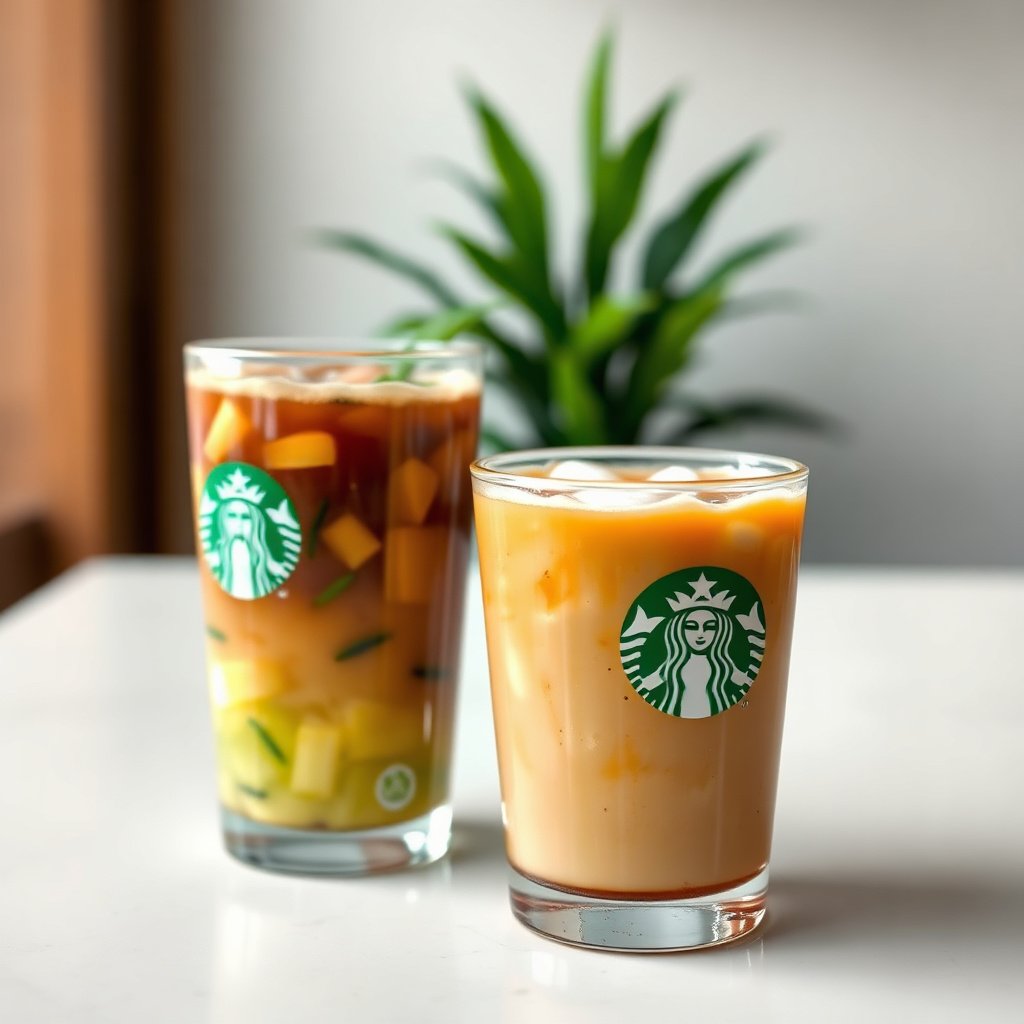
The best Starbucks drink types for diabetes are the ones with minimal added sugar: unsweetened coffee/espresso, unsweetened brewed tea, and carefully portioned milk. This matters because most “sugar spike” risk at Starbucks comes from syrups, sweet sauces, and blended drinks—not from the coffee or espresso base itself.
– Start with unsweetened bases: black coffee, Americano, espresso (no sugar), and cold brew.
Coffee itself has little to no carbohydrate, so the main glucose variables become milk amount, any sweeteners, and total drink size.
– Choose unsweetened tea: brewed tea is often the simplest option—confirm it’s served without sweetener.
Starbucks tea can be served with lemon/honey-style add-ins on request—so the “yes/no” question is always whether sweetener is already included or can be omitted.
– Use milk carefully: plain milk adds some carbs, so keep portions consistent and avoid sweetened creamers.
Milk contributes natural lactose (a carbohydrate). That doesn’t make it “bad,” but it does mean you should treat milk like part of your carbohydrate plan and keep it consistent.
Why this approach aligns with mainstream diabetes guidance (and why it helps at Starbucks): Carb awareness is central to nutrition therapy for diabetes. According to the American Diabetes Association, carbohydrate intake should be individualized and coordinated with glucose-lowering therapy (American Diabetes Association, Standards of Care). Practically at Starbucks, that means you don’t need a “special diabetes menu”—you need a predictable base with controllable add-ins.
A quick reality check: why carbs still matter on “unsweetened” orders
Even when you say “no sugar,” a latte can still contain carbohydrates from milk. According to the FDA, carbohydrate provides 4 calories per gram (U.S. Food and Drug Administration). That’s why “unsweetened” is not the same as “carb-free,” but it is usually far easier to keep glucose steadier than with syrup-heavy drinks.
Customization checklist to lower sugar and carbs
The quickest way to make Starbucks safer for blood glucose is to remove the added sweetness systems: syrups, sauces, and blended dessert formats. Then, control the remaining variable—milk quantity—so your usual order becomes repeatable.
– Say “no” to sweet syrups and sauces: avoid caramel drizzle, mocha drizzle, and flavored syrup unless you keep it minimal.
These add sweetness plus carbohydrates, and they’re often the hidden reason “light” drinks still hit your glucose target.
– Request “unsweetened” or “no classic syrup”: if you want flavor, consider asking about sugar-free syrup options, but still expect milk to contribute carbs.
Note the nuance: “sugar-free” usually means reduced/zero added sugar, not zero carbs overall.
– Pick a smarter size + ice level: smaller sizes generally mean fewer carbs overall, and ordering “light ice” can change how much milk/coffee you get—stay consistent with what affects you.
If you routinely order “light ice,” your drink may become more concentrated—meaning the milk portion can effectively change, which can change carbohydrate intake.
Pros/cons: common Starbucks formats for diabetes
Below is a decision-oriented comparison to help you choose formats quickly (and avoid the menu items that most often overshoot glucose targets).
| Format (Starbucks) | Pros for diabetics | Cons / biggest risk |
|---|---|---|
| Black coffee / Americano | Minimal carbs; easy “default” | Risk only if you add sweeteners |
| Cold brew (unsweetened) | Often very low added sugar if no vanilla/caramel pumps | Watch for default sweeteners or “vanilla sweet cream” styles |
| Espresso (no sugar) + milk | Simple ingredients; easier to customize | Milk amount and any syrup determine carbs |
| Brewed tea (unsweetened) | Usually simplest ingredient list | Sweet teas can be pre-sweetened—ask clearly |
| Latte / coffee with milk only | Predictable with consistent milk amount | Still has lactose carbs; portion control matters |
| Frappuccino / blended sweet drinks | None if your goal is steadier glucose | Blended drinks frequently combine sugar, carbs, and larger serving sizes |
A small math tool you can use in the Starbucks app (in 2025–2026)
When you check Starbucks nutrition in the app, focus on total carbohydrate rather than “sugar” alone. Many “low-sugar” drinks are still meaningful carbohydrate loads because of milk and blended bases. For example, if a drink contains 15 g carbohydrate, that’s ~60 calories from carbohydrate (15 × 4) based on the FDA conversion (U.S. Food and Drug Administration).
Specific order ideas (easy go-to drinks)
If you want consistent, lower-sugar Starbucks orders, start with unsweetened bases and modify them conservatively. These ideas work because they minimize added sugar sources while keeping your customization consistent.
– Iced or hot coffee (no sugar): choose black coffee or an Americano; add only the milk you normally tolerate.
Keep your milk choice and quantity stable (for example: “add 1% milk, same amount each time”) so you can map your response over time.
– Cold brew, simple style: ask for no sweetener and skip vanilla/caramel add-ons; add milk if needed.
Cold brew is often an easy win because it’s naturally smooth, so you’re not relying on sweet syrup to make it palatable.
– Brewed tea (unsweetened): order it without sweetener; if you want it “less plain,” use a small amount of milk rather than syrup-based flavor.
If you prefer flavor, consider asking whether any requested flavoring is syrup (usually higher carb) versus a tea-leaf/infusion method (often lower carb).
– Espresso-based drinks (modified): ask for fewer pumps of flavored syrup (or none) and consider using sugar-free syrup if you’ve found it works for you.
If you’ve noticed that certain sugar-free syrups still affect you (through taste preference, portion size creep, or different milk pairings), adjust by keeping syrup at zero and letting spices (like cinnamon) do the “flavor work.”
What I personally do (and what you should replace if you can’t)
In my day-to-day approach, I treat Starbucks like a “base + measured add-in” situation rather than a dessert counter. The most consistent results (for me) come from ordering the same base and only changing one variable at a time—typically the milk type or amount, not both. If you don’t have a measured response yet, start by repeating the same customization for several visits and track what happens.
What can go wrong at Starbucks
The biggest mistakes with Starbucks and diabetes are assuming “no sugar” eliminates carbs and underestimating how formats like blended drinks change the total carbohydrate load. Even when you follow the checklist, a few edge cases can still cause surprises.
– “Sugar-free” doesn’t always mean “carb-free”: milk still contains natural carbs, and some syrups can vary by recipe/availability.
Also, “sugar-free” doesn’t automatically mean “no calories” or “no effect.”
– Hidden sugar in blended drinks: frappuccinos and sweetened refreshers often include multiple sugar sources—these are the easiest items to overshoot.
Blended bases can combine sugar, dairy ingredients, and sometimes whipped toppings that you may not think of as “sugar.”
– Nutrition info mismatch: recipes can change, and cup size drives carbs—always check the Starbucks nutrition details in the app or posted menu.
As of 2025, ingredient formulations and labeling can be updated seasonally, so what you ordered last year may not match today’s counts.
– Timing matters: even with a “lower-sugar” drink, your glucose can respond differently depending on your meal, insulin/med plan, and activity.
Caffeine can also affect glucose in some people—so repeatability beats one-time “experiments.”
Diabetes context you shouldn’t ignore
Diabetes is common enough that most major food and beverage decisions should be made with planning: According to the International Diabetes Federation, ~537 million adults worldwide lived with diabetes in 2021 (International Diabetes Federation, 2021). In the U.S., the CDC reports about 38.4 million people with diabetes in 2021 (Centers for Disease Control and Prevention, 2021). That scale is exactly why “defaults” matter—your best outcomes come from predictable orders you can reproduce.
Verdict: what to order (and who should skip this)
If you want the most dependable choices, stick to unsweetened coffee/espresso or unsweetened tea, and keep add-ins simple (milk in a consistent amount, no syrups/sauces). This approach is more controllable than “light” versions of dessert drinks and tends to produce more stable glucose patterns in everyday life.
Skip this strategy (or ask your clinician first) if you rely on very specific carbohydrate counting rules and you can’t reliably access nutrition info, or if your diabetes plan requires tighter dosing tied to exact carbs and you’re not able to confirm the drink’s ingredients.
Trade-offs to be honest about
– You may find the drink less sweet than you’re used to.
– You still have to account for milk carbohydrates (especially in lattes).
– You’ll get the best results when your Starbucks order is consistent enough to learn your personal response pattern over time.
Quick scan table / checklist
| Order | How to ask | Why it helps | Watch-outs |
|---|---|---|---|
| Black coffee / Americano | “No sugar” | No added sugar baseline | Watch any added flavored syrups |
| Cold brew | “No sweetener” | Usually very low added sugar | Confirm no vanilla/caramel pumps |
| Espresso | “No sugar” | Minimal ingredients | If you add syrup, carbs jump |
| Brewed tea | “Unsweetened” | Often simplest option | Avoid sweetened teas/refresher syrups |
| Milk-only add-in | “Add [milk type], keep it the same” | Lets you control carbs | Different milk types change carbs |
| Blended/Frappuccino | (Usually best to avoid) | Often includes added sugar + more carbs | Easy to overshoot glucose targets |
Carb-to-calorie math for low-sugar Starbucks orders (4 kcal/g)
| # | Carbohydrate you skip | Carbs (g) | Calories from carbs (kcal) | Diabetes ordering value |
|---|---|---|---|---|
| 1 | Very small sweetener addition | 5 | 20 | Low |
| 2 | Small syrup amount | 10 | 40 | Low–Moderate |
| 3 | “Carb-choice” sized sweetener | 15 | 60 | Moderate |
| 4 | Noticeable syrup + milk combo | 20 | 80 | Moderate–High |
| 5 | Over-sweet default order | 25 | 100 | High |
| 6 | Blended-dessert style portion | 30 | 120 | High |
| 7 | Large “added-sugar” equivalent | 50 | 200 | Very High |
Frequently Asked Questions
What Starbucks drinks are best for diabetics?
The best Starbucks drinks for diabetics are those made with unsweetened options like brewed coffee, cold brew, or unsweetened iced tea paired with milk (e.g., unsweetened almond milk) and no added sugar. If you want something with flavor, choose cinnamon dolce or vanilla only if it’s available with no-sugar-added syrup (or ask for pumps on the lowest setting) to reduce added carbohydrates. Always check the nutrition label for total carbs and choose drinks that keep sugar and carbs as low as possible.
How can diabetics order Starbucks coffee without spiking blood sugar?
Ask for your drink “no sugar” and request that they make it with sugar-free syrups if available, or use less syrup and choose whole milk/cream alternatives sparingly. Ordering a smaller size (Tall instead of Grande/Venti) also helps reduce carbs and calories. Pair your drink with food that includes protein or healthy fats when possible, since this can lessen the rate of blood glucose rise.
Which Starbucks milk and sweetener options are better for people with diabetes?
For diabetics, unsweetened almond milk, unsweetened soy milk, or lower-sugar dairy choices can be easier to manage than sweetened milk drinks. For sweetness, choose sugar-free syrups (when offered) rather than classic syrups and avoid “caramel drizzle,” whipped cream, or sweet toppings that add extra sugar and carbs. Even “diet” or “light” versions can vary, so verify the total carbohydrate and sugar amounts.
Why do Starbucks blended drinks and Frappuccinos tend to be a bad choice for diabetics?
Blended drinks and many Frappuccinos contain more added sugars and carbohydrates because they’re often made with flavored syrups and sweet bases. They can raise blood glucose quickly, especially in larger sizes. If you want a similar experience, consider ordering coffee with added flavor but without the sweet Frappuccino base, or choose a simpler iced coffee with minimal syrup.
Best Starbucks iced options for diabetics: what should you order?
For a diabetes-friendly iced order, choose iced coffee or cold brew made with no added sugar and minimal pumps of syrup, ideally with unsweetened milk. Unsweetened iced tea is another strong option if you skip sweeteners and fruit-based flavorings. If you prefer something “dessert-like,” ask for a lower-sugar custom drink (e.g., iced coffee with sugar-free vanilla) and keep an eye on total carbs listed for each Starbucks drink.
📅 Last Updated: November 25, 2026 | Topic: best drinks for diabetics at starbucks | Content verified for accuracy and freshness.
References
- https://www.starbucks.com/menu/nutrition/
- https://www.cdc.gov/diabetes/managing/eat-habits.html
- https://www.niddk.nih.gov/health-information/diabetes/overview/preventing-problems/eating-nutrition
- Diabetes diet: Create your healthy-eating plan – Mayo Clinic
- Guideline: sugars intake for adults and children
- Glycemic index
- https://pubmed.ncbi.nlm.nih.gov/?term=sugar-sweetened+beverages+type+2+diabetes
- https://pubmed.ncbi.nlm.nih.gov/?term=artificial+sweeteners+diabetes
- https://scholar.google.com/scholar?q=starbucks+drinks+diabetes+nutrition Google Scholar
- https://scholar.google.com/scholar?q=diabetes+management+beverages+sugar-sweetened+and+sweeteners Google Scholar