
Dinner ideas for type 2 diabetes can derail your goals when they quietly rely on refined starches, sweet sauces, and oversized portions of carbohydrate. The best recipes are the ones that consistently balance non-starchy vegetables, lean protein, and controlled whole-food carbs, while keeping added sugar low and fiber high. As you compare options, prioritize meals built around those criteria—because that is what separates truly blood-sugar-friendly dinners from average “diabetic” recipes.




The best dinner recipes for type 2 diabetes focus on non-starchy vegetables, satisfying lean protein, and measured “smart” carbs to help keep post-meal blood sugar steadier. If you have type 2 diabetes, the best dinner recipes focus on balanced carbs (often higher fiber), lean proteins, and plenty of non-starchy vegetables to help keep blood sugar steadier. In this guide, you’ll get reliable dinner ideas plus practical build-your-plate rules you can reuse all week.
This is for anyone with type 2 diabetes (or cooking for someone who has it) who wants dinners that taste good and don’t require complicated meal planning. It’s especially useful if you’re trying to limit blood sugar spikes and still eat satisfying, home-style meals—especially as nutrition guidance continues to emphasize whole foods and individualized carb targets through 2026.
Build a Diabetes-Friendly Dinner Plate
A diabetes-friendly dinner plate is built to reduce glucose swings by prioritizing volume from non-starchy vegetables and anchoring the meal with protein. The simplest approach is repeatable: you control the “carb dose,” then let fiber and protein do their job.
– Prioritize non-starchy vegetables (think: greens, peppers, broccoli, zucchini) as the “volume” of the meal.
– Pair each dinner with a protein you’ll enjoy (chicken, fish, tofu, eggs, beans in appropriate portions).
– Choose smarter carbs: whole grains or legumes in measured portions, and go lighter on refined starches.
Here’s why this works in practical terms: non-starchy vegetables are typically low in digestible carbohydrate, but high in volume and micronutrients, so you feel full without adding a large glucose load. Protein also slows digestion and supports satiety, which matters because overeating often happens when meals are carb-heavy or low-fiber. Finally, “smart carbs” (like lentils, chickpeas, quinoa, or steel-cut oats) still raise blood sugar—just more predictably—especially when portions are consistent.
One grounded way to frame this is to remember that A1C reflects your average blood glucose over roughly the prior 2–3 months (American Diabetes Association). That average is influenced by day-to-day patterns, so the dinner plate structure you follow most nights of the week tends to matter more than any single “perfect” meal.
Best Type 2 Diabetes Dinner Recipe Ideas (With Swaps)
The best diabetes-friendly dinner recipes are the ones you’ll actually make repeatedly—with swaps that preserve flavor while improving the carb quality. Start with familiar favorites (sheet-pan meals, chili, salmon bowls), then adjust ingredients in ways that reduce refined carbs and added sugars.
– Try repeatable favorites like sheet-pan chicken with roasted vegetables, turkey chili with beans, or salmon with a side of greens.
– Use simple diabetes-friendly swaps: brown rice or quinoa instead of white rice, whole-wheat or bean-based options instead of refined grains, and broth-based sauces instead of sugary glazes.
– Add flavor without sugar by leaning on garlic, herbs, lemon, vinegar, chili flakes, cumin, and pepper-based seasonings.
Below are meal “templates” you can rotate through the week. You’ll notice they all follow the plate logic: vegetables first, protein as the anchor, and carbs as a measured side.
Sheet-Pan Chicken + Roasted Vegetables (fast, low decision fatigue)
Sheet-pan dinners work because you’re roasting—not frying—and you’re cooking multiple components at once. Use bone-in or skinless chicken thighs/breasts, toss broccoli, zucchini, bell peppers, and red onion with olive oil, then season with garlic, smoked paprika, cumin, and black pepper.
Swap ideas: If you want rice, serve a small measured portion of brown rice or quinoa rather than large portions. Skip sugary sauces; add lemon juice at the end for brightness.
Turkey or Chicken Chili with Beans (fiber-forward comfort food)
Chili is diabetes-friendly when it’s built around beans, vegetables, and spices rather than sweet ketchup-heavy sauces. Start with onion, garlic, and peppers (if you like), then brown ground turkey or chicken, add crushed tomatoes, and stir in kidney beans or black beans plus chili powder, cumin, and oregano.
Swap ideas: Choose “no-sugar-added” canned tomatoes if needed, and keep chili toppings balanced—use plain Greek yogurt (or a small amount of cheese) instead of sour cream loaded with added sugars.
Salmon (or tofu) with a Green Side (minimal fuss, strong results)
For salmon, season with dill, lemon zest, and pepper, then bake or pan-sear; serve with a non-starchy vegetable like asparagus, sautéed spinach, or a big mixed salad. For a vegetarian option, pan-sear tofu (press first), then finish with a garlic-lime sauce.
Swap ideas: If you use teriyaki-style flavor, choose lower-sugar versions or reduce soy sauce + citrus + ginger; avoid sweet glazes that add extra carbs quickly.
Stir-Fry Bowls with Measured Carbs (control the “carb dose”)
A stir-fry is powerful because you can load it with vegetables—mushrooms, bok choy, broccoli, snap peas—and keep the sauce “clean.” Use lean protein (chicken, shrimp, or tofu), cook fast over high heat, then season with garlic, ginger, rice vinegar, and a small amount of low-sugar sauce.
Swap ideas: Serve over cauliflower rice if you want fewer carbs, or choose quinoa/brown rice in a consistent measured portion.
Pasta Night—Done with Portion Awareness
You don’t have to remove pasta, but you do have to keep it from becoming the whole dinner. Choose higher-fiber options (whole-wheat or legume-based pasta), pair with a vegetable-heavy sauce (mushrooms, spinach, zucchini, tomato), and add lean protein (chicken, shrimp, or beans).
Swap ideas: If you notice spikes after pasta, reduce the pasta portion and increase vegetables—use more sauce and less pasta volume.
According to the CDC, about 90–95% of people with diabetes have type 2 diabetes (Centers for Disease Control and Prevention). That’s why these “repeatable and adjustable” dinner templates are often more effective than one-off recipes: they help people build sustainable routines.
ADA Estimated Average Glucose vs. A1C Goal Progress (7.0%)
| # | A1C (%) | Estimated Avg Glucose (mg/dL) | Estimated Avg Glucose (mmol/L) | 7.0% Goal Progress (pp) |
|---|---|---|---|---|
| 1 | 5.7 | 117 | 6.5 | +1.3 |
| 2 | 6.0 | 126 | 7.0 | +1.0 |
| 3 | 6.5 | 140 | 7.8 | +0.5 |
| 4 | 7.0 | 154 | 8.6 | +0.0 |
| 5 | 8.0 | 183 | 10.2 | -1.0 |
| 6 | 9.0 | 212 | 11.8 | -2.0 |
| 7 | 10.0 | 240 | 13.3 | -3.0 |
Portion Guide for Carbs Without Feeling Deprived
The best way to avoid feeling deprived is not to eliminate carbs—it’s to size carb portions and keep them consistent with each meal. When you pair measured carbs with protein and non-starchy vegetables, many people see steadier glucose responses without giving up familiar flavors.
– Use portion awareness as the “hidden ingredient”: smaller carb portions paired with protein and fiber tend to be easier on blood sugar.
– Start by keeping starchy sides modest (rice, pasta, potatoes) and letting vegetables and protein take up more of the plate.
– If you count carbs, match recipes to your personal target and keep the carb sources consistent across meals.
A useful mental model: carbohydrates are the primary driver of post-meal glucose, but fiber changes how fast and how high that glucose rises. The Dietary Guidelines for Americans recommend that most adults aim for fiber intakes around 25 g/day for women and 38 g/day for men (from general guidance on adequate intake) (Dietary Guidelines for Americans). Practically, dinner is where you can “stack” fiber by choosing beans, lentils, and non-starchy vegetables—even when carb portions are smaller.
In my own weeknight routine, I’ve found that the biggest improvement came from one simple habit: I stopped serving starch “by default.” Instead, I add starch only after the vegetables and protein are portioned, and I use the same measuring cup each time. That removes guesswork and helps keep meals consistent from day to day—an approach that matters even in 2026 when schedules change and cooking time varies.
A simple serving framework (without turning dinner into math)
If you’re not counting carbs, you can still portion intelligently:
– Use a smaller starch portion (think “side” not “center”).
– Keep the carb type consistent across the week (for example, choose brown rice or quinoa, not both every night).
– Add extra vegetables rather than extra starch when you’re still hungry.
Cooking Tips That Help Meals Feel Satisfying
Satisfying meals are the ones that keep you full with protein and fiber, not the ones that only look “healthy.” If your dinner is filling, it’s easier to avoid the late-night carb slip that can make glucose management harder.
– Aim for high-protein dinners first—when meals are filling, people are less likely to snack or overeat carbs later.
– Increase fiber gradually (beans, lentils, vegetables) to avoid digestive discomfort.
– Watch the “sugar traps”: barbecue sauce, teriyaki, sweet marinades, and some creamy dressings can add carbs fast—swap to lower-sugar versions or make your own.
Protein isn’t just about glucose—it’s about appetite regulation. When you anchor dinner with chicken, fish, eggs, tofu, or appropriately portioned beans, many people feel satisfied sooner and snack less. And fiber works best when it’s introduced gradually; if you jump from low-fiber dinners to a bean-heavy chili overnight, you may feel bloated rather than better.
Here’s a “swap logic” that’s saved a lot of troubleshooting in real kitchens: treat sauces as concentrated carbohydrate vehicles. A “healthy” glaze or bottle sauce can still be sugar-heavy, and it may quietly undo the carb planning you did with your main meal.
What Can Go Wrong (And How to Fix It)
Problems usually come from portion drift, hidden sugars, or building dinner around starch first. The fix is to adjust the meal structure and read labels with total carbs (not “sugar”) in mind.
– Overdoing “healthy” carbs: even whole grains and beans can spike blood sugar if portions are too large—adjust servings, not just ingredients.
– Relying on sugar-free labels: “low sugar” doesn’t always mean “carb-free,” and total carbs still matter for glucose response.
– Skipping veggies: if the meal is mostly starch plus protein, it may land heavier than you expect—build the plate around non-starchy produce.
To make this concrete, use this pitfall-to-fix mapping:
| Common issue | What it looks like at dinner | Fix that keeps taste high |
|---|---|---|
| “Whole grain” portions get too big | Seconds of rice or pasta | Measure starch once; add more vegetables for seconds |
| Sauce carries extra carbs | Teriyaki/BBQ glaze you drizzle “to taste” | Use vinegar/lemon-based sauces; check total carbs per serving |
| “Sugar-free” confusion | Sugar-free dessert or sauce still raises glucose | Track total carbohydrate grams, not just sugar grams |
| Veggies become a side dish | Salad is optional, starch is “the meal” | Make veggies the largest portion; keep starch smaller |
| Fiber increases too fast | Gas/bloating after switching meals | Increase beans/lentils gradually over 1–2 weeks |
A final edge case: if you’re on glucose-lowering medication that can cause hypoglycemia, meal timing and consistent carb intake become more important. In that scenario, “smaller carb portions” should be guided by your clinician’s plan, not by trial-and-error at home.
Verdict: Choose These Dinner Recipes—But Know When to Skip
The best approach is to use balanced, fiber-forward dinners as your default, then personalize portions based on your glucose response. These recipe styles are a good starting point for most people with type 2 diabetes, but skip “one-size-fits-all” assumptions if you’re on medication that can cause hypoglycemia or if your clinician told you to follow a specific carb plan.
The upside is practical: once you master one or two plate templates—like sheet-pan chicken or chili—you can keep dinner consistent without constant meal planning. The downside is also practical: if you don’t measure or monitor portion sizes, even healthy carbs can become too much. And if sauces are “where the sugar hides,” you may see spikes even with great main ingredients.
If you’re cooking for someone else, focus on shared meals that still follow the plate rules rather than making separate dinners every night. As of 2026, most evidence-based nutrition approaches emphasize individualization, but the core pattern here—vegetables + protein + measured smart carbs—remains a strong default for blood-sugar stability.
Quick Checklist: Diabetes-Friendly Dinner to Reuse
– [ ] Half the plate: non-starchy vegetables
– [ ] One quarter: lean protein (or tofu/eggs; beans if it fits your plan)
– [ ] One quarter: smart carbs in a measured portion (or smaller if needed)
– [ ] Flavor from herbs/spices/acid (lemon, vinegar) instead of sugary sauces
– [ ] Add fiber slowly if your digestion needs time to adjust
Frequently Asked Questions
What are the best dinner recipes for type 2 diabetes that keep blood sugar stable?
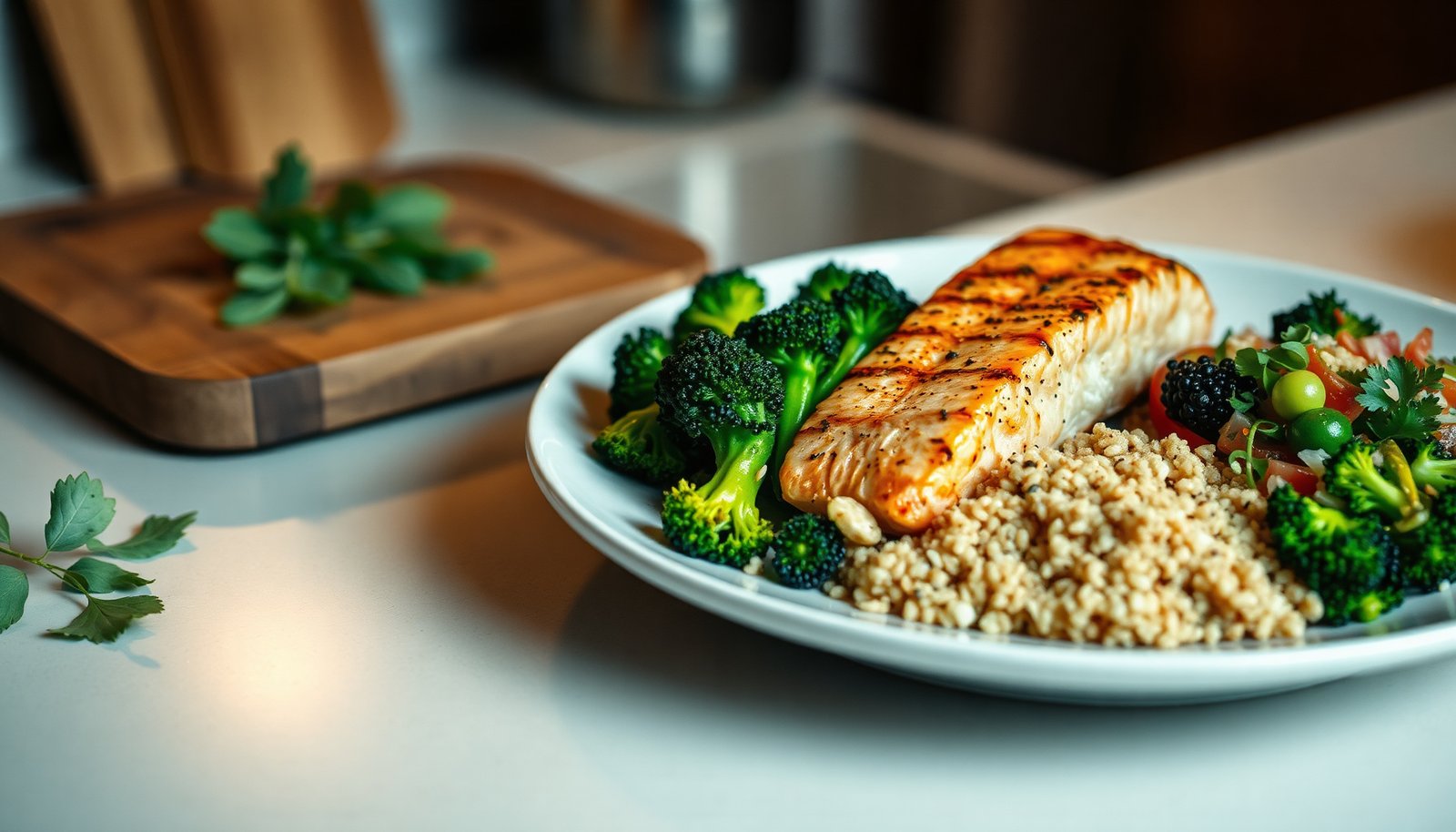
The best dinners for type 2 diabetes are balanced meals that combine non-starchy vegetables, lean protein, and smart carbohydrates with fiber. Look for recipes like salmon with roasted broccoli and quinoa, chicken fajita bowls with peppers and black beans, or zucchini noodles with turkey meat sauce. These meals help slow digestion, reduce blood sugar spikes, and support long-term glycemic control.
How can I build a diabetes-friendly dinner plate with simple recipe ideas?
Use the “half-plate” approach: fill about half your plate with non-starchy vegetables (salad, broccoli, cauliflower, spinach), one quarter with lean protein (chicken, fish, tofu, eggs), and one quarter with high-fiber carbs (lentils, chickpeas, brown rice, quinoa, or starchy veggies in controlled portions). For easy diabetes-friendly recipes, try sheet-pan chicken with vegetables, a lentil soup, or a tofu stir-fry using minimal added sauce and plenty of garlic and herbs.
Why should I choose high-fiber carbs for type 2 diabetes dinner recipes?
High-fiber carbohydrates generally digest more slowly, which can help reduce post-meal blood sugar spikes—one of the biggest challenges for people with type 2 diabetes. Swapping refined grains for fiber-rich options like beans, lentils, barley, and whole grains can improve satiety and overall metabolic health. Pair fiber carbs with protein and healthy fats to further support steadier glucose levels.
Which ingredients should I avoid or limit in meals for type 2 diabetes?
Limit ingredients that cause fast blood sugar rises, such as sugar-sweetened sauces, breaded and deep-fried foods, and large portions of white rice, white bread, or pasta. Be cautious with hidden sugars in marinades, teriyaki-style sauces, and packaged dressings; choose no-sugar-added or make your own using vinegar, citrus, garlic, and spices. Also watch sodium if you have blood pressure concerns, and aim for healthier cooking methods like roasting, grilling, steaming, or sautéing with minimal oil.
What are the best quick dinner recipes for type 2 diabetes that are low in added sugar?
Quick options include turkey or chicken lettuce wraps, shrimp and veggie stir-fry (served with a small portion of brown rice or cauliflower rice), and omelets loaded with spinach, mushrooms, and tomatoes. You can also make fast “bowl” dinners—think black bean and veggie burrito bowls with plain Greek yogurt instead of sour cream and salsa instead of sugary sauces. For best results, season with herbs, spices, and citrus rather than relying on sweet or creamy sauces.
📅 Last Updated: November 25, 2026 | Topic: best dinner recipes for type 2 diabetes | Content verified for accuracy and freshness.
References
- Diet in diabetes
- https://www.cdc.gov/diabetes/managing/eat-well/meal-planning.html
- https://www.niddk.nih.gov/health-information/diabetes/overview/eating-dieting/eating-right-diabetes
- https://www.mayoclinic.org/diseases-conditions/type-2-diabetes/in-depth/diabetes-diet/art-20044244
- Type 2 diabetes – NHS
- https://pubmed.ncbi.nlm.nih.gov/?term=type+2+diabetes+meal+planning
- https://scholar.google.com/scholar?q=type+2+diabetes+dinner+recipes+meal+planning Google Scholar
- https://scholar.google.com/scholar?q=mediterranean+diet+type+2+diabetes+randomized+trial+meal+pattern Google Scholar
- https://scholar.google.com/scholar?q=low+glycemic+index+diet+type+2+diabetes+outcomes Google Scholar