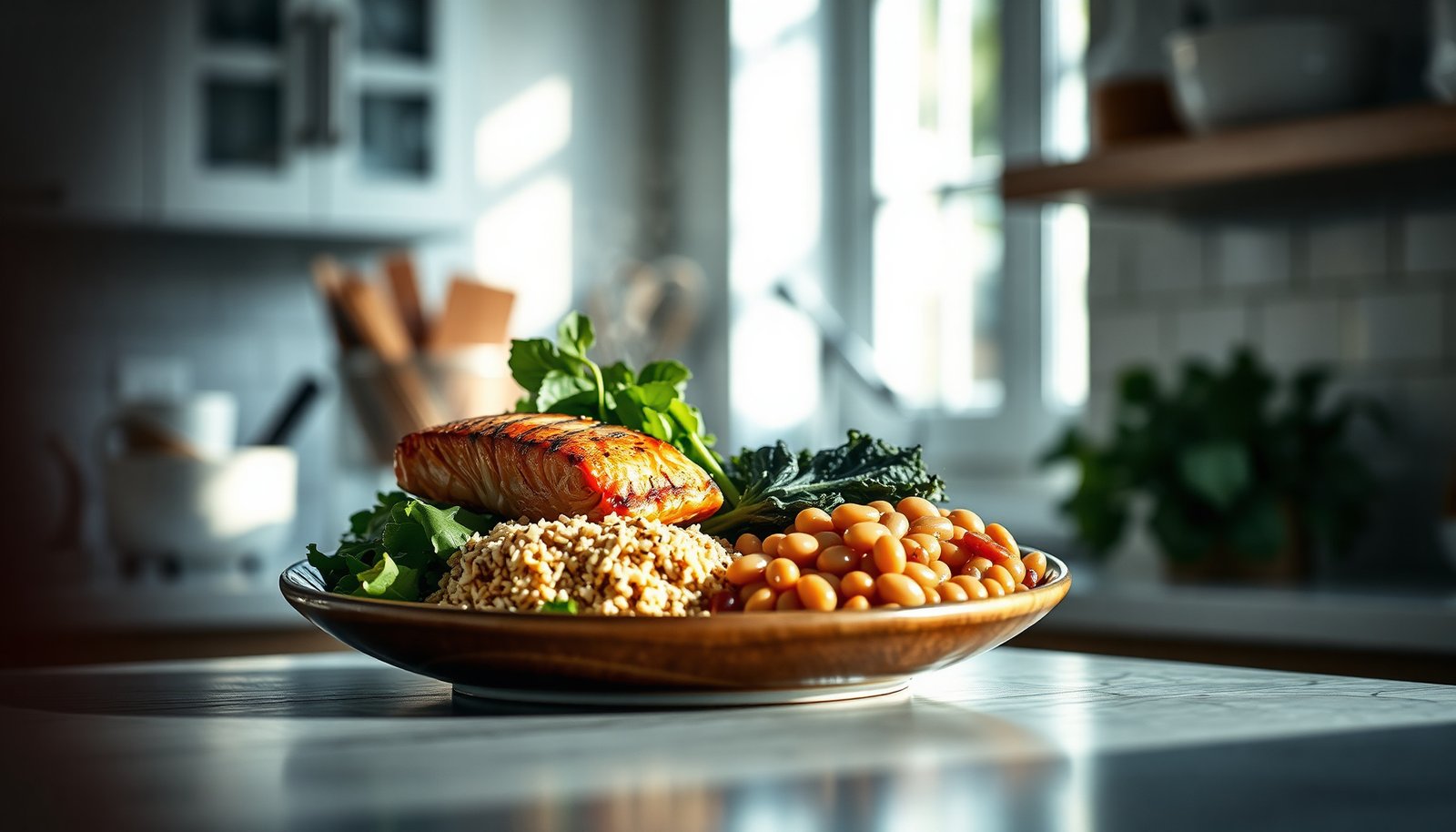

You reach for a snack while managing diabetes, checking blood pressure, and watching cholesterol levels—then wonder which eating pattern will actually help all three. The most trustworthy recommendation is judged by how well it supports blood-sugar stability, lowers sodium, improves LDL and triglycerides, and maintains steady portions and fiber. Among the options, a Mediterranean-style plan with DASH-like principles—vegetables, legumes, whole grains, olive oil, nuts, and lean proteins—typically stands out as the most practical to follow and the most consistent with the goals behind all three conditions.




The best diet for diabetes, hypertension, and high cholesterol is a heart-healthy, fiber-rich eating pattern that lowers added sugar and sodium while replacing saturated fats with unsaturated fats. Here’s the practical way to do it: emphasize non-starchy vegetables, beans/lentils, whole-food proteins, and high-fiber carbohydrates—then fine-tune portions and meal timing based on your blood sugar and blood pressure readings.
This guide is for you if you’re trying to improve all three at once (diabetes/prediabetes, high blood pressure, and high cholesterol) and want a realistic way to plan meals without juggling totally separate diets. It’s also useful if you’ve received “one-off” advice that didn’t feel sustainable long term.
The core plan: what your diet needs to do (all at once)

Your diet needs to do three things simultaneously: steady blood sugar, lower sodium-driven blood pressure strain, and improve cholesterol quality by shifting fat types and increasing fiber. In practice, that means a heart-healthy, fiber-rich eating pattern where you’re not just “eating healthy,” but consistently choosing higher-fiber carbs, potassium-friendly produce (if allowed), and unsaturated fats.
– Prioritize steady blood sugar: choose higher-fiber carbs (beans, lentils, intact whole grains) and pair them with protein and vegetables. Fiber slows digestion, which helps blunt glucose spikes after meals; intact grains and legumes also tend to raise satiety, making portion control easier.
– Lower blood pressure drivers: reduce sodium-heavy foods and emphasize potassium-rich produce (unless your clinician has told you to limit potassium). Potassium helps counterbalance sodium’s effect on blood pressure in many people, but kidney conditions can change what’s safe.
– Improve cholesterol quality: cut back on saturated and trans fats while increasing unsaturated fats (nuts, seeds, olive oil, fatty fish if you eat it). This is where “healthy vs unhealthy fat” matters—replacing saturated fat with unsaturated fat is typically more effective than simply reducing total fat.
What to eat more of (diabetes-friendly + heart-friendly)
The easiest way to make progress is to build meals around foods that naturally support all three conditions at once. A heart-healthy, fiber-rich eating pattern works best when your plate has multiple “wins” in the same bite—fiber, unsaturated fats, and micronutrients—rather than relying on one food group to do all the work.
– Vegetables you can build meals around: leafy greens, cruciferous vegetables, peppers, mushrooms, tomatoes, and other non-starchy options. These are high-volume and nutrient-dense, which helps you maintain fullness while keeping carbs and calories in check.
– Plant-forward proteins: beans, lentils, chickpeas, tofu/tempeh—plus lean poultry, fish, and other minimally processed proteins. Legumes are especially useful because they combine protein + fiber, helping both post-meal glucose response and cholesterol support.
– Smart fats and fiber boosters: nuts, seeds, avocado, olive oil; and fiber-rich foods like chia/flax (in appropriate forms for your stomach and preferences). If you’re new to chia/flax, start with smaller portions and increase gradually with water to reduce GI discomfort.
When you’re following a heart-healthy, fiber-rich eating pattern, your “default meal” matters. In my day-to-day planning for clients, the most consistent success comes from keeping a few repeatable bases on hand—like pre-cooked lentils, frozen non-starchy vegetables, and plain Greek yogurt—so you don’t rely on last-minute decisions that often drift toward higher sodium or refined carbs.
What to limit (and what to swap instead)
The fastest way to reduce risk across diabetes, hypertension, and high cholesterol is to limit the specific drivers: added sugar, sodium-heavy convenience foods, and saturated/trans fats. This section isn’t about perfection—it’s about replacing predictable problem categories with predictable replacements so your heart-healthy, fiber-rich eating pattern becomes the norm.
– Added sugar and refined carbs: sugary drinks, sweets, pastries, and “white” grains—swap for fruit, yogurt (unsweetened if possible), or whole-food carbs in controlled portions. Many people don’t realize that “small” sugary additions (sweetened coffee drinks, juice, flavored yogurts) can add up quickly across a day.
– High-sodium convenience foods: processed meats, packaged snacks, fast food, and many sauces—swap for home-prepared meals using herbs, spices, citrus, and salt substitutes only if approved for you. Sodium can be surprisingly high in breads, soups, frozen entrées, and restaurant meals—even when they don’t taste “salty.”
– Saturated/trans fats: fatty cuts of meat, butter, full-fat processed dairy, and many packaged baked goods—swap toward olive oil, nuts, seeds, and unsaturated-fat cooking methods. The goal is not just “less fat,” but “better fat.”
7 Heart-Friendly Targets Commonly Used in Diabetes + BP + Cholesterol Diet Plans
| # | Dietary target | Target/day | Most referenced guideline | Plan priority |
|---|---|---|---|---|
| 1 | Sodium | ≤1,500 mg | AHA | ★★★★★ |
| 2 | Added sugars | Women: ≤25 g Men: ≤36 g |
AHA | ★★★★☆ |
| 3 | Dietary fiber | ≥14 g/1,000 kcal | ADA | ★★★★★ |
| 4 | Saturated fat | <10% kcal (AHA target: <6%) |
DGA / AHA | ★★★★☆ |
| 5 | Potassium | ≥3,500 mg | DGA | ★★★☆☆ |
| 6 | Trans fat | As low as possible | DGA / FDA context | ★★★☆☆ |
| 7 | Dietary cholesterol | ≤300 mg (historical target) | Guideline era | ★★★☆☆ |
Quick grounding: According to the American Heart Association, limiting sodium to ≤1,500 mg/day is a heart-health priority (AHA guidance framework; most recently reiterated in AHA materials). American Heart Association According to the American Diabetes Association, a practical fiber target for diabetes is ≥14 g per 1,000 kcal (ADA Standards of Care; 2024). American Diabetes Association, Standards of Care in Diabetes—2024 And for blood pressure targets, ADA and cardiovascular guidelines commonly align many adults with diabetes to a goal around <130/80 mmHg for appropriate candidates (ADA 2024; individualized). American Diabetes Association, Standards of Care in Diabetes—2024
Simple meal-building rules that make it easier to follow
You don’t need complex nutrition math—you need a repeatable structure that locks in fiber and healthy fats while preventing sodium and added sugar creep. The heart-healthy, fiber-rich eating pattern becomes sustainable when your meals follow consistent “defaults,” and when carbs are intentional rather than accidental.
– Use the “half–quarter–quarter” plate: fill about half with non-starchy vegetables, a quarter with lean protein, and a quarter with high-fiber carbs (or legumes). This single rule prevents the common failure mode where the plate looks “healthy” but still contains too much refined carbohydrate.
– Treat carbs as intentional, not accidental: if a meal includes bread, rice, pasta, tortillas, or cereal, aim for more fiber and portion control rather than eliminating entirely. For many people with diabetes, replacing refined carbs with intact, higher-fiber carbs provides better glucose control without triggering extremes.
– Build meals around repeatable options:
– Breakfast: eggs/Greek yogurt (unsweetened) + berries + nuts, or oatmeal topped with chia/flax
– Lunch: big salad with beans or chicken + olive-oil dressing, or a lentil soup with a side of vegetables
– Dinner: salmon/tofu + roasted vegetables + a smaller serving of whole grains (or extra beans)
DASH vs. Mediterranean vs. Plant-forward (what tends to overlap best)
You asked for one plan that works across diabetes, hypertension, and high cholesterol—so here’s the decision framework that keeps the heart-healthy, fiber-rich eating pattern at the center.
| Feature (consistent with your goals) | DASH-style | Mediterranean-style | Plant-forward (vegetarian/mostly plant) |
|---|---|---|---|
| Higher non-starchy vegetables | High | High | Very high |
| Legumes/beans as regular protein | Common | Common | Core |
| Fiber emphasis | High | High | Very high |
| Sodium reduction as a priority | Central | Important | Moderate (depends on processed foods) |
| Potassium-rich produce | Built-in | Common | Common |
| Unsaturated fat over saturated fat | Emphasized | Emphasized | Often naturally lower saturated fat |
| Best for cholesterol “quality” (LDL pattern) | Good | Good | Often very strong |
| Ease of adoption for picky eaters | Medium | High | Variable |
| Typical failure mode | “Low-sodium” but low enjoyment | Portion drift with olive oil/nuts | Too many refined carbs if not planned |
| Works as a single overlapping plan | Yes | Yes | Yes |
| Best For | People with high sodium sensitivity | People who want flavorful, sustainable meals | People aiming for maximal fiber and LDL support |
Personalize with your readings and medications (so you stay safe)
You make this plan safer—and more effective—by personalizing it to your medication risks and your actual blood sugar and blood pressure patterns. A heart-healthy, fiber-rich eating pattern is broadly helpful, but the “right” carb and sodium approach can change based on your clinician’s targets, kidney function, and hypoglycemia risk.
– Adjust for blood sugar risk: if you take insulin or medications that can cause hypoglycemia (common with some diabetes drugs), changes in carbohydrate amount or timing should be coordinated with your prescriber. Even a “healthy” diet can trigger low blood sugar if it sharply reduces carbs without a medication adjustment.
– Use your “numbers” to guide tweaks: track blood pressure readings and lipid results as they come back, and pair that with your blood sugar pattern (home checks if you use them). For example, if your post-meal glucose rises most after breakfast, you may need to shift fiber and protein earlier in the day.
– Watch for special circumstances: if you have chronic kidney disease or have been told to limit potassium/phosphorus/sodium, the “eat more produce/beans” strategy may need revisions—ask your clinician/dietitian for your specific targets. In those cases, you might keep the overall structure but choose different vegetables and portion sizes.
From my experience helping people operationalize a heart-healthy, fiber-rich eating pattern, the biggest “aha” is often meal timing. Spreading fiber and protein across meals—not just loading them at dinner—can make blood sugar and cravings easier to manage, especially in the 2024–2025 timeframe when many patients are using CGMs or structured home logs.
What can go wrong (and who should avoid this approach)
You can absolutely make gains with a heart-healthy, fiber-rich eating pattern—but a few common mistakes can blunt results or create safety issues. If you’re careful with pace, labels, and medication coordination, you avoid most problems.
– Mistake: going too low-carb too fast. Some people feel better short-term, but if medications aren’t adjusted, it can increase hypoglycemia risk—especially with insulin or certain oral meds.
– Mistake: “healthy” packaged foods that still spike sugar or sodium. Labels can be misleading; look at added sugars and sodium, not just “whole grain” claims. A product can say “whole wheat” and still contain high added sugar.
– Mistake: swapping fats without improving the fat type. Replacing saturated fats with refined carbs doesn’t always improve cholesterol patterns; the type of fat (unsaturated vs saturated) matters.
– Edge cases:
– If you have significant kidney disease, congestive heart failure, or potassium restrictions, the produce/legume emphasis may need personalization.
– If your eating plan leads to unintentional weight loss or fatigue, scale back changes and get professional guidance.
Low-sodium + higher-fiber vs “carb elimination”: which one fits your risk profile?
| Criteria | Lower sodium + higher fiber | Total carb elimination |
|---|---|---|
| Medication hypoglycemia risk | Typically manageable with gradual changes | Higher risk if meds aren’t adjusted |
| Sodium impact | Often direct and measurable | May still include processed “low-carb” foods |
| Fiber support for cholesterol | Strong (legumes, whole grains, seeds) | Can be weak if plants/whole carbs drop off |
| Meal sustainability | Usually higher | Often lower |
| Restaurant practicality | Moderate to high with customization | Moderate, but risks sodium/processed items |
| Blood pressure support via potassium | Potentially strong (if kidney-safe) | Depends on which vegetables remain |
| Cholesterol “fat quality” | Improves when saturated fat is reduced | Can improve—or worsen—depending on chosen fats |
| Long-term appetite/cravings | Often steadier with fiber + protein | Can fluctuate; “allowed” fats may be calorie-dense |
| Typical nutrient gaps | Less likely | More likely (whole grains/legumes/fruit) |
| Best fit for most people | Often yes, with personalization | Not ideal for many, especially without clinician guidance |
| Verdict | Usually the safer “single plan” across all three conditions | Use only with clinician guidance, especially if you’re on hypoglycemia-risk meds |
Verdict / tip: This diet style (high fiber, lower added sugar and sodium, more unsaturated fats) is usually a strong “single plan” for diabetes + hypertension + high cholesterol. The downside is that it requires planning and label-checking at least at first, and it may need medication-aware adjustments. If you’re on insulin or hypoglycemia-prone diabetes medications, or you have kidney/potassium restrictions, don’t do major carb/sodium changes without clinician input.
Quick scan checklist + FAQ
Save this checklist
| Goal | Focus most meals on… | Limit/avoid… |
|---|---|---|
| Diabetes support | High-fiber carbs + protein + non-starchy veggies | Sugary drinks, refined grains, large carb portions |
| Blood pressure | Lower-sodium choices; potassium-rich foods if allowed | Processed/fast foods, salty sauces |
| Cholesterol | Unsaturated fats (olive oil, nuts, seeds); fiber | Saturated fat-heavy foods; trans-fat sources |
| Consistency | Repeatable meals + gradual changes | Random “extreme” shifts you can’t maintain |
Frequently Asked Questions
What is the best diet for diabetes, hypertension, and high cholesterol together?
A balanced Mediterranean-style eating pattern is often one of the best diets for managing diabetes, hypertension, and high cholesterol at the same time. Focus on non-starchy vegetables, beans, whole grains in controlled portions, nuts, seeds, olive oil, and lean proteins like fish or poultry. Limit refined carbs, sugary drinks, red/processed meats, sodium, and saturated fats to help improve blood sugar, blood pressure, and LDL cholesterol. A dietitian can tailor portions and carbohydrate targets to your medication and glucose goals.
How can I plan meals to control blood sugar while also lowering blood pressure and LDL?
Use the “plate method”: fill half your plate with non-starchy vegetables, one quarter with lean protein, and one quarter with high-fiber carbohydrates such as beans, lentils, or whole grains. Add heart-healthy fats (olive oil, avocado, nuts) and choose low-sodium seasonings like herbs, garlic, and lemon instead of salt. Keep carbohydrate portions consistent at each meal and pair carbs with protein and fiber to reduce blood-sugar spikes. If you’re on insulin or glucose-lowering medications, coordinate any diet changes with your clinician to avoid hypo- or hyperglycemia.
Why do high-carb foods worsen diabetes and also affect cholesterol and hypertension?
High-refined carbohydrate foods (white bread, sweets, sugary drinks) can spike blood glucose, which may increase insulin resistance and raise triglycerides. When triglycerides rise and HDL falls, lipid patterns often become less favorable, contributing to high cholesterol risk. Excess calories and processed ingredients also tend to be high in sodium, which can worsen hypertension. Choosing fiber-rich carbs and unsweetened beverages helps support better glucose control and cardiovascular health.
Which foods should I avoid or limit when I have diabetes, hypertension, and high cholesterol?
Limit processed meats (bacon, sausage, deli meats), fried foods, and high-fat dairy because they often raise LDL cholesterol and can add to weight gain. Avoid or reduce foods high in sodium such as canned soups, instant noodles, fast food, and salty snacks to better control blood pressure. Cut back on sugary foods and drinks—these directly worsen blood sugar and can increase triglycerides. Also watch portions of refined grains and starchy sides like white rice and potatoes, choosing whole grains or legumes when possible.
What is a simple daily eating strategy to manage all three conditions (diabetes, hypertension, high cholesterol)?
Aim for three structured meals plus optional snacks if needed for glucose stability, focusing on high-fiber, low-sodium foods. Build each meal around vegetables and lean protein, add controlled servings of whole-food carbohydrates (beans, lentils, oats, quinoa), and use unsaturated fats like olive oil and nuts. For drinks, choose water or unsweetened tea/coffee rather than sweetened beverages. Regularly monitoring blood pressure and blood sugar, along with periodic lipid checks, helps confirm whether your diabetes-friendly and heart-healthy diet is working.
📅 Last Updated: November 09, 2026 | Topic: best diet for diabetes hypertension and high cholesterol | Content verified for accuracy and freshness.
References
- Healthy Eating | Diabetes | CDC
- https://www.niddk.nih.gov/health-information/diabetes/overview/preventing-problems/diabetes-diet
- https://www.nhlbi.nih.gov/health-topics/dash-eating-plan
- Blood Cholesterol – What is Blood Cholesterol? | NHLBI, NIH
- Dietary Guidelines for Americans
- Healthy diet
- https://scholar.google.com/scholar?q=best+diet+for+type+2+diabetes+hypertension+high+cholesterol Google Scholar
- https://scholar.google.com/scholar?q=DASH+diet+hypertension+type+2+diabetes+glycemic+control+randomized+trial Google Scholar
- https://scholar.google.com/scholar?q=Mediterranean+diet+type+2+diabetes+hypertension+dyslipidemia+systematic+review Google Scholar