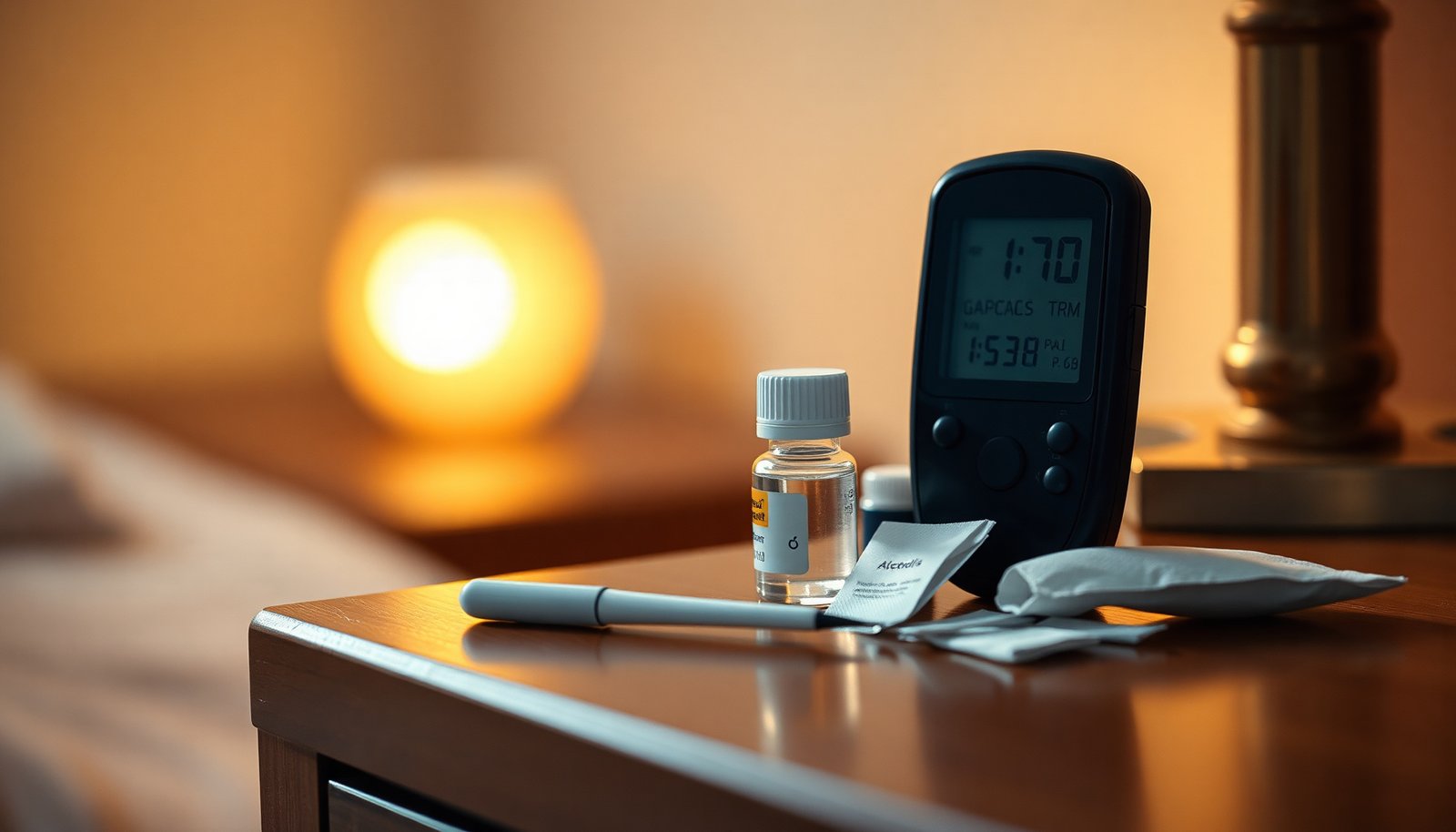

The best diabetic supplies for everyday home care are the ones that match your prescriptions and provide dependable readings with minimal hassle—starting with a glucose meter, matching test strips, and a lancing device you can use comfortably. Options are compared by reading accuracy, meter-strip compatibility, safety features, refill availability, and long-term cost. A kit built around a widely supported meter system is the standout because it minimizes delays and shortages.




The best diabetic supplies are the ones that match your diabetes type and your monitoring workflow, so you can check glucose reliably and replace items without delays. Focus first on monitoring tools (meter vs CGM), then buy only the compatible refills (strips/sensors/needles) that work with your specific devices, and finally add the “small essentials” (storage and sharps disposal) that prevent last-minute disruptions.
The best diabetic supplies are the ones that fit your diabetes type and how you check blood sugar—then you make sure refills and replacements are compatible and easy to get. You’ll learn what to prioritize first (monitoring tools), what must match (strips/sensors/needles), and which “easy to forget” items prevent delays when something runs out. If you’re setting up a home care routine, upgrading supplies, or switching devices (meter to CGM, pens to pump, etc.), this guide helps you build a practical kit without buying mismatched items.
Pick supplies that match your monitoring plan (meter or CGM)

The right diabetic supplies start with one decision: how you measure glucose every day—fingersticks with a meter or automated sensing with a CGM (continuous glucose monitor). Once you pick the monitoring plan, the rest of your supply list becomes mostly compatibility and refill timing.
– Decide whether you’re using fingerstick testing (glucose meter + strips) or a CGM (continuous glucose monitor).
– Confirm compatibility for every refill item (strips must match the meter; sensors must match the CGM model).
– Think about how often you’ll realistically test in daily life—your “best” option is the one you’ll use consistently.
In practice, “best” diabetic supplies aren’t universal—they’re operational. A meter-based routine can be simple and inexpensive, but it requires enough strips and enough lancets to match your testing frequency. A CGM can reduce friction for trend tracking, but it creates an ongoing supply schedule (sensor changes) and a backup need if the CGM is unavailable.
For context on why this planning matters, diabetes prevalence remains high: according to the CDC, about 37.3 million people in the United States had diabetes in 2022. That scale is exactly why supply continuity—having compatible refills on hand—becomes a real-world priority, not just a clinical detail.
Meter vs CGM: which monitoring supplies fit your day?
Below is a quick, decision-oriented comparison of diabetic supplies for monitoring. (This isn’t medical advice—use your clinician’s targets and device instructions.)
| Criteria | Glucose meter supplies | CGM supplies |
|---|---|---|
| Primary data | Single readings (point-in-time) | Ongoing trend data (continuous) |
| Core consumable | Test strips (meter-specific) | Sensors (CGM-model-specific) |
| Calibration needs | Often none (depends on device) | Usually none or minimal (depends on CGM) |
| Fast “confirm” when symptoms don’t match | Yes—quick fingerstick check | Sometimes; confirm when advised/required |
| Cost pattern | Ongoing strip usage | Sensor replacement schedule |
| Downtime risk | Usually low (strips are portable) | Higher if sensor fails early or is out of range |
| Learning curve | Technique matters (sample size, timing) | Placement/site care matters |
| Visibility of trends | Limited unless logging frequently | Strong trend view and alerts (where supported) |
| “Backup plan” requirement | Typically built-in (same-day strips) | Usually needed (meter + compatible strips) |
| Best for | People who can test at planned times | People who need trend context and alerts |
| Verdict (most often best for) | Consistent scheduled testing with a reliable strip supply | Trend-driven management with a sensor refill plan |
Glucose testing basics: strips, sensors, and lancets
Your diabetic supplies for testing should be chosen around three compatibility points: strips for your meter, sensors for your CGM, and lancets that you can use consistently without “skipping days.” When testing is uncomfortable or inconvenient, real-world consistency drops—even if the device is technically correct.
– For meters: choose the correct test strips for your meter model and keep a buffer for travel or busy weeks.
– For CGMs: plan around sensor change schedules and have a backup method for confirming lows/highs if your clinician advises it.
– Choose a lancing device + lancet type you can handle comfortably (needle size/gauge can affect pain and repeatability).
Meter supplies: strips and technique
Meter strips are the classic “must-match” diabetic supplies. The wrong strip type can lead to errors, invalid results, or wasted purchases. If you switch meters (even within the same brand family), you can’t assume strip compatibility—check the exact model or strip code listed by the manufacturer.
Also plan for the human factor: if you’re testing more than you expected (illness, travel, medication changes), you need extra strips and enough lancets in the same replenishment cycle. As you build diabetic supplies for the meter, make sure your “strip buffer” aligns with how quickly you can reorder through your pharmacy, insurance, or mail-order pharmacy.
CGM supplies: sensor schedules and confirmation routines
CGMs simplify monitoring, but diabetic supplies for CGMs still require scheduling. For example, according to manufacturer product information, sensor wear duration differs by system—Dexcom G7 is designed for up to 10 days (Dexcom, 2024) and FreeStyle Libre 3 is designed for up to 14 days (Abbott, 2024). If you don’t account for these change cycles, you can end up with gaps when you least want them.
CGM interpretation also matters. Hypoglycemia is commonly defined as glucose below 70 mg/dL (3.9 mmol/L), per widely used diabetes clinical definitions (American Diabetes Association (ADA), 2024). Your clinician may advise confirmatory fingerstick checks in certain situations (for example, symptoms that don’t match readings), so keep the backup diabetic supplies your plan calls for.
Lancets: comfort is a supply strategy
Lancing devices and lancets are frequently overlooked diabetic supplies, even though they strongly influence adherence. If you have to fight through pain, you may test less, and testing less can delay detection of patterns.
On first use, consider matching lancet depth/gauge to your skin sensitivity (the goal is enough sampling consistency without unnecessary discomfort). Then stock compatible lancets that match your lancing device—universal-looking lancets are not always interchangeable.
Insulin delivery supplies (pens, pumps, and syringes)
Your diabetic supplies for insulin delivery should match both your insulin form and your delivery device—because “close enough” compatibility is not safe. The best setup reduces interruptions, prevents cartridge/reservoir mismatch, and supports consistent injection or infusion site rotation.
– If you use insulin pens: match pen needles to your pen/insulin type and keep extras on hand.
– If you use a pump: make sure you stock the right infusion sets and reservoirs for your pump model.
– Keep backup delivery supplies if you rely on a device (for example, backup options if you run into pump/sensor downtime)—ask your care team what they recommend for your situation.
Pens: matching pen needles and having overflow
Pen needles are a compatibility-dependent category of diabetic supplies. Even when the insulin pen is correct, incorrect needle sizing or mismatch with the pen mechanism can create usability issues. Keep enough extra needles for at least the time it takes you to reorder, and store them in a way that prevents contamination and damage.
In 2026, many people also standardize on a “travel refill pouch” so they aren’t rebuilding supplies from scratch when they’re away from home. If you’ve ever had to stop your routine mid-day because the needle supply was missing, you already understand why this matters.
Pumps: infusion sets and reservoir planning
For pump users, diabetic supplies are device-specific in a different way: infusion sets, reservoirs/cartridges, and sometimes insertion tools must match the pump model. A common failure mode isn’t “running out” as much as running into a mismatch—ordering the wrong tubing set, choosing the wrong cannula type, or forgetting the required accessories.
Make your pump supply planning more robust by aligning your reorder timing with your expected change schedule and the realities of shipping. Also ask your care team for an explicit backup plan if your pump supplies or sensor data is interrupted. That plan is part of your diabetic supplies strategy, not an emergency add-on.
CGM Sensor Durations That Drive Diabetic Supply Reordering (2024)
| # | Monitoring system | Designed wear (days) | Manufacturer founded | Replacement burden vs 10-day baseline |
|---|---|---|---|---|
| 1 | Dexcom G6 ★★★★☆ | 10 | 1999 | +0.0% |
| 2 | Dexcom G7 ★★★★☆ | 10 | 1999 | +0.0% |
| 3 | FreeStyle Libre 2 ★★★★☆ | 14 | 1888 | +28.6% |
| 4 | FreeStyle Libre 3 ★★★★☆ | 14 | 1888 | +28.6% |
| 5 | Medtronic Guardian 3 ★★★☆☆ | 7 | 1949 | -42.9% |
| 6 | Medtronic Guardian 4 ★★★☆☆ | 7 | 1949 | -42.9% |
| 7 | Eversense E3 (implantable CGM) ★★★★★ | 90 | 2001 | +88.9% |
Prevention and comfort essentials (storage, skin care, sharps)
The best diabetic supplies include the prevention layer—storage, skin care, and safe disposal—because these items protect usability and reduce complication risk. When you manage these basics well, the “core” supplies (strips/sensors/insulin) last longer in practice.
– Use proper storage for insulin and supplies (heat, cold, and sunlight can shorten usability); follow your label directions.
– Include “small but critical” items like alcohol swabs, gauze, and barrier cream if recommended—these reduce irritation and messy cleanup.
– Have safe disposal ready: sharps container access is part of having a complete supply setup, not an afterthought.
Storage isn’t housekeeping—it’s a compatibility and safety issue
Insulin and many consumables have specific storage guidance. Heat, freezing, and sunlight can affect potency and performance, while improper storage of testing supplies can degrade usability. For 2026 home routines, the most practical approach is to follow the medication label exactly and store supplies in predictable environments (not in places that swing from hot to cold, like car trunks or near heat vents).
Skin care: reduce friction so you keep testing and injecting
Skin irritation and injection-site discomfort can slowly erode adherence to diabetic supplies. If your clinician or device manufacturer suggests barrier protection, include it. Many people find it easier to prevent irritation with a consistent routine than to treat it after it flares up.
Also prioritize cleaning technique. Using alcohol swabs correctly and rotating injection or infusion sites reduces the chances of localized issues that can derail daily care.
Sharps disposal: plan it before you need it
Sharps disposal is one of the easiest diabetic supplies to forget until you’re already dealing with used needles, lancets, or infusion-related waste. Keep a sharps container accessible in the same place you store your routine supplies. Make sure household members understand where it is and how you’re handling disposal per local regulations.
What can go wrong with diabetic supplies
Even well-chosen diabetic supplies can fail if compatibility, timing, or backup planning breaks down. The most common issues are preventable—if you review your kit like an operations checklist, not just a shopping list.
– Buying the wrong compatibility items (wrong strips, wrong sensors, wrong pen needles) can waste money and delay care.
– Missing an expiration date or using questionable test strips/supplies can lead to confusing readings—check packaging and storage conditions.
– Forgetting backup plans: if a sensor fails or supplies run out, you need a fast fallback method your clinician approves.
– Not accounting for skin/infection risk (especially with frequent testing/injections): clean technique and site rotation matter.
A key edge case is switching devices. If you transition in 2026 from a glucose meter to CGM (or from pens to a pump), old supplies might still be “technically diabetes-related,” but they often won’t serve your new monitoring delivery workflow. That mismatch is where delays happen—because the kit you have doesn’t match the system you’re using.
Another failure mode is reorder timing. Insurance authorization delays, mail-order backlogs, and travel can turn “I’ll reorder when I’m low” into “I’m out for days.” Your diabetic supplies plan should reflect real reorder time, not best-case delivery estimates.
Verdict: the best diabetic supply setup for most people
For most people, the “best diabetic supplies” are a compatible monitoring system (meter or CGM), the correct refills for that system, insulin delivery tools that match your method, and a small comfort/safety kit (swabs, storage basics, and sharps disposal). The main downside is that the “best” setup depends heavily on compatibility and your workflow—what works for one person may be frustrating or impractical for you.
Skip this “build-it” approach (or go more slowly) if you don’t yet have guidance from your clinician on targets, insulin plan, or how you should confirm readings—starting supplies without that plan can create confusion.
Scan-and-save checklist (plus quick FAQ)
| Supply category | What to double-check before you buy/stock up |
|---|---|
| Meter + strips (if used) | Strips match your exact meter model; test strip storage conditions |
| CGM supplies (if used) | Sensor model compatibility; backup plan for confirmed lows/highs |
| Lancets + lancing device | Lancet type comfort; you have enough spares for weeks of testing |
| Insulin delivery | Needles/pen parts match your insulin pen; pump parts match your pump model |
| Safety + comfort | Alcohol swabs, gauze, skin care items if recommended |
| Disposal | Sharps container on hand; disposal method you can actually follow |
| Storage | Insulin/supplies kept within label guidance (heat/cold/sun) |
Frequently Asked Questions
What are the best diabetic supplies to buy for everyday blood sugar management?
The best diabetic supplies for daily management typically include a reliable blood glucose meter (or continuous glucose monitor), compatible test strips or CGM sensors, a lancing device with lancets, and an alcohol wipe supply for clean testing. Many people also benefit from a logbook or a diabetes app, as well as glucose tablets or gel for fast hypoglycemia treatment. If you use insulin, insulin pen needles or syringes and a safe sharps disposal container are essential supplies.
How do I choose the best glucose meter and test strips for accuracy and convenience?
Start by checking meter accuracy reviews, user experience, and whether the test strips are easy to find and afford in your area. Make sure the meter is compatible with the exact test strip type listed by the manufacturer, since using the wrong strips can affect results. Consider features like larger display, minimal blood volume needs, and fast test times, especially if you’re frequently testing throughout the day.
Which continuous glucose monitor (CGM) supplies are best for reducing finger sticks?
The best CGM supplies usually include a CGM system with sensors, a transmitter (if required), and compatible adhesives or sensor patches for secure wear. When comparing CGMs, check sensor wear length, calibration requirements, app integration, and whether you can easily replace sensors without interruptions. If skin irritation is a concern, look for barrier wipes and hypoallergenic over-patches as part of your diabetic supply checklist.
Why do diabetic supplies like lancets, alcohol swabs, and sharps containers matter?
Using the right diabetic supplies helps you test safely, consistently, and accurately. Fresh lancets reduce discomfort, while alcohol swabs (or proper cleansing methods) support cleaner finger-stick sampling, especially when your hands aren’t freshly washed. A sharps disposal container is also crucial for safe disposal of lancets and needles to protect you and others at home.
Which insulin administration supplies should I stock to avoid running out?
For insulin users, the best diabetic supplies to keep on hand include insulin pens or vials, compatible pen needles or syringes, and alcohol swabs for hygiene. It’s also smart to stock extra supplies like insulin storage accessories (if needed), glucose tablets for hypoglycemia, and a backup plan for missed doses. Consider ordering supplies ahead of time based on your usage rate and checking insurance coverage, because test strips, sensors, and needles can be time-sensitive and costly.
📅 Last Updated: November 09, 2026 | Topic: best diabetic supplies | Content verified for accuracy and freshness.
References
- https://pubmed.ncbi.nlm.nih.gov/?term=glucose+meter+accuracy+test+strips+lancets
- Glucose meter
- Continuous glucose monitor
- Injector pen
- Insulin pump
- Diabetes
- https://www.mayoclinic.org/diseases-conditions/diabetes-care/expert-answers/blood-glucose-meter/faq-20057910
- https://scholar.google.com/scholar?q=best+glucose+meter+selection+test+strips+lancets+guidelines Google Scholar
- https://scholar.google.com/scholar?q=continuous+glucose+monitoring+CGM+supplies+accuracy+systematic+review Google Scholar
- https://scholar.google.com/scholar?q=insulin+pump+vs+injections+insulin+delivery+devices+review Google Scholar