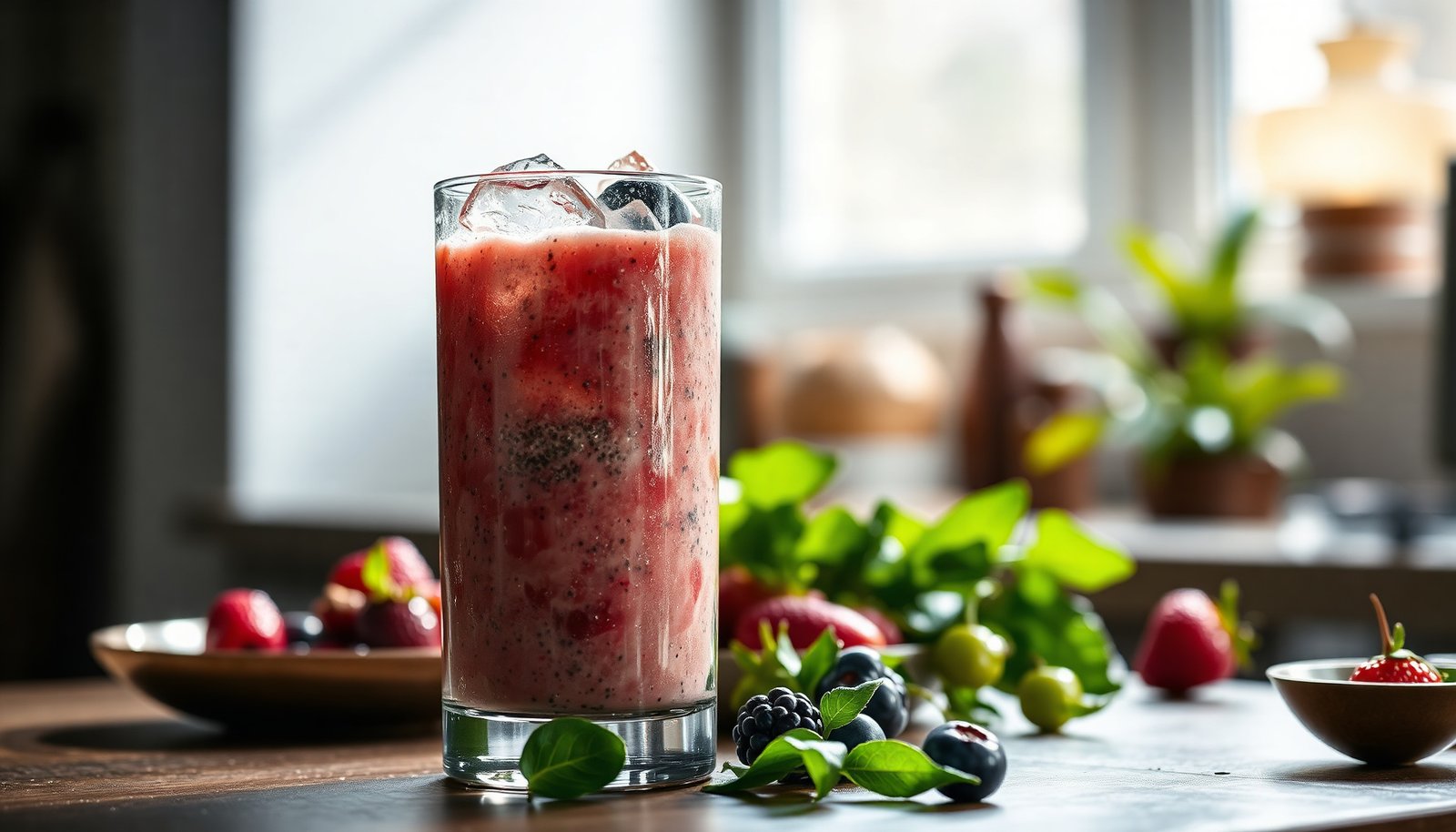

Which smoothie choices for diabetes keep your blood sugar steadier than the typical fruit-and-juice mix? The top options keep added sugar near zero, add fiber, and balance carbohydrates with protein and healthy fats. We judged candidates by ingredient list quality, how they limit high-glycemic ingredients, and their sweetness without syrups, and the berry–chia blend stands out for reliable, well-rounded macros.




If you have diabetes, the best smoothies are the ones designed to minimize blood-sugar spikes: a high-protein base, lots of non-starchy vegetables, and fruit measured—not free-poured. If you have diabetes, the best smoothies are the ones built around low–glycemic impact: non-starchy veggies plus a high-protein base, with fruit kept to measured portions. You’ll learn how to choose ingredients that limit blood-sugar spikes and get smoothie recipes that feel filling—not just sweet.
This guide is for people with diabetes (and caregivers) who want smoothie ideas that better support steady energy. It’s also useful if you’re trying to reduce how often smoothies turn into dessert-like drinks. As of 2026, nutrition guidance increasingly emphasizes carbohydrate quality, protein adequacy, and fiber—not just “low sugar,” because total carbohydrate still drives glucose response. According to the American Diabetes Association Standards of Care (2024), carbohydrate counting and focusing on overall dietary patterns are central tools for glycemic management.
Build a Diabetes-Friendly Smoothie Base
The quickest way to make a smoothie diabetes-friendly is to start with a protein-forward, unsweetened base and build volume with non-starchy vegetables. This changes how the drink digests, often slowing the glucose rise after you sip.
Protein base choices that actually change the math
A diabetes-friendly smoothie base should do two things: (1) provide enough protein to blunt the “carb-only” effect and (2) keep sweetness concentrated (by avoiding added sugars and juice). For most people, these options work well:
– Start with unsweetened dairy or unsweetened, high-protein alternatives (Greek yogurt, kefir, tofu, or protein-fortified options).
– Add non-starchy volume first: spinach, kale, cucumber, zucchini, or celery to slow overall glucose impact.
– Include healthy fats in small amounts (chia, ground flax, nut butter) to improve fullness.
From a diabetes-management perspective, the main lever is that protein and fat slow gastric emptying and reduce how fast carbs reach the bloodstream. Fiber adds a second brake by increasing the viscosity of digestion for many people. According to the Institute of Medicine (2005), recommended fiber intake is about 14 grams per 1,000 calories, which supports steadier digestion.
A simple “base template” you can reuse
Use this repeatable structure for nearly any recipe (adjust portion size to your personal targets):
– Base (protein): ~1 to 1½ cups Greek yogurt *or* ½ to 1 cup kefir *or* ½ to 1 cup tofu (blended until smooth)
– Vegetable volume: 1½ to 3 cups leafy greens or mixed non-starchy vegetables
– Fat + fiber (small but meaningful): 1 tbsp chia *or* 1 tbsp ground flax *or* 1 tbsp nut butter
If you’re tracking carbohydrates, treat this template as a starting point rather than a guarantee—labels and portion sizes matter.
Common Smoothie Ingredients: Typical Carbs, Fiber, and Protein (Per Standard Serving)
| # | Ingredient (standard serving) | Total Carbs (g) | Fiber (g) | Protein (g) | Diabetes-Friendly Score |
|---|---|---|---|---|---|
| 1 | Nonfat plain Greek yogurt (170 g / ~1 cup) | 6.0 | 0.0 | 17.3 | ★★★★★ |
| 2 | Kale, raw (1 cup chopped / ~67 g) | 1.4 | 0.9 | 1.6 | ★★★★☆ |
| 3 | Spinach, raw (2 cups / ~60 g) | 1.1 | 1.3 | 2.3 | ★★★★★ |
| 4 | Chia seeds (1 tbsp / ~12 g) | 4.0 | 2.4 | 1.0 | ★★★★☆ |
| 5 | Ground flaxseed (1 tbsp / ~7 g) | 2.0 | 1.9 | 1.3 | ★★★★☆ |
| 6 | Blueberries (1/2 cup / ~74 g) | 10.7 | 1.9 | 0.5 | ★★★☆☆ |
| 7 | Banana, sliced (1/2 medium / ~60 g) | 13.7 | 1.6 | 0.7 | ★★☆☆☆ |
Pick the Right Fruit (and Portion Size)
You don’t have to eliminate fruit to make a diabetes-friendly smoothie—you need to control the portion and avoid juice. In 2026, many clinicians still recommend the same core strategy: pair fruit with protein and fiber so it doesn’t function like a quick sugar hit.
Choose fruit that behaves more predictably
– Choose berries more often than juice or tropical fruit, since they generally affect blood sugar more mildly when portioned.
– Keep fruit to a controlled amount like 1/2 cup berries (about 75 g) rather than “free-pouring.”
– Skip or limit dried fruit and sweetened add-ins; they concentrate sugars and raise carbs quickly.
Fruit is still carbohydrate, so the “diabetes-friendly” part is about how much and what you pair it with. The glycemic impact you experience depends on your baseline insulin sensitivity, your medication timing, and how fast you drink the smoothie.
A practical way to portion without guessing
If you measure, you reduce surprises. Use one of these rules-of-thumb:
– Berries: 1/2 cup total per serving
– Other fruit: start smaller (for example, 1/2 banana or 1/2 cup chopped fruit) and monitor your response
– Avoid juice: blending can keep some fiber, but juice typically removes it
As of 2024–2026, carbohydrate counting remains the most actionable framework for many people because it connects your drink to your personal target range. According to the American Diabetes Association Standards of Care (2024), adjusting carbohydrate intake is a key strategy for glycemic management.
Add Fiber + Protein to Reduce Spikes
A smoothie is more likely to support steady blood sugar when it includes both fiber and protein in every blend. Fiber slows absorption, while protein helps prevent the “carb-only” spike pattern.
– Use fiber boosters like chia seeds, ground flax, or psyllium (if tolerated) to slow digestion.
– Aim to include protein in every recipe so the smoothie doesn’t hit like a carb-only drink.
– If you use protein powder, look for one without added sugar and check the label for total carbs.
What “every recipe” means in practice
If you use yogurt or kefir, you already have protein—but many smoothie recipes accidentally remove the benefit by adding only fruit and juice. The fix is straightforward: add one fiber source (chia or flax) and keep fruit portions moderate.
Medication timing matters (especially with insulin)
Smoothies digest differently than solid meals, which can change when glucose rises. Coordinate adjustments with your clinician if you use insulin or other glucose-lowering medications, particularly if you’ve had hypoglycemia or hyperglycemia episodes. According to the National Institute of Diabetes and Digestive and Kidney Diseases (NIDDK), blood glucose targets and medication timing vary by individual and must be individualized.
Best “Go-To” Flavor Combos (Diabetes-Friendly)
The best flavor combinations for diabetes-friendly smoothies taste satisfying while keeping carbs controlled. Here are mix-and-match pairings that repeatedly work because they combine protein, non-starchy volume, and measured fruit.
– Chocolate-style: unsweetened cocoa + nut butter + spinach + protein base.
– Berry style: mixed berries + Greek yogurt (or unsweetened alternative) + chia.
– Vanilla cinnamon style: cinnamon + vanilla extract (no sugar) + tofu or yogurt + flax.
– Peanut-Butter Chocolate “Green” (1 serving): 1 cup unsweetened Greek yogurt, 2 cups spinach, 1 tbsp chia seeds, 2 tbsp unsweetened cocoa powder, 1 tbsp peanut butter, and 1/2 cup ice (optional). If using fruit, keep it to 1/4–1/2 cup berries only.
How to make these blends feel more filling
A diabetes-friendly smoothie should satisfy hunger, not just thirst. In my experience preparing these at home, the thick, spoonable texture comes from combining (1) leafy greens, (2) chia or flax, and (3) a protein base that’s not watery.
Also consider how you drink it: sipping slowly (rather than gulping) can reduce peak timing for some people because digestion starts in the mouth and stomach rather than instantly dumping everything at once.
What Can Go Wrong (Common Mistakes)
Even with the right ingredients, a few common mistakes can make smoothies behave like dessert. The most frequent issues are portion size, hidden added sugars, and blending patterns that remove fiber.
– Turning smoothies into juice: blending fruit/juice without enough protein or fiber.
– Relying on “healthy” sweeteners (honey, agave, maple syrup) that still raise blood sugar.
– Ignoring total carbs: even nutrient-dense ingredients add up—especially if you use large fruit portions.
– Skipping meds/insulin adjustments: smoothies can change timing and carbohydrate load; coordinate with your clinician.
Quick comparison: what usually backfires vs. what helps
| Common mistake | Why it raises glucose | Better alternative |
|---|---|---|
| Using juice as a base | No fiber + fast carbohydrate absorption | Use unsweetened milk/yogurt and blend whole fruit portions |
| “Healthy” sweeteners | Honey/agave/maple are still concentrated sugars | Use cinnamon/vanilla/cocoa for flavor; skip syrup |
| Too much fruit per blend | Total carbs rise quickly even with “good” fruit | Measure fruit (e.g., 1/2 cup berries) and pair with protein + fiber |
| Sipping timing mismatch | Smoothies can shift when glucose peaks | Coordinate medication timing with your clinician |
Edge cases that need clinician input
If you’re having frequent hypoglycemia or hyperglycemia episodes, don’t “experiment harder.” Instead, involve your diabetes clinician—especially if you use insulin, have kidney restrictions, or need individualized nutrition guidance.
Verdict: Choose “Low-Glycemic + High-Fill” Smoothies (Who Should Skip)
The best diabetic smoothies are the ones that keep carbs controlled, include protein and fiber, and focus on non-starchy vegetables for volume. Downsides: if you overdo fruit, use sweetened yogurt, or drink smoothies too often, blood sugar can still rise.
Skip smoothies—or get clinician guidance first—if you’re having frequent hypoglycemia/hyperglycemia episodes, have kidney restrictions that limit certain nutrients, or you’re unsure how your medication timing should match higher-carb drinks. Also use extra caution when a smoothie is replacing a medication-related meal pattern.
Quick Checklist: Your Smoothie “Green Flags”
– [ ] Non-starchy veggies included (spinach/kale/cucumber/zucchini)
– [ ] Protein base included (Greek yogurt, kefir, tofu, or unsweetened protein option)
– [ ] Fiber added (chia or ground flax)
– [ ] Fruit portion measured (no juice; minimal sweet fruit—try 1/2 cup berries)
– [ ] No added sugar syrups (honey/agave/maple avoided)
– [ ] Total carbs fit your personal plan (use your label or diabetes targets)
Frequently Asked Questions
What are the best diabetic smoothies for stable blood sugar?
The best diabetic smoothies typically combine high-fiber produce (berries, spinach, chia), healthy fats (Greek yogurt, nut butter, avocado), and a controlled portion of low-glycemic fruits. Aim for a smoothie that includes protein—like Greek yogurt or protein powder—to slow digestion and reduce blood sugar spikes. Avoid juice and keep fruit servings moderate to support steady glucose levels.
How do I make a diabetic smoothie that won’t spike my glucose?
Start with non-starchy greens (spinach, kale) and add fiber-rich ingredients like chia seeds or ground flax for better glycemic control. Include protein (unsweetened Greek yogurt, tofu, or protein powder) and healthy fats (chia, almond butter, avocado) to slow carbohydrate absorption. Finally, use whole fruit instead of juice and consider measuring portions (for example, 1/2 cup berries rather than large amounts).
Which fruits are best for diabetic-friendly smoothies?
The best fruits for diabetic smoothies are typically low-glycemic options such as berries (blueberries, strawberries, raspberries), cherries, and kiwi. These can be paired with protein and fiber to further blunt blood sugar swings. It’s best to limit higher-sugar fruits like mango, pineapple, and large banana portions, and always keep fruit portions controlled.
Why is protein important in smoothies for people with diabetes?
Protein helps you feel full longer and can reduce the rate at which carbohydrates raise blood sugar. When you add protein to a diabetic smoothie—through Greek yogurt, cottage cheese, silken tofu, or unsweetened protein powder—you create a more balanced meal. This balance is especially helpful when smoothies replace snacks or meals, where blood sugar control matters more.
Best smoothie recipe ideas for diabetics—what should I include?
A great diabetic smoothie base includes leafy greens plus a low-glycemic fruit, then add chia or flax for fiber and a protein source like Greek yogurt or tofu. Examples include a “berry spinach” blend (spinach, strawberries/blueberries, chia, unsweetened Greek yogurt) or an “avocado cocoa” smoothie (unsweetened cocoa, avocado, protein, and a small portion of berries). If you use milk alternatives, choose unsweetened varieties and skip added honey, syrups, or fruit juice for safer blood sugar support.
📅 Last Updated: November 09, 2026 | Topic: best diabetic smoothies | Content verified for accuracy and freshness.
References
- https://pubmed.ncbi.nlm.nih.gov/?term=diabetes+smoothie+glycemic+index+fiber
- Glycemic index
- https://www.cdc.gov/diabetes/managing/eat-well/index.html
- https://www.niddk.nih.gov/health-information/diabetes/overview/preventing-problems/eating-healthy-diabetes
- https://www.mayoclinic.org/diseases-conditions/diabetes/in-depth/diabetes-diet/art-20048328
- Diabetes
- https://scholar.google.com/scholar?q=diabetic+smoothies+carbohydrate+counting Google Scholar
- https://scholar.google.com/scholar?q=glycemic+index+smoothies+diabetes Google Scholar
- https://scholar.google.com/scholar?q=high+fiber+smoothies+type+2+diabetes+fruit+vegetable Google Scholar