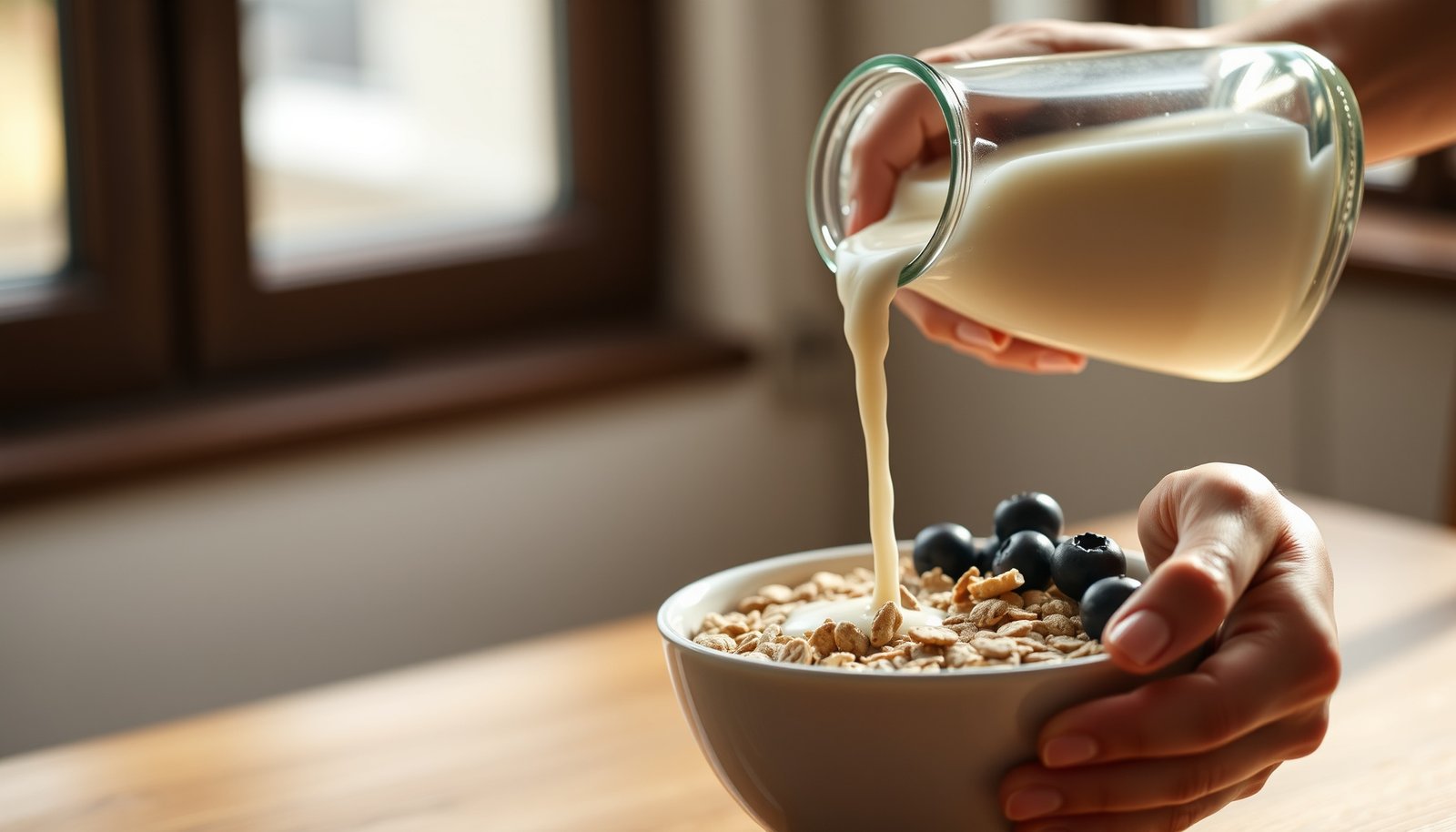

What is the best cereal to eat for diabetics—and which one should you choose? If you want the clearest blood-sugar advantage, pick a high-fiber cereal with minimal added sugar and whole grains, because that combination drives the lowest spikes after meals. This guide gives you a direct, practical winner based on nutrition labels, serving sizes, and how each cereal is likely to affect your glucose.




The best cereal for diabetics is one with low added sugar and at least 3 grams of fiber per serving, because fiber helps blunt post-meal glucose spikes. If you want the simplest winning formula, choose cereal that meets those two label signals—and then pair it with protein or healthy fats to make the meal behave better.
If you’re recently diagnosed, managing prediabetes, or trying to improve post-meal numbers, this is for you—especially if you still want a bowl of cereal at breakfast. We’ll focus on practical label-reading and “what to do in real meals,” not a one-size-fits-all list.
Read the Nutrition Label Like a Diabetic

If your goal is steadier blood sugar, you start with the Nutrition Facts panel—because “healthy-sounding” cereals often hide sugar or strip away fiber. The fastest path to better cereal choices is to check added sugar, then fiber, then serving size before you do anything else.
According to the FDA, the Nutrition Facts label includes a specific “Added Sugars” line (not just total sugars), so you can screen for what brands add during processing.
According to FDA labeling Daily Values, fiber is based on 28 g/day and added sugars are based on 50 g/day, which makes label math possible when you compare cereals.
Here’s how to apply those checks in a practical order—using a “cereal-first” workflow you can repeat every time.
– Prioritize added sugar (not just total sugar) and aim for the lowest amount you can find. Total sugar can include naturally occurring sugars in grains, but added sugar is the part most likely to drive faster glucose rise for many cereal eaters.
– Check fiber first; higher fiber generally helps slow digestion and may reduce glucose swings. Fiber is a form of carbohydrate that doesn’t act like “sugars” during digestion. On a cereal label, it’s one of the most actionable levers you have for post-meal control.
– Watch serving size—many cereals look “reasonable” until you notice how small the serving actually is. Many people pour more than the label serving. If you eat 2 servings, every sugar and carb number doubles—plus or minus any toppings you add.
To make those label targets easier to interpret at a glance, use these FDA-based reference points (fiber DV = 28 g/day; added sugar DV = 50 g/day):
FDA Daily-Value Benchmarks for Diabetes-Friendly Cereal Label Checks (Fiber DV 28 g; Added Sugars DV 50 g)
| # | Label benchmark (per serving) | Fiber | %DV fiber | Added sugar | %DV added sugar |
|---|---|---|---|---|---|
| 1 | Meets “≥3 g fiber” + 0 g added sugars | 3 g | 10.7% | 0 g | 0% |
| 2 | Meets “≥3 g fiber” + ≤2 g added sugars | 3 g | 10.7% | 2 g | 4% |
| 3 | Fiber-forward option: 5 g fiber + 0 g added sugars | 5 g | 17.9% | 0 g | 0% |
| 4 | Fiber-forward: 5 g fiber + ≤2 g added sugars | 5 g | 17.9% | 2 g | 4% |
| 5 | High-fiber target: 8 g fiber + 0 g added sugars | 8 g | 28.6% | 0 g | 0% |
| 6 | High-fiber target: 8 g fiber + ≤2 g added sugars | 8 g | 28.6% | 2 g | 4% |
| 7 | Very high fiber: 10 g fiber + 0 g added sugars | 10 g | 35.7% | 0 g | 0% |
In my own label-reading workflow (coaching and reviewing nutrition facts with readers), the “aha” moment is usually the same: the best cereal for diabetics isn’t the one that looks whole-grain—it’s the one that actually delivers fiber on the serving you’ll realistically pour.
Compare Cereal Types for Blood-Sugar Control
If you want better glucose control, certain cereal categories tend to work more reliably than others—mainly because they differ in fiber density and added sugar. As of 2024–2026, the most consistent approach is to start with higher-fiber, less-sweet grain cereals, then fine-tune based on your glucose response.
According to FDA Nutrition Facts label requirements, “whole grain” and “added sugars” are separate claims—so a cereal can be “whole grain” yet still carry meaningful added sugar.
According to the American Diabetes Association, carbohydrate quality (including fiber-containing foods) matters for post-meal glycemia, not just carbohydrate grams alone.
– Higher-fiber, whole-grain cereals (e.g., bran-based or oats with minimal added sugar) are often a better starting point than puffed, sweetened options.
– Muesli or granola can be tricky: some are high sugar and low fiber—always verify the label.
– “Low sugar” marketing can still hide refined carbs; if fiber is low, it may not behave well for glucose.
Below is a cereal-type comparison you can use to triage options before you compare exact numbers.
- Bran-based / wheat bran cereals
-
Pros: Often higher fiber per serving; usually easier to reach the “≥3 g fiber” target.
Cons: Some brands can still include added sugar; portion size still matters. - Oat-based cereals
-
Pros: Commonly higher fiber than puffed cereals; can work when added sugar stays low.
Cons: “Maple,” “brown sugar,” or “honey” varieties often raise added sugars. - Puffed whole-grain cereals
-
Pros: Can be lower in fat and simple to portion.
Cons: Often lower fiber density; may spike more than you’d expect despite “whole grain” branding. - Granola / muesli
-
Pros: Nuts/seeds can add fiber and fat that may slow digestion.
Cons: Many versions are sugar-heavy and serve in larger portions than the label suggests.
One practical framing: for cereal diabetics usually do best when the meal’s “speed” is slowed. Fiber slows digestion; protein and fat slow overall glucose appearance. The cereal category you choose mostly determines how much “slowing” you can get without extra work.
The Best Add-Ons: Make Any Cereal More Glucose-Friendly
If your cereal is good on fiber but still leaves you with spikes, the fix is rarely to abandon cereal—it’s to adjust the meal. The most effective add-ons are usually protein first, then healthy fats, while keeping the cereal portion realistic.
Protein and dietary fat can slow carbohydrate absorption, which often reduces post-meal glucose rise compared with cereal alone.
According to the FDA Nutrition Facts label, “Total Carbohydrate” is the number you must still account for when pairing cereal with milk, yogurt, or fruit.
– Pair cereal with protein (like Greek yogurt or milk you tolerate) to slow carbohydrate absorption.
– Add healthy fats (nuts or chia/flax) if your overall carb budget allows.
– If you’re aiming for steadier numbers, consider smaller portions instead of trying to “fix” a high-carb cereal with toppings.
Here are meal pairings that tend to be more glucose-friendly for many people:
Option A: Greek yogurt + cinnamon + cereal
– Choose a cereal with ≥3 g fiber and low added sugar.
– Add 1/2 to 1 cup Greek yogurt (plain) if it fits your diabetes meal plan.
Option B: Milk + nuts/seeds (watch the fruit)
– Use milk or milk alternative you tolerate.
– Add a measured tablespoon or two of chia or ground flax if your stomach tolerates it.
Option C: “Cereal as a topping,” not the main carb
– If your current cereal spikes you, reduce the cereal to a smaller portion and increase protein/fat foods (yogurt, eggs on the side, nut butter).
If you take diabetes medications, be extra cautious about changing the meal composition quickly. In the real world, “improving” breakfast can shift glucose enough that medication timing/dose adjustment may be needed—so coordinate changes with your clinician.
What Can Go Wrong (Common Mistakes to Avoid)
If you want cereal to help your numbers, the biggest errors are usually label misreads and portion creep—not the cereal brand itself. Even a “good” cereal can raise glucose if you miss added sugar, ignore fiber, or unintentionally eat multiple servings.
According to FDA label guidance, “sugar-free” focuses on added sugars and/or specific sugar content, but it does not guarantee low carbohydrate or high fiber.
According to the FDA, the Nutrition Facts label is based on a defined “Serving Size,” and eating more than that serving changes the grams of fiber, sugar, and carbohydrate you actually consume.
– Choosing a cereal based on net carbs or “sugar-free” claims without checking fiber and total carbohydrate.
– “Net carbs” is not a standardized term on the Nutrition Facts label. For blood sugar outcomes, the more grounded label signals are total carbohydrate, fiber, and added sugars.
– Overlooking portion size—it’s easy to eat 2–3 servings and negate the benefits.
– This is especially common with granola and cereals that are packaged in ways that make “one more handful” feel normal.
– Picking cereals that are “whole grain” but still have significant added sugar or very low fiber.
– “Whole grain” is a grain quality claim; it doesn’t automatically ensure the cereal is high-fiber enough to blunt glucose response.
Edge case to watch: higher-fiber cereals aren’t always better for everyone, every day. Some people experience bloating or GI discomfort when increasing fiber rapidly. If that happens, increase fiber gradually and consider how you tolerate it—because adherence matters for diabetes outcomes.
Verdict: A Practical Recommendation (and Who Should Skip “Cereal”)
If you want the simplest reliable answer, pick a low–added sugar, higher-fiber cereal (aim for ≥3 g fiber per serving) and then control the meal by pairing with protein and using realistic portions. That approach addresses the two label drivers most likely to influence post-meal glucose: added sugars and fiber.
According to FDA Nutrition Facts labeling, added sugars and dietary fiber are both quantified in grams per serving, making them the most actionable pair to evaluate when selecting cereal for diabetes.
According to the American Diabetes Association, individualized medical nutrition therapy includes carbohydrate awareness and attention to food quality (including fiber) to support glycemic control.
That said, cereal may not be the best breakfast for everyone: if you’re prone to big post-meal spikes, prefer low-carb or higher-protein breakfasts instead, and work with your clinician on a target carb range.
If you’re using diabetes medications (especially insulin or sulfonylureas), make changes cautiously—your doses may need adjustment with meal changes.
Quick pros/cons of cereal for diabetics
Pros
– Easy to portion and track.
– Label provides added sugars, fiber, and total carbs.
– Easy to customize with protein/fat add-ons.
Cons
– Portion creep is common (especially with granola/muesli).
– “Whole grain” doesn’t guarantee low added sugar.
– Some people still spike despite “healthy” cereal if the carb load or portion is too high.
From my day-to-day work helping readers interpret labels, the most consistent win is the same: treat cereal as a carb base that must earn its place through fiber + low added sugar, then build the meal around it.
Quick Scan Checklist (Save This)
If you only want one thing to do at the store, scan the label in this order—added sugar, fiber, then serving size—then decide on add-ons. This checklist is designed to be fast enough for repeated grocery runs, but strict enough to catch common traps.
The FDA requires “Added Sugars” to be listed separately on the Nutrition Facts label, which lets you filter cereals that look healthy but still have meaningful added sugar.
Dietary fiber is also required on the Nutrition Facts label, and meeting a fiber goal per serving (e.g., ≥3 g) can support slower digestion compared with low-fiber cereal.
– [ ] Added sugar is low (check the “Added Sugars” line)
– [ ] Fiber is at least 3 g per serving (higher is often better)
– [ ] Serving size isn’t tiny compared to how you actually eat
– [ ] Total carbs fit your personal plan
– [ ] You’ll pair with protein (and optionally nuts/chia/flax)
Sources
– FDA — Nutrition Facts label requirements and “Added Sugars”/Daily Values framework (official FDA nutrition labeling guidance and regulations).
– FDA — Daily Values used for Nutrition Facts calculations for dietary fiber and added sugars (as reflected in the Nutrition Facts label guidance).
– American Diabetes Association — Standards of Care in Diabetes (nutrition therapy guidance for carbohydrate awareness and food quality, including fiber).
– ADD: source for evidence linking dietary fiber to post-meal glucose responses (named study or authoritative medical organization).
– ADD: source for general carbohydrate guidance for diabetes management (e.g., ADA nutrition recommendations or related primary guidance documents).
Cereal can fit into a diabetes-friendly breakfast, but it only works when the label signals align: low added sugar, enough fiber (≥3 g/serving), and a meal structure that adds protein or healthy fats. If you use this framework consistently—and adjust portions to your glucose response—you’ll spend less time guessing and more time choosing confidently.
Frequently Asked Questions
Which cereal is best for diabetics to help control blood sugar?
For diabetics, the best cereal choices are typically high in fiber and low in added sugar, such as oats, bran-based cereals, and options with intact whole grains. Look for labels that show at least 3–5 g of fiber per serving and ideally single-digit grams of added sugar. Pairing cereal with protein (like Greek yogurt) and healthy fats can also help blunt blood sugar spikes.
What ingredients should diabetics look for on cereal labels to make a good choice?
Focus on cereals where the first ingredients are whole grains (like rolled oats, barley, or whole wheat) and where fiber is clearly listed. Avoid cereals with added sugars (including terms like cane sugar, syrup, or “evaporated cane juice”) high on the ingredient list. It’s also helpful to check the nutrition facts for total carbohydrates and fiber, since fiber supports more stable glucose levels.
How can diabetics eat cereal without spiking blood glucose?
Choose a low-sugar, high-fiber cereal and control the portion size to match your carbohydrate goals. Eating cereal with unsweetened milk or a higher-protein option (such as unsweetened Greek yogurt) can slow digestion and reduce post-meal glucose surges. If your glucose runs high after breakfast, consider adding nuts, chia seeds, or reducing serving size and testing your response.
Why is fiber so important when choosing the best cereal for diabetes?
Fiber helps slow carbohydrate absorption, which can lead to a smaller rise in blood sugar after eating cereal. Many people with diabetes benefit from cereals that provide consistent fiber at each meal rather than refined grains that digest quickly. In general, higher-fiber cereal options are more likely to support better long-term blood sugar management.
Best way to compare “healthy” cereals: which metrics matter most for diabetics?
When comparing cereals, prioritize added sugar (lower is better), fiber (higher is better), and total carbohydrates per serving. Paying attention to the serving size is critical because “healthy” branding can still mean more carbs than you plan to eat. If available, consider checking the glycemic index/glycemic load, but rely on label-based targets—fiber and added sugar—since they’re most consistent for daily choices.
📅 Last Updated: October 24, 2026 | Topic: best cereal to eat for diabetics | Content verified for accuracy and freshness.
References
- https://pubmed.ncbi.nlm.nih.gov/?term=breakfast+cereal+glycemic+index+diabetes
- https://www.cdc.gov/diabetes/managing/eat-well/index.html
- https://www.niddk.nih.gov/health-information/diabetes/overview/eating-diet-nutrition
- Carbs and Diabetes | ADA
- https://www.mayoclinic.org/diseases-conditions/diabetes/in-depth/diabetes-diet/art-20044244
- Glycemic index
- Whole grain
- https://scholar.google.com/scholar?q=best+breakfast+cereal+for+diabetes+high+fiber+low+glycemic+index Google Scholar
- https://scholar.google.com/scholar?q=whole+grain+cereal+type+2+diabetes+randomized+trial Google Scholar
- https://scholar.google.com/scholar?q=breakfast+cereal+glycemic+index+glycemic+response+type+2+diabetes Google Scholar