
Looking for the best carbohydrate foods for diabetics? Here’s the clear winner: fiber-rich carbs—like beans, lentils, nonstarchy vegetables, and intact whole grains—that tend to lower post-meal glucose spikes. You’ll also learn exactly how to choose portions and carb types so your blood sugar stays steadier, not higher.




For most people with diabetes, the best carbohydrate foods are the ones that are high in fiber, minimally processed, and portion-controlled, because they tend to produce smaller, slower rises in blood sugar. Pair those carbs with protein and/or healthy fats to blunt glucose spikes, and you’ll get the benefits of carbs without the usual roller-coaster.
If you have diabetes (type 1, type 2, or gestational) and you’re trying to manage blood sugar without cutting carbs completely, this is for you. Use this as a food-selection guide alongside your clinician’s plan and any carb-counting targets you’ve been given.
Best carbohydrate foods for diabetics (start here)

The best carbohydrate foods for diabetics start with choices that deliver fiber and micronutrients while avoiding rapid digestion—so your body has an easier time regulating glucose. In practice, the most diabetes-friendly carb sources are non-starchy vegetables, beans/lentils, whole grains, berries, and plain (unsweetened) dairy.
“Dietary fiber slows carbohydrate digestion and absorption, which can reduce post-meal glucose excursions.” (American Diabetes Association Standards of Care in Diabetes, 2024)
“Adequate intake goals for fiber are 38 g/day for adult men and 25 g/day for adult women.” (Institute of Medicine / National Academies, 2005)
Non-starchy vegetables
Non-starchy vegetables (leafy greens, broccoli, peppers, zucchini) are often the most “forgiving” carbs because they provide volume, fiber, and nutrients with relatively fewer glucose-raising carbohydrates per calorie. They also make it easier to build meals that feel satisfying without overshooting carb targets—an advantage that matters for diabetics who are trying to keep portions consistent.
Beans and lentils
Beans and lentils (chickpeas, black beans, lentil soup) are a cornerstone of smart carb choices. Their combination of soluble + insoluble fiber tends to slow digestion, and their protein adds another layer of glucose-smoothing. If you’re carb-counting, beans often “go further” than refined starches because they’re filling and nutrient-dense while still contributing measurable carbohydrates you can plan for.
Whole, minimally processed grains
Whole grains (oats, barley, quinoa, brown rice) are generally preferred over highly refined grain products because they keep more of the grain’s structure—especially bran and fiber. That said, “whole grain” doesn’t automatically mean “no impact.” For diabetics, the dose (grams of carbohydrate) and the food pairings are still the deciding factors.
Berries and unsweetened fruit (with portion logic)
Berries and unsweetened fruit can work well, but they must be portioned and ideally paired thoughtfully. Fruit adds natural sugars plus fiber; the fiber helps, but the carbs still count—especially if fruit replaces more protein-rich parts of the meal.
Plain dairy (unsweetened)
Plain yogurt or milk (unsweetened) often fits more easily than sweetened dairy because added sugars are a common source of rapid spikes. Yogurt also provides protein, which can further reduce the speed of glucose rise for many people managing diabetes.
Fiber & Carbs in Common Smart Carb Choices (USDA FoodData Central, selected servings)
| # | Food (smart carb) | Serving | Total carbs | Dietary fiber | Diabetes-friendly fiber rating |
|---|---|---|---|---|---|
| 1 | Cooked lentils | 1 cup | 39.9 g | 15.6 g | ★★★★★ |
| 2 | Cooked black beans | 1 cup | 40.8 g | 15.0 g | ★★★★★ |
| 3 | Cooked chickpeas | 1 cup | 45.1 g | 12.5 g | ★★★★☆ |
| 4 | Cooked quinoa | 1 cup | 39.4 g | 5.2 g | ★★★☆☆ |
| 5 | Rolled oats (dry) | 1/2 cup dry | 27.4 g | 4.0 g | ★★★☆☆ |
| 6 | Blueberries | 1 cup | 21.4 g | 3.6 g | ★★☆☆☆ |
| 7 | Plain nonfat Greek yogurt | 1 cup | 9.8 g | 0.0 g | ★☆☆☆☆ |
How to choose “safer” carbs (without obsessing)
The easiest way to choose safer carbs is to use fiber, processing level, and portion size as your decision triad—then adjust based on your personal glucose response. This keeps smart carb choices practical for diabetics, rather than turning every meal into a math exercise.
“Carbohydrate counting and insulin-to-carbohydrate ratios are commonly used tools to match insulin to carbohydrate intake in diabetes management.” (American Diabetes Association Standards of Care in Diabetes, 2024)
“A1C reflects average blood glucose over roughly the preceding 2–3 months.” (American Diabetes Association Standards of Care in Diabetes, 2024)
“Fiber intake targets for adults are anchored at 38 g/day (men) and 25 g/day (women).” (Institute of Medicine / National Academies, 2005)
Look for fiber first (and not just “high fiber” marketing)
Fiber is one of the most consistent levers diabetics can pull. More fiber generally means carbs digest more slowly, which can reduce the chance of sharp glucose rises after eating. In real life, we see people focus on “total carbs” while ignoring fiber—yet fiber is a major reason some carb sources behave differently even when their carb counts look similar on a label.
Prefer minimally processed foods
Minimally processed carbs (whole grains, legumes, intact fruits, vegetables) tend to keep more structure and fiber. Highly processed grain products often break down faster and can behave more like refined starch—especially when paired with added sugars or high-salt snack formats.
Match carbs to your routine (context is glucose control)
Even the best carbohydrate foods for diabetics can spike blood sugar if portion sizes overshoot your personal targets. For many people, the bigger difference comes from consistency: eating planned portions at predictable times and pairing foods the way your body expects.
Pair carbs with protein or healthy fats
Protein and healthy fats can blunt the speed of glucose absorption by slowing gastric emptying and affecting post-meal metabolic signals. Examples include eggs with vegetables, chicken or tofu with quinoa, nuts with berries, or olive oil on a bean-based salad.
Fiber-forward vs refined-carb: quick comparison
| Factor | Fiber-forward smart carbs | Refined carbs & sugary forms |
|---|---|---|
| Typical digestion speed | Often slower due to intact structure and fiber | Often faster due to refinement and concentrated starch |
| Post-meal glucose spikes | More likely to be moderated when portions are planned | More likely when eaten alone or in large portions |
| Meal satiety | Usually higher (beans, oats, vegetables) | Can be lower, increasing “second helping” risk |
| Common hidden issue | Portion creep still happens (beans + rice mix) | Added sugars in “whole grain” snacks/cereals |
Practical ways to use these carbs in real meals
The fastest path to better blood sugar with diabetes is not only choosing the right carbohydrate foods—it’s arranging them into a meal pattern your body can handle. Think “carb anchor + fiber + protein/fat,” then fine-tune portions to your personal targets.
“Plate-based meal planning and carbohydrate counting are both recognized approaches in diabetes nutrition therapy.” (American Diabetes Association Standards of Care in Diabetes, 2024)
“Adding protein and healthy fats to carbohydrate-containing meals can reduce the rate of glucose appearance for many people.” (American Diabetes Association Standards of Care in Diabetes, 2024)
Build your plate with a “carb anchor”
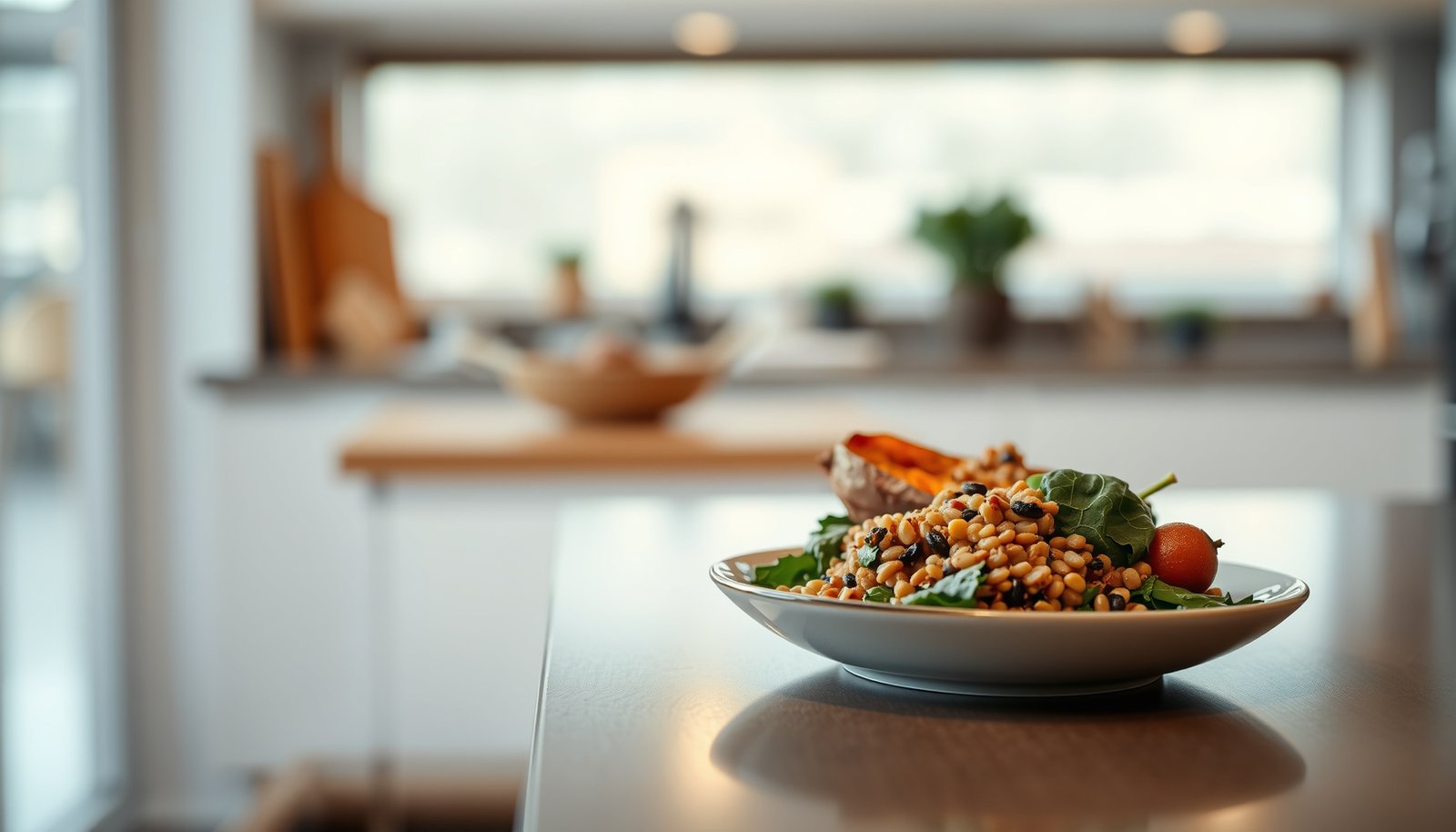
Use one planned carb source—beans, whole grains, or a measured portion of fruit—and build around it with non-starchy vegetables and protein. For many diabetics, this makes portion control easier than trying to “eat healthy” while freehanding carbs.
A common pattern:
– Half plate: non-starchy vegetables
– Quarter plate: protein
– Quarter plate: carb anchor (beans, quinoa, brown rice, or fruit)
Swap refined carbs for whole-food carbs
If you normally rely on white bread or pasta, replacing them with whole-grain versions can help—but label-checking matters. Some products are “whole” but still contain added sugar and refined ingredients. When I guide readers through this step, I repeatedly see the same issue: the label looks healthier, but the grams of carbohydrate still add up fast.
Use “planned treats” rather than eating sweets on an empty stomach
If you want something sweeter, choose a smaller portion and combine it with a meal rather than eating it alone. This approach doesn’t eliminate carbs; it changes the metabolic context so diabetics often see less dramatic post-meal glucose spikes.
Try “starchy carbs last” (as a practical pacing strategy)
Starting with vegetables and protein, then saving the carb portion, can help some people eat less overall and may reduce the timing peak. This isn’t a universal rule, but it’s a low-risk strategy aligned with the idea that meal composition affects glucose dynamics.
Foods to limit (common high-spike carb sources)
The biggest “avoid or minimize” category for diabetics is carbs that deliver fast glucose absorption—especially from added sugars and refined starches. You don’t necessarily need total carb elimination, but you should be careful with foods that reliably raise blood sugar quickly.
“Sugary drinks and other added sugars can cause rapid increases in blood glucose.” (American Diabetes Association Standards of Care in Diabetes, 2024)
“Refined grains and foods made with white flour often digest faster than whole, minimally processed grains.” (American Diabetes Association Standards of Care in Diabetes, 2024)
Sugary drinks and sweetened beverages
Juice, soda, sweet tea, and many sports drinks can raise glucose quickly because they deliver carbohydrates with limited fiber. Even when the “carb count” looks manageable, liquid carbs often act faster than carbs from solid, fiber-containing meals—one of the most common issues for diabetics aiming for stable readings.
Refined grains and white flour products
Pastries, white bread, many crackers, and snack bars often digest faster than whole grains. Their convenience can also encourage larger portions than intended, especially when you’re eating them “between meals” instead of as planned components.
Candy and desserts
Desserts can be especially problematic because they often combine sugar and refined flour—two factors that tend to amplify glucose excursions. Counting carbs may help, but the added sugars can still push glucose higher, faster, or both depending on the meal context.
“Low-fat” but highly sweetened foods
Some low-fat products trade fat for sugar. If you’re choosing these while managing diabetes, treat labels as essential—not optional—and pay attention to both carbohydrate and added sugars.
What can go wrong (and when advice doesn’t fit)
The most common failures in smart carb choices happen when diabetics assume “healthy carbs” are always spike-proof. The reality: response varies by dose, timing, meal composition, medications, and individual metabolism.
“Portion size remains a key determinant of post-meal glucose, even for nutrient-dense carbohydrate foods.” (American Diabetes Association Standards of Care in Diabetes, 2024)
“Diabetes management requires individualization; stress, illness, activity, and medication timing can alter glucose patterns.” (American Diabetes Association Standards of Care in Diabetes, 2024)
Portion size beats “good vs bad” labels
Two healthy carb foods can affect you differently depending on how much you eat and what else is on your plate. Beans may be “better,” but large portions all at once can still overshoot your personal targets.
Diabetes varies—so does response
Stress, sleep, illness, activity level, and medication timing (especially insulin or sulfonylureas) can change outcomes. This is why the best carbohydrate foods for diabetics are ultimately the foods that you can consistently portion and pair—based on your own glucose feedback.
Carb counting mistakes happen in the details
Sauces, gravies, restaurant meals, and “small additions” (like dessert toppings or sweetened dressings) are frequent sources of mismatch between your estimate and reality. If your numbers don’t match expectations, it’s often not the carb category—it’s the hidden carb quantity.
Glycemic index (GI) isn’t a full picture
GI can be useful, but it doesn’t capture real-life serving size, cooking, food combinations, or individual physiology. Your glucose response in your real meal is what matters most for diabetics trying to manage day-to-day outcomes.
Not every “whole grain” product is equal
Some “healthy” branded whole-grain breads and cereals still contain added sugars. Check the label for total carbs and added sugars—not just the word “whole.”
Verdict / tip + quick scan checklist
For most diabetics, the best approach is to prioritize carbohydrate foods that are high in fiber, minimally processed, and portion-controlled, then pair them with protein and/or healthy fats. Downsides: even healthy carbs can raise blood sugar if portions are too large, and some people need more structured carb targets based on medication type and glucose patterns.
“Medical nutrition therapy should be individualized and can include carbohydrate counting or other meal planning strategies.” (American Diabetes Association Standards of Care in Diabetes, 2024)
“Fiber targets for adults help guide healthier carbohydrate choices that may improve post-meal glucose control.” (Institute of Medicine / National Academies, 2005)
Skip or customize this approach if your clinician has you on a very specific diet plan (or if you’re having frequent high/low blood sugars). In those cases, you’ll want clinician guidance before changing your carb choices—especially if you use insulin or medications that can cause hypoglycemia.
Quick checklist (save this)
| Choose more often | Why it helps | Watch out for |
|---|---|---|
| Non-starchy vegetables | Higher fiber, fewer glucose-raising carbs | Added butter/sauces with sugar |
| Beans/lentils | Slower digestion, fiber | Large portions all at once |
| Whole grains (less-refined) | More fiber than refined grains | Added sugar in “healthy” cereals |
| Berries/unsweetened fruit | Fiber + natural sugars | Fruit juice and large servings |
| Plain dairy (as allowed) | Often easier to fit than sweetened options | Flavored/sweetened varieties |
Sources
– American Diabetes Association (ADA) — Standards of Care in Diabetes (Nutrition Therapy and Glycemic Management guidance, 2024).
– USDA — FoodData Central (official nutrient database used to estimate carbs and fiber for foods).
– Atkinson FS et al. — International tables of glycemic index and glycemic load values (GI/GL reference used in clinical nutrition discussions; commonly cited edition: 2008).
– — choose diabetes-relevant trials/reviews focused on legumes/fiber/whole grains.
Even with “smart” carb choices, your results still depend on dose, meal composition, and medication timing—so use your glucose data (CGM or fingersticks) to confirm what works for you. If you stick with fiber-forward carbs in planned portions and pair them with protein or healthy fats, you’ll typically improve blood-sugar stability without needing to eliminate carbs altogether.
Frequently Asked Questions
What are the best carbohydrate foods for diabetics that won’t spike blood sugar?
The best carbohydrate foods for diabetics are high-fiber options with a low to moderate glycemic impact, such as oats, quinoa, barley, beans, lentils, non-starchy vegetables, and some fruits like berries. These foods digest more slowly and help improve post-meal blood glucose control when portion sizes are kept consistent. Pair carbohydrates with lean protein and healthy fats (like Greek yogurt, nuts, or olive oil) to further reduce blood sugar spikes.
How can I choose carbs at meals if I have diabetes?
Start by prioritizing carbohydrate foods that are minimally processed and high in fiber—whole grains, legumes, and vegetables—rather than refined grains and sugary drinks. Use portion control and read nutrition labels for total carbohydrate and fiber content, aiming for carbs that come with at least some fiber. If you monitor glucose, check how your body responds to specific carbohydrate foods to fine-tune your meal plan.
Why do some carb foods raise blood sugar more than others for people with diabetes?
Carb foods raise blood glucose based on how quickly they break down into sugar, which is influenced by fiber content, processing, and the overall meal composition. Refined carbohydrates (white bread, sugary snacks, sweetened beverages) tend to digest faster and can cause sharper glucose spikes. Meanwhile, high-fiber carbohydrate foods like beans and whole grains typically have a slower glucose response and better satiety.
Which carbs are safest for diabetics—whole grains, fruits, or starchy vegetables?
For many people with diabetes, the safest carb choices are beans and lentils, then whole grains like oats, brown rice, quinoa, and barley, because they generally provide fiber and steadier blood sugar. Fruits can fit well too—especially berries, apples, and citrus—when eaten in measured portions and not as juice. Starchy vegetables (like potatoes, corn, and peas) can be included, but portions matter; choosing roasted or boiled versions and balancing with protein and non-starchy vegetables helps.
Best ways to include carbohydrate foods for diabetics in everyday meals?
Build meals around high-fiber carbohydrates by using legumes in salads or bowls, oats for breakfast, and quinoa or brown rice as a side instead of refined grains. Try “plate method” planning: fill half the plate with non-starchy vegetables, one quarter with lean protein, and one quarter with your chosen carbohydrate foods. Avoid sugary drinks and desserts on their own; when you do include carbs, pair them with protein and healthy fats to support more stable blood glucose.
📅 Last Updated: October 24, 2026 | Topic: best carbohydrate foods for diabetics | Content verified for accuracy and freshness.
References
- Diabetes diet: Create your healthy-eating plan – Mayo Clinic
- https://www.cdc.gov/diabetes/managing/healthy-eating.html
- https://www.niddk.nih.gov/health-information/diabetes/overview/preventing-managing-diabetes/eating-healthy-diabetes
- Diet in diabetes
- https://pubmed.ncbi.nlm.nih.gov/?term=low+glycemic+index+diet+type+2+diabetes+systematic+review
- https://pubmed.ncbi.nlm.nih.gov/?term=whole+grains+intake+type+2+diabetes+meta-analysis
- Glycemic index
- https://scholar.google.com/scholar?q=best+carbohydrate+foods+for+diabetics Google Scholar
- https://scholar.google.com/scholar?q=low+glycemic+index+diet+type+2+diabetes+systematic+review Google Scholar
- https://scholar.google.com/scholar?q=whole+grain+intake+type+2+diabetes+meta-analysis Google Scholar