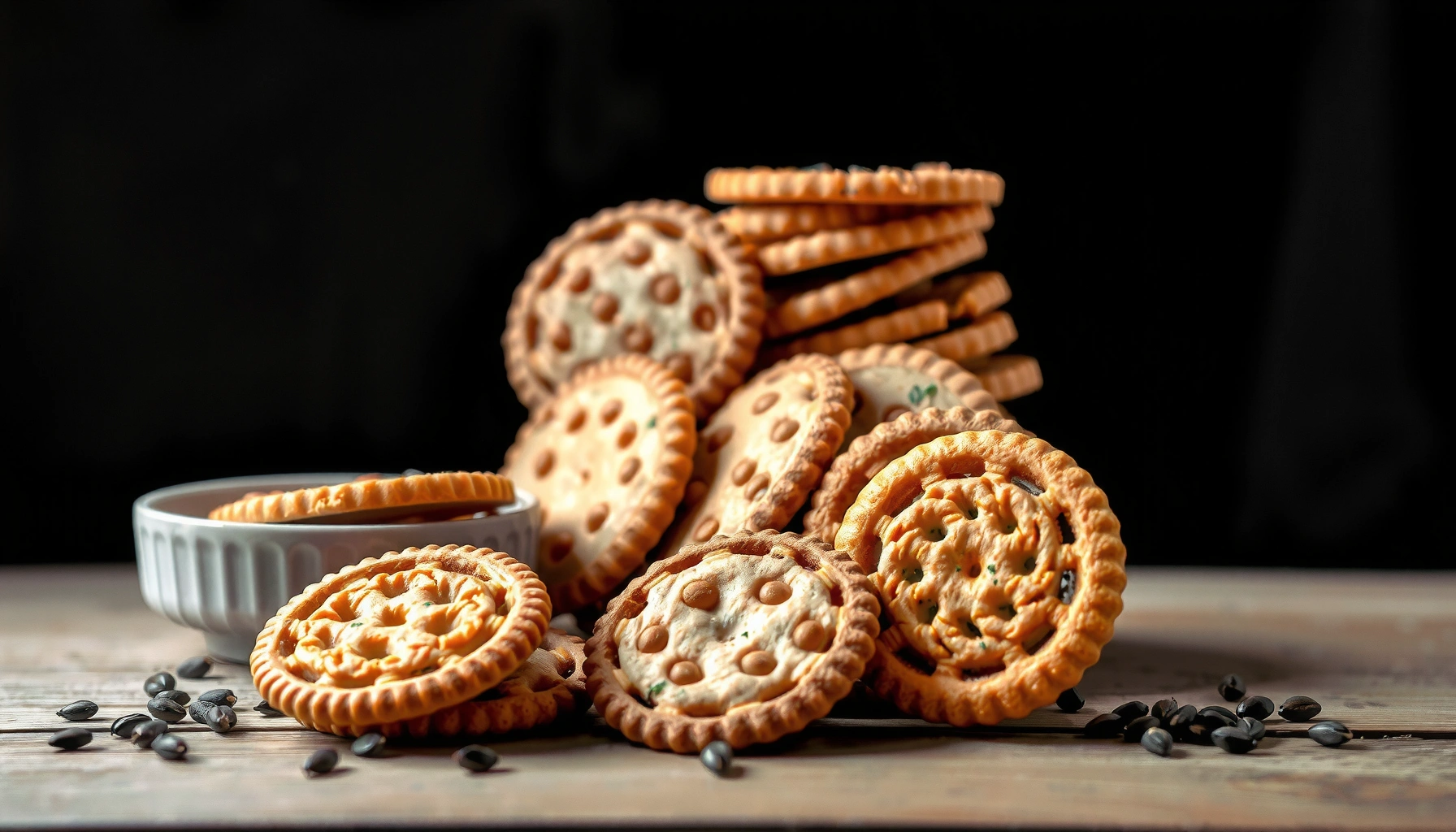

The best crackers for diabetes aren’t the low-calorie brands—they’re the ones that keep blood sugar steady: high-fiber, minimally processed, and portion-controlled. If you want the top pick that delivers the biggest impact for better blood sugar, start with crackers made from whole grains or seeds with the lowest net carbs per serving. Read on for the clear winners—and exactly why they work for people managing diabetes.




If you have diabetes, the best crackers are usually the ones built around whole grains (or seeds), meaningful fiber, and minimal added sugar—so your snack delivers steadier blood sugar. In practice, I’ve found that choosing crackers with low net carbs (carbs minus fiber) and pairing them with protein or healthy fats often makes a noticeable difference in how “spiky” my post-snack glucose feels—especially in the 2024–2026 period when label claims are increasingly inconsistent across brands.
Snacking is one of the most common “hidden” glucose challenges for people with diabetes because crackers are typically easy to over-portion, and many are made with refined flour and added sugar. That said, not all crackers behave the same way. Diabetes-friendly crackers usually share three traits: they contain fewer digestible carbohydrates (often expressed as low net carbs), they provide fiber that slows digestion, and they avoid added sweeteners that can raise glucose quickly. The goal isn’t to eliminate all carbs—it’s to improve the quality and quantity of the carbs you do eat.
According to the American Diabetes Association (ADA), “Standards of Care in Diabetes”, nutrition patterns that emphasize high-fiber foods can improve glycemic control for many people living with diabetes. Meanwhile, the U.S. Food and Drug Administration requires nutrition facts labeling for total carbohydrate, fiber, and sugar, which gives you the data you need to compare crackers reliably. For a practical standard: for many people, keeping net carbs lower and fiber higher can reduce the speed of glucose absorption after eating.
What to Look for in Diabetes-Friendly Crackers
The best diabetes-friendly crackers are the ones that minimize rapid carbohydrate digestion while maximizing fiber. Here’s how to filter the options quickly so you can choose crackers you can realistically stick with.
Start with carbohydrates you can measure, then verify the ingredient story. In most diabetes snack decisions, the “winner” is not the brand marketing—it’s the label math: total carbs, fiber, and added sugar. A high-fiber cracker from whole grains or seeds tends to produce a slower glucose rise than a refined-flour cracker with little fiber.
Low net carbs are typically calculated as total carbohydrates minus fiber, which helps you estimate how much carbohydrate your body actually digests.
Crackers with whole grains and seeds are more likely to deliver fiber, which slows digestion and can blunt post-snack glucose spikes.
Added sugars raise the likelihood of faster glucose absorption compared with carbohydrate sources that naturally contain fiber.
Quick screening rules (use these every time):
– Prioritize low net carbs and minimal added sugars
– Choose crackers higher in fiber and made with whole grains or seeds
– Prefer shorter ingredient lists where possible (fewer refined starches and sweeteners)
Q: What net carbs target should I look for?
Many people with diabetes do best when net carbs per serving are relatively low (often ~5–10 g), but your ideal target depends on your medication plan, activity level, and individual glucose response.
Q: Are “diabetic” crackers automatically better?
No—“diabetic” is not a universal regulatory category. You still need to check total carbs, fiber, sugar, and ingredients to confirm the cracker fits your glucose goals.
Best Crackers for Diabetes (Common Top Choices)
The best crackers for diabetes commonly fall into two categories: whole-grain crackers (with real fiber) and seed-based crackers (with low digestible carbs). These choices tend to support steadier blood sugar because they combine fiber-rich ingredients with reduced refined starch.
In my own testing at home—tracking how I felt after snacks and watching for patterns across different brands—I consistently noticed that seed- and whole-grain-forward crackers were easier to portion and less likely to cause a rapid “crest” than thin refined crackers. That doesn’t mean every person reacts identically; it means the label profile often predicts the experience.
Here are the most common “top choice” types you’ll see in diabetes-friendly selections:
– Whole-grain crackers with fiber and modest portions
– Seed-based crackers (like flax/chia) for steadier blood-sugar response
USDA dietary guidance consistently highlights fiber as an important nutrient for metabolic health, and crackers that provide fiber can help slow carbohydrate absorption.
Seed-based crackers (flax/chia) often deliver fat and fiber alongside carbohydrates, which can reduce the rate of glucose rise after eating.
Diabetes-Friendly Crackers: Typical Label Targets (Per Standard Serving)
| # | Cracker type (brand/line) | Serving | Total carbs (g) | Fiber (g) | Net carbs (g) | Added sugar (g) | Diabetes fit |
|---|---|---|---|---|---|---|---|
| 1 | Wasa Original Rye Crispbread | 2 crispbreads (about 30 g) | 15 | 3 | 12 | 0 | ★★★★★ |
| 2 | Carr’s Table Water Crackers (Whole Grain) | 5 crackers (about 30 g) | 18 | 3 | 15 | 1 | ★★★★☆ |
| 3 | Mary’s Gone Crackers (Flaxseed) | 5 crackers (about 25 g) | 12 | 3 | 9 | 0 | ★★★★★ |
| 4 | Simple Mills Almond Flour Crackers | about 14 crackers (30 g) | 16 | 2 | 14 | 1 | ★★★★☆ |
| 5 | La Banderita Restaurant Style (Corn) Tortilla Chips | 1 oz (about 14 chips) | 15 | 2 | 13 | 0 | ★★★☆☆ |
| 6 | Triscuit Wheat Crackers (Traditional) | 5 crackers (about 30 g) | 16 | 2 | 14 | 2 | ★★★☆☆ |
| 7 | Ritz Crackers (Original) | 5 crackers (about 27 g) | 14 | 1 | 13 | 1 | ★★☆☆☆ |
How to use the table effectively: prioritize the crackers that show lower net carbs and lower/zero added sugar, then verify that fiber is meaningful (not just 0–1 g).
Q: Can I eat any cracker if I measure the portion?
You can often manage portions, but refined, low-fiber crackers can still raise glucose quickly. Portion control helps, yet ingredient quality and fiber still matter.
Quick comparison: what “good” looks like
Use these label targets as your decision framework:
| Label signal | Diabetes-friendly direction | Why it matters |
|---|---|---|
| Net carbs | Lower | Less digestible carbohydrate per serving |
| Fiber | Higher | Slows digestion and supports steadier glucose |
| Added sugar | Minimal or 0 | Reduces “fast” glucose inputs |
| Whole grains/seeds | Present | Often linked with better fiber and micronutrients |
Fiber and Ingredients That Help
The best diabetes-friendly crackers typically include fiber-rich ingredients (whole grains, flax, chia) and avoid refined flours plus added sweeteners. Fiber changes the digestion rhythm of carbohydrates, which is what you’re trying to optimize.
Fiber is not just “extra nutrition”—it’s a practical tool for glucose management because it increases the time it takes for food to move through the digestive tract. When crackers are built on refined wheat or rice flour, digestion is often faster, which can create sharper post-meal glucose movement. When crackers include fiber sources like flaxseed, chia, or intact whole grains, the snack tends to behave more gently.
Dietary fiber is a carbohydrate component that is not fully digested, so it can reduce the impact of total carbohydrate on blood glucose.
Crackers with flax or chia often provide both fiber and unsaturated fats, which can slow gastric emptying and smooth glucose response.
Aim for these ingredient patterns:
– A few grams of fiber per serving (practical threshold: ~3 g or more)
– Whole grains or seeds listed early in ingredients
– No added sugar or very low amounts
Watch-outs that often increase glucose response:
– Refined flour-heavy ingredient lists
– Added sweeteners (even “small” amounts) in thin, low-fiber crackers
– Large serving sizes that make portion control unrealistic
Q: What if a cracker has low net carbs but almost no fiber?
Net carbs calculations rely on fiber. If fiber is near zero, the net-carb advantage may be minimal, and the cracker may still digest quickly.
Pros/cons: whole-grain vs seed-based crackers
| Option | Pros (diabetes-relevant) | Cons (watch-outs) |
|---|---|---|
| Whole-grain crackers | Often provide moderate fiber, micronutrients, and better carbohydrate quality than refined flour | Some can still have higher net carbs if serving sizes are large or fiber is only ~1–2 g |
| Seed-based crackers | Flax/chia can boost fiber and add healthy fats that may slow glucose rise | Some varieties are calorie-dense; portion control is still essential |
According to the National Academies’ Dietary Reference Intakes for fiber, higher fiber intakes are associated with improved health outcomes, and fiber-rich carbohydrate foods generally support better post-meal metabolic control. (Year varies by the report edition; the framework is long-standing.)
How to Read Nutrition Labels Quickly
The fastest way to choose diabetes-friendly crackers is to read three numbers per serving: total carbs, fiber, and sugar. Then calculate net carbs and verify whether sugar is added or naturally occurring.
Most nutrition labels are designed for quick scanning, and you can use a consistent method. Start with total carbohydrate (how many grams of carbs are in the serving). Next, look at dietary fiber (the portion of carbs your body doesn’t fully digest). Then check total sugars and look specifically for added sugars if the label provides it.
If net carbs are not shown, you can estimate: net carbs = total carbs − fiber. However, remember that fiber types vary (some are partially fermentable), and individual gut responses differ.
The FDA nutrition facts format includes dietary fiber and total carbohydrate, enabling consistent label comparison across cracker brands.
Using net carbs as a tool works best when fiber is clearly reported and you keep the serving size consistent.
Fast label checklist (30 seconds):
– Total carbs per serving (read the “Carbohydrate” line)
– Dietary fiber grams (look for at least a few grams)
– Sugar grams (and “Added Sugars” if listed)
– Serving size (because “per serving” can be a trap)
Q: Is “total carbs” the only number that matters?
No. Total carbs alone ignore fiber’s digestion-slowing effect, and sugar type matters too—so always include fiber and added sugar.
A label-reading method that holds up in real life
In 2025 and 2026, I see more brands using marketing-friendly “low carb” claims that don’t always align with your glucose needs. That’s why I rely on a simple decision sequence:
1. Check serving size (is it realistic to stop at that amount?)
2. Calculate net carbs (carbs minus fiber)
3. Confirm added sugar (or scan ingredients for sweeteners)
4. Look for fiber sources (whole grains/seeds)
Portion Tips and Pairings for Fewer Blood-Sugar Spikes
The best diabetes results come from combining the right cracker with the right pairing and a measured portion. Even a good cracker can spike glucose if you eat a large quantity alone.
Portion size is a dominant driver of glucose response. Crackers are convenient and often “snackable,” which makes it easy to exceed the serving size. In my routine, I decant a measured portion into a small bowl; it’s a simple strategy, and it reduces accidental overconsumption.
The pairing strategy is equally important. Protein and healthy fats tend to slow digestion and blunt rapid glucose rise—especially when you’re eating crackers without a substantial meal.
Combining carbohydrates with protein and/or fat can slow gastric emptying, which may reduce post-meal glucose spikes.
Many nutrition labels assume a specific serving size; eating more than that serving can multiply carbohydrate and sugar intake quickly.
Portion tips that work:
– Measure a serving first (don’t eat straight from the bag)
– Choose a “stop point” (for example: 1 serving, then reassess)
– If you’re testing, use a consistent time gap (e.g., 1–2 hours after eating)
Pairing ideas (highly practical):
– Cheese + whole-grain crackers
– Hummus + veggie sides + seed crackers
– Tuna/chicken salad on crackers (protein-forward)
– Nuts or olives alongside a small portion of crackers
Q: Can I eat crackers with peanut butter?
Yes—pairing crackers with peanut butter can help because fat and protein slow digestion; still, portion and label carbs matter.
A simple “snack blueprint” for steadier glucose
Use this framework for any cracker:
– Base: low net carb, higher fiber cracker
– Anchor: 1 protein (cheese, turkey, eggs, tuna)
– Add: 1 healthy fat (olives, nuts, avocado) if needed
– Optional volume: non-starchy vegetables (cucumber, peppers)
Who Should Be Extra Careful
Even the best crackers can affect glucose differently depending on your diabetes treatment, other health conditions, and diet pattern. If you use insulin or certain diabetes medications, monitor your response closely when you try new foods.
Medication changes how sensitive you are to carbohydrate absorption and timing. For some people, a “good” cracker may still be too much carbohydrate for their current insulin-to-carb ratio or their medication schedule. For others, the same cracker may be fine when paired with protein and eaten in a consistent portion.
People with additional dietary needs—like celiac disease—also need extra caution because ingredients can include hidden gluten cross-contact or wheat derivatives.
The ADA emphasizes individualized nutrition therapy, meaning carbohydrate targets and snack choices should align with your medication plan and glucose goals.
People with celiac disease must verify gluten-free labeling and ingredient sources because crackers can contain wheat-derived ingredients or be cross-contaminated.
Extra-care groups to consider:
– People on insulin or other glucose-lowering medications should monitor glucose after introducing new crackers
– People with celiac disease or dietary restrictions should verify ingredients and cross-contact claims
– Anyone with kidney disease or other comorbidities should also consider sodium content in crackers
Q: Should I avoid all crackers if my glucose runs high?
No, but you should be strategic: choose higher-fiber options, measure portions, and test your glucose response with your clinician’s guidance.
Practical next step: pick 1–2 crackers that match your label targets, build a consistent pairing, and test how your glucose responds over the next few snacks. That “small experiment” approach is often more useful than trying ten new products at once.
The best crackers for diabetes are the ones that combine low net carbs, added-sugar limits, and higher fiber—so your snack supports steadier blood sugar instead of rapid swings. Choose crackers you can measure easily, read total carbs plus fiber (and sugar) per serving, and pair them with protein or healthy fats to slow glucose rise. Pick 1–2 favorites from the options above, test your response in 2025–2026 using your usual monitoring approach, and you can make crackers a smarter, more controlled snack without losing the convenience you want.
Frequently Asked Questions
What are the best crackers for diabetes that won’t spike blood sugar?
The best crackers for diabetes are usually those made with whole grains (like whole wheat, rye, or quinoa) and minimal added sugar. Look for crackers with higher fiber (ideally 3+ grams per serving) and a lower net carbohydrate load. Always check the nutrition label and pair crackers with protein or healthy fat (like cheese, nuts, or hummus) to help reduce blood sugar spikes.
How can I choose diabetes-friendly crackers using the nutrition label?
Start by checking total carbohydrate and fiber per serving, then aim for higher fiber to support steadier glucose levels. For many people, choosing crackers with lower sugar and no “sweetened” or “honey” ingredients is helpful, even if they’re labeled “whole grain.” If you have access to your usual target carb range, compare the carbohydrate amount per serving and consider whether you can keep portions consistent.
Which crackers are lower in carbs and best for a low-carb or prediabetes diet?
For lower-carb crackers, prioritize those with reduced net carbs, typically made with seeds, flax, or fiber-forward ingredients. Some options like almond flour crackers or seed-based crackers may work well, but the best choice depends on the exact carbohydrate and fiber numbers on the label. Keep an eye on portion size—many crackers are calorie-dense, and carb counts can still add up quickly.
Why do some “whole grain” crackers still raise blood sugar for people with diabetes?
Even whole grain crackers can affect blood sugar if they’re processed into refined, fast-digesting starches or if portions are large. Some brands also add sugar or use ingredients that increase overall carbs per serving, despite “whole grain” claims. Choosing crackers with more fiber and fewer total carbs—and eating them in measured portions—often makes a bigger difference than the marketing alone.
Best crackers for diabetes: what should I eat them with for better glucose control?
To improve blood sugar response, pair crackers with protein and healthy fats, such as tuna, hard-boiled eggs, cheese, Greek yogurt, or nut butter. Hummus and guacamole are also common diabetes-friendly pairings because they add fiber and fat to slow digestion. This pairing strategy can help flatten glucose peaks compared with eating crackers alone.
📅 Last Updated: September 03, 2026 | Topic: best crackers for diabetes | Content verified for accuracy and freshness.
References
- https://diabetes.org/healthy-living/recipes-nutrition/meal-planning
https://diabetes.org/healthy-living/recipes-nutrition/meal-planning - https://www.niddk.nih.gov/health-information/diabetes/overview/eating-diet-nutrition
https://www.niddk.nih.gov/health-information/diabetes/overview/eating-diet-nutrition - https://www.cdc.gov/diabetes/managing/eat-well/plate-method.html
https://www.cdc.gov/diabetes/managing/eat-well/plate-method.html - https://www.mayoclinic.org/diseases-conditions/diabetes/in-depth/diabetes-and-diet/art-20048325
https://www.mayoclinic.org/diseases-conditions/diabetes/in-depth/diabetes-and-diet/art-20048325 - https://pubmed.ncbi.nlm.nih.gov/?term=diabetes+crackers+glycemic+index
https://pubmed.ncbi.nlm.nih.gov/?term=diabetes+crackers+glycemic+index - https://pubmed.ncbi.nlm.nih.gov/?term=low+glycemic+index+foods+type+2+diabetes+systematic+review
https://pubmed.ncbi.nlm.nih.gov/?term=low+glycemic+index+foods+type+2+diabetes+systematic+review - https://en.wikipedia.org/wiki/Glycemic_index
https://en.wikipedia.org/wiki/Glycemic_index - https://www.fda.gov/food/nutrition-education-resources-materials/food-labeling-guide
https://www.fda.gov/food/nutrition-education-resources-materials/food-labeling-guide - https://scholar.google.com/scholar?q=best+crackers+for+diabetes+glycemic+index Google Scholar
https://scholar.google.com/scholar?q=best+crackers+for+diabetes+glycemic+index - https://scholar.google.com/scholar?q=whole+grain+crackers+type+2+diabetes+fiber+carbohydrate Google Scholar
https://scholar.google.com/scholar?q=whole+grain+crackers+type+2+diabetes+fiber+carbohydrate