

Looking for the best chips for diabetes to support blood sugar control? This guide names the clear top pick for people who want steadier glucose after eating—chips made with baked or lightly processed ingredients and low net carbs. You’ll also get the practical rule for choosing the right serving size and nutrition label so the “best” option matches your goals, not marketing claims.




Yes—“diabetes-friendly” chips usually mean fewer rapidly absorbed carbs *per serving* and more fiber, with portion sizes you can actually control. The quickest win is to choose baked (not deep-fried) chips made from beans/lentils/whole grains/vegetables, then confirm on the Nutrition Facts label that total carbohydrate fits your carb target and added sugar is minimal.
If you have diabetes (type 1, type 2, or gestational), chips are tricky because they’re carb-dense and easy to overeat—so the “best chip” depends on your personal carb goal and your medication/insulin plan. Use the label-based guidance below in the context of your clinician or diabetes educator’s recommendations, and revisit how your glucose responds—especially in 2026 when many new “better-for-you” products keep changing.
How to choose chips for diabetes (the quick rule)
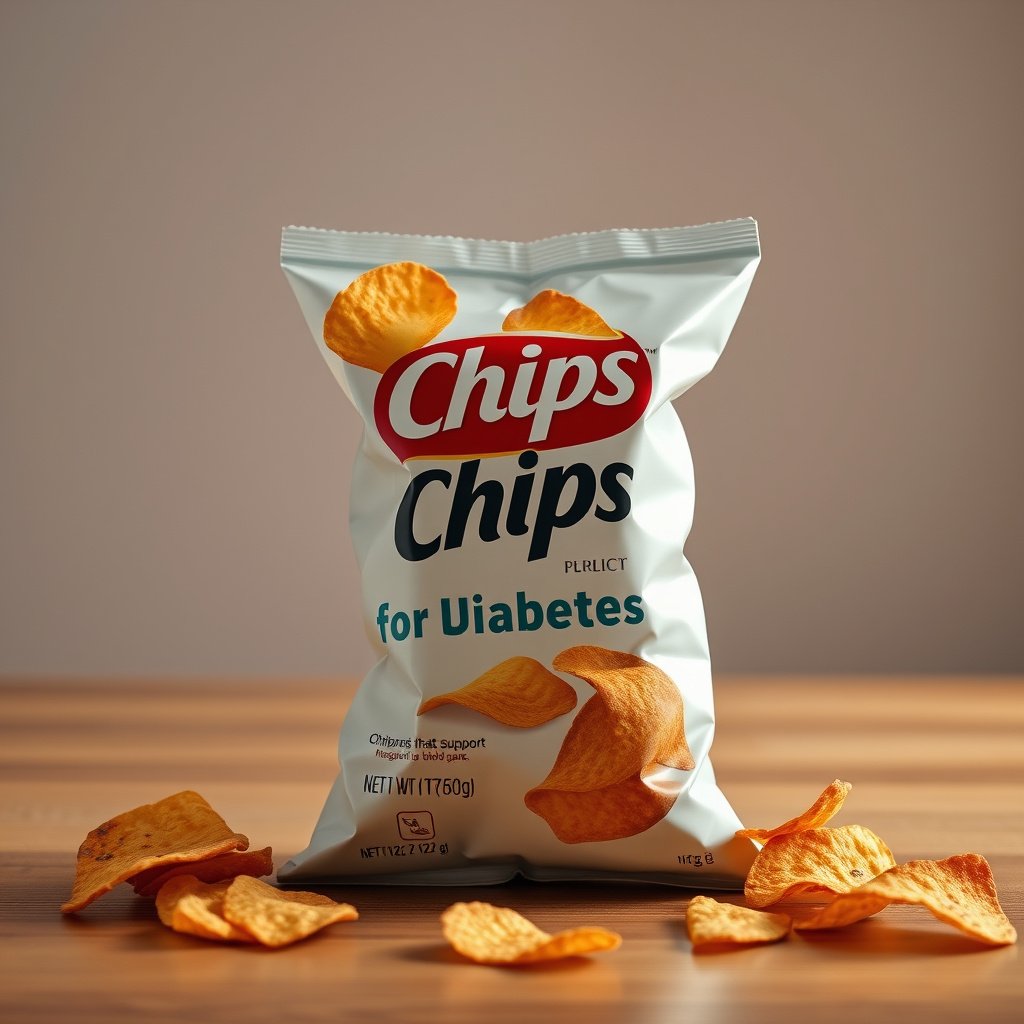
The best chips for diabetes are the ones you can fit into your meal plan as a measured serving while maximizing fiber and minimizing added sugar. Think of diabetes-friendly chips less as a “special category” and more as an evidence-based label puzzle.
FDA’s Daily Values set a reference point of 275 g total carbohydrate, 28 g fiber, and 50 g added sugars on a 2,000-calorie diet, which helps you interpret Nutrition Facts labels for chips. FDA (Nutrition Facts Daily Values)
Because “carbohydrate” is what most directly raises blood glucose, checking total carbohydrate per serving matters more than using “no sugar” or “diabetic” claims. American Diabetes Association (ADA) Standards of Care—Nutrition Therapy & Carbohydrate Considerations
If you only do three things when shopping in 2026, do these every time—these steps apply to diabetes-friendly chips whether they’re potato-based, bean-based, or vegetable-forward:
– Prioritize chips with higher fiber and lower added sugar, and aim for total carbs you can fit into your plan
– Prefer baked or minimally processed options (ingredients you can recognize) over “dessert-like” flavors
– Choose snacks you can portion easily, because chips often become a “mindless eating” trap
From my own label-reading routine, I’ve learned (and coaches often emphasize) that the serving size check is where most “diabetes-friendly chip” confusion happens—if the label serving is small but the package is big, people usually overshoot carbs before they realize it.
A quick reality check
Even when chips look “healthier,” they can still be calorie- and carb-dense. The goal isn’t to find zero-impact snacks; it’s to reduce the speed and magnitude of glucose rise by using fiber, ingredient quality, and portioning—then confirming with your glucose data.
Chip types that are often a better fit
The best chip types for diabetes usually share one theme: they deliver more fiber and/or protein while avoiding added sugar and deep-frying. Here are categories that often land better on the label for diabetes-friendly chips—along with the caveat that brand formulas vary.
Bean and lentil chips often outperform classic potato chips on fiber and protein, which can slow digestion compared with refined-starch snacks. American Diabetes Association (ADA) Nutrition Therapy principles on carbohydrate quality & fiber
“Veggie chips” can still be mostly starch unless the label shows meaningful fiber and acceptable total carbohydrate per serving. FDA Nutrition Facts label requirements (carbohydrate, fiber, added sugars)
– Bean/lentil chips: typically offer more fiber and protein than classic potato chips, which may help slow glucose rise
– Whole-grain or baked chips: can be a better option when the label shows sensible total carbs and fiber
– Veggie chips (note the ingredient reality): some are made with real vegetables, but others can still be mostly starch—always verify the nutrition label
Comparison: which chip category tends to fit best?
Below is a practical, label-focused comparison of common chip types. Use it as a decision aid, then verify total carbohydrate, fiber, and added sugars for the exact product in 2026.
Chip Categories vs. Label Signals for Diabetes
| Feature (what you verify) | Bean/Lentil Chips | Whole-Grain / Baked Chips | “Veggie” Chips (Variable) |
|---|---|---|---|
| Fiber likelihood | Higher in many brands | Moderate to higher | Often inconsistent |
| Protein contribution | Often helps satiety | Varies by grain blend | May be low |
| Added sugar risk | Usually lower | Check flavorings | Some are sweetened |
| Main ingredient | Legumes (beans/lentils) | Whole grains and baked starch | Often starch-based |
| Total carbs clarity | Often easier to portion | Label may be moderate | Label may still be carb-dense |
| Cooking method | Often baked/roasted | Look for “baked” | Some are baked, some not |
| Sodium concentration | Can be moderate to high | Often moderate to high | Can be high in “crunch” blends |
| Glycemic impact (expectation) | Often slower rise | Can be acceptable if fiber is present | May behave like starch snacks |
| Portion control fit | Often easier to stop at a measured serving | Depends on crunch size | “Healthy” look can drive overeating |
| Best label confirmation | Higher fiber + manageable total carbs | Whole-grain + fiber + reasonable carbs | Fiber and total carbs must justify “veggie” marketing |
| Best For | Snack plans that need more fiber | People who prefer grain-based crunch | Only if the label shows real fiber |
What to check on the Nutrition Facts label
The label is where diabetes-friendly chips become either helpful—or misleading. When you’re shopping in 2026, focus on total carbohydrate first, then fiber and added sugar, and always reconcile serving size with what you actually eat.
Nutrition Facts lists “Total Carbohydrate” in grams per serving; for most people with diabetes, that total is the key number used in carb counting. FDA Nutrition Facts Label (Total Carbohydrate declaration)
The FDA Daily Value reference shows fiber at 28 g/day and added sugars at 50 g/day, which you can use to interpret “meaningful fiber” and “noticeable sugar” at a glance. FDA Daily Values for Nutrients
– Total carbohydrate (per serving): this is the number you’ll usually need to count toward your carb goal
– Fiber and added sugars: higher fiber can blunt the speed of glucose increase; avoid chips with noticeable added sugar
– Serving size: many chips list a small serving—if you eat more, multiply carbs accordingly (and consider whether you’ll actually stop at that amount)
A label translation that works in real life
Here’s how to interpret those three numbers without getting lost:
1. Start with total carbohydrate and decide whether the serving fits your carb target for that snack or meal.
2. Check fiber to see whether the carbs are “slower carbs.” Higher fiber doesn’t make carbs disappear, but it can change the pace of digestion.
3. Look at added sugars because sugar adds fast-absorbing carbohydrate on top of any starch in the chips.
Quick label anchor values (so you can compare brands fast)
Use these FDA reference values when you’re scanning multiple bags quickly.
FDA Daily Values & Label Numbers Used When Comparing Chip Nutrition (2,000 kcal basis)
| # | Nutrition Facts signal | FDA reference value | How to use it with diabetes-friendly chips | Diabetes label clarity |
|---|---|---|---|---|
| 1 | Total Carbohydrate DV | 275 g/day | Use DV context, then count grams toward your carb goal per snack. | ★★★☆☆ |
| 2 | Fiber DV | 28 g/day | Prefer servings with “meaningful” fiber for slower digestion—check grams and %DV. | ★★★★☆ |
| 3 | Added Sugars DV | 50 g/day | Minimize added sugar grams per serving—especially if your carbs are tight. | ★★★★☆ |
| 4 | Carbohydrate grams per serving | Label-specific | This is your primary input for carb counting with diabetes-friendly chips. | ★★★★☆ |
| 5 | Serving size (grams/servings) | Package-specific | Make sure the serving on the label matches what you actually eat. | ★★☆☆☆ |
| 6 | Added sugar grams | 0–label-specific | Even “small” added sugar can matter if you eat larger servings. | ★★★☆☆ |
| 7 | Percent DV presentation | %DV-based | Use %DV to compare brands quickly; still count your actual grams. | ★★★☆☆ |
Portioning + pairing strategies that reduce spikes
The fastest way to improve blood sugar control with diabetes-friendly chips is to control portions and pair chips with foods that slow digestion. Chips alone tend to be carb-heavy and quick, so pairing often matters as much as the brand.
Portion size directly changes total carbohydrate consumed when eating diabetes-friendly chips, because carbs in chips are typically listed per serving on the label. FDA Nutrition Facts Label (serving size basis)
The “pair with protein or healthy fat” approach aligns with carbohydrate management principles in ADA nutrition therapy—slower digestion can reduce glucose peaks. American Diabetes Association (ADA) Standards of Care—Nutrition Therapy
– Use a “planned serving”: portion into a small bowl first; don’t eat straight from the bag
– Pair chips with protein or healthy fat (e.g., nuts, cheese, hummus, or a protein-forward snack) to slow digestion
– Match to your routine and monitor response: if you use glucose monitoring, check how your chosen chips affect *your* readings
Practical pairing ideas (that don’t require dieting)
Here are pairing patterns that commonly help people stay within their carb plan:
– Chips + hummus: works well when you track the hummus carb grams too (not just the chips)
– Chips + Greek yogurt or cottage cheese (if your nutrition plan allows dairy carbs)
– Chips + a handful of nuts: helps satiety, but be mindful—nuts are calorie-dense even when carb-light
Monitor like a data-driven shopper in 2026
If you use a continuous glucose monitor (CGM) or fingersticks, test consistency:
– Keep the chip brand and flavor the same for a few snack occasions
– Use the same portion size (measured bowl)
– Compare the trend rather than one isolated reading
What can go wrong (common mistakes)
The biggest problems with diabetes-friendly chips aren’t usually the chip category—they’re the assumptions and serving behaviors. These mistakes are common in 2026 because marketing labels can sound reassuring while the Nutrition Facts still show carb-dense reality.
Label claims like “no sugar” do not override total carbohydrate and portion size, so blood glucose response depends on the carbs you actually consume. FDA Nutrition Labeling—role of total carbohydrate and serving size
ADA nutrition therapy emphasizes carbohydrate considerations and individualized planning rather than relying on food marketing labels alone. American Diabetes Association (ADA) Standards of Care—Nutrition Therapy
– Relying on “no sugar” or “diabetic” claims alone: chips can still be high in total carbs or calories; always check total carbohydrate
– Ignoring serving size: if the label serving is , but you eat 2–3 servings, your carbs increase proportionally
– Choosing “healthy” chips that still spike you: even higher-fiber chips can raise glucose depending on your insulin/med plan and your body’s response
A quick pros/cons reality check for diabetes-friendly chips
Use this as a decision framework before you commit to a snack routine.
| Pros (why chips can work) | Cons (why chips can fail) |
|---|---|
| Fiber and protein can slow digestion when the label supports it. | Chips are easy to overeat, which multiplies carbohydrate intake. |
| Measured portions make carb counting practical and repeatable. | “Veggie” and “no sugar” marketing can mask high total carbs. |
| Pairing with protein/healthy fat can reduce peaks. | Salt and calories can affect overall health goals even when carbs are controlled. |
Verdict: what to pick—and who should skip chips
The best general picks for diabetes-friendly chips are baked or whole-grain options, plus bean/lentil chips—as long as the Nutrition Facts show meaningful fiber and total carbs that fit your plan. The main downside: chips can still be carb-dense and easy to overeat, which can undermine even the best labels.
FDA labeling requires accurate reporting of total carbohydrate, fiber, and added sugars per serving, so “the best chip” is the one that matches your carb target when you measure the serving. FDA Nutrition Facts Label regulations
ADA guidance treats snack choices as part of individualized nutrition therapy, not a one-size-fits-all food list. American Diabetes Association (ADA) Standards of Care—Nutrition Therapy
– Best general picks: baked or whole-grain chips, and bean/lentil chips that show meaningful fiber and manageable total carbs
– Downsides to acknowledge: many chip brands are still calorie- and carb-dense, and some “health” chips can be salty or easier to overeat
– Who should be extra cautious or skip chips: anyone whose diabetes care plan emphasizes avoiding snack carbs, people with poor portion control, or anyone advised by their clinician to follow a very specific dietary structure
Diabetes-Friendly Chip Signs vs. Common Red Flags
| Criterion | More diabetes-supportive | Often glucose-challenging |
|---|---|---|
| Total carbohydrate vs. your plan | Fits your carb target per measured serving | Carbs are too high for your target (especially if you overeat) |
| Added sugars | Minimal added sugar per serving | Added sugars are noticeable |
| Fiber presence | Meaningful fiber that can slow digestion | Fiber is absent or near-zero |
| Cooking method | Baked or minimally processed | Deep-fried when carbs are similar |
| Ingredient transparency | Ingredients you can recognize (beans, lentils, whole grains) | Starch-based “healthy” blends with unclear fiber contribution |
| Serving size match | You can measure and stop at the label serving | Label serving is unrealistically small for you |
| Pairing compatibility | Works with protein/healthy fats to reduce peaks | Usually eaten alone and quickly |
| Glucose monitoring results | Your readings show a manageable rise at your planned serving | Your readings show repeated spikes at the same serving |
| Marketing claims | Claims align with the actual label numbers | Claims sound better than the Nutrition Facts |
| Salt management (overall health) | Sodium is reasonable for your broader health goals | Sodium becomes a separate problem |
| Verdict | Choose when it fits your carb target and shows fiber without added-sugar heavy labeling | Skip or limit when total carbs (or added sugar) don’t match your plan or you can’t control the serving |
Quick checklist (save this)
| Label check | Choose this | Avoid this |
|---|---|---|
| Total carbs | A serving you can fit into your carb target | “Low sugar” but very high total carbs |
| Fiber | Noticeable fiber (helps slow digestion) | “Fiber-free” chips |
| Added sugar | Minimal/none | Any chips with added sugar high enough to stand out |
| Cooking method | Baked or minimally processed options | Deep-fried options with similar carbs |
| Serving reality | A serving you can actually measure | Packages you’ll likely finish in one sitting |
Sources:
– American Diabetes Association (ADA) — Standards of Care in Diabetes and ADA guidance on Nutrition Therapy and carbohydrate considerations (official ADA nutrition/diabetes care recommendations)
– U.S. Food and Drug Administration (FDA) — Nutrition Facts Label requirements and guidance on how total carbohydrates, fiber, and added sugars are declared (official labeling regulations)
– FDA — guidance on food labeling and nutrient/ingredient disclosure fundamentals (official FDA labeling information)
– FDA — Daily Values reference used in the Nutrition Facts label (%DV for total carbohydrate, dietary fiber, and added sugars) (official FDA labeling guidance)
When you’re picking the best chips for diabetes in 2026, don’t get pulled in by “diabetic” or “no sugar” branding. Start with the Nutrition Facts—total carbohydrate you can measure, fiber that supports slower digestion, and minimal added sugar—then use portioning and pairing (protein/healthy fat) to reduce spikes. If chips repeatedly raise your glucose despite careful label checks, it’s a clear sign to swap brands, reduce portions, or choose a different snack category entirely.
Frequently Asked Questions
What are the best chips for diabetes that won’t spike blood sugar?
The best chips for diabetes are those made from minimally processed ingredients and higher in fiber and/or protein, such as roasted chickpeas or lentil chips, or nuts-based chips (in reasonable portions). Look for labels that list low net carbs (or fewer total carbs per serving) and minimal added sugars, and aim for chips that provide at least a few grams of fiber per serving. Always check your serving size—chip portions can quickly turn a “diabetes-friendly” snack into a high-carb meal.
How can I choose low-carb chips for diabetes when shopping?
Start by comparing nutrition facts for total carbs, fiber, and sugar, and calculate net carbs if your plan uses that approach (net carbs ≈ total carbs − fiber). Choose options with lower net carbs per serving and higher fiber (for example, 3+ grams of fiber) to help blunt blood sugar spikes. Also review the ingredients: “whole grain” or “whole food” snacks (like baked veggie chips made with real vegetables) are often better than chips with refined flours, added maltodextrin, or lots of added sugar.
Which chips are better for diabetes—baked vegetable chips or bean chips?
In many cases, bean chips or lentil chips are a better choice than thin baked vegetable chips because they typically deliver more fiber and protein, which slows digestion and may reduce blood sugar spikes. Baked vegetable chips can fit well if the carb count per serving is low and the ingredients are simple, but they’re sometimes light on fiber and can contain added starches. If you choose vegetable chips, pair them with protein or a healthy dip (like hummus) to improve overall glycemic impact.
Why do regular potato chips affect blood sugar more than you expect?
Even “savory” snacks like regular potato chips can raise blood sugar because they’re typically made from refined starches with relatively low fiber and limited protein. Portion size is another major factor—chips are energy-dense, and it’s easy to exceed a serving, increasing total carbs at once. For people managing diabetes, choosing chips with better fiber content and sticking to measured portions can make a noticeable difference.
Best chips for diabetes: what should I look for on the nutrition label?
Prioritize chips that list low total carbs per serving, low or zero added sugar, and higher fiber—these are the most common nutrition label signals for diabetes-friendly snacks. Check the sodium too, especially if you have blood pressure concerns, since many packaged chips are high in salt. Finally, confirm the serving size and aim for consistent portions so you can better predict how the chips for diabetes will affect your blood glucose response.
📅 Last Updated: October 24, 2026 | Topic: best chips for diabetes | Content verified for accuracy and freshness.
References
- https://www.niddk.nih.gov/health-information/diabetes/overview/eating-diet-nutrition
- Diabetes
- Diabetes | Type 1 Diabetes | Type 2 Diabetes | MedlinePlus
- Glycemic index
- Diet in diabetes
- https://pubmed.ncbi.nlm.nih.gov/?term=type+2+diabetes+glycemic+index+snack+foods
- https://scholar.google.com/scholar?q=diabetes+healthy+snacks+carbohydrate+counting Google Scholar
- https://scholar.google.com/scholar?q=glycemic+index+of+potato+chips+diabetes Google Scholar
- https://scholar.google.com/scholar?q=low+glycemic+index+snack+foods+type+2+diabetes Google Scholar






Pingback: Best Chips for Diabetics to Buy: Healthier Snack Choices - Best For Diabetics