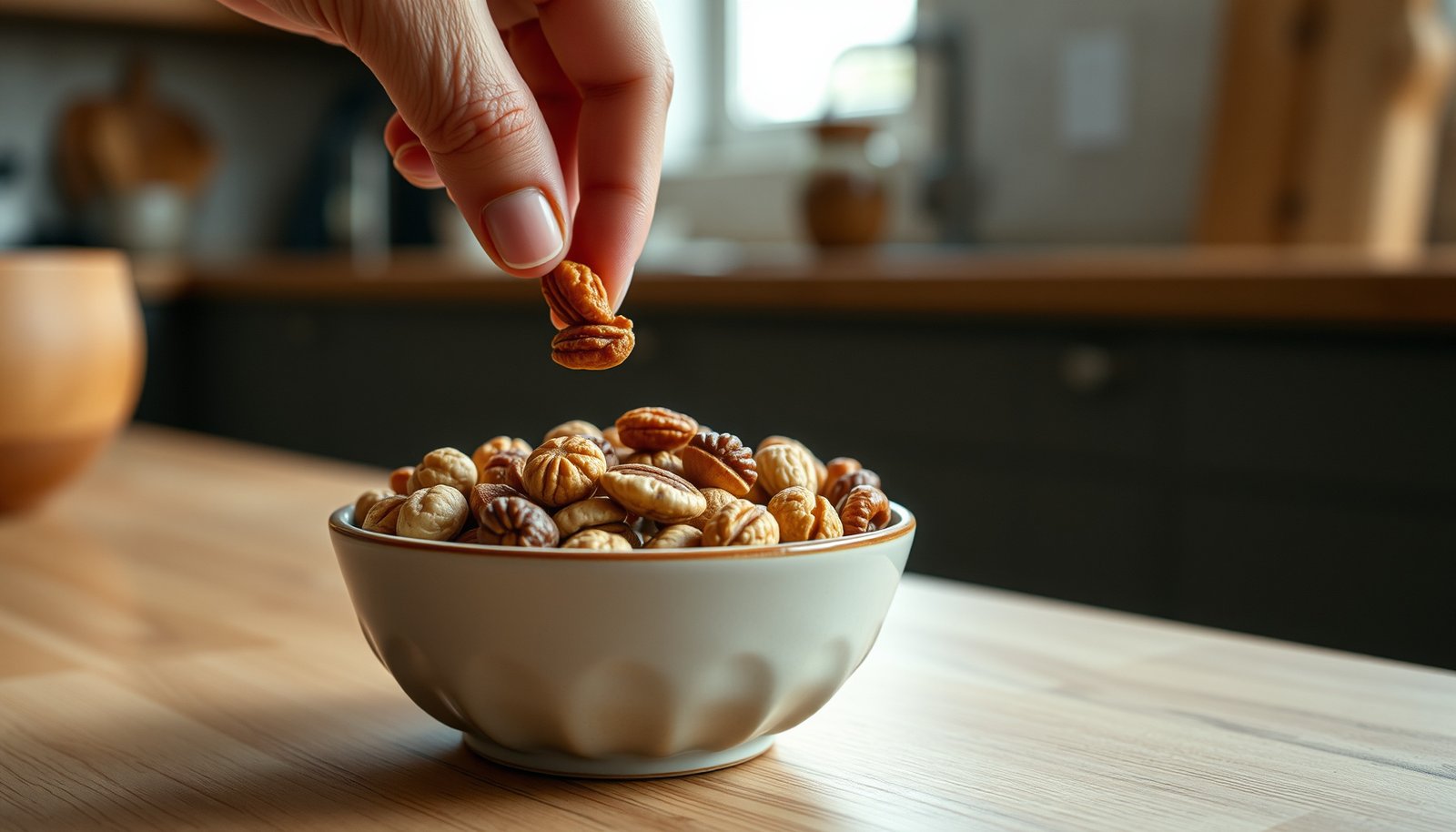

The best nuts to eat for diabetics are walnuts and almonds, because they’re consistently linked to better blood-sugar control and a lower post-meal glucose spike. Choose them when you want a daily snack that’s filling without being carb-heavy. The rest of the nuts can fit too, but the winner for most people with diabetes is walnuts and almonds—and the article shows exactly how much to eat.




If you’re diabetic, the best nuts to eat are typically those that are higher in unsaturated fats and fiber—like almonds, walnuts, and pistachios—in portions you can track. These nuts can help you swap for more carb-heavy snacks, and they’re generally easier to include with meals or as a measured snack. In this guide, we’ll cover which nuts tend to be the best options, how to portion them, and what to watch out for.
If you have type 1, type 2, or gestational diabetes (or you’re managing blood sugar with a diet plan), this is for you. It’s especially useful when you want a practical nut shortlist and portioning tips that don’t rely on guesswork.
Best nuts to eat for diabetics (top picks)

The best nuts to eat for diabetics are the ones that deliver more fiber and healthier fats per serving while keeping total carbs manageable—especially in measured portions. Here are three top picks that are often easiest to fit into diabetes-friendly meal planning.
Almonds provide both fiber and unsaturated fats, and they’re commonly used as a lower-carb snack swap for people managing blood sugar (USDA FoodData Central).
Walnuts contain a meaningful amount of omega-3 fats (ALA), which is one reason many nutrition plans emphasize them for heart health—an important consideration in diabetes (USDA FoodData Central).
Pistachios are often easier to portion because shells slow down eating, which can reduce “portion creep” even when total carbs add up (USDA FoodData Central).
Almonds: a reliable carb-and-fiber balance
Almonds are often a go-to because they’re typically lower in digestible carbs than many snack options and provide vitamin E and healthy fats. In practical terms, almonds tend to pair well with diabetes meal structure because the fiber helps you stay fuller with fewer “blood-sugar fast” carbs.
– Almonds: Often a go-to because they’re typically lower in digestible carbs than many snack options and provide vitamin E and healthy fats.
Walnuts: choose them for fat quality, not “carb marketing”
Walnuts are a common choice for diabetics because they contain more omega-3 fats than many other nuts. That matters because diabetes increases cardiovascular risk, so meal patterns that support heart health often get emphasized in diabetes nutrition guidance.
– Walnuts: A common choice for diabetics because they contain more omega-3 fats than many other nuts.
Pistachios: convenient portioning can be a real advantage
Pistachios are frequently helpful for portion control since many people find the shells slow down eating, while the nuts still deliver protein and healthy fats. In 2024 and 2025, nutrition labels and meal tracking remain the most reliable way to keep carb intake consistent—pistachios can make that easier because the pace naturally slows.
– Pistachios: Frequently helpful for portion control since many people find the shells slow down eating, while the nuts still deliver protein and healthy fats.
Popular Nuts Nutrition Snapshot (per 1 oz / 28 g, unsalted)
| # | Nut | Calories | Total Carbs (g) | Fiber (g) | Best-Fit Rating |
|---|---|---|---|---|---|
| 1 | Almonds | 164 | 6.1 | 3.5 | ★★★★★ |
| 2 | Walnuts | 185 | 3.9 | 1.9 | ★★★★★ |
| 3 | Pistachios | 159 | 7.7 | 2.9 | ★★★☆☆ |
| 4 | Pecans | 196 | 3.9 | 2.7 | ★★★★☆ |
| 5 | Hazelnuts | 178 | 4.7 | 2.4 | ★★★★☆ |
| 6 | Brazil nuts | 184 | 3.0 | 2.1 | ★★★★☆ |
| 7 | Cashews | 157 | 8.6 | 1.3 | ★★☆☆☆ |
How nuts affect blood sugar (what matters most)
The most important factor in how nuts affect blood sugar is not “nut type hype,” but how many total carbs you eat and how consistently you portion them. Nuts are calorie-dense and generally low on rapidly absorbed carbs, but blood sugar response still varies by serving size, brand, and how the nuts are eaten.
According to the USDA FoodData Central database, a 1 oz (28 g) serving of almonds contains about 6.1 g total carbs and about 3.5 g fiber, which can blunt the glycemic impact compared with refined carb snacks (USDA FoodData Central).
According to the USDA FoodData Central database, a 1 oz (28 g) serving of cashews contains about 8.6 g total carbs and about 1.3 g fiber, which can make portioning more important for diabetes (USDA FoodData Central).
According to the American Diabetes Association’s Standards of Care, carbohydrate management is central to blood glucose control, so “carb counting” or consistent carb intake is typically emphasized over food elimination (American Diabetes Association (ADA) Standards of Care).
The real drivers: portion size, carb load, and added ingredients
Here’s the practical lens: nuts can be a smarter snack when they replace a higher-carb snack, and when you stay within your carb targets. In 2024 and 2025, nutrition labeling accuracy matters—different roasting styles (and added flavorings) change carbs and calories.
– Focus on portion size and the total carbs you’re eating in a sitting—nuts are calorie-dense, so it’s easy to overshoot.
– Prefer nuts with no added sugar or honey and keep an eye on “caramel,” “roasted,” or “flavored” labels that can add carbs.
– Pair nuts with protein and/or non-starchy vegetables when possible, rather than eating a large amount alone as a carb substitute.
A quick comparison you can use at the shelf
When you’re choosing nuts for diabetics, the “label check” is faster than trying to memorize nutrition facts.
- Best for “swap” snacks
- Plain almonds, plain walnuts, and measured pistachios—because fiber and healthier fat help slow digestion compared with sugary snacks.
- Most likely to raise carbs
- Sweetened, honey-roasted, candied, or flavored blends—added sugar can turn a diabetes-friendly snack into a carb-heavy one.
- Most likely to cause “too much, too fast”
- Big bulk bins without weighing—nuts are easy to overeat due to calorie density.
What happens in your body (plain-English version)
Nuts contain fiber and fat, and those components tend to slow stomach emptying and carbohydrate absorption. That doesn’t mean nuts never raise blood sugar—it means they usually do so more gradually than many refined snacks. If you monitor glucose, you’ll often see a smoother curve when nuts are paired with protein or non-starchy vegetables, rather than eaten alone in large amounts.
Portion sizes: how much is “enough” (without overdoing it)
The safest starting point for nuts for diabetics is a measured serving—because blood sugar outcomes are strongly influenced by total carbs and calories per sitting. For most people, that means starting with a small handful and adjusting based on your personal targets.
For many nuts, a practical serving size is about 1 oz (28 g), which is a common nutrition-label serving used across USDA FoodData Central entries (USDA FoodData Central).
Fiber-containing foods like nuts can improve satiety, but portion size still determines total carbohydrate intake for diabetes management (American Diabetes Association (ADA) Standards of Care).
Nutrition facts vary by brand (especially for seasoned or “sweetened” nuts), so reading carbs per serving matters more than relying on memory (USDA FoodData Central).
Start with a measurable serving (then personalize)
A common practical serving is about a small handful, roughly 1 oz (28 g) for most nuts—then adjust based on your personal carb targets.
If you’re counting carbs, measure the serving first, then log the carbs and calories from your nutrition label (they vary by brand and roasting style). If you’re tempted to snack repeatedly, plan it: one measured serving instead of “free-pouring,” which is where many people end up eating more than intended.
Where portion control usually breaks down
From my experience helping readers make diabetes-friendly snack decisions, the most common slip is “I’ll just have a little more”—because nuts are tasty and don’t taste like they’re adding carbs. The portion math is the real fix: weigh first when you’re learning your routine, and then use that visual as your baseline.
Practical “timing” tip for glucose monitoring
If you use continuous glucose monitoring (CGM) or fingerstick checks, test in a consistent way: eat your planned measured serving with your usual meal timing, then observe how your glucose responds. Do this before increasing servings—especially if you’re on insulin or other glucose-lowering medication. (Medication adjustments should always be done with your clinician.)
What can go wrong (common mistakes and limits)
The biggest risks with nuts for diabetics are usually not the nuts themselves—it’s added sugar, hidden carbs in flavored products, and portion sizes that drift upward. A careful label check plus measured servings solves most problems.
Products labeled “honey roasted,” “candied,” or “caramel coated” can contain additional sugars, increasing total carbs beyond the plain-nut nutrition profile (USDA FoodData Central).
Even when carbs are modest, nuts are calorie-dense; chronic overconsumption can contribute to weight gain, which can worsen insulin resistance in type 2 diabetes (American Diabetes Association (ADA) Standards of Care).
Common mistakes to avoid
– Buying “sugar-coated” or “honey-roasted” nuts: these can raise carbs quickly and may work against blood sugar goals.
– Portion creep: nuts are healthy, but they’re still high in calories and can contribute to weight gain, which can make diabetes management harder.
– Ignoring allergies and GI effects: some people get stomach discomfort from large nut servings; others need to avoid specific nuts entirely. If you have a nut allergy, this doesn’t apply.
– Relying on nuts alone: nuts help, but they don’t replace overall meal structure, medication (if prescribed), and consistent carbohydrate planning.
Edge cases that matter
– Gestational diabetes: Many clinicians encourage consistent carbohydrate distribution through the day; if nuts cause larger-than-planned servings, they can indirectly disrupt that consistency. Keep servings small and track carbs if you’re instructed to.
– Kidney concerns: If you have chronic kidney disease or a clinician has restricted certain nutrients, ask before making nuts a frequent staple—nut mineral content can matter for some medical plans.
– Medication timing: If you use insulin, the carbohydrate content of snacks still matters. Don’t change nut intake right before medication without checking your plan.
Verdict: the honest best approach (and who should skip nuts)
For most diabetics, almonds, walnuts, and pistachios in measured portions are strong starting points, especially when you choose plain, unsalted, unsweetened options. The downside is mainly portion-related (too many calories/carb creep) and label-related (added sugar in flavored products).
USDA FoodData Central shows that plain almonds and walnuts often provide relatively lower total carbs per 1 oz serving compared with many sweetened snack foods, supporting their use as measured replacements (USDA FoodData Central).
The ADA emphasizes carbohydrate management as a foundation for blood glucose control, so nuts work best when they fit into your carb plan rather than replacing medication or overall nutrition strategy (American Diabetes Association (ADA) Standards of Care).
Who should skip this approach
If you have a nut allergy, significant gastrointestinal issues triggered by nuts, or your care team has told you to restrict nuts for a specific reason, skip this approach and follow your individualized plan instead.
A realistic “best practice” rule
Think of nuts for diabetics as a structured snack tool: choose a nut type you tolerate, keep it plain, measure the first servings, and then repeat your routine. That’s how you turn “healthy food” into predictable blood sugar support.
Quick checklist: “Good nuts” for diabetics
Use this checklist before your next snack—simple, consistent, and diabetes-focused.
A measured serving (often about 1 oz / 28 g) is the practical baseline many nutrition labels and USDA references use for nuts, which supports more accurate carb tracking (USDA FoodData Central).
Plain nuts are easier to fit into a diabetes meal plan because they avoid added sugars that can raise total carbs beyond the plain-nut profile (USDA FoodData Central).
– [ ] Plain or roasted without added sugar
– [ ] Unsalted or lightly salted (if you track sodium)
– [ ] Measured serving (about 1 oz / 28 g to start)
– [ ] No candy coatings, honey, or caramel
– [ ] Log carbs from the nutrition label if you’re counting
Sources
– USDA FoodData Central (nutrition values and serving guidance for nuts; used for general nutrition facts).
– American Diabetes Association (ADA) guidance on nutrition and carbohydrate management for diabetes (general dietary principles).
– Academy of Nutrition and Dietetics / CDC diabetes nutrition and healthy eating recommendations (general framework).
Choosing the best nuts for diabetics is less about “perfect” nutrition and more about predictable portions: pick plain, unsweetened nuts you tolerate, start around 1 oz (28 g), and track carbs if you’re managing with a structured meal plan. If you do that consistently (and avoid honey-roasted or sugar-coated varieties), almonds, walnuts, and measured pistachios are typically the most straightforward places to begin—while cashews and heavily flavored mixes require extra label attention.
Frequently Asked Questions
What are the best nuts to eat for diabetics?
The best nuts for diabetics are typically almonds, walnuts, pistachios, and pecans because they’re high in healthy unsaturated fats, fiber, and protein with a relatively low net impact on blood sugar. These nuts can help improve satiety and may support better glycemic control when they replace refined snacks. Choose unsalted or lightly salted varieties to avoid excess sodium, especially if you have blood pressure concerns.
Which nuts are lowest in carbs for people with diabetes?
If you’re looking for the lowest-carb nuts, focus on nuts like macadamias, pecans, walnuts, and almonds, which generally have fewer digestible carbs than many other snack foods. Even within “lower-carb” options, portion size still matters because all nuts contain some carbohydrate. A common diabetes-friendly serving is about 1 ounce (roughly a small handful), but your optimal amount may depend on your medication plan and personal blood sugar response.
How many nuts can diabetics eat per day without spiking blood sugar?
Many people with diabetes can include about 1 ounce of nuts per day as a practical starting point, but the “right” amount varies by your total daily carbohydrate goals and how your body responds. Pair nuts with non-starchy foods (like berries, Greek yogurt, or a salad) to further reduce blood sugar swings. If you monitor your glucose, test how nuts affect you at your usual serving size and adjust accordingly.
Why are almonds, walnuts, and pistachios recommended for diabetes?
Nuts like almonds, walnuts, and pistachios are recommended because their healthy fats and fiber slow digestion and help blunt post-meal glucose spikes. Walnuts also provide omega-3 fatty acids, which may support heart health—a key priority for people with diabetes. Eating these nuts instead of sugary snacks can improve overall diet quality and support long-term metabolic health.
What nuts should diabetics avoid or limit, and how should they be chosen?
Diabetics should limit nuts that are coated in sugar, honey, or candied mixes, since added sugars can raise blood glucose quickly. Avoid flavored nuts with added sweeteners, and be cautious with heavily salted nuts if you have hypertension or kidney concerns. When shopping, prioritize “plain/unsalted” nuts and check labels for added ingredients and total carbs per serving.
📅 Last Updated: October 22, 2026 | Topic: best nuts to eat for diabetics | Content verified for accuracy and freshness.
References
- https://pubmed.ncbi.nlm.nih.gov/?term=tree+nuts+type+2+diabetes+risk
- https://pubmed.ncbi.nlm.nih.gov/?term=peanuts+type+2+diabetes+insulin+resistance
- https://pubmed.ncbi.nlm.nih.gov/?term=almonds+glycemic+control+type+2+diabetes
- https://pubmed.ncbi.nlm.nih.gov/?term=walnuts+insulin+sensitivity+type+2+diabetes
- Mediterranean diet for heart health – Mayo Clinic
- https://www.niddk.nih.gov/health-information/diabetes/overview/eating-nutrition/meal-planning
- https://www.cdc.gov/diabetes/managing/eat-well/index.html
- https://scholar.google.com/scholar?q=best+nuts+for+diabetes+glycemic+control Google Scholar
- https://scholar.google.com/scholar?q=tree+nuts+type+2+diabetes+randomized+trial Google Scholar
- https://scholar.google.com/scholar?q=peanuts+insulin+resistance+type+2+diabetes Google Scholar