
Looking for the best Chinese food for type 2 diabetes and what to order—here’s the clear winner: choose steamed or stir-fried dishes built around lean protein and non-starchy vegetables, with sauce on the side and rice swapped for extra greens. This guide answers exactly what to order at Chinese restaurants to keep carbs and added sugar under control while still getting satisfying flavor. If you want the safest “go-to” plate order, you’ll know it after this.



You’ll usually get the best blood-sugar outcomes with Chinese meals built around lean protein + non-starchy vegetables, with sauce kept light or served on the side. In practice, that means skipping sweet, fried, or breaded dishes (and most sugary sauces) and choosing steamed/ stir-fried options with measured portions of rice or noodles.
If you manage type 2 diabetes and want to eat Chinese food without constantly “messing up” your numbers, this guide is for you—whether you cook at home or order takeout. We’ll focus on what to choose, what to ask for, and the common traps that raise carbs, sugar, and sodium.
What to look for in Chinese restaurant orders (diabetes-friendly)
The fastest way to improve blood-sugar results at Chinese restaurants is to control three things: cooking style, base ingredients, and sauce sweetness. Here’s how to shop the menu like a “carb and sugar manager,” not a hope-and-pray diner.
“A meal is usually more important than a single ingredient for post-meal glucose—Chinese sauces can quietly add sugar even when the entrée looks savory.”
“Steaming and dry stir-frying generally add fewer fast carbs than battering, deep-frying, and sweet glaze reduction.”
“For type 2 diabetes, portion size of carbohydrate (rice/noodles) is often the main driver of a post-meal glucose rise.”
That approach aligns with how major diabetes organizations frame nutrition therapy: carbohydrate quality and quantity matter, but so do meal structure and consistency. According to the NIDDK, type 2 diabetes is the most common form of diabetes and accounts for about 90%–95% of cases (typically summarized across clinical education materials, no single U.S. “year” for the proportion).
Prefer cooking styles that don’t add starch or breading: steamed, boiled, stir-fry without batter, and “light” sauces
Instead of deciding based on the dish name, look for clues like “steamed,” “sauteed,” “stir-fried,” “dry,” or “light sauce.” Batter and breading add starch and often turn a slow-cooked protein into a rapid-carb hit.
Choose the right base: non-starchy vegetables + chicken, shrimp, tofu, or lean beef
Aim for vegetables that don’t behave like “carb sponges.” Examples include broccoli, bok choy, mushrooms, and cabbage. These tend to deliver fiber and volume, which can slow glucose absorption compared with starch-heavy sides.
For anchoring: According to USDA FoodData Central (accessed 2026), 1 cup of cooked broccoli contains about 6 g total carbohydrate, which is dramatically lower than a rice/noodle base.
Control the “hidden sugar” factor: ask for sauce on the side or request “less sweet” and “no added sugar”
Many Chinese restaurant sauces use sugar (and sometimes corn syrup) as part of the flavor system. The order strategy is simple: separate sauce from the entrée so you can decide how much to use.
Personal note: in my meal-planning routine, I’ve seen the biggest difference when I keep “glaze-like” sauces on the side and limit them to a thin coating—. If you track glucose or have a CGM, this becomes easy to verify.
Quick “order script” you can reuse
Use language restaurants understand:
– “No batter, no breading.”
– “Sauce on the side—please use less sweet.”
– “Extra vegetables.”
– “Can I have rice in a smaller portion?”
Comparison: what helps vs. what commonly backfires
| Choose | Avoid | Why it matters for glucose |
|---|---|---|
| Steamed or stir-fried with light sauce | Sweet glazed entrée | Often fewer added sugars and less starch from batter |
| Protein + non-starchy vegetables | Crispy/breaded “combo” dishes | Breading adds rapid carbs; fried items can spike faster |
| Measured rice/noodles portion | Unlimited/large rice or noodle servings | Carbohydrate amount is the most direct driver of post-meal glucose rise |
Best Chinese dishes to choose (and safer swap ideas)
The best Chinese dishes for type 2 diabetes are the ones you can “de-glaze” and “de-starch” by default: protein-forward, vegetable-rich, and sauce-light. Below are safer selections (and what to swap when you’re craving something familiar).
“Ask for sauce on the side—this is a practical way to manage added sugar when the entrée comes with a glaze.”
“Egg-based soups like egg flower can work well if they’re not thickened with starchy noodles or heavy cornstarch.”
“For many people with type 2 diabetes in 2026, restaurant portion sizes of rice are the main hidden variable—even when the entrée seems ‘healthy.’”
High-protein, vegetable-forward picks
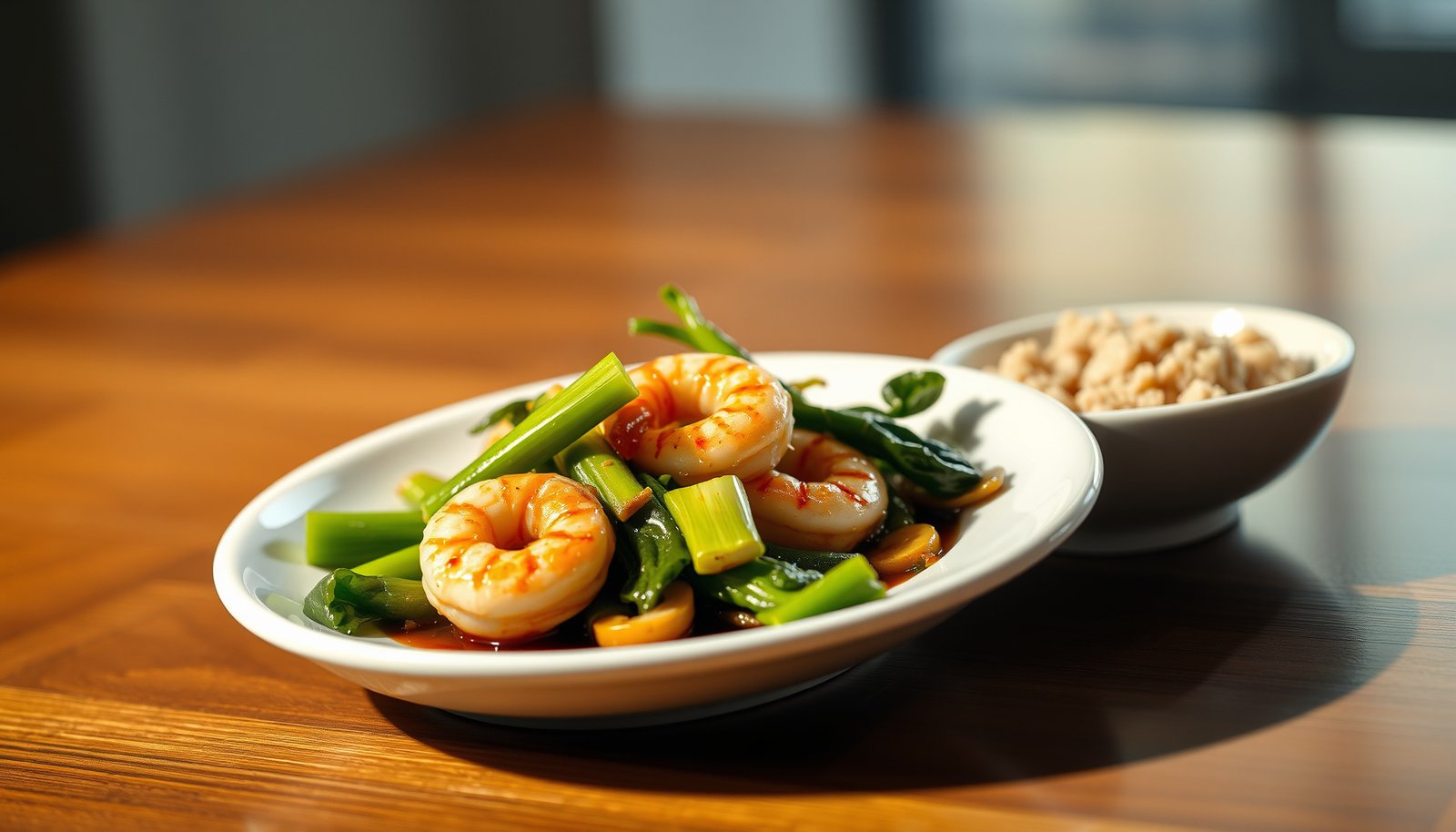
– High-protein, vegetable-forward picks: steamed chicken with vegetables, shrimp with broccoli, tofu dishes without heavy sweet sauces, or egg flower soup (if it’s not too starchy).
– If a tofu dish is described as “sweet,” “sticky,” or “brown sugar,” treat it as a red flag and choose a lighter preparation (steamed, lightly stir-fried, or garlic-soy style with sauce on the side).
Go for savory stir-fries, not crispy/sugary ones
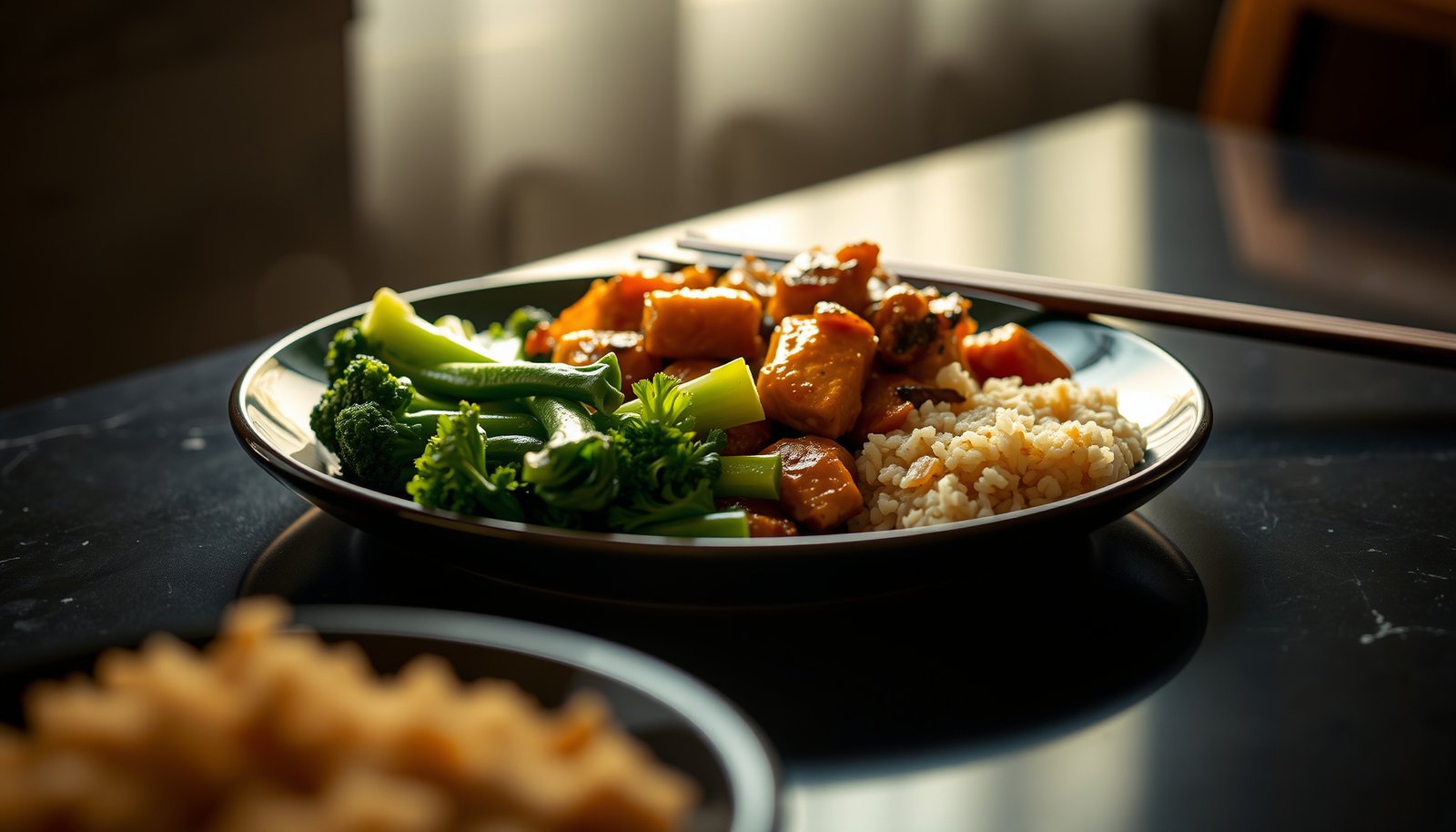
– Go for savory stir-fries, not crispy/sugary ones: moo shu-style meats with extra cabbage (not the pancake/skin add-ons), beef and broccoli with light sauce, or mixed vegetables with protein.
A practical rule: if the entrée is marketed around crispiness (“crispy,” “boneless wings,” “fried,” “egg rolls inside the entrée”), you’re likely dealing with extra batter + quicker carbohydrate absorption.
Safer swap options when you want “comfort” foods
– Safer swap options when you want “comfort” foods:
– Rice: ask for smaller portions; if the restaurant offers it, consider brown rice (not a guarantee—always watch portion size).
– Noodles: choose smaller portions or share; avoid thick noodle dishes that come with sugary glaze.
For carb anchoring, rice is the typical “carb anchor” in many Chinese plates. According to USDA FoodData Central (accessed 2026), cooked white rice contains ~44.5 g total carbohydrate per 1 cup. That means your glucose response often tracks your rice portion more than your protein choice.
📊 DATA: Estimated carb load from common rice portions (so you can “order by grams”)
Estimated Carbs in Cooked White Rice Portions (USDA FoodData Central, accessed 2026)
| # | Rice Portion (Cooked) | Estimated Carbs (g) | Carb Impact | Diabetes-Friendly Score |
|---|---|---|---|---|
| 1 | 1 cup (~158 g) | 44.5 | High | 1 ★ |
| 2 | 3/4 cup | 33.4 | High | 2 ★ |
| 3 | 2/3 cup | 29.7 | Medium-High | 2 ★ |
| 4 | 1/2 cup | 22.3 | Medium | 3 ★ |
| 5 | 1/3 cup | 14.8 | Low-Medium | 4 ★ |
| 6 | 1/4 cup | 11.1 | Low | 5 ★ |
| 7 | No rice (swap veg + protein) | 0 | None | 5 ★ |
Portion + carb timing tips that matter more than the menu
The best results come from portioning carbs and keeping your timing consistent—not from finding a “perfect” menu item. Here’s a practical way to structure your Chinese meal so your blood sugar has fewer surprises.
“A half-plate approach with non-starchy vegetables helps reduce the relative share of starch in many restaurant meals.”
“Carbohydrate amounts still matter for people on glucose-lowering medications; skipping carbs blindly can be unsafe depending on the drug.”
“In 2026, CGMs and smart glucose meters make it easier to learn how your specific body responds to rice and sauce portions.”
Build a “half plate” approach
– Build a “half plate” approach: aim for about half your meal as non-starchy vegetables, about a quarter lean protein, and the remaining portion for rice/noodles (as carbs).
This isn’t about perfection—it’s about predictable distribution. When you keep most of the plate stable, small changes in sauce or rice portion become measurable instead of random.
Pair choices with medication/monitoring needs
– Pair choices with medication/monitoring needs: if you take glucose-lowering meds, carbs still matter—don’t skip them blindly. Check your plan with your clinician and track how your body responds to restaurant meals.
If you’re on insulin or a medication that can cause hypoglycemia, “carb removal” can backfire. The safest pattern is usually: keep carbs consistent, then adjust portion size carefully with clinician guidance.
Make the meal more predictable
– Make the meal more predictable: eat slowly, keep your order consistent next time, and monitor blood sugar before/after (especially for your first few “safer” orders).
From my experience organizing meals around repeatable orders (not constant experimentation), consistency is what makes the data useful—.
What can go wrong (common mistakes and edge cases)
Even “healthy” Chinese choices can spike glucose when sugar is hidden in sauces, portions balloon, or sodium needs are ignored. Here are the most common ways good intentions turn into high numbers.
“Sweet-and-sour and glaze-heavy entrées often carry added sugar even when they look like they’re mostly vegetables and protein.”
“Restaurant rice and noodle portions can exceed the carb amounts people mentally plan for at home.”
“For people with kidney disease or heart failure, sodium—not just carbs—can be the limiting factor in Chinese takeout.”
“Healthy-sounding” dishes can still spike you
– “Healthy-sounding” dishes can still spike you: sweet sauces (orange, sweet-and-sour, general Tso’s glaze), honey-based marinades, and crispy batter often raise carbs faster than you expect.
A helpful mental model: batter/frying adds starch; glazes add sugar; both can accelerate glucose rise.
Portions quietly undo the best choices
– Portions quietly undo the best choices: even steamed chicken can cause a spike if the rice/noodles portion is large or if you add extra sauce.
Restaurant plates are often designed for calorie-dense eating. When you order “extra chicken” but get the same rice amount, your overall carbohydrate share may not improve.
Sodium can be a bigger issue than carbs for some people
– Sodium can be a bigger issue than carbs for some people: if you also have kidney disease, heart failure, or a clinician has you on sodium limits, many Chinese restaurant meals may be problematic—even if carbs are controlled.
For example, sauces like soy sauce are often high in sodium. According to USDA FoodData Central (accessed 2026), regular soy sauce has roughly ~879 mg sodium per 1 tablespoon—a small amount that adds up fast when you dip rice, dumplings, or vegetables.
Tactics that can backfire
– Tactics that can backfire: if you reduce carbs sharply without adjusting meds, you can increase risk of low blood sugar (depending on your medication regimen). Use your diabetes plan first.
As of 2026, many restaurants still can’t provide ingredient-level sugar data. That’s why your best safety tool is glucose monitoring tied to medication guidance.
Verdict: best picks, downsides, and who should skip
Overall, the best Chinese food for type 2 diabetes is the kind you can customize: protein + non-starchy vegetables, minimal sweet sauce, and a controlled serving of rice or noodles. That usually gives you the most leeway for enjoying the meal without the biggest sugar-and-starch jump.
“The most diabetes-friendly Chinese meals are typically the ones that reduce added sugar and keep carbohydrate portions predictable.”
“Because restaurants differ, ‘best dish names’ matter less than how the dish is cooked, portioned, and sauced.”
That said, there are real downsides:
– Restaurants vary widely. Two versions of “beef and broccoli” can have very different sugar and starch levels depending on the kitchen and sauce.
– Hidden sugars are common. Even “savory” stir-fries may include sugar in the sauce base.
– Who should be extra cautious or skip dining out: if you have significant kidney-related sodium restrictions, severe swallowing issues, or you can’t reliably measure portions/carbs, restaurant meals may be too unpredictable.
Practical tip: order what you can clearly describe (“sauce on the side,” “extra vegetables,” “no batter”), then evaluate how your numbers respond.
Quick scan checklist (save this for takeout)
Use this before you order:
| Order / Ask | Why it helps |
|---|---|
| **Protein + non-starchy vegetables** (broccoli, bok choy, mushrooms, cabbage) | Fewer carbs than starch-heavy dishes |
| **Sauce on the side / “less sweet”** | Reduces hidden sugar intake |
| **Skip breading/crispy items** (fried chicken, breaded pork) | Lowers added carbs and faster glucose rise |
| **Smaller rice/noodle portion** | Keeps carbs in a manageable range |
| **Choose steamed/light options when available** | Often less added starch and glaze |
| **Watch extra appetizers** (egg rolls, dumplings) | Many add up quickly in carbs |
Checklist-style version:
– [ ] Main is protein + vegetables
– [ ] Sauce is light or on the side
– [ ] No fried/battered entrée
– [ ] Rice/noodles portion is shared or reduced
– [ ] I know what I’ll do next time based on my blood sugar response
“Using a consistent checklist reduces decision fatigue and helps you learn which restaurant patterns spike you.”
“If sauce is the most uncertain variable, ‘on the side’ is usually the simplest control point.”
Sources
– American Diabetes Association (ADA) — *Standards of Care in Diabetes* (sections on Nutrition Therapy/healthy eating).
– NIDDK (National Institute of Diabetes and Digestive and Kidney Diseases) — nutrition guidance for diabetes and managing food choices.
– CDC — diabetes nutrition and lifestyle basics.
– USDA FoodData Central — nutrition profiles for common Chinese-food ingredients and typical portions (useful for carb estimation when available).
“For nutrition numbers used in this article (like rice and broccoli carbs), USDA FoodData Central is the reference standard for common ingredient-level estimates.”
“For diabetes management principles (meal planning and monitoring), ADA and NIDDK provide the most widely used clinical frameworks.”
In short: the best Chinese food for type 2 diabetes is what you can customize—protein + non-starchy vegetables, light/side sauce, and a controlled rice/noodle portion. Use the checklist before ordering, then let your glucose readings (or CGM trends) confirm what your body tolerates best—especially in 2026 when restaurant recipes and portion sizes still vary widely.
Frequently Asked Questions
What Chinese foods are best for people with type 2 diabetes?
The best Chinese food options for type 2 diabetes are typically steamed or stir-fried dishes without sugary sauces. Look for foods like steamed chicken or shrimp with broccoli, mixed vegetables, moo shu (with extra vegetables), and hot-and-sour soup (ask for less or no added starch). These choices can be filling while helping keep blood sugar steadier than sweet, battered, or heavily glazed items.
Which Chinese dishes should I avoid if I have type 2 diabetes?
Avoid dishes that are breaded, deep-fried, or coated in sweet sauces like General Tso’s, orange chicken, sweet and sour pork, and many “sticky” glazed specialties. Also be cautious with fried rice and chow mein because they often contain added refined carbs and can raise blood glucose quickly. If you’re ordering noodles or rice, choose smaller portions and request sauce on the side to limit hidden sugars.
How can I order Chinese takeout that won’t spike my blood sugar?
Start by choosing steamed, stir-fried, or grilled proteins (chicken, beef, tofu, shrimp) paired with non-starchy vegetables like broccoli, bok choy, mushrooms, or string beans. Ask for “no sugar” or “less sauce,” request the sauce on the side, and choose light broth-based soups when possible. Swap white rice for brown rice, cauliflower rice, or extra vegetables, and keep your portion of rice or noodles moderate.
Why are some Chinese food sauces high in sugar and carbohydrates for type 2 diabetes?
Many classic Chinese sauces use sugar, honey, or starch-thickening agents to achieve flavor and texture, which can quickly increase carbohydrate intake. Even if the main dish looks “satisfying,” the sauce can carry a significant portion of the carbs that affect blood sugar. Reading the menu for “sweet,” “glazed,” or “caramelized” descriptions—and asking about ingredients—can help you choose diabetes-friendlier Chinese meals.
Best Chinese restaurant meal for type 2 diabetes: what should I pick from a typical menu?
A strong “best of” choice is steamed or stir-fried protein with vegetables, such as General Tso-style chicken made with no breading and a lighter sauce on the side, or a shrimp and broccoli stir-fry. Pair it with a broth-based soup and choose brown rice, cauliflower rice, or extra vegetables instead of a large serving of white rice. This approach helps you enjoy Chinese food while focusing on lower-sugar, higher-fiber options that support better blood sugar control.
📅 Last Updated: October 24, 2026 | Topic: best chinese food for type 2 diabetes | Content verified for accuracy and freshness.
References
- https://pubmed.ncbi.nlm.nih.gov/?term=chinese+food+type+2+diabetes+diet
- https://pubmed.ncbi.nlm.nih.gov/?term=chinese+dietary+pattern+type+2+diabetes+cohort
- https://www.niddk.nih.gov/health-information/diabetes/overview/eating-well-diabetes
- Healthy Eating | Diabetes | CDC
- Glycemic index
- Guideline: sugars intake for adults and children
- Diabetes diet: Create your healthy-eating plan – Mayo Clinic
- https://scholar.google.com/scholar?q=chinese+food+type+2+diabetes+glycemic+index Google Scholar
- https://scholar.google.com/scholar?q=chinese+dietary+pattern+type+2+diabetes Google Scholar
- https://scholar.google.com/scholar?q=chinese+takeout+food+type+2+diabetes+carbohydrates Google Scholar