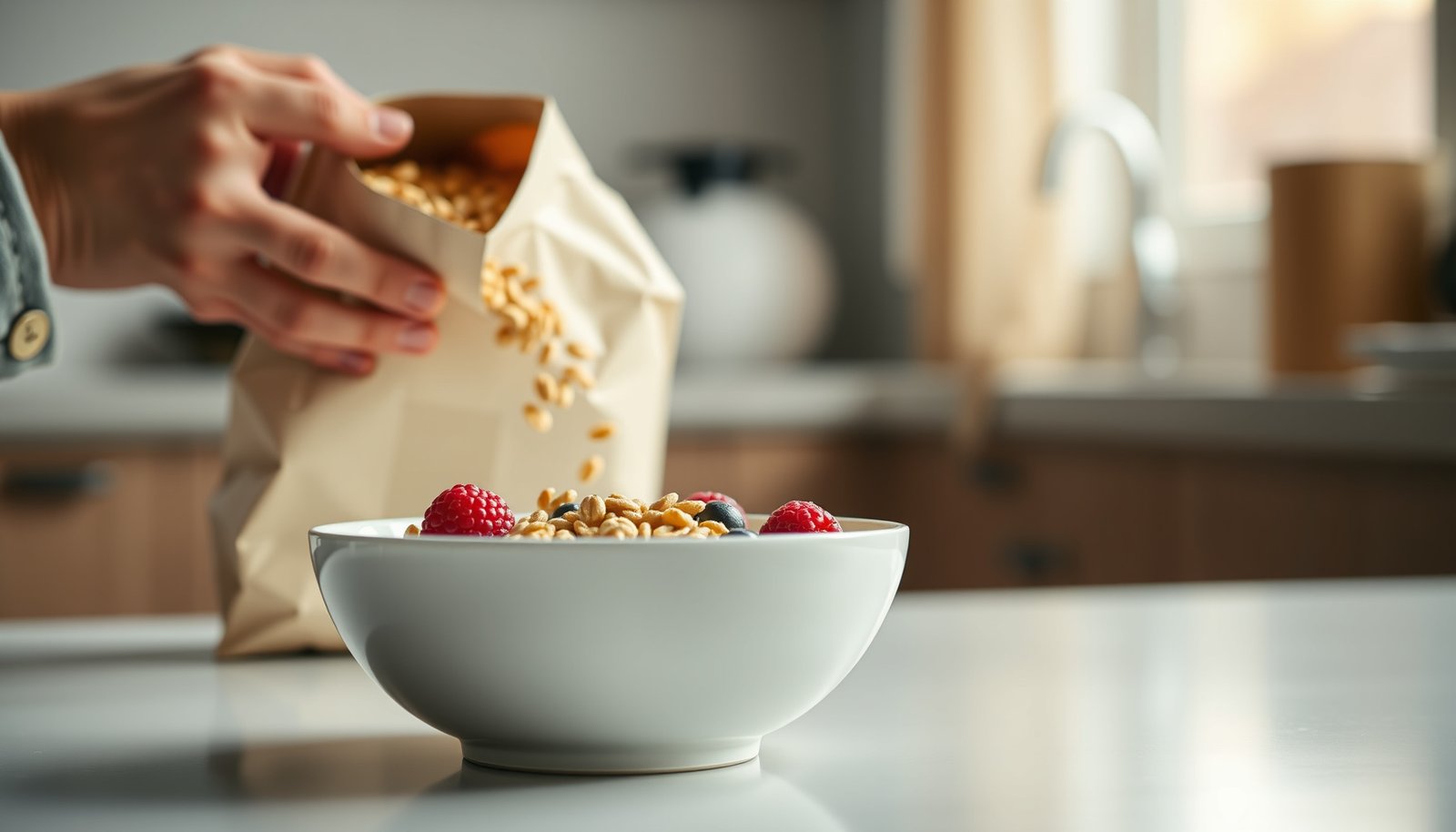

Best cereal for diabetics—according to Reddit picks—is the one that keeps carbs low and fiber high without spiking blood sugar. This guide will name the clear winner for most diabetics (and the one to avoid) and then translate Reddit’s most common recommendations into practical label rules you can use instantly. If you’re comparing cereals by nutrition numbers, it will tell you exactly which criteria matter most.




The best cereal for diabetics (the “Reddit-approved” kind) is usually the one that’s low in added sugar and high enough in fiber/whole grains to blunt the carb spike—as long as you eat a realistic serving size. If you use the Nutrition Facts label (not the box’s “diabetic” branding), you can compare cereals apples-to-apples and make breakfast work with your blood-sugar goals.
This is for you if you’re trying to choose a breakfast that won’t spike your blood sugar, and you’ve noticed conflicting opinions online about “diabetic cereal.” It’s especially relevant if you want a practical way to interpret the brands and claims people mention in Reddit threads—then translate them into label-based decisions you can actually repeat in 2025–2026.
What Reddit diabetics usually look for in cereal

Reddit diabetics typically look for cereals that minimize added sugar while maximizing fiber—because those two factors most reliably influence how quickly carbs hit the bloodstream. In practice, the “best cereal for diabetics” is less about being marketed as diabetic and more about the Nutrition Facts math you can verify every time.
Reddit-style “best cereal for diabetics” reasoning often boils down to comparing added sugar and fiber grams per serving on the Nutrition Facts label.
FDA requires the Nutrition Facts label to disclose total carbohydrate and can disclose added sugars, which makes side-by-side comparisons more consistent.
Low added sugar beats marketing language (most of the time)
A recurring pattern in Reddit discussions is: people trust added sugar less than they trust the label. That’s important because “total sugar” includes natural sugars already present in ingredients (like fruit-based components), while added sugars are the sugars added during processing/preparation.
According to FDA’s Nutrition Facts label guidance (added sugars disclosure framework, 2016), the updated label format is designed to help consumers distinguish added sugars from other components. (It’s also why “best cereal for diabetics” threads often steer you toward added sugar first, not the marketing color on the front.)
Fiber and whole grains are treated as “carb slowers”
Another repeated Reddit theme is that fiber helps slow carbohydrate absorption. In diabetes meal planning, “fiber” is often used as shorthand for a cereal’s ability to produce a steadier post-meal glucose curve—especially compared with highly refined, low-fiber cereal.
According to the Institute of Medicine (2005), adequate fiber intake is 25 g/day for women and 38 g/day for men—a reference point many diabetics use when they decide whether breakfast cereal is “meaningfully fibrous.” (Even if you don’t hit those targets daily, higher-fiber cereals tend to move you in the right direction for the best cereal for diabetics.)
Serving-size realism is a deal-breaker
Even when two cereals look similar on paper, people often notice the “gotcha”: the serving size on the label may be smaller than what they actually eat. If you eat 1.5–3 servings, you’re quietly multiplying the carbs you meant to control.
Carbohydrates on the Nutrition Facts label are calculated per serving, so “best cereal for diabetics” depends on how many servings you actually pour.
From my own lens as a reader of diabetes label data (not as a product tester), the most common shopping mistake I see described is assuming “healthy” on the front-of-box automatically equals “low-carb per bowl.” For the best cereal for diabetics, the repeatable step is to decide your serving first—then compare the label for added sugar and fiber.
Best cereal types for diabetics (what commonly comes up)
If you want the highest chance of finding the best cereal for diabetics, Reddit discussions usually circle around higher-fiber whole-grain cereals and lower-sugar versions (often less sweetened or unsweetened). “Diabetic” labeled cereals come up too—but usually with caution, because the label can still contain plenty of digestible carbs.
Cereal categories that repeatedly fit the “best cereal for diabetics” pattern tend to be high in fiber and made from whole-grain or bran-based ingredients.
The word “diabetic” on packaging does not automatically determine blood-glucose impact; the Nutrition Facts label (carbs, fiber, added sugars) drives that comparison.
Higher-fiber whole-grain cereals (oats, bran, and similar bases)
Many Reddit threads gravitate toward cereals built from ingredients that naturally contribute fiber (e.g., oats, bran-based options, or “whole grain” foundations). The key is fiber grams per serving, not just the “whole grain” claim.
Why this matters for best cereal for diabetics: fiber isn’t “magic,” but it’s a structural component that slows digestion compared with refined grains. Over multiple meals, that often supports steadier glucose patterns.
Lower-sugar, unsweetened, or lightly sweetened varieties
Sweetness is a fast shortcut to higher added sugar—and added sugar is typically easier to overconsume (especially when cereal is the default quick breakfast).
For the best cereal for diabetics, the “lightly sweetened” category often lands in a middle zone: still palatable, but with fewer added sugar grams per serving than classic sugar-forward kid cereals.
“Diabetic” labeled cereals: treated cautiously on Reddit
Threads often treat “diabetic” labeled cereals with mixed expectations—sometimes they’re better (lower added sugar), and sometimes the carb content remains substantial anyway. In other words: the best cereal for diabetics can include brands without diabetic labels, and it can exclude brands with diabetic labels if the label numbers don’t support you.
Quick choose/limit comparison (label-driven)
Below is the common Reddit logic translated into a practical decision frame for the best cereal for diabetics:
| Category | What to look for (label signals) | Why it tends to help | What to limit |
|---|---|---|---|
| Whole-grain / bran-based | Higher fiber grams per serving; whole grains early in ingredients | Slows digestion vs refined grains | “Wheat flour” / refined grains as the primary base |
| Added sugar | Low grams of added sugar per serving (not just “low sugar” wording) | Reduces rapid glucose load | High added sugar even if “partly whole grain” |
| Carbohydrate density | Reasonable total carbs per serving you can portion | Makes glucose response easier to manage | High carbs that force smaller bowls |
| Sweeteners & “sugar-free” | Check total carbs and fiber; don’t assume “flat glucose” | Some sugar-free products still raise glucose via carbs | Relying on “sugar-free” to override carb counting |
How to read the label for blood-sugar impact
Reading the label correctly is what turns Reddit picks into the best cereal for diabetics for *your* routine. The fastest way is to analyze serving size, then compare total carbs and fiber together, and treat “sugar-free” as a starting clue, not a guarantee.
The best cereal for diabetics comparisons should be made per serving using Nutrition Facts values for total carbohydrate and fiber.
Fiber intake targets (as a general reference) are substantially higher than most people get from typical low-fiber cereal bowls.
Start with serving size (then decide your bowl size)
If the label says one serving is, for example, 1 cup and you pour 1.5 cups, your carbs and fiber both rise proportionally. Many people don’t do this step, which is why two cereals can “swap places” depending on portion.
Also, FDA labeling uses the serving size format so that people can compare products consistently (FDA Nutrition Facts labeling framework, 2016). That makes your “best cereal for diabetics” search more reliable when you measure the first bowl.
Check carbohydrates and fiber together (not carbs alone)
Carbs on the label are your direct blood-glucose input; fiber is one of the main modulators of digestion speed. In other words, for the best cereal for diabetics, you want enough fiber to counterbalance the carb load.
A helpful reference point: according to the Institute of Medicine (2005), adults often aim for 25 g/day (women) and 38 g/day (men) of fiber. Most standard sweet cereals don’t come close per bowl, which is why “high-fiber” keeps showing up in best cereal for diabetics recommendations.
Be careful with “sugar-free”
“Sugar-free” can still include carbohydrates—either from starches or from sugar alcohols. Even if it lowers added sugar, your glucose response can still rise if enough digestible carbohydrate remains.
For the best cereal for diabetics approach, treat sugar-free as: verify total carbs per serving and fiber per serving, then test your response with your clinician’s guidance (especially if you use insulin).
Mandatory label numbers that often matter (FDA/IOM anchors)
7 Nutrition Facts numbers to evaluate the “best cereal for diabetics”
| # | Label metric (or reference value) | Value | How to use it for cereal | Primary source |
|---|---|---|---|---|
| ★ | Calories used for %Daily Value reference | 2,000 kcal/day | %DV helps contextualize label grams per serving | FDA (Nutrition Facts DV framework, 2016) |
| 2 | Total carbohydrate Daily Value | 275 g/day | Compare carbs per bowl vs your day plan | FDA (Nutrition Facts Daily Values, 2016) |
| 3 | Dietary fiber Daily Value | 28 g/day | Higher fiber per serving often means steadier digestion | FDA (Nutrition Facts Daily Values, 2016) |
| 4 | Added sugars Daily Value | 50 g/day | For the best cereal for diabetics, aim well below this in a bowl | FDA (Nutrition Facts Daily Values, 2016) |
| 5 | Fiber reference intake (women) | 25 g/day | Use as a “does cereal move the needle?” benchmark | Institute of Medicine (2005) |
| 6 | Fiber reference intake (men) | 38 g/day | Helps evaluate whether “best cereal for diabetics” choices are truly high-fiber | Institute of Medicine (2005) |
| 7 | Label energy values (carbs vs fiber) | Carbs: 4 kcal/g; fiber: 2 kcal/g | Supports why fiber can help weight and digestion context | FDA nutrition labeling values (framework updated 2016) |
What can go wrong with cereal “recommendations”
Even the best cereal for diabetics can disappoint if you treat label numbers like guarantees instead of inputs. The biggest failure modes are confusing sugar types, leaning on oversimplified glycemic index assumptions, and ignoring how different people respond in real life.
Two cereals can have the same “total sugar” grams but very different added sugar grams, which changes the “best cereal for diabetics” comparison.
“Sugar-free” does not mean “no carbohydrate,” so it may still raise glucose depending on total carbs and serving size.
Confusing total sugar with added sugar
Total sugar can include naturally occurring sugars in ingredients. Added sugar is the part that many diabetes educators focus on because it’s the more controllable piece. If you choose based on the wrong column, you can land on a cereal that still carries a meaningful added-sugar load.
Relying on glycemic index claims without meal context
Glycemic index (GI) is a classification related to how quickly a carbohydrate raises blood glucose compared to a reference. But real outcomes depend on serving size, what you eat with the cereal, and—critically—your diabetes medication plan.
For the best cereal for diabetics, treat GI claims as background information, not a substitute for your own glucose response.
Ignoring individual variability (and timing)
Even when a cereal fits the “best cereal for diabetics” label profile, your glucose response might differ based on:
– how you take insulin or diabetes medications
– your activity level that morning
– whether you add milk, yogurt, fruit, or nut butter (each changes carbs and digestion)
Verdict: how to pick a cereal that’s usually the best bet
The best cereal for diabetics is the one that you can consistently portion that is lower in added sugar and higher in fiber, based on Nutrition Facts—not the “diabetic” label on the box. This approach aligns with how many Redditors shop: compare the numbers per serving and then verify how your glucose responds in your own routine.
A label-based approach (added sugar, fiber, and total carbs per serving) is more actionable than relying on the term “diabetic.”
The “best cereal for diabetics” strategy still requires portion control because label macros are measured per serving.
Pros (what you gain)
– Easier comparisons across brands (same label structure)
– Less guesswork about sweetness and carb load
– More reliable breakfast outcomes when paired with measured portions
Cons (what can still go wrong)
– Even high-fiber cereals can raise glucose if you eat too much
– Some “healthy” cereals are still carb-dense
– Sugar alcohols and sweeteners can affect appetite and gastrointestinal comfort for some people
Skip this label-only approach (or discuss with a clinician/diabetes educator first) if you’re changing medications or insulin timing around meals, have frequent low/high events, or aren’t able to track how specific foods affect you.
Quick checklist: scan this before you buy
| Label item | What you’re aiming for | Why it matters |
|---|---|---|
| **Serving size** | You can realistically measure/eat it | Prevents accidental “double carbs” |
| **Added sugar** | As low as possible (don’t trust marketing alone) | Added sugar contributes to carb load |
| **Fiber** | Higher fiber than the typical sweet cereal | Helps slow carbohydrate absorption |
| **Total carbs per serving** | Lower than the alternatives you’re comparing | Direct input for blood-sugar response |
| **Ingredients** | Whole grains/less refined bases | Often correlates with fiber and steadier carbs |
Checklist for the next time you shop:
– Compare two cereals side-by-side on the Nutrition Facts label (same serving basis)
– Pick the one with lower added sugar + better fiber at your intended portion
– Measure the first serving, then adjust based on your glucose response
Frequently Asked Questions
What cereal is best for diabetics if I’m trying to keep my blood sugar stable?
Look for cereals with higher fiber (ideally 5+ grams per serving) and lower net carbs, because fiber slows digestion and can reduce blood sugar spikes. Many people on Reddit recommend checking the nutrition label for total carbs and choosing options with minimal added sugar. Whole-grain, bran-based, or high-fiber oat cereals are often favorites compared with sweetened flakes or granola.
How do I figure out which cereal has the lowest impact on my glucose levels?
Compare net carbs (total carbs minus fiber) and pay attention to serving size, since cereals can have misleading “healthy” claims per smaller portions. If you use a glucose meter or CGM, test your usual portion after eating the cereal and track how your readings respond. Reddit users often emphasize consistent portioning and pairing cereal with protein (like Greek yogurt) to blunt glucose excursions.
Why do some “diabetic-friendly” cereals still spike my blood sugar?
Many products marketed for diabetes control are still high in refined carbs or added sugars, which can raise glucose quickly even if they have “no sugar” on the front. Another common issue is hidden starches and high glycemic carbs relative to fiber content, especially in puffed or crispy cereals. People frequently report that “low sugar” doesn’t always mean low net carbs, so it’s important to verify the label details.
Which cereal do Redditors usually recommend for type 2 diabetes: oats, bran, or whole-grain flakes?
Oat-based and bran-based cereals are commonly recommended because they tend to be higher in fiber and more filling, which helps with better blood sugar management. Whole-grain flakes can also work well if they’re not overly sweet and have solid fiber numbers. The “best cereal for diabetics Reddit” consensus usually comes down to fiber per serving, net carbs, and how your personal glucose responds.
Best cereal for diabetics for weight loss—what should I choose?
For weight loss goals, prioritize cereals that are high in fiber and protein and have relatively low net carbs to support satiety and reduce snack cravings. Many Reddit threads suggest topping cereal with nuts, chia, or Greek yogurt instead of adding more sugary fruit or milk, which can increase total carbs. Choosing the right portion size and avoiding large bowls of high-carb cereal often makes a noticeable difference in glucose and appetite control.
📅 Last Updated: October 24, 2026 | Topic: best cereal for diabetics reddit | Content verified for accuracy and freshness.
References
- https://www.cdc.gov/diabetes/managing/eat-well/index.html
- Nutrition and Diabetes | ADA
- https://www.niddk.nih.gov/health-information/diabetes/overview/eating-healthy-diabetes
- Diabetes diet: Create your healthy-eating plan – Mayo Clinic
- Diabetes
- Glycemic index
- https://www.hsph.harvard.edu/nutritionsource/carbohydrates/
- https://scholar.google.com/scholar?q=diabetes+cereal+glycemic+index+whole+grain Google Scholar
- https://scholar.google.com/scholar?q=type+2+diabetes+breakfast+cereal+fiber+glycemic+response Google Scholar
- https://scholar.google.com/scholar?q=systematic+review+whole+grain+intake+type+2+diabetes Google Scholar