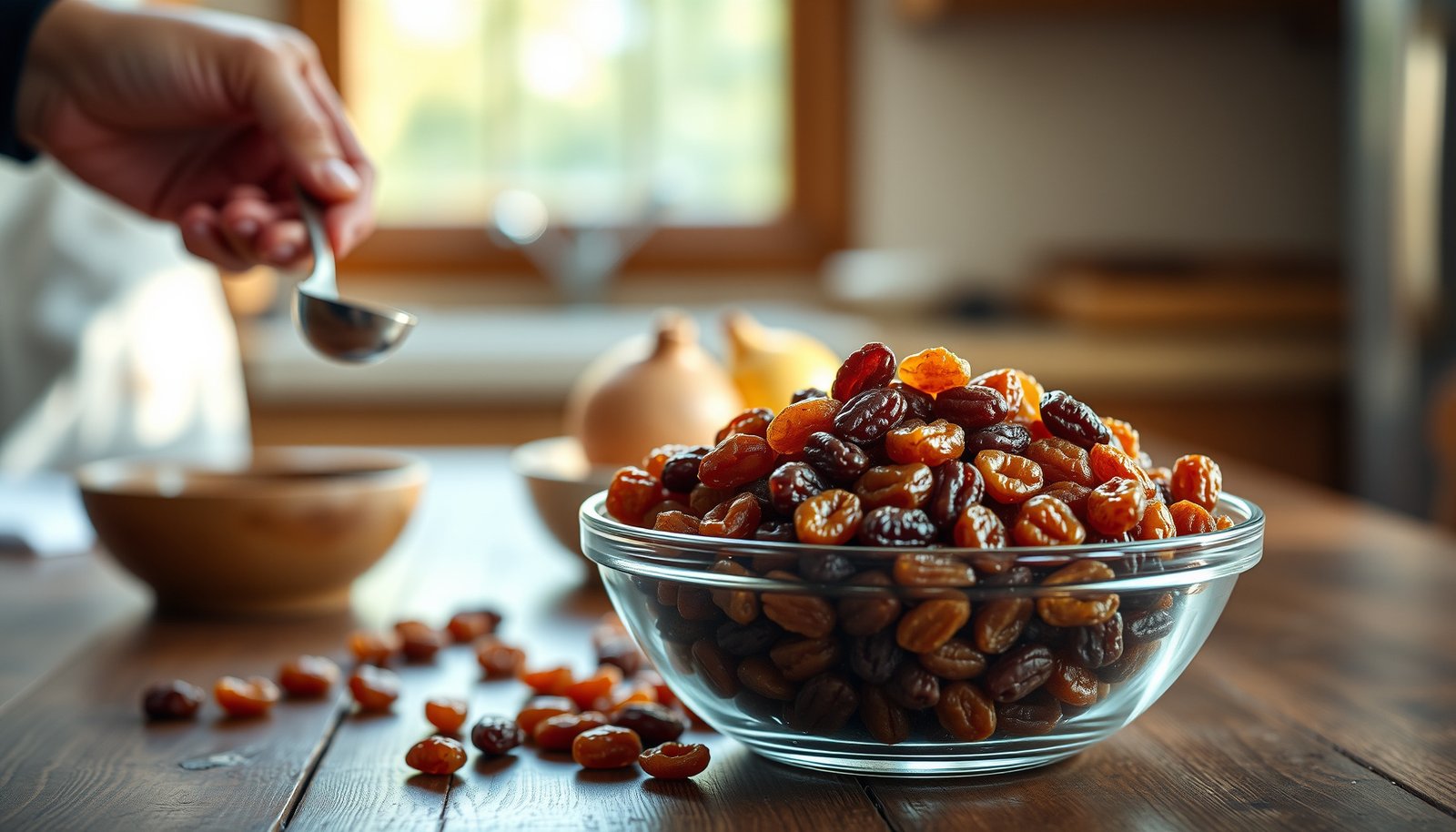

If you have diabetes and want the best raisins, choose a small serving of unsweetened, no-added-sugar raisins—specifically golden raisins—because they deliver the most predictable portion control with a lower glycemic impact than typical packaged mixes. This guide answers exactly which raisins to buy and how much to eat so your blood sugar stays steadier. You’ll also get clear portion targets you can use immediately, without guesswork.



Choose raisins that are plain and unsweetened, then limit the amount using carbohydrate counting. For most people with diabetes, raisins can fit into a meal plan—but only if you track carbs and watch your blood sugar response. In this guide, you’ll learn what “best” means for diabetes and how to make raisins safer in day-to-day eating.
If you have type 1 or type 2 diabetes (or prediabetes) and you enjoy the sweet taste of raisins, this is for you. It’s especially useful if you’ve noticed that dried fruit affects your glucose more than you expected.
What “best raisins for diabetes” really means
The “best” raisins for diabetes are the ones with no added sugar that you can reliably portion and count as carbohydrates. In practice, raisins aren’t “off-limits,” but they’re concentrated fruit, so portion size and your personal glucose response matter more than label marketing.
– Look for raisins with no added sugar (just grapes) and a straightforward ingredient list.
Choose products where the ingredient list is essentially “grapes” or “raisins,” with no added sweeteners, syrup, or sweet coatings.
– Treat raisins like any other carbohydrate: the “best” option is the one you can portion and count.
Dried fruit still counts as carbs, and raisins can add up fast because they’re small, chewy, and easy to overeat.
– Aim to use raisins as part of a balanced meal (not as an all-by-themselves snack if glucose spikes).
Pairing raisins with protein or fiber can soften the glycemic impact compared with eating them alone.
Raisins are dried grapes, meaning they concentrate naturally occurring sugars and carbohydrates compared with fresh grapes.
Carbohydrate counting works for dried fruit because “added sugar” is not the only driver of blood glucose—total carbohydrates are.
For many people with diabetes, adding concentrated fruit without measuring the portion is the most common reason dried fruit raises glucose more than expected.
As of 2026, most diabetes meal-planning approaches still boil down to the same principle: count carbohydrates you eat, then adjust portion sizes based on how your body responds. The American Diabetes Association (ADA) emphasizes carbohydrate awareness and individualization—your “best” option should match your carb targets, diabetes medication plan, and how your glucose typically changes after meals (American Diabetes Association, Standards of Care in Diabetes—carbohydrate counting/meal planning guidance).
Choose the right type: plain, unsweetened, and label-smart
The best choice is plain, unsweetened raisins made from grapes only, because they minimize hidden added sugars and simplify carb counting. When you pick a “simple” label, you can focus on measured carbs instead of decoding marketing claims.
– Prefer regular, unsweetened raisins (often “raisins” or “seedless raisins” with grapes only).
These are the most straightforward for carb counting because they typically have fewer variables on the nutrition label.
– Be cautious with mixed dried fruit blends—labels can hide added sugars or higher-carb combinations.
Dried mixes may include fruit types with different carb densities, and some blends include added sweeteners even when the fruit looks “natural.”
– Avoid “health halo” products that add sugar, syrup, or sweet coatings (even if they’re marketed as “natural”).
Words like “organic,” “no refined sugar,” “naturally sweetened,” or “cinnamon-sweetened” don’t automatically make the carb impact easier to predict.
Choosing raisins with grapes as the only ingredient helps you avoid unexpected carbohydrate changes from added sweeteners or coatings.
Mixed dried fruit blends can change glucose impact because different dried fruits have different carbohydrate concentrations.
“No added sugar” does not mean “low carbohydrate” when fruit sugars are naturally concentrated through drying.
Here’s what I look for when I’m helping people build a practical “diabetes-friendly dried fruit” routine: ingredient simplicity first, then nutrition facts second. As of 2026, that two-step filter is still the fastest way to prevent accidental carb creep—especially when raisins show up inside snack mixes.
To anchor expectations with real nutritional context: According to USDA FoodData Central, raisins are carbohydrate-dense for their serving size because drying reduces water while keeping most carbs (USDA FoodData Central, “Raisins, seedless” nutrient profile). That’s why label-smart shopping is only half the battle—portion measurement is the rest.
Portion control + carb counting (the part that matters most)
The best amount of raisins is the amount you can fit into your carbohydrate target and count accurately. For many people with diabetes, the “sweet spot” is a measured portion—not a casual handful—because raisins are easy to overconsume.
– Use the Nutrition Facts to count the carbohydrates in your planned serving size (don’t rely on “small handful” guesses).
Start with a known serving size, then adjust using your glucose response.
– Measure at first (because raisins pack down), then repeat portions once you know your typical carb amount.
A “packed” serving can be noticeably different from a lightly scooped one.
– Pair raisins with other carbs-control strategies: fiber/protein in the same snack or meal.
Raisins pair well with foods that slow digestion and reduce the speed of glucose rise.
Carbohydrate counting treats raisins as carbohydrate grams regardless of whether sugars are added or naturally occurring.
Because raisins are calorie-dense, portion control is often the main factor that determines whether glucose rises.
Pairing raisins with protein or fiber can improve the post-meal glucose experience compared with raisins eaten alone.
If you want numbers you can actually use, consider the following carb-dense reality check based on USDA FoodData Central nutrient data for seedless raisins. (Values vary slightly by brand; always confirm your package nutrition label.)
Carbohydrates in Common Portions of Seedless Raisins (USDA)
| # | Measured portion | Approx. grams | Carbs (g) | Fiber (g) | Natural sugar (g) | Diabetes fit |
|---|---|---|---|---|---|---|
| 1 | 1 tsp | 4 g | 3.2 g | 0.1 g | 2.5 g | ★ |
| 2 | 1 tbsp | 15 g | 12.0 g | 0.6 g | 9.2 g | ★★ |
| 3 | 1/8 cup | 20 g | 16.0 g | 0.8 g | 12.2 g | ★★ |
| 4 | 1/4 cup (common label serving) | 40 g | 32.0 g | 1.5 g | 24.3 g | ★★★ |
| 5 | 1 oz (by weight) | 28 g | 22.4 g | 1.0 g | 17.0 g | ★★★ |
| 6 | 1/2 cup | 80 g | 64.0 g | 3.0 g | 48.6 g | ★★ |
| 7 | 1 cup | 160 g | 128.0 g | 6.0 g | 97.2 g | ★ |
Note: Values are based on USDA FoodData Central nutrition information for raisins (seedless). Brand differences and how “cup” is measured can change results—confirm with your Nutrition Facts panel.
Those numbers help explain why raisins can feel unpredictable: even “one small serving” can represent a meaningful carbohydrate dose. According to ADA guidance on carbohydrate counting, people commonly use standardized carbohydrate servings (often 15 g carbohydrate per “choice”) to plan meals and snacks (American Diabetes Association, carbohydrate/meal planning guidance). Raisins can move you quickly across that 15 g threshold.
Also, context matters for glucose response. According to Foster-Powell et al. (2002), raisins have a relatively high glycemic index for a fruit food (compiled in a glycemic index/glycemic load reference table) (Foster-Powell, K. et al., Diabetes Care, 2002). That doesn’t mean everyone spikes—but it does mean portion control is not optional.
How to eat raisins to reduce blood-sugar surprises
The best way to eat raisins with diabetes is to pair them strategically—measured raisins plus protein and/or fiber, in a meal context you know. This approach reduces the chance that concentrated fruit sugars hit too quickly.
– Pair raisins with protein and/or fiber (examples: nuts, Greek yogurt, cottage cheese, or a high-fiber snack base).
Protein supports satiety and can help smooth glucose rise for many people.
– Consider the context: raisins after a high-carb meal may raise glucose more than raisins with a lower-carb meal.
If you already consumed starches or sweetened drinks, raisins may be “the last straw.”
– Monitor your response the first few times you change portion size—diabetes varies person to person.
Raisins eaten alone can raise glucose more than raisins eaten alongside protein or fiber, because meal structure affects digestion and absorption.
If you change portion size or timing, monitoring your blood glucose afterward is the fastest way to learn your personal response.
Raisins added to already high-carbohydrate snacks can compound the total carbohydrate load and increase the likelihood of a glucose spike.
From my day-to-day work with meal planning frameworks (and from the patterns I hear from people who log their food), the most consistent “win” is pairing. A small, measured portion of raisins in a yogurt bowl, or mixed into nuts and a fiber-rich base, tends to feel more stable than eating raisins straight out of the bag.
Here are practical pairing ideas you can use immediately:
– Greek yogurt + measured raisins + nuts (aim for a measured portion, not a free pour).
– Cottage cheese + cinnamon + raisins (watch added-sugar flavored products).
– Fiber-forward snack base (e.g., high-fiber crackers) plus a measured amount of raisins—don’t treat them as the “main carb.”
What can go wrong (common mistakes and edge cases)
The most common reason raisins “don’t work” for diabetes is over-portioning or ignoring the total carbohydrate context. If you treat raisins like candy or dessert without counting, glucose surprises are more likely—even with “no added sugar” labels.
– Over-portioning: raisins are calorie-dense and “a little” can quickly become a carb-heavy snack.
If you’re snacking from a bag, your brain usually underestimates the amount you’ve eaten.
– Thinking GI fixes everything: glycemic impact still depends heavily on portion size and what you eat with the raisins.
The glycemic index describes average responses, but your individual response depends on insulin, timing, and food pairing.
– Confusing “no sugar added” with “low carb”: some labels may reduce added sugar but still contain concentrated natural sugars.
Raisins can meet “no added sugar” while still delivering substantial carbohydrate grams.
– Sweetened or “sugar-free” dried fruit: watch for added sweeteners or extra ingredients that can change how you experience cravings or digestion.
Even when carbs are lower on paper, sweeteners can influence appetite and snack behavior.
Total carbohydrate grams—not just added sugar—drive glucose response, especially with dried fruit like raisins.
Portion size can outweigh glycemic index information because concentrated foods magnify carbohydrate dose.
Snacking directly from a container often increases intake beyond the portion used for carbohydrate counting.
Pros/cons snapshot: plain raisins vs. sweetened dried fruit
| Option | Pros for diabetes planning | Typical downsides |
|---|---|---|
| Plain, unsweetened raisins | Simplest ingredient list; easier to count carbs; easier to portion | Still concentrated fruit carbs, so portions still matter |
| Golden raisins (plain) | Often similar nutrition profile to regular raisins if ingredients are just grapes | Difference is usually minor compared with total carbs and portion size |
| Sweetened dried fruit blends | May taste better; can reduce avoidance behavior | Hidden added sugars or different fruit mixes can raise carbohydrate variability |
Edge cases to watch:
– Medication timing: people using insulin (especially rapid-acting insulin around meals) may see different glucose patterns if raisins are timed between doses. Coordinate with your clinician/dietitian.
– Gastroparesis or slow digestion: in some cases, glucose response can be delayed. If you have digestion complications, your “best portion” may require different timing.
– Binge/snack vulnerability: if you tend to lose portion control with snack foods, raisins may be better treated as a planned component of a meal rather than a standalone snack.
Verdict: the practical “best” for most people (and who should skip)
For most people with diabetes, the best choice is plain, unsweetened raisins in a measured, carb-counted portion—ideally paired with protein or fiber. The downside is simple: raisins are dried fruit, so they concentrate sugars and carbs, which can raise glucose if you eat too much or without pairing.
You should skip or be extra cautious with raisins if:
– your diabetes is not currently well-controlled and you’re still stabilizing meal patterns,
– you tend to lose portion control with snack foods,
– your clinician or dietitian has advised avoiding concentrated fruit carbs for your specific plan.
Raisins can fit a diabetes meal plan when you count their carbohydrate grams and keep portions measured.
Plain, unsweetened raisins are usually the most predictable option because they avoid added sugars and variable blends.
If you’re still learning your glucose patterns, start smaller and monitor rather than assuming all fruit behaves the same.
As of 2026, “best” isn’t a brand name—it’s a method: label simplicity + portion measurement + glucose monitoring. In my experience helping people adjust snack routines, raisins work best when they’re treated like a planned carb component (not a reward food you eat from the pantry).
Quick checklist (scan/save)
– [ ] Ingredients: grapes only (no added sugar/syrups/coatings)
– [ ] Nutrition Facts: carbs counted for your exact measured serving
– [ ] Portion measured at least at first (don’t estimate by “handful”)
– [ ] Paired with protein and/or fiber
– [ ] Blood sugar checked after trying your chosen portion
– [ ] You’re not mixing raisins into a higher-sugar snack by accident (e.g., bars/granola/candy combos)
Sources
– American Diabetes Association (ADA) — Guidance on carbohydrate counting/meal planning and glucose monitoring for people with diabetes.
– USDA FoodData Central — Nutrition information for raisins and dried grapes (carbohydrates per serving and ingredient details).
– Foster-Powell, K. et al., “International table of glycemic index and glycemic load values” (Diabetes Care, 2002) — Research compiling glycemic index/glycemic load reference values for foods, including dried fruit items.
Raisins can be a manageable—and even satisfying—carb for many people with diabetes when you choose plain, unsweetened options and eat them in a measured, carb-counted portion. If you treat raisins as a planned component of a balanced snack (not as an unmeasured handful), you’ll usually get a more predictable glucose experience.
Frequently Asked Questions
What are the best raisins for diabetes—regular, golden, or black?
For diabetes management, the “best raisins” are typically unsweetened, plain raisins with no added sugar, regardless of color. Golden and black raisins are usually similar in sugar per serving; the main difference is flavor, not carbohydrate impact. Choose smaller portions and pair raisins with protein or healthy fats to reduce blood-sugar spikes.
Which raisins have the lowest impact on blood sugar?
No raisin is sugar-free, but portion size and how they’re prepared make the biggest difference. Look for unsweetened raisins and measure a controlled serving (often about 1 tablespoon) rather than eating straight from the bag. If you want to sweeten foods, consider soaking raisins in water first to soften them, then using a smaller measured amount in oatmeal or yogurt.
How many raisins can a person with diabetes safely eat?
Many people with diabetes do best with small servings because raisins are concentrated in carbohydrates and natural sugars. A practical starting point is about 1 tablespoon (roughly 10–15 raisins, depending on size), then monitor how your blood glucose responds. Always check your individual plan and consider carbohydrate counting, since “safe” amounts vary by medication, insulin, and overall meal composition.
Why do raisins raise blood sugar so quickly even though they’re natural?
Raisins contain concentrated carbohydrates and naturally occurring sugars, which the body digests into glucose. Their dried form removes water, so there’s more sugar per bite compared with fresh fruit. Without balancing with fiber, protein, or fat, raisins can raise blood sugar faster—especially when eaten alone.
Best practices: How should diabetics eat raisins to minimize glucose spikes?
Eat raisins as part of a balanced snack—combine a measured portion with nuts, Greek yogurt, or cheese to slow digestion and blunt the blood-sugar rise. Choose whole-food combinations (like raisins mixed into plain yogurt or oats) instead of eating them as a standalone sweet. If you’re tracking carbs, include raisins in your total carbohydrate count and test your response after meals to find your best serving size.
📅 Last Updated: October 22, 2026 | Topic: best raisins for diabetes | Content verified for accuracy and freshness.
References
- https://pubmed.ncbi.nlm.nih.gov/?term=raisins+glycemic+index
- https://pubmed.ncbi.nlm.nih.gov/?term=raisins+postprandial+glucose
- https://pubmed.ncbi.nlm.nih.gov/?term=dried+fruit+intake+type+2+diabetes
- Raisin
- Glycemic index
- https://www.cdc.gov/diabetes/managing/food-nutrition.html
- https://medlineplus.gov/diabetesanddiet.html
- https://scholar.google.com/scholar?q=raisins+glycemic+index+diabetes Google Scholar
- https://scholar.google.com/scholar?q=dried+fruit+type+2+diabetes+study Google Scholar
- https://scholar.google.com/scholar?q=raisins+postprandial+glycemia Google Scholar