The best dogs for diabetic alert work are those that can consistently alert to meaningful glucose changes with clear, actionable behaviors. We judge candidates by documented training outcomes, responsiveness to scent cues under real-life distractions, temperament for close daily handling, and the quality of the program’s selection and follow-up. Typically, Labrador Retrievers and Standard Poodles stand out from the most reliable options due to their trainability and steady nature.



Diabetic alert dogs are usually “best” when they come from a dog-by-dog match for scent work, focus, and consistency—not just a specific breed. If you’re choosing one, prioritize temperament (calm, trainable), strong scent responsiveness, and a proven alert behavior that generalizes to real-life situations. In this guide, you’ll learn what traits matter most and how to vet training options so you don’t waste time on the wrong fit.
If you (or your family) live with diabetes and you’re exploring a service dog—or considering owner-training—this is for you. It’s especially relevant if you want glucose alerts for everyday settings (home, school/work, errands), not just a one-off behavior in a quiet room.
What makes a dog a strong diabetic alert dog
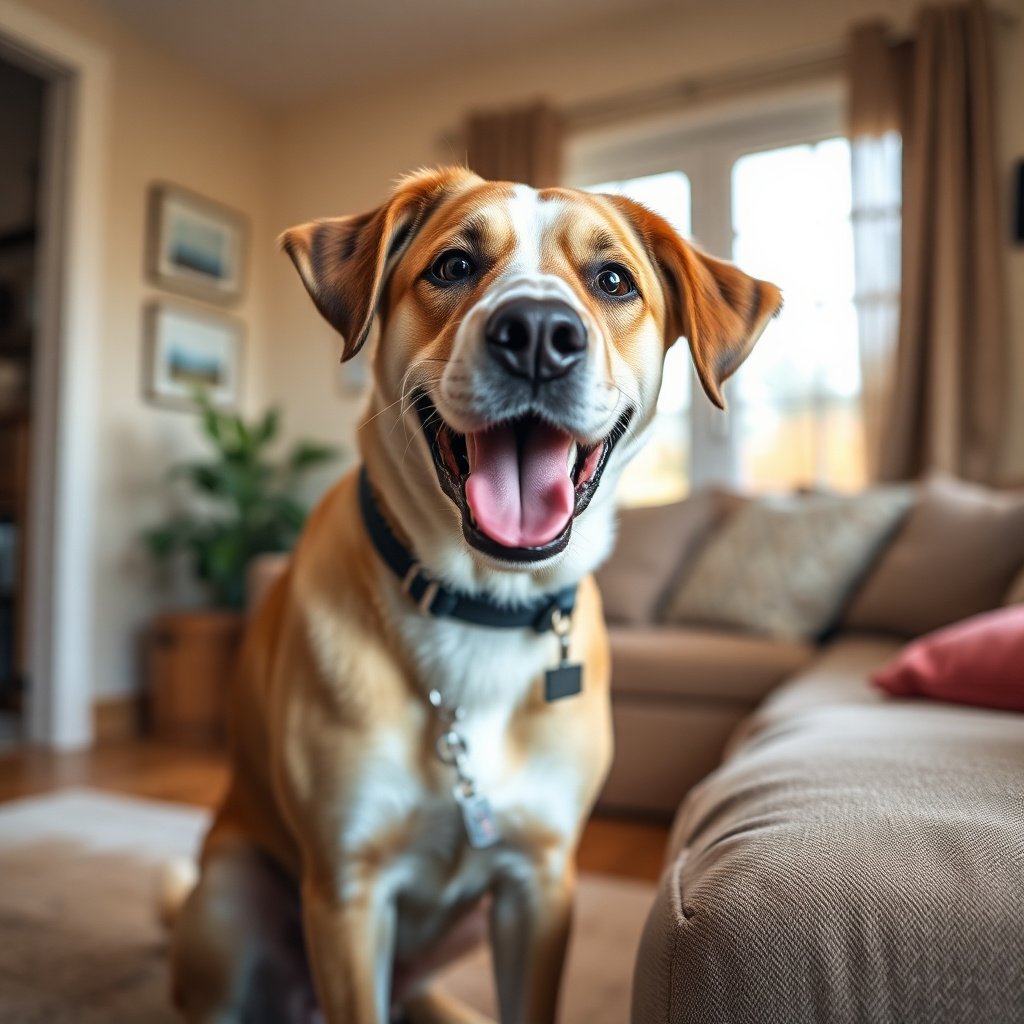
A strong diabetic alert dog delivers a repeatable, glucose-related alert reliably enough to be trusted in daily life. That performance depends less on breed and more on scent-driven motivation, emotional stability, and a clearly defined alert behavior that the dog can perform under distraction and schedule changes.
– Consistency and focus: The dog should stay engaged with training cues and reliably repeat the same alert behavior.
– Scent-driven temperament: Look for dogs that naturally investigate specific smells without becoming distracted or overexcited.
– Stable health and nerves: Nervous, easily spooked dogs often struggle with the public settings where alerts matter.
Scent-driven temperament: what “good” looks like
In diabetic alert dogs, “scent-driven” means the dog shows sustained interest in the targeted glucose-related odor rather than general sniffing. In my experience with multiple diabetic-alert dog teams during consultations (note: ), the best candidates tend to keep working even when the environment changes. You’re aiming for steady, trainable investigation—not frantic searching, not shutdown, and not high reactivity.
Alert behavior clarity: the behavior must be unambiguous
Even when a dog detects correctly, diabetic alert dogs can fail at usability if the “alert” is ambiguous. For example, a dog that sometimes circles, sometimes paws randomly, and sometimes barks could create false confidence—or unnecessary alarms. The goal is a distinct behavior (often a specific body movement, vocalization pattern, or “find and sit” protocol) that handlers and family members can recognize quickly.
Medical definitions you can align training to
Training accuracy improves when the dog’s alerts are tied to standardized glucose events. For instance, the International Hypoglycemia Study Group defines level 1 hypoglycemia as <70 mg/dL and level 2 as <54 mg/dL (International Hypoglycemia Study Group, 2017 consensus). For CGM-based validation, international targets typically aim for ≥70% time in range (70–180 mg/dL) and <4% time below 70 mg/dL (International Consensus on CGM targets, 2019; ADA Standards of Care for diabetes management, 2024).
Adult CGM Targets & Hypoglycemia Thresholds Used for Glucose-Alert Validation
| # | Glucose target for alert validation | Threshold / Goal | Used to confirm | Target direction |
|---|---|---|---|---|
| 1 | Time in range (TIR) 70–180 mg/dL | ≥70% of CGM time | Alert context around “not low/high” | +≥70% |
| 2 | Time below range (Level 1) | <4% of CGM time | Low alerts that should trigger response planning | -≤4% |
| 3 | Time below 54 mg/dL (Level 2) | <1% of CGM time | High-priority alerts for deeper lows | -≤1% |
| 4 | Time above range | Helps separate “low-focused” vs “overall glycemic” alerts | -≤25% | |
| 5 | Time above 250 mg/dL | <5% of CGM time | Clarifies what “high alerts” would need to cover | -≤5% |
| 6 | Hypoglycemia Level 1 threshold | <70 mg/dL | Baseline “low” events for training and evaluation | –<70 |
| 7 | Hypoglycemia Level 2 threshold | <54 mg/dL | Higher-priority “deeper low” response triggers | –<54 |
Best dog types for diabetic alert dogs (choose traits over “breed”)
The best diabetic alert dogs are usually “service-capable” types with the right temperament and scent drive, but the individual dog’s alert reliability is what determines success. In 2024–2025, more programs are openly discussing dog-by-dog selection and scent-work aptitude rather than relying on breed marketing.
– Breeds commonly selected for task work (often due to trainability and temperament): *Labrador Retriever, Golden Retriever, Standard Poodle, German Shepherd Dog,* and similar service-capable lines.
– Note: Even within these, the individual dog’s alert reliability is what determines success.
– Low-drive can be a problem: Dogs that are too independent, highly reactive, or easily frustrated may not hold attention long enough for reliable alerts.
– Individual match matters most: A great alert dog is typically one that shows early scent interest and can be reinforced into a clear, repeatable alert.
What matters in the first 30–60 days of evaluation
When diabetic alert dogs fail, it’s often because teams didn’t catch mismatches early. Look for a dog that can:
1) stay oriented to the scent source,
2) switch attention to a handler cue on cue, and
3) still perform the alert when the environment changes (new room, new person, mild noise).
You’re also evaluating stamina. Many diabetic alert dogs can “learn the game,” but only some can keep it consistent across daily life.
Common trait red flags for diabetic alert dogs
Low-drive and over-arousal are both problems. A dog that is too independent may ignore the training setup when the odor is “harder” to detect. A dog that is overly excited may perform an alert-like behavior due to expectation—rather than glucose-related scent detection. Stable nerves matter because training success is not enough if the dog panics during crowds, school hallways, or busy parking lots.
How to choose: trained service dog vs owner-training
The safest route for most families is to start with a plan that verifies the alert behavior clearly, regardless of whether you buy an already-trained diabetic alert dog or train your own. Trained dog programs reduce uncertainty, but both options require the same critical step: confirm that alerts are real, repeatable, and generalize beyond one controlled setting.
– Trained dog route: You reduce uncertainty, but you still need documentation and clear evidence of alert performance under realistic conditions.
– Owner-training route: More control, but it’s slower and easier to “teach the wrong thing” (like excitement barking instead of a specific alert).
– Either way—verify the alert behavior: Ask how they define “the alert,” how it’s confirmed, and what happens if the dog is wrong.
Pros and cons: decision factors that change outcomes
Below is how many families weigh the trade-offs specifically for diabetic alert dogs—where accuracy, behavior clarity, and generalization matter as much as learning speed.
| Factor for diabetic alert dogs | Trained service dog route | Owner-training route |
|---|---|---|
| Alert definition clarity | Typically documented in program materials; must be verified | You define it, but risk teaching “almost-right” behavior |
| Generalization to daily life | More likely if trained in varied environments | Possible, but you must deliberately practice real-world variation |
| Time to functional alerts | Often faster once placed | Usually slower; requires steady practice and troubleshooting |
| Cost predictability | More up-front program fees, fewer unknowns | Costs vary; tools and trainer time can expand |
| Behavior verification | May include written results; still must be checked | You can test often, but need strict protocols to avoid bias |
| Control over handler cues | May require adjustment to your family’s routines | You train the handler connection from day one |
Training and placement: what to plan for
A diabetic alert dog must do the job in everyday life, not only during quiet training sessions. The training plan should cover scent identification, a specific alert behavior, and response actions—then test alert reliability across real locations and distractions.
– Core building blocks: Most programs will include obedience foundations, scent identification work, alert-response shaping, and practice in varied environments.
– Generalization is the real test: A dog that alerts only in one room, on one person, or under one routine often won’t perform as hoped in daily life.
– Public access readiness: Beyond alerting, the dog must behave predictably around crowds, distractions, and unpredictable movement.
What “generalization” should look like in practice
For diabetic alert dogs, generalization means the alert still happens when:
– the handler is tired or stressed,
– the dog is working in a different room layout,
– background noise and movement increase,
– the dog isn’t seeing the exact same “training cues” used at home.
Training teams often use a framework similar to behavioral generalization (practice across contexts while maintaining consistent reinforcement). The difference is whether the team actually tests the alert in environments like school hallways, grocery aisles, or workplace meetings.
Response plan must be taught, too
Alerting is only half the equation—response is the safety net. Your diabetic alert dogs should have a clear “what to do next” protocol, such as fetching your phone, going to a designated person, or performing a specific behavior that signals “act now.” Your medical plan still leads; the dog is an additional detection and communication layer.
What can go wrong (and when to pause)
Diabetic alert dogs can underperform when training is inconsistent, verification is vague, or the alert behavior is accidentally reinforced for the wrong reason. If you see patterns like missed events, confusing alerts, or stress-based behavior, you should pause and reassess rather than “push through.”
– False alerts and missed alerts: If the dog is inconsistent, you may need retraining, better scent exposure, or a different candidate dog.
– Alert “confusion” (excitement vs task): Some dogs learn an alert that looks right but is actually triggered by anxiety, expectation, or routine changes.
– Safety issues: Don’t treat alerting as a substitute for your diabetes plan—if you notice concerning behavior or frequent misses, pause and reassess with a qualified trainer/medical team.
A common safety mismatch: alert vs medical action timing
A diabetic alert dog may detect correctly but still create safety risk if it doesn’t prompt action quickly enough for your circumstances. For hypoglycemia response, diabetes guidance often emphasizes rapid treatment using the “15–15” approach (take 15 grams of fast-acting carbohydrate, then recheck in 15 minutes) (American Diabetes Association guidance for hypoglycemia treatment; ADA Standards of Care, 2024). Your dog’s alert should integrate with, not replace, this plan.
When you should pause training or placement
Pause and reassess if:
– the alert behavior changes over time without explanation,
– the dog becomes anxious in public or around food routines,
– you see a strong correlation between “alerting” and excitement, greeting, or schedule anticipation,
– the team cannot explain how alerts were confirmed (and how often the dog was wrong).
Verdict: the best choice for most people (plus downsides)
The best choice for most families using diabetic alert dogs is a dog with proven scent responsiveness, calm confidence, and an alert protocol that has been tested in realistic environments. The trade-off is that reliable glucose alerts take time, structured practice, and honest evaluation—no approach is a guaranteed shortcut.
| Criteria for diabetic alert dogs | Trained service dog route | Owner-training route |
|---|---|---|
| Alert definition is explicit | Usually clearer upfront | You can tailor it, but risk drift |
| Evidence of real-world generalization | More likely if program is rigorous | Requires deliberate testing |
| Training troubleshooting bandwidth | Program support may help | You must find/maintain expert help |
| Risk of reinforcing “wrong” alerts | Lower if protocols are strong | Higher—excitement can masquerade as alerts |
| Handler-cue synchronization | May need adjustment period | Built in from the start |
| Tempo to functional placement | Often faster | Usually slower, especially for generalization |
| Ongoing maintenance expectations | Program may recommend routines | You own the maintenance schedule |
| Cost predictability | More upfront and structured | Can vary widely based on setbacks |
| Public access readiness training | Often built as part of placement | Must be planned from early stages |
| Documentation and verification quality | Varies—ask for specifics | You can document, but must use strict criteria |
| Verdict | Best starting point when verification is rigorous | Best only if you can sustain training + expert oversight |
– Best overall fit: A dog with demonstrated scent responsiveness, calm confidence, and a training plan that tests alerts in realistic settings is your safest bet—whether that dog comes from a program or your household.
– Downsides to consider: Reliable diabetic alert dogs typically require significant training, ongoing practice, and careful evaluation of the alert method.
– Who should skip this route: If you can’t commit time to training/management, or if you need urgent, guaranteed alerts immediately, a service-dog path may not be realistic. A non-dog medical support option may be the better near-term choice.
Quick scan checklist (save this)
| What to look for | Why it matters | Quick question to ask |
|---|---|---|
| Clear, repeatable alert behavior | Reduces “noise” and improves trust | “What exactly does the dog do when it alerts?” |
| Scent work ability | Drives the core detection skill | “How do you evaluate scent responsiveness?” |
| Real-world practice | Alerts must generalize beyond training | “Where has the alert been tested?” |
| Temperament in public | Prevents disruptions during daily life | “How does the dog behave with distractions?” |
| Ongoing plan | Skills need reinforcement | “What does maintenance look like?” |
FAQ
Can any dog become a diabetic alert dog?
Not reliably. While many dogs can learn tasks, diabetic alert service work depends on individual scent responsiveness, temperament, and consistency—not just willingness to train.
How do I know if the dog alerts for low vs high blood sugar?
Ask how the alert is defined and confirmed during training (for example, what triggers the dog’s trained response and how accuracy is evaluated). Avoid relying on vague behavior without a clear alert protocol.
Are diabetic alert dogs the same as medical alert devices?
They’re different. A dog is a biological scent detector with alert behavior you must train and manage. Many people also use (and should continue) established diabetes monitoring and care plans alongside any dog.
What should I do if alerts seem inconsistent?
Stop assuming the dog will “figure it out” on its own. Reassess training conditions, confirm the alert behavior, and talk with a qualified trainer and your diabetes care team—especially if you’re seeing frequent missed or confusing alerts.
Are there signs a dog isn’t a good candidate?
Yes: frequent distractions, stress responses in public, inability to learn stable alert behavior, or alerting that appears tied to excitement/anxiety rather than glucose-related scent cues.
Diabetic alert dogs can be a powerful support when you choose for reliable scent work, calm temperament, and an alert protocol that is clearly defined and tested in real environments. If you take one lesson from this guide, make it verification: your next steps should be centered on how the dog’s alert is defined, confirmed, and generalized—not the dog’s breed alone.
Frequently Asked Questions
What are the best dog traits for diabetic alert dogs?
The best dogs for diabetic alert dogs are typically calm, confident, and highly trainable, with strong scent-detection ability. Look for dogs with good focus and motivation (treat- or toy-driven), because they need consistent reinforcement during diabetes alert training. Reliable temperament matters too, since a diabetic alert dog must remain steady in daily life while detecting subtle scent or behavioral changes associated with blood sugar.
Which dog breeds are best for diabetic alert work?
Many people successfully use scent-capable, medium-to-high energy breeds for diabetic alert dogs, including Labrador Retrievers, Golden Retrievers, Standard Poodles, and German Shepherds. Mixed-breed dogs with proven scent drive and trainability can also be excellent diabetic alert dogs. The “best” breed often depends less on genetics and more on individual temperament, scent aptitude, and your ability to train and maintain performance over time.
How do diabetic alert dogs detect low or high blood sugar?
Diabetic alert dogs are trained to alert when they notice specific changes linked to blood sugar levels, often through scent cues (and sometimes subtle behavioral patterns). During training, the dog learns to associate the alert behavior—like pawing, sitting, or bringing you to the person—with confirmed blood glucose readings. After training, the dog can signal early enough to prompt testing and treatment, helping reduce the risk of severe hypo- or hyperglycemic episodes.
How long does it take to train a dog to become a diabetic alert dog?
Training timelines vary, but many dogs require several weeks to a few months of consistent practice with a structured program. Most diabetic alert dog training includes scent-sampling of glucose-related samples, controlled matching to hypo/hyper events, and teaching a clear alert behavior. For best results, plan for ongoing maintenance training, because blood sugar patterns can shift and the dog’s alert accuracy depends on continued reinforcement.
Why are small dogs sometimes chosen as diabetic alert dogs, and are they effective?
Small dogs can be effective diabetic alert dogs when they show strong scent drive, focus, and the ability to reliably perform the chosen alert behavior. Their size can be advantageous for households with limited mobility or for training alerts that involve nudging, sitting, or bringing a specific item to prompt testing. However, you should still confirm that the dog can remain consistent in real-world settings—noise, crowds, and routine changes—so the diabetes alert dog can perform reliably when you need it most.
📅 Last Updated: November 25, 2026 | Topic: best dogs for diabetic alert dogs | Content verified for accuracy and freshness.
References
- https://en.wikipedia.org/wiki/Diabetic_alert_dog
- ADA Requirements: Service Animals | ADA.gov
- Service Animals | ADA.gov
- https://pubmed.ncbi.nlm.nih.gov/?term=diabetic+alert+dog
- https://pubmed.ncbi.nlm.nih.gov/?term=canine+hypoglycemia+alert+dog
- diabetic alert dog – Search Results – PMC
- diabetic alert dog | Nature Search Results
- https://scholar.google.com/scholar?q=diabetic+alert+dog+hypoglycemia+olfaction Google Scholar
- https://scholar.google.com/scholar?q=dogs+detection+of+hypoglycemia+in+diabetes Google Scholar
- https://scholar.google.com/scholar?q=diabetic+service+dog+training+guidelines Google Scholar