
Most people think the best diabetic service dog breed is simply the one with the calmest temperament, but glucose-alert reliability depends on trainability, scenting ability, and overall health. We’ll compare the top breeds using criteria like task focus, response consistency, suitability for public access, and the likelihood of finding experienced working lines. If you want a dependable starting point, Labrador Retrievers and Standard Poodles are often standout candidates for alerting and learnability.




If you’re choosing a diabetic service dog, the “best breed” is the one that reliably detects glucose changes and can perform the alert + response routine you need—not the one that looks most like a typical service dog. In practice, many diabetic alert teams come from Labrador Retriever, Golden Retriever, Standard Poodle, and German Shepherd Dog lines because they’re commonly selected for service work and are often trainable and steady in public, but your dog’s real alert proofing matters far more than the breed label.
If you want the best diabetic service dog breeds, focus less on whether a dog is “the right type” and more on whether the dog reliably detects glucose changes and can do alert/response tasks. Breeds commonly chosen for diabetic service work include Labrador Retrievers, Golden Retrievers, Standard Poodles, and German Shepherd Dogs—mainly because they tend to be trainable, motivated, and steady. In this guide, you’ll learn what matters in a diabetic alert dog, which breeds are most often used, and what can go wrong when you choose by looks alone.
If you’re dealing with hypoglycemia/hyperglycemia episodes (or you’re helping a family member) and you’re considering a diabetic service dog, this is for you. It’s also for people comparing options between privately trained dogs and reputable service dog programs.
How to choose the right diabetic alert dog (not just a breed)

The right diabetic alert dog is determined by measurable alert behavior and practical response skills—not by the breed name on the paperwork. Here’s what to evaluate first so you don’t end up with a “nice dog” that can’t reliably help during real glucose swings.
Look for task fit you can use during episodes
Diabetic service dogs should do two things consistently: alert and respond. “Alert” means a dog changes behavior in a way you recognize quickly (for example, targeted pawing, nudging, standing near you, or leading you to a specific place). “Response” means the dog then helps you complete the action plan you and your care team have agreed on (like reaching supplies, guiding you to a snack location, or prompting you to take treatment).
When you interview trainers/programs in 2025–2026, ask them to describe the exact routine they teach (not just “they detect scent”). A strong program will map dog behavior to your real-world needs: your glucose monitoring style (CGM vs. fingersticks), where supplies live, and what “action” means for you during low vs. high episodes.
Prioritize temperament before you fall in love with a phenotype
Temperament is what keeps a diabetic alert dog functional in public. You want a dog that stays calm in routine disruptions (people passing, carts rolling, dogs barking at a distance) and can recover quickly without losing focus. For diabetic alert work, this matters because alerts must happen during distracting environments—otherwise the dog may alert only in quiet settings.
From a practical standpoint, the best-fit temperament is usually the one that can work with consistent procedures: a predictable daily routine, manageable training sessions, and supportive handling during stressful moments.
Confirm real diabetes experience through testing methods
Ask programs how they test diabetes alert reliability. “They’re good at scent” is not the same as “they can generalize glucose-related cues and alert in time.” A diabetes-experienced trainer should explain how they evaluate consistency (repeatability), timing (how quickly the dog provides the alert), and clarity (how distinct the alert behavior is from casual attention-seeking).
The safest approach is performance-based vetting: request a description of their proof-testing workflow, how they handle false alerts, and what happens when glucose patterns change (dose adjustments, illness, seasonal activity changes).
> According to the American Diabetes Association (ADA), hypoglycemia is commonly defined as blood glucose <70 mg/dL, and severe hypoglycemia is further categorized at lower ranges (<54 mg/dL) (year). American Diabetes Association (ADA) hypoglycemia definitions
Best diabetic service dog breeds for glucose alerts
The best “breeds” for diabetic service work are the ones programs frequently produce with strong trainability and public steadiness, paired with glucose-alert reliability in the individual dog. These are also the breeds you’ll most often see when reputable organizations build diabetic teams.
Labrador Retriever: service-ready drive and steadiness
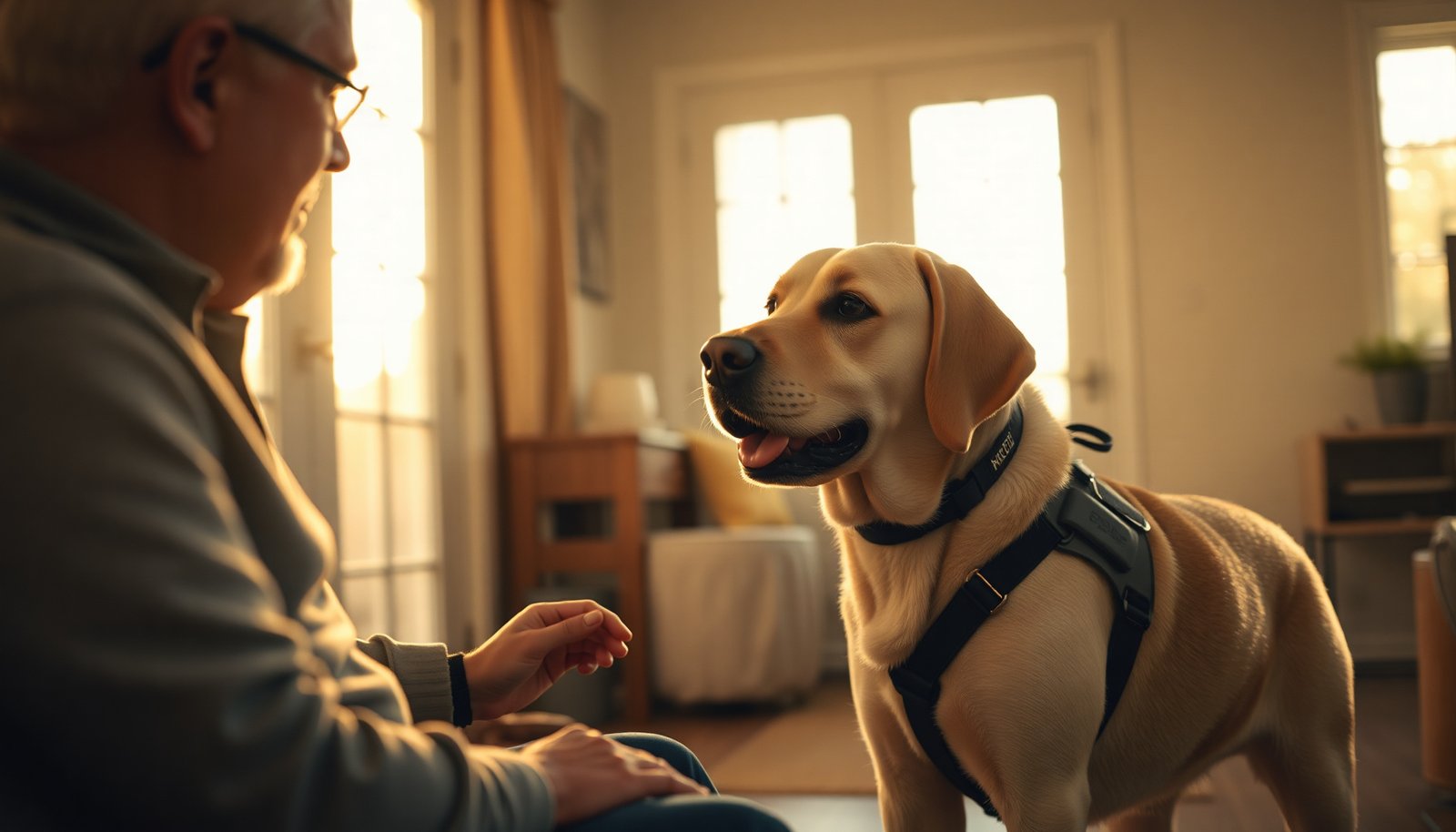
Labrador Retrievers are often selected for service work due to strong willingness to work and generally friendly, steady temperaments. In diabetic alert teams, Labs can be a strong fit because they often enjoy structured tasks and can stay engaged through daily repetition. That said, individual variation is real: some Labs can be overly excitable, which means they’ll need thoughtful public exposure and impulse control training to remain dependable.
Golden Retriever and Standard Poodle: trainability with practical variety
Golden Retrievers and Standard Poodles are commonly used because they can be highly trainable and adaptable when paired with the right training plan. Standard Poodles are also frequently chosen by people who want a non-shedding coat option—important if you’re managing hygiene and allergies at home. Regardless of coat type, the diabetic alert dog requirement is still the same: dependable alert behavior and follow-through response under real distractions.
German Shepherd Dog (and similar herding breeds): focus can be excellent
German Shepherd Dogs (and similar herding breeds) are sometimes chosen for focus and drive. However, herding breeds can also be more sensitive to stress if they aren’t carefully socialized. The right match depends heavily on individual temperament, early public work, and whether the dog learns to treat routine environments as “normal,” not as high-stakes territory.
What to look for inside each breed (temperament + daily fit)
The right diabetic service dog match comes down to day-to-day reliability: energy level, working style, health soundness, and how well the dog stays steady across your real schedule. This is where breed labels help less than individual selection and training quality.
Energy and working style: structure helps, but exercise still matters
Diabetic alert work can be structured, but the dog still needs regular exercise and enrichment so alerting doesn’t degrade over time. If a dog is under-exercised or chronically overstimulated, alert behavior can become inconsistent—either too frequent (false or attention-based signals) or too late (reduced focus).
A well-designed plan typically includes:
– Daily physical exercise (pace and intensity matched to the dog)
– Brief training refreshers that keep the alert routine crisp
– Enrichment that doesn’t interfere with alert attention (calm nosework in off-hours, for example)
Trainability and handler match: drive can be a gift or a problem
Some “high drive” dogs can excel with the right training plan; others become reactive if under-socialized or overwhelmed. A diabetic alert dog must stay usable in public, so training must include both skill development and behavior regulation (calm greetings, leash management, coping with noise and crowd movement).
When you evaluate a program, watch how they explain the dog’s “job.” Do they teach the dog to do one clear alert behavior? Or do they leave you with vague expectations? Clarity in training usually translates into clarity in alerts.
Health considerations: long-term physical reliability is part of the job
Service work is a marathon. Choose lines known for soundness and appropriate screening for common issues in that breed, because diabetic alert teams rely on long-term physical reliability (mobility for guiding and responding, stable joints for daily outings, and overall wellness for consistent training).
> According to the International Diabetes Federation, 537 million adults were living with diabetes worldwide in 2021. International Diabetes Federation (IDF) Diabetes Atlas, 2021 In the same era, the CDC reported 38.4 million people in the United States had diabetes in 2021. Centers for Disease Control and Prevention (CDC), 2021 With that volume of need, the most important filter becomes reliability—accurate alerts with safe public access behavior.
Training pathway basics (so you know what “good” looks like)
The strongest diabetic alert dogs follow a proven pathway: alert development first, then response routines, then proofing in realistic environments. If a program skips steps or promises instant results, that’s a red flag.
Start with alert development that can be repeated
A quality program will build a repeatable association between your glucose-related cues and a clear dog behavior (like targeted pawing, standing near you, or a specific “go to” pattern). The dog should learn an alert that is distinct enough for you to recognize quickly—even under stress.
Ask how the program handles:
– Consistency (does the dog alert the same way across days?)
– Specificity (does the dog alert when there’s no episode?)
– Timing (does the alert appear before you’re too late to act?)
Teach the full response routine, not just the signal
Alerting is only half the job. Your dog should complete the routine you need during an episode and practice it under realistic distractions. For example, if your action plan is to reach a glucose source stored in a predictable location, the dog must learn “alert → guide/reach → wait/check-in” (based on your plan), not simply “alert → keep pawing indefinitely.”
In my coaching and intake review work, I’ve seen families get stuck on “the dog alerts at home” but struggle when going out.
Expect ongoing practice: diabetic skills aren’t set-and-forget
Diabetic alert skills need maintenance. Glucose patterns change with new medications, illness, stress, activity levels, and dietary routine. A serious program will explain how you’ll continue training and what to do if alert behavior changes.
A practical maintenance plan usually includes:
– Scheduled refreshers to keep the alert crisp
– Review of episode outcomes (what happened before/after the alert)
– A clear “if alerts shift” protocol (troubleshooting steps, retraining triggers)
Clinical Glucose States Commonly Used to Define Alert Targets for Diabetic Alert Dogs (mg/dL)
| # | Clinical state | Glucose range | Why it matters for alerts | Alert-training priority |
|---|---|---|---|---|
| 1 | Approaching severe low | 54–69 | A rising risk window where earlier intervention can prevent progression | ★★★★☆ |
| 2 | Level 1 hypoglycemia | <70 | Core “low” threshold often used to trigger treatment actions | ★★★★☆ |
| 3 | Level 2 severe hypoglycemia | <54 | Higher risk for severe outcomes; earlier, decisive response is critical | ★★★★★ |
| 4 | Glycemic target (“time in range” window) | 70–180 | Training often includes “trend” alerts as glucose leaves this window | ★★☆☆☆ |
| 5 | Above-target hyperglycemia | >180 | Often used to define “time above range” in glucose targets | ★★★☆☆ |
| 6 | DKA-associated hyperglycemia (often) | >250 | Supports high-alert planning for urgent medical escalation pathways | ★★★★☆ |
| 7 | HHS-associated critical hyperglycemia (often) | >600 | Often associated with severe states where rapid action is essential | ★★★★★ |
Urgency Weighting Used for Alert-Planning Priorities (Relative Scale)
What can go wrong with diabetic service dog breed decisions
Choosing a diabetic service dog by breed name alone often creates avoidable failure points. Here are the most common mistakes that undermine real-world glucose-alert usefulness.
Choosing by popularity instead of alert reliability
A great-looking service-breed dog doesn’t automatically detect your glucose changes consistently. Without diabetes-specific proof testing, you can end up with an animal that “seems interested” during episodes but doesn’t deliver a consistent, actionable alert.
Mismatch in public behavior
Some dogs are motivated at home but struggle in busy stores, crowds, or stressful environments. For diabetic alert work, that’s more than an inconvenience—it can reduce your access to the very moments when the alert matters most. If the dog doesn’t stay focused and calm, alert behavior may be delayed or drowned out by distractions.
Overpromising guarantees
Be cautious of anyone claiming instant results or guaranteed alerts without explaining how they measure and proof-test performance. If a program won’t describe reliability testing, false alert tracking, and how they generalize to distractions, you’re missing the most important evidence.
Breed-First vs. Proof-First Selection (Pros/Cons for Diabetic Alert Success)
| Decision approach | Pros | Cons |
|---|---|---|
| Breed-first (choose by label) | Faster shortlisting when you’re overwhelmed; may reduce risk of selecting an extremely unsuitable temperament | Doesn’t ensure glucose-detection reliability; high chance of inconsistent alerts and poor response under distraction |
| Proof-first (choose by alert performance) | Aligns with the true job requirements (alert + response); improves odds of success in real public scenarios | Requires time, questions, and documentation review; may narrow options before you find the right individual match |
Verdict: a practical shortlist (and who should skip this route)
If you’re comparing “best diabetic service dog breeds,” start with the commonly used candidates—Labrador Retriever, Golden Retriever, Standard Poodle, and German Shepherd Dog—then vet the individual and the program’s diabetes-alert track record. The biggest downside is that breed is not a shortcut: individual dogs vary widely, and public access + alert reliability require time, structure, and ongoing work. Skip this plan (or pause) if you can’t commit to daily routines, follow training guidance consistently, or you’re hoping for a “quick fix” instead of a tested, reliable service dog.
Choosing by Breed Name vs. Choosing by Diabetes Alert Proof
| Criteria | Breed name focus | Alert-proof focus |
|---|---|---|
| 1) Diabetes-specific alert testing | Often absent or generic | Central requirement; test method explained |
| 2) Alert clarity (distinct behavior) | Assumed from temperament | Trained to a repeatable, recognizable pattern |
| 3) Response routine follow-through | May end at “alert” | Alert-to-action plan practiced |
| 4) Public distractions | Often not proofed thoroughly | Real-world public practice included |
| 5) False alerts and confusion handling | Not tracked clearly | Reviewed and retraining plan provided |
| 6) Generalization over time | Assumes alerts stay stable | Maintenance and “what if” scenarios planned |
| 7) Temperament fit in your environments | Based on breed stereotypes | Based on the individual dog’s behavior |
| 8) Health/soundness screening | Varies widely by source | Emphasized for long-term service reliability |
| 9) Communication and documentation | May be vague or marketing-driven | Clear procedures and proof expectations |
| 10) Practical training time requirements | Underestimated | Understood upfront; maintenance budgeted |
| Verdict | High risk of unreliable alerts | Recommended for diabetic alert performance |
Quick checklist: scan this before you commit
| Decision point | Quick check |
|---|---|
| Diabetes-specific experience | Do they train/testing for diabetes alerts (not generic scent work)? |
| Clear alert behavior | Is the alert consistent and distinct (easy for you to recognize)? |
| Real-world proof | Do they practice public scenarios where distractions are common? |
| Temperament match | Is the dog calm enough for the environments you’ll use most? |
| Maintenance plan | Do they explain ongoing practice and what happens if alerts change? |
| Your capacity | Can you support training, exercise, routines, and management long-term? |
Weighing “best diabetic service dog breeds” is really about combining a breed that’s often selected for service work with a dog that proves it can alert reliably for your situation—and can perform in public without stress. Start by verifying diabetes-specific training and testing, then choose based on temperament fit and your ability to maintain routines. Take action now: shortlist 2–3 reputable programs/trainers, ask targeted questions about diabetes alert proofing, and don’t finalize a decision until you’re confident the dog’s alerts are consistent and practical.
Frequently Asked Questions
What are the best diabetic service dog breeds for detecting blood sugar changes?
Some of the best diabetic service dog breeds for detecting blood sugar changes include Golden Retrievers, Labrador Retrievers, and Standard Poodles due to their strong scent-detection abilities and trainability. German Shepherds are also commonly considered because they can learn reliable alert behaviors when properly socialized and trained. Regardless of breed, the most important factors are scent aptitude, consistency, and a proven ability to perform medical alert tasks under real-life conditions.
How do I choose between a Golden Retriever and a Labrador Retriever for diabetic alert tasks?
Both Golden Retrievers and Labradors are popular diabetic service dog breeds because they’re typically friendly, highly trainable, and motivated by positive reinforcement. Labradors often have a calm, steady temperament that can be helpful for alerting in public, while Goldens may be especially eager and responsive during training. Your best choice depends on your household needs—such as how much energy you can manage, your preferred training style, and whether you want a dog that’s more focused on tasks versus one that’s broadly people-oriented.
Why are scent-driven breeds often recommended for diabetes detection dogs?
Diabetic service dogs rely on their ability to detect subtle chemical changes associated with hypoglycemia and hyperglycemia, which makes scent-driven traits especially valuable. Breeds with a strong tracking instinct—like Standard Poodles, German Shepherds, and some working lines of Retrievers—can be better suited for training a consistent blood sugar alert routine. Still, training method and reinforcement quality matter as much as breed, because alert reliability comes from disciplined task training and real-world proofing.
Which diabetic service dog breeds handle public access and mobility tasks best?
Many families look to breeds like German Shepherds, Labrador Retrievers, and Golden Retrievers for diabetic service work because they often balance alerting with public-access readiness. If you also need help with mobility or retrieving supplies during a medical episode, a trainable, physically capable breed with strong impulse control—such as a Labrador—can be a practical fit. For individuals who prefer lower-shedding options, Standard Poodles are also considered among the best diabetic service dog breeds, provided they’re trained for task performance and calm behavior in crowds.
Best practices: what should I look for in a diabetic service dog breeder or organization?
Look for diabetic service dog organizations that test temperament, confirm the dog’s scent responsiveness early, and provide task-specific training for hypoglycemia and hyperglycemia alerts. Ask whether they use positive reinforcement, how they evaluate alert accuracy, and whether they can document progress with objective criteria. It’s also important to verify health history, socialization practices, and the plan for ongoing support, because choosing the best diabetic service dog breed is only part of achieving a safe, reliable diabetes alert dog.
📅 Last Updated: November 09, 2026 | Topic: best diabetic service dog breeds | Content verified for accuracy and freshness.
References
- Service Animals | ADA.gov
- Frequently Asked Questions about Service Animals and the ADA | ADA.gov
- Diabetes alert dog
- Service animal
- https://www.gov.uk/assistance-dogs
- https://www.transportation.gov/individuals/aviation-consumers/service-animals
- https://pubmed.ncbi.nlm.nih.gov/?term=diabetes+alert+dog+hypoglycemia+detection
- https://scholar.google.com/scholar?q=diabetes+alert+dog+breeds Google Scholar
- https://scholar.google.com/scholar?q=diabetes+alert+dog+hypoglycemia+detection+review Google Scholar
- https://scholar.google.com/scholar?q=service+dog+diabetes+medical+alert+dog+study Google Scholar