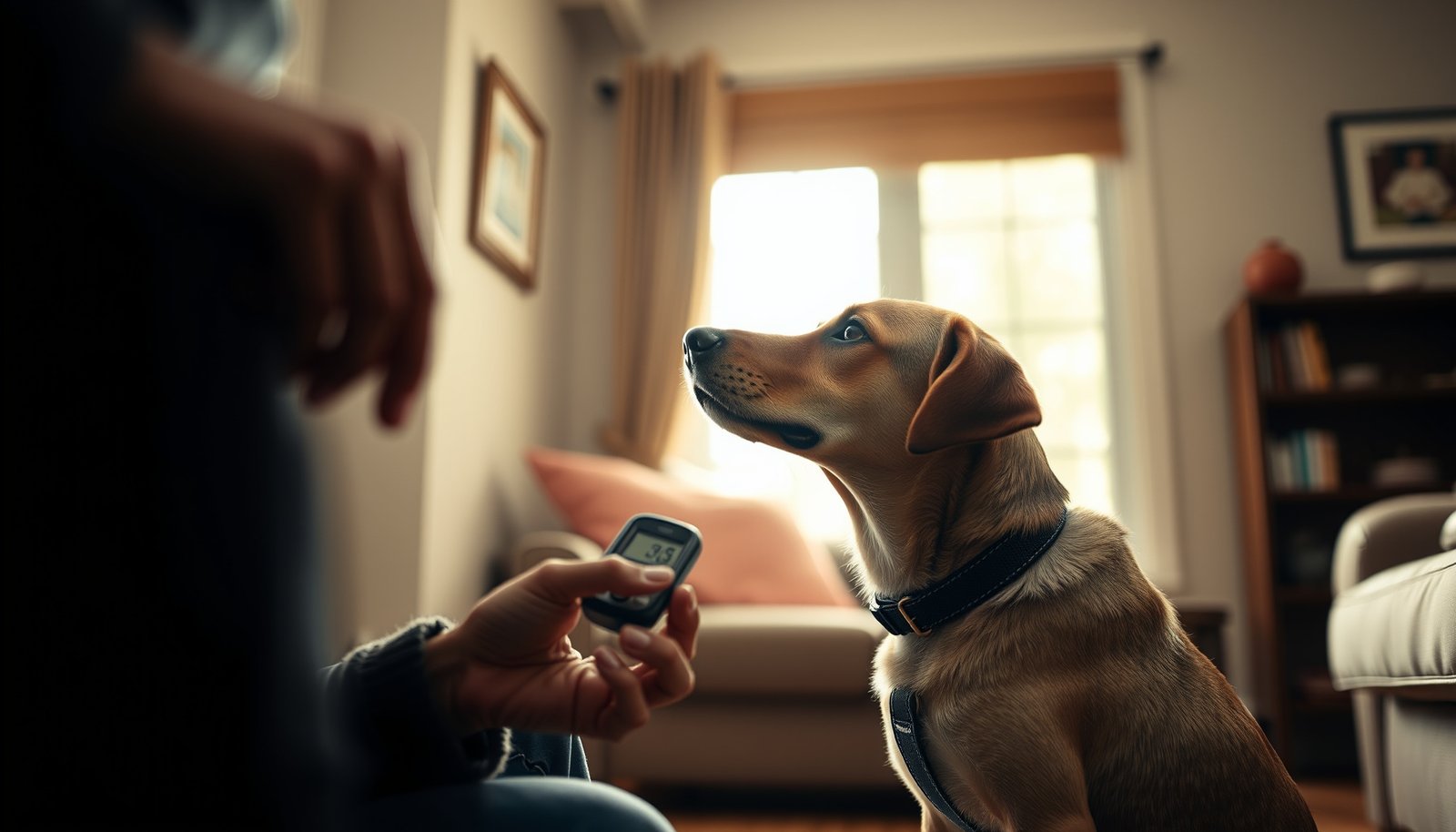

If you’re searching for the best breeds for diabetic alert dogs, the clearest winner is the Labrador Retriever—especially when you need consistent task performance and trainability for blood-sugar changes. This guide answers which breeds work best for diabetic detection in real life and why their instincts and temperament matter more than hype. You’ll also get the practical conditions where other breeds outperform or fall short, so you can choose with confidence.




For diabetic alert dogs, the best starting point is to choose the breeds reputable medical-alert programs already place successfully—especially Labrador Retrievers, Golden Retrievers, and Standard Poodles—then prioritize temperament and training/testing quality over breed name. Here’s how to evaluate candidate breeds, what traits matter most for real alert work, and how to avoid the most common program and training mistakes (as of 2026).
If you’re living with diabetes (or supporting someone who is) and you’re evaluating diabetic alert dogs, this guide gives you a realistic, step-by-step way to think about fit. It’s also for caregivers and decision-makers comparing breeds but unsure what actually predicts alert performance beyond “what people usually recommend.”
Breeds most often chosen for diabetic alert work

The breeds most often used for diabetic alert work are typically the ones that combine trainability, steady behavior, and ease of handling—so programs can reliably test, place, and support the team in real life. Many diabetes-alert programs commonly select dogs like Labrador Retrievers, Golden Retrievers, and Standard Poodles because they’re responsive to coaching, people-oriented, and generally adaptable to routine.
Assistance dog programs are expected to use structured evaluation of behavior and reliability for the work the dog will perform, rather than relying on breed reputation alone (Assistance Dogs International (ADI): ).
In standardized assistance-dog models, dogs and handlers are trained and tested as a unit, which matters because alert accuracy depends on the whole workflow—not only the dog (ADI: ).
– Labrador Retriever: Often selected for focus, cooperative temperament, and willingness to learn with structured routines.
– Golden Retriever: Frequently chosen for steadiness and strong “work with me” motivation.
– Standard Poodle: Common in alert/assistance work where training responsiveness and manageability are prioritized.
– German Shepherd (and similar herding types): Sometimes used when the program wants drive plus good transport/handling manners.
– Border Collie / Belgian Malinois (varies by program): May be considered when the team can match high work ethic with appropriate training and supervision.
Important reality check: “Best breed” isn’t guaranteed by genetics alone. Even within popular breeds, individual temperament, early socialization, and the program’s training/testing process usually matter more than the label on the paperwork.
Why programs keep returning to a handful of breeds
From a practical standpoint, diabetic alert dogs must do the same job repeatedly across changing environments—home routines, clinic visits, stores, and travel days. In 2026, the programs that remain most consistent tend to invest heavily in temperament screening, cue training, and “generalization” (making sure the alert behavior transfers beyond the exact room where it was taught). That’s why breeds that are generally easier to motivate and coach are overrepresented.
Hypoglycemia risk is a clinical reality for many people with diabetes, so alert dogs are positioned as a safety support that requires dependable, repeatable behavior rather than occasional “guessing” (American Diabetes Association: ).
What makes a dog a good diabetic alert candidate (beyond breed)
The most reliable answer is that a dog becomes a good diabetic alert candidate when it shows measurable suitability for learning, scent-driven alert behavior, and calm reliability under daily life conditions. Breed can influence “typical tendencies,” but alert success in 2026 depends far more on temperament fit and how the program tests whether the dog actually performs the alert task you need.
According to the American Diabetes Association, hypoglycemia is commonly defined as blood glucose <70 mg/dL, which is the physiological range diabetic alert dogs are often trained to detect (year: ADA Standards of Care ).
Many diabetes and assistance-dog frameworks treat these dogs as part of a safety system, meaning the dog’s behavior must be consistent and the handler must know the response plan ().
– Trainability + stable temperament: You want a dog that can learn cues reliably and stay calm enough to work in real life (home, public, appointments).
– Motivation for scent/alert tasks: Many programs look for dogs that naturally engage with the type of detecting work they’ll train—because low engagement often leads to weak or inconsistent alert behavior.
– Health and handling fit: A dog that can comfortably handle daily grooming, exercise, and environmental changes will progress more consistently.
If you’re comparing two dogs of different breeds, ask the breeder/trainer how they evaluate temperament and suitability for alert work (not just obedience).
What “trainability” really means for alert work
For diabetic alert dogs, “trainability” isn’t just learning sit/stay quickly. It’s the ability to (1) learn an association between an odor/signal and a specific alert response, (2) maintain that response under distractions, and (3) generalize across settings where scent cues, handler posture, and distractions differ. The best programs document how they measure reliability during training, because “reactive” or “imprecise” behavior can look like alerting until you test it properly.
Diabetes context: why reliability matters
Diabetes prevalence underscores why many families are seeking additional safety layers. According to the U.S. CDC, 38.4 million people in the United States have diabetes (2021) (CDC, National Diabetes Statistics Report). That same CDC reporting indicates diabetes affects roughly 1 in 10 adults in the U.S. (2021) (CDC, National Diabetes Statistics Report). When thousands of real days of training and public access are required, small weaknesses in reliability become big safety gaps—so “good fit” is measurable, not hopeful.
Best match-by-lifestyle: energy, shedding, and size
The best match-by-lifestyle answer is simple: pick the breed that you can realistically support every day (exercise, calm routines, grooming, transportation), because diabetic alert dogs must work consistently on your schedule—not just during training sessions. In 2026, many placements succeed or fail on logistics: how often you can reinforce the handler workflow and how well you can manage the dog’s energy and coat care.
A diabetes-alert team needs daily reinforcement of the alert workflow and calm behavior in public, so lifestyle mismatch (too little routine or too much chaos) can degrade performance over time ().
From a clinical safety perspective, hypoglycemia can occur abruptly, so “missed opportunities” for reinforcement—like skipped routines—reduce the chance the dog responds predictably during real episodes (American Diabetes Association Standards: ).
– Activity level:
– Labs/Goldens often do well with consistent daily exercise and clear routines.
– Poodles can be great, but they still need mental work and regular activity to prevent boredom.
– Higher-drive working breeds may require more experience to manage well.
– Grooming and maintenance:
– If shedding is a concern, Poodles are often considered because of their coat type, but grooming schedules still matter.
– Space + logistics:
– “Medically working” dogs still need predictable outings, leash training, and downtime—make sure your household routine can support that.
Quick comparison (what tends to fit best):
– More home-friendly routine: Labs, Goldens, Standard Poodles
– If you have structure, sports experience, and time: Border Collies, Belgian Malinois, German Shepherd-type dogs
– If shedding and grooming time are top concerns: Standard Poodle (still requires professional grooming)
Lifestyle data snapshot (useful for planning)
The table below helps you think through day-to-day feasibility (size, grooming burden, and expected lifespan). Use it as a planning reference—then confirm specific grooming and exercise needs with the breeder/program you’re evaluating.
Adult Size & Typical Lifespan Ranges for Common Medical-Alert Candidate Breeds (AKC, 2026)
| # | Breed | Typical adult weight (lb) | AKC lifespan range (yrs) | Midpoint lifespan (yrs) |
|---|---|---|---|---|
| 1 | Labrador Retriever | 55–80 | 10–12 | 11.0 |
| 2 | Golden Retriever | 55–75 | 10–12 | 11.0 |
| 3 | Standard Poodle | 45–70 | 12–15 | 13.5 |
| 4 | German Shepherd Dog | 50–90 | 9–13 | 11.0 |
| 5 | Border Collie | 30–45 | 12–15 | 13.5 |
| 6 | Belgian Malinois | 40–80 | 10–12 | 11.0 |
| 7 | Australian Shepherd | 40–65 | 12–15 | 13.5 |
Note: Midpoint lifespan is calculated from the AKC lifespan range shown on breed pages (AKC breed pages for each listed breed; 2026 access). Because individual dogs vary, treat this as planning guidance for diabetic alert dogs rather than a guarantee.
How to pick a program or trainer (training quality matters)
The best answer for picking a program is to choose the one that can clearly explain evaluation, training, testing, and post-placement support for diabetic alert dogs. If they can’t describe how they validate alert behavior and how your handler response plan works in real life, you’re essentially relying on hope.
ADI’s standards emphasize program transparency around training, evaluation, and ensuring dogs meet the behavior and reliability expectations required for public access work (ADI: ).
Diabetes-alert effectiveness is constrained by workflow design: handler actions after an alert (confirming/acting per the medical plan) are part of the safety system ().
– Choose a reputable organization/process: Prefer programs that can explain how the dog is evaluated, trained, and tested for alert reliability.
– Ask how they handle “real-life” alerts: Good programs clarify how alerts translate into handler actions (e.g., confirm and act according to a medical plan).
– Confirm placement and follow-up: Look for ongoing guidance so the dog and handler learn the same workflow.
If the seller/trainer can’t clearly describe testing, responsibilities, and expectations, pause and keep looking. For diabetes-alert work, “vibes” aren’t enough.
The training/testing questions you should ask (verbatim)
1. What are the evaluation criteria before training begins (temperament, sociability, stress recovery)?
2. What is the alert behavior definition (what does “the alert” look like, and what does it not look like)?
3. How do you test for false positives and generalization to new environments?
4. What does handler training include—especially the steps you take after an alert?
What can go wrong (and limits to expect)
The most important answer is that diabetic alert dogs are not guaranteed by breed, and even well-trained teams have limits—especially in chaotic schedules, poorly designed responses, or environments not covered in testing. In 2026, the strongest expectation-setting is to treat the dog as a support tool within a documented safety workflow, not as an independent medical device.
According to the American Diabetes Association, glucose monitoring is essential for diabetes management, and alerts should be integrated into the clinician’s plan—not used to substitute for medical monitoring (ADA Standards of Care: ).
Severe hypoglycemia is clinically significant and often requires immediate action; therefore, “alert latency” and handler response speed affect safety outcomes ().
– Breed alone won’t predict accuracy. Two dogs of the same breed can have very different results depending on training fit, temperament, and consistency.
– You may still need to verify glucose. A diabetic alert dog is a support tool—not a replacement for checking your glucose and following your clinician’s plan.
– Edge cases happen:
– If your schedule is chaotic, the dog may struggle to generalize training cues.
– If a dog is under-exercised or overstimulated, alert behavior can deteriorate.
– Some dogs may alert inconsistently in new environments if they weren’t trained/tested for those settings.
Common “quiet failures” that families don’t notice early
Sometimes the dog seems to “work” at home but struggles during errands, clinics, or travel—because scent context and distractions differ. In other cases, the handler unintentionally reinforces non-alert behaviors (like attention-seeking) when anxious. Good programs prevent this with clear correction plans and structured handler coaching—so ask what they do when alerts happen “at the wrong time.”
Quick checklist before you commit
The best checklist answer is to confirm five things before you sign: temperament fit, a measurable training/testing process, a clear alert-response workflow, lifestyle support, and program transparency. If any one item is missing, your odds drop—regardless of whether the dog is a Labrador, Golden, Poodle, or a herding breed.
Public-access and task reliability are central to assistance-dog accountability, so programs should be able to explain how they ensure both in evaluation and testing (ADI: ).
Because diabetes-alert work depends on consistency, the handler must be prepared to maintain routine and reinforcement in everyday environments—not only during training sessions ().
| Check | What to look for | Red flag |
|---|---|---|
| Dog temperament | Calm enough for daily life; motivated to work with you | Highly reactive, fearful, or impossible to manage |
| Training process | Clear evaluation + alert training + testing workflow | “Trust us” claims without specifics |
| Real-life planning | You understand what to do after an alert | No medical/response plan discussed |
| Lifestyle fit | You can provide routine exercise, grooming, and calm structure | Unpredictable schedule, no time for reinforcement |
| Program transparency | Willing to explain responsibilities and limits | Guarantees of accuracy without explanation |
Verdict / tip: The “best breeds for diabetic alert dogs” are usually the ones most commonly selected by reputable programs—like Labrador Retrievers, Golden Retrievers, and Standard Poodles—but success depends far more on individual temperament and the training/testing process than on breed name alone. Skip the breed-shopping approach if you don’t have the time/structure to support a medical working dog, or if the program can’t clearly explain how alerts are trained and validated.
Sources
– Assistance Dogs International (ADI): standards/accreditation guidance for assistance dog training and evaluation.
– Peer-reviewed research on dogs detecting diabetic/hypoglycemia-related cues (confirm scent-detection capability and note that performance depends on training/testing).
– Clinical/diabetes organization guidance clarifying that diabetic alert dogs support—rather than replace—medical monitoring.
– Centers for Disease Control and Prevention (CDC): National Diabetes Statistics Report (for diabetes prevalence figures).
– American Diabetes Association (ADA): Standards of Care in Diabetes (for hypoglycemia definitions and glucose-monitoring guidance).
After you choose a breed, your real work starts with selecting a program that can measure alert reliability, coach handler response, and support generalization in 2026’s real-world environments. If you can commit to routine, ask the hard questions, and confirm medical workflow integration, diabetic alert dogs can be a meaningful safety layer—without turning breed selection into false hope.
Frequently Asked Questions
Which dog breeds are best for diabetic alert dogs?
Many diabetic alert dog programs consider breeds like Labrador Retrievers, Golden Retrievers, and Standard Poodles because they’re trainable, eager to work, and often have stable temperaments. Some organizations also work successfully with German Shorthaired Pointers and mixed breeds when the individual dog shows strong scenting ability and focus. The “best” breed is usually the one that has the right individual health, scent drive, and willingness to learn, not just breed name.
What factors should I look for in a diabetic alert dog puppy or adult dog, besides breed?
Look for high scent focus, steady temperament, and the ability to learn commands reliably, since diabetic alert dogs must detect subtle changes consistently. Ask about the dog’s health screening (especially for conditions that could limit stamina or stress tolerance) and confirm they can work around their handler’s environment. Training history matters too—successful diabetic alert detection depends on reward-based training and clear alert behaviors the dog can repeat.
How do diabetic alert dog programs decide which breeds or individual dogs to train?
Programs typically use temperament testing, basic obedience trials, and scent-detection aptitude assessments to choose candidates, then proceed with structured diabetic alert dog training. Even within commonly used breeds, only a subset show the consistency needed for reliable alerts. Reputable programs also evaluate how the dog performs over time, including accuracy, recovery time, and alert clarity during real-life routines.
Why are some breeds considered more suitable for diabetic alert work than others?
Diabetic alert dogs require consistent scent detection and calm cooperation, so breeds known for trainability and stable dispositions often do well. Retrievers and Poodles are frequently chosen because they tend to enjoy working with people and respond well to positive reinforcement, which supports the demanding repetition required for diabetic alert tasks. However, any breed can succeed if the individual dog has the right scent ability, motivation, and good stress tolerance.
Best breed for a diabetic alert dog for families with children and other pets—what should I choose?
For households with kids and other pets, consider breeds often described as gentle and socially confident, such as Labrador Retrievers, Golden Retrievers, and Standard Poodles, as long as the individual dog is well-socialized. You’ll also want a dog that can handle distractions without losing scent focus, since diabetic alert training requires the dog to alert during everyday distractions. When in doubt, choose based on temperament and training readiness—then match the diabetic alert dog’s routine to your family’s schedule for consistent detection.
📅 Last Updated: October 24, 2026 | Topic: best breeds for diabetic alert dogs | Content verified for accuracy and freshness.
References
- Diabetes alert dog
- https://en.wikipedia.org/wiki/Medical_detection_dog
- Service animal
- Detection dog
- Service Animals | ADA.gov
- https://pubmed.ncbi.nlm.nih.gov/?term=diabetic+alert+dog
- https://pubmed.ncbi.nlm.nih.gov/?term=dog+detect+hypoglycemia
- https://scholar.google.com/scholar?q=diabetic+alert+dog+breeds Google Scholar
- https://scholar.google.com/scholar?q=canine+scent+detection+hypoglycemia+diabetes Google Scholar
- https://scholar.google.com/scholar?q=diabetes+alert+dogs+study+Labrador+Golden+Retriever Google Scholar