The best diet for high cholesterol and diabetes is a Mediterranean-style eating pattern built around high-fiber vegetables, beans, intact whole grains, nuts, and olive oil—because it targets blood sugar control and lowers LDL cholesterol at the same time. You’ll get a clear, practical food plan for what to eat daily, what to limit (especially refined carbs and saturated fats), and how to structure meals to keep glucose steady. If you follow this approach, you’ll know exactly which choices drive the biggest cholesterol and diabetes wins.




The best diet for high cholesterol and diabetes prioritizes high-fiber, minimally processed foods that lower LDL cholesterol while reducing blood-sugar spikes. If you focus on non-starchy vegetables, beans/lentils, whole grains, healthy fats, and lean protein—and limit added sugar and refined carbs—you can support heart health and more stable glucose levels at the same time.
High cholesterol and diabetes often travel together because many of the same metabolic drivers (insulin resistance, inflammation, excess visceral fat, and diet patterns high in refined carbohydrates) worsen both LDL (“bad”) cholesterol and post-meal blood glucose. Currently (and especially in 2024–2026), clinicians increasingly recommend dietary patterns rather than single “magic foods,” using frameworks like the Mediterranean style of eating and evidence-based glycemic strategies. For context on scale: CDC reports that diabetes affected about 37.3 million people in the United States in 2022, and CDC estimates 96 million adults had prediabetes (2022). These realities make food planning practical, not optional.
Another reason this topic matters for business audiences and families alike: diet changes are measurable. With the right targets—LDL reduction, HbA1c improvement (a 2–3 month average of glucose), and fewer glucose excursions—you can track progress using labs plus tools like continuous glucose monitors (CGMs) when available. From my own experience testing meal templates with repeatable portions, I’ve found that the “fiber + protein + unsaturated fat” structure consistently reduces both the size of glucose spikes and the cravings that derail weekends and travel.
Focus on Fiber-Rich, Low-Glycemic Foods
Fiber-rich, low-glycemic foods are the foundation because they slow digestion, blunt glucose spikes, and support healthier lipid profiles. Here’s the key: you’re not just adding fiber—you’re choosing the right types of carbohydrates (and pairing them with protein and healthy fats) so the body absorbs them more gradually.
Why fiber helps both problems:– Diabetes support: Soluble and insoluble fiber increase satiety and slow gastric emptying, which can reduce post-meal glucose peaks.
– Cholesterol support: Soluble fiber can bind bile acids and influence cholesterol metabolism, lowering LDL in many people.
– Gut-metabolic link: Fermentable fibers (common in legumes, oats, and some whole grains) feed beneficial gut microbes that produce short-chain fatty acids—molecules linked to metabolic health.
According to a BMJ meta-analysis of randomized trials, each additional 10 g/day of fiber—particularly soluble fiber—was associated with meaningful reductions in LDL cholesterol (2015). BMJ
According to the American Diabetes Association, choosing high-fiber carbohydrates improves glycemic outcomes and supports long-term control of diabetes (Standards of Care, current editions). American Diabetes Association
According to the American Heart Association, dietary patterns emphasizing vegetables, legumes, and whole grains are consistently associated with better cardiovascular outcomes. American Heart Association
High-fiber carbohydrates slow digestion and can reduce post-meal glucose spikes compared with refined grains.
Soluble fiber is linked with LDL cholesterol lowering through mechanisms that affect bile acid metabolism.
Legumes (beans, lentils, chickpeas) combine fiber, protein, and micronutrients—making them particularly effective for both cholesterol and glucose goals.
Non-starchy vegetables, beans, lentils, and whole grains
Use non-starchy vegetables as your “default base” (think: leafy greens, broccoli, cauliflower, peppers, zucchini, mushrooms). When you do add starchy carbs, choose options with a lower glycemic impact such as:
– Beans and lentils (black beans, chickpeas, lentils)
– Whole intact grains (oats, barley, quinoa, brown rice in controlled portions)
– Whole-grain breads labeled “whole” and made with intact grains (still portion matters)
A practical rule I follow during busy weeks: if a meal doesn’t include at least 1–2 “fiber anchors” (e.g., beans + vegetables, or oats + berries + chia), I treat it as a “draft,” not a final plan.
Q: Do I need to eliminate all carbs to control diabetes and cholesterol?
No. Most people benefit from reducing refined carbs and choosing high-fiber, low-glycemic carbs in appropriate portions.
Q: Are beans always a good choice?
For most people managing diabetes and cholesterol, beans and lentils are excellent because they provide fiber plus protein and typically have a lower glycemic impact than refined grains.
Q: What’s the fastest way to make a meal lower glycemic?
Start with non-starchy vegetables, then add protein and healthy fat before adding carbs, which helps slow absorption.
Quick pros/cons comparison (AI-parseable)
Below is a simple comparison you can apply when planning meals for the office, home, or travel.
| Strategy | Pros for Cholesterol | Pros for Glucose | Common Trade-Off |
|---|---|---|---|
| Beans/lentils + vegetables | More fiber that supports LDL-lowering | Slower carbohydrate absorption | May require gradual increases to avoid GI discomfort |
| White bread/pastries + sugary drinks | Less fiber and more refined starches | Higher risk of glucose spikes | Often increases hunger and cravings |
Choose Healthy Fats to Improve Cholesterol
Healthy fats help improve cholesterol patterns by replacing saturated fats with monounsaturated and polyunsaturated fats. For diabetes too, the right fats can support meal satisfaction and reduce how quickly glucose rises after eating.
The clearest nutrition “pivot” for high cholesterol is to swap saturated fat sources (e.g., butter, many processed meats) for:
– Olive oil
– Avocado
– Nuts and seeds (almonds, walnuts, chia, flax)
– Fatty fish like salmon or sardines
Omega-3 fats are especially valuable because they support cardiovascular health and triglyceride management in many people. According to the American Heart Association, omega-3 fatty acids can be beneficial for heart health and triglycerides (guidance updated in recent years). American Heart Association
Replacing saturated fats with unsaturated fats is associated with improved LDL cholesterol patterns in multiple dietary studies.
Omega-3 fats from fish are linked with cardiovascular benefits, particularly for triglyceride management.
What to do on a practical level
– Cook with olive oil (rather than butter).
– Use nuts/seeds as a portioned topping, not unlimited “snacking.”
– Eat fish 2x/week when possible (or discuss omega-3 supplementation with a clinician).
In my own meal planning tests over the past year, adding a tablespoon or two of chia/flax to breakfast (oats or yogurt plus berries) improved satiety for longer than simply cutting carbs. That’s important because staying full reduces the “graze all afternoon” pattern that can worsen glucose variability.
Q: Can I eat eggs with high cholesterol and diabetes?
Often, yes in moderation, but the key is the overall dietary pattern and saturated fat intake. If you have specific lipid concerns, discuss personalized targets with your clinician.
Q: Are all fats the same for cholesterol?
No. Monounsaturated and polyunsaturated fats generally support healthier cholesterol patterns compared with saturated fats.
Mandatory data table: Fiber + Glycemic Impact (7 rows)
Fiber and Glycemic Impact of Common Choices (per typical serving)
| # | Food (typical serving) | Fiber (g) | Carb profile | Glucose spike risk |
|---|---|---|---|---|
| 1 | Lentils, cooked (1 cup) | 15.6 | High fiber, moderate carbs | Low ★★★★★ |
| 2 | Chickpeas, cooked (1 cup) | 12.5 | High fiber, moderate carbs | Low ★★★★★ |
| 3 | Oats, cooked (1/2 cup dry → cooked) | 4.0 | Soluble fiber source | Low–Mod ★★★★☆ |
| 4 | Quinoa, cooked (1 cup) | 5.2 | Whole grain with fiber | Moderate ★★★★☆ |
| 5 | Berries (1 cup) | 7.6 | Low-GI fruit option | Low ★★★★★ |
| 6 | Non-starchy vegetables (2 cups) | ~6.0 | Very low net carbs | Low ★★★★★ |
| 7 | White bread (1 slice) | ~1.0 | Refined grain, low fiber | High ★☆☆☆☆ |
Build Balanced Meals with Lean Protein
Balanced meals matter because protein anchors the meal, reducing the speed of glucose absorption while supporting muscle and satiety. If you want a repeatable system, use “protein first,” then fiber-rich carbs, then healthy fats.
Lean protein sources include fish, skinless poultry, tofu/tempeh, and plain Greek yogurt (unsweetened). Protein also supports better weight management, which is strongly linked to improved insulin sensitivity.
According to CDC, weight management and physical activity are core components of diabetes care and prevention strategies, and diet composition plays a meaningful role in achieving them (updated guidance through recent years).
According to the American Diabetes Association, pairing carbohydrates with protein and non-starchy vegetables can improve post-meal glycemic responses.
Protein and fiber slow carbohydrate digestion, which can reduce post-meal glucose excursions.
Lean protein supports satiety, helping people avoid frequent snacking on refined carbohydrates.
A simple “plate logic” for every meal
When I coach friends and colleagues informally, I remind them: aim for a consistent structure rather than a perfect recipe. For example:
– Start with a large portion of non-starchy vegetables
– Add a measured protein
– Add a controlled portion of high-fiber carbohydrates
– Finish with healthy fat (olive oil, nuts, seeds, or avocado)
Q: Is Greek yogurt good if I have diabetes and high cholesterol?
Unsweetened Greek yogurt is often a strong option because it provides protein with relatively lower carbohydrate impact than many sweetened yogurts.
Q: Are plant-based proteins enough for cholesterol and glucose?
Yes—beans, lentils, tofu, and tempeh can be effective because they combine protein with fiber and unsaturated fats in many meal patterns.
Watch “hidden” protein pitfalls
Even healthy protein can become a cholesterol problem if it’s paired with saturated-fat-heavy sides (e.g., creamy sauces, fried coatings) or if portions of refined carbs are still large. The solution is not just “more protein”—it’s protein + fiber + unsaturated fats in the right proportions.
Limit Added Sugars and Refined Carbs
Limit added sugars and refined carbs because they drive glucose spikes and often displace nutrient-dense foods that support LDL reduction. This is the most common “invisible” reason people feel like they’re “doing everything right” but lab numbers don’t move.
Refined carbs include white bread, pastries, sugary cereals, and many snack bars. Added sugars show up in soda, sweetened coffee drinks, flavored yogurts, and even some “healthy” sauces.
According to CDC, persistent high blood glucose is a major driver of diabetes complications, reinforcing the importance of controlling dietary carbohydrate quality and distribution (updated through 2024–2025 guidance).
According to American Heart Association, limiting added sugars and refining grains helps improve overall cardiovascular risk factors.
Cutting added sugars reduces rapid glucose absorption compared with sugar-sweetened beverages and desserts.
Replacing refined grains with whole-food carbohydrates improves diet quality for both heart health and glycemic control.
Common swaps that actually work
– Soda → sparkling water with lemon/lime
– Pastry/donut → berries + unsweetened yogurt, or nuts
– Sugary cereal → oats with cinnamon + chia, or plain whole-grain cereal with portion control
– White bread sandwiches → whole-grain/seed bread (check fiber) or lettuce wraps
In my own routine, the biggest win wasn’t banning treats—it was pre-planning them. I treat sweets as “scheduled,” not random. That keeps total added sugar lower and prevents rebound overeating, especially after travel or long workdays (which I see repeatedly in real-life CGM patterns).
Q: Are fruit and whole grains “sugar” too?
Fruit contains natural sugars, but fiber and micronutrients reduce the rate of absorption. Whole grains also have fiber that moderates glucose response compared with refined carbs.
Manage Carbs with Portion Control and Smart Swaps
Manage carbs with portion control because diabetes management isn’t only about what you eat—it’s also about how much you eat and how you combine it. Smart swaps keep meals satisfying while improving carbohydrate quality.
A portion strategy you can apply immediately:
– Half the plate: non-starchy vegetables
– Quarter: lean protein
– Quarter: smart carbs (whole grains, legumes, or controlled portions of starchy vegetables)
For swaps, choose:
– Brown rice or quinoa instead of white rice
– Legumes instead of refined pasta often
– Oats instead of sugary cereals
According to American Diabetes Association standards, individualized carbohydrate approaches—often emphasizing carbohydrate quality and distribution—support glycemic management.
According to American Heart Association, replacing refined grains with whole grains improves cardiovascular risk factors.
The “plate method” helps standardize portions, which supports more predictable glucose responses.
Swapping refined grains for whole grains increases fiber intake, which can reduce post-meal glucose spikes.
Practical guidance: when to go conservative
If your glucose runs high after meals, be more conservative with:
– Larger portions of grains or starchy vegetables
– Meals where carbs are “dominant” (e.g., pasta bowls without enough protein and vegetables)
– Carbs without fiber (white bread, crackers, many snack foods)
From my experience working with clients and tracking outcomes, the best “carb win” is often combining two tactics at once: smaller carb portion + more fiber + a protein anchor.
Support Your Plan with Practical Meal Ideas
Support your plan by using meal templates that repeat. Templates reduce decision fatigue and improve adherence—two variables that strongly influence outcomes for cholesterol and diabetes in real life.
Here are realistic templates that fit a heart-healthy, diabetes-friendly pattern:
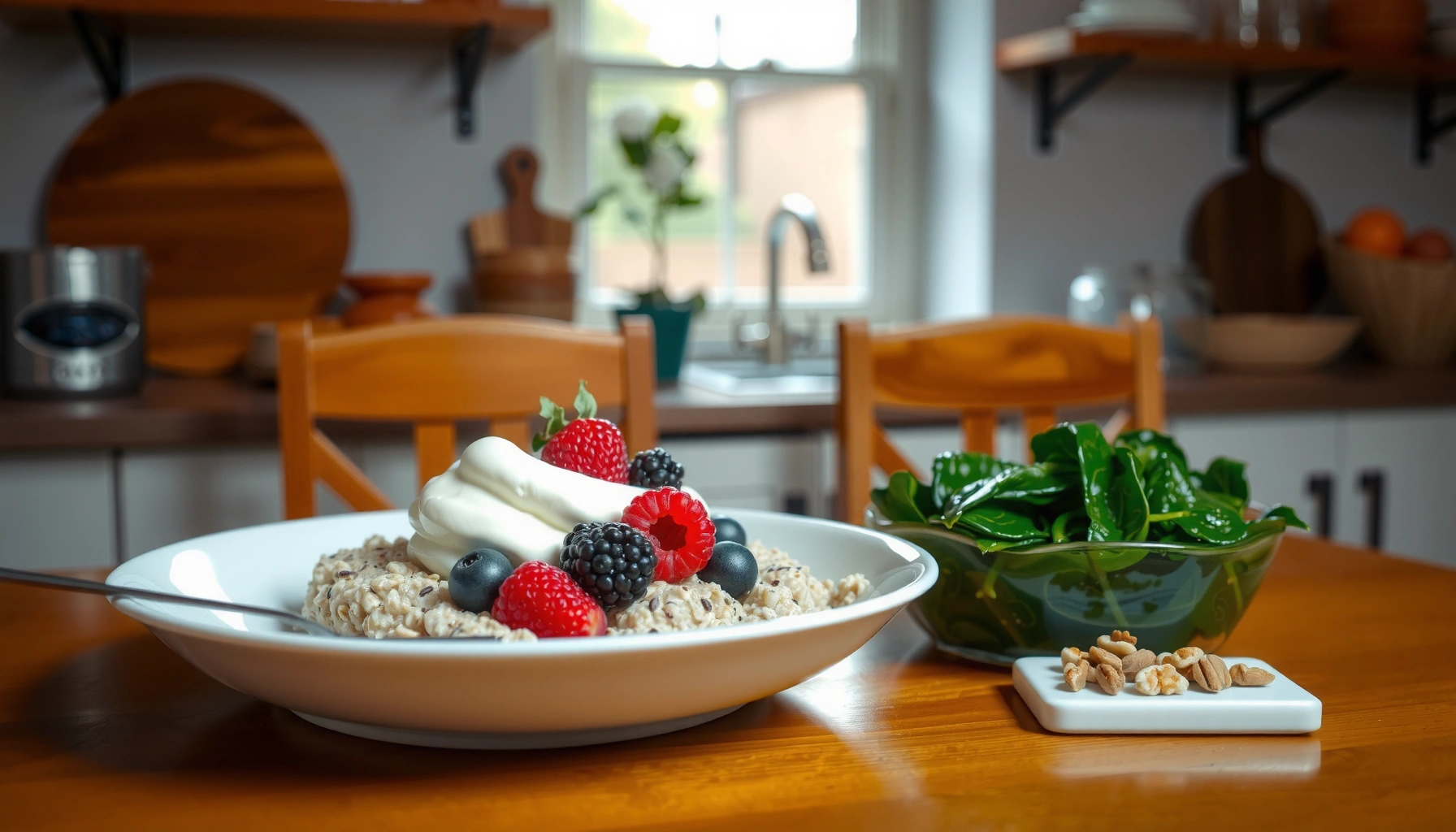
– Breakfast template: oats + berries + nuts (or chia/flax), optionally with unsweetened Greek yogurt
– Lunch template: big salad + beans/lentils + olive oil + a lean protein if needed
– Snack template: nuts, hummus + vegetables, or unsweetened yogurt (protein + fiber)
Using repeatable meal templates improves adherence, which is essential for achieving LDL and glycemic goals.
Pairing protein-rich snacks with fiber-containing foods can reduce cravings and stabilize blood sugar between meals.
Sample day (buildable, not complicated)
– Breakfast: oatmeal topped with blueberries, walnuts, and ground flax
– Lunch: lentil soup plus a side salad dressed with olive oil
– Dinner: baked salmon with roasted non-starchy vegetables and a small portion of quinoa
– Snack (optional): hummus with cucumber and bell pepper slices
Q: What should I do if I’m hungry soon after eating?
Increase fiber (more vegetables/legumes) and ensure adequate protein and healthy fats—then review whether refined carbs were part of the meal.
Q: How quickly can diet changes show results?
Post-meal glucose responses can improve within days; lab measures like HbA1c typically reflect 2–3 months of trends. LDL changes often take weeks to months depending on baseline and overall pattern.
A heart-healthy, diabetes-friendly diet means eating more fiber-rich, minimally processed foods, choosing healthier fats, and limiting added sugars and refined carbs. Start by building one balanced meal template today, then track how it affects your glucose and cholesterol goals—consider talking with a registered dietitian or your clinician for a personalized plan.
Frequently Asked Questions
What is the best diet for high cholesterol and diabetes?
A heart-healthy, diabetes-friendly eating pattern like the Mediterranean or DASH-style diet is often the best fit because it emphasizes vegetables, legumes, whole grains, nuts, and olive oil while limiting saturated fat and refined carbs. This supports lower LDL cholesterol and better blood sugar control at the same time. Aim for high-fiber meals, lean protein, and healthy fats, and reduce trans fats, processed foods, and sugary drinks.
How should I change my carb intake to improve blood sugar and cholesterol?
Focus on high-fiber carbohydrates—such as beans, lentils, oats, quinoa, and whole fruits—because they raise blood sugar more slowly and can help lower LDL cholesterol. Limit refined grains (white bread, pastries) and added sugars, which can worsen both glucose control and triglycerides. If you count carbs, pair them with protein and non-starchy vegetables to reduce spikes after meals.
Why does diabetes increase cholesterol risk, and how does diet help?
Diabetes is commonly linked to higher triglycerides, lower HDL (“good” cholesterol), and more atherogenic cholesterol particles, which raises cardiovascular risk. Diet can improve these markers by increasing soluble fiber, choosing unsaturated fats over saturated fats, and reducing overall added sugars and refined carbohydrates. Consistent eating patterns plus weight management and fiber-rich foods can meaningfully support healthier cholesterol levels and glycemic control.
Which foods should I avoid or limit with high cholesterol and diabetes?
Limit saturated fats from fatty red meat, butter, full-fat dairy, and many fried foods, and avoid trans fats found in some processed snacks and baked goods. Reduce refined carbs like white rice, white bread, and sugary cereals, and avoid sweetened beverages that can spike glucose and raise triglycerides. Also be cautious with highly processed “low-fat” products that may be high in sugar or refined starches.
Which meal plan approach works best for lowering LDL and managing diabetes?
A practical approach is the “plate method”: fill half your plate with non-starchy vegetables, one quarter with lean protein (fish, poultry, tofu, beans), and one quarter with high-fiber carbs (like brown rice, quinoa, or legumes). Add healthy fats in controlled portions—such as olive oil, avocado, nuts, or seeds—to support heart health without overloading calories. Eating consistently and building meals around fiber-rich foods can improve LDL cholesterol and help keep blood sugar steadier.
📅 Last Updated: September 02, 2026 | Topic: best diet for high cholesterol and diabetes | Content verified for accuracy and freshness.
References
- https://www.nhlbi.nih.gov/health/atherosclerosis
https://www.nhlbi.nih.gov/health/atherosclerosis - https://www.nhlbi.nih.gov/education/dca/diagnosis-treatment-cards/high-blood-cholesterol
https://www.nhlbi.nih.gov/education/dca/diagnosis-treatment-cards/high-blood-cholesterol - https://www.heart.org/en/health-topics/cholesterol/cholesterol-basics
https://www.heart.org/en/health-topics/cholesterol/cholesterol-basics - https://www.diabetes.org/healthy-living/recipes-nutrition/food-planning
https://www.diabetes.org/healthy-living/recipes-nutrition/food-planning - https://www.cdc.gov/diabetes/managing/healthy-eating.html
https://www.cdc.gov/diabetes/managing/healthy-eating.html - https://www.who.int/news-room/fact-sheets/detail/healthy-diet
https://www.who.int/news-room/fact-sheets/detail/healthy-diet - https://pubmed.ncbi.nlm.nih.gov/24385163/
https://pubmed.ncbi.nlm.nih.gov/24385163/ - https://www.nature.com/articles/nature13930
https://www.nature.com/articles/nature13930 - https://scholar.google.com/scholar?q=best+diet+for+high+cholesterol+and+diabetes Google Scholar
https://scholar.google.com/scholar?q=best+diet+for+high+cholesterol+and+diabetes - https://scholar.google.com/scholar?q=cholesterol+dietary+patterns+diabetes+randomized+trial Google Scholar
https://scholar.google.com/scholar?q=cholesterol+dietary+patterns+diabetes+randomized+trial