
Looking for the best breakfast for diabetic patients that won’t spike blood sugar? The winner is a protein-forward, high-fiber meal—think Greek yogurt with nuts and berries or eggs with nonstarchy vegetables—because it steadies glucose and keeps you full through the morning. If you need quick options, we’ll show fast, blood-sugar-friendly combinations you can eat daily without guesswork.




A blood-sugar-friendly breakfast for a diabetic patient is one built around protein and high-fiber carbs, with limited added sugar. Aim for a balanced plate—think eggs or Greek yogurt plus vegetables and whole grains (or fruit in a controlled portion)—so glucose rises more slowly. In this guide, you’ll find practical breakfast options, portions to watch, and common mistakes to avoid.
If you’ve been searching for what to eat in the morning to prevent big blood-sugar spikes, this is for you—whether you use insulin, take oral medication, or are managing diabetes through diet. It’s also helpful if you’re trying to choose breakfasts that keep you full longer without turning the first meal into a sugar load.
Pick the Right Macro Mix (Protein + Fiber First)

The best macro mix for a diabetic breakfast is protein first, then high-fiber carbohydrates, with added sugar kept minimal. Here’s why it works: protein and fiber slow digestion and reduce the speed of glucose absorption compared with carb-heavy, low-fiber breakfasts.
“HbA1c reflects average blood glucose over approximately the past 2–3 months,” which is why breakfast patterns matter over time, not just hour-to-hour (American Diabetes Association (ADA), Standards of Care in Diabetes—2024).
“Carbohydrate counting” in diabetes meal planning commonly uses a 15-gram carbohydrate unit/serving to estimate the carbohydrate impact on blood glucose (American Diabetes Association (ADA) Diabetes Meal Planning guidance, Standards of Care in Diabetes—2024).
Dietary fiber recommendations are often expressed as about 14 grams per 1,000 kcal/day to support metabolic and digestive health (U.S. Dietary Guidelines for Americans, 2020–2025).
To apply this to a diabetic breakfast in a practical, repeatable way, build your plate like this: start with a protein source (eggs, Greek yogurt, cottage cheese, tofu, or lean meat), add a high-fiber carb you can measure (oats, whole-grain toast, beans, quinoa), then round it out with non-starchy vegetables (spinach, peppers, mushrooms, tomatoes) for extra volume and fiber.
Common “macro” pattern for a diabetic breakfast:
– Protein base: 1 palm-sized portion (or about what you normally tolerate with your medication plan)
– High-fiber carbs: a measured serving (especially if you’re carb counting)
– Vegetables: at least one cup for bulk when possible
If you’re eating fruit, treat it like a carbohydrate—not a free food. Pairing fruit with protein (like Greek yogurt) can reduce the speed of glucose rise for many people.
What “high-fiber” looks like in real breakfast foods
Below is a quick reference for typical nutrition in common breakfast staples (so you can compare fiber and protein side-by-side for your diabetic breakfast choices). Values are based on USDA FoodData Central entries for standard serving sizes.
Nutrition Snapshot: Protein + Fiber Breakfast Picks (per common serving)
| # | Food (typical serving) | Protein | Fiber | Total Carbs | Glucose-Stability Fit |
|---|---|---|---|---|---|
| 1 | Whole egg (1 large) | 6.3 g | 0 g | 0.4 g | ★★★☆☆ |
| 2 | Greek yogurt, plain 0% (170 g) | 17.3 g | 0 g | 6.0 g | ★★★★☆ |
| 3 | Oats, rolled (1/2 cup dry) | 5.1 g | 4.0 g | 27.0 g | ★★★★★ |
| 4 | Chia seeds (1 tbsp / ~12 g) | 2.0 g | 3.0 g | 4.0 g | ★★★★★ |
| 5 | Black beans, cooked (1/2 cup) | 7.6 g | 7.5 g | 20.9 g | ★★★★☆ |
| 6 | Whole wheat bread (1 slice) | 4.0 g | 2.0 g | 12.0 g | ★★★★☆ |
| 7 | Broccoli, raw (1 cup) | 2.6 g | 2.4 g | 6.6 g | ★★★☆☆ |
Note: “Glucose-stability fit” is a practical match to a diabetic breakfast (protein + fiber). Nutrition values come from USDA FoodData Central using common serving sizes.
Best Breakfast Options for Diabetic Patients
The best breakfast for diabetic patients is the one you’ll repeat consistently: protein + fiber-forward carbs (or measured fruit) plus non-starchy vegetables. If you want reliable results, choose options that keep added sugar low and make it hard to “accidentally overserve” carbohydrates.
The American Diabetes Association recommends tailoring diabetes nutrition to carbohydrate intake patterns and pairing carbohydrates with protein and/or fiber when appropriate (American Diabetes Association (ADA), Standards of Care in Diabetes—2024).
FDA labeling makes it possible to identify added sugar on nutrition facts labels, helping limit added sugars in diabetic eating patterns (U.S. Food and Drug Administration (FDA), Nutrition Facts Labeling guidance).
Soluble fiber from foods like oats can increase satiety and slow carbohydrate absorption compared with refined grains, which supports more gradual glucose response (Academy of Nutrition and Dietetics / EatRight resources on diabetes meal planning & fiber).
Here are diabetic breakfast ideas that map closely to the “protein + fiber first” framework—so you’re not relying on willpower alone.
Protein + fiber “go-to” choices
– Vegetable omelet + whole-grain toast: Add spinach, peppers, mushrooms, or tomatoes to the eggs to increase volume and fiber.
– Greek yogurt + chia/flax + berries (controlled portion): Keep berries to a measured serving and avoid sweetened yogurt (even “low-fat” options can contain added sugar).
– Cottage cheese + cucumber/tomatoes + seeds: High-protein, low-added-sugar, and very breakfast-satisfying.
Warm options that digest more slowly
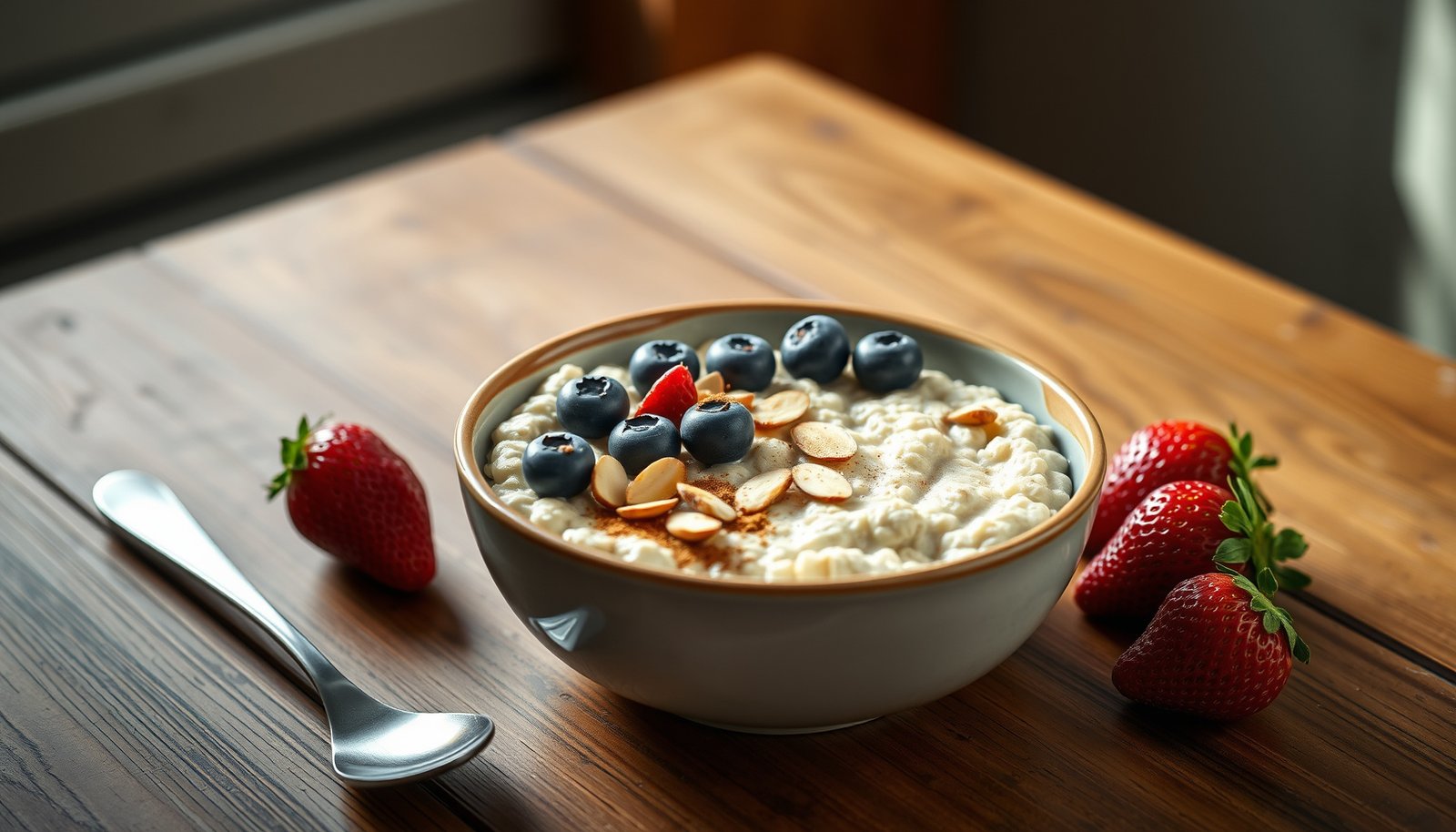
– Oatmeal (less added sweetener) + nuts/seeds + fruit measured: Choose rolled/old-fashioned oats when possible. Add cinnamon for flavor instead of sugar.
– Beans as breakfast (savory bowl): A small serving of beans on whole-grain toast or as a side with eggs can boost fiber without turning breakfast into a sugar load.
If you prefer savory
– Tofu scramble: Pair with a fiber-rich side—like sautéed vegetables and a slice of whole-grain toast.
– Beans + eggs or tofu: This combo is often “difficult to overeat,” because it’s filling and fiber-forward.
Quick pros/cons comparison (for picking your diabetic breakfast style)
| Option style | Pros | Cons | Best for |
|---|---|---|---|
| Egg/Tofu scramble | Very low added sugar; easy protein anchor | If you skip veggies/whole grains, you may miss fiber | People who spike after sugary carbs |
| Greek yogurt bowl | Fast; strong protein base | Some yogurts are sweetened—check labels | People who want minimal cooking |
| Oatmeal bowl | High fiber option | Portions creep—watch serving size | People who prefer warm breakfast |
| Beans on whole-grain toast | Fiber + protein combo | Carb load still matters—measure toast | People who like savory, filling meals |
Portion Guidance That Helps Control Blood Sugar
The most powerful lever for a diabetic breakfast is portion size—especially for carbohydrates—even when the foods are “healthy.” This matters because glucose response depends on both what you eat and how much.
Carbohydrate servings (often 15 grams per serving) help estimate how much carbohydrate a diabetic breakfast contributes to post-meal glucose (American Diabetes Association (ADA), Standards of Care in Diabetes—2024).
Fiber intake targets are commonly expressed as ~14 grams per 1,000 kcal/day, which supports steadier carbohydrate absorption patterns in meal planning (U.S. Dietary Guidelines for Americans, 2020–2025).
HbA1c tracks average glucose over roughly 2–3 months, so repeated breakfast portion habits influence longer-term outcomes (American Diabetes Association (ADA), Standards of Care in Diabetes—2024).
How to apply portion control without making breakfast miserable
– Measure at first, then adjust. For many people, starting with measured servings (like a specific slice of bread or a set amount of oats) makes it easier to learn your pattern.
– Carb counting (if recommended for you). If you’re using insulin or a structured carb-counting approach, build your diabetic breakfast around your prescribed carb limits.
– Use “plate logic” until you can personalize. If you don’t carb count, aim to ensure your plate still includes:
– protein (eggs/yogurt/tofu/cottage cheese),
– fiber (oats/whole grains/beans/vegetables),
– and a restrained carb portion.
Monitoring glucose: the feedback loop
If you check glucose (fingerstick or CGM), treat your first month like data collection:
– note what happened after your diabetic breakfast,
– identify which foods and portions reduce spikes,
– and then refine servings rather than reinvent everything.
If you’re working with a clinician, diabetes educator, or dietitian, align your diabetic breakfast portions with your plan.
What Can Go Wrong (Common Breakfast Mistakes)
The most common reason a “healthy” diabetic breakfast still spikes blood sugar is hidden sugar or underestimated carbohydrate portions. The second reason is missing fiber—either from low-fiber choices or from meals that are effectively carbs-only.
Added sugar can be identified on nutrition facts labels, and limiting added sugars is a key practical strategy in diabetes meal planning (U.S. Food and Drug Administration (FDA), Nutrition Facts Labeling guidance).
Foods marketed as “whole grain” can still raise blood glucose if serving sizes are large or if the breakfast is paired with little protein/fiber (American Diabetes Association (ADA), Standards of Care in Diabetes—2024).
Fiber supports more gradual glucose response compared with refined carbohydrate patterns, which is why skipping fiber often leads to faster hunger and higher post-meal glucose (Academy of Nutrition and Dietetics / EatRight resources on diabetes meal planning & fiber).
Mistake 1: “Healthy-sounding” traps
Even for diabetic patients, these are frequent culprits:
– fruit juice instead of whole fruit
– sweetened yogurt (especially “vanilla” or “low-fat” with added sugar)
– granola with added sugar
– cereal marketed as “whole grain” but high in sugar per serving
Mistake 2: Overserving carbs because it’s “breakfast”
Morning carbs can still spike glucose later if they’re too large for your body’s response. A diabetic breakfast should not be an excuse to “bank carbs”—it should match your medication plan and your target glucose pattern.
Mistake 3: Choosing protein-only or toast-only meals
A protein-only breakfast can leave you hungry earlier, increasing the chance of larger snacking. Toast-only meals can cause a faster glucose rise. The fix is pairing carbs with protein and fiber—so the diabetic breakfast works as a system.
Edge case to watch: medication timing
If you use insulin, the “best breakfast” for diabetic patients may also depend on:
– injection timing,
– the type of insulin,
– and your clinician’s meal-to-dose guidance.
When medication dynamics matter, general meal templates may not be enough.
Verdict: What’s Usually the Best Choice (and Who Should Skip)
For most diabetic patients, the best breakfast is a balanced, repeatable meal: protein + high-fiber carbs (or fruit in a measured portion) + limited added sugar. The main downside is that you may need to measure portions at first and adjust based on how your glucose responds; consistency is the goal, not perfection.
The ADA emphasizes individualized nutrition therapy and carbohydrate management as central components of diabetes care planning (American Diabetes Association (ADA), Standards of Care in Diabetes—2024).
The U.S. Dietary Guidelines recommend fiber targets as part of overall dietary pattern quality, which supports steadier carbohydrate absorption for many people (U.S. Dietary Guidelines for Americans, 2020–2025).
Which diabetic breakfast style fits most people? (VS table)
| Criteria | Savory protein + fiber breakfast | Sweet-leaning breakfast bowl | Verdict |
|---|---|---|---|
| Added sugar risk | Lower when you skip syrups/packaged toppings | Higher if the bowl includes sweet yogurt, syrup, or candy-like toppings | Savory wins |
| Fiber density | Usually easy to add via vegetables/beans/seeds | Depends on the recipe; fruit-only tends to be lower fiber | Savory wins |
| Protein anchor | Eggs/tofu/yogurt provide strong protein base | Often lower protein unless you add Greek yogurt/nuts | Savory wins |
| Glucose rise speed | Typically slower for many people | More variable, especially with refined cereal | Savory wins |
| Portion control | Helps prevent overeating carbs accidentally | Toppings can “stack” carbs quickly | Savory wins |
| Satiety for late-morning hunger | Often better due to protein + fiber | Can be filling, but sugar-heavy meals may wear off fast | Savory wins (often) |
| Practicality on busy mornings | Many savory options reheat or prep fast | Requires careful ingredient selection | Savory wins |
| Label-check burden | Moderate (still check sauces/packaged toast) | High (sweetness hides in yogurts/cereals) | Savory wins |
| Works with carb counting | Easier to estimate measured carbs | Still workable, but requires careful serving sizes | Savory wins |
| Best “default” choice for new routines | Yes—repeatable and balanced | Only if you control portion and keep toppings low-sugar | Savory wins |
“Best For” comparison (so you can choose your diabetic breakfast template)
Diabetic Breakfast Templates: Which one fits your morning?
| # | Feature (what you care about) | Omelet/Tofu + Veg | Greek Yogurt + Seeds | Oats + Measured Fruit |
|---|---|---|---|---|
| 1 | Protein strength | High | High | Moderate |
| 2 | Fiber potential | High (via veg) | Medium (via seeds/berries) | High |
| 3 | Added sugar risk (default recipe) | Low | Medium (depends on yogurt) | Medium (depends on toppings) |
| 4 | Portion “leakage” risk | Lower | Medium | Higher (oats add up fast) |
| 5 | Satiety (typical) | Very high | High | High |
| 6 | Vegetable integration | Easy | Not typical | Limited |
| 7 | Time-to-plate | Fast to moderate | Fast | Moderate |
| 8 | Carb-counting friendliness | Good with measured toast | Good with labeled toppings | Good with weighed oats |
| 9 | Consistency for repeated routines | High | High | Medium (varied toppings) |
| 10 | Best “default” for spiking concerns | Yes | Often yes | Depends on portion |
| 11 | Best For | Protein-first mornings | Busy, no-cook routines | Warm, fiber-led breakfasts |
If you’ve been trying to control morning spikes in 2025 and 2026, this is the pattern that most often holds: pick one diabetic breakfast template, keep ingredients simple, then adjust portion sizes based on your glucose response.
If you have specific medical instructions (e.g., individualized carb limits from your clinician or dietary restrictions like kidney disease), don’t rely on general meal templates—follow your clinician’s plan and any diabetes educator guidance.
Quick Scan Checklist (Save This)
– Protein at breakfast: eggs / Greek yogurt / tofu / cottage cheese (pick one)
– Fiber included: berries / chia or flax / oats / vegetables / beans
– Added sugar minimized: avoid sweet cereals, pastries, sweetened yogurt, and juice
– Carb portion controlled: measured serving or carb-counted amount
– Pair carbs with protein/fiber: no carbs-only breakfasts
– Monitor response (if you track): note what spikes and what doesn’t (and adjust portions, not just foods)
Sources
– American Diabetes Association (ADA). Standards of Care in Diabetes—2024. Diabetes Care.
– American Diabetes Association (ADA). ADA Diabetes Food Hub (official ADA web resource for practical meal-building ideas).
– Academy of Nutrition and Dietetics / EatRight. Diabetes meal planning resources on diabetes nutrition and fiber (official organization guidance).
– U.S. Department of Agriculture (USDA). FoodData Central (official USDA food nutrition database; used for nutrition snapshot values in the table above).
For most diabetic patients, the “best breakfast” in real life is the one that repeatedly gives you protein + fiber with a controlled carbohydrate portion and minimal added sugar. If you implement one template and adjust servings using your glucose response (and your clinician’s plan), you’ll usually get steadier mornings in 2025 and 2026—without turning breakfast into a daily negotiation.
Frequently Asked Questions
What is the best breakfast for a diabetic patient to control blood sugar?
A great diabetic breakfast is high in fiber and protein with minimal added sugar, such as Greek yogurt or eggs plus vegetables. Pairing carbs with protein (and healthy fats) helps slow glucose absorption and supports steadier blood sugar levels. Choose options like oatmeal made with nuts or chia, or a whole-grain egg-and-veggie breakfast to improve glycemic control.
How should a diabetic patient build a balanced breakfast plate?
Aim for a mix of non-starchy vegetables, lean protein, and smart carbohydrates with fiber. For example, use spinach, peppers, and mushrooms with eggs, then add a small portion of whole grains (or beans) and a source of healthy fat like avocado or olive oil. Keeping portions consistent and avoiding sugary drinks helps prevent spikes in blood glucose.
Which breakfast foods should a diabetic patient avoid to prevent spikes?
Limit refined carbohydrates such as white bread, sugary cereal, pastries, and pancakes made with white flour. Also be cautious with fruit juices, sweetened coffee drinks, and breakfast bars that contain added sugar and low fiber. Even “healthy-sounding” options can raise blood sugar quickly if portions are large or fiber is minimal.
Why does protein and fiber at breakfast matter for diabetes?
Protein and fiber slow digestion and reduce the speed of carbohydrate breakdown, which can lead to a more gradual rise in blood sugar. They also increase satiety, helping diabetic patients manage cravings and overall daily calorie intake. Adding fiber-rich foods like chia seeds, berries, legumes, or vegetables can improve post-meal glucose response.
Best breakfast ideas for diabetics when cravings hit?
If you crave something sweet, try a low-sugar Greek yogurt bowl with berries, nuts, and cinnamon instead of sugary cereal. For a warm option, make oatmeal with chia or ground flax and add protein like nuts or a side of eggs. These diabetic-friendly breakfasts still satisfy taste while supporting blood sugar control by reducing added sugar and increasing fiber and protein.
📅 Last Updated: October 24, 2026 | Topic: best breakfast for diabetic patient | Content verified for accuracy and freshness.
References
- https://www.cdc.gov/diabetes/managing/healthy-eating.html
- https://www.niddk.nih.gov/health-information/diabetes/overview/eating-nutrition/eating-foods-diabetes
- Diabetes diet: Create your healthy-eating plan – Mayo Clinic
- Glycemic index
- Diet in diabetes
- Diabetes
- https://scholar.google.com/scholar?q=breakfast+glycemic+control+type+2+diabetes Google Scholar
- https://scholar.google.com/scholar?q=diabetes+breakfast+high+fiber+low+glycemic+index Google Scholar
- https://scholar.google.com/scholar?q=breakfast+skipping+insulin+resistance+type+2+diabetes Google Scholar