

If you’re searching for the best type of bread for diabetics, the clear winner is bread made with whole grains and high fiber—like 100% whole wheat or seeded sprouted-grain loaves—because it raises blood sugar more slowly. This guide answers which bread types actually help control glucose, what to look for on labels (fiber and whole-grain content), and which common breads to avoid. Choose the right loaf and you’ll get more stable energy without turning every sandwich into a blood-sugar spike.




The best type of bread for diabetics is bread made with whole grains (or sprouted/rye) that’s higher in fiber and lower in added sugar, so it doesn’t spike blood glucose as fast. You’ll get the most benefit by checking the Nutrition Facts for total carbohydrate per slice and keeping your portion size consistent with your diabetes meal plan—then using label clues to compare loaves without relying on marketing.
If you’ve noticed your blood sugar rise after eating toast, sandwiches, or “multigrain” bread, this is for you. It’s especially useful when you want a practical way to compare different loaves without doing food-science homework.
Best bread for diabetics: whole grain + fiber first
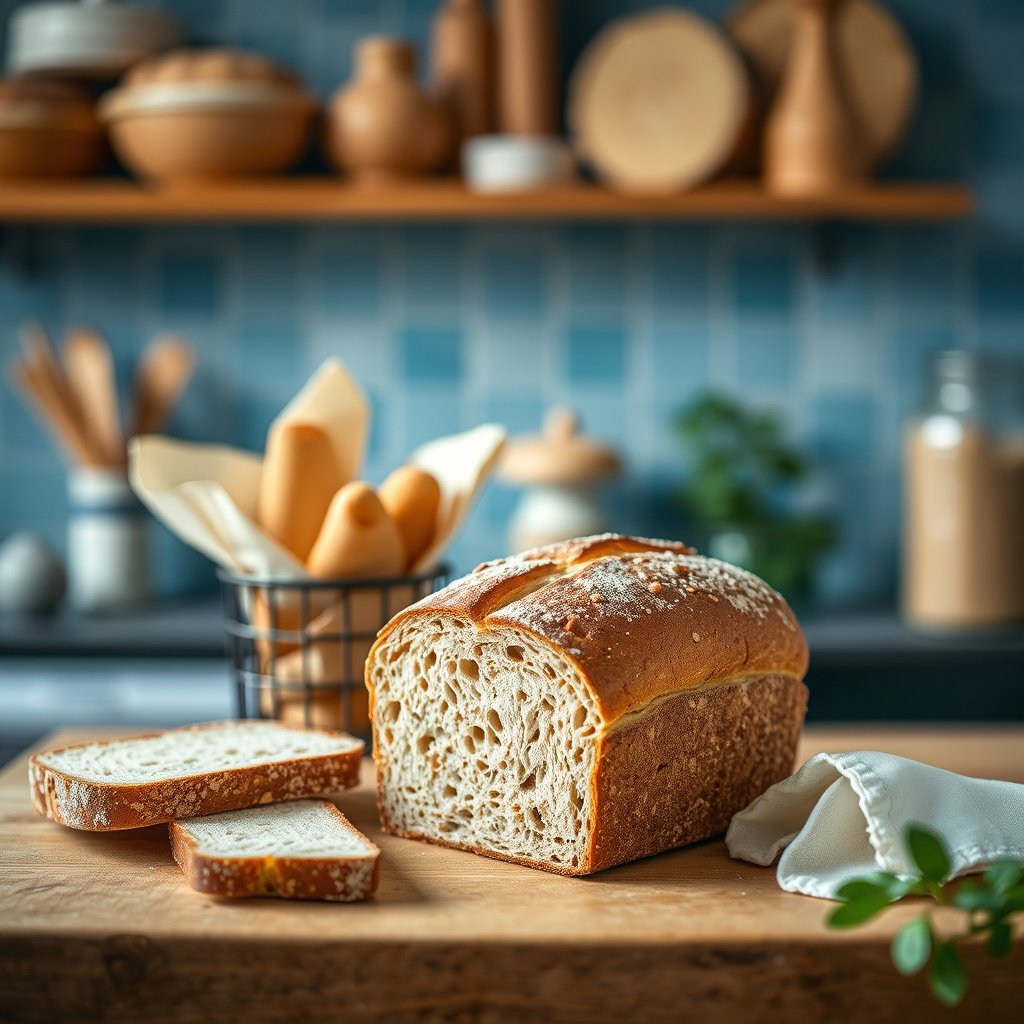
The best bread choice for most people managing diabetes is whole-grain (including rye or sprouted-grain) bread with meaningful fiber and minimal added sugar. Here’s why: whole grains generally digest more slowly, and fiber can blunt how quickly carbs reach the bloodstream.
Whole-grain breads are typically made with intact grain components, which slows digestion compared with refined flour and can reduce the speed of glucose rise after eating.
Dietary fiber (on the Nutrition Facts label) is a key factor because fiber increases satiety and can slow carbohydrate absorption.
For diabetes meal planning, total carbohydrate per serving is the most actionable label number for predicting blood-glucose response.
– Prioritize loaves that are clearly made from whole grains (e.g., 100% whole wheat, rye, or sprouted grain), since whole-grain breads generally keep digestion slower than refined flour.
– Look for higher fiber (and ideally fewer refined ingredients), because fiber can help blunt glucose spikes when carbs digest.
– In real life (as of 2026), the “best” loaf is often the one where you can consistently hit your planned carbs without accidentally overshooting—so consistency matters as much as ingredient quality.
Whole grains vs. refined bread (how to think about it)
Whole grains are usually the better starting point than refined breads because they tend to produce a gentler glucose response. The key is to think in terms of digestion speed and carbohydrate composition—not the front-of-pack claim.
Refined grain products typically contain less fiber because the bran and germ are removed during milling.
“Multigrain” describes variety of grains, not automatically whole-grain status—label ingredients and fiber content determine what you’re actually eating.
– Refined breads tend to break down faster, which can make the glucose response more abrupt after you eat.
– “Multigrain” doesn’t automatically mean whole grain—some products include whole grains plus a lot of refined flour, so label reading matters more than the front-of-pack wording.
To make this comparison easier, here’s a practical “scan-and-decide” view:
| Category | What it usually means on the label | Likely impact on glucose timing |
|---|---|---|
| Whole grain (e.g., 100% whole wheat, rye) | Higher fiber; whole-grain ingredients listed early; fewer refined flour-only ingredients | Often slower digestion; can reduce how quickly glucose rises |
| Refined grain (e.g., “white” flour as main ingredient) | Lower fiber; ingredient list emphasizes refined wheat flour | Carbs often digest faster; glucose response may be sharper |
One nuance: two whole-grain loaves can behave differently depending on how much fiber they contain per slice and how many grams of total carbohydrate are packed into that slice. That’s why your “label reading” step matters next.
Read the label: carbs and added sugar tell the real story
The most reliable way to pick diabetic-friendly bread is to read Nutrition Facts for total carbohydrate and fiber per serving, then check added sugar. Marketing claims like “low sugar” or “multigrain” can still hide high-carb portions, so you want numbers you can compare apples-to-apples.
The Nutrition Facts label reports total carbohydrate grams per serving, which is the most direct label metric for carbohydrate-related blood-glucose changes.
Added sugars have their own line item on the Nutrition Facts label, helping you distinguish “extra sweet” ingredients from naturally occurring sugars.
– Use the Nutrition Facts to compare total carbohydrate per serving and how many slices fit your “serving” size (this is where many people get tripped up).
– Check for added sugar ingredients (even if the bread is marketed as “healthy”); lower added sugar typically helps when you’re managing overall carbohydrate load.
Because the label can be dense, it helps to know which Nutrition Facts numbers are most useful when diabetes is your lens. Below are FDA Daily Values (DV) that show up on packaged food labels and connect to bread choices—especially for whole grains and added sugars.
FDA Daily Values that Matter When Choosing Bread (Adults >4 years)
| # | Label item (FDA DV) | Daily Value | Why it matters for diabetes | Priority |
|---|---|---|---|---|
| 1 | Dietary fiber | 28 g/day | Helps slow carbohydrate absorption and supports fullness | ★★★★★ |
| 2 | Added sugars | 50 g/day | Helps limit extra sweet carbohydrates | ★★★★☆ |
| 3 | Sodium | 2,300 mg/day | Supports heart health considerations common in diabetes care | ★★★☆☆ |
| 4 | Saturated fat | 20 g/day | Can matter for cardiovascular risk alongside diabetes | ★★★☆☆ |
| 5 | Cholesterol | 300 mg/day | Less central for most bread, but relevant for whole meals | ★☆☆☆☆ |
| 6 | Potassium | 4,700 mg/day | Supports blood pressure health; bread is usually a modest source | ★★☆☆☆ |
| 7 | Added sugars (%DV) | 0%–100% shown on label | Helps you quickly compare “added sweetness” across brands | ★★★★☆ |
For numbers you can use immediately: the FDA sets Dietary Fiber DV at 28 g/day and Added Sugars DV at 50 g/day (Nutrition Facts label requirements). Those DVs don’t replace carb counting, but they help you interpret the label faster when you’re choosing bread in 2026.
Also anchor your overall fiber target: the 2020–2025 Dietary Guidelines for Americans recommend about 14 grams fiber per 1,000 calories (which translates to many adults aiming roughly 25–38 g/day depending on calorie needs). That broader goal supports steadier meals, including bread choices.
Portion and pairing tips that actually change blood sugar
The best bread won’t perform well if portions drift beyond your carb plan. So the “diabetic-friendly” move is pairing a sensible loaf with a consistent slice count—and, when it fits your plan, adding protein and fiber-rich foods to slow digestion.
Even the most fiber-rich bread can raise glucose if the serving size (total carbohydrate) is larger than your meal plan allows.
Combining carbohydrates with protein and healthy fats can reduce how quickly digestion translates into glucose changes for many people.
– Keep portions steady: even the “best” bread can raise glucose if you eat more slices than your carb plan allows.
– Pair carbs with fiber/protein/fat when it fits your plan (for example, add non-starchy vegetables and a protein), which can reduce how quickly you digest the meal.
Here are practical pairing examples you can use immediately (no fancy formulations required):
– Whole-grain toast + peanut butter (or other nut butter) + sliced cucumber/tomatoes
– Sprouted rye open-faced sandwich with deli turkey/chicken + leafy greens
– Smaller portion of bread + hearty soup loaded with vegetables + side salad
From a day-to-day routine standpoint, what has helped me most is keeping the “carb math” consistent: I always check the label’s total carbohydrate per slice and then keep the slices the same when I’m testing which loaf feels best. If you want to mirror that approach, .
What can go wrong when choosing diabetic-friendly bread
The biggest mistake isn’t choosing the wrong word on the package—it’s using labels incorrectly and ignoring portion size. If you correct those errors, bread can be a predictable part of your meal pattern rather than a wildcard.
“Whole wheat” or “multigrain” on the front does not guarantee whole grain on the ingredient list, so you still need to verify ingredients and fiber on the Nutrition Facts.
Total carbohydrates per serving control the immediate glucose impact more directly than the presence or absence of “added sugar” alone.
– Mistake: assuming “wheat” or “multigrain” = whole grain. Fix: verify ingredients and Nutrition Facts, not just the name.
– Mistake: focusing only on sugar while ignoring total carbohydrates. Fix: compare total carbs per slice/serving and track how your body responds.
– Edge case: if you’re on insulin or other glucose-lowering meds, bread changes may require dose/meal timing adjustments—work with your clinician before making big swaps. Ask your diabetes care team about carb counting and medication adjustments if you’re changing the bread type, slice size, or total grams of carbohydrate.
For clarity, here’s a short script you can use:
– “I’m switching to a bread with different carbs and fiber per slice—can I keep my current carb target and make any medication or timing adjustments?”
Also watch for digestion surprises: some higher-fiber breads are denser and can cause gas or discomfort, which may lead you to change portions unintentionally. In 2026, that “practical adherence” factor matters for real glucose outcomes.
Verdict: the best choice is usually whole-grain (with a clear label)
The best overall choice is whole-grain (or rye/sprouted-grain) bread that’s higher in fiber, low in added sugar, and has carbohydrate amounts that fit your meal plan. That’s the combination that makes blood-glucose response more predictable.
When selecting bread for diabetes management, total carbohydrate per serving and fiber content are more actionable than marketing phrases.
Sustained meal patterns (consistent servings of carbohydrate) typically matter as much as food selection for stabilizing glucose.
– Our best honest recommendation: choose a whole-grain or rye/sprouted-grain bread with higher fiber, no significant added sugar, and carbs per slice that fit your meal plan.
– Downsides: some “high-fiber” breads can be dense and may upset sensitive digestion, and some low-carb breads can still vary widely in carbs and ingredients—so don’t assume “diet bread” is automatically better.
– Skip this approach if you’re allergic to wheat/rye grains, have a medical restriction on high-fiber foods, or haven’t been trained on carbohydrate counting and portion planning.
If you want a simple decision rule for your cart:
1) Pick whole grain first,
2) Confirm fiber and added sugar on the label,
3) Confirm total carbs per serving and match your slice count to your plan.
Quick checklist (scan this in the store)
| What to look for | Why it matters | Notes |
|---|---|---|
| Whole-grain ingredients (or rye/sprouted grain) | Tends to digest more slowly | Verify the ingredient list; “multigrain” can mislead |
| Higher fiber | Helps smooth glucose response | Target will vary—use your plan/labels |
| Lower added sugar | Avoids extra sweet carbs | Don’t rely on “no sugar added” alone |
| Carbs per slice/serving you can control | Portion drives the spike | Compare apples-to-apples servings |
Conclusion
For most people with diabetes, the best bread choice is a whole-grain (or rye/sprouted) loaf with higher fiber and less added sugar—then pairing it with a consistent serving size that matches your carb plan. Use the Nutrition Facts to compare total carbohydrate per serving (and how many slices that includes) rather than relying on marketing terms, and—if you use glucose-lowering medications—coordinate any meaningful bread changes with your diabetes care team. Done this way, bread becomes a manageable, repeatable part of your meals rather than a guessing game.
Sources (primary):
– American Diabetes Association (ADA). Standards of Care in Diabetes—Nutrition Therapy / carbohydrate management recommendations.
– U.S. Food and Drug Administration (FDA). Nutrition Facts label regulations and definitions for nutrients like total carbohydrate, dietary fiber, and added sugars.
– USDA. Dietary fiber and whole grain definitions/guidance used for interpreting food labels.
Frequently Asked Questions
What type of bread is best for diabetics?
The best type of bread for diabetics is one made with whole grains and high fiber, such as 100% whole wheat, whole rye, or sprouted grain bread. These options generally have a lower glycemic impact because they contain more fiber and fewer rapidly digested refined carbohydrates. Look for breads labeled “whole grain” and “high fiber,” and aim for fewer added sugars.
How can diabetics choose bread with a lower glycemic index?
To choose bread with a lower glycemic index, check the nutrition facts for fiber and total carbohydrate content, since higher fiber often means slower blood sugar rise. Sourdough and sprouted grain breads can be helpful because fermentation may improve carbohydrate digestion compared with some standard white breads. If possible, compare nutrition labels between brands and choose the one with more grams of fiber per serving and fewer added sugars.
Why is whole grain or rye bread often better for blood sugar control?
Whole grain and rye bread typically contain more fiber, which slows digestion and helps reduce spikes in blood glucose after meals. Rye, in particular, often has a favorable carbohydrate profile compared with many white breads due to its fiber content. However, portions still matter, so pair bread with protein or healthy fats (like eggs, tuna, or avocado) to further blunt blood sugar swings.
Which bread should diabetics avoid to reduce blood sugar spikes?
Diabetics should generally limit white bread, brioche, dinner rolls, and other refined-grain breads, especially those with added sugars like honey, syrups, or sugar listed near the top of the ingredients. These breads usually digest faster and can lead to quicker glucose increases. If you want to eat bread, choose whole grain or sprouted bread options and pay attention to “net carbs” only if you understand how the label calculates them.
Best how-to: How much bread can a diabetic eat per serving?
A practical starting point is to use the package’s serving size and monitor your response, since carbohydrate tolerance varies by person and medication. Many people with diabetes do well when they limit bread to a moderate carbohydrate portion (often around 15–30 grams of carbs per meal), but your ideal amount depends on your overall meal plan. For better blood sugar control, choose high-fiber bread and combine it with protein, non-starchy vegetables, and healthy fats rather than eating bread alone.
📅 Last Updated: October 22, 2026 | Topic: best type of bread for diabetics | Content verified for accuracy and freshness.
References
- Glycemic index
- Healthy Eating | Diabetes | CDC
- https://www.mayoclinic.org/diseases-conditions/diabetes/in-depth/diabetes-and-diet/art-20048455
- https://pubmed.ncbi.nlm.nih.gov/?term=whole+grain+bread+glycemic+index+diabetes
- https://pubmed.ncbi.nlm.nih.gov/?term=rye+bread+glycemic+response+diabetes
- https://pubmed.ncbi.nlm.nih.gov/?term=low+glycemic+index+bread+type+2+diabetes
- https://scholar.google.com/scholar?q=best+bread+for+diabetics+whole+grain+glycemic+index Google Scholar
- https://scholar.google.com/scholar?q=low+glycemic+index+bread+type+2+diabetes+randomized+trial Google Scholar
- https://scholar.google.com/scholar?q=whole+grain+bread+intake+type+2+diabetes+systematic+review Google Scholar