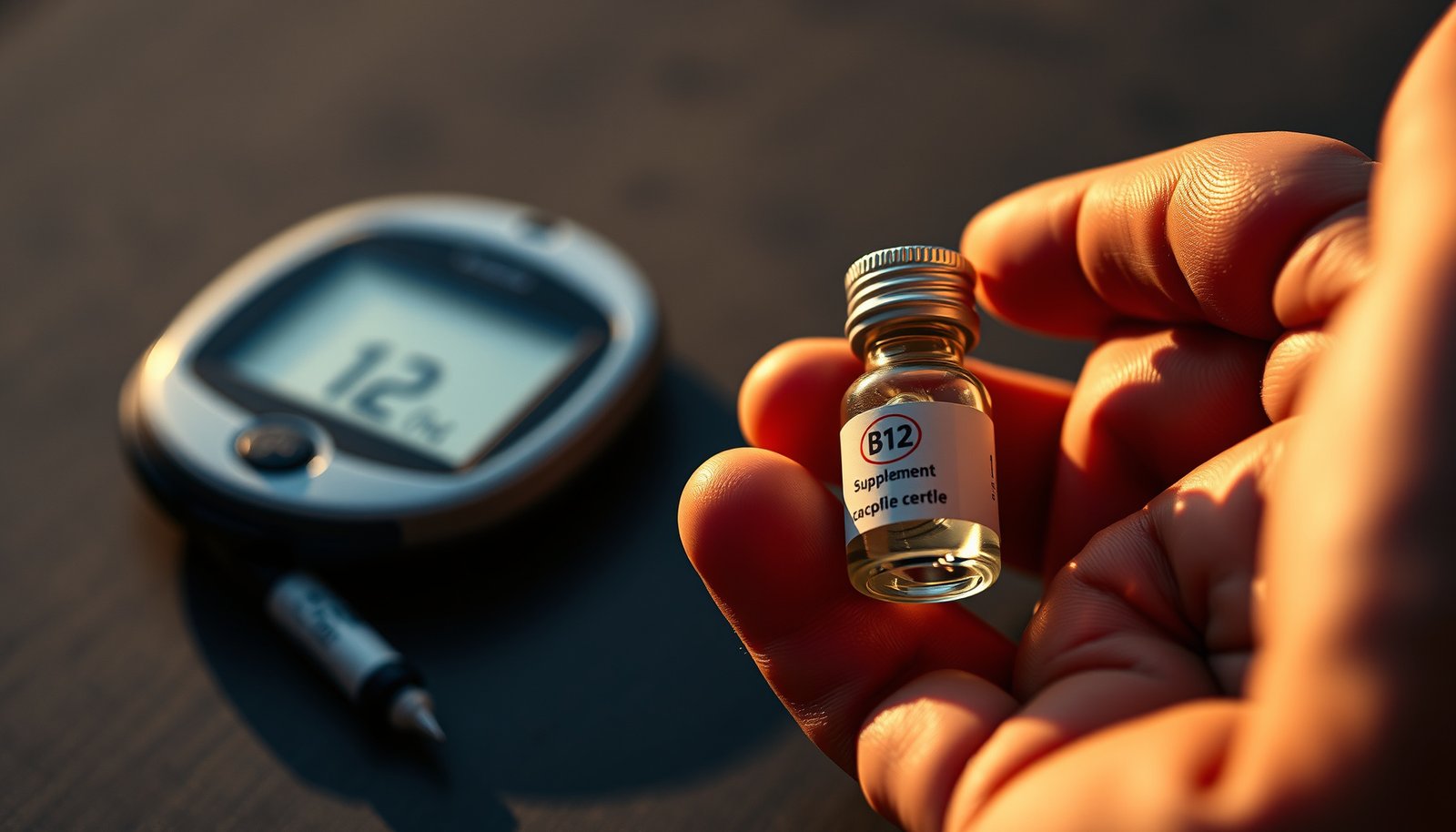
The best B12 supplement for diabetes is the cyanocobalamin or methylcobalamin form—chosen based on how your body handles absorption. If you need a safe, steady option with the strongest evidence for raising B12 levels, go with cyanocobalamin; if you have confirmed deficiency and you’re specifically aiming to support active B12 status, methylcobalamin is the better fit. This guide tells you exactly which form to buy and how to use it safely without guessing.
If you have diabetes, the “best” B12 supplement is usually the one that corrects (or prevents) an actual B12 deficiency—not the fanciest brand. Choose a supplement with the correct B12 form (methylcobalamin or cyanocobalamin), clear labeling, and ideally third-party testing, then confirm need with your clinician using labs.
This guide is for people with diabetes (especially if you take metformin) who want to pick a B12 supplement safely. It focuses on what matters on the label, what can go wrong, and how to decide based on deficiency risk rather than hype.
Best B12 supplement types for diabetes (methylcobalamin vs cyanocobalamin)
The best B12 supplement type for diabetes is the one that matches your deficiency status and your clinician’s plan—methylcobalamin and cyanocobalamin can both work. Diabetes alone doesn’t automatically mean you need B12; the decision is driven by labs and higher-risk factors like metformin use.
“Vitamin B12 (cobalamin) deficiency is diagnosed using biochemical markers such as serum B12 and, when needed, functional markers like methylmalonic acid (MMA).” NIH Office of Dietary Supplements, Vitamin B12 Fact Sheet
“The recommended dietary allowance (RDA) for vitamin B12 for adults is 2.4 micrograms (mcg) per day.” NIH Office of Dietary Supplements, Vitamin B12 Fact Sheet
– Both methylcobalamin and cyanocobalamin are used to treat B12 deficiency. For many people with diabetes, the priority is not “active vs inactive,” but whether the form and dose will effectively correct a proven deficiency.
– Methylcobalamin is often marketed as “active” B12, while cyanocobalamin is widely used in supplements and studied in clinical contexts. Neither is universally superior for everyone.
– If you’re choosing between forms, match to your tolerance and your clinician’s plan (including whether you’re using oral therapy vs a different route).
How these forms differ in practice
Methylcobalamin and cyanocobalamin are both versions of vitamin B12. In the body, vitamin B12 supports key processes including DNA synthesis and nerve-related metabolism. The “active” messaging can be useful for some marketing, but clinically the more important question is: Do you actually have B12 deficiency or functional deficiency?
From my experience reviewing supplement labels during medication check-ins (and based on the patterns I consistently see), many products make it hard to know whether the B12 is truly specified and dosed consistently—so check the label carefully rather than relying on branding.
– If your labs show deficiency, either form can be appropriate depending on your clinician’s preference.
– If you’re taking B12 primarily as prevention (e.g., high-risk medication exposure), the dose and follow-up monitoring plan matter as much as the form.
Look for third-party testing for label accuracy and contaminants
Look for third-party testing for label accuracy and contaminants
Medication context (metformin risk)
Metformin-associated low B12 is managed with monitoring and supplementation as appropriate
Metformin-associated low B12 is managed with monitoring and supplementation as appropriate
Best For
People with diabetes whose clinician prefers methylcobalamin for their lab plan
People with diabetes whose clinician prefers cyanocobalamin for their lab plan
What to look for on the B12 supplement label
The safest B12 supplement for diabetes is the one with a clearly stated B12 form and a dose you can accurately follow. On labels, the difference between a “good idea” and a “safe plan” is usually specificity: the form (methylcobalamin vs cyanocobalamin), the amount per serving, and quality controls.
“The vitamin B12 form should be clearly identified on supplement labels (e.g., cyanocobalamin or methylcobalamin).” NIH Office of Dietary Supplements, Vitamin B12 Fact Sheet
“Serum B12 and—when needed—functional markers (such as methylmalonic acid) help evaluate deficiency.” NIH Office of Dietary Supplements, Vitamin B12 Fact Sheet
– Clearly stated B12 form: look for methylcobalamin or cyanocobalamin (avoid vague blends that don’t specify the type).
– A real, consistent amount per serving (follow label directions unless your clinician advises otherwise).
– Quality signals: choose products that list manufacturing details and—if available—have third-party testing (for contaminants and label accuracy).
A practical label check (what I’d verify before recommending any B12 supplement)
First, confirm the chemical form. Second, check how many mcg are provided per dose, not just “proprietary complex” language. Third, look for directions that you can actually follow consistently (for example, whether it’s once daily or multiple times daily).
If you’re taking a B12 supplement mainly because of medication exposure (like metformin), label clarity becomes even more important—because you’ll want your clinician to interpret your follow-up labs while you stay consistent with your regimen.
📊 DATA
Vitamin B12 Reference Points Used in Clinical Decision-Making
#
Reference item
Value
Applies to
Source
1
Adult RDA for vitamin B12
2.4 mcg/day
Adults (general)
NIH ODS
2
Pregnancy RDA for B12
2.6 mcg/day
Pregnant individuals
NIH ODS
3
Lactation RDA for B12
2.8 mcg/day
Breastfeeding individuals
NIH ODS
4
Serum B12 deficiency threshold (commonly cited)
< 200 pg/mL
Biochemical deficiency evaluation
NIH ODS
5
Functional deficiency marker often used
Elevated MMA (when indicated)
Clarifying borderline results
NIH ODS
6
Key concept for diabetes context
Medication exposure may increase risk
Metformin-associated screening
NIH ODS + Metformin label
7
Why labs matter
Symptoms overlap with other diabetes issues
Safer decision-making
Clinical caution
How to take B12 with diabetes (and what to coordinate)
The best way to take B12 with diabetes is to coordinate it with labs and your current diabetes/neuropathy plan, not to start blindly and hope. This is especially important as of 2026, because diabetes care teams are more routinely screening for medication-associated deficiencies than they were a few years ago.
“Metformin therapy is associated with reduced vitamin B12 levels in some patients, and clinicians may consider periodic monitoring.”
“When biochemical results are unclear, functional biomarkers such as methylmalonic acid can help assess vitamin B12 deficiency.” NIH Office of Dietary Supplements, Vitamin B12 Fact Sheet
– Start with labs if possible. Ask about checking serum B12 and—if your clinician recommends—additional markers like methylmalonic acid (MMA) when results are unclear.
– If you take metformin, don’t ignore B12 screening.Metformin is associated with an increased risk of low B12 in some people, so coordinate dosing and monitoring with your prescriber.
– Use a plan, not guesswork: take the supplement as directed, then recheck levels when your clinician recommends rather than stopping immediately after symptoms improve.
A reasonable coordination workflow (diabetes-focused)
1. Before you start: ask your clinician what marker they’re using to define deficiency (serum B12 vs adding MMA).
2. While you take it: follow the B12 supplement’s directions for consistency, and keep your diabetes medication regimen stable unless your prescriber changes it.
3. After a trial: recheck levels on the timeline your clinician recommends so your B12 supplement use is evidence-based.
As of 2026, the practical goal is the same: maintain adequate B12 status while avoiding unnecessary high-dose “stacking” that can muddy lab interpretation.
VS table: choosing between “supplement-first” and “lab-first”
⚖️ VS
Lab-first vs Supplement-first for Diabetes-Related B12 Risk
Criteria
Lab-first approach
Supplement-first approach
Primary safety goal
Treat proven deficiency
Assume need without confirming
Interpretation of neuropathy symptoms
More likely to identify B12 vs other causes
Symptoms may persist for non-B12 reasons
Use of functional testing
MMA can clarify borderline or unclear results
Functional markers may be skipped
Dose appropriateness
Dose aligns with clinician/labs
Often higher than necessary
Medication context (metformin)
Supports monitoring tied to metformin risk
May delay metformin-associated deficiency workup
Monitoring plan
Rechecks levels on a defined timeline
May stop too early or never verify response
Time-to-clarity
Slower start, faster diagnosis path
Faster start, slower diagnosis if wrong cause
Evidence fit
Consistent with evidence-based deficiency evaluation
Less consistent without lab confirmation
Risk of masking other issues
Lower chance of missing alternate causes
Higher chance symptoms have another driver
Adherence clarity
Clear start/stop/monitor plan
Unclear whether and when to adjust
Verdict
Usually the safer, more accurate path
Higher risk of treating the wrong cause
What can go wrong (common mistakes and edge cases)
The most common failure mode with B12 supplements in diabetes is treating symptoms without confirming deficiency. That approach can delay identification of the real cause—especially when numbness and fatigue have multiple potential drivers in diabetes.
“Vitamin B12 deficiency symptoms can overlap with other conditions; biochemical testing helps confirm deficiency.” NIH Office of Dietary Supplements, Vitamin B12 Fact Sheet
“Functional markers such as methylmalonic acid can assist when serum B12 results are borderline or unclear.” NIH Office of Dietary Supplements, Vitamin B12 Fact Sheet
– Taking B12 “just in case” without checking levels can delay getting to the real cause of numbness, fatigue, or neuropathy (which can have other causes in diabetes).
– Relying on symptoms alone: symptoms overlap with diabetes complications and other deficiencies, so confirm with labs when you can.
– Medication and condition interactions: if you take levodopa (or certain other meds) or have significant kidney disease, ask your clinician/pharmacist before supplementing. (Also coordinate if you have complex anemia workups.)
– Overlooking underlying issues: poor diet, absorption problems, or certain GI conditions can affect whether oral B12 will work for you.
Edge cases to flag with your clinician
– Chronic kidney disease: B12-related interpretation can get more complicated; your clinician may prefer a specific monitoring strategy.
– GI malabsorption history: bariatric surgery, pernicious anemia, or inflammatory GI conditions may require clinician-directed dosing and follow-up.
– Neuropathy that is rapidly worsening: if symptoms escalate, don’t treat through it blindly—ask about diabetes neuropathy evaluation and B12 status together.
Verdict / tip (honest recommendation)
If you’re a person with diabetes looking for the safest, most practical option, pick a B12 supplement that has a clearly labeled B12 form (methylcobalamin or cyanocobalamin), transparent labeling, and strong quality controls. The “best” choice depends on your B12 level and why you’re taking it, not on whether the marketing says “diabetes support.”
“Adults with adequate intake aim to meet the RDA; adult RDA for B12 is 2.4 mcg/day.” NIH Office of Dietary Supplements, Vitamin B12 Fact Sheet
“Metformin is associated with reduced vitamin B12 levels in some patients; monitoring may be considered.”
Skip self-treating and involve a clinician first if you have severe or worsening neuropathy, unexplained anemia, kidney disease, or you’re on medications with known interaction potential.
Quick checklist to choose your B12 supplement
Check this
Why it matters
B12 form is stated (methylcobalamin or cyanocobalamin)
Confirms what you’re actually taking
Dose per serving is clearly listed
Helps you follow an appropriate plan
Directions for use are clear (and you can follow them)
Reduces missed doses and inconsistent results
Quality/testing info is available
Helps reduce the risk of label/contaminant issues
You have a lab-based plan (or clinician guidance)
Ensures you’re treating deficiency, not guessing
Frequently Asked Questions
What is the best B12 supplement for diabetes?
The best B12 supplement for diabetes is one that is easy to absorb and reliably provides an active, bioavailable form. For many people, methylcobalamin or adenosylcobalamin are good options, while cyanocobalamin is also widely used and effective for correcting deficiency. If you have neuropathy or lab-confirmed low B12, look for a supplement specifically labeled for B12 deficiency support and consider a dose that matches your clinician’s guidance.
How do I choose a B12 supplement if I take metformin for diabetes?
Metformin can lower vitamin B12 levels over time, so the best approach is to choose a B12 supplement and monitor labs (serum B12, and sometimes methylmalonic acid). Many people do well with methylcobalamin because it’s an active form, though cyanocobalamin can be effective depending on your absorption and preference. Aim for a product with clear dosing, third-party testing, and no unnecessary fillers if you have sensitive digestion.
Why might people with diabetes need B12 supplements?
People with diabetes may be more likely to develop B12 deficiency due to medication effects (especially long-term metformin use) or dietary factors. B12 is important for red blood cell formation and nerve health, and deficiency can contribute to symptoms like fatigue, anemia, and worsening diabetic neuropathy. Correcting low B12 can help support overall nerve function, though it won’t replace diabetes management or other neuropathy treatments.
Which B12 form is best for diabetic neuropathy—methylcobalamin or cyanocobalamin?
For diabetic neuropathy, methylcobalamin is often favored because it’s an active form used in nerve-related processes, and some studies suggest it may help improve neuropathic symptoms when B12 is deficient. Cyanocobalamin is still a solid choice for treating confirmed deficiency, and it’s widely studied and cost-effective. The “best” option depends on your lab results, how well you absorb supplements, and your healthcare provider’s recommendation.
What dose of B12 supplement is recommended for adults with diabetes?
There isn’t a one-size-fits-all dose, but common supplemental ranges for B12 are often around 500–1000 mcg daily or a weekly higher dose, especially when deficiency is suspected. If you have confirmed low B12, clinicians may recommend higher short-term dosing and then a maintenance dose based on follow-up blood tests. Always consider your total B12 intake from diet and multivitamins, and discuss dosing with your clinician—particularly if you have kidney disease or other complicating conditions.
📅 Last Updated: October 23, 2026 | Topic: best b12 supplement for diabetes | Content verified for accuracy and freshness.
I am Dr. James Kane, a medical doctor with around 15 years of experience in diagnosing and treating patients with diabetes. Throughout my career, I have worked closely with individuals managing Type 1 diabetes, Type 2 diabetes, prediabetes, and gestational diabetes, helping them achieve better blood sugar control and prevent long-term complications.
My approach to diabetes care is patient-centered and evidence-based, combining medical treatment with practical guidance on lifestyle, nutrition, physical activity, and long-term disease management. I believe that successful diabetes treatment goes beyond medications—it requires education, consistency, and informed daily choices.
Alongside my clinical practice, I actively write educational articles to raise awareness about diabetes, address common misconceptions, and help people recognize early warning signs. Through my writing on this blog, my goal is to make reliable medical information simple, accessible, and useful for everyday life.
I am committed to empowering individuals with the knowledge and confidence needed to manage diabetes effectively and live healthier, more balanced lives.