

The best diabetic cookies to buy are the ones that actually keep carbs steady without sacrificing taste, making them a smart pick for people managing blood sugar who still want a satisfying snack. We judge options by nutrition label clarity, total carbohydrates and fiber balance, added sugar and sugar alcohol handling, and ingredient quality. With those criteria applied, the standout choices are the brands that deliver “better-for-you” macros in a form you can rely on day after day.




If you want the best diabetic cookies to buy, choose options with lower net carbs, tighter added-sugar limits, and ingredient lists that don’t rely on quick-digesting starch. As of 2026, more packaged cookies market “no sugar added” or “sugar-free,” so the safest move is reading labels the same way every time—net carbs, added sugar, and serving size first.
This is for anyone shopping for diabetic cookies (or “no sugar added” cookies) and trying to make a safer choice for blood sugar, especially if you count carbs or monitor how you respond after snacks.
Start with the label: the 3 numbers that matter

– Look for net carbs (carbs minus fiber) and aim for lower values per serving (use your diabetes meal plan targets).
– Check added sugar—cookies with little to none are usually a better starting point than “regular” cookies.
– Confirm the serving size so you’re not accidentally comparing 1 cookie vs. 3 cookies.
Start with the label numbers because cookie ingredients can look “diabetes-friendly” while still delivering too many glucose-impacting carbohydrates. The easiest way to do this consistently is to review the three metrics that most directly connect to post-meal glucose: net carbs, added sugar, and serving size.
Here’s the practical logic. Net carbs are often calculated as total carbohydrate minus fiber (fiber is not fully digested into glucose), which can be more useful for carb counting than total carbs alone. But note that “net carbs” is not a single, federally standardized definition—some brands use different subtraction rules—so always sanity-check the nutrition panel and ingredient list. If your plan uses total carbs instead of net carbs, follow your clinician’s method.
Next, evaluate added sugar. Even when a cookie is labeled “no sugar added,” it may still contain carbohydrate from flour and other ingredients. For a diabetes-focused snack, lower added sugar usually helps you stay in range, particularly if you eat cookies on days you’re more sensitive to carbohydrate swings.
Finally, verify serving size. Some cookies list nutrition facts per 1 cookie, while others list per 2–3 cookies. If you compare “net carbs per serving” without confirming how big the serving really is, it’s easy to unintentionally double (or triple) your carbohydrate intake.
How Common Sugar Alcohols Can Differ for Diabetes-Friendly Snacking
| # | Sugar alcohol | GI (approx.) | Calories (kcal/g) | Typical label effect | Diabetes fit |
|---|---|---|---|---|---|
| 1 | Erythritol | 0 | 0.2 | Often used to lower net carbs; often minimal glucose impact for many people | ★★★★★ |
| 2 | Xylitol | 7 | 2.4 | May count as carbs on labels; often smaller glucose impact than table sugar | ★★★★☆ |
| 3 | Sorbitol | 9 | 2.6 | Can raise carbs more than erythritol; higher doses may trigger GI symptoms | ★★★☆☆ |
| 4 | Mannitol | 0 | 1.6 | Often low GI; still a polyol that can affect GI comfort | ★★★★☆ |
| 5 | Maltitol | 35 | 2.1 | Higher glucose impact vs. many other polyols; verify net carbs and response | ★★☆☆☆ |
| 6 | Lactitol | 15 | 2.0 | Intermediate GI among polyols; still can add carbs on the label | ★★★☆☆ |
| 7 | Isomalt | 9 | 2.0 | Often used as a sugar alternative; can still affect carbs and GI comfort | ★★★☆☆ |
Sweeteners: what helps and what to watch
– “No added sugar” can still be sweetened with sugar alcohols (like maltitol, erythritol, xylitol), which may affect carbs differently—check the carb math on the nutrition facts.
– Some sugar alcohols can cause gas/bloating/diarrhea for certain people; start with a smaller portion if that’s a concern.
– If a cookie uses honey, agave, or cane sugar, it’s usually not the best fit for “diabetic” goals.
The fastest way to misjudge a cookie is to treat “no sugar added” as “no blood sugar impact.” The reality is that sweeteners can be lower-glucose for many people, but they don’t replace the need to check carbohydrates and portion size.
In the U.S., “added sugar” is specifically tracked on the Nutrition Facts label for modern labeling, and the FDA’s disclosure rule was finalized in 2016, with compliance beginning in the early 2020s (FDA, 2016). That means you can often compare cookies by added sugar directly—especially when brands are transparent about serving size.
Sugar alcohols (polyols) are common in “diabetic cookie” products, but they vary. According to glycemic index research compiled in the International tables, erythritol has an approximate GI of 0, while xylitol is around 7 and maltitol is much higher (around 35) (International tables of glycemic index values, 2008). This is why two “sugar-free” cookies can behave differently for the same person.
There’s also the gut side. Polyols can pull water into the intestines and ferment differently, which can cause gas, bloating, or diarrhea—especially when you eat more than the brand’s intended portion. If you’ve ever noticed GI upset after sugar-free candy or gum, start with a half-serving the first time you try a cookie, and avoid stacking it with other polyol foods that day.
One more red flag: cookies sweetened with honey, agave, or cane sugar generally won’t meet a diabetes-friendly target if your goal is tight glucose control. Even though these are “natural” products, they still contain readily usable carbohydrates that can drive post-snack glucose.
Choose cookie ingredients that tend to fit better
– Prefer cookies with fiber-rich components (e.g., nuts, seeds, cocoa, or whole-grain ingredients) because fiber can slow digestion.
– Watch for refined flours as the first ingredient—many “diabetic” cookies use them, which can raise the carb impact.
– If you’re sensitive to certain foods, be mindful of dairy, nuts, or wheat (ingredient lists matter as much as sugar content).
Sweeteners matter, but ingredients determine the “carb structure” of a cookie—how quickly it breaks down and how filling it feels. In my experience reviewing nutrition panels for people managing diabetes, the most common mistake is focusing only on whether a cookie is “sugar-free,” while ignoring whether it’s still made primarily from refined flour.
When refined wheat flour (or other refined starches) is listed near the top of the ingredient order, the cookie often delivers fast-digesting carbohydrates. That doesn’t mean all flour is equal, but refined flour usually reduces your “buffer,” because it lacks the structural fiber and slower digestion benefits you get from nuts, seeds, cocoa, or minimally processed whole-grain components.
Fiber is the practical marker to look for, because it can blunt the speed at which carbohydrates reach your bloodstream. Dietary guidance commonly recommends about 14 grams of fiber per 1,000 kilocalories consumed (National Academies, 2005). That doesn’t mean every cookie must reach those numbers, but it helps you interpret whether a cookie is truly adding fiber or just swapping one carbohydrate for another.
Also pay attention to the ingredient list for “invisible” irritants or sensitivities. Many diabetes-friendly cookies include dairy (butter, whey, milk solids), nuts (almonds, pecans), or wheat (even in “low sugar” recipes). If you manage celiac disease, lactose intolerance, or nut allergies, don’t treat “diabetic cookie” labeling as a substitute for ingredient scrutiny.
Finally, consider how the cookie fits your meal pattern. If you eat cookies alone on an empty stomach, even a relatively low-carb option may hit faster. If you pair the cookie with protein or fats, many people see a smoother glucose curve (your clinician can help you tailor this).
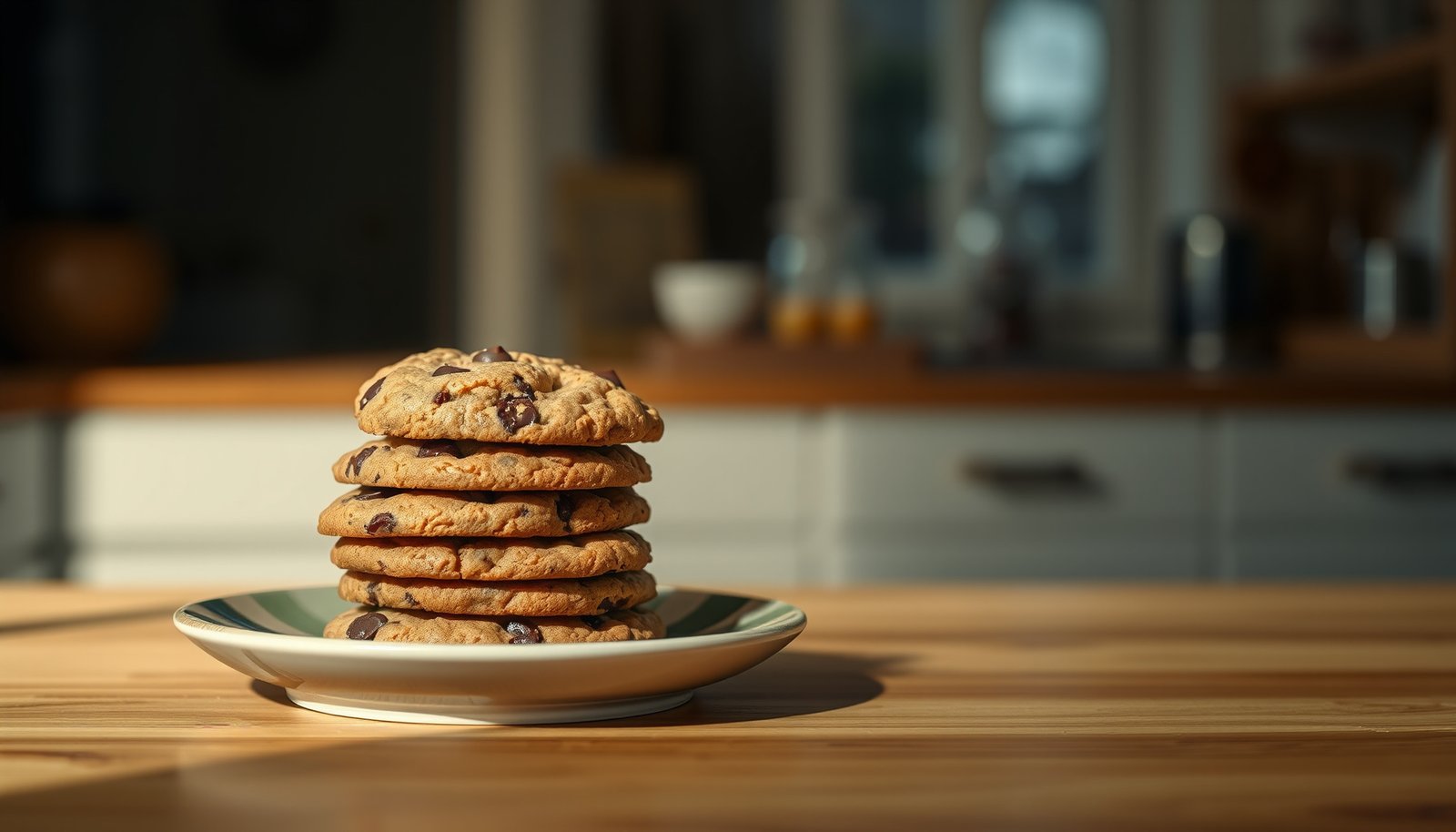
Best “cookie types” to shop for (without guessing brands)
– Shortbread-style or nut-based options often have a more filling ingredient mix—still verify net carbs per serving.
– Chocolate cookies can be workable if they’re made with low sugar and have controlled serving sizes.
– Oat cookies may vary widely; oats can add fiber, but you still need to check net carbs and added sugar.
Instead of chasing brand names, shop by cookie type and then confirm with the label. This approach works because cookie structure influences satiety and digestion: a nut-forward cookie often feels more filling than a crisp wafer made mostly from refined starch.
Shortbread-style and nut-based cookies are commonly worth evaluating because they can use fats and nuts as texture builders, which may reduce how quickly you want to eat more than one serving. Still verify the net carbs per serving—“lower sugar” cookies can still be carb-dense if the flour base is high.
Chocolate cookies can also work, but the “gotcha” is often the sweetener and serving size. Some chocolate cookies are made with cocoa and include a manageable sugar profile; others use refined flour plus sugar or syrup. Always confirm added sugar and net carbs, and treat “dark chocolate” as a flavor choice, not an automatic blood-sugar guarantee.
Oat cookies are particularly inconsistent. Oats can provide fiber and a slower digestion profile for some people, but oat cookies vary widely in sugar, portion size, and whether the product is “oat flour-heavy” or “oat flavored.” Two oat cookies can look similar on the front and still deliver different net carbs inside the nutrition facts.
Here’s a quick compare to use while you’re shopping:
| Option | Pros (why it can fit) | Cons (watch-outs) |
|---|---|---|
| Nut-based / shortbread-style | Often more filling due to fat + fiber; can support lower snack overeating | May still be refined-flour driven; net carbs can be higher than expected per cookie |
| Chocolate cookies | Cocoa adds flavor and sometimes some fiber; can be workable with strict portions | Chocolate sometimes pairs with higher sugar alcohols or sweeteners; serving size varies |
| Oat cookies | Oats can increase fiber; some versions have steadier carb impact | Added sugar and net carbs vary widely; “oat” may be a minor ingredient |
What can go wrong when buying diabetic cookies
– Serving-size surprises: nutrition facts may be per 1 cookie or a small portion—eating “a normal amount” can blow past your targets.
– “Sugar-free” isn’t automatically “low-carb”: sugar-free items can still contain significant carbs from starch or flour—always check net carbs.
– Personal glucose response varies: even two cookies with similar labels can hit differently depending on your body and meal timing.
The biggest shopping failure isn’t usually the label—it’s how people interpret it under real-life hunger. In 2026, I still see shoppers (and I’ve been guilty of it myself in fast grocery trips) grab two cookies because the front looks “diabetic,” then realize later that the serving size was smaller than their usual portion. If you’re counting carbs, treat the serving size as a hard boundary, not a suggestion.
Another common issue is the marketing shortcut: “sugar-free” or “no sugar added” does not automatically mean low net carbs. Flour, starches, and some sweetened binders can still deliver carbohydrate. The only honest answer is in the nutrition facts: look at total carbs, fiber, and how net carbs are being handled.
Finally, your glucose response is personal. Even if two cookies match for net carbs and added sugar, you can see different curves based on insulin sensitivity, sleep, stress, activity after eating, and what you ate earlier. That’s why you want to test with a controlled portion—not by eating a whole package the first time.
As of 2026, another edge case is “net carbs” calculators. Some companies subtract polyols differently than others, and some customers subtract fiber in a way your clinician may not recommend. If your meal plan is strict, follow the method you were taught rather than mixing label math systems.
Verdict: the safest way to pick your next diabetic cookie
If the goal is better blood-sugar control, pick cookies that are low in added sugar, lower in net carbs, and portion-controlled. Skip cookies that rely mainly on “sugar-free” marketing while using refined flour and larger servings. If you have GI sensitivities, also avoid sugar alcohols that tend to trigger symptoms—. Also consider skipping “diabetic cookies” entirely if you struggle with portion control, because even lower-carb cookies can add up quickly.
Quick checklist (save this for shopping)
– ☐ Added sugar: low or none
– ☐ Net carbs: within your target per serving
– ☐ Fiber: included (not just “sugar-free”)
– ☐ Serving size: small enough that you can stay in your plan
– ☐ Sweetener type: sugar alcohols ok for you? (or skip if not)
– ☐ Ingredients: fewer refined flour starters, more nuts/fiber sources
Frequently Asked Questions
What are the best diabetic cookies to buy that won’t spike blood sugar?
Look for diabetic cookies made with low-glycemic sweeteners like allulose, erythritol, or stevia and that use whole grains (or fiber-rich flours) instead of refined white flour. Prioritize cookies with at least 3–5 grams of fiber per serving and fewer added sugars, ideally under 5 grams. Always check the nutrition label for net carbs and choose options where net carbs are lower than typical cookies.
How do I choose diabetic cookies to buy based on carbs and sugar alcohols?
Start by comparing total carbohydrates and “net carbs” (total carbs minus fiber) per serving, since that’s what most affects blood glucose. If the cookie uses sugar alcohols (like maltitol, sorbitol, or xylitol), remember they can still impact blood sugar and may cause digestive discomfort for some people. Choose cookies that list sugar alcohol type and keep net carbs and added sugars as low as possible.
Which brands or types of diabetic cookies are best for people with type 2 diabetes?
Many people with type 2 diabetes do well with diabetic cookies that are explicitly labeled low sugar, sugar-free, or low-glycemic and that provide more fiber and protein than standard cookies. Consider options like almond-flour cookies, oatmeal-style cookies with minimal added sugar, and chocolate chip varieties sweetened with allulose or erythritol. Reading ingredient lists for whole-food ingredients and avoiding “hidden sugars” (like cane sugar, syrups, or maltodextrin) can help you pick smarter diabetic snacks.
Why do “sugar-free” cookies sometimes still raise blood glucose?
Even sugar-free cookies can contain carbs that break down into glucose, especially if they’re made with starches or have sugar alcohols that partially affect blood sugar. Some products may be “sugar-free” but higher in total carbohydrates or low in fiber, which can still lead to a noticeable glucose rise. Checking net carbs and pairing the cookie with protein or nuts can help reduce the glycemic impact.
What’s the best way to eat diabetic cookies while managing portion size?
The “best diabetic cookies to buy” are still only as effective as the portion you eat—aim for a single serving and measure it when possible. Pairing a cookie with a protein source (like Greek yogurt or cheese) and adding fiber-rich foods can blunt blood sugar spikes. If you’re new to a product, test your response by checking glucose before and about 1–2 hours after eating to find what works best for your body.
📅 Last Updated: November 09, 2026 | Topic: best diabetic cookies to buy | Content verified for accuracy and freshness.
References
- https://www.cdc.gov/diabetes/managing/eat-well/index.html
- https://www.niddk.nih.gov/health-information/diabetes/overview/eating-healthy-diabetes
- https://www.mayoclinic.org/diseases-conditions/diabetes/in-depth/diabetes-diet/art-20048294
- Substance use – prescription drugs: MedlinePlus Medical Encyclopedia
- Guideline: sugars intake for adults and children
- https://www.fda.gov/food/nutrition-education-resources-materials/added-sugars
- https://pubmed.ncbi.nlm.nih.gov/?term=low+glycemic+index+diet+type+2+diabetes+systematic+review
- https://scholar.google.com/scholar?q=best+diabetic+cookies+to+buy+nutrition+guidelines Google Scholar
- https://scholar.google.com/scholar?q=low+glycemic+desserts+diabetes+randomized+trial Google Scholar
- https://scholar.google.com/scholar?q=diabetes+carbohydrate+counting+food+label+reading+guidelines Google Scholar



Pingback: Easy Best Diabetic Dinner Ideas for Stable Blood Sugar Tonight - Best For Diabetics