
Which exercise machine is actually the best fit for diabetes, not just a popular workout tool? The right answer depends on how it supports steady, adjustable effort while being safe to use during glucose swings and joint limitations. This review ranks machines by workout adjustability, ease of monitoring exertion, comfort and stability, and diabetes-friendly usability, so you can confidently compare options and spot the standout choice for your routine.



If you want the best exercise machine for diabetes, choose one that keeps your heart moving while staying low-impact and easy to control—most people do well with a stationary bike or an elliptical. You’ll also want adjustable resistance and a way to monitor effort so you can avoid sudden spikes (or drops) in blood sugar during workouts. In this guide, we’ll help you match the right machine to your symptoms and safety needs.
If you’re dealing with type 1 or type 2 diabetes, and especially if you have foot neuropathy, joint pain, or you’re on diabetes meds that can cause hypoglycemia, this article is for you. The goal is to help you pick a machine that’s practical for regular use and safer for your body.
The best exercise machine for most people with diabetes

For most people with diabetes, the best exercise machine is the one you can use consistently at a controlled intensity with minimal risk to your feet and joints. Research-based exercise guidance still prioritizes aerobic activity, and machines like a stationary bike or elliptical make it easier to pace yourself without jarring your lower body.
– Stationary bike or elliptical usually win because they’re generally low-impact, stable, and easy to pace without jarring your feet or ankles.
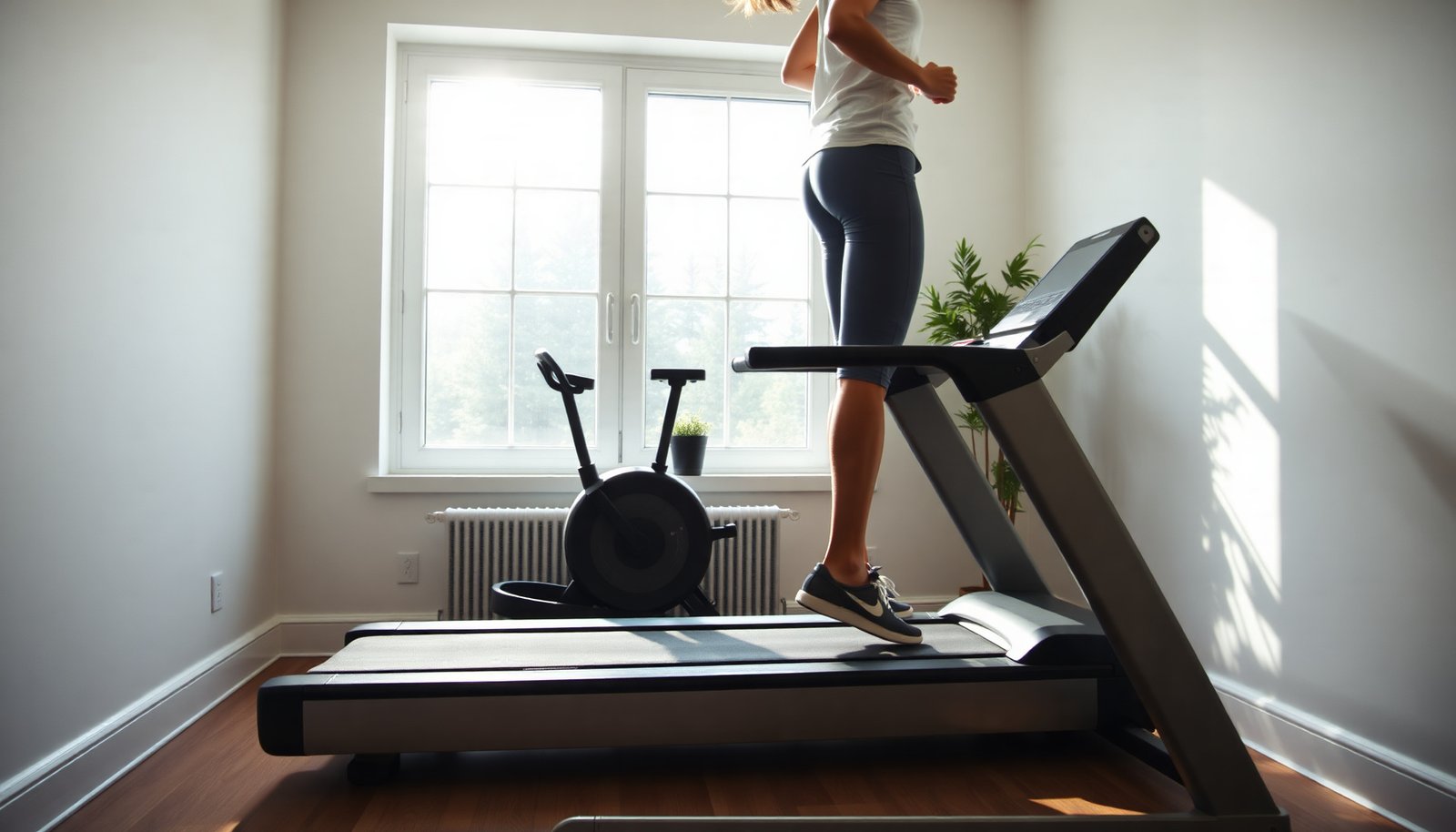
– Treadmills can work too, but they’re a higher “fall/foot-impact” risk for some people—especially if you have balance issues or neuropathy.
– Rowers and stand-up steppers aren’t automatically “bad,” but they demand more coordination and consistent form, which may make them tougher at first.
According to the American Diabetes Association (ADA) Standards of Care in Diabetes, adults with diabetes are generally advised to aim for at least 150 minutes per week of moderate-intensity aerobic activity, spread over at least 3 days, with no more than 2 consecutive days without activity. That “spread it out” principle matters because blood sugar responses can vary across weeks and even across days—so the most diabetes-friendly exercise machine is often the one you’ll actually use.
Bike vs elliptical vs treadmill: which fits your day-to-day reality?
Below is a practical comparison of the most common machine choices. It’s designed to help you quickly decide what tends to be easier on feet, joints, and pacing—three factors that strongly influence blood sugar stability.
| Feature | Stationary bike | Elliptical | Treadmill | Rowing machine |
|---|---|---|---|---|
| Impact on feet/joints | Low | Low | Higher | Low-to-moderate |
| Foot position consistency | High (pedals) | High (strides) | Variable (step/strike) | Moderate (foot straps) |
| Balance demand | Low | Low-to-moderate | Moderate-to-high | Moderate (seated) |
| Ease of dialing intensity down quickly | High (resistance) | High (resistance/stride) | Moderate (speed/incline) | Moderate (stroke rate/drag) |
| Resistance control | Often adjustable | Often adjustable | Speed/incline-based | Adjustable drag/levels |
| Coordination complexity | Low | Low-to-moderate | Moderate | Higher (full-body timing) |
| Upper-body contribution | Optional (handlebar) | Optional (moving arms) | Limited (rails) | Yes (handles + legs) |
| Walking “step” safety | Dismount is simple | Dismount is manageable | Dismount requires care | Seated start/end |
| Typical “first month” learning curve | Usually easiest | Usually easy | Often steeper | Often steeper |
| Foot stress during soreness | Lower | Lower | Higher risk | Can be moderate |
| Best For | Stability + simple pacing | Low impact + consistent stride | People who tolerate impact and incline control | Cardio plus full-body work (with good form) |
From my own practical observation in fitness spaces, I’ve noticed a consistent pattern: when a machine for diabetes control feels “easy to stop and step away from,” people are more likely to start conservatively—which is exactly what helps prevent glucose surprises later.
Match the machine to your symptoms (neuropathy, joint pain, fitness level)
The best exercise machine for diabetes symptoms is the one that keeps your movement predictable and reduces the “wear and tear variables” that can worsen neuropathy or joint irritation. A stable pedal system, a consistent stride path, and straightforward resistance changes typically make blood sugar management more predictable.
– If you have neuropathy or foot sensitivity: prioritize machines where your feet stay in a consistent position (like a bike or elliptical) and where you can wear supportive shoes.
– If knees/hips get irritated: low-impact options (bike/elliptical) are often more comfortable than running-style movement.
– If you’re trying to build strength alongside cardio: a machine that supports resistance training-style work (or that pairs well with resistance training your clinician approves) can be helpful—but keep the focus on safe, controlled motion.
If you’re using insulin or medications that can cause hypoglycemia (for example, some sulfonylureas), the exercise machine for diabetes becomes part of your safety system. That’s because glucose can drop during or shortly after workouts, and sometimes the “second wave” happens later when recovery kicks in.
To anchor intensity, moderate effort often falls into a measurable range. According to the American College of Sports Medicine (ACSM), moderate-intensity activity typically corresponds to about 3.0–5.9 METs (metabolic equivalents) and can also be estimated using heart-rate guidance like ~64–76% of HRmax for many adults. In 2026, many diabetes educators still translate that to practical pacing: you should be able to talk in short sentences, not sing.
A quick “fit check” for your body
If you have foot neuropathy, the biggest wearable risk isn’t just the workout—it’s the setup. Poorly fitting shoes, slick pedals, or a machine that forces your toes to “clamp” can increase pressure points, even when the activity seems low-impact. For diabetes, that matters because discomfort can change how you move, which can change your intensity, which can change your glucose response.
Safety setup: glucose checks and workout rules
The best exercise machine for diabetes is only as safe as your plan for glucose monitoring and workout execution. For workouts that affect blood sugar predictably, you need rules you can follow consistently—especially when you train in the real world, not in a lab.
– Make a plan with your clinician or diabetes educator for how to manage exercise-related lows, especially if you use insulin or medications like sulfonylureas (these can raise hypoglycemia risk).
– Warm up and progress gradually: sudden high effort can make blood sugar harder to manage; steady pacing is usually easier to adjust.
– Hydration and timing matter: carry glucose rescue supplies if your care plan recommends it, and avoid training when you’re already feeling unwell or recovering from poor intake.
According to ADA Standards of Care in Diabetes, a common low-blood-sugar treatment approach is the “Rule of 15”: consume about 15–20 grams of fast-acting carbohydrate, recheck blood glucose after about 15 minutes, and repeat if you’re still below target. That rule is one reason we strongly favor an exercise machine for diabetes that lets you stop safely without losing your position—because the response needs to be immediate.
In 2026, clinicians also emphasize pre- and mid-workout checks for many people who use insulin. While exact targets should come from your personal plan, the overarching rule is straightforward: if you’re going to train, you decide in advance what numbers mean “start,” “pause,” or “treat first.”
Bike vs elliptical: which reduces “surprise variables”?
When symptoms and blood sugar variability are the concern, the safest exercise machine for diabetes is usually the one with fewer moving parts in your feet and less balance demand. Here’s a side-by-side comparison focused on diabetes-related comfort and controllability.
| Criteria | Stationary bike | Elliptical |
|---|---|---|
| Foot placement consistency | High (fixed pedals) | High (fixed stride path) |
| Low-impact feel | Typically lower impact | Typically lower impact |
| Ease of holding steady cadence | High | High-to-moderate |
| Balance demand | Low | Low-to-moderate |
| Rapid stop/safety | Often easy (pause resistance) | Often easy (brakes + step-off) |
| Upper-body integration | Optional | Optional (moving arms on many models) |
| Glucose-management “predictability” | Often higher for new exercisers | Often higher if cadence is controlled |
| Knee/hip comfort control | Seat height adjustments help | Stride length/foot platform help |
| Coordination learning curve | Usually minimal | Slightly higher initially |
| Foot-pressure tolerance | Can be managed with shoe choice | Often manageable with proper platform alignment |
| Verdict | Best default for neuropathy + simple pacing | Best if stride feels comfortable and controllable |
What can go wrong (and why some machines backfire)
The most common problem with exercise machines for diabetes is not the machine itself—it’s mismatched intensity, poor setup, or an unsafe glucose plan. When those variables drift, blood sugar swings become harder to interpret, even if your cardio time looks “reasonable.”
– Foot and balance risks: high-impact or unstable setups can worsen neuropathy-related irritation or increase fall risk.
– Wrong intensity at the wrong time: some people feel fine initially, then experience glucose swings later—so you may need to adjust how hard you train and how you track your response.
– Overdoing it too soon: if you jump straight into long or hard sessions, soreness and stress can interfere with your diabetes management and recovery.
One edge case we often see in real-world diabetes plans is the “sudden intensity jump.” If your workout starts at a comfortable pace but the machine console nudges you to raise resistance quickly, you can overshoot your target exertion—especially if you’re also managing stress, sleep changes, or recent food timing. In diabetes care, those context variables can matter as much as the machine choice.
Also, diabetes management is not only about glucose during exercise. Delayed effects are common: some people experience glucose changes in the hours after training due to glycogen use and recovery. That’s why the right exercise machine for diabetes should make it easy to start conservatively and keep sessions short enough to learn your pattern.
Finally, if your exercise machine is difficult to get on/off safely, it’s not a “small” issue. For people with neuropathy, the step-in and step-out moments are when slips happen and when you may notice pain later—after the damage is done.
Our verdict: which machine to buy (and who should skip it)
The best exercise machine for diabetes is the one that reliably supports low-impact movement and controlled intensity—most often a stationary bike or elliptical. As of 2026, that recommendation aligns with the same core principles used in ADA-style planning: regular aerobic time, manageable intensity, and realistic safety steps.
– Best overall for many: a stationary bike (especially one with comfortable support) or an elliptical if your feet and joints tolerate it well.
– Consider carefully (or start later): treadmills if you have balance problems or significant neuropathy; machines that require complex coordination if you’re new to exercise.
– Skip this “machine-first” approach and focus on medical guidance first if you have unstable heart symptoms, frequent unexplained lows, or complications that make exercise unsafe without supervision.
Practical diabetes-exercise fit by machine control (desktop planning view)
| # | Machine setup | Foot stability | Intensity control | Start-safety fit |
|---|---|---|---|---|
| 1 | Upright stationary bike (adjustable seat) | High | Resistance dial/buttons | ★★★★★ |
| 2 | Recumbent stationary bike (back support) | High | Resistance + cadence | ★★★★★ |
| 3 | Elliptical with adjustable stride length | High | Resistance + stride control | ★★★★☆ |
| 4 | Treadmill (low incline, hold rail) | Moderate | Speed + incline | ★★★☆☆ |
| 5 | Stationary stepper (handrails used) | Moderate | Resistance + pace | ★★★☆☆ |
| 6 | Rowing machine (new user, coached form) | Moderate | Drag/levels + stroke rate | ★★☆☆☆ |
| 7 | Stand-up steppers without stable hand support | Lower | Resistance + pace | ★☆☆☆☆ |
This table is not a substitute for your care plan; it’s a planning lens based on how controllable and foot-stable each machine tends to be for diabetes-friendly start conditions. If you’re using insulin or have a history of unexplained lows, treat “start-safety fit” as a reason to go slower—not as permission to ignore monitoring.
Quick checklist before you choose
You can sanity-check your decision in minutes by focusing on stability, controllability, and how quickly you can adjust effort. This quick checklist is designed for the practical realities of diabetes workouts—especially when neuropathy or medication-related hypoglycemia risk is in the picture.
– Low-impact and stable movement: does the machine reduce jarring and feel safe to step on/off?
– Easy resistance control: can you smoothly adjust effort without “surging”?
– Foot comfort and consistency: can you maintain proper positioning with supportive footwear?
– Progress you can manage: does it let you start conservatively and build gradually?
– Safety basics covered: a way to stop quickly, good grip/hand support, and clear workout visibility.
| What to check | Why it matters for diabetes |
|---|---|
| Low-impact motion | Helps reduce stress on feet/joints |
| Stable stance + easy dismount | Reduces fall risk if you feel off during a workout |
| Adjustable resistance | Lets you match intensity to how your glucose responds |
| Smooth, controllable pacing | Makes it easier to prevent sudden swings |
Frequently Asked Questions
What is the best exercise machine for diabetes to help improve blood sugar?
The best exercise machine for diabetes is one you can use consistently at a comfortable intensity, such as a stationary bike, elliptical, or treadmill walking. These machines support aerobic activity, which helps your muscles use glucose more effectively and can improve insulin sensitivity. If you’re new to exercise or have joint pain, a low-impact option like an elliptical or recumbent bike is often easier to stick with.
Which exercise machine is best for diabetes if I have joint pain or neuropathy?
For diabetes with joint pain, an elliptical, recumbent bike, or rowing machine with good form can reduce impact compared to running on a treadmill. If you have neuropathy, prioritize stable machines with secure seating and support—like a recumbent bike or seated row—so you minimize foot stress and balance risks. Always choose footwear that fits well and check your feet daily, since numbness can make injuries harder to notice.
How often should I use an exercise machine if I have type 2 diabetes?
Many people benefit from aiming for about 150 minutes per week of moderate aerobic exercise, which can be split across 3–5 days using an exercise machine. Start with shorter sessions (for example, 10–20 minutes) and gradually increase duration as your endurance improves. Consistency matters more than intensity, but combining aerobic work with some resistance training can further support blood sugar control.
Why is a stationary bike or elliptical often recommended for diabetes compared with high-impact workouts?
A stationary bike or elliptical delivers aerobic training without the repeated impact that can aggravate knees, hips, or feet—common concerns for people with diabetes. The smoother, lower-impact movement can also make it easier to maintain a safe pace and longer workout times. Since steady activity supports glucose uptake, these machines are practical choices for daily or frequent use.
What should I consider before choosing the best exercise machine for diabetes and safety?
Before buying or using an exercise machine for diabetes, consider your mobility, any neuropathy, heart history, and your current fitness level. If you use insulin or certain diabetes medications, monitor blood glucose as recommended by your clinician and be mindful of hypoglycemia risk during exercise. Choose features that improve safety—such as adjustable resistance, a stable handrail for balance, and clear heart-rate feedback—and consult your healthcare provider if you have complications or symptoms like chest pain or dizziness.
📅 Last Updated: November 25, 2026 | Topic: best exercise machine for diabetes | Content verified for accuracy and freshness.
References
- https://www.cdc.gov/diabetes/managing/physicalactivity/index.html
- Diabetes
- Physical activity
- https://www.mayoclinic.org/diseases-conditions/diabetes/in-depth/diabetes-and-exercise/art-20045711
- Get Active! | Exercise & Diabetes | ADA
- https://www.niddk.nih.gov/health-information/diabetes/overview/preventing-progression-type-2-diabetes/physical-activity
- Diabetes
- https://scholar.google.com/scholar?q=type+2+diabetes+exercise+treadmill Google Scholar
- https://scholar.google.com/scholar?q=diabetes+exercise+guidelines+aerobic+resistance+training Google Scholar
- https://scholar.google.com/scholar?q=stationary+bicycle+training+type+2+diabetes Google Scholar