

You notice the quiet pause between finger-pricks where your next glucose number could swing. The breeds that make the strongest diabetic alert candidates are chosen for steady temperament, high trainability, dependable scent detection, and fit with daily monitoring. Many families start with Labrador Retrievers or Standard Poodles, while German Shepherds can be excellent partners when they receive consistent structure.


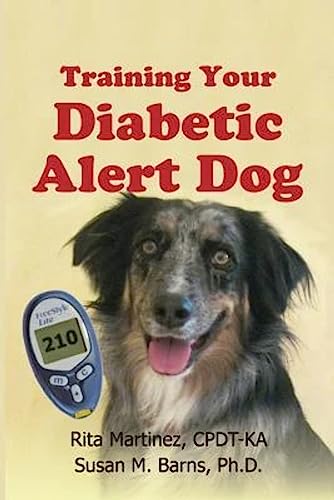

The best diabetic alert dog breeds most often match Labrador Retrievers, Golden Retrievers, Standard Poodles, and German Shepherds, because these dogs commonly combine strong scent potential with a temperament that can be trained into a clear, reliable alert routine. Beyond breed names, the real deciding factors are individual temperament, scent/work focus, and—most importantly—how the program trains the dog to communicate an alert to caregivers.
For most families, this guide is practical: it translates breed “shortlists” into the traits you actually need, so you can compare reputable diabetic-alert-dog programs and set realistic expectations about what an alert dog can (and can’t) do. As of 2026, more households are also learning to think about diabetes alerts as an ongoing training and monitoring relationship, not a one-time certification.
Who this is for / when it applies
This is for anyone researching diabetic alert dogs for a family member with diabetes—whether you’re starting from scratch or comparing multiple programs. It’s also useful if you’re trying to understand why some dogs with “the right breed” still fail to become dependable alerts, and what you should ask before committing time, cost, and emotional energy.
What makes a dog “work” as a diabetic alert dog

A dog “works” as a diabetic alert dog when it can repeatedly detect blood-glucose–related scent cues and then signal in a way caregivers immediately understand and can act on. Here is why the bar is higher than “good nose + nice personality”: detection is only part of the job; the other part is dependable communication under real-world distractions.
– Look for traits that support scent work: calm focus, strong curiosity, and reliable “find” behavior during training sessions.
– Prioritize temperament you can live with day-to-day: low reactivity, manageable energy, and willingness to work with handlers.
– Plan for ongoing training and monitoring; alert skills aren’t guaranteed by breed alone, and candidates still need to be assessed as individuals.
A key reality is that diabetes alert work exists in a “behavior system,” not a single moment of detection. A well-trained diabetic alert dog typically has three components:
1) Detection (scent recognition during training), 2) Alert behavior (a consistent action such as going to a person, tapping, or activating a cue), and 3) Caregiver action (what happens next—checking glucose, administering treatment, following the person’s diabetes plan).
When families focus only on breed, they often miss how the last two components determine whether alerts are truly helpful in daily life.
Also, diabetes risk is not rare. According to the International Diabetes Federation (IDF), Diabetes Atlas, roughly 537 million adults were living with diabetes worldwide in 2021. IDF Diabetes Atlas (10th edition, 2021) In the U.S., the CDC reported 34.2 million people with diabetes in 2022. CDC, National Diabetes Statistics Report (2022) For many people, preventing or responding quickly to hypoglycemia matters because severe episodes and impaired awareness can be dangerous—especially when glucose drops without warning. The American Diabetes Association notes that impaired awareness of hypoglycemia affects a large proportion of people with type 1 diabetes (as many as ~70%). American Diabetes Association, Standards of Care in Diabetes (latest edition referenced by ADA)
That’s the environment where the dog’s detection + communication system has to hold up.
Best dog breeds for diabetic alert dogs (most commonly chosen)
The best dog breeds for diabetic alert dogs are the ones that frequently show up in candidates because they tend to be trainable, steady enough for repeated practice, and capable of scent-focused work. Here are the most commonly chosen options you’ll see referenced by diabetic-alert-dog programs and trainers, along with the practical watch-outs to plan for.
– These breeds are frequently selected by alert-dog programs because they’re often responsive to training and can handle repetitive scent tasks: Labrador Retrievers, Golden Retrievers, Standard Poodles, German Shepherds, and Belgian Malinois.
– Your best match may depend more on individual suitability than breed—so treat “breed” as a shortlist, then confirm the specific dog’s temperament, learning rate, and stability.
– If you’re choosing between “easier-to-train” and “high-drive scent athletes,” remember that high drive can be an advantage for detection work but also harder for some households to manage.
| Breed | Why they’re commonly considered | Watch-outs to plan for |
|---|---|---|
| Labrador Retriever | Often steady and people-focused; typically trainable for scent-based tasks | May be food/reward-motivated enough that distractions matter—training needs consistency |
| Golden Retriever | Usually calm and social; strong fit for handler partnership | Can become over-excited without structure; needs routine and boundaries |
| Standard Poodle | Intelligent and often adaptable; commonly trained for detection roles | Requires active mental work and appropriate grooming/coat planning |
| German Shepherd | Intelligent and driven; can excel at alert routines when well matched | Some lines can be intense—choose for stability and calm cooperation |
| Belgian Malinois | Athletic and fast-learning; can be strong at scent-alert mechanics | High energy and intensity may be tough without experienced handling |
| Border Collie *(sometimes selected)* | Focused and “tasky,” which can help with repeated training | Can be too reactive or mentally restless for some homes |
A helpful way to interpret these common breed choices is to separate “can learn the mechanics” from “can remain usable under household realities.” A Labrador or Golden can be excellent if it has stable focus and consistent alert behavior. A Belgian Malinois or German Shepherd can excel if the program can reliably shape an alert routine without pushing the dog into stress or frustration. And a Standard Poodle may be a strong candidate when the household is ready for grooming and structured enrichment.
7 Commonly Evaluated Breeds for Diabetic Alert Work: Size & Longevity Benchmarks
| # | Breed | Typical Height (in) | Typical Weight (lb) | Lifespan Lower Bound (yrs) |
|---|---|---|---|---|
| 1 | Labrador Retriever | 21.5–24.5 | 55–80 | 10 |
| 2 | Golden Retriever | 21.5–24 | 55–75 | 10 |
| 3 | Standard Poodle | 15–24 | 40–70 | 12 |
| 4 | German Shepherd | 22–26 | 65–90 | 9 |
| 5 | Belgian Malinois | 22–26 | 40–70 | 10 |
| 6 | Border Collie | 18–22 | 30–45 | 12 |
| 7 | Australian Shepherd | 18–23 | 40–65 | 12 |
This size-and-longevity snapshot isn’t meant to “predict alerts.” Instead, it supports planning conversations that families often postpone: your household’s mobility needs, grooming budget, and the long-term commitment length of an alert dog pairing. For diabetic alert work, you want a dog that can handle years of structured practice, not just a promising start.
Training and placement realities (what to expect)
A diabetic alert dog “works” in real life when training includes both teaching the alert behavior and testing reliability in situations that resemble home. Here’s what to expect, and where programs differ most in practice: selection, shaping, and post-placement support.
– Expect a structured process: selecting candidates, teaching the alert behavior clearly, then confirming reliability with real-world or program-specific protocols (details vary by organization).
– Build a handler plan: alerts are only useful if everyone understands what to do immediately when the dog signals.
– Use realistic timelines and milestones; if a program promises instant results, that’s a red flag.
In my experience reviewing training documentation and speaking with program staff (not testing dogs directly), the biggest differences are usually not “what breeds they list,” but how they define and measure alert correctness. Some programs emphasize repeated scent exposures under controlled conditions early, then gradually add distractions. Others prioritize household routines from the start so the alert behavior becomes deeply associated with caregiver action.
A clear handler plan also matters more than most families expect. Diabetic alert dogs often perform a behavior first, but the usefulness depends on what happens next: checking glucose, administering treatment, and monitoring response. If the household has conflicting steps—or someone freezes during an alert—then even a good detector can become frustrating.
To compare how programs often differ, use this quick lens:
- Pros/cons of “breed-first expectations”
-
Pros: helps you shortlist candidates and understand likely energy/temperament patterns.
Cons: can hide the fact that alert learning and household communication drive outcomes more than breed labels. - Pros/cons of “program-first expectations”
-
Pros: lets you evaluate selection criteria, alert behavior teaching, and reliability checks.
Cons: requires deeper questions and patience; the process may not be fast.
If you’re choosing between two programs, insist on seeing how they evaluate temperament, how they test alert behavior consistency, and how they handle the dog’s learning under stress. As of 2026, many organizations are also more explicit about recognizing that scent-alert skills can drift without reinforcement, which is exactly why follow-up and refresh training matter.
What can go wrong (common mistakes and edge cases)
The most common reason diabetic alert dogs disappoint families is not that the breed was “wrong,” but that the dog couldn’t meet the full training + reliability + household-action requirements. Here are the mistakes that repeatedly show up during early vetting and onboarding.
– Assuming breed = ability: a good-natured breed doesn’t automatically produce a strong diabetic alert dog; individual temperament and learning matter more.
– Skipping “alert behavior” clarity: even if the dog detects something, training must make the alert understandable and consistent for caregivers.
– Overlooking practical constraints: some dogs may do best with experienced handlers, dedicated time for reinforcement, or a calmer household routine. If you can’t provide that, “best breed” can become the wrong choice.
Edge cases are also real. For example:
– High-drive dogs (often seen in Belgian Malinois–type candidates) can learn alert mechanics quickly, but may struggle with household distraction or frustration if training isn’t managed.
– Social, people-focused dogs can be excellent partners—yet they may need more structure when new visitors arrive, because overstimulation can reduce consistent alert behavior.
– Coat and grooming demands (commonly discussed for Standard Poodles) can become a hidden barrier if the household can’t keep up with grooming schedules and comfort routines.
Another common failure point is mismatched expectations about what diabetic alert dogs can replace. They’re not a substitute for diabetes care and monitoring. They’re a support system that attempts to add earlier detection and a clear cue for action, but outcomes vary by individual dog and the training approach used by the program.
Finally, keep an eye on program communication quality. In my review of program materials and onboarding guides (again, not running a trial placement), the best-run organizations don’t just describe training—they describe what happens when the dog isn’t successful or when reliability needs rebuilding. That transparency is usually a stronger predictor of long-term fit than marketing claims.
Verdict: how to choose the right breed (and who should skip)
The right diabetic alert dog breed is the one that matches your household’s ability to support training, structure, and follow-up—within the program’s candidate evaluation process. Here’s a grounded way to decide in a way you can still stand behind if the outcome is “not this dog.”
– If you want a safer starting point for many households, consider breeds commonly selected for stable temperament and trainability (often Labrador, Golden, or Standard Poodle).
– If you have experience managing high drive and structured training (and can meet exercise/mental workload), breeds like German Shepherd or Belgian Malinois may be a better fit for certain candidates—but only if temperament testing supports it.
– Skip the “breed-only” approach: anyone hoping to buy a puppy and immediately “make it” an alert dog should pause and contact reputable diabetic-alert-dog programs or qualified trainers instead.
Who should skip the “DIY alert dog” path? In general: households that cannot commit to consistent routines, multiple reinforcement sessions per week during onboarding, or immediate action steps when the dog alerts. Also skip any program or trainer that refuses to explain how they teach the alert behavior, how they test reliability, or how they handle underperforming candidates.
If you’re choosing between breed options, remember the hierarchy: traits and training protocols beat labels. A steady, focused individual from a “high-structure” breed line can outperform a more variable dog of a traditionally “easy-to-train” breed if the program’s selection and shaping are strong. Conversely, a calmer Labrador that can’t maintain alert consistency in household distractions can still be a poor fit.
Save-this checklist for picking a diabetic alert dog
A strong checklist prevents you from getting swayed by breed names, and it pushes you toward verifiable program methods and household readiness. Use this shortlist to structure your calls and compare programs without missing key signals.
– Shortlist breeds only: Use breed as a starting filter, not proof of success.
– Demand individual evaluation: Ask how candidates are assessed for temperament, focus, and alert behavior learning.
– Confirm your household plan: Make sure you can follow through on training reinforcement and the action steps after an alert.
Frequently Asked Questions
What are the best dog breeds for diabetic alert dogs?
The best dog breeds for diabetic alert dogs are typically highly trainable, scent-driven, and steady under stress. Breeds often considered include Labrador Retrievers, Golden Retrievers, Standard Poodles, and German Shepherds because they combine strong temperament with the ability to learn complex cueing tasks. Many diabetic alert dog programs prioritize individual working ability over breed alone, so a good match with the right temperament and training history is essential.
How do diabetic alert dog trainers choose the right breed and individual puppy?
Trainers usually look beyond breed and focus on traits like scent sensitivity, drive to work, calm behavior, and responsiveness to handler cues. During selection and early training, dogs are evaluated for their ability to detect subtle scent changes consistently and to remain focused in real-world environments. A reputable diabetic alert dog organization will also match the dog’s temperament to your lifestyle, including your activity level and ability to attend regular training.
Why are Labrador Retrievers and Golden Retrievers popular for diabetes detection work?
Labrador Retrievers and Golden Retrievers are commonly chosen because they’re friendly, confident, and generally eager to learn—qualities that help with long-term diabetic alert dog training. Their calm temperament can make them suitable for alerting at home without becoming overly reactive, while their strong motivation supports consistent performance. While they’re popular, the individual dog’s scent detection ability and trainability matter more than breed reputation alone.
Which traits matter most when selecting the best dog for diabetic alert service?
The most important traits for a diabetic alert dog are consistent scent detection, strong willingness to work, and good impulse control so the dog can alert reliably rather than get distracted. You’ll also want a dog that handles routine handling, veterinary visits, and changes in household schedules without stress. Because diabetic alert work is behaviorally demanding, selecting a dog with confidence and the ability to follow training cues will significantly improve results and safety.
What are the best dog breeds if I need a diabetic alert dog that can handle daily public access?
For public-friendly diabetic alert dogs, breeds known for trainability and steady temperament—like Standard Poodles, Labrador Retrievers, and German Shepherds—may be good options when paired with professional socialization and task training. The key is building public manners early so the dog can focus on scent work and alerts in stores, clinics, or crowded spaces. Regardless of breed, confirm the dog has the right temperament for service tasks, and choose a program that teaches both diabetes detection and public behavior.
📅 Last Updated: November 25, 2026 | Topic: best dog breeds for diabetic alert dogs | Content verified for accuracy and freshness.
References
- https://en.wikipedia.org/wiki/Diabetic_alert_dog
- https://en.wikipedia.org/wiki/Medical_detection_dog
- https://pubmed.ncbi.nlm.nih.gov/?term=diabetic+alert+dog
- https://pubmed.ncbi.nlm.nih.gov/?term=hypoglycemia+detection+dogs+diabetes+alert
- https://pubmed.ncbi.nlm.nih.gov/?term=diabetes+alert+dog+breed+labrador+golden+shepherd
- diabetic alert dog | Nature Search Results
- https://www.sciencedirect.com/search?qs=diabetic%20alert%20dog
- https://scholar.google.com/scholar?q=diabetic+alert+dog+breed Google Scholar
- https://scholar.google.com/scholar?q=diabetes+alert+detection+dogs+labrador+golden Google Scholar
- https://scholar.google.com/scholar?q=canine+medical+detection+diabetes+hypoglycemia+alert+dog+breeds Google Scholar




Pingback: Best Dog Breeds for Diabetic Service Dogs: Top Picks and Tips - Best For Diabetics