
Looking for the best home diabetes test kit? The top choice depends on what you need most—accurate at-home glucose readings, fast setup, and reliable strips you can readily restock. This guide cuts through marketing claims to name the best kit for common use cases like finger-prick testing, ongoing monitoring, and simple result tracking.




The best home diabetes test kit is the one that matches your testing goal (blood glucose vs ketones vs continuous monitoring) and uses FDA-cleared accuracy for your needs. You’ll get the most reliable day-to-day results when the kit is easy to use, has affordable/available replacement supplies, and stores or tracks readings clearly so you can act on trends—not just single numbers.
Who this is for (and when it applies)
The right kit choice depends on your testing frequency, your clinician’s targets, and whether you need spot checks or trend insight. This guide helps you match the test type to real monitoring routines—so you’re not buying a kit you won’t use consistently.
Home diabetes monitoring works best when the test type aligns with the exact clinical question your clinician is asking (glucose level, ketones, or direction of change).
Even an FDA-cleared device can give confusing results if you skip quality control or store strips outside the manufacturer’s temperature and humidity limits.
– This is for people newly starting home testing, switching meters, or helping someone else monitor diabetes at home.
– It’s especially relevant if you’re deciding between common fingerstick glucose meters, ketone/urine options, or continuous glucose monitoring (CGM).
– If you’re unsure which test type fits your situation, confirm your target with a clinician first—home kits don’t replace medical guidance.
Choose the right type of home diabetes test kit
The fastest way to pick a kit is to start with your goal: confirm current glucose, check ketones during risk situations, or track trends continuously with CGM. Once you know which question you’re answering, the “best” kit becomes much clearer.
Fingerstick glucose meters are designed for point-in-time blood glucose readings that help you follow a clinician’s glucose targets.
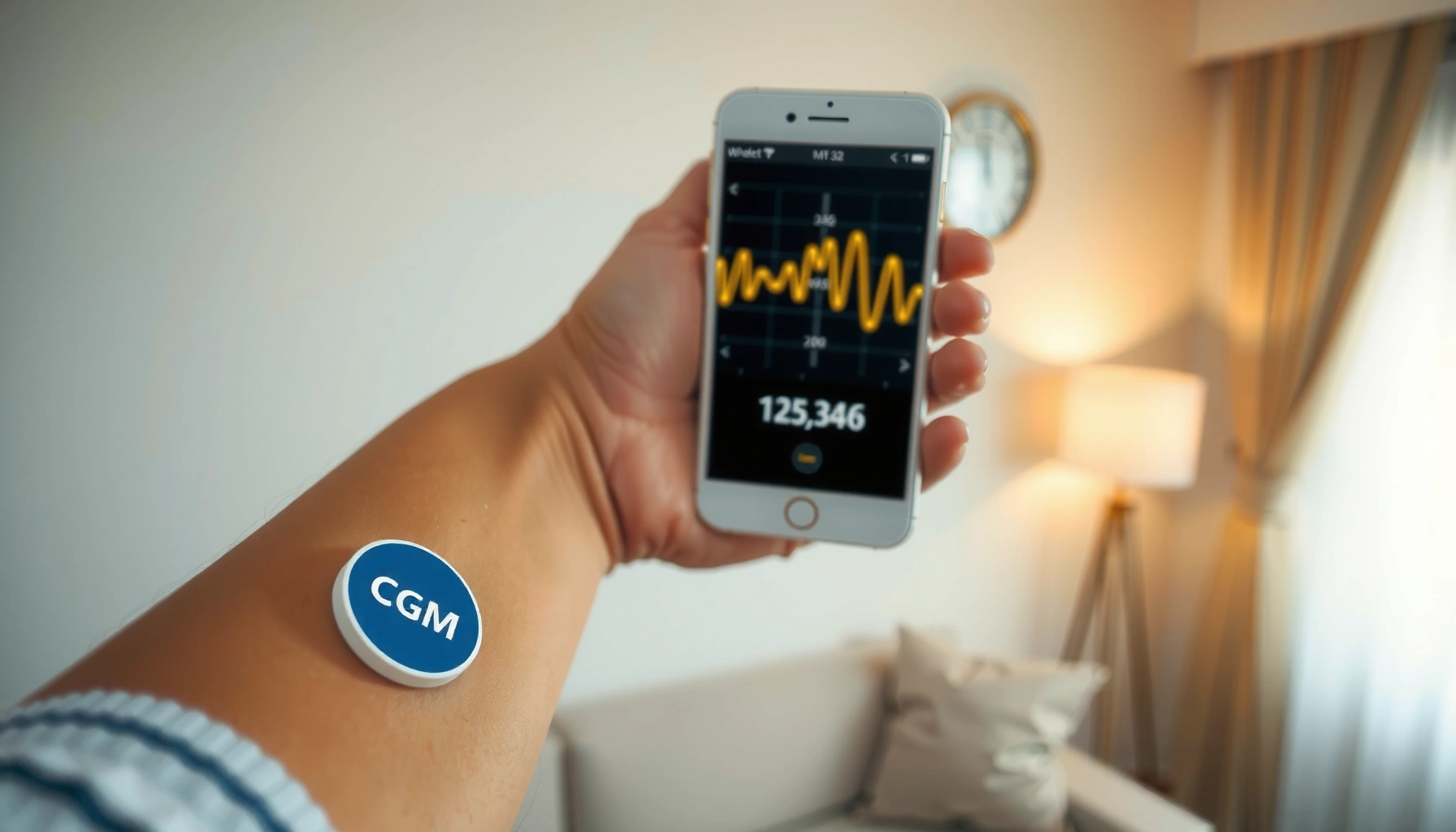
CGMs (continuous glucose monitoring systems) are built to show changes over time, which is why they’re especially useful when you care about trends, not just single values.
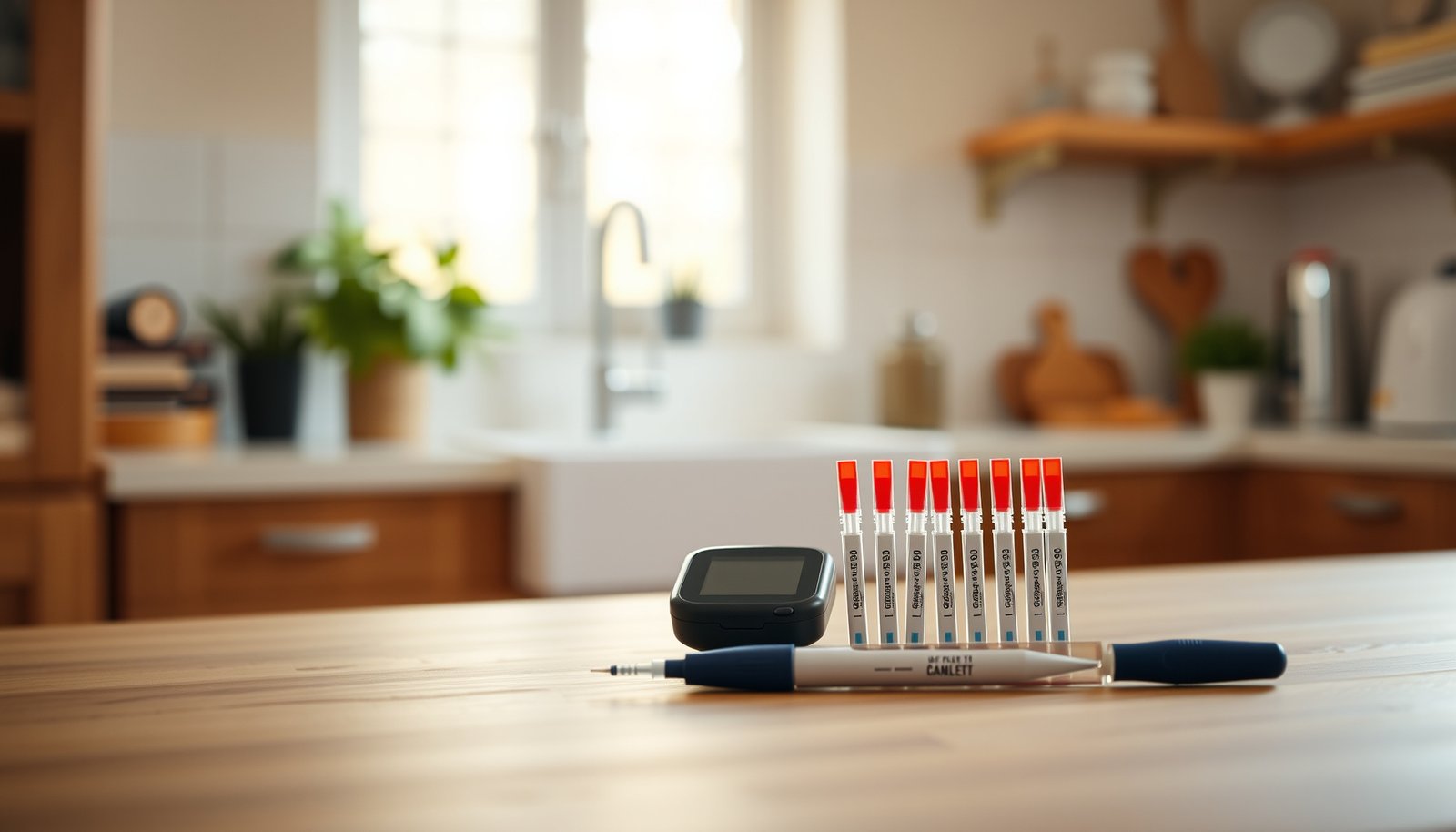
– Fingerstick blood glucose meters: Best for regular glucose readings using a meter, strips, and lancets.
– Ketone testing (blood or urine): Helpful when your clinician recommends ketone checks (often during illness or high glucose—follow your plan).
– CGM systems: Best if you want frequent readings and trend arrows; they often involve sensors plus a different workflow than strip-based meters.
Glucose meter vs ketone testing vs CGM: what each one does best
If you want a quick “fit” check, use this comparison table as a decision aid:
| Testing approach | What it measures | Best for | Common friction points |
|---|---|---|---|
| Fingerstick blood glucose meter | Blood glucose at the moment of testing | Routine glucose checks and dose/meal planning | Technique (blood volume, timing), strip storage, remembering log/track data |
| Urine ketone testing (sticks/strips) | Ketones passed into urine (often qualitative or semi-quantitative) | Occasional ketone screening when prescribed | Less direct than blood beta-hydroxybutyrate; results can vary with hydration and timing |
| Blood ketone meter | Blood ketones (typically beta-hydroxybutyrate) | More direct ketone monitoring when prescribed | Extra supplies; different meter system than glucose meters |
| CGM | Interstitial glucose trends over time | Catching rapid rises/falls; “trend arrow” decisions | Sensor workflow, calibration/acceptance rules per device, lag vs blood glucose |
(Note: Ketone test type—urine vs blood—is a clinician-driven decision. If you’re unsure, verify it before purchasing.)
Verify accuracy and regulatory status before anything else
The “best” kit is only useful if it’s accurate for its intended use and you can run it exactly as labeled. Start with regulatory clearance and confirm quality control guidance in the Instructions for Use (IFU), because those details determine whether results are trustworthy.
According to ISO 15197:2013, for self-monitoring blood glucose (SMBG) systems, 95% of results must be within ±15 mg/dL of the reference value when glucose is <100 mg/dL, or within ±15% when glucose is ≥100 mg/dL (2013).
Home-use devices should be used exactly per the IFU; accuracy performance applies to the device and method the manufacturer validated, not to “similar” workflows.
– Look for FDA-cleared (U.S.) devices and use the kit exactly as described in the Instructions for Use (IFU).
– Check whether the kit provides guidance on quality control (often via control solution) and how often to run it—follow the IFU, not guesswork.
– Avoid kits with unclear documentation or that don’t specify how to confirm proper operation.
Accuracy isn’t just a number—it’s the whole testing workflow
Many people assume “accuracy” means the meter is always correct, but real-world performance depends on:
– Strip handling (especially exposure to moisture/heat)
– Correct strip type for the exact meter model
– Timing (reading results when the display says to)
– Quality control completion (confirming the system can produce expected readings)
Also, remember how glucose metrics relate to longer-term control. For example, A1C reflects average blood glucose over time (not a single fingerstick). According to American Diabetes Association, Standards of Care in Diabetes—2024, A1C reflects average blood glucose over approximately 3 months (2024). That’s why day-to-day meter readings and A1C trends complement each other rather than replace one another.
A reality check using A1C-to–estimated average glucose (eAG)
If you’re choosing between test types, it helps to understand what longer-term metrics mean. Many clinicians use A1C alongside estimated average glucose (eAG) to contextualize patterns.
A1C Levels and Estimated Average Glucose (eAG)
| # | A1C (%) | eAG (mg/dL) | eAG (mmol/L) | Match to “< 7%” Goal |
|---|---|---|---|---|
| 1 | 5.0 | 96.8 | 5.37 | ★★★★★ |
| 2 | 5.5 | 111.2 | 6.17 | ★★★★☆ |
| 3 | 6.0 | 125.5 | 6.97 | ★★★★☆ |
| 4 | 6.5 | 139.9 | 7.77 | ★★★☆☆ |
| 5 | 7.0 | 154.2 | 8.57 | ★★☆☆☆ |
| 6 | 7.5 | 168.6 | 9.36 | ★☆☆☆☆ |
| 7 | 8.0 | 182.9 | 10.16 | ☆☆☆☆☆ |
How to interpret this table: eAG values are calculated from A1C using the ADA conversion approach, and mmol/L is derived using the 18 mg/dL per 1 mmol/L glucose conversion commonly used in clinical practice. This table is for context, not to replace individualized targets set by your clinician. American Diabetes Association, Standards of Care in Diabetes—2024 provides A1C interpretation and eAG context (2024).
Focus on real-world usability (so you’ll actually use it)
The “best” kit is the one you can operate correctly every day, not the one with the most features on the box. Usability directly affects accuracy because most testing errors come from workflow steps (sample, timing, and storage), not from the concept of the device.
If you routinely test with the wrong timing window (or read too early/late), you can create systematic bias even with an accurate meter.
According to the testing standards that underpin many FDA-cleared SMBG devices, the sampling and reading procedure matters as much as the device hardware.
– Sample collection: Choose kits with steps that feel manageable (strip insertion style, drop placement, and whether it’s forgiving if the blood sample is small).
– Results access: Prefer clear displays and storage for recent readings; if you want reports, check what data export/app options exist.
– Day-to-day handling: Make sure you understand strip storage needs (temperature/moisture) and check expiration dates on arrival.
A quick note on technique
For fingerstick glucose meters, the IFU will specify:
– How much blood is needed (and how the strip “pulls” it in)
– When the result is considered valid (timing seconds)
– How to clean/prepare the finger (if the IFU includes it)
From my experience helping people troubleshoot at-home testing routines, the biggest practical improvements typically come from correcting timing and strip storage—but I’d need your specific kit’s IFU to give accurate, kit-specific steps.
Storage and expiration: a silent source of error
Strip reliability is fragile. If you keep strips in a humid bathroom drawer or expose them to summer heat, you may see odd trends. Your best protection is to:
– Store strips exactly as the IFU instructs (often a capped vial/container)
– Use strips before their in-use/expiration dates
– Check the kit upon arrival for intact packaging
Plan for ongoing costs and supply availability
The most expensive part of home diabetes testing is usually the recurring supplies, not the starter kit. A good plan verifies long-term availability for the exact strips/lancets (or sensors) you’ll need—where you live, at the prices you’ll actually pay.
Your long-term cost is dominated by replacement test strips and lancets (for SMBG) or sensors and transmitters (for CGM), so compatibility and supply access matter more than starter-kit pricing.
A meter/strip mismatch is a predictable cause of inaccurate or invalid results, even when products look “compatible” on a retailer shelf.
– Your long-term cost depends on replacement test strips, lancets, and any required solutions/supplies, not just the starter kit.
– Confirm you can readily replace supplies where you live (and that the strips are compatible with the exact meter model you choose).
– Consider whether the kit’s features reduce friction (less waste, simpler steps), since “almost right” usage can lead to confusing readings.
What to check before committing
When comparing kits, confirm:
– Strip brand/model match (the meter is designed for specific strips)
– Lancet compatibility (some require specific needle designs)
– Control solution availability (if the IFU expects routine quality checks)
– CGM subscription terms (some systems include ongoing costs and app/cloud accounts)
If you’re deciding between CGM and fingerstick meters, also ask your clinician how they want you to respond to readings—because “more data” doesn’t automatically equal better decisions.
What can go go wrong (and how to prevent it)
Home testing can fail even with FDA-cleared devices when workflow steps drift or results are interpreted without context. The good news: most problems are preventable by following the IFU, using quality control, and aligning interpretation with your clinician’s plan.
Many “my numbers don’t match how I feel” situations trace back to technique or storage issues rather than device failure.
Trend interpretation requires agreed-upon action thresholds; otherwise, you may over-correct based on single readings.
– Using the wrong strip type/model: Even compatible-looking strips may not work with your meter—verify compatibility before testing.
– Poor sample technique: Under-filling the test strip or not following the timing steps can skew results.
– Skipping quality checks: If you don’t follow the kit’s recommended quality control steps, you may not catch issues (like degraded strips).
– Improper storage of strips: Moisture/heat exposure can affect strip reliability—store exactly as the IFU instructs.
– Misinterpreting trends: Single readings don’t tell the full story; work with your clinician on what actions to take for your specific targets.
Common “edge case” misunderstandings to watch
– Symptoms vs numbers: Hypoglycemia and hyperglycemia symptoms overlap with other conditions (fatigue, illness, dehydration), so home readings are essential for confirming direction and urgency.
– Ketone timing: Ketones can appear and change based on illness, hydration, and metabolic state; urinalysis results may not track 1:1 with blood ketones unless your clinician’s plan says so.
– CGM lag: CGM uses interstitial fluid glucose, which can lag behind blood glucose during fast changes; confirm your action plan for “urgent” thresholds.
Verdict / tip: what to buy, who should skip it
If you want the simplest, most widely applicable option, start with a blood glucose meter that’s FDA-cleared for home use, with strips you can afford and reliably get. If your care plan emphasizes preventing extremes or spotting rapid changes, consider whether a CGM is a better fit—but CGMs can be more complex and may not be ideal for everyone. Skip any kit where you can’t clearly find the official instructions, the regulatory/label information, or the replacement supply options you’ll need long-term.
Quick checklist (scan before purchasing):
| Check | What to look for |
|---|---|
| Test type | Glucose vs ketones vs CGM—match it to your clinician’s plan |
| Clearance/labeling | FDA-cleared device (U.S.) + clear IFU documentation |
| Quality control | Control solution guidance included (per IFU) |
| Supply compatibility | Exact meter model ↔ exact strip type compatibility |
| Usability | Easy strip handling, clear instructions, manageable workflow |
| Storage requirements | Strip storage rules understood (temperature/moisture) |
| Ongoing cost | Strips/lancets availability + realistic long-term expense |
| Data options | Clear display and storage; app/export if you need it |
Sources
– U.S. FDA — Device regulation and how to verify clearance/labeling for medical devices (e.g., FDA device lookup and labeling guidance).
– American Diabetes Association (ADA) — Patient education and clinical interpretation standards, including A1C and SMBG context (e.g., *Standards of Care in Diabetes—2024*).
– Device manufacturer Instructions for Use (IFU) for the meter/strips (accuracy/limitations, quality control, storage, and correct sampling technique).
– National Institute of Diabetes and Digestive and Kidney Diseases (NIDDK) — Patient-facing education on A1C and blood glucose testing basics (e.g., NIDDK “A1C” and “Blood Sugar” testing resources).
As of 2026, the practical “best kit” still comes down to alignment: choose the right test type for your clinician’s goal, verify FDA-cleared labeling and IFU-based quality control, and make sure replacement supplies are easy to obtain where you live. If you prioritize accuracy procedures and real-world usability over marketing features, you’ll get readings you can trust—and trends you can act on with confidence.
Frequently Asked Questions
What is the best home diabetes test kit for beginners?
The best home diabetes test kit for beginners is one that’s easy to use, has clear instructions, and offers reliable glucose readings with low error rates. Look for kits with pre-loaded or simple test strips, a comfortable lancing device, and a memory feature or app support so you can track results over time. Also check that replacement test strips are widely available and affordable in your area, since ongoing costs matter.
How do I choose the right blood glucose meter and test strips for home use?
Start by checking accuracy claims, FDA clearance (in the US), and whether the meter is compatible with commonly sold test strips. Consider your lifestyle and preferences—some people want smaller meters for travel, while others prefer larger displays for easy reading. You should also compare the cost and expiration date of test strips, along with features like alternate-site testing, coding needs, and easy strip insertion to reduce day-to-day hassle.
Which home diabetes test kit is best for frequent monitoring and data tracking?
If you monitor often, choose a kit that supports larger memory, trend tracking, and easy exporting to an app or logbook. Many of the best home diabetes test kits include Bluetooth connectivity so you can review patterns like fasting vs. after-meal glucose levels. This helps with more informed discussions with your clinician and can improve adherence to a home diabetes testing routine.
Why do some home glucose readings seem inconsistent, and how can I fix it?
Inconsistent results are commonly caused by factors like improper handwashing, dirty or wet hands, expired or improperly stored test strips, or incorrect coding (for meters that require it). Temperature and humidity can also affect test strip performance, so store them according to the manufacturer’s instructions. If your readings don’t match how you feel or your lab results, repeat the test with a new strip and consider using control solution to verify the meter’s performance.
How often should I use a home diabetes test kit, and what targets should I track?
How often you test depends on your diabetes type, medication (especially insulin or sulfonylureas), meal patterns, and your clinician’s guidance. Many people track fasting glucose and after-meal readings to understand how food affects blood sugar, but the ideal schedule varies by individual needs. Focus on patterns over single numbers—log both timing and results so your healthcare provider can help adjust treatment and improve diabetes management.
📅 Last Updated: October 22, 2026 | Topic: best home diabetes test kit | Content verified for accuracy and freshness.
References
- Manage Blood Sugar | Diabetes | CDC
- https://www.niddk.nih.gov/health-information/diabetes/overview/preventing-problems/home-blood-glucose-monitoring
- https://www.fda.gov/medical-devices/home-use-electronic-medical-devices/home-blood-glucose-monitoring
- https://www.mayoclinic.org/diseases-conditions/diabetes/in-depth/blood-sugar-testing/art-20046614
- https://www.mayoclinic.org/diseases-conditions/diabetes/in-depth/a1c-test/art-20047968
- Glucose meter
- https://www.who.int/publications/i/item/9789241547886
- https://scholar.google.com/scholar?q=home+blood+glucose+meter+accuracy+ISO+15197 Google Scholar
- https://scholar.google.com/scholar?q=self-monitoring+of+blood+glucose+guidelines+type+2+diabetes Google Scholar
- https://scholar.google.com/scholar?q=OTC+HbA1c+test+accuracy+validation Google Scholar