
Best Mexican food for diabetes comes down to one clear winner: building your plate around grilled lean protein, non-starchy vegetables, and controlled portions of beans or corn tortillas to keep carbs predictable. This guide answers which common Mexican favorites are most blood-sugar friendly—and which typical choices (like sugary drinks, deep-fried sides, and overloaded cheese) are most likely to spike glucose. You’ll get smart, practical picks you can order with confidence, not vague “eat less” advice.




The best Mexican food for diabetes is meals built around lean protein, non-starchy vegetables, and controlled portions of tortillas/rice/beans—so your plate lowers the total carbohydrate load that drives glucose spikes. You’ll usually get the safest results with fajitas or tacos plus smart swaps (grilled meats, extra veggies, sauce on the side) and by limiting high-carb sides like white rice and sugary drinks.
If you’re newly managing diabetes—or you already know carbs matter but Mexican restaurant menus feel confusing—this is for you. It’s especially helpful if you want practical ordering language and a quick checklist you can use without doing math at the table.
What to order at Mexican restaurants with diabetes
The best strategy is to order Mexican meals that begin with protein + vegetables, then deliberately manage the carb “add-ons” (tortillas, rice, chips). This approach matches how diabetes nutrition guidance prioritizes overall carb quality and portion size—not just “healthy-sounding” items.
“Protein and non-starchy vegetables are lower-glycemic choices, and portioning carbohydrate foods helps support glycemic control” (American Diabetes Association, Nutrition Management and Glycemic Control (Standards of Care in Diabetes)).
“Sugar-sweetened beverages can raise blood glucose because they deliver rapidly absorbed carbohydrate” (National Institute of Diabetes and Digestive and Kidney Diseases, Diabetes & Healthy Eating).
– Choose meals that start with protein + vegetables (grilled chicken or steak, fajita-style plates, shrimp, or omelet-style options if available).
Look for “grilled,” “fajita,” “skillet,” “carne asada,” “pollo asado,” “steak,” or “camaron/shrimp.” If the menu offers it, omelet-style options can be especially helpful because they naturally keep tortillas and rice out of the equation.
– Aim for less refined starch by requesting smaller tortillas or skipping tortillas/rice when possible.
Refined starches and large starch portions tend to digest faster than meals centered on vegetables and fiber-rich foods. If you want carbs, keep them intentional and consistent with your diabetes plan.
– Use sauce strategy: ask for salsa/crema/queso on the side, so you control how much goes on your plate.
Sauces are often where “invisible carbs” and extra calories accumulate. On-the-side portions make it easier to stop before you unintentionally add a second meal of richness—especially with queso or creamy sauces.
Best Mexican food for diabetes: top choices (and swaps)
The best Mexican dishes for diabetes are the ones with lean protein and lots of vegetables, where tortillas and rice are reduced rather than assumed “automatically okay.” Here are top picks—and exactly what to ask for—so you can keep blood sugar more stable.
“Focusing on overall meal composition (including carbohydrate quality and portion) is central to nutrition management for diabetes” (American Diabetes Association, Nutrition Management and Glycemic Control (Standards of Care in Diabetes)).
“Beans can be a nutritious carbohydrate choice because they provide fiber, which slows digestion” (National Institute of Diabetes and Digestive and Kidney Diseases, Diabetes & Healthy Eating).
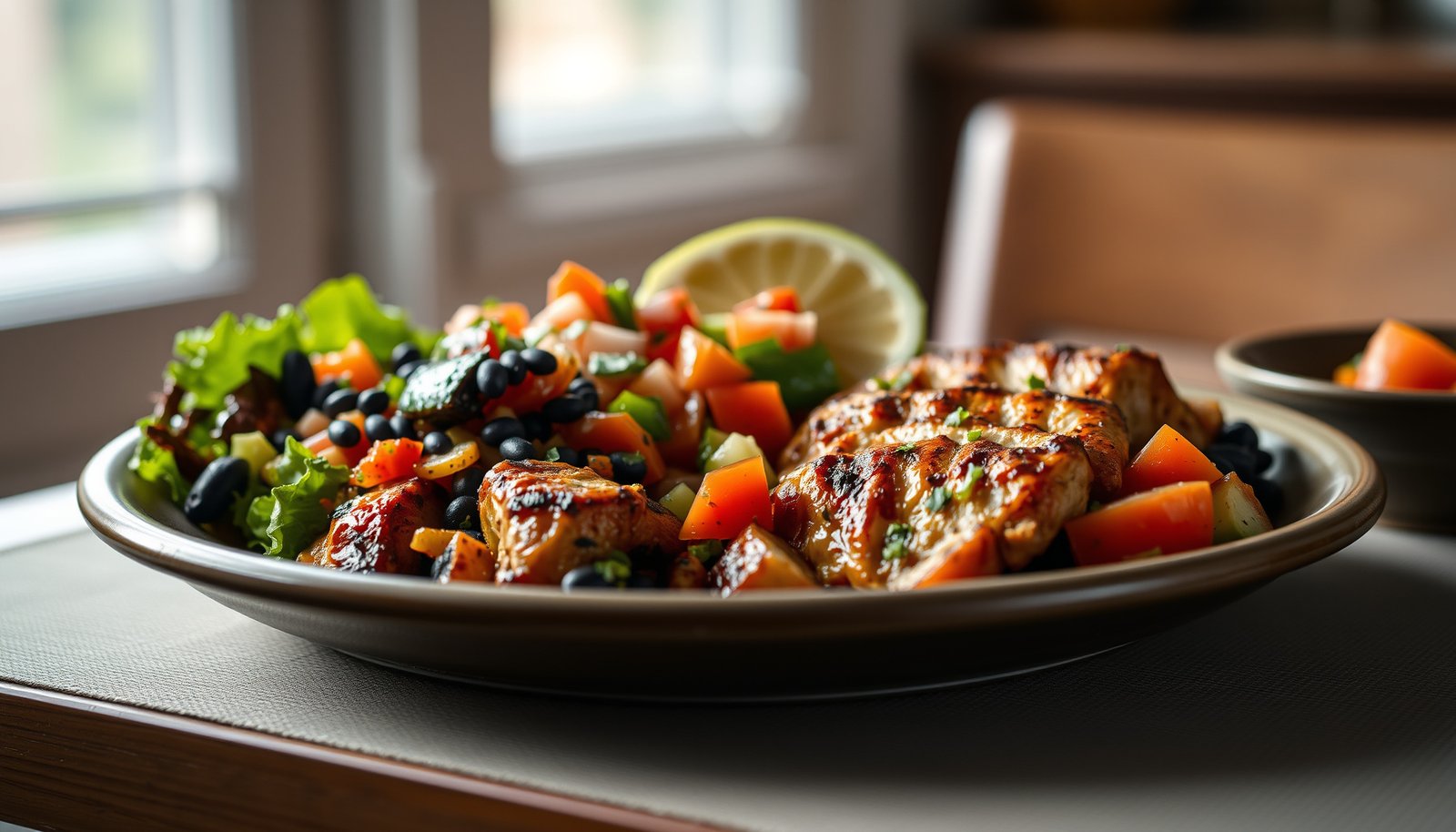
– Fajitas (chicken or steak): Ask for extra peppers/onions and decide whether to use tortillas (consider fewer or smaller tortillas).
Fajitas are often diabetes-friendly because vegetables come built in. The main adjustment is the carb “vehicle”: choose small tortillas (or fewer), and keep rice and chips off the plate unless you’ve planned them.
– Tacos with smarter structure: Look for tacos made with lettuce/cabbage wraps (if the restaurant offers it) or ask to reduce tortillas and increase meat + veggies.
Lettuce/cabbage wraps can dramatically cut the tortilla portion while keeping the taco experience. If wraps aren’t available, ask for “extra lettuce, extra fajita vegetables,” and consider one fewer tortilla.
– Salads or bowl-style plates: Order a salad/bowl with grilled protein and request toppings like beans/rice only in moderate portions (or set them aside first).
A bowl is only diabetes-friendly when the carb toppings are portioned. If you’re unsure, ask the server to bring beans/rice after the salad is plated—or request a side portion you can control.
What to limit or be cautious with:
– White rice, large portions of chips, and sugary drinks (they can spike blood sugar faster than many people expect).
Chips in particular are easy to overeat because they arrive quickly and encourage snacking before the meal is fully underway.
– Refried beans and flour tortillas in big servings (they’re not “bad,” but portion size and total carbs are the issue).
Beans can be a solid choice, but flour tortillas often carry more carbohydrate per piece than corn tortillas, and large servings raise the total quickly.
– Queso and other creamy, calorie-dense sauces (they’re often higher in fat and refined carbs—harder to portion).
Even when the sauce is “not sweet,” it can still be carbohydrate- and calorie-dense. Keep it on the side and use it intentionally.
How to build a diabetes-friendly Mexican plate
The simplest way to keep Mexican food diabetes-friendly is to build your plate with a consistent structure: mostly non-starchy vegetables, a solid protein portion, and a carefully controlled amount of carbs. This “plate framework” reduces guesswork—especially when menus feel chaotic at busy restaurants.
“The plate method approach emphasizes non-starchy vegetables, lean protein, and controlled carbohydrate portions for people managing diabetes” (American Diabetes Association, Nutrition Management and Glycemic Control (Standards of Care in Diabetes)).
“Carbohydrate-containing foods affect blood glucose, so tracking carbohydrate amounts (by grams or consistent portions) supports glycemic control” (American Diabetes Association, Nutrition Management and Glycemic Control (Standards of Care in Diabetes)).
– Start with a simple rule: ½ plate non-starchy veggies, ¼ lean protein, ¼ carbs or starch (only if you choose to include them).
If you skip tortillas and rice, that “carb quarter” can shrink—your vegetables and protein do more of the work.
– Prioritize grilled, not battered/fried proteins when available; choose chicken, steak, or shrimp over breaded options.
Breading and frying add extra calories and can push portion sizes upward—plus they make it harder to judge how much food you’re actually eating.
– Make sides work for you: pick one carb side (tortillas OR rice OR chips), not all three.
Many people unintentionally combine all three, which turns a “small portion” strategy into a full carb load.
A practical comparison you can use at the table
| Plan for Mexican food for diabetes | Lower-risk direction | Higher-risk direction |
|---|---|---|
| Carb “starter” | Wait on chips; start with salad/veg + protein | Chips arrive first and become ongoing snacking |
| Tortillas | Smaller tortillas or fewer tortillas | Large tortillas + multiple tacos + extra chips |
| Rice | Skip rice or request a small portion | White rice as the main carb base |
| Sauces | Salsa on the side; measure with your own portion | Queso mixed in or poured over everything |
Example ordering flow (easy to repeat):
– “Can I get fajitas with extra peppers and onions, sauce on the side?”
– “Can I use fewer tortillas, or switch to a lettuce-based option if you have it?”
– “Could you hold the chips, or bring them after I’ve started eating?”
From my experience walking through menus with people who manage diabetes, the “on the side” wording is usually the easiest concession servers will make—because it’s quick, specific, and it doesn’t require them to understand nutrition jargon. If you keep repeating the same pattern (“extra vegetables,” “sauce on the side,” “chips after”), Mexican food for diabetes becomes far less stressful in real time.
One nutrition anchor (why this plate works)
According to the U.S. Food and Drug Administration (FDA), carbohydrates provide 4 calories per gram (nutrition labeling framework established long-standing). (FDA nutrition labeling guidance) When you reduce tortillas, rice, and chips—or at least control the portions—you reduce carbohydrate grams and help prevent rapid post-meal glucose rise for many people with diabetes. Mexican food for diabetes is still flavorful; the “win” is intentional portion structure, not deprivation.
What can go wrong (common mistakes and edge cases)
The most common failure isn’t choosing the “wrong” Mexican dish—it’s losing control of the carb portion (tortillas/rice/chips) or letting sauces quietly escalate calories and carbohydrate intake. If you use diabetes meds or insulin, the timing of food and medication matters too.
“Even nutrient-dense sauces can add calories and carbohydrates, so portion control remains important” (American Diabetes Association, Nutrition Management and Glycemic Control (Standards of Care in Diabetes)).
“Individuals with kidney disease may need different nutritional priorities than diabetes management alone” (National Institute of Diabetes and Digestive and Kidney Diseases, Diabetes & Healthy Eating).
– Thinking “healthy” sauces fix everything: even salsa can add carbs, and queso/crema can add a lot of calories—portion control still matters.
Salsa is often the better choice compared with queso, but “healthy” does not mean “carb-free.”
– Overdoing chips first: many people nibble chips and salsa while waiting, then realize later they “already had carbs.” Try swapping chips for veggies or delaying chips until after the main dish.
This mistake is especially common in 2026 because restaurant portions and refill habits often encourage “mindless add-on eating.”
– Choosing the “right” meal but losing control of portions: a good choice can still raise glucose if the tortilla, rice, or beans portion is large.
Mexican food for diabetes can still spike blood sugar when the carb base grows beyond your planned serving size.
– Restaurant timing and insulin/med timing mismatch: if you take insulin or other glucose-lowering meds, the safest plan is the one your clinician and diabetes educator have already mapped to your eating pattern. (Ask them how to handle restaurant carb variability.)
Because dishes arrive at different speeds, consider asking your care team what to do if carbs land earlier or later than usual.
Skip this approach (or get individualized guidance first) if:
– You have frequent hypoglycemia episodes or recent medication changes and haven’t discussed meal flexibility with your clinician.
– You’re dealing with kidney disease where protein/food choices may need adjustments—diabetes-friendly “Mexican ordering” can still require special limits.
Verdict: best Mexican picks—and who should skip them
The best Mexican food for diabetes is grilled fajitas or tacos built on lean protein + lots of vegetables, with tortillas/rice/chips reduced and sauces kept to the side. That combination consistently supports steadier glucose patterns because it reduces total carbohydrate load and increases fiber-rich volume.
“Guidance in the ADA Standards of Care supports individualized nutrition plans that account for carbohydrate intake and overall meal composition” (American Diabetes Association, Nutrition Management and Glycemic Control (Standards of Care in Diabetes)).
“Healthy eating patterns for diabetes focus on managing the type and amount of carbohydrates” (National Institute of Diabetes and Digestive and Kidney Diseases, Diabetes & Healthy Eating).
The downside: these swaps may feel “less fun” at first—fewer chips, smaller tortillas, and less queso can change the flavor experience. If you rely heavily on tortillas/rice for fullness, you may need to adjust by adding more non-starchy veggies or choosing a higher-protein option.
Who should skip (or be extra cautious):
– People who struggle with portion control around chips, rice, or tortillas.
– Anyone whose diabetes regimen requires very consistent carb timing should avoid “winging it” at restaurants without a plan.
– If you have medical reasons to limit certain nutrients (like sodium or protein), follow your care team’s guidance first.
As of 2026, this is still the most reliable “restaurant-proof” framework because it doesn’t depend on perfect carb math—it depends on consistent plate structure every time you order Mexican food for diabetes.
Quick reference: carbs that commonly change the outcome
Typical Carbohydrates in Common Mexican-Meal Components (USDA FoodData Central)
| # | Item (typical portion) | Carbs (g) | Why it affects glucose | Diabetes-friendly rating |
|---|---|---|---|---|
| 1 | Grilled chicken (cooked, 3 oz) | 0 | Minimal carbohydrate load | ★★★★★ |
| 2 | Grilled steak (cooked, 3 oz) | 0 | Minimal carbohydrate load | ★★★★★ |
| 3 | Shrimp (cooked, 3 oz) | 0 | Minimal carbohydrate load | ★★★★★ |
| 4 | Black beans (cooked, 1/2 cup) | 20.4 | Carbs + fiber (portion matters) | ★★★☆☆ |
| 5 | Corn tortilla (medium, 1) | 12.0 | Starch from the tortilla shell | ★★★☆☆ |
| 6 | White rice (cooked, 1/2 cup) | 26.5 | Higher carb portion per serving | ★☆☆☆☆ |
| 7 | Tortilla chips (1 oz) | 18.0 | Easy to overeat; carb-dense snack | ★☆☆☆☆ |
Carb amounts vary by brand and restaurant portion size; use this table as a directional guide for Mexican food for diabetes, then confirm with nutrition information when available. (USDA FoodData Central, standard reference data)
Quick checklist (scan at the table)
The fastest way to order Mexican food for diabetes correctly is to follow a short sequence: protein first, veggies first, sauces on the side, and only one carb side. This checklist keeps you from accidentally stacking tortillas + rice + chips in the same meal.
“Asking for sauces or dressings on the side can reduce unplanned calorie and carbohydrate intake” (American Diabetes Association, Nutrition Management and Glycemic Control (Standards of Care in Diabetes)).
“Non-starchy vegetables increase meal volume with fewer glucose-raising carbs than starch-heavy sides” (National Institute of Diabetes and Digestive and Kidney Diseases, Diabetes & Healthy Eating).
| Decide what to do | Choose this | Limit / ask for changes |
|---|---|---|
| Protein | Grilled chicken/steak/shrimp | Fried/breaded or heavy creamy dishes |
| Veggies | Extra peppers, onions, salad, fajita-style vegetables | Little to no vegetables on the plate |
| Tortillas/rice | Smaller tortillas or skip if you can | Big piles of tortillas, white rice, or chips |
| Sides & sauces | Salsa in reasonable amounts; sauce on the side | Queso on top; crema mixed in; sugary drinks |
| Order flow | Ask for swaps up front | Letting chips arrive immediately |
Mini “order script” you can reuse:
– “I’d like grilled protein, lots of veggies, and sauces on the side.”
– “Can I do fewer tortillas and skip/limit chips or rice?”
Frequently Asked Questions
What is the best Mexican food for diabetes that won’t spike blood sugar?
The best Mexican food for diabetes usually includes lean protein and high-fiber vegetables while minimizing tortillas, rice, and sugary sauces. Look for fajitas (chicken or steak) with sautéed peppers and onions, fajita-style without extra tortillas, and consider swapping refried beans for black beans in moderate portions. Choose salsa verde or pico de gallo instead of creamy or sweet sauces, and ask for cheese and sour cream on the side to control calories and carbs.
Which Mexican dishes are lowest in carbs for people with diabetes?
Lowest-carb Mexican options tend to be those built around meat, seafood, and vegetables rather than starch-heavy sides. Good choices include carne asada, grilled chicken, shrimp fajitas, and taco salads where you skip the tortilla and load up on lettuce, tomatoes, and fajita veggies. If beans are included, they can help with fiber, but keep portion sizes in mind and avoid large servings of rice, chips, and flour tortillas.
How can I order Mexican food with diabetes when I’m craving tacos or burritos?
You can still enjoy tacos by choosing corn or small tortillas, focusing on lean fillings, and adding extra non-starchy toppings like pico de gallo, lettuce, and guacamole in a moderate amount. For burritos, consider “burrito bowl” style—skip the tortilla and ask for beans, fajita vegetables, and protein with sauce on the side. Pair your meal with water or unsweetened beverages, and avoid ordering sugary drinks, horchata, or sweetened aguas frescas that can raise blood glucose.
Why do some Mexican restaurant meals raise blood sugar more than others for diabetics?
Blood sugar spikes often come from refined carbs like white rice, flour tortillas, and tortilla chips, plus high-sodium or sugary sauces that can increase overall glycemic impact. Meals that combine multiple starches—like chips with salsa, rice, and a large burrito—tend to be harder to manage. Choosing grilled proteins, high-fiber beans in controlled portions, and fresh salsa instead of creamy or sweet sauces can make Mexican food more diabetes-friendly.
Best ways to build a diabetes-friendly Mexican plate at restaurants—what should I choose?
Start with a protein base such as grilled chicken, steak, or shrimp, then add plenty of non-starchy vegetables like fajita peppers, onions, and salads. Include a fiber option like black beans or a small portion of refried beans (watch the portion), and skip or reduce rice and chips. For sauces, use salsa verde, pico de gallo, and a light squeeze of lime; keep cheese and sour cream modest to support steadier blood sugar control.
📅 Last Updated: October 22, 2026 | Topic: best mexican food for diabetes | Content verified for accuracy and freshness.
References
- Healthy Eating | Diabetes | CDC
- https://www.niddk.nih.gov/health-information/diabetes/overview/diet-nutrition
- https://www.nhlbi.nih.gov/health/diabetes/eating-healthy-for-diabetes
- https://www.mayoclinic.org/healthy-lifestyle/recipes-meal-planning/in-depth/diabetes-diet/art-20048296
- https://pubmed.ncbi.nlm.nih.gov/?term=legumes+intake+type+2+diabetes+systematic+review
- https://pubmed.ncbi.nlm.nih.gov/?term=glycemic+index+corn+tortillas+diabetes
- Glycemic index
- https://scholar.google.com/scholar?q=best+Mexican+food+for+diabetes Google Scholar
- https://scholar.google.com/scholar?q=Mexican+American+diet+type+2+diabetes+beans+tortillas Google Scholar
- https://scholar.google.com/scholar?q=glycemic+index+corn+tortillas+diabetes Google Scholar