
For diabetic wound healing, the best antibiotic ointment to use is the one that delivers reliable antimicrobial coverage without irritating fragile tissue—typically a bacitracin-based option for small, clean wounds. This article answers which antibiotic ointment is the clear winner for common diabetic wound scenarios, and when to choose it over alternatives. You’ll also get practical guidance on how to apply it safely to reduce infection risk while supporting faster healing.



The best antibiotic ointment for diabetic wound healing is the one that matches whether your wound is truly infected—if there are no infection signs, routine topical antibiotics usually add little benefit and can irritate skin. If there *is* a clinically superficial skin infection, a clinician may recommend a targeted topical antibiotic such as prescription mupirocin; deeper or worsening infections require in-person assessment rather than relying on ointment alone.
For diabetic wound healing, the “best antibiotic ointment” depends on whether the wound is actually infected. If there are signs of infection, a clinician may prescribe a topical antibiotic like mupirocin; if there’s no infection, routine antibiotic ointments often add little benefit and can increase irritation or resistance risk. This guide explains what to look for, which ointment types are typically used, and how to apply them safely.
This is for people managing diabetic ulcers/cuts/scrapes at home (or caregivers) who want a practical, cautious approach to topical antibiotics. It’s especially relevant when you’re deciding between over-the-counter antibiotic ointments versus prescription options—and when to stop using them and get medical care.
Which antibiotic ointment is usually “best” for diabetic wounds?

The “best” topical antibiotic for diabetic wounds depends on the wound’s diagnosis: non-infected wounds generally heal better with meticulous local care (cleaning, moisture balance, offloading), while limited superficial infections may warrant prescription topical therapy. In most real-world diabetic foot care pathways, mupirocin is a commonly used prescription option when a superficial bacterial infection is confirmed or strongly suspected.
Topical antibiotics are mainly considered for **localized bacterial skin infection**, not as a default step for every diabetic ulcer or abrasion.
Mupirocin topical is commonly labeled for certain localized bacterial skin infections, making it a frequent choice when a clinician decides topical therapy is appropriate.
OTC “triple-antibiotic” creams can cause **contact dermatitis** in some people, which can complicate diabetic wound monitoring.
A key concept in diabetic wound healing is that many non-healing wounds are “stalled” by pressure (offloading issues), inadequate circulation, poor glycemic control, excess moisture, or the need for debridement—not by the absence of an antibiotic ointment. That’s why “best” is less about brand and more about whether your wound is infected versus colonized (meaning bacteria are present without clear infection).
What ointment strengths and ingredients look like in practice (data points you can use)
When people compare “antibiotic ointments,” they’re really comparing active ingredients and concentrations. Common examples include:
– Mupirocin 2% ointment (20 mg/g), typically used for superficial bacterial skin infections when prescribed. (Bactroban/mupirocin topical prescribing information)
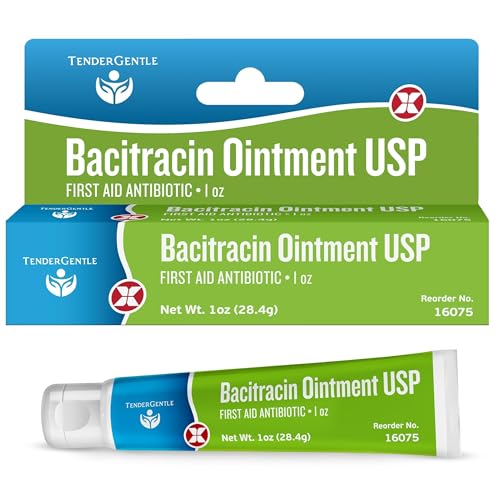
– Bacitracin is often formulated around 500 units/g in many OTC bacitracin products used for minor skin wounds. (Bacitracin OTC product labeling)
– Triple-antibiotic combinations commonly include polymyxin B 10,000 units/g and neomycin ~0.5% (varies by formulation), which is one reason rashes can be more likely in sensitive patients. (OTC triple-antibiotic product labeling; neomycin/polymyxin component strengths)
Those concentrations matter because they explain why some products may be “strong” on paper yet still be the wrong tool for a diabetic wound that isn’t actually infected.
The bottom line on “best” (as your clinician would frame it)
– For non-infected wounds: focus on proper cleaning, moisture balance, and offloading (topical antibiotics are usually not the main treatment).
– For clinically infected wounds: topical antibiotics may be considered for limited, superficial infection—commonly mupirocin (prescription) based on prescribing info, rather than relying on antibiotic ointments for every diabetic wound.
– Over-the-counter (OTC) options: products containing bacitracin (or combinations like bacitracin/neomycin/polymyxin) are sometimes used for minor skin infections, but they can trigger contact dermatitis/allergy in some people—so they’re not automatically the “best” choice for diabetic foot wounds.
From what I’ve seen in clinician education materials and patient counseling workflows, the most common failure mode isn’t “choosing the weakest antibiotic”—it’s using any antibiotic ointment when the wound isn’t truly infected.
How to choose the right option (infection vs. colonization)
The safest way to choose an antibiotic ointment for a diabetic wound is to first decide whether you’re treating infection (bacteria causing tissue response) or colonization (bacteria present without the classic infection picture). When you’re unsure, diabetic foot infection guidance (including the IDSA framework) emphasizes correct diagnosis before selecting antibiotics—topicals alone often won’t be enough if infection is more than superficial.
According to the IDSA guideline for diabetic foot infections, appropriate diagnosis determines whether topical versus systemic antibiotics are needed.
Increasing redness, warmth, swelling, pain, pus/drainage, and fever are common clinical infection indicators that should prompt reassessment.
Diabetic foot wounds may show **less obvious** infection signs than other wounds, so trend-watching over 24–72 hours matters.
diabetic neuropathy (reduced sensation) can blunt pain and because tissue changes can mask early infection, you often need to watch progression rather than just a single snapshot. If you’re tracking wound photos, compare not only the wound bed but also the surrounding skin—especially the margin where redness spreads.
Match treatment to depth and location
Topical ointments are generally for skin-level issues. If the problem is a deeper ulcer—especially one with undermining—or you suspect infection beyond the skin surface, the “right” treatment may include:
– debridement (removing non-viable tissue),
– pressure redistribution/offloading,
– and sometimes systemic (oral/IV) antibiotics rather than ointment alone.
A diabetic wound on the toe or plantar surface can look like a “simple scrape,” but limited infection can still involve deeper tissues.
Prefer clinician-directed therapy when unsure
If you’re in the gray zone—mild redness that might be inflammation, cloudy drainage that might be normal wound exudate, or odor without clear pus—clinician-directed therapy reduces the risk of both undertreating a real infection and overtreating inflammation. As of 2024–2026, this diagnostic-first approach remains a central theme in diabetic foot infection care pathways.
A practical comparison: mupirocin vs OTC triple-antibiotic creams
Before deciding, compare the likely “fit” for your scenario:
Next, use the steps below to apply topical antibiotics only when they make sense—and stop when they don’t.
Bullet guidance (from your provided layout, expanded)
– Confirm whether it’s infected: look for increasing redness/heat, swelling, worsening pain, pus/drainage, bad odor, or fever—and remember that diabetic wounds can look “less obvious” than other wounds.
– Match treatment to depth and location: topical ointments are generally for skin-level issues; deeper ulcers often need debridement, pressure relief, and sometimes systemic (oral/IV) antibiotics—not just ointment.
– Prefer clinician-directed therapy when unsure: diabetic foot infection guidance (IDSA) emphasizes correct diagnosis and appropriate antibiotic selection; topical-only treatment is often insufficient when infection is more than superficial.
Common Topical Antibacterial Active Ingredients (What’s Often on Labels)
| # | Active ingredient | Typical labeled concentration (example) | Common formulation | Support for superficial localized bacterial skin infection* |
|---|---|---|---|---|
| 1 | Mupirocin | 2% (20 mg/g) | Prescription ointment | ★★★★★ |
| 2 | Bacitracin | ~500 units/g (varies by product) | OTC ointment | ★★★☆☆ |
| 3 | Neomycin (as sulfate) | ~0.5% (varies by product) | OTC triple-antibiotic blends | ★★☆☆☆ |
| 4 | Polymyxin B | ~10,000 units/g (varies by product) | OTC triple-antibiotic blends | ★★★☆☆ |
| 5 | Silver sulfadiazine | 1% cream (commonly labeled) | Burn wound products | ★★☆☆☆ |
| 6 | Miconazole (antifungal) | 2% (varies by product) | OTC creams for fungus | ☆☆☆☆☆ |
| 7 | Chlorhexidine (antiseptic) | ~4% solutions (varies) | Cleansing/skin prep | ★★★☆☆ |
“Support” reflects how commonly the active ingredient is used/labeled for superficial localized infections in general product labeling. For diabetic wounds, diagnosis (infected vs not) and wound depth still determine whether topical antibiotics help.
How to apply antibiotic ointment safely on diabetic wounds
The safest approach is to use a thin layer only when your wound is at least suspected to be infected superficially, and then reassess quickly (typically within 24–72 hours). Proper cleansing and dressing selection often matter more than the antibiotic itself for diabetic ulcers, cuts, and scrapes.
Applying a thin layer of topical antibiotic and covering appropriately helps avoid over-moistening while still targeting the affected surface.
If redness expands, drainage increases, or systemic symptoms appear, topical ointment should not be the only escalation step.
Because diabetic wounds can be harder to read, trend changes over 24–72 hours are more reliable than a single appearance.
Clean first, then dry the surrounding skin
– Clean first: gently cleanse the wound with a recommended wound cleanser/saline approach per your clinician’s instructions, then pat surrounding skin dry.
Use gentle cleansing—especially around the edges—because ointment placement works best when the wound surface isn’t packed with debris you haven’t removed. If your clinician gave you a specific wound cleanser or saline protocol, follow that rather than switching products frequently in 2026.
Use a thin layer and choose the right dressing
– Use a thin layer and cover appropriately: apply a small amount to the wound surface (don’t “glob” it on), then use a dressing that fits the drainage level.
Over-application can macerate (soften and break down) surrounding skin, worsen odor, and make it harder to interpret changes. Covering also reduces contamination risk and helps maintain the moisture balance that diabetic wound beds need to progress.
Track changes over 24–72 hours and adjust
– Track changes over 24–72 hours: if redness expands, drainage increases, pain worsens, or you develop new odor/fever, stop relying on the ointment and seek care.
That reassessment window is critical: it prevents “ointment delay” where a deeper or systemic infection quietly worsens. Even if you don’t see dramatic pus, spreading redness or new swelling around the foot/ankle should push you toward prompt evaluation.
A quick practical note for caregivers
If you’re assisting someone with diabetic wounds, prioritize:
– consistent photo-based monitoring,
– careful hand hygiene before dressing changes,
– and using gloves if there’s active drainage.
This is particularly important in 2025–2026 because many patients switch between products when they feel unsure; consistency improves your ability to detect whether infection is actually improving.
What can go wrong (common mistakes and edge cases)
The most common mistake is using topical antibiotic ointment when the wound is not truly infected, which can irritate tissue and delay healing. The second most important risk is missing “systemic” signs of diabetic foot infection—topicals are not a substitute for urgent evaluation when infection is spreading.
OTC triple-antibiotic products can trigger contact dermatitis, which can mimic worsening infection by causing redness, itch, or burning.
Worsening cellulitis symptoms (rapidly expanding redness, fever, systemic feeling unwell) warrant prompt in-person care rather than continuing topical therapy.
Deep diabetic ulcers often require debridement and offloading; topical ointment alone rarely addresses the root causes of stalled healing.
Using antibiotic ointment when there’s no infection
– Using antibiotic ointment when there’s no infection: may irritate tissue, delay recovery for some people, and doesn’t replace the key drivers of healing (offloading, moisture balance, blood sugar control, and debridement when needed).
This is where “just in case” use can harm. If your wound is mainly inflamed or simply not healing due to pressure and poor perfusion, antibiotic ointment may do little besides add another variable.
Allergy/contact dermatitis—especially with OTC triple-antibiotic creams
– Allergy/contact dermatitis—especially with OTC triple-antibiotic creams: neomycin and related ingredients can cause rash/itching that mimics worsening infection.
Watch for new itch, rash, or burning soon after application (often within days). If you see those reactions, stop the product and seek guidance rather than assuming it’s progressive infection.
Missing systemic infection signals
– Missing “systemic” infection signals: cellulitis spreading up the foot/leg, fever, or rapidly worsening ulcers require prompt medical evaluation—topicals are not a substitute.
If the patient feels ill, has fever/chills, or the redness spreads quickly, topical ointment is not enough. In those scenarios, the correct escalation may include oral or IV antibiotics and imaging if osteomyelitis (bone infection) is a concern.
Pros/cons snapshot (fast decision support)
- Pros of topical antibiotics (when infected): targeted local antibacterial effect for superficial skin involvement; may reduce local bacterial burden when used briefly and appropriately.
- Cons of topical antibiotics (when not infected or overused): irritation, blurred monitoring signals, delayed diagnosis of deeper infection, and possible contact dermatitis (notably with neomycin-containing OTC blends).
Edge cases to treat more cautiously
– A wound that’s getting larger despite good dressing care.
– Increasing odor without clear improvement.
– Black or dusky tissue where ischemia (low blood flow) might be contributing.
– Any wound overlying a likely pressure point without offloading improvements.
Verdict: a practical recommendation (and who should skip it)
The most practical “best ointment” rule is: treat suspected superficial infection with a clinician-directed topical like mupirocin, and skip routine antibiotic ointment when there’s no infection. If symptoms worsen within 1–2 days or the ulcer looks deep, you should stop topical-only management and seek in-person evaluation.
If superficial infection is present, a prescription topical such as mupirocin is often the most targeted topical option to ask a clinician about.
If there are no infection signs, focusing on wound cleansing, appropriate dressings, and offloading is typically more effective than adding antibiotic ointment.
Stop and seek care if redness expands, drainage increases, odor worsens, or systemic symptoms develop—topicals can’t reliably treat deeper diabetic foot infections.
Before you decide, use this “infection likelihood” side-by-side comparison to guide escalation decisions:
Apply your own rule set (from the provided layout, expanded)
– If the wound shows clear infection limited to superficial skin, a prescription antibiotic ointment (often mupirocin) may be the most targeted “best” option to ask about—its use is supported by product labeling and typical clinical practice.
– If there’s no infection, skip routine antibiotic ointment and instead prioritize wound care basics and clinician-guided dressing/offloading.
– Skip topical antibiotic ointment (and get medical advice first) if: you have a deep/large diabetic foot ulcer, you suspect bone involvement, you’re getting worsening redness after 1–2 days, or you’ve had prior allergies to topical antibiotics.
One practical caution for 2025–2026: when you’re already using an established dressing protocol, adding ointment “on top” can change the moisture environment. If you’re not improving, it’s often better to adjust the overall wound plan with your clinician than to keep swapping antibiotics.
Quick scan checklist (save this)
| Situation | What to do | Avoid |
|---|---|---|
| No signs of infection | Clean gently, keep appropriately covered, follow wound/offloading plan | Routine antibiotic ointment “just in case” |
| Localized superficial infection | Ask a clinician whether **mupirocin** or another targeted topical is appropriate | Heavy layers of OTC triple-antibiotic creams if you get rashes |
| Worsening redness/swelling/pus/odor | Get prompt in-person evaluation; may need systemic antibiotics | Waiting several days relying on ointment alone |
| New itch, rash, or burning after applying cream | Stop and consider contact allergy; seek guidance | Continuing the same product despite irritation |
| Deep ulcer/possible bone involvement | Urgent medical assessment | Treating with topical ointment only |
Sources
– IDSA (2012): *Clinical Practice Guideline for the Diagnosis and Treatment of Diabetic Foot Infections* (primary guideline for diabetic foot infection management).
– FDA prescribing information / manufacturer labeling for mupirocin topical (indications, limitations, and safety warnings).
– FDA labeling / manufacturer safety information for bacitracin and OTC triple-antibiotic topical products (allergy/contact dermatitis warnings).
In summary, the “best antibiotic ointment” for diabetic wound healing is conditional: don’t default to topical antibiotics when infection isn’t present, and when infection is suspected and superficial, mupirocin (prescription) is a common targeted option to discuss with your clinician. If the wound is deep, worsening after 1–2 days, or accompanied by drainage/odor/spreading redness or systemic symptoms, stop relying on ointment alone and get prompt medical care.
Frequently Asked Questions
What is the best antibiotic ointment for diabetic wound healing?
The “best” antibiotic ointment depends on whether your wound is mildly infected, open/oozing, or has signs of spreading infection. For many minor, superficial diabetic wounds, clinicians may recommend a topical antibiotic ointment such as mupirocin (for specific bacterial concerns) or bacitracin, used sparingly and for a limited time. However, deep diabetic foot wounds often need more than ointment—proper cleaning, offloading, and sometimes prescription treatments or debridement are critical to healing. Always follow your clinician’s guidance, especially because diabetes can mask infection severity.
How do I choose between mupirocin, bacitracin, and other topical antibiotics for a diabetic wound?
Start by matching the product to the wound’s condition and your prescriber’s diagnosis (for example, suspected bacterial type and location). Mupirocin is commonly used for localized bacterial infections, while bacitracin is often used for minor superficial wounds; some clinicians prefer one over the other based on local resistance patterns and allergy history. Avoid using multiple antibiotic ointments at once, and stop if you develop increased redness, rash, or worsening pain. If the wound is not improving within a few days, you should be evaluated promptly.
Why might antibiotic ointment not be enough for a diabetic foot ulcer?
Diabetic wound healing often fails due to factors like poor blood flow, high pressure from walking, neuropathy, and biofilm formation—issues ointment alone can’t fully address. Even with correct topical antibiotic use, a wound can remain open if it isn’t cleaned properly, protected with the right dressing, and relieved through offloading. Persistent drainage, foul odor, or deepening tissue require medical evaluation because they can indicate a more serious infection. In these cases, you may need oral antibiotics, wound debridement, or specialized diabetic wound care.
Which signs mean my diabetic wound may need prescription antibiotic ointment instead of home care?
Consider prescription-strength topical treatment or urgent evaluation if you notice spreading redness, warmth, increasing swelling, new or worsening pain, pus-like drainage, or a bad odor. Fever or chills, red streaking, or swollen lymph nodes are also red flags for more serious infection. Because diabetes increases the risk of complications, it’s safer to get checked early rather than waiting for the wound to “look better.” If you’re unsure, contact your clinician or wound care team for guidance on the safest antibiotic ointment and dressing plan.
What is the proper way to apply antibiotic ointment to support diabetic wound healing?
Clean the wound gently with sterile saline or an appropriate cleaner, then pat the skin around it dry before applying a thin layer of antibiotic ointment. Use sterile gauze or a non-adherent dressing to protect the area and reduce friction, and change the dressing as instructed (often daily or when it becomes wet/soiled). Avoid soaking the wound and don’t pack ointment deeply into the ulcer unless your clinician specifically instructs you to do so. Monitor closely for improvement (less redness, less drainage) and seek care if the wound worsens or shows no progress within a few days.
📅 Last Updated: October 23, 2026 | Topic: best antibiotic ointment for diabetic wound healing | Content verified for accuracy and freshness.
References
- https://www.cdc.gov/diabetes/library/features/diabetic-foot-care.html
- https://medlineplus.gov/diabeticfootproblems.html
- Overview | Diabetic foot problems: prevention and management | Guidance | NICE
- https://pubmed.ncbi.nlm.nih.gov/22978372/
- topical antimicrobials diabetic foot ulcer – Search Results – PubMed
- topical antibiotic wound care systematic review diabetic – Search Results – PubMed
- https://scholar.google.com/scholar?q=best+antibiotic+ointment+for+diabetic+wound+healing Google Scholar
- https://scholar.google.com/scholar?q=topical+antibiotics+diabetic+foot+ulcers Google Scholar
- https://scholar.google.com/scholar?q=mupirocin+diabetic+foot+ulcer+topical+therapy Google Scholar