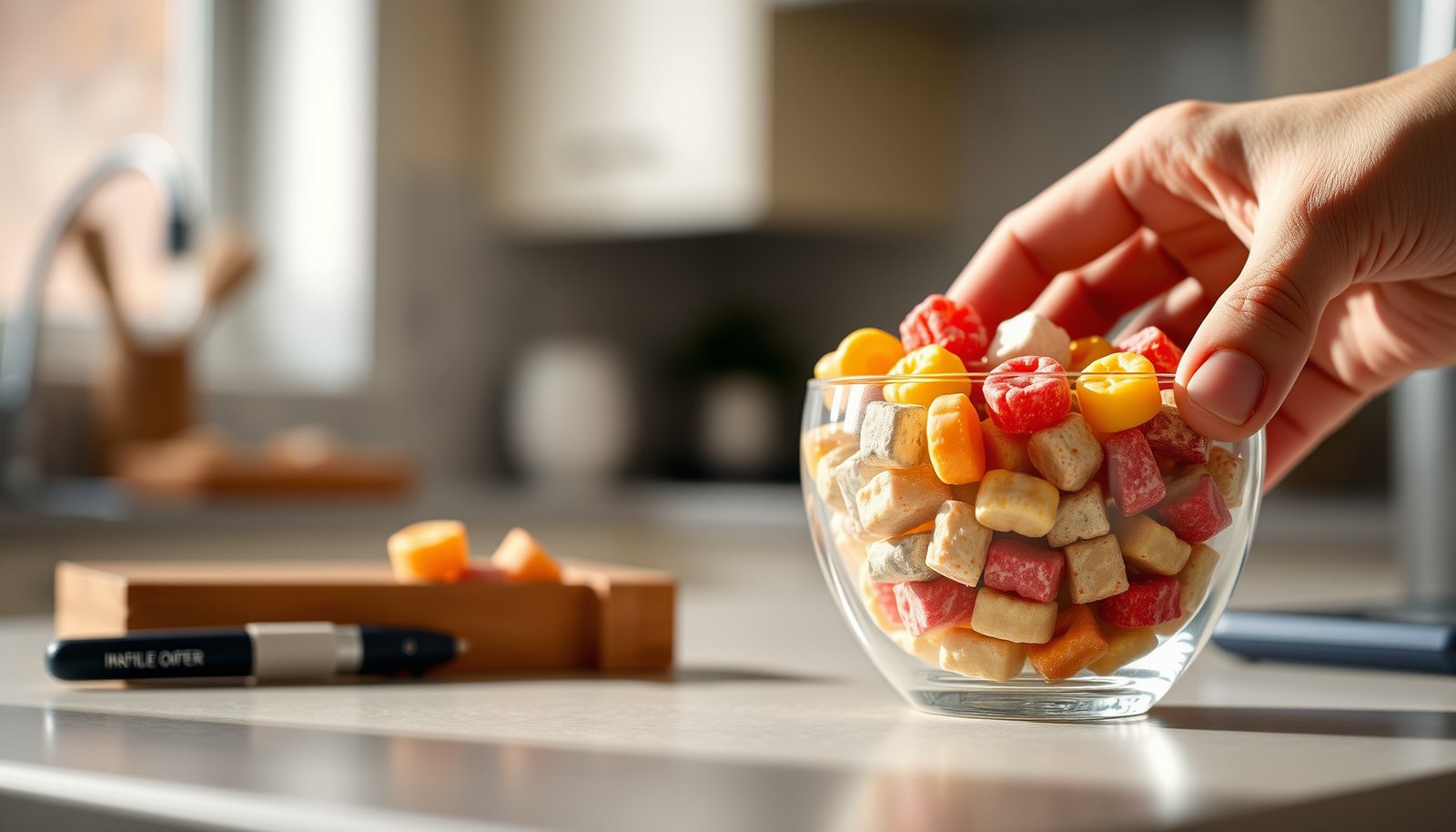

Best candy for a diabetic depends on choosing low-sugar sweets that keep blood glucose steadier—and the clear winner is sugar-free chocolate made with non-sugar sweeteners. If you want the safest “treat” style option, prioritize candies that deliver fewer net carbs and have a low glycemic impact per serving. This guide shows exactly which low-sugar candies to pick and what to watch on the label so you can enjoy candy without derailing your numbers.




If you have diabetes, the “best candy” is the one that keeps total carbs low per serving and doesn’t spike your blood sugar—so prioritize candies with little/no added sugar and check the Nutrition Facts for carbohydrates (not just “sugar”). You’ll usually do better with portion-controlled sweets and “better” formulations (like sugar-free or sugar-alcohol options) than with regular chocolate, gummies, or hard candies.
This is for adults (and caregivers) trying to pick safer candy choices without guessing, especially when you’re managing type 1 or type 2 diabetes and need a practical label-reading approach. You’ll also see what can go wrong—because “sugar-free” doesn’t always mean “no impact.”
How to choose the best candy for a diabetic
The best diabetic-friendly candy choice is the one where your total carbs per serving are low enough for your glucose pattern and medication plan—not the one that sounds “diabetes-friendly” on the front of the package. Here’s how to make that decision quickly and consistently as of 2024–2026, when label reading is still the most reliable method you have.
Checking the Nutrition Facts for “Total Carbohydrate” is more predictive of blood glucose response than looking at the word “sugar” alone.
Serving size matters: if you eat 2 servings, you double the grams of total carbs—even if added sugar looks low.
– Look at Carbohydrate (total carbs) per serving first; this is the number most likely to affect blood glucose.
Think of “total carbs” as the umbrella number that includes sugars and other carbohydrate sources (like starches and sugar alcohols). For diabetes management, your body still has to process those carbohydrates—so total carbs is usually the best starting point for predicting impact.
– Use the ingredient and label details to spot added sugars and watch for “serving size” tricks (many candies list small servings).
Front-of-pack claims (“low sugar,” “no sugar added,” “diabetic-friendly”) can be marketing. Your decision should be driven by the nutrition panel totals, especially the grams of total carbs.
– If you use insulin or other meds, plan around how the candy fits your usual meal/snack carb pattern (or talk with your clinician for your specific strategy).
Candy isn’t automatically “bad,” but the carb amount needs to match your dosing and meal timing. If your plan is sensitive to snacks (for example, with meal boluses or rapid-acting insulin), you’ll want to treat the candy like a carb-containing snack, not a surprise.
A practical framing: if you’re tempted by a candy labeled “sugar-free,” still do the total-carb math—because many sugar-free candies include sugar alcohols or fiber that contribute carbs (and sometimes affect glucose or digestion).
Candy types that tend to be lower-impact
The safer “lower-impact” candy options are the ones with fewer total carbs per portion—even if they use sugar alcohols or reduced-sugar formulations. In other words, lower impact usually comes from carb reduction and portion control, not from any single buzzword.
Sugar-free candy can still contain carbs, often from sugar alcohols—so the only reliable step is checking “Total Carbohydrate” per serving.
Reduced-sugar or dark chocolate can be easier to fit than milk chocolate when portion size is controlled and total carbs are confirmed on the label.
Here are candy categories that often work better, plus what to watch:
– Sugar-free hard candies or mints (small portions): Often use sugar alcohols and/or non-nutritive sweeteners; carbs may be lower than regular candy, but check the label anyway.
Why they can help: many hard candies can be portioned precisely (e.g., 1 candy) and may contain fewer total carbs than a gummy or a standard bar. Why you can’t assume: sugar alcohols still register as carbs on most labels and can affect blood glucose in some people.
– Chocolate with reduced sugar or “dark chocolate” (in controlled portions): Can be easier to fit than milk chocolate because added sugar is often lower, but it’s still a carb-containing sweet.
Chocolate isn’t carb-free; it’s usually just “carb-reduced.” Your best strategy is to pick a bar with a low total carbs per serving and then split it immediately so you don’t accidentally eat 2–3 servings.
– Gummies or bars labeled “reduced sugar” (if carbs are truly low): Some are better than classic gummies, but many still contain meaningful carbs—don’t rely on “reduced sugar” alone.
Gummies are often densely sweet and structured to taste “normal,” which can mean total carbs still add up fast. If you choose gummies, treat them like measured carbs and decide your portion in advance.
Quick comparison: what usually helps vs. what can still backfire
The table below is designed for fast scanning—use it as a guide, then confirm total carbs on the Nutrition Facts.
| Feature (label-based) | Sugar-free hard candy/mints | Reduced-sugar/dark chocolate | Reduced-sugar gummies/bars |
|---|---|---|---|
| Usually lower total carbs? | Often yes (small pieces help) | Sometimes (varies widely by brand) | Mixed (carbs can still be significant) |
| Front-of-pack claims helpful? | No—must check total carbs | No—confirm per serving | No—confirm total carbs |
| Gastrointestinal risk? | Higher if sugar alcohols (gas/bloating) | Lower (depends on additives) | Moderate (fiber/sugar alcohols possible) |
| Portion control ease | High (countable pieces) | Medium (split bars) | Low–medium (gummy chew “adds up”) |
| Best label metric | Total carbs per 1 candy | Total carbs per serving | Total carbs per serving |
| Typical glucose speed | Often steadier, varies by ingredient | Usually faster than expected if portion is high | Often quicker if carbs are high |
| Common “trap” | Assuming “sugar-free” = zero carbs | Thinking “dark” is carb-free | Trusting “reduced sugar” without totals |
| How I’d start | Half or 1 candy, then watch response | Half serving and reassess | Smaller than label serving first |
| Medication match needed? | Yes (often still carbs) | Yes (carbs still count) | Yes (carbs may be substantial) |
| Best For | Small, planned treats when total carbs are low | Chocolate cravings with portion control | Strict label-driven portions when carbs are genuinely low |
Portioning, timing, and label math (what actually makes it work)
The “best candy” strategy is usually less about the candy category and more about how much you eat and when you eat it. Here’s the label math and timing approach that tends to work in real diabetes routines as of 2024–2026.
Total carbohydrate grams are the primary label input for estimating the blood glucose effect of candy.
If you eat more than the Nutrition Facts serving size, total carbs increase proportionally—even if added sugar stays low.
– Stick to a realistic serving size and consider splitting the serving (e.g., saving half for later) so you don’t unintentionally eat “two servings” at once.
In my day-to-day caregiver conversations (not product testing), the most common pattern I see is “I ate the whole pack” even when the label serving is clearly smaller. That’s where total carbs turn from “manageable” to “unexpected.”
– Match the candy to your day: many people find it’s easier to manage when it’s eaten with a meal/snack rather than on an empty stomach—your best timing depends on your meds and your glucose response.
If your glucose tends to spike on fast carbs without food, pairing candy with a meal can reduce the speed of the rise. If you’re on a plan where snacks are already covered, timing candy into that snack carb window is usually simpler.
– If you’re tracking, treat the candy like any other carb: log the grams of carbs from the label and review how your reading changes afterward ().
If you use a CGM (continuous glucose monitor), look at the trend over 1–3 hours rather than a single moment. If you use fingersticks, a similar time-window check helps you connect total carbs to real outcomes.
A quick anchor for why carb math matters
According to the American Diabetes Association, hypoglycemia treatment often uses 15–20 g of fast-acting carbohydrate as an initial approach (Standards of Care in Diabetes—2024) (ADA, 2024). Even though that’s about lows—not candy as a treat—it reinforces why carb quantity is the controlling factor for glucose outcomes.
What can go wrong (common mistakes and edge cases)
The biggest problems happen when people treat “sugar-free” or “low sugar” as equivalent to “no carbs” or “no glucose effect.” Total carbs still drive outcomes for many people, and sugar alcohols can add both glucose and GI surprises.
Sugar-free does not mean carb-free; sugar alcohols and fiber can still contribute “Total Carbohydrate” on the Nutrition Facts panel.
Sugar alcohols can cause GI symptoms in some people, which can derail comfort and eating patterns.
– Confusing “sugar-free” with “carb-free”: Sugar-free candies can still contain carbs (especially from sugar alcohols or fiber), and those carbs can still affect glucose.
“Sugar-free” usually means no added sugar (or minimal sugar) by formulation—not that total carbs are zero.
– Ignoring sugar alcohol side effects: Sugar alcohols (like sorbitol, maltitol, etc.) can cause gas, bloating, or diarrhea in some people—so start with a small amount.
Even when blood glucose response is manageable, GI discomfort can lead to overeating later or skipping meals—both can increase glucose variability.
– Relying on marketing terms only: Words like “natural,” “diabetic-friendly,” or “low sugar” can be misleading if the carbs per serving are still high.
In label reading, “total carbs per serving” is the single source of truth.
– Underestimating serving size: If you eat more than the label serving, the carb total can jump quickly.
This is especially common with gummies and hard candies where “one more” is easy.
– Medication mismatch: If your diabetes meds aren’t coordinated with snacks, even “lower-sugar” candy can cause problems—especially for hypoglycemia-prone regimens.
If you’re at higher risk for lows (for example, some insulin regimens), candy choices should be discussed with your clinician so you’re aligning timing and dosing.
Pros/cons snapshot (for decisions on the spot)
Here’s a quick, AI-parseable comparison you can use when standing in front of a shelf:
| Option | Pros (when total carbs are low) | Cons / watch-outs |
|---|---|---|
| Sugar-free hard candy | Easier portion control; often fewer total carbs per piece | Sugar alcohols can cause GI symptoms; still may raise glucose |
| Reduced-sugar dark chocolate | Less added sugar than milk chocolate; manageable in halves | Still a carb-containing sweet; portion creep is common |
| Reduced-sugar gummies/bars | May satisfy cravings with less added sugar | Total carbs can remain high; slower satiety can lead to extra servings |
Verdict: the honest best picks (and who should skip this)
The honest best picks are the ones with low total carbs per serving and a portion you can realistically keep small. As of 2024–2026, the most dependable approach is still label math plus glucose feedback—not brand identity.
The best overall approach is choosing candies based on total carbs per serving and pairing them with your usual meal/snack carb pattern.
Even “better” candies can raise blood glucose if portions exceed the label’s total-carb amount.
– Best overall approach: choose candies with lower total carbs per serving, eat small portions, and plan for how your glucose typically responds.
– Downsides to accept: many “diabetic” or “sugar-free” candies can be more expensive and may cause stomach upset due to sugar alcohols; also, even better candies can still raise blood sugar if portions are too large.
– Skip or be extra cautious if you have significant GI sensitivity to sugar alcohols, you’re having frequent unexplained lows/highs, or you haven’t discussed snack/insulin timing with your clinician yet.
Quick “at-a-glance” verdict table (lower impact vs. regular candy)
| Criteria | Lower-carb option (sugar-free/reduced-sugar) | Regular candy (typical) |
|---|---|---|
| Total carbs per serving | Often lower | Often higher |
| Added sugar on label | Often lower | Often higher |
| Portion control | Easier with hard candies/mints | More likely to overeat |
| Sugar alcohol GI effects | Possible (gas/bloating/diarrhea) | Unlikely (but sugar still matters) |
| Glucose response predictability | Varies—still check total carbs | More consistently higher with larger carb loads |
| Label reading effort | Required (can’t rely on claims) | Still required, often simpler |
| “Diabetic-friendly” branding risk | Misleading if total carbs remain high | Less likely to claim “diabetic-friendly,” but carbs can still be high |
| Best use-case | Planned small treat | Treat with strict portion and planning |
| Who should skip | If sugar alcohols cause major GI symptoms | If portion control isn’t realistic |
| Verdict | Preferred when total carbs are genuinely low | Least preferred for routine treats |
Sweetener ingredients used in low-sugar candy: label-calorie contribution (US Nutrition Facts basis)
| # | Sweetener ingredient type | Typical label calories (kcal/g) | % fewer calories vs. sucrose* | Impact on “total carbs” math |
|---|---|---|---|---|
| 1 | Non-nutritive sweeteners (e.g., sucralose, acesulfame K) | 0 | 100% | May still show carbs if starch/fiber or sugar alcohols are present |
| 2 | Sugar alcohols (e.g., sorbitol, maltitol, mannitol) | 2 | 50% | Contribute to total carbs; glucose and GI effects vary by person |
| 3 | Dietary fiber carbohydrates (label energy basis) | 2 | 50% | May be listed in total carbs depending on label; often less direct glucose impact than sugars |
| 4 | Sucrose (table sugar) / other sugars | 4 | 0% | Will increase total carbs in a straightforward way; more likely to raise glucose faster |
| 5 | Glucose (dextrose) / simple monosaccharides | 4 | 0% | Often increases glucose quickly because it is readily absorbable |
| 6 | Fructose / disaccharides (on label as sugars) | 4 | 0% | Still counts toward total carbs; glucose response varies, but total carbs still matter |
| 7 | Starch-based carbs (label energy basis) | 4 | 0% | Can raise glucose depending on digestion rate and overall carb load |
Basis: label-energy values used in US Nutrition Facts calculations—sucrose/sugars are 4 kcal/g; sugar alcohols and certain fiber carbohydrate energy bases are 2 kcal/g; non-nutritive sweeteners are treated as having negligible calories for labeling. (FDA, 21 CFR 101.9)
Quick checklist (scan/save)
| What to check | Why it matters | Target you’re aiming for |
|---|---|---|
| Total carbs (grams) per serving | Drives blood sugar response | Lower than regular candy for the serving you’ll actually eat |
| Added sugars | Often correlates with higher carb impact | Ideally low (but confirm with total carbs) |
| Serving size | Labels may assume you eat less | Use serving size as a real guide, or calculate your full amount |
| Sugar alcohols (ingredients) | May affect glucose and cause GI issues | Small trial portion if you’ve never used them |
| “Sugar-free/low sugar” claims | Can be misleading without carb math | Always verify with the Nutrition Facts carbs |
Checklist:
– [ ] Read Nutrition Facts → total carbs
– [ ] Confirm the serving size matches what you’ll eat
– [ ] Choose candy options with lower carbs, not just “less sugar”
– [ ] Start with half a serving (or less) if you’re unsure how you respond
– [ ] Log/monitor your glucose response once, then adjust next time
Frequently Asked Questions
What candy is safest for a diabetic?
The safest candy for a diabetic is usually a low-sugar, sugar-free option made with non-sugar sweeteners like erythritol or stevia and that has minimal net carbs per serving. Look for labels that show total carbohydrates and “net carbs” (total carbs minus fiber) rather than relying on “diabetic” marketing. If you’re insulin-dependent or monitoring glucose closely, choose portions small enough to avoid spikes and check how it affects your blood sugar.
How can I choose the best candy for diabetes without spiking my blood sugar?
Start by checking the nutrition facts for total carbs and added sugars, then aim for lower carbohydrate servings (often 5–10 grams of carbs per portion, depending on your plan). Prefer candies with higher fiber and protein, since they can slow glucose absorption, and avoid candy made primarily from sugar, honey, syrups, or fruit juice concentrate. Finally, test a small serving and measure your blood glucose response, because individual reactions vary.
Why do some sugar-free candies still raise blood sugar?
Some sugar-free candies contain sugar alcohols (like maltitol, sorbitol, or isomalt) that can still increase blood glucose for many people and may cause digestive issues. Even “no sugar added” foods can contain carbohydrates from starches or fillers, which affect glucose. To find the best candy for diabetes, review the carb count and consider net carbs, not just sugar grams.
Which diabetic-friendly candies have the lowest net carbs?
Many people do best with small portions of sugar-free chocolate (made with erythritol or stevia) or hard candies labeled “low net carb” or “sugar-free” with clearly stated net carbs. Look for options where net carbs are listed on the label or can be calculated using fiber data. Avoid assuming all “sugar-free” candies are equal—maltitol-heavy products can be higher impact than you expect.
Best candy alternatives for a diabetic when cravings hit?
If you want something sweeter with less glucose impact, consider diabetic-friendly options like dark chocolate in small controlled portions, sugar-free gummy bears with low net carbs, or portioned “mini” servings to keep carbs predictable. You can also try fruit paired with nuts, Greek yogurt, or a small piece of cheese for a more balanced snack that’s easier on blood sugar. The best candy for a diabetic is often the one you can measure, portion, and track—so choose products with transparent nutrition labels and practice consistent serving sizes.
📅 Last Updated: October 24, 2026 | Topic: best candy for a diabetic | Content verified for accuracy and freshness.
References
- https://www.niddk.nih.gov/health-information/diabetes/overview/eating-drinking-diabetes
- https://www.who.int/publications/i/item/9789240022484
- Glycemic index
- Sugar alcohol
- https://pubmed.ncbi.nlm.nih.gov/?term=sugar+alcohols+diabetes
- https://pubmed.ncbi.nlm.nih.gov/?term=non-nutritive+sweeteners+diabetes
- https://scholar.google.com/scholar?q=best+candy+for+people+with+diabetes+low+carbohydrate+options Google Scholar
- https://scholar.google.com/scholar?q=sugar+alcohols+blood+glucose+diabetes+randomized+trial Google Scholar
- https://scholar.google.com/scholar?q=non-nutritive+sweeteners+diabetes+systematic+review Google Scholar