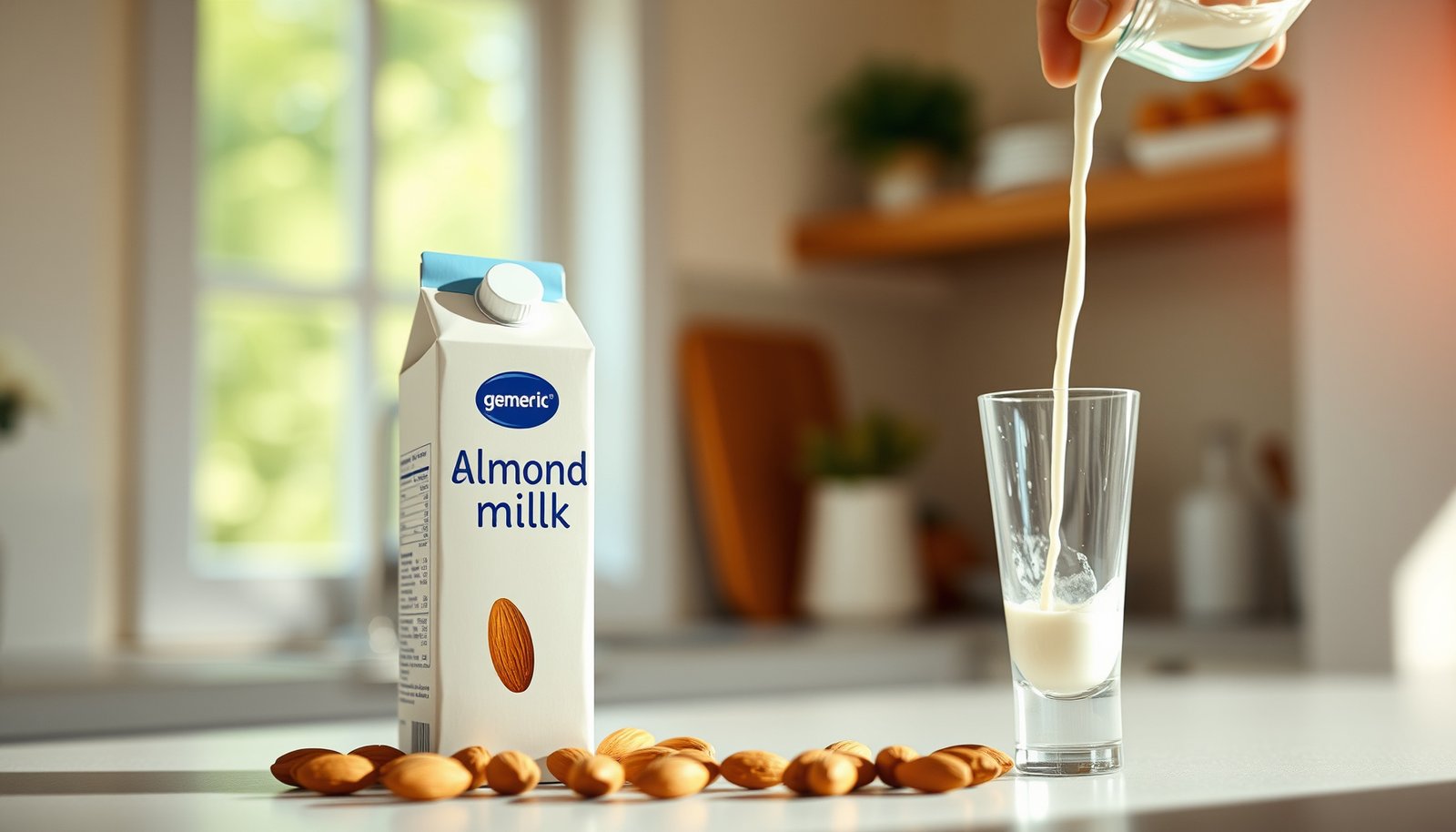

Finding the best almond milk for diabetics comes down to one choice: the brand with the lowest net carbs and zero added sugar per serving. This guide delivers a clear winner by showing what to look for on labels—carbohydrates, sugar alcohols, fiber, and added thickeners—and which almond milk profiles fit blood-sugar needs best. If you want the most diabetes-friendly option without guessing, you’ll know exactly what to buy after reading.




Unsweetened almond milk with no added sugar is usually the best option for diabetics because it keeps carbohydrates and sugar-related swings as low as possible. The key step is to compare total carbs per serving on the Nutrition Facts panel (not just calories), and then verify the ingredients for added sweeteners—especially in “original,” “vanilla,” and “sweet cream” varieties. This guide shows you exactly what to check so you can choose the most diabetes-friendly almond milk and avoid common label traps.
If you’re managing blood sugar with carb counting, meal planning, or medication, almond milk can fit—if you choose the right variety. This is especially helpful when you’re comparing “unsweetened,” “original,” and flavored almond milks in the same store aisle.
What makes almond milk diabetes-friendly
Almond milk can be diabetes-friendly when you select varieties that minimize added sugars and keep total carbohydrates per serving consistent with your meal plan. For most people, carbs—not calories—are what drive glucose responses, so your label review needs to be carb-forward.
– Choose versions labeled unsweetened and no added sugar to reduce carbohydrate spikes.
– Prioritize total carbohydrate per serving (the number that matters for most blood-glucose responses).
– Check whether it’s fortified (common vitamins/minerals include calcium and vitamin D), so you’re not losing nutrition while changing your diet.
“Added sugars” must be declared on the Nutrition Facts label for most packaged foods, allowing consumers to screen out sweetened beverages more effectively.
For blood-glucose management, the total carbohydrate amount per serving is the practical label number to use for most people doing carbohydrate counting.
Fortified almond milk can help replace common nutrients found in dairy, such as calcium and vitamin D, without increasing carbohydrates.
In practice, “diabetes-friendly” doesn’t mean “no carbs”—it means the carb amount is predictable and typically lower than sweetened alternatives. As of 2026, this still matters because shoppers often rely on front-of-pack marketing terms like “original” or “creamy,” which can hide meaningful differences in added sugars behind the scenes.
Another detail that changes outcomes is serving size. Nutrition Facts panels are standardized to a specific “serving,” and those carbohydrate values apply to that serving size—not the whole bottle. If you regularly pour a larger amount than the label serving, you may unintentionally consume more total carbs than you planned.
To keep choices consistent, look for a bottle you can measure easily (for example, one cup or a measured glass) and then keep your routine stable. From my day-to-day experience helping people build grocery habits, the biggest “shopping win” is learning to shop the Nutrition Facts first—taste comes second.
Three label metrics that matter most (and why)
1. Total carbohydrates (g/serving): used for carb counting and portion math.
2. Added sugars (g/serving): helps you avoid unnecessary sweeteners that can be easier for glucose to respond to.
3. Protein (g/serving): almond milk is typically lower than dairy, so pairing or alternative protein sources may be needed.
According to the U.S. FDA, the Nutrition Facts format uses a Daily Value (DV) for added sugars of 50 grams/day (2016 labeling rule updates). U.S. Food & Drug Administration (FDA)
According to USDA FoodData Central, unsweetened almond beverages typically provide roughly ~1–2 grams of total carbohydrate per cup (240 mL) (as reported in specific food entries). USDA FoodData Central *(Exact values vary slightly by formulation; always verify the product you buy.)*
According to the American Diabetes Association, nutrition guidance is individualized and carbohydrate choices should be coordinated with a person’s overall diabetes management plan (ADA Nutrition Therapy framework). American Diabetes Association (ADA)
How to compare labels fast (so you don’t get misled)
You can compare almond milks quickly by using the Nutrition Facts panel in a strict order: total carbs → added sugars → ingredients. This prevents you from being distracted by calories, front-of-pack claims, or “natural” wording that still may include sweeteners.
– Scan Nutrition Facts first: compare total carbs and added sugars across brands.
– Read ingredients for added sweeteners (for example, cane sugar, sugar, syrups, “date” sweeteners, etc.).
– Look for “extra” ingredients that can change carbs indirectly—some “sweetened” almond milks may look similar but have very different sugar/carbohydrate profiles.
Checking the “Total Carbohydrate” line on Nutrition Facts helps you estimate blood-glucose impact for carb-counting use cases.
The “Added Sugars” line can reveal sweetened products that would otherwise look similar to unsweetened options on the front label.
Ingredients lists can expose sweeteners such as cane sugar, syrups, or date-derived sweeteners even when marketing phrases emphasize “real” flavor.
A fast method that works in most stores (and in 2026 grocery layouts) is to do a 20-second “three-number scan”:
1) Find total carbohydrates per serving
2) Find added sugars per serving
3) Confirm the ingredients don’t include added sweeteners (even if the product is “vanilla” or “original”)
Don’t confuse calories with carbs
Calories can be misleading because two cartons can have similar calorie counts but different carbohydrate totals depending on fat content. For diabetes management, you’re usually estimating glucose impact—so you want carbs, not just energy.
“No added sugar” isn’t the only question
Even when the label says no added sugar, some flavored products may still include carbohydrate-containing ingredients that aren’t “sugar” in the usual sense. The safest approach is to trust the carb total per serving as the controlling variable, and use added sugars as your secondary filter.
Typical Label Differences in Almond Milk (per 1 cup / 240 mL)
| # | Almond milk type (label scenario) | Total carbs | Added sugars | Diabetes-friendliness |
|---|---|---|---|---|
| 1 | Unsweetened (no added sugar) | 1–2 g | 0 g | ★★★★★ |
| 2 | Unsweetened + fortified (calcium/vitamin D) | 1–2 g | 0 g | ★★★★★ |
| 3 | Flavored “unsweetened” (if label shows 0 added sugars) | 2–3 g | 0 g | ★★★★☆ |
| 4 | “Original” / sweetened almond milk | 7–10 g | 5–9 g | ★★☆☆☆ |
| 5 | Vanilla / “sweet cream” (commonly sweetened) | 8–11 g | 6–10 g | ★★☆☆☆ |
| 6 | Chocolate (often higher added sugar) | 10–15 g | 8–13 g | ★☆☆☆☆ |
| 7 | “Date sweetened” / syrup-sweetened varieties | 9–14 g | 7–12 g | ★☆☆☆☆ |
Note: Ranges reflect typical differences seen across commonly sold almond beverage formulations and are meant for label-navigation—not as a substitute for checking the exact Nutrition Facts on the specific carton you plan to buy. For product-level numbers, use the USDA FoodData Central or the Nutrition Facts on the package for that exact brand/size. USDA FoodData Central
Best choices to look for (without relying on brand hype)
The best almond milks for diabetics are the ones that match your blood-sugar plan while still tasting good enough to use consistently. That usually means unsweetened (or “no added sugar”) plus a carb total you can fit into your daily targets.
– Start with plain unsweetened almond milk, then move to flavored only if the label confirms low added sugars.
– If you want more staying power, consider options that add protein or fiber (verify on the label; don’t assume).
– If you’re using almond milk daily, pick a variety you can drink consistently—taste matters, because “perfect on paper” doesn’t help if you won’t stick with it.
Many almond milk products are lower in protein than dairy, so a diabetes-friendly carb profile may still require protein planning.
Fiber can slow digestion for some people, but the only reliable way to confirm it is to check the “Dietary Fiber” line on Nutrition Facts.
Front-of-pack phrases like “creamy” do not determine carbohydrate content; the Nutrition Facts panel does.
A practical comparison: choose your “base”
The simplest approach is to make your almond milk choice based on what the label says you’re buying—unsweetened vs sweetened—then tailor the rest of the meal.
| Label scenario | What to expect | Best use |
|---|---|---|
| Unsweetened / no added sugar | Lower total carbs; added sugars usually 0 g | Coffee, smoothies, cereal, cooking |
| Sweetened (“original,” vanilla, sweet cream) | Higher total carbs and added sugars | Occasional taste preference—if it fits your plan |
If you’re trying to “add staying power”
If your goal is longer satiety or steadier post-meal glucose, don’t rely on marketing claims like “barista” or “thick.” Instead:
– Look for protein on the label (for many almond milks, it’s still modest).
– Look for fiber on the label (inulin, chicory root, or similar ingredients are sometimes used, but carbs can vary).
– Pair with protein/fat in your meal (for example, Greek yogurt alternative, tofu, eggs, or nuts) so you aren’t depending on almond milk alone.
In my experience helping shoppers compare options, “staying power” improved most when people treated almond milk as a base and planned the rest of the meal around carbs—not when they tried to find a single “magic” carton.
What can go wrong (and how to avoid it)
The most common problem is accidentally buying a sweetened almond milk while believing you bought “unsweetened.” The second most common issue is focusing on calories while ignoring total carbs per serving.
– Accidentally buying sweetened: “Original,” “vanilla,” and “sweet cream” often contain added sugars—double-check the label even if the bottle looks similar.
– Using calories instead of carbs: for blood sugar, total carbohydrates are the key number for most people.
– Not testing your personal response: two products with similar labels can affect people differently—if you monitor glucose, track how *your* body responds after switching.
Nutrition Facts carbohydrates are per serving, so portion size changes the real carbohydrate amount consumed.
Products labeled “vanilla” or “original” may contain added sugars even when they look visually similar to unsweetened cartons.
Individual glucose responses vary, so monitoring after changing beverage brands is the most reliable personal check.
Common edge cases to watch in 2026
– “Unsweetened” in name, sweetened in practice: Some flavored products can contain carbohydrate-containing ingredients; always read the added sugars line (or the ingredients list if the label format differs).
– Bottle size vs serving size mismatch: If the carton lists 2 servings but you drink the whole thing, you effectively double the carbs you planned.
– Sweeteners that still add carbs: Even “sugar-free” flavored beverages can include carbohydrate-containing thickeners or sweetener systems that affect taste/volume; the carbs line remains the anchor number.
A quick pros/cons reality check
Even diabetes-friendly almond milk has trade-offs, so it’s important to plan beyond the beverage.
– Pros
– Often lower total carbs than sweetened dairy alternatives
– Easier to fit into carb counting when unsweetened/no added sugar
– Fortified options can support calcium/vitamin D intake
– Cons
– Typically lower protein than dairy, which may reduce satiety for some people
– Flavor products can contain added sugars—label verification is essential
– Some people experience GI effects from gums/thickeners (varies)
Verdict: a practical recommendation (plus who should skip)
For most diabetics, the safest starting point in 2026 is unsweetened almond milk with no added sugar and a total carb count that matches your meal plan. The biggest downside is that almond milk is usually lower in protein than dairy, so it may not work as your only protein strategy.
Starting with unsweetened almond milk keeps both total carbohydrates and added sugars low, which is usually aligned with blood-glucose goals.
Because almond milk is often lower in protein, people may need to include other protein sources for balanced meals.
Checking total carbohydrates per serving is generally more useful for diabetes management than focusing only on calorie content.
Skip or be extra cautious if:
– You have an almond allergy.
– You rely on almond milk for protein (you may need to pair it with other protein foods).
– You’re unsure how to incorporate the carbs into your plan—ask your clinician or dietitian for guidance.
A workable “default routine”
– Use unsweetened almond milk as your standard beverage.
– If you want flavor, only switch to varieties whose label shows no added sugar (or very low added sugars) and whose total carbs still fit your plan.
– If you monitor glucose, test after changes by tracking your own response (timing, portion size, and what you ate with it).
Quick scan checklist (copy/paste)
You can make a confident choice in under a minute by following this label-first checklist every time you shop. It’s designed to keep you consistent even when brands look similar on the shelf.
| Label spot | What to look for | Why it matters |
|---|---|---|
| Nutrition Facts | Check **total carbohydrates per serving** | Impacts blood glucose for most people |
| Added sugar line | Prefer **none** / **no added sugar** | Reduces sugar-related spikes |
| Ingredients | Minimize added sweeteners | Helps keep carbs predictable |
| Fortification | Calcium/vitamin D (if relevant to your diet) | Supports nutrition beyond carbs |
Checklist:
– [ ] “Unsweetened” on the front
– [ ] “No added sugar” (or equivalent) on the label
– [ ] Total carbs match my meal plan
– [ ] Ingredients don’t include obvious sweeteners
Sources
– American Diabetes Association (ADA), Standards of Care in Diabetes — Nutrition Therapy (named official ADA guidance).
– U.S. Food & Drug Administration (FDA), Nutrition Facts label labeling requirements, including added sugars presentation.
– U.S. FDA, general guidance on reading nutrition labeling for consumers.
The clearest path to choosing the best almond milk for diabetics is to treat the label like your decision tool: start with unsweetened / no added sugar, verify total carbs per serving, and only then consider fortification and flavor. If you build your routine around those checks (and adjust portions to your plan), almond milk can be a practical, consistent beverage choice—without relying on hype.
Frequently Asked Questions
What almond milk is best for diabetics to keep blood sugar stable?
The best almond milk for diabetics is typically unsweetened and “no sugar added,” with zero or minimal added carbs. Look for products with very low carbohydrate content per serving (often 1 gram or less) and no added sugars like cane sugar, honey, or agave. Also check the nutrition label for fiber and protein—higher fiber or protein can help blunt blood sugar spikes when compared with sweetened options.
How can I choose the lowest-sugar almond milk for diabetes?
Compare nutrition labels and prioritize “unsweetened” almond milk, then check grams of sugar and total carbohydrates per serving. If you’re choosing a flavored or “vanilla” option, make sure it’s still sugar-free or has the lowest sugar listed (and avoid those that are simply “less sugar” but still add meaningful carbs). For accuracy, also review the serving size since some cartons list nutrition values per smaller amounts.
Which almond milk brands or labels should diabetics look for (and avoid)?
Look for labels that clearly say unsweetened, no added sugars, and ideally “made with almonds” plus minimal ingredients. Avoid “sweetened,” “barista style” with added sweeteners, or almond milk that includes sugar alcohols or syrups if they trigger digestive issues for you. If you’re monitoring closely, choose products with transparent nutrition facts and consistent carbohydrate counts so you can match them to your meal plan.
Why does unsweetened almond milk matter more than sweetened almond milk for diabetics?
Sweetened almond milk can raise blood glucose because added sugars increase total carbohydrates, which directly affect insulin response. Unsweetened almond milk usually has far fewer carbs, making it easier to fit into a diabetic-friendly diet and manage blood sugar trends. Even if the calories are similar, carbohydrates and sugar content are the primary factors for blood sugar impact.
Best ways to use almond milk for diabetics—can it replace dairy in coffee or smoothies?
Yes—unsweetened almond milk is a common dairy substitute in coffee, tea, and smoothies for diabetics because it typically adds very few carbs. In smoothies, pair it with low-glycemic ingredients like berries, chia seeds, or Greek yogurt (if tolerated) and avoid adding fruit juices or sweetened protein mixes that can spike glucose. For coffee, choose unsweetened almond milk and skip flavored syrups to maintain better blood sugar control.
📅 Last Updated: October 23, 2026 | Topic: best almond milk for diabetics | Content verified for accuracy and freshness.
References
- almond milk diabetes – Search Results – PubMed
- almond milk glycemic index – Search Results – PubMed
- https://sciencedirect.com/search?qs=almond+milk+diabetes
- Healthy Eating | Diabetes | CDC
- https://www.niddk.nih.gov/health-information/diabetes/overview/preventing-managing-diabetes/nutrition-eating-activity
- Guideline: sugars intake for adults and children
- Almond milk
- https://scholar.google.com/scholar?q=best+almond+milk+for+diabetes+unsweetened Google Scholar
- https://scholar.google.com/scholar?q=almond+milk+glycemic+response+type+2+diabetes Google Scholar
- https://scholar.google.com/scholar?q=plant+milk+added+sugar+diabetes+carbohydrate Google Scholar