
Choosing a diabetes app tracker by star rating alone can leave you with a tool that cannot log glucose, carbs, or insulin in a way that matches your routine or reliably exports data. To help you pick with confidence, we compare the leading apps on tracking accuracy, ease of entry, smart reminders and alerts, and integration with devices or sharing with your care team. The result is a clear top recommendation—and practical guidance on what to avoid.



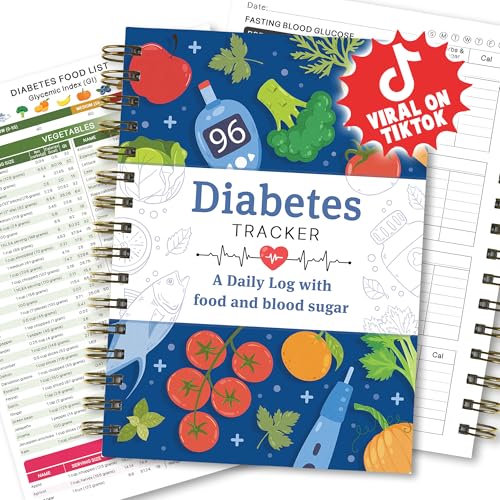
The best diabetes app tracker is the one that matches your data sources (finger sticks vs CGM vs manual logs) and helps you spot patterns without making tracking a chore. In this guide, we’ll walk through what to look for—then help you filter options so you can start logging with fewer mistakes and better clarity.
If you’re choosing for yourself or a family member, the “best” app depends on what you track (glucose, carbs, meds, insulin, activity), how you want reports, and whether you need export/sharing for your clinician.
What “best” means for diabetes tracking apps
The “best” diabetes app tracker is the one that actually fits your real-life input habits and output needs—not the one with the most screens. Here’s the key: if the app doesn’t match how you log (manual entries, meter downloads, or CGM imports), it won’t just be inconvenient—it will quietly degrade your data quality, which undermines pattern detection.
In my experience, the biggest difference between “works on day one” and “stays useful” is friction: how many taps it takes to record glucose, whether meals are easy to log consistently, and whether the reports are readable when you’re tired.
Repeat this question for any diabetes app tracker you consider: “Can I log what I need every day with minimal effort, and can I review it weekly without extra work?”
– Choose an app that fits your inputs: manual entry, meter/CGM import, and meal/insulin logging.
– Prioritize usefulness over extras—pattern insights and clear summaries usually matter more than flashy dashboards.
– Make sure it supports the workflows you’ll actually use daily (quick entry, reminders, easy review).
Must-have features to look for
The best diabetes app tracker gives you fast, reliable logging and reports that drive decisions, not just charts. As of 2026, many apps can display graphs—but fewer are built to keep context attached to glucose (meals, insulin timing, exercise, stress/illness), which is what makes patterns actionable.
Start by matching features to your regimen and data sources. For example, manual trackers shine when you’re doing finger sticks, while CGM-first trackers reduce missed values when you want near-real-time trend awareness.
– Glucose logging that’s fast: custom time ranges, easy notes, and the ability to record context (meals, exercise, symptoms).
– Medication and insulin tracking options: confirm what the app supports for your regimen (e.g., basal/bolus, pumps, or general notes). For most people, that means verifying support for:
– Insulin delivery style: pen, vial/syringe, insulin pump (if applicable)
– Therapy structure: basal-bolus (including pre-meal boluses), correction boluses, temp basal (pump users)
– Common pump families: e.g., tubeless pump systems and integrated systems (Tandem, Medtronic, Insulet—verify exact model compatibility per app documentation)
– CGM compatibility (if relevant): Dexcom or Abbott FreeStyle Libre or Medtronic Guardian—verify model-by-model support
– Reporting you can act on: trends by time of day, before/after meals views, and export options for sharing with a healthcare professional.
To make reporting concrete, the time-in-range metrics many clinicians discuss are often built directly into diabetes app trackers. These targets are widely referenced in CGM interpretation:
CGM/Glucose Report Metrics Commonly Used in Clinical Targets (Non‑pregnant Adults)
| # | Metric | Definition | Common Target | Directional Goal |
|---|---|---|---|---|
| 1 | Time in Range (TIR) | 70–180 mg/dL | ≥ 70% | +70% |
| 2 | Time Above Range (TAR) | > 180 mg/dL | ≤ 25% | -25% |
| 3 | Time Below Range (TBR) | < 70 mg/dL | ≤ 4% | -4% |
| 4 | Severe Hypoglycemia Exposure | < 54 mg/dL | ≤ 1% | -1% |
| 5 | A1C Target (common reference) | < 7.0% | < 7.0% | -7% |
| 6 | A1C Interpretation Horizon | ~8–12 weeks | 8–12 weeks | +8–12w |
| 7 | eAG for 7.0% A1C | ~154 mg/dL | ~154 mg/dL | +154 |
Those metrics matter because diabetes app trackers should help you connect day-to-day logging with longer-term measures like A1C. For example, according to the NGSP, A1C reflects average glucose over roughly 8–12 weeks. And according to the International Consensus on Time in Range (Battelino et al., Diabetes Care, 2019), common non‑pregnant targets emphasize TIR (70–180 mg/dL) and limited time below range.
How to set up your tracker (so it doesn’t fall apart)
The best diabetes app tracker is the one you set up in a way that supports habit formation, not perfection. When logging feels optional, data gaps appear—and once gaps appear, your pattern insights become less trustworthy.
– Start simple: log glucose + meal timing first, then add carbs/insulin/meds once the habit is consistent.
– Align entry with real life: decide when you’ll log (right after meals vs before), and set reminders that match your schedule.
– Use labels consistently: keep wording for “what happened” (exercise, stress, illness) consistent so patterns are actually readable later.
A practical approach for any diabetes app tracker—whether manual-first or CGM-enabled—is to use a “minimum viable day.” Keep three fields stable for the first 7–14 days: glucose reading (or automatically imported reading), whether a meal occurred (and approximate timing), and a short context note. Then gradually expand.
From a clinical reasoning perspective, this mirrors the logic behind problem-oriented monitoring: collect a stable baseline, then add variables once you can interpret cause-and-effect. As of 2026, more apps support automated context prompts (e.g., meal association windows), but you still need consistency in how you label events.
What can go wrong (common mistakes)
The fastest way to lose trust in a diabetes app tracker is to generate “pretty” charts from incomplete or inconsistent entries. Many people don’t realize that missing context can make highs and lows look mysterious when the underlying cause is simply unlogged insulin timing, underestimated carbs, or unrecorded activity.
– You enter data inconsistently (different times, missing meals), and the “trends” become misleading.
– You rely on alerts without context—highs/lows can be caused by factors you didn’t log (activity, missed insulin, inaccurate carb estimates).
– Data privacy/sharing assumptions: some apps may store data on-device or sync to accounts differently—double-check sharing controls before connecting anyone else.
In my view, the privacy risk is less about “the existence of data” and more about “who can access it.” Before connecting a family member or clinician, confirm:
– Whether data sharing is opt-in per person
– Whether the app offers export-only sharing vs continuous syncing
– How long historical data remains tied to the account after you change sharing settings
Also, remember that A1C and CGM-derived metrics answer different questions. According to the NGSP, A1C averages glucose over about 8–12 weeks, while CGM patterns reflect shorter-term physiology. A diabetes app tracker that mixes these views without clear labeling can lead to over-correction—especially during stabilization periods.
Verdict: how to pick the right diabetes app tracker for you
If you want the most reliable “best” result, pick an app that matches your logging style (manual vs imported), supports your medication/insulin workflow, and gives reports you’ll actually review weekly. Downsides to watch: complex setups can reduce adherence, and some apps are strong for personal insights but weaker for clinician-friendly exports—so skip apps that feel too heavy for your day-to-day.
If you’re newly diagnosed or still stabilizing, it may be easier to start with a simpler tracker first (fewer fields to fill), then graduate to more detailed logging once your routines are set. That staged approach works because the best diabetes app tracker is the one that keeps your data consistent long enough to show true patterns.
Comparison (what to choose based on your inputs)
| Feature | Manual-first tracker | CGM-first tracker |
|---|---|---|
| Best match for data input | Finger sticks & reminders | Auto-imported glucose readings |
| Meal timing association | You drive it | Usually time-window guided |
| Context notes (exercise/stress) | Required discipline | Prompts can reduce missed context |
| Time-in-range metrics | Limited unless frequent entries | Core reporting strength |
| Adherence risk | Higher for busy days | Lower for glucose values |
| Medication/insulin fields | Flexible manual entries | Often integrates with pump/bolus logs (varies) |
| Weekly review workflow | Works when you keep it simple | Designed for trend review |
| Export/sharing with clinicians | Depends on CSV/PDF options | Often more structured for summaries |
| Best habit to build | Consistent logging times | Review + context labeling |
| Setup complexity (2026 reality) | Lower upfront | Higher, but reduces daily typing |
| Best For | People using finger sticks or who are stabilizing routines | People using CGM who want time-in-range insights and less manual entry |
VS table: which tracker style matches your goal?
| Criteria | Manual-first diabetes app tracker | CGM-first diabetes app tracker |
|---|---|---|
| Primary advantage | Low setup friction | Rich trend data |
| Risk of missing glucose points | Higher | Lower |
| Best for A1C-aligned tracking | Good with consistent entries | Good with time-in-range summaries |
| Context capture | You must remember | Prompts often help |
| Meal/insulin pattern detection | Depends on data completeness | Often more reliable with CGM granularity |
| Export for clinician review | Varies by app settings | Often structured and faster |
| Best habit loop | Log right after meals | Review weekly + annotate key events |
| Alert fatigue | Less automatic | Potentially more alerts (configurable) |
| Maintenance effort | Manual entries add up | Sensor + account maintenance |
| Best for | Stabilizing routines or limited CGM use | People who want trend analytics with less typing |
| Verdict | Choose it when logging consistency is your main constraint | Choose it when you want reliable patterns and time-in-range summaries |
Quick checklist: scan before you download
| Check | Why it matters |
|---|---|
| Matches your inputs (manual/CGM/import) | Reduces entry burden and missing data |
| Easy daily logging | Improves consistency → better trends |
| Medication/insulin support for your regimen | Prevents gaps or incorrect records |
| Clear weekly summaries | Helps you spot patterns without overthinking |
| Export/share options | Makes it easier to share with clinicians |
| Privacy controls are understandable | Avoids accidental sharing/sync issues |
Frequently Asked Questions
What is the best diabetes app tracker for daily blood sugar tracking and insights?
The best diabetes app tracker is one that makes it easy to log glucose readings, carbs, meals, and medications while providing clear trends like time-in-range and averages. Look for features such as customizable reminders, graphs that highlight patterns by time of day, and export options for sharing with your clinician. Apps that support both manual entry and integration with common glucose monitors tend to reduce logging fatigue and improve data accuracy.
How do I choose a diabetes app tracker that works with my glucose monitor and devices?
Choose a diabetes app tracker based on device compatibility—especially whether it syncs with your specific continuous glucose monitor (CGM) or meter. Check whether the app offers automatic readings, calibration support, and reliable syncing intervals so you don’t have to double-enter data. It’s also important to confirm the app supports the smartphone operating system you use and offers data backups or history retention.
Why should I use a diabetes app tracker instead of keeping notes in a spreadsheet or journal?
A dedicated diabetes app tracker helps you spot patterns faster by automatically visualizing glucose trends, meal timing, and medication effects. Instead of manually calculating averages, time-in-range, or identifying spikes, these apps can generate insulin or carb impact insights with fewer steps. Many also provide reminders and hypo/hyper alerts that a basic journal can’t replicate, helping you respond sooner and stay consistent.
Which features matter most in the best diabetes app tracker for carb counting and meal planning?
In the best diabetes app tracker for meal planning, prioritize a strong carb database, quick meal entry, and the ability to track serving sizes accurately. You’ll also want customizable targets (like pre- and post-meal glucose ranges) and the option to log insulin doses alongside carbs so the app can relate results to dosing. Reminders for logging meals and the ability to create favorites or meal templates can significantly reduce friction during busy days.
What’s the best diabetes app tracker for insulin dosing logs and improving time-in-range (TIR)?
The best diabetes app tracker for TIR focuses on accurate insulin and glucose logging, plus clear reporting on time-in-range for your specific target bands. Look for features that let you record basal and bolus insulin, document corrections, and visualize outcomes after meals or insulin doses. If your goal is improving time-in-range, the app should also provide trend summaries, event flags for highs/lows, and actionable recommendations you can discuss with your healthcare provider.
📅 Last Updated: November 09, 2026 | Topic: best diabetes app tracker | Content verified for accuracy and freshness.
References
- Digital health
- https://www.cdc.gov/diabetes/managing/index.html
- https://www.niddk.nih.gov/health-information/diabetes/overview/managing-your-diabetes
- https://www.fda.gov/medical-devices/digital-health-center-excellence/mobile-medical-applications
- Diabetes | Type 1 Diabetes | Type 2 Diabetes | MedlinePlus
- https://pubmed.ncbi.nlm.nih.gov/?term=diabetes+mobile+app+systematic+review
- Diabetes – NHS
- https://scholar.google.com/scholar?q=diabetes+mobile+app+effectiveness+self-management Google Scholar
- https://scholar.google.com/scholar?q=diabetes+digital+health+interventions+systematic+review Google Scholar
- https://scholar.google.com/scholar?q=diabetes+app+tracking+clinical+outcomes+study Google Scholar





Pingback: Best Diabetes Apps: Find the Right One for You - Best For Diabetics