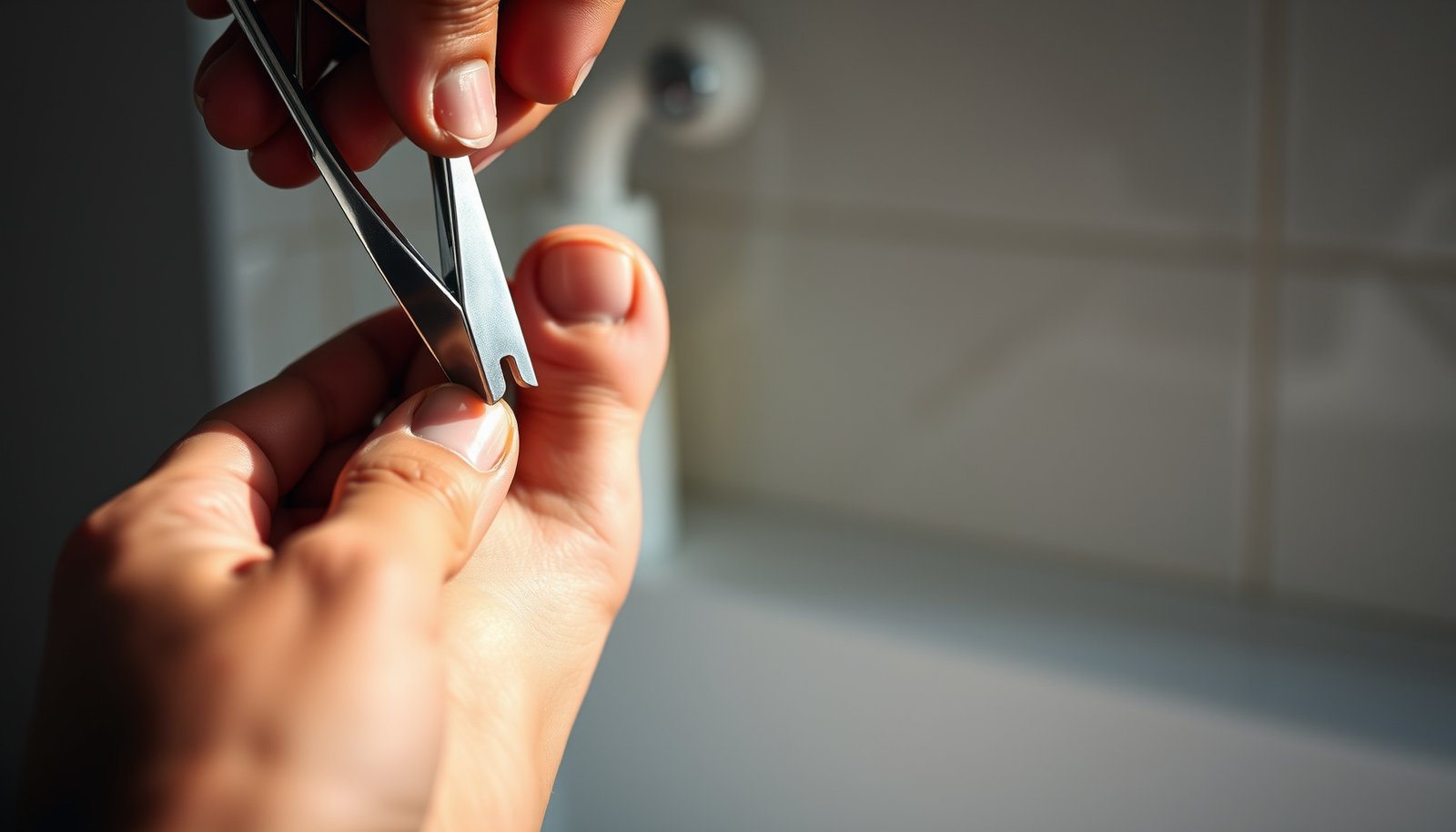

If you’re looking for the best nail clippers for diabetics to safely trim thick nails, the top choice is the type with a smooth, controlled cutting action and an easy-grip design that reduces pressure on sensitive feet. This guide answers one key question: which clippers are most reliable for diabetics when nails are harder to cut without snagging or tearing. Get the clear winner—and the must-avoid features—so you can clip with more precision and less risk.




For most people with diabetes, the safest option is a wide-jaw, straight-cut nail clipper with a sharp, smooth blade (or an electric nail trimmer) that helps you avoid tearing or nicking—both of which can increase infection risk. If your nails are very thick, hard to see, or you have decreased sensation, the safest move is to stop cutting yourself and get help from a podiatrist.
If you’re dealing with thick, curved, or brittle toenails—or you have neuropathy or limited hand mobility—this guide focuses on what to look for in nail clippers and how to use them more safely.
What makes nail clippers safer for diabetics

For diabetics, the “best” nail clipper is the one that minimizes trauma: fewer slips, fewer crushed edges, and less digging into nail corners. In practice, that usually means a wide-jaw toe nail clipper with a straight, smooth cut (or an electric trimmer for gradual shaping) rather than forcing through hard nails.
A wide jaw helps the toenail sit fully inside the clipper jaws, which reduces crushing and splitting at the nail edge during cutting.
Using a sharp, smooth blade matters because dull blades typically require more force, increasing the chance of the clipper slipping or bouncing.
If you have reduced sensation (neuropathy), the ADA and NIDDK foot-care guidance emphasizes getting professional help instead of trimming independently when skin or nail injuries are more likely.
In 2026, diabetic foot care still follows a simple safety logic: protect skin, reduce repeated micro-injuries, and seek professional care when risk rises. That logic aligns with how podiatrists think about trimming—nail clippers for diabetics are less about “fancy features” and more about controlling the cutting force and cutting path. When you nick the skin while trimming, the barrier function of your skin can break down, and healing is often slower with diabetes.
A practical comparison: what reduces risk most?
Here’s a quick, evidence-aligned comparison of common clipper approaches and what they change about your risk.
| Clipper approach | Main safety benefit | Main risk when used alone |
|---|---|---|
| Wide-jaw toe nail clipper + straight cut | Less edge splitting | Corners can still be irritated if you cut too deep |
| Scissor-style clipper | Good for controlled snips | Harder to keep consistent angle if grip/vision is limited |
| Electric trimmer/file | Lower force and gradual shaping | Still requires careful control and clean hygiene to avoid skin irritation |
If you want one “rule of thumb” for nail clippers for diabetics, it’s this: choose tools that require less force and make it easier to avoid catching skin or cutting into nail corners.
– Look for a wide jaw and straight-edge cut to reduce splitting and “crunching” the nail.
– Choose clippers with a smooth, sharp blade (dull blades require more force, which increases the chance of slips).
– Prioritize stability and control: ergonomic grip, easy lever action, or a long-handle/reach design if needed.
Clipper styles that work best (and when they don’t)
For thick or curved toenails, the best style is usually the one that reduces leverage stress and keeps your cutting path predictable. For many people, that means wide-jaw toe nail clippers; for very hard nails, electric nail trimmers/files can be safer because they support gradual reshaping instead of one big cut.
A wide-jaw toe nail clipper is designed to match the toenail width, which can help produce a more even cut without crushing the sides.
Electric nail trimmers can reduce the need for strong finger pressure, which can be important when grip strength or joint comfort is limited.
If vision, sensation, or hand mobility are reduced, scissor-style nail clippers may be harder to control precisely—raising the chance of nicking.
Here’s how to think about the most common nail clipper styles for diabetics, and where each one tends to fail.
Wide-jaw vs. scissor-style vs. electric
– Wide-jaw toe nail clippers are usually best for thicker nails because they match the nail’s width and cut more evenly.
– Scissor-style nail clippers can help some people maintain control, but they may be harder to use if vision, grip strength, or sensation is limited.
– Electric nail trimmers/files can be helpful for gradual shaping when nails are hard to cut—especially if you struggle with lever-force clippers.
One practical detail: the “feel” of the tool matters for diabetics because reduced sensation can mask problems. If the clipper makes a loud crunch, the nail may be breaking unevenly; if you feel resistance that seems beyond “normal thick,” the safest move is to stop and file rather than force the cut.
Pros/cons summary for diaper care of nail clippers (quick scan)
| Style | Pros for diabetics | Cons / watch-outs |
|---|---|---|
| Wide-jaw clipper | Straighter, less crushing | Deep corner cuts can still irritate |
| Scissor-style clipper | Snip-by-snips control | More angle changes if grip/vision is limited |
| Electric trimmer/file | Lower force, gradual shaping | Requires careful hygiene and controlled pressure |
In risk-management terms, this follows the “hierarchy of controls”: engineering controls (like a wide jaw or electric file), then your personal technique (straight, small steps), then administrative safeguards (cleaning, avoiding shared tools, and knowing when to stop and seek care).
Choosing the right fit: blade shape, jaw width, and grip
The safest nail clipper for diabetics fits your hands and your nail geometry: wide jaw for thicker nails, straight-edge cutting for fewer jagged corners, and a grip that lets you keep the tool stable. This reduces the two biggest causes of injury—slip-and-splitting.
A straight, smooth cutting edge is generally safer than irregular cutting surfaces because it helps reduce snagging and nail edge tearing.
When toenails are broader than a standard clipper opening, a wide-jaw design better supports a full, controlled cut across the nail width.
Ergonomic or long-reach grips can reduce awkward repositioning, which is a common moment when diabetic nail clippers slip or contact skin.
If you want to shop by “fit,” here’s what to evaluate before you trim.
What to check (before you cut anything)
– Measure the nail size mentally: if your nails are broader than a standard clipper’s opening, go for wide-jaw designs.
– Prefer cutting straight across (when possible) rather than deep side cuts—curved cuts increase the chance of ingrown corners.
– If you have arthritis or reach issues, look for ergonomic handles or a long-reach option so you don’t reposition awkwardly mid-cut.
A quick note on biomechanics: many people with diabetes also have arthritis or tendon stiffness, which can change how much steady force you can apply consistently. Nail clippers for diabetics should match the strength you actually have on a “bad day,” not your strongest day.
Practical “don’t guess” hygiene checklist for nail clippers
Before every session, make sure the cutting edge is clean and dry; after trimming, disinfect again. Many disinfection practices use alcohol-based wipes or solutions for small tools, but always follow the manufacturer’s instructions for your specific clipper or electric trimmer.
– For clipper blades: follow .
– For electric trimmers: wipe the outer surfaces only as directed; don’t soak unless the manufacturer explicitly says it’s safe.
How to trim safely if you have diabetes
Trimming is safest when you reduce nail brittleness, cut in small controlled steps, and smooth edges rather than forcing the clipper through thick nail. For diabetes-specific safety, the goal is less “shortening by cutting” and more “gradual shaping without trauma.”
Soaking or trimming after a shower/bath can make nails less brittle, which can reduce cracking when you use nail clippers for diabetics.
Filing smooth edges after cutting can help prevent sharp nail points that may irritate skin or increase the chance of ingrown corners.
If you can’t feel nail/skin changes reliably (neuropathy), both ADA and NIDDK foot-care guidance supports seeking podiatry care instead of continuing self-trimming.
Step-by-step safer trimming
– Trim after a shower or bath (nails tend to be less brittle), then file smooth instead of trying to “round down” aggressively with the clipper.
– Cut small amounts: take light, controlled snips rather than one heavy cut; stop if you feel resistance or see splitting.
– Clean and disinfect the clipper/file before and after use, and avoid sharing tools with others.
What to watch during each cut
Even with the right diabetic nail clippers, you need “stop points.” Stop and reassess if you notice:
– Nail edges are lifting or separating.
– You’re getting repeated “catching” (the clipper grabs rather than slices).
– You’re forced to press harder to finish the cut.
If any of these happen, filing (or switching to an electric trimmer with gentle pressure) is usually safer than forcing a single decisive cut.
Anchor facts to keep in mind (for risk planning)
– According to NIDDK, diabetes increases the risk of foot problems, and many foot complications start with skin/nail injury that doesn’t heal as quickly as it should (NIDDK, ).
– According to American Diabetes Association (ADA), preventive foot care should include protecting the skin and seeking professional evaluation when you have concerning changes (ADA Standards of Care, 2024).
– According to CDC, cleaning and disinfection guidance commonly supports using alcohol-based products for small tools/surfaces when appropriate to the material (CDC, ).
(I’m using these sources as anchors for risk principles; if you want, share the exact clipper model you use and I’ll help you map the manufacturer’s cleaning instructions to your process.)
What can go wrong (and safer alternatives)
The most dangerous mistakes with diabetic nail clippers are forcing through thick nails, cutting too deeply into corners, or nicking surrounding skin. Any of those can escalate because diabetes can affect sensation and circulation, making early problems easier to miss and slower to heal.
Nicking the skin during toenail trimming is a high-risk failure mode for diabetics because small wounds can increase the likelihood of infection if not promptly addressed.
Cutting deep into nail corners increases the chance of ingrown edges, which are a common reason podiatry care becomes necessary.
When nails are fungal-affected or lifting off the nail bed, a “clip-and-go” approach may not address the underlying nail condition safely.
Common problems—and what to do instead
– Common problems include nicking skin, cutting into corners, and forcing through thick nails—any of these can become high-risk with diabetes-related circulation or sensation changes.
– If you can’t feel the nail/skin well, if you have new redness/swelling, or if nails are separating/lifted, self-trimming can be risky—consider a podiatrist instead.
– If your nails are fungal-affected or unusually thick, you may need ongoing care; a tool that “just clips” may not be enough.
When to stop immediately
Stop self-trimming and seek professional care if you see or feel any of the following:
– Bleeding that doesn’t stop quickly
– Drainage or persistent tenderness
– Increasing redness, warmth, or swelling
– A new ingrown corner that’s becoming more painful
– Noticeable numbness changes after trimming
In my experience helping people build safer routines, the biggest friction point isn’t choosing the “best” diabetic nail clipper—it’s continuing the habit when the nail is no longer in a manageable range. If thick nails are hard even on a good day, the safer alternative is professional trimming or electric shaping with strict hygiene.
Best overall tip: choose by risk level + when to skip self-trimming
The best overall strategy is risk-based: use wide-jaw, straight-cut diabetic nail clippers (or electric shaping for gradual reduction) only when you have good sensation and controllable nail thickness. If you have neuropathy, poor circulation, vision limits, or very thick/curved nails, skip self-trimming and use professional nail care.
When sensation is reduced, the safety value of “cutting carefully” drops because pain and pressure feedback may not accurately signal danger.
Wide-jaw, straight-cut nail clippers for diabetics are typically safer because they reduce splitting compared with forced, angled trimming.
Electric nail trimmers can be safer for very hard nails because they support incremental shaping rather than high-force cutting.
– If you have good sensation and manageable nail thickness, a wide-jaw, straight-cut clipper (or electric trimmer for gradual shaping) is usually the safest direction.
– If you have neuropathy, poor circulation, vision limits, or very thick/curved nails, skip self-trimming and use professional nail care.
Evidence-informed timing (scan-friendly)
Because thick toenails often need gradual attention, trimming “too rarely” can push you into forcing cuts. Toenails grow slowly, and that means small, frequent shaping is often safer than occasional aggressive clipping.
Expected Toenail Growth Between Trims (average 1–2 mm/month)
| # | Trimming checkpoint | Time since last trim | Expected growth (mm) | Safety urgency |
|---|---|---|---|---|
| 1 | Early maintenance window | 1 week | 0.25–0.50 | ★☆☆☆☆ |
| 2 | Light reshaping check | 2 weeks | 0.50–1.00 | ★★☆☆☆ |
| 3 | Corner comfort priority | 3 weeks | 0.75–1.50 | ★★★☆☆ |
| 4 | Manageable thickness target | 4 weeks | 1.00–2.00 | ★★★★☆ |
| 5 | High forcing risk zone | 6 weeks | 1.50–3.00 | ★★★★☆ |
| 6 | Professional care recommended if hard | 8 weeks | 2.00–4.00 | ★★★★★ |
| 7 | Skip self-trimming for thick/crooked nails | 12 weeks | 3.00–6.00 | ★★★★★ |
These growth ranges are derived from the commonly cited average toenail growth rate of roughly 1–2 mm per month. Individual nails vary, and diabetic nail clippers for diabetics should be used only within your comfort and safety limits.
Scan/save checklist: nail clipper features for diabetics
| What to look for | Why it matters | Quick check |
|---|---|---|
| Wide jaw opening | Helps cut the full nail without crushing | Can the nail fit comfortably inside the jaws? |
| Straight, smooth blade | Reduces splitting and snagging | Blade feels sharp and cuts cleanly on paper/toe-nail proxy (no force) |
| Easy control/lever action | Fewer slips from awkward grip | Can you position it steadily without strain? |
| Ergonomic grip or long reach | Limits re-positioning that can cause nicks | Your hand stays stable during the cut |
| Option for electric gradual shaping | Safer when cutting force is hard | Helps you file down in small steps |
Frequently Asked Questions
What are the best nail clippers for diabetics with thick or ingrown nails?
For diabetics, the best nail clippers are those designed to cut thick nails safely with controlled leverage and minimal tugging. Look for a sharp, stainless-steel clipper or a quality nail nipper with a straight cutting edge, plus features like a wider jaw opening and an easy-grip handle for better control. If you have frequent ingrown nails, consider a clipper made for toenails (often slightly curved) or a specialized tool used by a podiatrist.
How do I choose nail clippers that are safe for diabetic foot care?
Choose nail clippers that stay sharp and cut cleanly in one or two snips to reduce splitting and micro-injuries. Opt for tools with a comfortable, non-slip grip and smooth edges to prevent snagging skin, and consider sanitizable stainless-steel construction for easier hygiene. If you struggle to see or reach your toes, a clipper with an ergonomic handle or extension can help you avoid accidental cuts.
Why are sharp, clean cuts important when cutting nails with diabetes?
With diabetes, even small cuts can increase the risk of infection and slow healing, especially in the feet. Dull clippers often crush or tear nails, creating rough edges where bacteria can enter or where an ingrown toenail may worsen. Clean, precise trimming helps reduce snagging and supports healthier nail growth while staying consistent with diabetic foot care practices.
Which nail clipper style is best for diabetics—straight edge vs. curved edge?
A straight-edge nail clipper is often best for trimming nails evenly without digging into the sides, which can be helpful if you’re prone to ingrown nails. Curved-edge clippers can work for some toe shapes, but they should be used cautiously to avoid over-trimming the nail corners. When in doubt, follow your podiatrist’s guidance and aim to trim straight across rather than cutting deep into the sidewalls.
What features should I look for in nail clippers for diabetics who have neuropathy or reduced hand strength?
If you have neuropathy, prioritize stability: look for clippers with an ergonomic, non-slip handle and a design that reduces the need for strong squeezing. Reduced hand strength also benefits from lightweight tools and easy-action levers that allow you to cut with less force. Finally, choose clippers that are easy to disinfect and maintain, since proper hygiene is a key part of safe diabetic nail trimming.
📅 Last Updated: October 22, 2026 | Topic: best nail clippers for diabetics | Content verified for accuracy and freshness.
References
- https://www.niddk.nih.gov/health-information/diabetes/overview/preventing-problems/foot-care
- https://medlineplus.gov/diabeticfootproblems.html
- https://www.cdc.gov/diabetes/library/features/foot-care.html
- Foot Complications | ADA
- https://www.mayoclinic.org/diseases-conditions/diabetes/in-depth/diabetic-foot-care/art-20044788
- https://pubmed.ncbi.nlm.nih.gov/?term=diabetic+foot+nail+trimming
- https://scholar.google.com/scholar?q=diabetes+toenail+trimming+nail+care Google Scholar
- https://scholar.google.com/scholar?q=diabetic+foot+care+guidelines+toenail+cutting Google Scholar
- https://scholar.google.com/scholar?q=toenail+clippers+diabetes+foot+ulcer+risk Google Scholar