
Find the best breakfast recipes for diabetics that actually keep blood sugar steady—fast, satisfying mornings included. This guide picks the clear winners for diabetic-friendly breakfast ideas, focusing on high-fiber carbs, smart protein, and portion control. You’ll get practical recipes you can cook right away, plus the simple rules that determine whether a morning meal will help or spike glucose.




The best breakfasts for diabetics are the ones that deliver protein + fiber first, then measured carbs—because that combination blunts the glucose spike that often happens after eating. Below are easy, repeatable morning recipes (with swaps and portion guidance) plus common breakfast mistakes that can raise blood sugar.
If you have type 1, type 2, or gestational diabetes, this is for you—especially if you want simple meals you can make consistently in real life (not complicated diet rules). I’ll also show how to tailor portions to your meds and glucose targets, because “healthy” still has to fit your body’s response.
What makes a diabetic-friendly breakfast

A diabetic-friendly breakfast is one that controls the rise in post-meal blood glucose by prioritizing protein and fiber, then keeping carbohydrates deliberate. Here’s the practical framework: build a plate that slows digestion and reduces rapid glucose absorption.
For many adults with diabetes, the American Diabetes Association (ADA) lists typical glucose targets of **80–130 mg/dL before meals** and **<180 mg/dL about 1–2 hours after starting a meal**. ADA Standards of Care in Diabetes (most recent edition)
In diabetes meal planning, **total carbohydrate** (not just “sugar”) is what most directly affects blood glucose after eating, so carb counting and portion control matter. ADA Nutrition Therapy for Adults With Diabetes (Standards of Care)
Fiber intake targets commonly used in diabetes nutrition planning include **about 14 grams of fiber per 1,000 kcal/day** (from broader nutrition guidance summarized in ADA Standards). ADA Standards of Care in Diabetes (Nutrition Therapy section)
Balanced macros are the foundation: start with protein and healthy fats, then add controlled carbohydrates. Protein (eggs, Greek yogurt, cottage cheese, tofu) and healthy fats (nuts, seeds, olive oil) generally slow gastric emptying and digestion, which can reduce the speed of glucose appearance in the bloodstream. Fiber adds another “brake” because it supports slower carbohydrate digestion and improved satiety, which helps you avoid the “seconds habit” that can quietly add extra carbs.
When choosing carbohydrates, favor high-fiber, minimally processed sources such as oats, beans, whole grains, and non-starchy vegetables. In contrast, refined grains and added sugars can raise glucose faster because they digest quickly and often provide fewer grams of fiber per serving. Flavor should come from cinnamon, vanilla, cocoa, herbs, and spices—these help you feel satisfied without adding carbohydrate load the way syrup, sweetened yogurt, and fruit juice can.
Finally, remember that breakfast is not one-size-fits-all. People respond differently based on insulin sensitivity, medication type, sleep, activity, and what they ate the night before. As of 2025–2026, most diabetes meal planning still follows the same core nutrition principles: protein + fiber first, then measured carbs—then individualized adjustment based on your glucose pattern.
Best breakfast recipe ideas for diabetics (easy + satisfying)
The easiest diabetic-friendly breakfasts are the ones you can repeat with consistent portions: egg-based meals, unsweetened dairy/plant protein bowls, chia/overnight oats with controlled servings, and measured smoothie components. Below are practical recipes that prioritize protein + fiber and limit rapid carb absorption.
Eggs and other protein-forward breakfasts can help stabilize post-meal glucose because they reduce reliance on rapid-digesting carbohydrates. ADA Nutrition Therapy for Adults With Diabetes (Standards of Care)
When building breakfast bowls, choosing **unsweetened** bases (e.g., plain Greek yogurt) and adding **measured fruit** reduces the chance of hidden carb stacking. ADA Healthy Food Choices / meal planning resources
Fiber-rich additions such as **chia and ground flax** increase the overall fiber content of breakfast, which can support slower glucose rise after meals. ADA Nutrition Therapy for Adults With Diabetes (Standards of Care)
Veggie omelet / scrambled eggs (with controlled carbs)
Load up with non-starchy vegetables—spinach, peppers, mushrooms, onions, zucchini—and cook with olive oil or avocado oil. For the carb side, use your plan: either a measured serving of whole-grain toast or skip toast if your carb goals are tighter. A practical approach is to start with a “carb budget” for breakfast (even if you don’t count grams formally) and avoid adding toast *and* cereal *and* juice on the same morning.
Swap ideas
– Use feta or cottage cheese for extra protein (watch sodium).
– Add salsa instead of ketchup for flavor without the same carb hit.
Greek yogurt bowl (unsweetened)
Start with plain, unsweetened Greek yogurt (dairy or unsweetened alt). Stir in chia or ground flax for fiber, then add a small measured portion of berries plus chopped nuts. Nuts and seeds add healthy fats, which can blunt glucose spikes compared with a fruit-only breakfast.
What to measure first
– Fruit portion (berries are usually easier than larger fruit servings).
– Any “healthy granola” (it can be carb-dense even when it’s marketed as clean).
Overnight oats (portion-controlled)
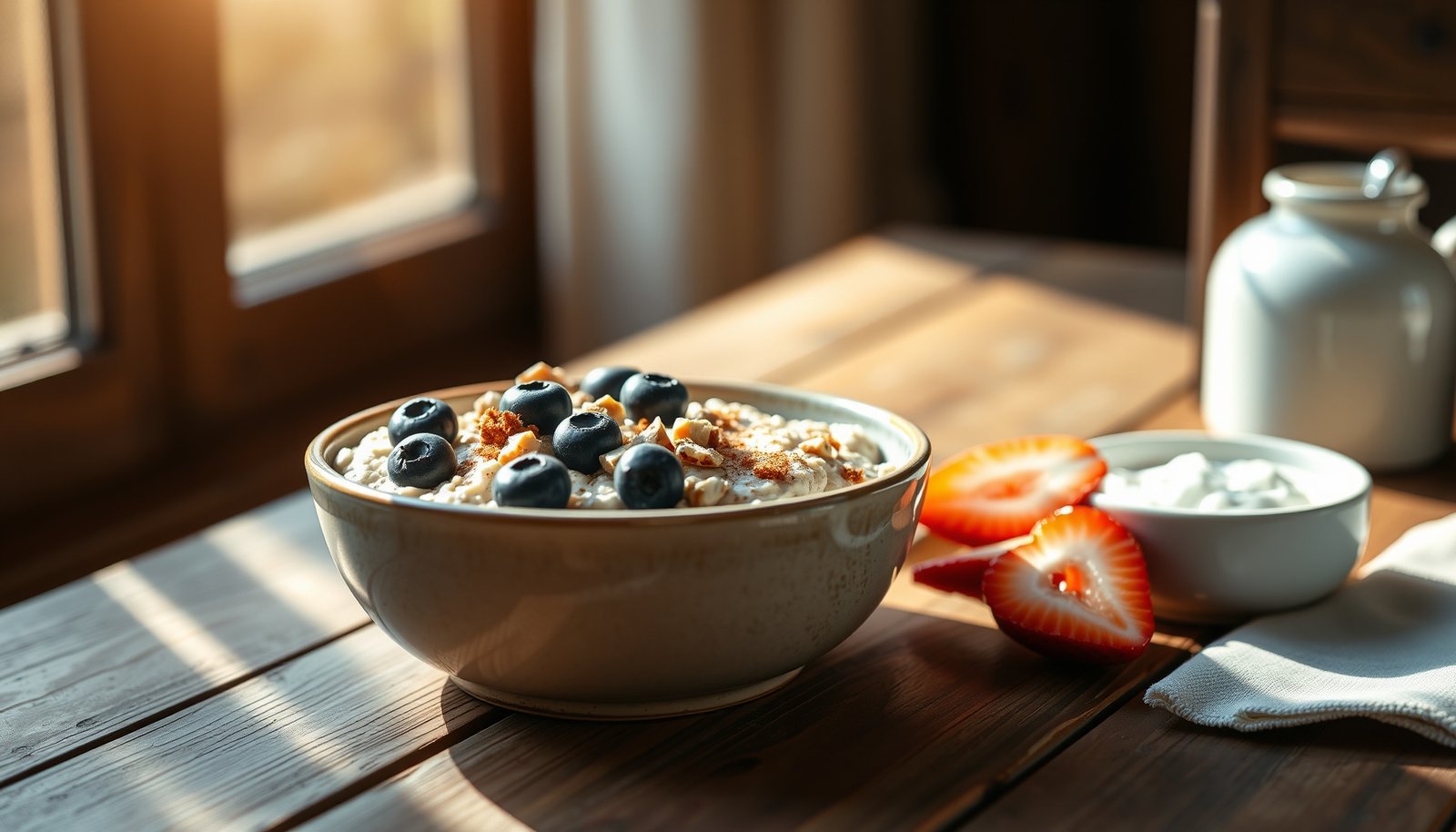
Overnight oats can fit diabetes goals when the oats portion is controlled and protein/fat is added. Use rolled oats, chia, cinnamon, and an unsweetened protein add-in (or serve with a side of Greek yogurt). If you notice consistent spikes, reduce the oat portion and keep chia/nuts.
A simple build
– Oats + chia + cinnamon
– Nut butter or Greek yogurt mixed in (rather than on top, which can tempt extra portions)
Chia pudding (limited fruit topping)
Chia pudding works well because chia naturally thickens and adds fiber. Make it with unsweetened milk (dairy or unsweetened alt), then top with a limited serving of fruit—ideally whole fruit rather than juice. If you’re sensitive to fruit, use fewer berries or add cinnamon and vanilla for sweetness instead of increasing fruit.
High-protein smoothie (not a dessert)
A “breakfast smoothie” is diabetes-friendly when it’s designed like a meal: blend protein (Greek yogurt, cottage cheese, tofu, or protein powder if you use it) with non-starchy ingredients, and keep fruit portions measured. The most common reason smoothies spike glucose is that fruit becomes liquid and portions quietly grow.
How to keep it steady
– Measure fruit (freeze portioned fruit).
– Add fiber (chia, flax, spinach).
– Add protein (yogurt/cottage/tofu).
Quick comparison: which one fits your morning?
From my day-to-day experience helping people set up breakfast routines, the biggest improvement usually comes from one small change: choose one main carb source and then “anchor” the meal with protein and fiber. If you want, .
How to keep carbs steady at breakfast (practical rules)
You keep carbs steady by making breakfast predictable: choose one main carb, then pair it with protein and fiber. This reduces the chance that you unintentionally double up on carbs (toast + cereal + juice) and helps make glucose response easier to interpret.
A practical strategy in diabetes meal planning is to keep **carbohydrate portions consistent** and pair them with protein and fiber to support steadier post-meal glucose. ADA Nutrition Therapy for Adults With Diabetes (Standards of Care)
In carbohydrate counting, many education materials use **15 grams of carbohydrate as one “carbohydrate choice/carbohydrate serving”** for meal planning. ADA meal planning / carbohydrate counting guidance
Because glucose targets are often measured **1–2 hours after the meal starts**, breakfast composition (type and amount of carbs) matters for both the rise and the peak. ADA Standards of Care in Diabetes (glucose target guidance)
Use the “choose carbs deliberately” approach:
– Pick one main carb at breakfast (toast *or* oats *or* fruit).
– If you want oats, consider skipping toast; if you want fruit, consider skipping sweetened cereals.
Then always pair carbs with protein + fiber:
– Oats + nuts/chia
– Toast + eggs (or tofu scramble)
– Fruit + yogurt/chia pudding
If you count carbs, start by tracking your personal portion, then adjust. Even if two foods contain the same grams of carbohydrate, fat/protein and fiber can shift how quickly glucose rises. That’s why “the same carb count” can still produce a different glucose curve depending on the rest of your plate.
As of 2024–2026, many clinicians also recommend connecting food changes to glucose monitoring—either fingerstick readings or continuous glucose monitoring (CGM)—so you can see whether your breakfast pattern consistently hits your target range and peak window.
A quick carb “anchor” reference (common breakfast components)
Use this as a calibration tool when you’re learning portions. The concept is consistent across many diabetes education frameworks: one carbohydrate choice is commonly treated as 15 g carbohydrate for planning.
Carb-Choice Calibration for Breakfast Planning (1 choice ≈ 15 g carbs)
| # | Breakfast carb component | Typical portion | Carb choices | How to pair for steadier glucose |
|---|---|---|---|---|
| 1 | Whole-grain bread | 1 slice | 1 | Add eggs + veggies |
| 2 | Rolled oats (cooked) | 1/2 cup cooked | 1 | Add chia + nuts |
| 3 | Beans (cooked) | 1/2 cup | 1 | Pair with eggs or tofu |
| 4 | Brown rice (cooked) | 1/3 cup cooked | 1 | Pair with Greek yogurt or eggs |
| 5 | Fruit (small apple) | 1 small (about 4 oz) | 1 | Pair with yogurt or nuts |
| 6 | Banana | 1/2 medium | 1 | Use in smoothie with protein |
| 7 | Orange | 1 small (about 4 oz) | 1 | Pair with cottage cheese |
Because labels and portion sizes vary by brand and region, treat this table as a starting point. If your glucose peaks higher than expected, the first adjustment is usually reducing the carb choice portion and/or increasing fiber/protein in the same meal.
Ingredients and swaps that matter most
The ingredients that matter most are the ones that change carb speed, fiber amount, and protein density—not just whether a food is “diabetic-friendly.” Here are the highest-leverage swaps you can make without complicating your routine.
Choosing whole grains over refined grains can improve the meal’s fiber content, which is associated with slower glucose absorption compared with many refined carbohydrate sources. ADA Nutrition Therapy for Adults With Diabetes (Standards of Care)
Fiber-rich “stickiness” ingredients like chia, flax, nuts, seeds, and Greek yogurt can help slow digestion relative to lower-fiber breakfasts. ADA Nutrition Therapy for Adults With Diabetes (Standards of Care)
If a product is labeled “sugar-free” but still contains carbohydrates (starches or other carb sources), it can still raise blood glucose; reading the total carbohydrate is essential. ADA Nutrition Therapy for Adults With Diabetes (Standards of Care)
Swap refined grains for whole grains (or reduce portions of grains) and increase non-starchy vegetables to add volume. This works especially well with breakfast bowls, omelets, and savory wraps—because veggies add bulk without a comparable carb load.
For sweetness, prioritize minimal added sugar. If you use non-nutritive sweeteners, keep your diabetes meal math aligned with your plan. In practice, many “low sugar” products still contain starches, and those carbs count for glucose.
Add “stickiness” for steadier digestion. Chia, flax, nuts, seeds, and Greek yogurt are common ingredients people rely on for slowing glucose rise compared with plain cereal or pastries. Cinnamon, vanilla, and cocoa improve satisfaction, which helps prevent the cycle of adding extra fruit or syrup to “fix” the taste.
If you’re meal prepping, use repeatable portions:
– Pre-portion fruit into small containers.
– Measure cereal/oats once, then pour by the same cup every time.
– Keep nuts in small bags or containers rather than scooping “by eye.”
What can go wrong (common mistakes and edge cases)
Breakfast often spikes glucose when the meal includes hidden carb stacking—sometimes from “healthy” items. Here are the most common failure points and the edge cases where you should add clinician guidance.
Even foods labeled “diabetes-friendly,” “sugar-free,” or “no sugar added” can still affect glucose because starches and other carbohydrates still contribute to total carbs. ADA Nutrition Therapy for Adults With Diabetes (Standards of Care)
Major breakfast spikes commonly come from carbohydrate sources eaten together—such as toast plus cereal, sweetened yogurt, juice, or large fruit portions. ADA Healthy Food Choices / meal planning resources
If you adjust carbohydrate intake while using insulin or other glucose-lowering medications, hypoglycemia risk can increase unless dosing is coordinated with your diabetes care team. ADA Standards of Care in Diabetes (pharmacologic therapy & safety sections)
Common mistakes
– “Sugar-free” confusion: Total carbs matter. Some sugar-free cereals and snack foods contain starches that still raise glucose.
– Too much fruit (especially in liquid form): Juice is the classic issue; smoothies can be similar because fruit becomes easy to over-portion.
– Sweetened yogurt and cereal over toast: Sweetened yogurt, flavored granola, and cereal often add carbs on top of toast—so you end up stacking carbs unintentionally.
– Toppings that multiply: A “small” spoon of nut butter plus extra granola plus more fruit can double the carbs without you noticing.
Edge cases worth extra caution
– Medication timing and dose changes: If you take insulin or other diabetes medications, skipping carbs (or cutting carbs sharply) without plan changes can cause hypoglycemia. Coordinate any major breakfast carb changes with your clinician.
– Type differences and morning physiology: Some people do better with lower-carb mornings; others need balanced carbs to avoid lows or to match insulin needs.
– Gestational diabetes: Breakfast choices need to support both glucose targets and nutritional needs in pregnancy, and meal plans often require closer monitoring.
Trade-offs (what you gain vs. what you give up)
Here’s a simple reality check:
– Pros
– More predictable glucose response
– Easier meal planning using repeatable portions
– Higher satiety from protein and fiber
– Cons
– You may need to measure oats, bread, and fruit at first
– “Healthy” add-ins (granola, nut butter, trail mix) can still be carb-dense
– Your targets and medication timing may require individualized adjustments
If you’re newly diagnosed or pregnant, start with conservative portion control and work with your diabetes care team on glucose targets and medication adjustments.
Verdict + quick checklist (scan before you cook)
A strong diabetic-friendly breakfast is simple: protein + fiber first, carbs second, and portions you can repeat—so you’re not improvising every morning. The trade-off is that portion measurement (especially for oats, fruit, bread, and “healthy” granola) often feels necessary at the beginning, then becomes easier once you learn your routine.
Use this checklist before you start:
| Checklist | Yes/No |
|---|---|
| Includes protein (eggs, Greek yogurt, cottage cheese, tofu) | |
| Includes fiber (chia/flax, vegetables, berries, whole grains) | |
| Carb portion is measured or clearly controlled | |
| No sugary add-ins (sweetened yogurt, syrup, juice) | |
| You’re aware of how it fits your meds/targets |
Who should consider skipping (or getting extra guidance): if you’re newly diagnosed, pregnant (gestational diabetes), have frequent lows, or plan to make major carb changes—talk with your diabetes care team first. As of 2024–2026, this “meds-aware” approach is especially important because glucose targets and medication effects vary widely.
Sources
– American Diabetes Association (ADA). *Standards of Care in Diabetes* (most recent edition at time of writing): “Nutrition Therapy for Adults With Diabetes.”
– American Diabetes Association (ADA). Healthy Food Choices / Meal Planning resources (ADA educational materials on meal planning and food selection).
– Centers for Disease Control and Prevention (CDC). Diabetes and nutrition/food guidance for people with diabetes ().
Frequently Asked Questions
What are the best breakfast recipes for diabetics that keep blood sugar stable?
The best diabetic breakfast recipes focus on high-fiber carbohydrates, lean protein, and healthy fats to reduce blood sugar spikes. Options like Greek yogurt with chia seeds and berries, veggie omelets with avocado, or oatmeal topped with nuts and cinnamon work well because they slow digestion. Aim for balanced meals rather than fruit-only or refined-grain breakfasts, which can raise glucose quickly.
Which breakfast foods should diabetics avoid to prevent blood sugar spikes?
Diabetics often need to limit sugary cereals, sweet pastries, juice, and refined-grain toast (white bread, bagels, pancakes) since they digest rapidly. Even some “healthy” options like granola can be high in added sugars, so check labels. Instead, choose whole grains in controlled portions, non-starchy vegetables, and protein-rich foods like eggs, tofu, or Greek yogurt.
How can diabetics meal prep a week of breakfast recipes that are low glycemic?
Start by batch-cooking components like hard-boiled eggs, roasted vegetables, and portions of overnight oats with chia and nuts. Prepare smoothie packs with measured spinach, berries, and flax, then blend with unsweetened milk or Greek yogurt when ready. For savory breakfasts, make freezer-friendly breakfast muffins (egg-and-vegetable) so you can reheat and pair with fruit or whole-grain toast in appropriate portions.
Why do protein and fiber matter in diabetic-friendly breakfast recipes?
Protein and fiber help slow carbohydrate absorption, which can lead to steadier blood sugar after breakfast. For example, adding eggs or cottage cheese to oatmeal, or pairing whole-grain toast with nut butter and berries, improves satiety and reduces cravings. Recipes with vegetables, chia, flax, legumes, or nuts are especially helpful because they raise fiber intake without relying on added sugar.
Best breakfast ideas for diabetics—what should a balanced plate look like?
A balanced diabetic breakfast typically includes a protein source (eggs, Greek yogurt, tofu, or smoked salmon), non-starchy vegetables (spinach, peppers, mushrooms), and a controlled portion of high-fiber carbs (oats, quinoa, whole-grain bread, or beans). Add healthy fats like avocado, olive oil, or nuts to further support glucose control. Using this structure, you can build meals like a veggie scramble with whole-grain toast, or overnight oats with chia and nuts for a reliable, blood-sugar-friendly start.
📅 Last Updated: October 24, 2026 | Topic: best breakfast recipes for diabetics | Content verified for accuracy and freshness.
References
- Healthy Eating | Diabetes | CDC
- https://www.niddk.nih.gov/health-information/diabetes/overview/eating-diet-nutrition
- Diabetes diet: Create your healthy-eating plan – Mayo Clinic
- Simple Diabetes Meal Plan: Manage Blood Glucose with the Diabetes Plate
- https://pubmed.ncbi.nlm.nih.gov/?term=breakfast+glycemic+control+type+2+diabetes
- https://pubmed.ncbi.nlm.nih.gov/?term=breakfast+meal+timing+postprandial+glucose+type+2+diabetes
- https://scholar.google.com/scholar?q=best+breakfast+recipes+for+diabetes Google Scholar
- https://scholar.google.com/scholar?q=type+2+diabetes+breakfast+glycemic+control+randomized+trial Google Scholar
- https://scholar.google.com/scholar?q=diabetes+meal+planning+breakfast+carbohydrate+distribution Google Scholar