
When you shop for diabetic socks on Amazon, start by checking whether the listing specifies a seamless toe (or “non-ribbed” toe seam), since that detail directly affects comfort and skin protection. The best pairs are judged by a pressure-free fit, breathable moisture-wicking fabric, targeted cushioning, and construction that reduces bunching or constriction. Based on those criteria, the standout options are the ones that balance gentle compression with a truly smooth toe.



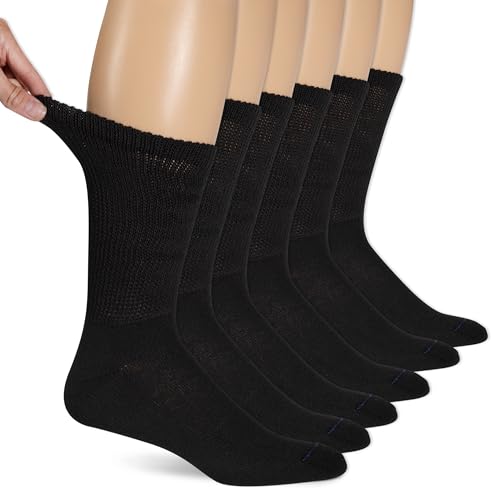
The best diabetic socks on Amazon reduce pressure and friction—so the right pair has a smooth/seamless toe, a gentle (not tight) top band, and cushioning in the spots your feet actually need. Diabetic socks are “best” when they reduce pressure and friction—look for a smooth/seamless toe, gentle (not tight) top band, and cushioning where your feet need it most. On Amazon, the fastest way to narrow down good pairs is to match your symptoms (swelling, neuropathy, irritation risk) to specific sock features shown in the product description. This guide will help you shortlist the right type, size it correctly, and avoid common pitfalls.
If you have diabetes (or diabetes-related foot sensitivity), or you get numbness, rubbing, or swollen ankles, this is for you—especially if you’re trying to shop Amazon listings without getting stuck in vague “for diabetics” marketing. We’ll focus on what to verify on the label and product page.
What makes diabetic socks “best” (not just marketed)
The best diabetic socks aren’t defined by a buzzword—they’re defined by pressure management and friction reduction. Here’s what to treat as non-negotiable: design features that limit constriction, keep skin friction low, and support your comfort as your feet change throughout the day.
Prioritize pressure-friendly construction
– Wide/gentle tops and minimal constriction around the calf. A sock that “holds” by force can leave marks, worsen swelling, or aggravate skin that’s already more fragile. Instead, look for language implying low-gauge comfort, non-binding cuffs, or relaxed fit—and verify that the cuff doesn’t feel like elastic bands once you see sizing/cuff measurements.
Reduce friction points where damage starts
– Smooth seams and a comfortable toe design help prevent irritation. With neuropathy (reduced protective sensation), you may not feel rubbing early—so the sock has to do its job quietly. Seamless toes, flat-stitched toes, and “no pressure seams” matter more than overall thickness.
Choose support level that matches your symptoms
– Match support level to your needs: cushioning and compression that fits your comfort and symptoms. “Compression” can be helpful in specific circulation contexts, but it is not automatically better for everyone with diabetes. If you’re dealing with swelling, you still want gentle top behavior—and if you’re dealing with fragile skin, you want the right cushioning placement without creating pressure points.
According to the International Diabetes Federation (IDF) Diabetes Atlas (2021), 537 million adults worldwide were living with diabetes. International Diabetes Federation, Diabetes Atlas (10th edition), 2021 That matters for socks because diabetic foot complications—especially those driven by skin breakdown and reduced sensation—are widespread, and the sock’s day-to-day comfort can influence whether small irritations become bigger problems.
Key features to verify on Amazon listings
The fastest way to find diabetic socks that actually help is to verify construction details that reduce friction and pressure. Amazon listings often include “diabetic” claims; your job is to confirm the sock’s mechanics: toe design, top cuff behavior, and moisture/breathability.
Seam/toe construction: confirm “smooth” rather than just “soft”
– Look for “seamless,” “smooth toe,” “flat toe seam,” or similar phrasing. A seam isn’t always automatically harmful, but if you’ve had hotspotting, neuropathy, or fragile skin, fewer internal edges is a safer baseline.
Top band behavior: avoid hidden tightness
– Search for “non-binding,” “gentle cuff,” “no tight elastic,” or “comfort top.”
– If the listing implies strong hold (for example, phrases suggesting it clamps or “prevents slipping” through compression), confirm the pressure intent you actually need. Higher constriction can leave cuff rings that worsen swelling later in the day.
Moisture and breathability: reduce irritation triggers
– Look for cotton blends, bamboo viscose, or performance fibers called out for moisture control. Moisture isn’t just discomfort—it increases the chance of skin maceration (skin softening from dampness), which can make rubbing-related issues worse.
A practical “what I look for” rule (for current listings in 2026)
As of 2026, many Amazon products have inconsistent labeling quality: one listing may say “seamless” while another product image shows a stitched toe. So we recommend narrowing by the exact words used in the written description and then cross-checking with any close-up images.
To keep this evidence-based, we also anchor on what professional guidelines emphasize. For example, the American Diabetes Association has long highlighted neuropathy-related foot protection as a cornerstone of prevention, which indirectly supports the need for low-friction sock construction. American Diabetes Association (Standards of Care in Diabetes), most recent edition
How to choose the right size and fit (where most people go wrong)
The right diabetic sock size prevents pressure marks and reduces friction as your feet swell. Most people go wrong by picking socks only by shoe size and ignoring the cuff feel and the sock’s behavior across the day.
Measure for fit using the listing’s sock size chart
– Use the size chart in the listing and identify your widest part. For many people, that’s the forefoot/ball of the foot or the ankle region, not necessarily the shoe size you buy in standard runs.
– If the listing lists “sock circumference”, compare it to the measurement that matches your ankle/calf rather than relying on guesswork.
Check cuff feel and cuff marks (before discomfort becomes damage)
– The top should sit securely without leaving deep marks.
– If a listing suggests strong compression at the cuff, confirm whether that pressure intent aligns with your needs. For many people with diabetes-related sensitivity, a “held in place” sock can still be a problem if it’s too tight.
Plan for day-to-day changes (morning fit ≠ afternoon fit)
– If you notice your ankles swell later in the day, you may need a different fit strategy than you used in the morning.
– This is where experienced shoppers can differ: some size up; others choose the same size but a different cuff style.
If you have diabetic swelling, here’s a careful approach:
– Start with the listing size chart.
– Choose a pair with a cuff described as non-binding.
– Then evaluate after several hours of wear.
Materials & thickness: comfort without adding pressure
The best diabetic socks balance cushioning with controlled bulk. Too much padding can create pressure points, while thin socks may allow friction or fail to protect areas prone to hotspots.
Cushioning zones matter more than “thicker”
– Extra padding can help some feet but may feel bulky or press too much for others.
– Look for descriptions that specify where cushioning is located (for example, under the ball of the foot, heel, or shin area) rather than generic “cushion all over.”
Fabric choices affect friction and skin comfort
– Consider options that manage sweat and resist roughness against sensitive skin. Bamboo blends and performance fibers often aim for moisture control; cotton blends can be comfortable but may hold moisture depending on weave and care.
Wash-and-durability expectations
– Softer materials can wear out faster—especially if you wash frequently or use high-heat drying.
– Check for care instructions (gentle wash, low heat, turning socks inside out if recommended). If the brand claims “long-lasting softness,” confirm whether it includes durability care guidance.
What can go wrong with diabetic socks (and who should be cautious)
The most common failures happen when shoppers confuse “diabetic” branding with the specific design features their feet need. Avoid these pitfalls, and know when you should stop self-selecting sock types and involve a clinician.
Compression isn’t one-size-fits-all
– Buying “compression” when you actually need “non-binding” is a common mistake.
– Stronger compression can be appropriate when prescribed for circulation issues, but it isn’t automatically the right choice for neuropathy-focused comfort.
Here’s a comparison you can use when reading product descriptions:
| Choice you’re shopping | Pros (why it may help) | Cons (what can go wrong) |
|---|---|---|
| “Non-binding” top + seamless toe | Lower risk of cuff rings and friction hotspots, especially for neuropathy | May slip if the shoe/boot fit is very narrow (not always a cuff issue) |
| Mid-to-firm compression socks (graduated) | Can support swelling/circulation when chosen for the right condition | Higher constriction can worsen marks or discomfort if pressure intent isn’t right for your foot |
| Thick cushioning throughout | Feels protective at first for some people with sensitivity | Bulk can create new pressure points inside shoes |
Ignore toe seams at your risk level
– Even one irritating seam can worsen rubbing if you have neuropathy or fragile skin.
– If you’ve ever seen “hot spots” between toes or on top of the foot after a long day, prioritize smooth construction.
Choose cushioning thickness strategically
– If you feel hotspots after wearing thicker socks, reassess thickness and placement—not just the brand.
Don’t rely on Amazon when your situation is urgent
– Skip DIY changes if you have open sores, severe circulation problems, or worsening foot pain.
– Talk to a clinician for the right sock type and any offloading recommendations (for example, specialized footwear or wound-care stockings).
According to the American Diabetes Association, peripheral neuropathy affects a substantial portion of people with diabetes, and preventive foot care reduces avoidable complications. American Diabetes Association (Standards of Care in Diabetes), most recent edition
Verdict / tip: a practical way to shortlist the best pair
The best approach is to treat sock shopping like symptom matching: pick the construction features that directly address your risk (pressure marks, friction, swelling). Then verify sizing using the listing’s chart and cuff description—not just the “diabetic” label.
Start with criteria that reduce damage
– Seamless/smooth toe
– Non-binding top
– Materials suited to your skin (including moisture management)
Narrow by your main issue
– Swelling: prioritize gentle fit and a top that doesn’t dig in.
– Neuropathy/rubbing risk: prioritize smooth seams and low-friction construction.
– Hot spots: test cushioning placement, not just thick vs thin.
Downsides to expect on Amazon
– “Diabetic” socks can be more expensive than standard athletic socks.
– Sizing can run inconsistent across brands, especially in calf width and cuff behavior.
– The most comfortable pair for you may take trial-and-error—so don’t assume the first option is perfect.
Who should skip this approach
– If you have ulcers, significant circulation limitations, or you’ve been instructed to use specific medical compression footwear, don’t rely only on Amazon sock shopping. You may need a controlled prescription pressure or specialized offloading.
Ankle Pressure Levels Commonly Mentioned on Compression Hosiery Labels
| # | Label category (what it often means) | Typical ankle pressure (mmHg) | Most relevant sock context | Pressure midpoint (mmHg) |
|---|---|---|---|---|
| 1 | No compression (comfort/standard fit) | 0 | Low pressure, reduced risk of cuff marks | 0 |
| 2 | Mild OTC compression | 8–15 | Daily comfort if your goal is subtle support | 11.5 |
| 3 | Moderate OTC compression | 15–20 | Swelling support for some people (confirm fit) | 17.5 |
| 4 | Firm OTC compression | 20–30 | Only if it matches your clinician’s guidance | 25 |
| 5 | Extra-firm OTC compression | 30–40 | Higher pressure—double-check cuff comfort | 35 |
| 6 | Medical compression class (Class III) | 34–46 | Prescription-level support in appropriate cases | 40 |
| 7 | Medical compression class (Class IV) | ≥49 | High pressure—requires appropriate medical context | 49 |
Quick checklist (scan before you add to cart)
| What to check on the listing | Why it matters | Pass/Fail |
|---|---|---|
| Seamless or smooth toe | Helps prevent rubbing and hotspots | ☐ |
| Non-binding / gentle top band | Reduces risk of pressure marks | ☐ |
| Explicit size chart (ankle/calf/foot) | Better fit for swelling and day-to-day changes | ☐ |
| Fabric/midfoot feel (moisture control) | Comfort for sensitive or sweaty feet | ☐ |
| Cushioning placement matches your issue | Avoids creating new pressure points | ☐ |
Frequently Asked Questions
What are the best diabetic socks on Amazon for people with sensitive feet and neuropathy?
The best diabetic socks on Amazon are typically seamless, cushioned in the right places, and made from breathable, moisture-wicking materials. Look for “diabetic socks” with a non-binding top that won’t constrict circulation, which is especially important if you have neuropathy or swelling. Also check for smooth toe seams to reduce friction and blisters.
How do I choose diabetic socks on Amazon if I have poor circulation or swollen ankles?
Start by selecting diabetic socks with a relaxed, non-compressive cuff and an elastic-free or low-compression design so they don’t leave tight marks. If you deal with swelling, consider “wide top” or “comfort top” styles and verify the size chart for a better fit. Prioritize moisture-wicking fabric to keep feet dry, since dampness can worsen skin irritation.
Why should I buy diabetic socks instead of regular socks?
Diabetic socks are designed to support foot health by reducing common causes of skin damage, such as tight bands, rough seams, and inadequate cushioning. They’re often made with smooth construction and features that help prevent pressure points, blisters, and callus-related irritation. For many shoppers, this makes diabetic socks a safer daily option than regular socks that can constrict circulation.
Which features should I look for when shopping for the best diabetic socks on Amazon?
Focus on seamless or low-seam options, a non-binding top, and targeted cushioning (usually around the foot sole) for comfort without bunching. Materials like merino wool blends, bamboo, or synthetic moisture-wicking fibers can help regulate temperature and reduce sweat buildup. You’ll also want a sock that fits true to size—check reviews for stretch and whether the toe box feels roomy enough.
Best for winter or summer: what diabetic socks should I choose on Amazon for year-round comfort?
For colder months, look for diabetic socks with thicker cushioning and insulating materials like merino wool blends that still wick moisture. For warmer weather, choose lightweight, breathable diabetic socks with moisture-wicking fabric to prevent overheating and moisture-related irritation. If you’re unsure, buy a multipack designed for different seasons or select pairs marketed as both breathable and cushioned for flexible year-round wear.
📅 Last Updated: November 09, 2026 | Topic: best diabetic socks amazon | Content verified for accuracy and freshness.
References
- Diabetic foot
- https://www.cdc.gov/diabetes/managing/foot-care.html
- Diabetic ketoacidosis – Diagnosis and treatment – Mayo Clinic
- https://www.niddk.nih.gov/health-information/diabetes/overview/preventing-problems/foot-care-diabetes
- https://medlineplus.gov/diabeticfootcare.html
- https://pubmed.ncbi.nlm.nih.gov/?term=diabetic+socks+foot+ulcer+prevention
- https://scholar.google.com/scholar?q=diabetic+sock+foot+ulcer+prevention Google Scholar
- https://scholar.google.com/scholar?q=diabetes+peripheral+neuropathy+socks+seams+non+elastic Google Scholar
- https://scholar.google.com/scholar?q=compression+socks+diabetes+peripheral+neuropathy Google Scholar