
The best breakfast for pregnant diabetes is one that reliably lowers post-meal blood sugar while still supporting pregnancy nutrition. If you need a clear winner, choose a high-protein, fiber-rich meal with minimal refined carbs—paired with smart portion control—because it steadies glucose better than typical toast-and-fruit breakfasts. Keep reading for stable blood sugar breakfast ideas you can use immediately.




The best breakfast for pregnant diabetes is one that combines protein + fiber-rich carbohydrates (plus a bit of healthy fat) so glucose rises more slowly after you eat. If you have gestational diabetes or preexisting diabetes during pregnancy, this approach helps you build steadier morning energy, reduce cravings, and better support your fasting and after-meal targets—especially when you avoid sugary or “carb-only” breakfasts. In this guide, you’ll learn what to build, what to eat, and common breakfast mistakes to avoid.
If you’re dealing with gestational diabetes or preexisting diabetes during pregnancy, this is for you—especially if your fasting numbers or morning spikes are hard to manage. Use this as meal-planning support alongside the specific targets and guidance your OB-GYN or diabetes care team gave you.
What “best” means for a diabetic pregnancy breakfast

The “best” breakfast is the one that slows glucose absorption without leaving you hungry an hour later. Here’s why it matters: pregnancy physiology can make insulin work less efficiently, so breakfast that’s too sugary or carb-only often leads to a faster spike and a harder crash.
For many pregnancies, diabetes care teams use glucose targets that commonly include fasting values under 95 mg/dL and post-meal values such as 1-hour under 140 mg/dL or 2-hour under 120 mg/dL.
The American Diabetes Association emphasizes that in diabetes meal planning, the quality and timing of carbohydrate sources matter for post-meal glucose, not just “how many carbs” total.
To make this concrete, here are the goals that define a diabetic pregnancy breakfast:
– Lower the speed of glucose absorption: choose high-fiber carbs and pair them with protein and fat.
– Prioritize satiety: a more balanced breakfast can reduce cravings later in the morning and support steadier energy.
– Match your personal goals: your glucose targets (fasting and after-meals) matter more than any one “perfect” menu.
Where the numbers show up in real life: fasting glucose (your “overnight” number) and after-meal glucose (your “breakfast impact” number) can point to different issues. According to the American Diabetes Association (ADA), Standards of Care in Diabetes (latest edition), recommended pregnancy glucose targets are used to guide therapy, and they’re typically revisited if patterns don’t match the plan—especially when morning readings don’t improve as expected.
The building blocks: what to include (and what to limit)
The best diabetic pregnancy breakfasts consistently include protein first, high-fiber carbs, and healthy fats. Think of it as slowing digestion and improving satiety so your breakfast doesn’t turn into a blood-sugar roller coaster.
Protein at the start of a meal can blunt the post-meal glucose rise by slowing overall carbohydrate digestion and absorption.
Dietary fiber (from whole fruit, beans/lentils, and intact whole grains) is a key strategy because it can slow gastric emptying and supports steadier glucose levels.
These building blocks help you design meals that work with, not against, pregnant diabetes physiology:
– Protein at the start: examples include eggs, Greek yogurt (plain), cottage cheese, tofu, or poultry.
– Carb quality > carb quantity: focus on whole grains (where tolerated), beans/lentils, fruit (whole rather than juice), and non-starchy vegetables.
– Fiber + healthy fat: add chia/flax, nuts/nut butter, avocado, or olive oil—these can help slow digestion.
A quick data snapshot to guide “protein + fiber” choices
Below are common breakfast staples and their typical fiber and protein per serving, using a straightforward “fiber score” method (★ based on fiber grams; not a medical rating).
Protein + Fiber “Density” for 7 Diabetic Pregnancy Breakfast Staples (typical servings)
| # | Staple (typical portion) | Protein (g) | Fiber (g) | Meal role | Fiber score |
|---|---|---|---|---|---|
| 1 | 2 large eggs | 12.6 | 0.0 | Core protein | – 1★ |
| 2 | Plain Greek yogurt (170 g) | 17.0 | 1.0 | Protein + gut support | – 2★ |
| 3 | Steel-cut oats, cooked (1/2 cup) | 5.0 | 4.0 | Slow carbs base | + 3★ |
| 4 | Chia seeds (2 tbsp) | 4.7 | 9.8 | Fiber “booster” | + 5★ |
| 5 | Cooked lentils (1/2 cup) | 9.0 | 7.8 | Carb + fiber combo | + 4★ |
| 6 | Cooked chickpeas (1/2 cup) | 7.3 | 6.2 | Fiber-rich carb | + 4★ |
| 7 | Cottage cheese (1 cup) | 28.0 | 0.0 | High protein anchor | – 1★ |
> Note: “Fiber score” here is a simple worksheet tool—not a substitute for your clinician’s carbohydrate targets for pregnant diabetes.
Breakfast ideas that usually work well (mix and match)
The best breakfasts for pregnant diabetes are the ones you can repeat reliably—because consistency is part of glucose stability. Use these ideas as templates, then tune portions based on your fingerstick/CGM pattern.
Oats, beans/lentils, and whole fruit can fit in a diabetic pregnancy meal plan when they’re portioned and paired with protein and fat.
Sweetened yogurt, juice-based smoothies, and pastry-style breakfasts often increase post-meal glucose faster because they deliver carbohydrates quickly with less fiber.
Mix and match from options that tend to work well:
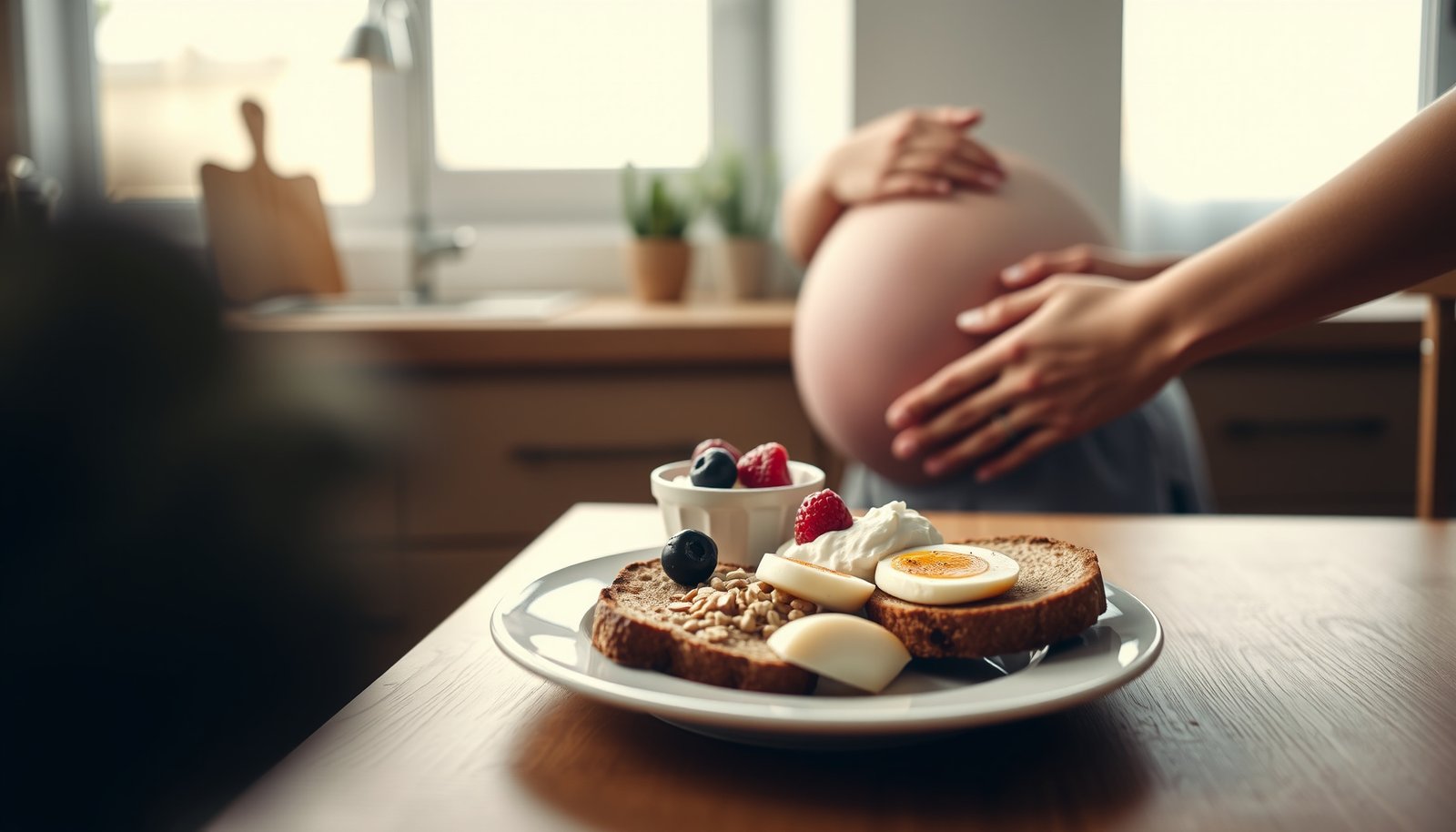
– Egg-based options: veggie omelet (with cheese if it fits your plan) or scrambled eggs with sautéed greens and a small serving of whole-grain toast.
– Greek-yogurt bowl: plain Greek yogurt topped with chia/flax and berries (skip added sugar); add a small handful of nuts for more staying power.
– Tofu scramble or bean + veg plate: tofu scramble with peppers/spinach, or a breakfast bowl with beans, avocado, and salsa (watch added sugar).
– Oatmeal that’s “diabetes-friendly”: plain oats or steel-cut oats topped with cinnamon and nut butter; avoid pre-sweetened packets.
– Whole-food smoothies (only if you can control portions): blend protein (Greek yogurt or protein powder if approved), non-starchy add-ins (chia/flax), and a small portion of fruit—skip juice.
From my experience guiding people through pregnant diabetes meal adjustments, the “best” choice is often the one you can keep consistent for at least several days while you review trends—because morning glucose can be influenced by overnight factors as well as breakfast composition.
Quick comparison: oats bowl vs Greek yogurt bowl
This side-by-side helps you decide which breakfast style better matches your goals (especially if you tend to spike after meals).
| Criteria | Oatmeal + nut butter | Plain Greek yogurt + chia/flax |
|---|---|---|
| Carb speed (typical) | Moderate—depends on oat type/portion | Often slower—fiber + protein pairing |
| Fiber potential | Good (choose less-processed oats) | Very high when adding chia/flax |
| Protein boost | Moderate (improves with added nuts/eggs) | High (Greek yogurt base) |
| Portion simplicity | Needs measuring to avoid “portion drift” | Portion drift is common—still measurable |
| Fruit add-on strategy | Works best with small servings of berries | Pairs well with berries over larger fruit servings |
| Fat pairing effect | Nut butter helps slow digestion | Nuts provide additional slowing power |
| Micronutrients | Manganese, magnesium (varies by brand) | Calcium, iodine (if yogurt is fortified) |
| Texture tolerance | Can feel heavy if portions are large | Often lighter; chia thickens quickly |
| Works well for “busy morning” | Yes—overnight oats can be measured | Yes—pre-portion toppings can help |
| Monitoring friendliness | Easy to adjust oats amount first | Easy to adjust fruit/topping amounts first |
| Verdict | Choose when you tolerate oats well and keep portions consistent. | Choose when you want a high-protein, fiber-forward base with easy portion control. |
How to assemble your breakfast step-by-step
The simplest method is to build from the inside out: protein first, smart carbs next, then fiber + fat. This order helps many pregnant patients reduce fast glucose rises after breakfast while staying full until lunch.
Fingerstick and CGM trends are often used to personalize breakfast carbohydrate portions and pairing strategies in gestational diabetes management.
Consistency in carbohydrate portions can reduce day-to-day variability in post-meal glucose for diabetic pregnancy.
Use this process:
– Step 1: Start with protein (eggs, yogurt, tofu, or lean meat) so the meal doesn’t start with quick carbs.
– Step 2: Add smart carbs from whole-food sources (whole fruit, legumes, whole grains) rather than pastries or juice.
– Step 3: Include fiber and fat (chia/flax, nuts, avocado, olive oil, non-starchy vegetables).
– Step 4: Keep it consistent: if your clinician wants stable carbs across the day, try similar breakfast carb portions most mornings.
– Step 5: Test and adjust (with your care team): use your fingerstick/CGM pattern to refine what triggers morning spikes.
A practical “portion drift” warning (based on common education patterns)
According to the American Diabetes Association (ADA), Standards of Care in Diabetes (latest edition), carbohydrate counting and consistent meal planning are core tools in diabetes education. One common teaching approach is that a standard carbohydrate serving is about 15 grams of carbohydrate (widely used in diabetes education), but your team may use a pregnancy-specific target. If your pregnant diabetes breakfast includes oats, rice, toast, or fruit, even small serving increases can push you over your personalized limit.
Also, if you’re changing insulin timing or medications, “morning spikes” can reflect overnight factors—not only what you ate at breakfast—so review patterns with your OB-GYN or diabetes educator.
What can go wrong (common breakfast mistakes)
The most common problem isn’t “the food”—it’s the breakfast pattern (timing, portion, and pairing). If your readings are still high with pregnant diabetes, these mistakes often explain why.
Flavored yogurt, sweetened oatmeal packets, and juice-based smoothies can spike glucose because they increase rapidly absorbed carbs while adding less fiber.
Skipping breakfast or delaying it too long can worsen fasting glucose in some people due to longer overnight fasting and stress hormone effects.
– “Healthy” but high-sugar swaps: granola bars, flavored yogurts, smoothies with juice, and sweetened oatmeal can still spike glucose.
– Skipping breakfast or delaying it too long: for some people, late meals worsen fasting numbers and make after-meal control harder.
– Carbs without protein: toast alone, cereal alone, or fruit alone often leads to a faster glucose rise than paired options.
– Portion drift: even good foods can cause problems if servings creep upward—especially with oats, bread, rice, and fruit.
– Sleep/med timing effects: if you’re also adjusting insulin or medications, morning readings can reflect overnight factors—not only breakfast choices. Bring trends to your clinician.
Comparison: “Protein-first” vs “Carb-first” breakfast strategy
This table is designed to clarify trade-offs in pregnant diabetes breakfast planning. It’s not a diagnosis—use it to decide what to test first.
| Feature | Protein-first build | Carb-first build |
|---|---|---|
| Typical glucose rise speed | Slower | Faster for many people |
| Fiber pairing likelihood | Higher (toppings often include chia/nuts/veg) | Lower (often starts with bread/cereal) |
| Satiety until lunch | Usually better | Often shorter-lived |
| Ease of portion control | Easier to measure protein + carbs separately | Carb portion can expand unintentionally |
| Common “hidden sugar” risk | Lower if you avoid sweetened add-ins | Higher with cereal, pastry, syrup, sweet spreads |
| Better for morning spikes | Often | Less often |
| Better for after-meal spikes | Often | More likely to overshoot |
| How quickly you can “test and adjust” | Adjust carb size while keeping protein steady | Harder—carbs are the first ingredient |
| Best outcome stability in routine | Higher | Lower |
| Best For | People with pregnant diabetes aiming for steadier readings and fewer cravings. | People who struggle to eat enough protein first; in those cases, swapping the order can improve control. |
Verdict: a practical recommendation (and who should skip experimenting)
If you want one simple default for pregnant diabetes, choose a breakfast that looks like protein + non-starchy vegetables + a small, high-fiber carb. The goal is steadier energy and often better glucose control—while you monitor to learn your personal carb tolerance.
A common pregnancy meal-planning principle for gestational diabetes is pairing carbohydrate sources with protein and fiber to reduce post-meal glucose peaks.
ADA and ACOG guidance typically emphasizes individualized targets and medication decisions rather than one-size-fits-all “perfect menus.”
If you want a straightforward recommendation, start here:
Verdict:
– Choose a breakfast like: eggs + non-starchy vegetables + a small, high-fiber carb
OR plain Greek yogurt + chia/flax + berries + nuts
– Upside: steadier energy and often better glucose control.
– Downside: you may need a few days of monitoring to find your exact carb tolerance and portions.
You should avoid major breakfast experimentation if your care team told you to follow a specific meal plan right now, if you’re having frequent low blood sugar, or if your medication plan is changing—talk with your OB-GYN or diabetes educator first.
> Important safety note for pregnant diabetes: If you’re experiencing recurrent lows (hypoglycemia), don’t “fix” it by changing breakfast alone—work with your clinician on the full plan.
Quick scan checklist (save this)
A diabetic pregnancy breakfast works best when you can check all the boxes quickly before you eat. Use this list to keep pregnant diabetes meal-building consistent—even on mornings when you’re rushed.
Consistency in breakfast composition can support steadier post-meal glucose patterns in diabetic pregnancy.
Pairing protein with high-fiber carbohydrate sources is a recurring education strategy in gestational diabetes meal planning.
| Breakfast choice | Include protein? | Include fiber-rich carbs? | Watch for |
|---|---|---|---|
| Eggs + veggies + small whole-grain toast | Yes | Yes | Pastry, white bread, sugary spreads |
| Plain Greek yogurt + chia/flax + berries | Yes | Yes | Flavored/sweetened yogurt, added sugar |
| Oatmeal + nut butter (unsweetened) | Yes | Yes | Sweetened packets, heavy honey |
| Tofu scramble + peppers/spinach | Yes | Optional (small) | Juice, large fruit servings |
| Smoothie with whole fruit + protein | Yes | Limited | Juice, “gummy” fruit, large portions |
Checklist before you eat:
– Protein is present.
– Carbs are whole-food and not sugary.
– There’s fiber and/or healthy fat in the meal.
– You’re within your clinician’s recommended portion range.
Sources
– American Diabetes Association (ADA). *Standards of Care in Diabetes* (latest edition): Pregnancy/diabetes guidance and nutrition principles.
– American College of Obstetricians and Gynecologists (ACOG). *Gestational Diabetes Mellitus* (committee guidance and patient recommendations).
– Centers for Disease Control and Prevention (CDC). *Gestational Diabetes* resources describing diet/monitoring fundamentals.
– NHS (UK). Advice on diabetes in pregnancy and meal planning principles.
The takeaway for pregnant diabetes is simple: build breakfast as protein + fiber-rich carbs + healthy fat, keep the morning routine consistent, and use your glucose trends to fine-tune portion sizes. If you do want to improve fasting or morning spikes, work with your OB-GYN or diabetes educator—because breakfast is only one piece of the overall plan.
Frequently Asked Questions
What is the best breakfast for pregnant diabetes to help control blood sugar?
The best breakfast for pregnant diabetes usually includes high-fiber carbohydrates paired with protein and healthy fat to reduce blood glucose spikes. Examples include Greek yogurt with chia seeds and berries, or whole-grain oatmeal topped with nuts and an egg on the side. Aim for a balanced meal rather than sugar-heavy choices, and include fiber-rich foods to support steadier blood sugar levels.
How can I build a breakfast for gestational diabetes that actually lowers my post-meal glucose?
Build your breakfast by combining protein (eggs, Greek yogurt, cottage cheese, or tofu), fiber-rich carbs (oats, quinoa, whole-grain toast, or legumes), and a small amount of healthy fat (nuts, nut butter, avocado, or olive oil). For example, try a veggie omelet with whole-grain toast or avocado on the side plus fruit in a controlled portion. This balance helps slow digestion and can improve post-meal blood sugar readings.
Why should I avoid certain breakfast foods when I have diabetes during pregnancy?
Breakfast foods that are high in refined carbohydrates or added sugars (like pastries, sweet cereal, juice, or sweetened yogurt) can cause rapid blood sugar spikes. Frequent spikes can make it harder to meet pregnancy blood glucose targets and may increase risk for complications. Choosing whole-food, fiber-forward options supports better glycemic control for pregnant diabetes.
Which breakfast options are safest if my glucose levels rise after eating?
If your glucose levels rise after meals, focus on breakfasts with minimal added sugar and higher protein plus fiber. Good options include eggs with sautéed vegetables, chia pudding made with unsweetened milk and topped with nuts, or plain Greek yogurt with berries and ground flax/chia. If you eat fruit, choose smaller portions and pair it with protein to blunt the glucose response.
Best breakfast for pregnant diabetes—what should my portions look like?
Portion control is key for managing diabetes in pregnancy, especially at breakfast. Many people do best with about 1 serving of carbohydrate (such as a measured portion of oatmeal, whole-grain toast, or fruit) plus a substantial protein serving (eggs, yogurt, or cottage cheese) and a small amount of healthy fat. Use your glucose meter to learn which carb amounts keep your readings within your target range as recommended by your OB-GYN or diabetes care team.
📅 Last Updated: October 24, 2026 | Topic: best breakfast for pregnant diabetes | Content verified for accuracy and freshness.
References
- Gestational Diabetes | Diabetes | CDC
- https://www.niddk.nih.gov/health-information/diabetes/gestational-diabetes
- https://www.mayoclinic.org/diseases-conditions/gestational-diabetes/diagnosis-treatment/drc-20355214
- Gestational Diabetes | ACOG
- Recommendations | Diabetes in pregnancy: management from preconception to the postnatal period | …
- Gestational diabetes – NHS
- https://pubmed.ncbi.nlm.nih.gov/?term=gestational+diabetes+meal+timing+glycemic+control
- https://pubmed.ncbi.nlm.nih.gov/?term=gestational+diabetes+glycemic+index+intervention
- https://scholar.google.com/scholar?q=gestational+diabetes+breakfast+carbohydrate+glycemic+index Google Scholar
- https://scholar.google.com/scholar?q=pregnant+diabetes+nutrition+therapy+meal+frequency Google Scholar