
Looking for the 21 best snacks for diabetics that actually keep blood sugar steady? This guide names the clear winners—easy, blood-sugar-friendly options you can grab at home or on the go—plus the key things to watch so you don’t spike your glucose. You’ll get practical picks for everyday snacking without guesswork.




If you have diabetes, the best snacks are the ones that pair fiber-rich carbs with protein and/or healthy fats—so glucose rises slower and cravings stay calmer. In this guide, you’ll get 21 diabetes-friendly snack ideas plus a simple way to portion them and avoid common pitfalls.
Who this is for / when it applies:
This is for anyone with diabetes (or prediabetes) who wants practical snack options that are easier on blood sugar than typical “quick” snacks. It’s especially useful if you snack between meals and want a repeatable approach without counting every bite from scratch.
How to choose snacks that don’t spike glucose
The fastest way to reduce snack-related blood sugar spikes is to choose snacks that include fiber + protein (and/or healthy fat), not carbs alone. This “slower digestion” combo helps blunt the glucose surge that often happens when fruit, crackers, or sweet foods are eaten by themselves.
“For many nonpregnant adults with diabetes, the ADA notes an A1C target of typically <7%” (2024). American Diabetes Association (ADA), Standards of Care in Diabetes—2024
“Hypoglycemia treatment commonly uses 15 grams of fast-acting carbohydrate and rechecking after 15 minutes” (2024). American Diabetes Association (ADA), Standards of Care in Diabetes—2024
“Dietary fiber recommendations are ~38 g/day for men and ~25 g/day for women” (2005). National Academies of Sciences, Engineering, and Medicine, Dietary Reference Intakes—Macronutrients—2005
The practical framework: fiber + protein + (fat)
Here’s the logic in plain terms: fiber slows carbohydrate absorption, protein increases satiety, and healthy fats further slow gastric emptying (how quickly food leaves the stomach). Together, they usually reduce the “fast spike, fast crash” pattern that can trigger hunger soon after snacking.
In current diabetes nutrition practice (including guidance emphasized in the ADA Standards of Care), the goal isn’t “no carbs.” It’s choosing carbs that come with fiber and pairing them strategically—especially when you’re snacking between meals. As of 2026, the most consistent theme across diabetes education resources remains the same: snack structure matters more than the snack’s marketing label.
Whole foods beat “sugar-free” marketing
A common trap is assuming sugar-free means carb-free. Many packaged items are “sugar-free” but still contain starches (which convert to glucose) or sugar alcohols that can affect carbs differently for each person.
Prefer:
– Vegetables and beans
– Plain/unsweetened Greek yogurt or cottage cheese
– Eggs, tuna, salmon
– Nuts, olive oil, hummus
A quick comparison: carb-only vs. balanced snacks
To make this decision easier, use this simple comparison:
| Snack style | What it tends to do to glucose | Pros | Cons |
|---|---|---|---|
| Carbs alone (fruit juice, crackers, sweet bars) | Often faster rise | Convenience, taste | Less filling; easier to overeat |
| Balanced snacks (fiber-rich carb + protein and/or fat) | Usually slower rise | More stable energy; better fullness | Requires prep or planning |
| “Sugar-free” packaged treats | Varies widely | Some options can feel sweet | Hidden carbs/refined starch still matter |
What I’ve learned from helping people plan snacks
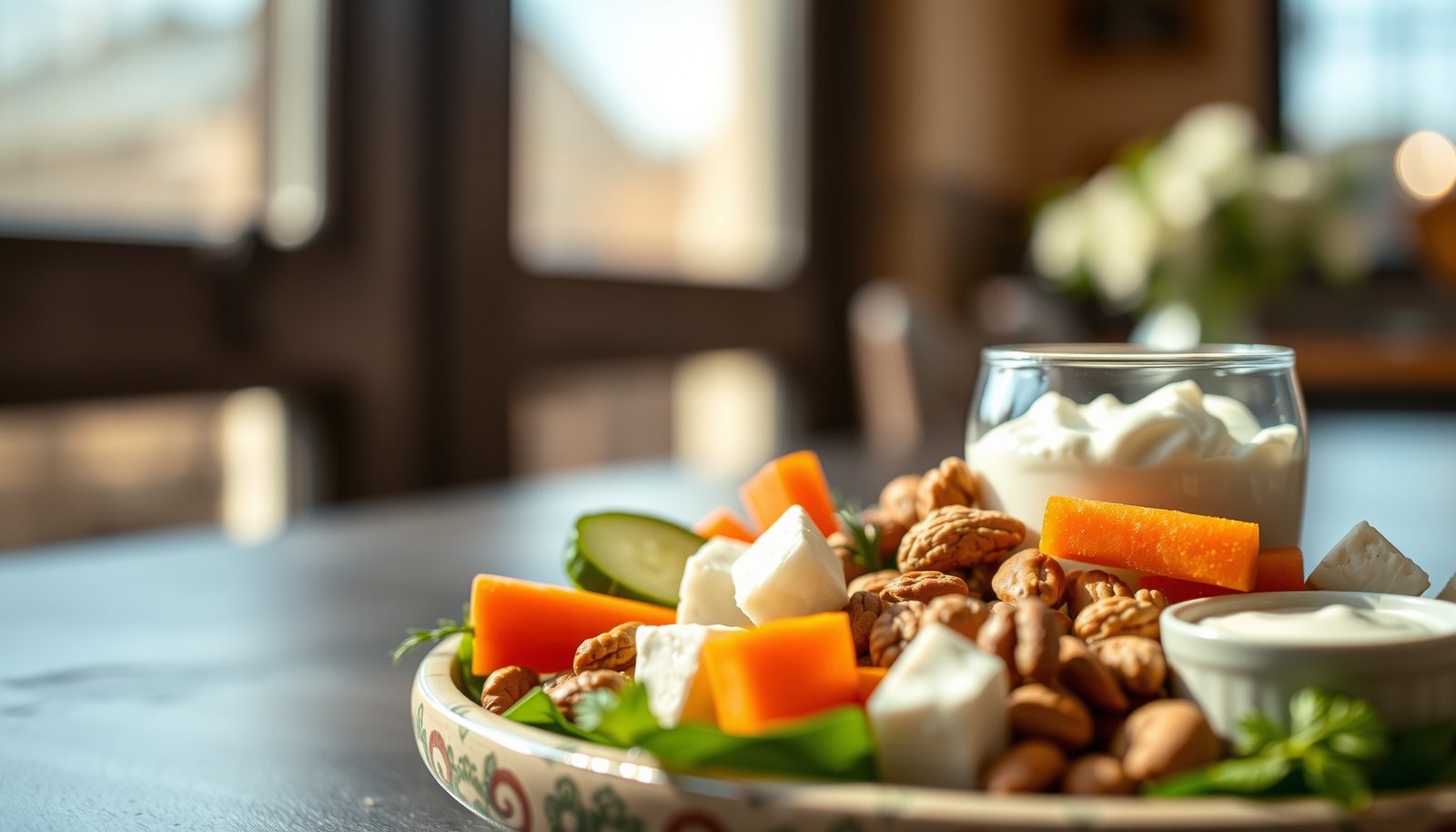
From my experience helping people shape meal and snack patterns, the biggest improvements come when snacks are assembled into “grab-and-go pairs” instead of relying on willpower. When a snack is already paired (for example: hummus + peppers, yogurt + nuts, tuna salad + greens), people are far less likely to drift into plain crackers or a sweet treat later.
7 High-Fill Snack Anchors (USDA Nutrition Averages)
| # | Snack anchor (common serving) | Fiber (g) | Total carbs (g) | Protein (g) | Fiber/Carb ratio |
|---|---|---|---|---|---|
| 1 | Cooked lentils, 1/2 cup | 7.8 | 20.1 | 9.0 | 0.39 |
| 2 | Black beans, 1/2 cup | 7.5 | 20.4 | 7.6 | 0.37 |
| 3 | Chickpeas, 1/2 cup | 6.7 | 27.4 | 7.3 | 0.24 |
| 4 | Almonds, 1 oz (28 g) | 3.5 | 6.1 | 6.0 | 0.57 |
| 5 | Blueberries, 1 cup | 3.6 | 21.5 | 1.1 | 0.17 |
| 6 | Plain nonfat Greek yogurt, 1 cup | 0.0 | 8.5 | 22.3 | 0.00 |
| 7 | Cucumber, 1 cup slices | 0.5 | 3.6 | 0.7 | 0.14 |
Fiber/Carb ratio is calculated as (dietary fiber grams ÷ total carbohydrate grams) from USDA FoodData Central nutrient averages for the serving sizes listed. Totals can vary by brand and preparation.
One more nuance: carbs still matter—just less when paired
Even with a “good” snack, carbohydrate quantity influences glucose. That’s why your portion size and pairing strategy (especially with fruit and crackers) are still the deciding factors.
21 best snacks for diabetics (pick from these)
The best diabetes snacks are the ones you can repeat—because consistent pairing beats “occasion-only” healthy choices. Use this list as your menu, then build each snack with the fiber + protein (and/or fat) structure.
A balanced snack usually includes a fiber-rich carbohydrate source plus protein (e.g., beans + yogurt, vegetables + eggs) to support steadier post-meal glucose. American Diabetes Association (ADA), Standards of Care in Diabetes—Nutrition Therapy
Plain dairy options like Greek yogurt and cottage cheese can be helpful because they’re protein-forward compared with many sweet snacks, but labels must be checked for added sugar. USDA FoodData Central (ingredient/nutrition reference)
Veggies + protein (crunch without the sugar):
1) Cucumber slices with hummus,
2) Bell pepper strips with guacamole,
3) Celery with peanut/almond butter,
4) Cherry tomatoes with mozzarella,
5) Roasted edamame,
6) Olives + a small handful of nuts,
7) Zucchini rounds with tzatziki,
8) Broccoli “slaw” with a yogurt-based dip
Fruit (when paired, not alone):
9) Apple slices with nut butter,
10) Pear slices with cottage cheese,
11) Berries with plain Greek yogurt,
12) Orange segments with a small serving of nuts,
13) Kiwi with cottage cheese (or unsweetened yogurt)
Carb-smart snacks (when you want something more filling):
14) Hard-boiled eggs,
15) Tuna or salmon salad (small serving) on greens,
16) Cottage cheese with cinnamon,
17) Small portion of beans (black beans or chickpeas) with olive oil + vinegar,
18) Turkey or chicken roll-ups with cheese,
19) Unsweetened yogurt + chopped nuts,
20) Whole-grain crackers (small portion) + cheese,
21) Air-popped popcorn (plain) + nuts (watch portions)
How to use this list without overthinking it
Pick 2–3 “go-to” snacks for weekdays and keep them stocked. If you rotate too many options, you’ll default back to whatever is easiest (often a carb-only snack).
Also, if you use insulin or medications that can cause low blood sugar, your snack plan may need to match your medication schedule—so always confirm timing with your clinician if you’ve had hypoglycemia.
Build a “balanced snack” in 30 seconds
The fastest repeatable method is the “one + one + one” rule: smart carb + protein + fat/fiber add-on. When you follow that structure, you don’t have to calculate every bite to get better snack outcomes.
A consistent pairing strategy (smart carb + protein + fat) supports slower glucose absorption compared with eating carbohydrates alone. American Diabetes Association (ADA), Standards of Care in Diabetes—Nutrition Therapy
Dietary fiber slows digestion, which can reduce the speed of glucose rise after carbohydrate intake. National Academies of Sciences, Engineering, and Medicine, Dietary Reference Intakes—Macronutrients—2005
The “one + one + one” rule (exactly how to do it)
– Choose (1) a smart carb: veggies, berries, fruit, beans
– Add (2) a protein: eggs, tuna, Greek yogurt, cottage cheese, chicken
– Finish with (3) a fat/fiber add-on: nuts, olive oil, avocado, hummus
If you’re adding fruit, pair it—don’t eat it alone
Fruit by itself can still work, but if your goal is steadier glucose, the safest pattern is to pair it:
– Apple + nut butter
– Berries + plain Greek yogurt
– Pear + cottage cheese
Make it “grab-and-go” to reduce decision fatigue
If you prep once, you’ll repeat without effort. Aim for combinations you can assemble in under 1 minute:
– Hummus + peppers
– Yogurt + nuts
– Tuna salad + greens
Portion size + timing: the part that often gets overlooked
The biggest reason “healthy snacks” still spike glucose is usually portion size (or timing relative to medication). Even fiber-rich foods can raise glucose if you eat a large amount, and grazing late can create pattern shifts that show up as overnight or next-morning swings.
ADA emphasizes that carbohydrate intake and meal planning should be individualized to medication regimen and glucose response. American Diabetes Association (ADA), Standards of Care in Diabetes—Nutrition Therapy
If you’re at risk of hypoglycemia, snack timing may be necessary depending on medication type and regimen. American Diabetes Association (ADA), Standards of Care in Diabetes—Glycemic Management/Hypoglycemia guidance
Portion size: the “snack-size” breakpoint
– Nuts are healthy, but calorie-dense—overdoing a handful can also mean more carbs than you expected.
– Hummus and beans contain carbs too, even when they’re fiber-rich.
– Whole-grain crackers can quickly turn into “snack-as-meal” portions if you pour freely from a container.
A good practical approach is to pre-portion:
– Nuts: small measured cups or single-serve packets
– Popcorn: make it yourself and portion into a bowl
– Yogurt: buy single-serve plain cups
Timing: keep it consistent, especially between meals
If you snack because you get hungry between meals, keep timing relatively consistent. Consistency helps you (and your clinician) interpret glucose patterns and adjust if needed.
Medication matters—especially if you’ve had lows
If you use insulin or sulfonylureas and have experienced hypoglycemia, don’t change snack patterns without checking your plan with your clinician. The goal is not just “avoid highs,” but also “prevent lows.”
What can go wrong (and how to avoid it)
The most common failures are usually label misunderstandings, skipped pairing, portion creep, and inconsistent timing. Fixing these issues is often more impactful than switching to another “healthier” snack.
“Sugar-free” products can still affect glucose because some contain carbohydrates from starches or other ingredients—checking the full nutrition label matters. USDA FoodData Central (ingredient/nutrient references)
Overeating calorie-dense foods (like nuts) can undermine a glucose-stability plan even when the food is nutrient-rich. National Academies of Sciences, Engineering, and Medicine, Dietary Reference Intakes—Macronutrients—2005
“Sugar-free” doesn’t always mean “carb-free”
– Read the Total Carbohydrate line, not only “sugar.”
– Watch for packaged snacks that contain refined starches (common in bars and certain “snack” crackers).
Pairing gets ignored
Fruit, yogurt, crackers, and popcorn can affect glucose more than expected when eaten alone. Pairing doesn’t just slow digestion—it also makes the snack more filling, which can reduce the temptation to keep eating.
Portion creep happens with “healthy” bowls
Common culprits:
– Nuts (easy to over-serve)
– Popcorn (volume is deceiving)
– Hummus (scooping can be mindless)
Late-night snacking may backfire for some people
If you notice overnight glucose swings, adjust timing or portion size and review with your care team. Some people do better with an earlier snack window or a smaller bedtime option.
Verdict / tip: what to do tomorrow
If you want the simplest plan, build snacks around the “balanced snack” combo: veggies/berries/beans + protein + a fiber/fat add-on. The upside is steadier energy and fewer cravings; the tradeoff is you’ll need a little prep so you don’t grab a carb-only option.
ADA’s nutrition approach supports individualized carbohydrate intake, emphasizing healthy food choices and consistent planning rather than relying on “one-size-fits-all” snack rules. American Diabetes Association (ADA), Standards of Care in Diabetes—Nutrition Therapy
Dietary fiber intake targets (about 38 g/day for men and 25 g/day for women) provide a benchmark for snack planning that prioritizes fiber-rich carb sources. National Academies of Sciences, Engineering, and Medicine—2005
A straightforward tomorrow plan (no calorie counting required)
1) Pick one veggie/bean-based snack from the list (1–8 or 17).
2) Pick one fruit-based snack paired with protein (9–13).
3) Keep one emergency option ready (14, 18, or 21 in a pre-portioned form).
Who should get extra guidance first
If you’ve had recent hypoglycemia, kidney issues requiring diet restrictions, or you’re on medication where snack timing is crucial, confirm snack choices and portions with your clinician or dietitian first.
Quick scan checklist (save this)
Use this checklist when choosing a snack:
– [ ] Includes protein (eggs, yogurt, cottage cheese, tuna/chicken, or similar)
– [ ] Includes fiber-rich carbs (veggies, berries, beans, or fruit paired with protein)
– [ ] Includes healthy fat if possible (nuts, avocado, olive oil, hummus)
– [ ] Low in added sugar (and not just “sugar-free” marketing)
– [ ] Portion feels “snack-sized,” not “meal-sized”
– [ ] Fits your medication plan (if you have a history of lows, double-check timing)
Sources
– American Diabetes Association (ADA), Standards of Care in Diabetes (sections on Nutrition Therapy and glycemic management).
– American Diabetes Association (ADA), nutrition guidance on carbohydrate intake and meal planning.
– U.S. Department of Agriculture (USDA), FoodData Central (ingredient and nutrition reference for foods used in snack ideas).
A good diabetes snacking plan isn’t about perfection—it’s about repeatable snack structure: fiber-rich carbs paired with protein (and ideally fat), measured portions, and timing that matches your glucose patterns and medication needs. If you start tomorrow with 2–3 of the combinations from this list, you’ll likely notice steadier energy and fewer cravings without turning snack time into a math problem.
Frequently Asked Questions
What are the best snack options for diabetics that won’t spike blood sugar?
The best snacks for diabetics are those high in fiber and protein with minimal added sugar, such as nuts, Greek yogurt, cheese, hummus with veggies, and chia pudding. Choosing snacks with a low glycemic index and pairing carbs with protein (like apple slices with peanut butter) helps slow digestion and supports more stable blood sugar levels. Also check labels for “added sugars” and aim for snacks that fit within your personal carbohydrate targets.
How do I build a diabetic-friendly snack using the right carbs and portion sizes?
Start by selecting a carb source (like berries, whole-grain crackers, or a small fruit portion) and then add protein or healthy fat to reduce the blood sugar impact. A practical approach is to pair carbs with protein (e.g., hummus + carrots, cottage cheese + tomatoes, or nuts + a small piece of fruit) and keep portions consistent. If you count carbohydrates, track net carbs and follow your clinician’s recommended snack carb range.
Which 21 snacks for diabetics are typically safest for stable energy and cravings?
Many diabetics do well with snacks such as almonds, walnuts, pistachios, chia pudding, Greek yogurt, cottage cheese, hard-boiled eggs, turkey or chicken roll-ups, tuna salad, hummus, guacamole, and olives. You can also choose non-starchy veggie snacks like cucumber, bell peppers, broccoli, and cherry tomatoes with a healthy dip. For sweet cravings, options like berries, unsweetened apple slices, or dark chocolate (small portions) paired with nuts or yogurt can help reduce spikes.
Why is fiber important in a diabetic snack list, and how much should I target?
Fiber slows carbohydrate absorption, which can help prevent blood sugar spikes after eating—making it a key factor in the best snacks for diabetics. Look for snacks with at least a few grams of fiber per serving, and generally aim for higher-fiber foods like legumes, whole fruits, nuts, seeds, and vegetables. Increasing fiber gradually and staying hydrated can also help with digestion and overall glucose control.
Best diabetic snack ideas for on-the-go: what should I pack to avoid sugar crashes?
For on-the-go snacking, pack portable protein and fiber options like a small handful of nuts, string cheese, boiled eggs, tuna packets, or roasted chickpeas. Consider single-serve Greek yogurt cups (unsweetened or low-sugar), hummus snack packs with pre-cut veggies, or whole fruit with nut butter for steady energy. Avoid ultra-processed snacks with added sugars and refined carbs, and always read the label to confirm carbs and added sugar content.
📅 Last Updated: October 23, 2026 | Topic: 21 best snacks for diabetics | Content verified for accuracy and freshness.
References
- https://www.cdc.gov/diabetes/managing/eat-well/index.html
- https://www.niddk.nih.gov/health-information/diabetes/overview/preventing-problems/meal-planning
- https://www.mayoclinic.org/diseases-conditions/diabetes/in-depth/diabetes-diet/art-20048220
- Diabetes
- Diet in diabetes
- Nutrition and Diabetes | ADA
- diabetes snacks nutrition guidelines – Search Results – PubMed
- https://scholar.google.com/scholar?q=diabetes+snacks+healthy+eating+carbohydrate+counting Google Scholar
- https://scholar.google.com/scholar?q=low+glycemic+index+snacks+type+2+diabetes Google Scholar
- https://scholar.google.com/scholar?q=snack+frequency+glycemic+control+type+2+diabetes Google Scholar