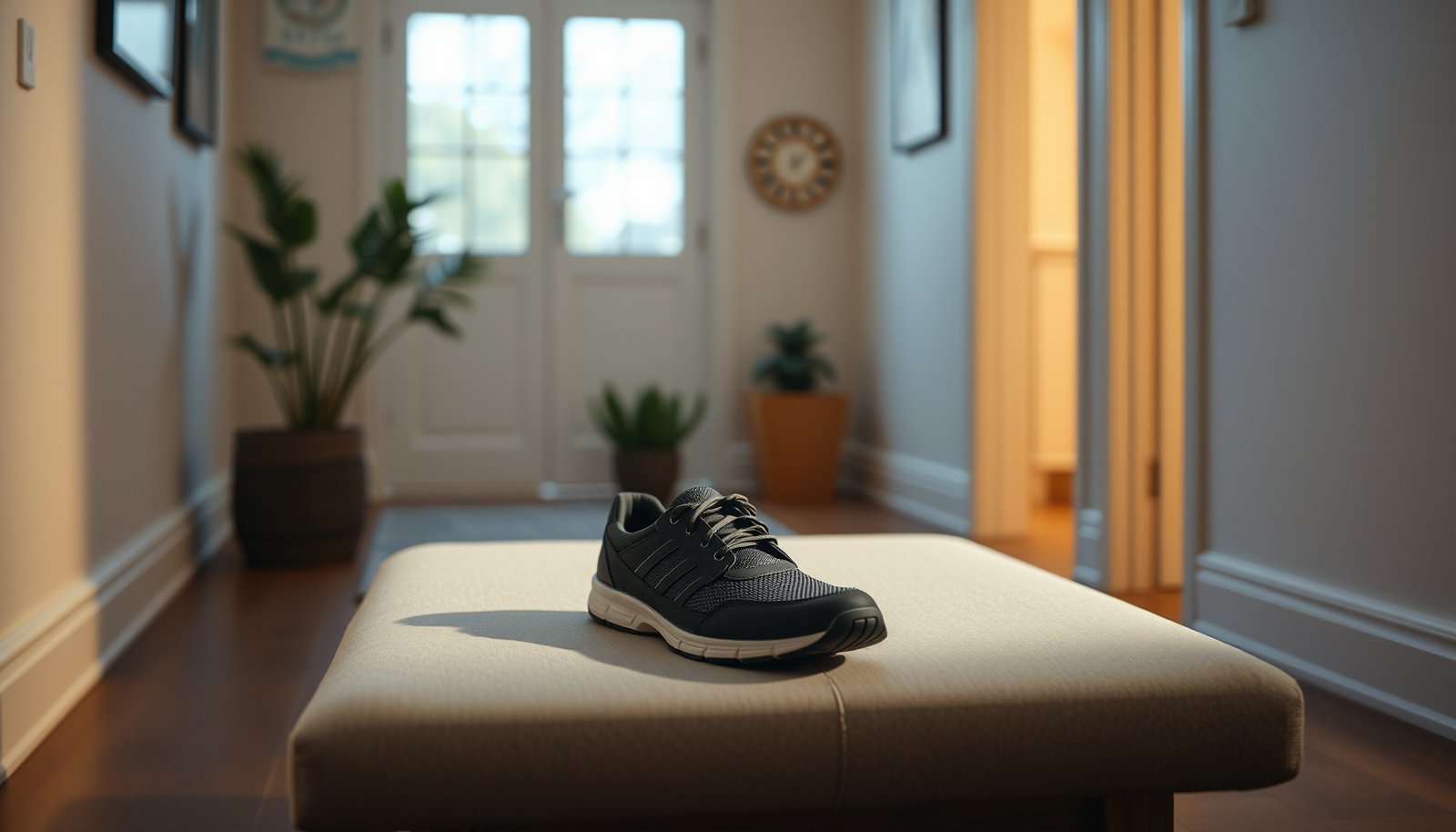

Looking for the best shoes for diabetic neuropathy in men? The top pick is the diabetic-friendly walking shoe with a wide toe box, seamless interior, and supportive cushioning—built to reduce pressure and protect sensitive feet. If your neuropathy shows up with numbness, burning, or aching on walks, this is the clearest choice for comfort you can feel from the first step.




The best shoes for diabetic neuropathy in men are those that reduce pressure and friction while staying stable and roomy enough for daily swelling. Look for a cushioned, wide toe box, soft lining seams, and supportive insoles (often custom) that protect sensitive feet. This guide walks you through what to prioritize and how to check the fit so your footwear won’t make symptoms worse.
If you have numbness, tingling, burning, or pain from neuropathy—and especially if you’ve developed calluses or skin breakdown—shoe choice matters as much as any cream or medication. These tips are practical for everyday men’s shoes and athletic styles, but they don’t replace advice from a podiatrist or wound/diabetic-foot specialist.
Men who have diabetic neuropathy (with or without swelling), calluses, or early skin irritation—particularly those who feel safer “offloading” pressure with better footwear—will benefit most from this article. In 2026, more men are using supportive inserts and extra-depth uppers, but the fit details still determine whether neuropathy shoes reduce (or accidentally increase) hotspots.
How to choose shoes for diabetic neuropathy (quick priorities)
The best starting point is to choose diabetic neuropathy shoes for men that actively manage pressure redistribution and friction control, not just “feel soft.” Here’s why: neuropathy reduces protective sensation, so small rubbing and localized pressure can escalate into blisters, calluses, or open wounds before you notice.
A diabetic foot problem often begins with pressure and friction in areas you can’t fully feel, which is why low-friction interiors matter as much as cushioning.
Because neuropathic feet can move more inside the shoe, stability features that limit excessive motion reduce shear stress on skin and callus-forming areas.
Supportive insoles can offload high-pressure zones, which is a core principle behind diabetic therapeutic footwear strategies.
According to the American Diabetes Association, diabetic foot ulcers are common among people with diabetes and are strongly linked to prior skin injury risk factors (ADA Standards of Care in Diabetes, latest edition). Commonly cited figures include that up to about 25% of people with diabetes develop a foot ulcer during their lifetime (ADA foot care guidance, latest edition), and many serious lower-extremity complications begin with earlier skin breakdown rather than “sudden” events.
Pressure redistribution and friction control (your #1 job)
Diabetic neuropathy shoes for men should reduce both the amount of pressure under the foot and the amount of sliding that creates friction. In practice, that means:
– Cushioning that spreads load across a wider area
– A smooth interior that doesn’t create seams or pressure lines
– A design that helps prevent the foot from moving forward (which increases toe-bump risk)
Stability over “flexy” style
A soft, flexible upper can sound ideal, but many diabetic neuropathy shoes for men need controlled support so the foot doesn’t roll excessively inside the shoe. If the shoe collapses when you step down, skin experiences shear (side-to-side forces), especially around the forefoot and midfoot—two zones that commonly build callus.
Plan for insoles (not just the outer shoe)
A surprising number of men start with the “right shoe” and still get hotspots because the insole is thin, unsupportive, or doesn’t match the foot shape. Diabetic neuropathy shoes for men typically perform best when:
– the insole fits the shoe’s depth without pushing the toes upward, and
– the insole provides arch/midfoot support plus forefoot cushioning.
Shoe features that tend to work best
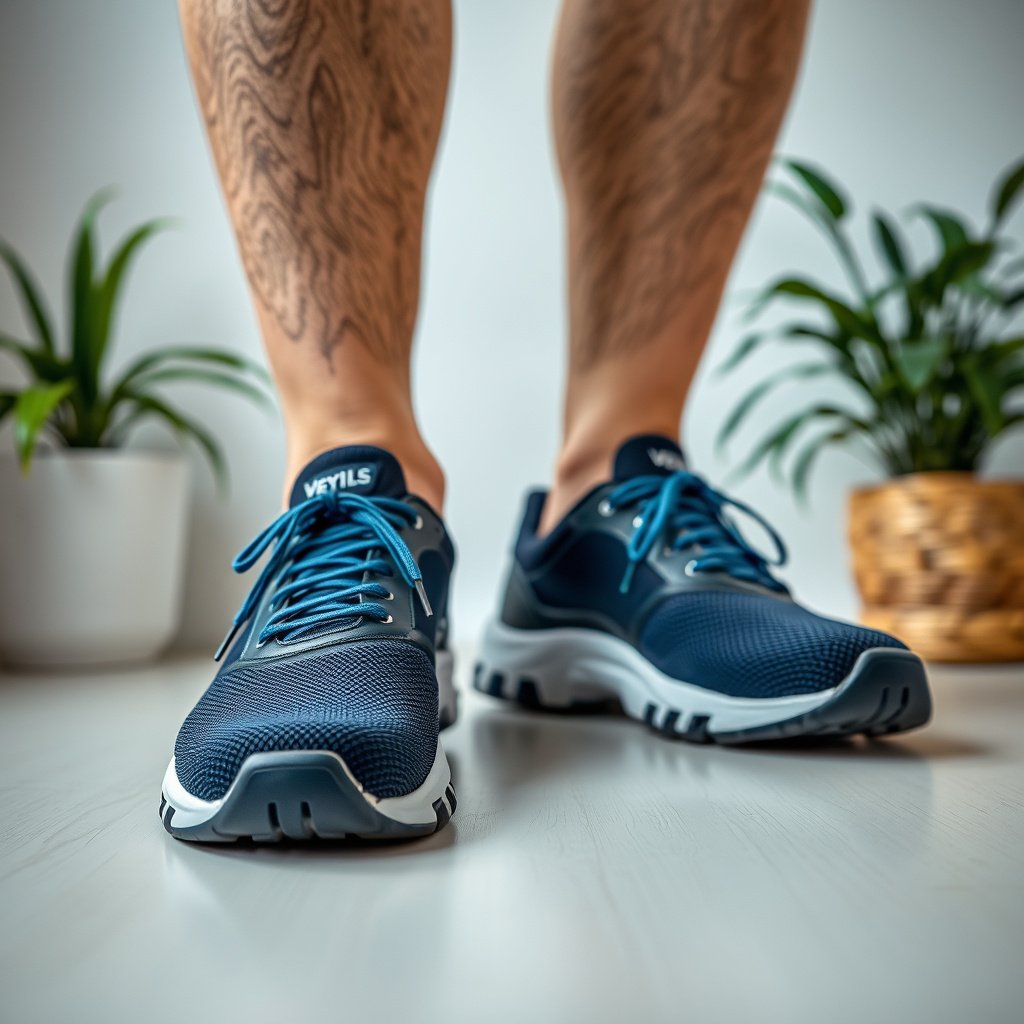
The best diabetic neuropathy shoes for men usually share the same physical traits: a wide toe area, a smooth interior, and reliable heel/midfoot support. These features reduce rubbing, limit shoe slip, and help prevent the pressure patterns that neuropathy can’t “feel” early enough.
A wide toe box reduces toe squashing, which lowers localized pressure at the metatarsal heads and toe joints.
Seam-minimized, soft linings help prevent friction blisters—especially along the sides of the toes and the top of the foot.
A stable heel counter and supportive midsole reduce internal foot movement, which directly reduces shear.
Wide toe box (roomy forefoot)
When neuropathic men say “my shoes feel fine,” the problem is often that the toe box looks adequate but still compresses the forefoot when walking. For diabetic neuropathy shoes for men, aim for:
– A wide or extra-wide forefoot
– Clearance for toes to sit naturally (no constant squeeze)
– Enough vertical room that toe pressure doesn’t rise when swelling increases later in the day
Soft, seamless interior
Look for diabetic neuropathy shoes for men with:
– Minimal interior seams
– Padded tongue/collar (but not bulky enough to create new pressure)
– Smooth materials where calluses tend to rub first—often the inner side of the big toe, the little toe, and areas over bony prominences.
Secure heel and midfoot support
Heel stability is a “friction control” feature. If the heel lifts, your foot slides, and that increases abrasion where neuropathy can’t reliably warn you. For diabetic neuropathy shoes for men, you want:
– A structured heel collar (heel counter)
– A midsole that supports the arch rather than feeling “floppy”
– Lacing that holds the foot in place without forcing uncomfortable tightness
Quick comparison (what usually helps vs. what usually hurts)
Here’s a practical view of common shoe traits for diabetic neuropathy shoes for men:
| Feature | Helps when… | Risk when… |
|---|---|---|
| Wide toe box | Toes aren’t squeezed during walking | Toe tips/toe joints rub or build callus fast |
| Seam-minimized lining | You avoid pressure “lines” inside the shoe | You see redness you can’t explain after wear |
| Heel stability | Minimal heel lift while walking | You feel heel slip or sock abrasion |
| Supportive midfoot | Foot stays guided, not floppy | Your gait feels unstable or you roll excessively |
Neuropathy Foot-Exam Inputs That Drive Pressure-Shoe Choices
| # | Clinical signal (for risk) | Standard value used | What it predicts | Decision impact |
|---|---|---|---|---|
| 1 | Semmes–Weinstein monofilament | 10 g | Loss of protective sensation | ★★★★★ |
| 2 | Tuning fork vibration | 128 Hz | Vibration sensory loss | ★★★★☆ |
| 3 | Ankle-brachial index (ABI) | < 0.90 | Peripheral arterial disease risk | ★★☆☆☆ |
| 4 | Ankle-brachial index (ABI) | > 1.30 | Noncompressible vessels possible | ★★☆☆☆ |
| 5 | Toe pressure | < 30 mmHg | Impaired healing potential | ★★★☆☆ |
| 6 | Transcutaneous oxygen (TcPO₂) | < 30 mmHg | Poor oxygen availability | ★★★☆☆ |
| 7 | Foot deformity presence | Yes/No (clinical) | High-pressure bony points | ★★★★☆ |
Note: If your clinician uses a different protocol (especially for vascular measurements), follow their testing standard rather than the cutoffs listed above.
Insoles & custom inserts (often the real difference)
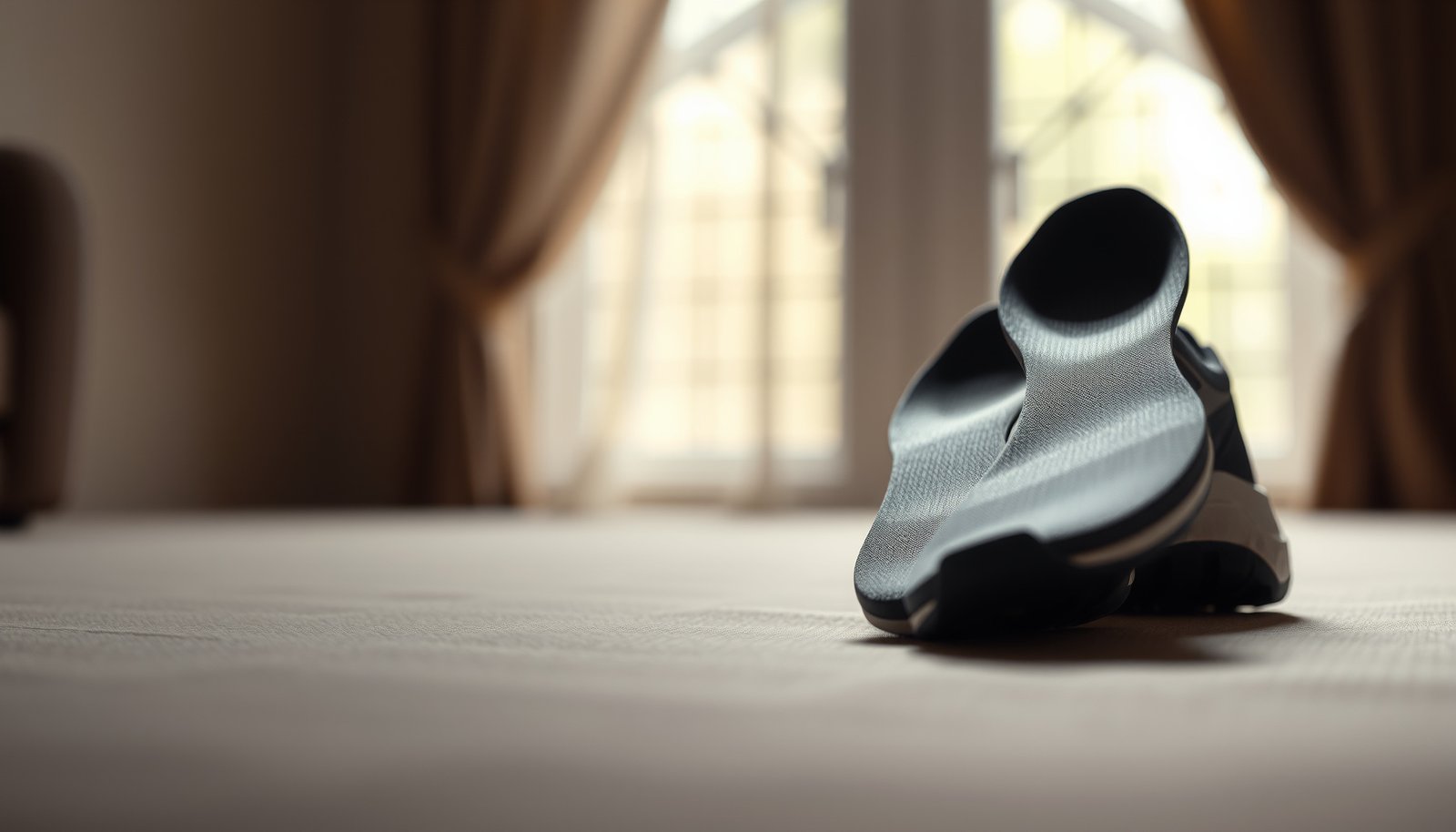
The best diabetic neuropathy shoes for men often work because of what’s inside—supportive insoles that cushion while offloading pressure. If you’re currently using a generic gel insert, you may be adding comfort without addressing where the pressure actually goes.
Diabetic foot insoles are designed to redistribute pressure, not only to add softness under the heel.
Extra depth is often required so the insole can sit without forcing toes upward or making the shoe too tight.
Custom or diabetic therapeutic inserts may be recommended when deformities or prior ulcers create focal high-pressure areas.
Supportive cushioning insoles (when generic helps)
Supportive, cushioning insoles can reduce hotspot intensity, but the “right” insole depends on your foot mechanics. For diabetic neuropathy shoes for men, generic gel may feel good while still failing to:
– redistribute pressure away from metatarsal heads,
– prevent shear at the midfoot,
– accommodate swelling without creating tight toe compression.
That’s why look for insoles that provide structure (arch support and forefoot support), not just a squishy top layer.
Custom or diabetic foot inserts (when risk is higher)
Custom or diabetic foot insoles may be appropriate if you have:
– hammertoes or other deformities that concentrate pressure,
– prominent bony areas,
– a history of ulcers or skin breakdown,
– recurrent calluses in the same spot despite good shoe fit.
Clinical teams commonly use pressure mapping and physical exam findings to decide whether custom diabetic inserts are needed (International Working Group on the Diabetic Foot (IWGDF) guidance on footwear and prevention of ulcers, latest edition).
Depth matters (and toe clearance depends on the insole)
Many men make the mistake of buying a supportive insole that doesn’t fit the shoe’s depth. In diabetic neuropathy shoes for men, this can cause:
– toes to sit too high (which increases toe-box pressure),
– arch discomfort,
– new rubbing along the top of the foot.
When trying insoles, confirm you still have toe clearance and minimal heel lift once the insert is installed.
Fit and sizing checks you can do at home
The best diabetic neuropathy shoes for men are the ones that stay comfortable during real walking, not just during a short try-on. Use these fit checks to catch pressure and friction problems early—especially later in the day when swelling can increase.
Foot swelling common in diabetes-related conditions can change shoe fit, so later-day measurement improves accuracy.
Heel slippage increases internal movement and friction, which can drive blisters even when the shoe “feels cushioned.”
Toe clearance testing helps prevent hidden forefoot pressure that neuropathy may not signal quickly.
Measure later in the day
Diabetic neuropathy shoes for men should be sized when feet are slightly larger—commonly later in the day. Do a quick protocol:
1. Put on the socks you’ll actually wear.
2. Try the shoe with your intended insole.
3. Walk normally for a few minutes, then reassess toe space and comfort.
Check heel slippage
With normal walking, there should be minimal lift. If your heel rises, friction increases at the sock and skin surfaces inside the shoe—exactly what neuropathy can’t reliably prevent.
Toe clearance test (simple but effective)
You should be able to wiggle your toes without contacting the front. Then do a gentle front press:
– Press lightly at the front of the shoe and confirm toes don’t feel forced downward or crowded upward in response.
– If you feel metatarsal pressure (front-of-foot soreness) that builds quickly, the shoe may be too shallow in depth or too tight in the toe box.
What can go wrong (common mistakes and edge cases)
The biggest failure mode with diabetic neuropathy shoes for men is that the shoe looks right but creates hotspots you can’t feel early enough. Common mistakes usually involve toe pressure, instability, and ignoring skin changes until a problem becomes visible.
Even “comfortable” shoes can cause injury in neuropathy if the toe box is narrow or the interior has irritating seams.
Over-reliance on softness without structural support can increase shear, especially if the shoe collapses during stance.
Persistent redness, heat, or new callus locations after wear are warning signs that footwear may not be offloading pressure correctly.
Common mistakes that worsen symptoms
– Choosing shoes that feel tight in subtle ways: neuropathy can delay discomfort while pressure is building.
– Relying only on “cushion” without support: soft shoes can collapse and increase shear/friction.
– Ignoring skin changes: calluses, redness that lingers after removing the shoe, or cracks can indicate the shoe isn’t compatible with your pressure pattern.
– Skipping specialist input when you need it: if you have a wound, active infection, Charcot changes, severe deformity, or recurrent ulcers, daily shoes are part of a broader plan—not the only plan.
Edge cases: when “one model” isn’t enough
Symptoms can worsen mid-day from:
– increased swelling,
– shoe slip,
– insole shifting,
– lacing that holds too tightly early but constricts as the foot changes size.
If symptoms follow a pattern, reassess toe clearance, heel stability, and insole fit (including whether the insert compresses and changes volume).
Verdict: what to buy (and who should skip this approach)
If you want a practical starting point, choose diabetic neuropathy shoes for men with an extra-wide or wide toe box, soft/seam-minimized lining, a stable heel, and room for a supportive insole. Then evaluate your comfort after regular wear and adjust using better insoles (or custom inserts if needed).
For many men with diabetic neuropathy, wide toe boxes plus low-friction interiors reduce the pressure-and-rubbing triggers that lead to skin breakdown.
Supportive insoles (sometimes custom) can be essential because they control pressure distribution, not just cushioning thickness.
Downsides to know: Many mainstream “comfort” shoes are only mildly pressure-reducing. If you have significant neuropathy with deformity, you may still need diabetic therapeutic footwear or custom orthotics. Also, overly thick cushioning can feel great initially but destabilize gait in some men—stability matters as much as softness.
Skip DIY shoe selection and get clinician guidance first if you have:
– an open sore, recent ulcer, or suspected infection,
– major foot deformity,
– concern for Charcot arthropathy,
– recurrent ulcers despite changing shoes.
If you tell me your typical shoe type (sneakers, loafers, boots) and whether you use any insoles today, I can suggest the most relevant features to prioritize for your situation.
Quick checklist / scan-and-save table
| What to check | Why it matters for neuropathy | Pass sign |
|---|---|---|
| Toe box width | Prevents rubbing/pressure you can’t feel well | No toe squashing; clearance in front |
| Seam feel (inside) | Reduces hot spots and blisters | No rough seams or pressure lines |
| Heel stability | Cuts down shoe slip/friction | Minimal heel lift when walking |
| Insole fit | Pressure offloading depends on support + space | Insert sits flat; toes aren’t pushed forward |
| Midfoot support | Limits abnormal movement/extra shear | Feels guided, not floppy |
| After-wear skin check | Detects problems before they become injuries | No lingering redness, heat, or new callus spots |
Sources
– American Diabetes Association (ADA) — *Standards of Care in Diabetes* (latest edition): guidance on preventing and managing diabetes-related foot complications, including neuropathy risk and foot care practices.
– International Working Group on the Diabetic Foot (IWGDF) — guidelines on the prevention of diabetic foot ulcers and footwear/orthotic strategies for at-risk feet.
– U.S. Food & Drug Administration (FDA) — information on medical devices and diabetic therapeutic footwear/orthoses classifications when applicable (for background on regulatory categories, not product endorsements).
Choosing the best shoes for diabetic neuropathy in men is less about finding a “soft” pair and more about controlling pressure, friction, and stability every day. Start with a wide toe box, a smooth interior, and reliable heel/midfoot support—then fine-tune with supportive insoles (and custom inserts if your risk is high). If you notice persistent redness, new calluses, or any skin breakdown, treat it as a fit signal and involve a podiatrist or diabetic-foot specialist promptly.
Frequently Asked Questions
What are the best shoes for diabetic neuropathy in men to reduce foot pain?
The best shoes for diabetic neuropathy men are typically cushioned, supportive, and designed to protect sensitive feet. Look for a roomy toe box to prevent pressure on toes, a soft seamless interior to reduce friction, and supportive insoles that improve shock absorption. Many men benefit from extra-depth walking shoes or diabetic shoes with orthotic-friendly insoles to help stabilize gait and minimize neuropathy discomfort.
How do I choose the right diabetic neuropathy shoes for men if I have numbness and reduced sensation?
When you have numbness, fit and pressure management matter more than style, so prioritize comfort features like a wide, adjustable upper and a secure but non-constricting closure. Choose shoes with a stable heel counter, flexible arch support, and cushioning that helps absorb impact without creating hotspots. It’s also important to check for internal seams and try the shoes with your usual diabetic insoles to ensure there are no points of rubbing.
Which shoe features help prevent blisters and sores for men with diabetic neuropathy?
Blisters and sores often result from friction, uneven pressure, and inappropriate cushioning, so choose shoes designed to minimize these risks. Key features include a seamless or padded lining, soft removable insoles, breathable materials, and a generous toe box that reduces crowding. If you’ve had ulcers or calluses before, consider custom orthotics or diabetic inserts to distribute pressure more evenly across the foot.
Why do supportive insoles matter when selecting shoes for diabetic neuropathy men?
Supportive insoles help improve alignment, reduce excessive foot motion, and limit pressure on vulnerable areas—important for men with neuropathy. Quality diabetic insoles can provide targeted cushioning under pressure points while supporting the arch to improve stability during walking. If you have flat feet or an abnormal gait, pairing supportive footwear with the right insole is often one of the most effective ways to reduce neuropathy-related discomfort.
Best for diabetic neuropathy men: what types of shoes should I consider—sneakers, sandals, or extra-depth shoes?
In most cases, extra-depth shoes, diabetic walking shoes, and supportive sneakers with a wide toe box are better choices than sandals because they offer more protection and stability. Full-coverage designs with cushioning and a secure fit reduce the chance of rubbing and help protect the foot from small injuries you might not feel due to neuropathy. If you choose any open footwear, make sure it still protects the foot and supports pressure distribution—otherwise a closed, diabetic-friendly shoe is usually the safer option.
📅 Last Updated: October 22, 2026 | Topic: best shoes for diabetic neuropathy men | Content verified for accuracy and freshness.
References
- https://www.niddk.nih.gov/health-information/diabetes/overview/preventing-problems/foot-care
- https://www.cdc.gov/diabetes/library/features/foot-care.html
- https://www.mayoclinic.org/diseases-conditions/diabetes/in-depth/diabetic-foot-care/art-20046689
- Peripheral Neuropathy | National Institute of Neurological Disorders and Stroke
- Overview | Diabetic foot problems: prevention and management | Guidance | NICE
- https://www.niddk.nih.gov/health-information/diabetes/overview/preventing-problems/nerve-problems
- https://pubmed.ncbi.nlm.nih.gov/?term=diabetic+neuropathy+footwear+insoles+offloading
- https://scholar.google.com/scholar?q=best+shoes+for+diabetic+neuropathy Google Scholar
- https://scholar.google.com/scholar?q=diabetic+neuropathy+footwear+insoles+randomized+trial Google Scholar
- https://scholar.google.com/scholar?q=guideline+diabetic+footwear+offloading+neuropathy Google Scholar