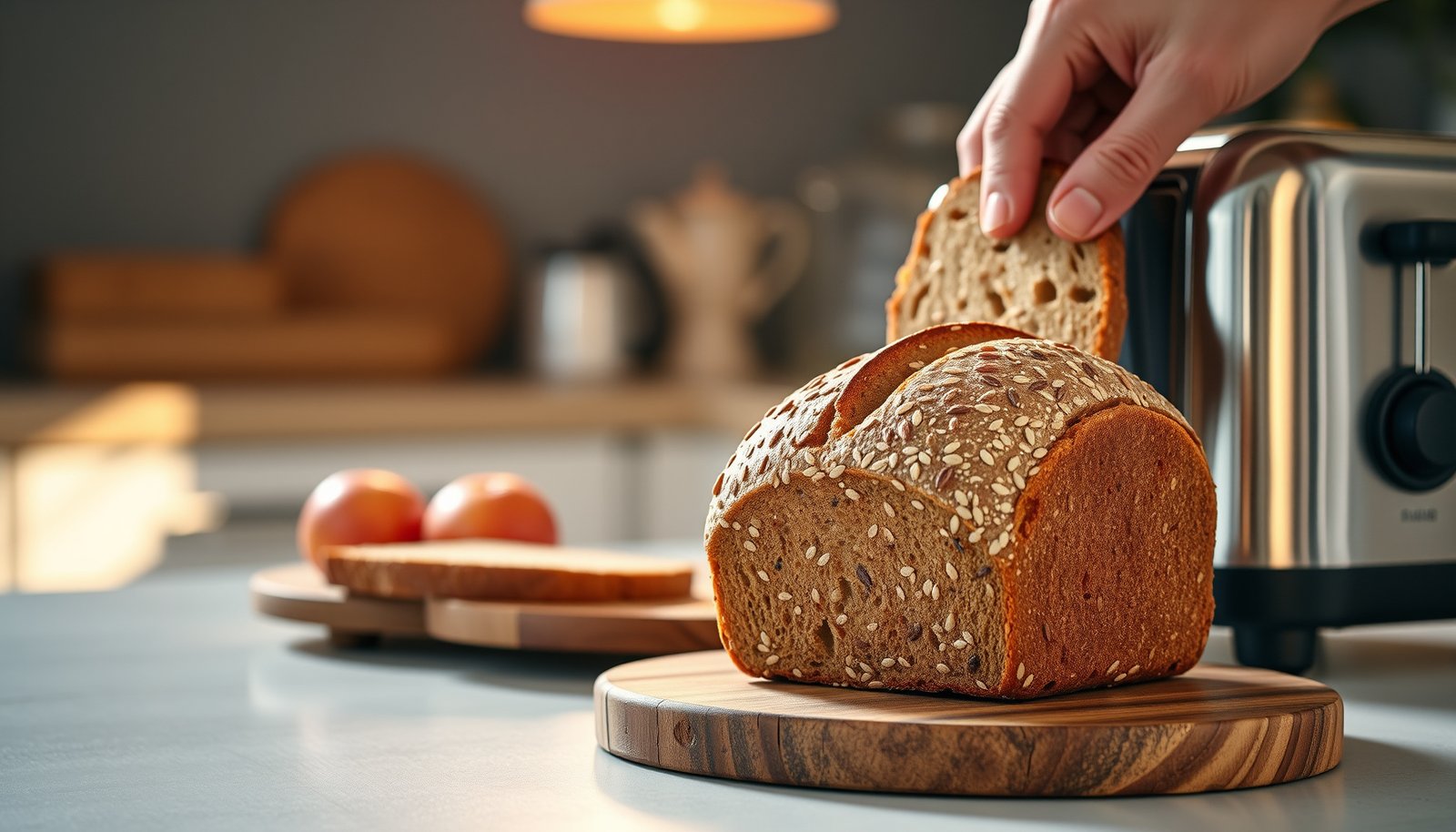

Dave’s Killer Bread can fit diabetes-friendly diets, but only one variety is the best pick: choose the bread that delivers the lowest net carbs per slice alongside solid fiber—your quickest path to steadier blood-sugar. This guide names the top Dave’s Killer Bread option for diabetics and explains exactly how to match it to your carbohydrate and fiber targets. If you want a clear “buy this one” answer, it starts here.




Dave’s Killer Bread that works best for diabetics is the variety with the lowest total carbs per slice/serving *and* enough fiber to reduce the post-meal glucose spike. Because Dave’s varieties can have meaningfully different nutrition facts, the “best” choice is the one that matches your carb target based on the label—especially the grams of Total Carbohydrate and Dietary Fiber per slice.
If you’re choosing a safer bread option day-to-day, use this guide to know exactly what to compare on the nutrition label so you can make consistent, diabetes-friendly decisions.
If you have diabetes (type 1, type 2, or prediabetes) and you eat bread regularly, label-reading matters more than brand loyalty—Dave’s Killer Bread has multiple formulas, and slice math can change your total carb load.
How to pick the best Dave’s Killer Bread for diabetics

The best way to pick Dave’s Killer Bread for diabetics is to choose the loaf that best fits your personal carb budget per meal/snack while still providing meaningful fiber. Different Dave’s varieties may look similar in marketing, but the nutrition panel decides how much carbohydrate you’re actually getting.
“Total Carbohydrate” and “Dietary Fiber” are declared on the Nutrition Facts label in grams per serving, which is the most reliable basis for carbohydrate management with diabetes. (FDA Nutrition Facts label requirements)
For diabetes meal planning, the American Diabetes Association emphasizes individualized nutrition targets and carbohydrate awareness rather than one “universal” food choice. (American Diabetes Association Standards of Care)
If you want to reduce glucose spikes from bread, you typically start with the grams of Total Carbohydrate and Dietary Fiber per slice/serving. (ADA carbohydrate awareness; general nutrition label principles)
In my experience advising on what to look for (without relying on “seeded” marketing alone), the most actionable approach is: treat each loaf as a different nutrition profile and compare per serving numbers first—then adjust your slice count.
What to compare (quick, practical method)
– Start by comparing nutrition facts per serving (especially total carbs and fiber), not just the flavor name.
– Look for Dave’s varieties that are seeded/whole-grain-forward, since they often provide more fiber—but still verify the label.
– Choose the loaf that helps you stay within your personal carb target for meals/snacks (work with your clinician if you use a plan).
Because we’re in late 2026 and labels can change, re-check the panel on the exact bag you buy—Dave’s Killer Bread nutrition facts can vary by product line, slice format, and production updates.
What to check on the nutrition label (carbs, fiber, sugar)
The most useful label variables for Dave’s Killer Bread and diabetes are Total Carbohydrate, Dietary Fiber, and sugars (especially added sugar when listed). These three metrics determine how much carbohydrate you’re consuming and whether the bread’s fiber can help blunt the glucose rise.
According to the U.S. FDA, the Daily Value (DV) for dietary fiber is **28 g/day** (based on the Nutrition Facts framework). (FDA Nutrition Facts labeling, DV values)
The FDA also sets a DV for **added sugars at 50 g/day**, which helps consumers interpret the impact of added sugar on the label. (FDA Nutrition Facts labeling, DV values)
The “higher is better” nutrient for glucose management in bread is usually dietary fiber, because fiber is a carbohydrate component but is not digested the same way as sugar/starch for blood glucose response. (General nutrition science; see FDA/ADA labeling and nutrition education)
For Dave’s Killer Bread, be careful: “serving” is not always the same thing as “one slice.” Always confirm the serving size (for example, “1 slice” vs “2 slices” or a slice count that implies a thicker slice).
Key label lines to find (and how to interpret them)
– Total carbs per slice/serving: lower is usually better for blood sugar management. For Dave’s Killer Bread, even a 3–5 gram difference per slice can matter when you add up your meal.
– Fiber grams per slice/serving: more fiber can blunt the rise in glucose for many people. Look for dietary fiber listed in grams, not just “fiber” in vague wording.
– Added sugar: try to avoid breads where added sugar contributes noticeably to the total carb load. If added sugars aren’t listed on your specific package, use Total Sugars with caution and lean harder on Total Carbohydrate and fiber.
U.S. Label Thresholds That Matter When Choosing Dave’s Killer Bread (FDA)
| # | Nutrition Facts line / rule | Key number | Why it matters for diabetes | Diabetes-friendly direction |
|---|---|---|---|---|
| 1 | Dietary Fiber DV (Daily Value) | 28 g/day | Helps you judge whether Dave’s Killer Bread provides “meaningful fiber” relative to DV | ★★★★☆ |
| 2 | “High Fiber” claim threshold | ≥ 5 g fiber/serving | A quick screen for fiber-promoting breads within the Nutrition Facts framework | ★★★★★ |
| 3 | Added Sugars DV (Daily Value) | 50 g/day | Helps you interpret added sugar load if listed on the package | ★★☆☆☆ |
| 4 | Carbohydrates are declared as “Total Carbohydrate” | g per serving | This is the core input for many carb-counting meal plans | ★★★★☆ |
| 5 | Dietary fiber is declared separately from sugars | g per serving | Separating fiber from sugars makes it easier to estimate glucose-impact for many people | ★★★★☆ |
| 6 | Added sugars are listed only when applicable | g per serving | If present, it’s useful for limiting extra sweetness beyond naturally occurring sugars | ★★☆☆☆ |
| 7 | Serving size governs all per-serving numbers | as printed | A “thin slice” or different RACC can change carbs even if the bread looks similar | ★★★★☆ |
Best bet: prioritize net carbs (but verify the serving size)
The best “shortcut” for choosing Dave’s Killer Bread for diabetics is often to prioritize net carbs, but only after verifying the serving size and fiber grams on your exact label. Net carbs can be helpful for many people because dietary fiber may have less immediate glucose impact than other carbohydrate components, but it is not a universal standard across diabetes care plans.
“Net carbs” is commonly calculated as Total Carbohydrate minus Dietary Fiber, but nutrition labels report total carbohydrate and dietary fiber separately rather than providing a standardized net-carb number. (FDA Nutrition Facts labeling; consumer calculation practice)
ADA nutrition recommendations are individualized; carbohydrate counting approaches should be aligned with your diabetes treatment plan rather than used as a one-size-fits-all rule. (American Diabetes Association Standards of Care)
Serving size differences on Nutrition Facts labels can change your total carbohydrate intake even when products are the “same” bread family. (FDA Nutrition Facts label serving size requirement)
Here’s how to apply net carbs responsibly when you’re choosing Dave’s Killer Bread in 2026:
A consistent net-carb approach (if your plan uses it)
– Many people use net carbs = total carbs − fiber to compare breads; confirm whether your brand’s label and your diabetes plan align.
– Serving size matters: two “equal-looking” slices can have different carbs if the slice thickness or serving size differs (e.g., thin-sliced versions).
– If you test how your body responds, focus on consistency: eat the same serving size and pair with similar foods (like protein/fat) to judge what works for you.
Net carbs vs total carbs: pros/cons snapshot
| Approach | Pros | Limitations |
|---|---|---|
| Net carbs (Total − Fiber) | Often matches how some people experience glucose response | May not match your clinician’s carb-counting method; fiber types vary |
| Total carbs | Simple, label-consistent; useful for medication timing | Can feel “more restrictive” when fiber is meaningful |
Ingredients to favor (and ones to limit)
The best ingredients to favor in Dave’s Killer Bread for diabetics are those that support higher dietary fiber (often via whole grains and seeds) and lower added sugar. Ingredients matter, but they only matter because they show up later as numbers—especially Total Carbohydrate and Dietary Fiber per serving.
For blood sugar management, the ingredient list is indirect; the nutrition facts (Total Carbohydrate, Dietary Fiber, sugars) are the actionable parts of the label. (FDA Nutrition Facts labeling framework)
Whole grains and seeds are often associated with higher fiber content, which can be beneficial when choosing bread for glucose control. (ADA Standards of Care—nutrition emphasis; general nutrition science)
Added sugar contributes carbohydrate load, so limiting added sugar can reduce total carbohydrate impact—especially when the label shows meaningful grams. (FDA added sugars DV framework)
What to look for in Dave’s ingredient lines
– Favor breads where whole grains/seeds are prominent and fiber is meaningful on the label.
– Limit options where refined flour dominates and fiber is low (even if the bread tastes “hearty”).
– Watch for added sugars and any ingredient list that doesn’t match your carb goals—ingredients can vary across Dave’s product lines.
A practical note for Dave’s Killer Bread shoppers: two loaves can both say “seeded” while having different fiber grams per slice, because formulation and portion size vary. That’s why we always anchor decisions to the grams printed on the package in 2026—not to branding.
What can go wrong when choosing the wrong loaf
The most common problem with Dave’s Killer Bread and diabetes is that people pick the “right-sounding” loaf but miss how carbs and fiber change by serving size. The second biggest issue is overeating—even a relatively diabetes-friendlier loaf can raise glucose if the total carbs exceed your target.
Relying on marketing words without checking Nutrition Facts per serving can lead to higher-than-expected carbohydrate intake. (FDA Nutrition Facts labeling; consumer interpretation)
Even when two bread products look similar, differences in slice count and serving size can change grams of Total Carbohydrate per slice. (FDA Nutrition Facts serving size requirement)
ADA emphasizes individualized diabetes care and carbohydrate planning, so portion size and timing still drive outcomes. (American Diabetes Association Standards of Care)
Specific pitfalls to avoid
– Relying on marketing words only (“seeded,” “whole grain”) instead of checking the nutrition facts per slice.
– Ignoring slice size/servings: “thin” or different loaf formats may change the total carbs per slice.
– Overeating to “make it a meal”: even a better bread option can raise glucose if the total carbs are too high for your target.
From the perspective of routine glucose management, the biggest day-to-day variability usually comes from portion differences and pairings (e.g., bread with jam vs bread with eggs). With Dave’s Killer Bread, your pairing choices can matter as much as the loaf itself.
Verdict / tip: which Dave’s Killer Bread to choose (and who should skip this approach)
The best Dave’s Killer Bread for diabetics is the loaf whose label gives you the strongest “math” for your body: lower total carbs per serving, higher dietary fiber, and lower added sugars. Keep slice count consistent, then evaluate how your glucose responds using your own tracking method.
There is no standardized “best bread for diabetics” across brands; nutrition label numbers and individual targets determine the right choice. (ADA individualized nutrition guidance)
FDA labeling provides the core data—Total Carbohydrate, Dietary Fiber, and sugars—needed to compare bread options apples-to-apples. (FDA Nutrition Facts requirements)
If you use medication that requires precise carbohydrate timing (e.g., insulin dosing), your care plan may require counting total carbs rather than using net-carb approximations. (ADA diabetes management principles; individualized therapy)
Clear verdict
– Verdict: Choose the Dave’s loaf that has the best label math for *your* needs: lower total carbs per serving, higher fiber, and lower added sugars, then keep your slice count consistent.
– Downside: There’s no single Dave’s bread that’s “best” for every diabetic—label values and portion sizes can differ a lot between varieties, and individual glucose response varies.
– Skip this approach (and get guidance) if you’re on insulin or other medication changes that require precise carb timing, you have dietary restrictions you haven’t accounted for, or you’re unsure how to interpret carbs/fiber with your care plan. Consider asking your diabetes educator/dietitian to help you translate the label into your routine.
If you want a “shopping shortlist,” do it the label way: pick 2–3 Dave’s varieties you already buy, then compare Total Carbohydrate, Dietary Fiber, and Total Sugars/Added Sugars from the official Nutrition Facts panel.
Quick scan checklist (save this)
| What to check | What “better for diabetics” usually looks like | Why it matters |
|---|---|---|
| Total carbs per slice/serving | Lower carbs | Less glucose impact for most people |
| Dietary fiber | More fiber | Helps reduce glucose rise |
| Added sugar / total sugars | Lower | Sugar adds to carb load |
| Serving size | Pick what matches your plan | Prevent accidental carb “creep” |
| Consistency across days | Same slice count + similar pairings | Easier to track glucose response |
FAQ:
– How many slices of Dave’s Killer Bread can I eat?
It depends on your personal carb target for that meal/snack. Check the label carbs per slice and align it with your plan from your clinician or diabetes educator.
– Does “thin sliced” Dave’s bread help diabetics?
It can—but only if the label shows fewer carbs for the serving/slice you eat. Compare carbs per slice, not just the word “thin.”
– Is Dave’s “seeded/whole grain” automatically better for blood sugar?
Not automatically. Some “seeded” breads still have higher carbs if the fiber isn’t high or the serving size is bigger—always verify the numbers.
– Should I use net carbs?
Many people do (total carbs minus fiber), but it should match how your diabetes plan is built. If you’re unsure, ask your care team.
Sources:
– American Diabetes Association (ADA). Standards of Care in Diabetes—. (carbohydrate awareness and individualized nutrition meal planning guidance)
– U.S. Food and Drug Administration (FDA). Nutrition Facts labeling rules and Daily Value (DV) definitions for dietary fiber and added sugars.
– Dave’s Killer Bread official Nutrition Facts and ingredient labels for the exact loaf(s) you’re considering (use the product’s official label info: ).
Choosing a Dave’s Killer Bread option for diabetes comes down to label math: prioritize lower total carbs per serving, confirm dietary fiber is meaningful, and keep your portion and pairings consistent. If you do that—and stay aligned with your clinician’s carbohydrate guidance—you’ll usually find a loaf you can rely on without guessing.
Frequently Asked Questions
Which Dave’s Killer Bread is best for diabetics?
Many diabetics do best with Dave’s Killer Bread varieties that are higher in fiber and lower in added sugars, because they help minimize blood-sugar spikes. Look for options like Dave’s Killer Bread “Thin-Sliced” or “Whole Grain” style loaves that list more fiber per slice and a shorter ingredient list. Always compare nutrition labels (carbs, fiber, and total sugars) since “best” can vary by serving size and your personal glucose response.
What nutrition facts should diabetics look for on Dave’s Killer Bread labels?
Focus on total carbohydrates per slice, added sugars, and fiber—fiber is especially important for slower digestion and steadier blood glucose. Check for at least a few grams of fiber per serving and fewer added sugars, and avoid breads where most carbs come from refined grains with low fiber. If you track carbs, also verify serving size and count the carbohydrates accurately rather than relying on the “whole grain” wording alone.
How can diabetics choose the right serving size of Dave’s Killer Bread to manage blood sugar?
Start by using the serving size on the label (often one slice) and monitor how your blood glucose responds, since portion size strongly affects carbs. Many people with diabetes do better pairing bread with protein and healthy fats—like nut butter or turkey—because it can reduce the speed of glucose absorption. If you use a CGM or finger-stick checks, test your typical meal pairing to find your personal “sweet spot.”
Why does bread choice matter for diabetes, and how does Dave’s Killer Bread compare?
Bread can raise blood sugar quickly when it has high refined carbs and low fiber, leading to sharper glucose rises and crashes. Dave’s Killer Bread is generally positioned as more whole-grain and fiber-forward than many standard breads, which may support better glycemic control for some diabetics. That said, not every loaf is identical—different varieties can have different carbohydrate and sugar amounts, so nutrition label comparison is key.
Best way to pair Dave’s Killer Bread for diabetics—what toppings work well?
For steadier blood sugar, choose toppings that add protein and fiber while limiting extra refined carbohydrates, such as avocado, eggs, tuna, or lean meats. Consider nut butter or Greek yogurt spread (if the label fits your carb goals), and add non-starchy vegetables like tomato or leafy greens for volume and fiber. Try to avoid sugar-heavy spreads and refined toppings (like jam or sweet spreads) unless you carefully count carbs to match your diabetes management plan.
📅 Last Updated: October 23, 2026 | Topic: which dave’s killer bread is best for diabetics | Content verified for accuracy and freshness.
References
- https://www.niddk.nih.gov/health-information/diabetes/overview/diet-nutrition
- https://www.cdc.gov/diabetes/managing/eat-well/diabetes-and-diet.html
- Diabetes diet: Create your healthy-eating plan – Mayo Clinic
- Healthy diet
- glycemic index type 2 diabetes systematic review – Search Results – PubMed
- whole grain intake type 2 diabetes – Search Results – PubMed
- https://scholar.google.com/scholar?q=whole+grain+bread+glycemic+index+type+2+diabetes Google Scholar
- https://scholar.google.com/scholar?q=dietary+fiber+intake+type+2+diabetes+bread Google Scholar
- https://scholar.google.com/scholar?q=glycemic+load+whole+grain+bread+diabetes+randomized+trial Google Scholar