
The best sweeteners for diabetics are generally natural, non-nutritive options like Stevia, Monk Fruit, and Erythritol, as they have zero glycemic impact and do not spike blood sugar or insulin levels. While artificial options like Sucralose are common, these natural plant-based alternatives offer a safer profile for long-term glucose management without the calories of traditional sugar. Managing diabetes requires vigilance regarding carbohydrate intake, and selecting the right sweetening agent is a critical component of dietary compliance. This guide breaks down the pros and cons of each to help you make the healthiest choice for your metabolic needs.
Natural Option 1: Stevia
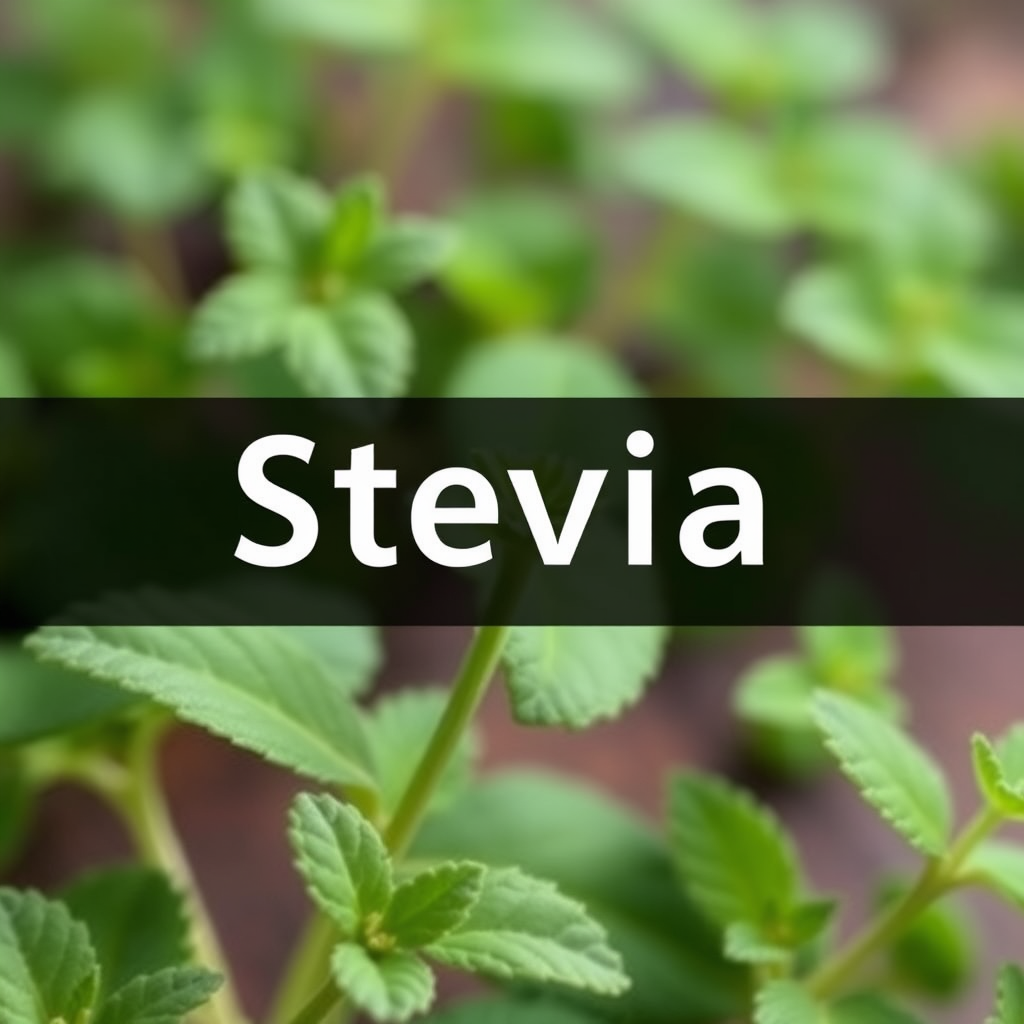
Stevia is widely considered the gold standard in diabetic-friendly sweetening, primarily because it is a plant-based, zero-calorie option that possesses a glycemic index (GI) of zero. Derived from the leaves of the Stevia rebaudiana plant, native to South America, this sweetener owes its potency to compounds known as steviol glycosides. These glycosides are 200 to 300 times sweeter than table sugar, meaning only a minuscule amount is required to achieve the desired level of sweetness. For individuals with Type 1 or Type 2 diabetes, Stevia is particularly valuable because it passes through the digestive system without breaking down into glucose, ensuring it causes no fluctuation in blood sugar or insulin secretion.
However, the sensory experience of Stevia can be polarizing. While high-purity extracts (often labeled as Rebaudioside A or Reb A) offer a cleaner flavor profile, many users report a distinct aftertaste often described as metallic, bitter, or licorice-like. This is more prevalent in less refined liquid drops or whole-leaf powders. To mitigate this, manufacturers often blend Stevia with other non-glycemic agents to balance the flavor. When selecting a Stevia product, it is crucial to read the ingredient label to ensure it has not been bulked up with maltodextrin or dextrose, hidden sugars that can inadvertently raise blood glucose levels.
Natural Option 2: Monk Fruit
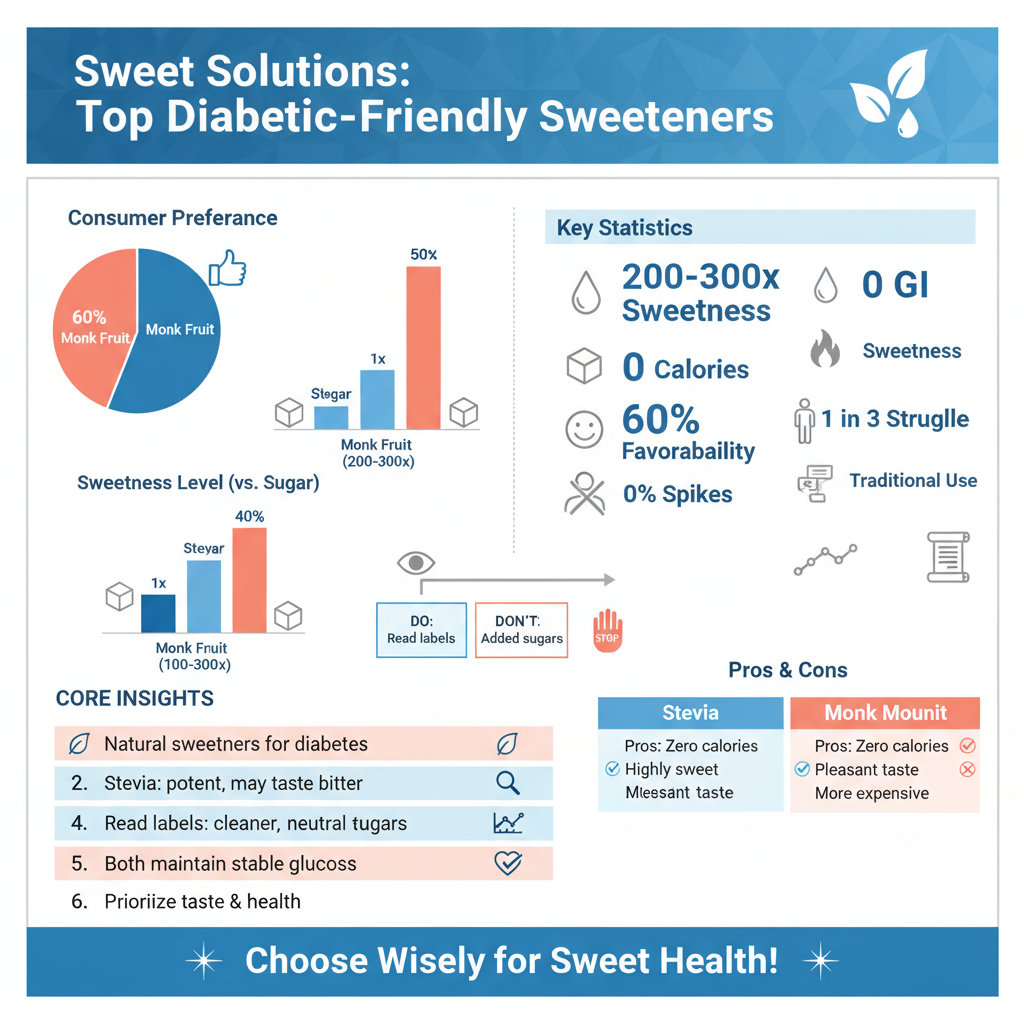
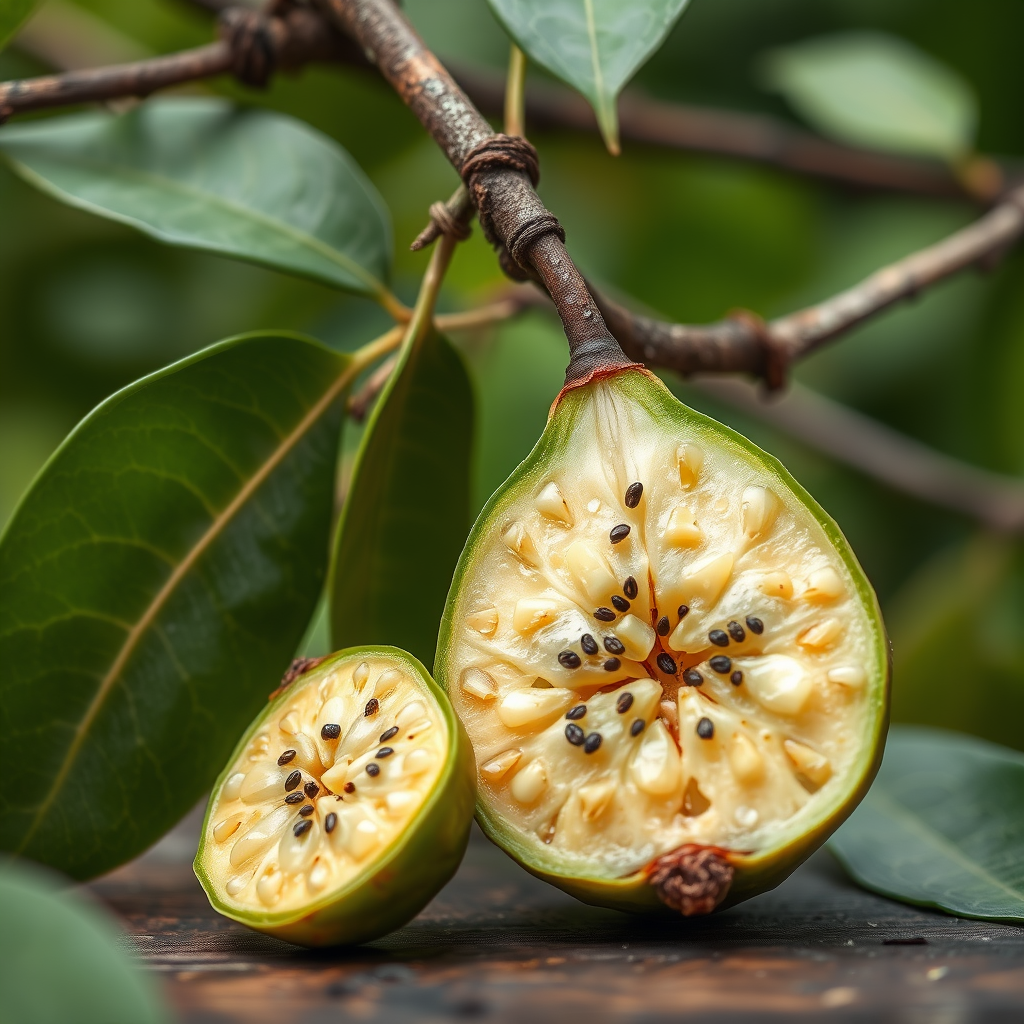
Monk Fruit, also known as Luo Han Guo, is rapidly gaining popularity as a premium alternative to Stevia. This small, green melon native to Southeast Asia has been used in traditional Eastern medicine for centuries. Unlike traditional fruits that derive their sweetness from fructose, Monk Fruit’s intense sweetness comes from unique antioxidants called mogrosides. Because the body processes mogrosides differently than sugars, Monk Fruit extract contains zero calories and zero carbohydrates, making it an exceptionally safe choice for diabetics aiming to maintain stable glucose readings.
The primary advantage of Monk Fruit over Stevia is its palatability. Most consumers find that Monk Fruit lacks the bitter, metallic aftertaste associated with steviol glycosides, offering a cleaner, more neutral sweetness that closely mimics table sugar. This makes it an excellent candidate for sweetening coffee, tea, and sauces where flavor integrity is paramount. The main drawback to Monk Fruit is its cost and availability; extracting mogrosides is an expensive process, resulting in a higher price point at the grocery store. Furthermore, because pure Monk Fruit extract is incredibly potent (up to 250 times sweeter than sugar), it is frequently sold in blends containing Erythritol to provide volume and make measuring easier for the consumer.
Understanding Erythritol and Sugar Alcohols
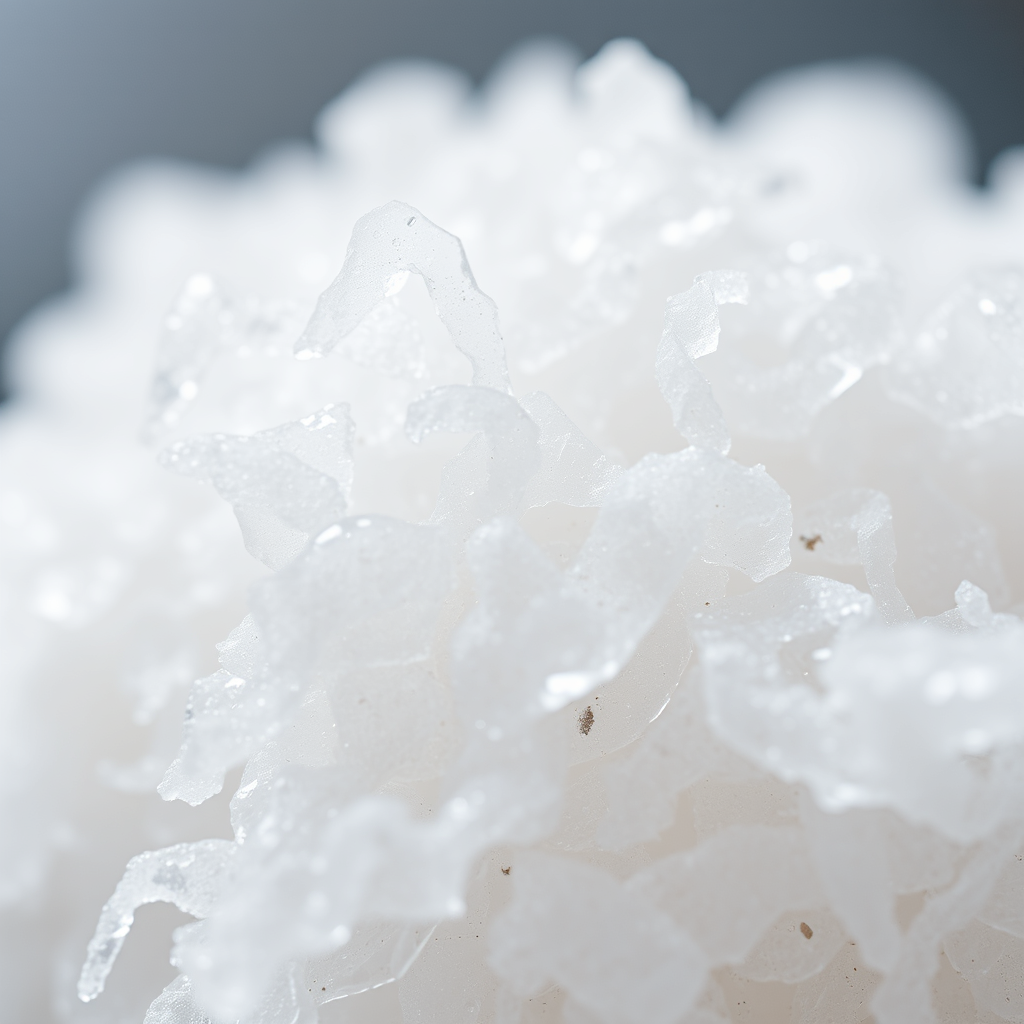
Sugar alcohols, or polyols, are a class of carbohydrates that naturally occur in certain fruits and vegetables but are also produced commercially for sugar-free products. Among these, Erythritol stands out as the most superior option for diabetics. Unlike other sugar alcohols, Erythritol has a unique metabolic pathway: it is absorbed into the bloodstream from the small intestine and then excreted almost entirely unchanged in the urine. Because it resists fermentation in the gut, it provides sweetness without the calories and, crucially, without the spike in blood glucose or insulin associated with sugar.
It is vital to distinguish Erythritol from other sugar alcohols like Xylitol, Maltitol, and Sorbitol. While Xylitol has a low glycemic index, it can still have a minor impact on blood sugar and is highly toxic to dogs, which poses a household risk. Maltitol, frequently found in “sugar-free” chocolates, is problematic because it has a relatively high glycemic index compared to other polyols and can significantly raise blood sugar. Furthermore, most sugar alcohols are known to cause digestive distress, including gas, bloating, and diarrhea, when consumed in large quantities because they ferment in the large intestine. Erythritol is generally the exception to this rule, earning the reputation of being “gut-friendly,” though excessive consumption should still be monitored.
Artificial Sweeteners: Sucralose and Aspartame
Artificial sweeteners, often identified by their yellow (Sucralose) and blue (Aspartame) packets, have been the standard sugar substitutes for decades. Sucralose, sold commonly as Splenda, is a heat-stable sweetener created by modifying sugar molecules with chlorine atoms, rendering them indigestible. Aspartame, found in Equal and NutraSweet, is a low-calorie sweetener used primarily in diet sodas. For years, these have been recommended to diabetics simply because they are non-nutritive and do not contain glucose.
However, the professional medical consensus on these synthetic options is shifting. Recent research suggests that while artificial sweeteners do not spike blood sugar immediately, they may have deleterious long-term effects. Studies indicate that chronic consumption of synthetic sweeteners can alter the gut microbiome—the bacterial ecosystem in the digestive tract—which plays a significant role in metabolic health and insulin sensitivity. Additionally, some research points to a “cephalic phase insulin release,” where the intense sweetness of these chemicals tricks the brain into preparing for sugar intake, potentially triggering small insulin releases or increasing sugar cravings. While they are considered safe by food safety authorities, many health professionals now recommend prioritizing natural options like Monk Fruit over these synthetic counterparts.
Sweeteners to Avoid Completely
There is a pervasive marketing myth that “natural” sugars are inherently safer for diabetics than white table sugar. This is scientifically inaccurate regarding metabolic impact. Sweeteners such as Agave Nectar, Honey, Coconut Sugar, and Maple Syrup should generally be avoided or treated exactly the same as high-fructose corn syrup or cane sugar. While honey and maple syrup do contain trace minerals and antioxidants, they are comprised almost entirely of fructose and glucose.
For a diabetic, the source of the sugar matters far less than the total carbohydrate load. For example, Agave Nectar is frequently marketed as “low glycemic,” which attracts many diabetic buyers. However, Agave is roughly 85% fructose. While fructose does not spike blood glucose as sharply as glucose, the liver must process it. excessive fructose intake is linked to fatty liver disease and insulin resistance—conditions that type 2 diabetics are already at risk for. Similarly, Coconut Sugar is chemically identical to sucrose (table sugar) once digested. Reliance on these “healthy” sugars can lead to consistently high A1C levels and frustrated efforts at weight management.
Baking and Cooking for Diabetics
Transitioning to sugar-free baking involves more than just swapping ingredients; it requires an understanding of food chemistry. Sugar provides structure, moisture, and browning (caramelization), in addition to sweetness. When cooking or baking, Erythritol or Erythritol-based blends (often mixed with Monk Fruit or Stevia) are the most resilient options. They are heat stable and provide the bulk necessary for cakes and cookies to rise properly. Conversely, Aspartame breaks down under high heat, losing its sweetness entirely, making it unsuitable for baking.
When using high-intensity sweeteners like pure Stevia or Monk Fruit drops in cold dishes or sauces, remember that the conversion ratio is drastic. A few drops may equal a cup of sugar. For baking, it is advisable to buy “1:1 baking blends” specifically formulated to measure cup-for-cup like sugar. Be aware that Erythritol can create a “cooling” sensation in the mouth (similar to mint) and may re-crystallize in leftovers, giving a crunchy texture to soft baked goods. To counter this, using powdered (confectioners) versions of these sweeteners often yields a smoother texture in frostings and cheesecakes.
Choosing the right sweetener is essential for managing diabetes without sacrificing the foods you love, and natural options like Monk Fruit or Stevia are usually your safest bets. Always monitor your blood sugar when introducing a new product to your diet to see how your body reacts personally. If you are unsure about a specific ingredient, consult your dietitian or healthcare provider to ensure it fits your specific nutritional plan.
Frequently Asked Questions
Which natural sweeteners are the safest for keeping blood sugar stable?
The safest natural sweeteners for maintaining stable blood sugar levels are generally Stevia, Monk Fruit, Allulose, and Erythritol. Unlike honey or agave, these options have a zero or near-zero glycemic index (GI), meaning they do not trigger a spike in blood glucose or insulin production. Most experts recommend these plant-based options over artificial alternatives because they provide sweetness without affecting metabolic health.
How does Monk Fruit compare to Stevia regarding taste and aftertaste?
While both are excellent zero-calorie options for diabetics, Monk Fruit is often preferred by those who dislike the bitter, licorice-like aftertaste associated with some Stevia brands. Monk Fruit extract typically offers a cleaner, more neutral sweetness that resembles table sugar, making it ideal for coffee and tea. However, because pure Monk Fruit is expensive, it is frequently blended with Erythritol to balance the flavor and lower the cost.
Can I use diabetic-friendly sweeteners for baking cakes and cookies?
Yes, you can bake with diabetic sweeteners, but for the best results, you should look for “granulated” blends specifically designed to measure 1:1 like sugar. Pure extracts (like liquid Stevia) lack the bulk and volume required for baking, which can result in flat, dry cakes. Sweeteners based on Erythritol or Allulose are particularly good for baking because they brown similarly to sugar and maintain moisture in the final product.
Why should diabetics be cautious about “sugar-free” candies containing Maltitol?
Diabetics should be careful with Maltitol because, despite being a sugar alcohol, it has a higher glycemic index than other substitutes and can partially raise blood sugar levels. Additionally, consuming Maltitol in significant quantities is well-known for causing digestive distress, including bloating and gas. It is often safer to look for sugar-free treats sweetened with Stevia, Erythritol, or soluble corn fiber to avoid these glycemic and digestive issues.
Is Agave Nectar a good alternative to sugar for type 2 diabetes?
No, Agave Nectar is generally not recommended for diabetics despite being marketed as a healthy, natural alternative. While it has a lower glycemic index than white sugar, it is extremely high in fructose (up to 90%), which can contribute to insulin resistance and elevate triglyceride levels when consumed in excess. For better management of type 2 diabetes, zero-calorie sweeteners or low-glycemic options like Yacon syrup are superior choices.
References
- Artificial sweeteners: Any effect on blood sugar? – Mayo Clinic
- https://health.clevelandclinic.org/sugar-substitutes-diabetes
- Low-Calorie Sweeteners • The Nutrition Source
- Sugar, sweeteners and diabetes | Diabetes UK
- https://www.hopkinsmedicine.org/health/conditions-and-diseases/diabetes/diabetes-and-sugar
- How Sweet It Is: All About Sweeteners | FDA
- https://www.uclahealth.org/news/ask-the-doctors-what-are-the-best-sweeteners-for-people-with-diabetes
