

Best CBD gummies for diabetes aren’t all the same—this guide picks the top option based on the evidence, safety, and blood-sugar-friendly formulation you can verify on the label. You’ll learn exactly what to look for, including third-party lab testing, THC limits, dosing transparency, and ingredients that don’t interfere with common diabetes medications. By the end, you’ll know which CBD gummy is the clearest choice for managing symptoms while minimizing risk.



The best CBD gummies for diabetes are the ones that come with batch-specific third-party lab proof (COA), have minimal added sugar and clearly listed carbs, and offer dosing you can track alongside your diabetes plan. Because CBD gummies aren’t an approved diabetes treatment, the “best” option is the one least likely to raise your glucose or create medication risks—while you monitor your numbers consistently in 2026.
If you’re dealing with diabetes (or prediabetes), you’ll want to prioritize nutrition labels and lab reports over hype. This guide shows you what to check so you can choose more responsibly and avoid common traps.
Who this is for / when it applies
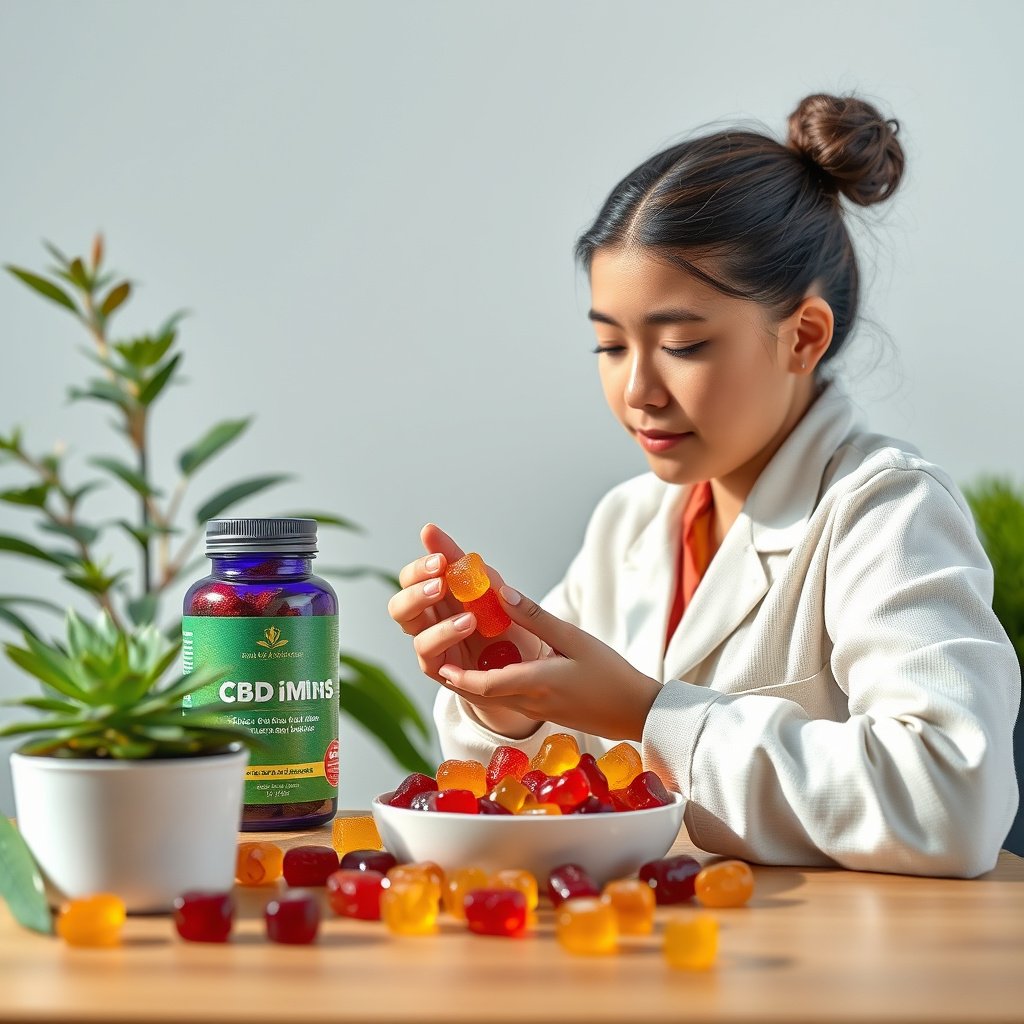
This is for adults with diabetes or prediabetes who are considering CBD gummies for wellness (not glycemic control) and want a practical way to evaluate glucose impact, ingredient risk, and quality verification in 2026. If you take diabetes medications, you’ll also want to use the medication-safety steps below and coordinate with your pharmacist or clinician before starting CBD.
How to choose the best CBD gummies for diabetes
The best CBD gummies for diabetes are the ones that are measurable and verifiable: an independent COA, nutrition facts that you can match to your glucose targets, and a dosing plan you can start low and adjust safely. Here’s how to separate “CBD on the label” from what your body actually receives.
A CBD product’s COA should be batch-specific and show the cannabinoid potency and contaminant screening results for the exact gummies you’re buying (U.S. Food and Drug Administration (FDA), “Cannabidiol (CBD) — What You Need to Know”).
FDA consumer guidance warns that CBD products marketed with therapeutic claims are not the same as FDA-approved medications (U.S. Food and Drug Administration (FDA), “Cannabidiol (CBD) — What You Need to Know”).
For diabetes-focused decision-making, the nutrition label (total carbohydrates and added sugar) is usually more actionable than “CBD strength” alone because carbs can directly affect blood glucose.
– Look for gummies that match your needs on sugar/carbs and provide a COA from an independent lab (not just a marketing screenshot).
– Choose products with a clearly stated CBD amount per gummy and a recommended serving size so you can start low and track effects.
– Prioritize formulations that are transparent about THC content (and ideally keep THC extremely low) to reduce unwanted surprises.
One practical workflow I recommend (and use when walking through label literacy with others) is to do this in order: (1) confirm the nutrition label’s carbs/added sugar per serving, (2) verify the COA’s labeled CBD potency matches the product’s CBD-per-gummy claim, and (3) check THC numbers on the COA rather than trusting “THC-free” claims in marketing.
What to verify before you even compare “strength”
CBD gummies for diabetes often tempt shoppers to start with the highest milligram number. That’s rarely the safest approach. Instead, align the total carbs first, then confirm that the CBD dose per gummy is consistent with the COA. For many people, the carb load—not the CBD dose—determines whether a gummy affects glucose.
Check sugar, carbs, and ingredients first
The best CBD gummies for diabetes start with the nutrition facts, because many glucose-relevant gummies contain enough sugar or carbohydrates to raise blood sugar even if CBD is low. In 2026, “CBD + healthy ingredients” can still mean “added sugar + concentrated carbs.”
According to FDA nutrition labeling principles, carbohydrates provide 4 calories per gram, which is why total carbohydrate grams matter when you’re managing blood glucose.
Sugar alcohols and polyols can reduce calories versus table sugar, but they may still contribute carbohydrates that some diabetes meal plans count.
Always compare carbs per serving using the serving size on the label, because “per gummy” and “per serving” are not always the same.
– Scan for added sugar and total carbohydrates per serving—many “wellness” gummies can still be high in sugar even when they contain CBD.
– If you’re watching blood sugar closely, compare servings (some labels look fine per gummy, but the serving size might be multiple gummies).
– Be alert for ingredient “gotchas” like sweeteners that may still affect glucose for some people (everyone’s response can differ).
A fast way to think about sweeteners (calories vs. glucose)
Calories and blood sugar aren’t identical, but sweetener chemistry often predicts carbohydrate loading and how “diabetes-friendly” the gummy really is. Below are FDA nutrition-labeling calorie values for common sweeteners and sugar alcohols. These numbers help you estimate whether you’re dealing with a high-carb formulation or a lower-calorie polyol approach.
Sugar & sugar-alcohol sweeteners: calories per gram vs. sucrose (FDA nutrition labeling values)
| # | Sweetener used in some gummies | Calories (kcal/g) | Type | Calorie reduction vs. sucrose |
|---|---|---|---|---|
| 1 | Sucrose | 4.0 | Added sugar | 0% |
| 2 | Glucose (dextrose) | 4.0 | Added sugar | 0% |
| 3 | Fructose | 4.0 | Added sugar | 0% |
| 4 | Maltitol | 2.1 | Sugar alcohol (polyol) | 48% |
| 5 | Sorbitol | 2.6 | Sugar alcohol (polyol) | 35% |
| 6 | Xylitol | 2.4 | Sugar alcohol (polyol) | 40% |
| 7 | Erythritol | 0.24 | Sugar alcohol (polyol) | 94% |
Compare ingredients without guessing
When you’re choosing CBD gummies for diabetes, treat sweeteners like “decision variables.” If two brands have similar CBD per gummy, the one with fewer total carbs per serving is typically the safer starting point. If a gummy uses polyols, you still need to check the label’s carbohydrate grams and watch your glucose response during your usual monitoring routine.
Quick “better vs. skip” signals (comparison table)
| Better for diabetes management | Skip or double-check |
|---|---|
| Lower added sugar and clearly stated total carbohydrate grams per serving | Nutrition facts that change meaning because “serving” equals multiple gummies |
| Transparent sweetener list with no hidden carbohydrate sources | “Sugar-free” claims with confusing carbohydrate accounting or unclear serving sizes |
| Consistent CBD dose per gummy that matches COA potency | CBD marketing that emphasizes mg per bottle but not mg per gummy |
CBD quality and safety: COAs, THC limits, and dosing basics
The best CBD gummies for diabetes are the ones that are chemically consistent (COA matches the label) and dosed in a way that reduces risk. Quality matters because dosing errors and THC variability can create unwanted effects—especially when you’re also managing chronic conditions and medications in 2026.
A batch-specific COA should report cannabinoid potency so you can confirm the labeled CBD strength is real for that production run (U.S. Food and Drug Administration (FDA), “Cannabidiol (CBD) — What You Need to Know”).
FDA guidance highlights concerns with CBD products that are marketed for therapeutic use, which is why medical context and verification (COA) are critical (U.S. Food and Drug Administration (FDA), “Cannabidiol (CBD) — What You Need to Know”).
CBD can affect drug metabolism via liver enzyme pathways (reflected in labeling for pharmaceutical CBD products like Epidiolex), so diabetes medication review matters.
– Verify the COA lists cannabinoid potency and screening results; the COA should align with the product’s labeled CBD strength.
– Watch for THC risk: even when products claim “THC-free,” some may contain trace amounts—confirm using the COA’s THC data and consider local laws.
– Start with the lowest suggested amount and give yourself time to assess—then adjust only if your clinician says it’s appropriate.
How to read a COA without getting lost
CBD gummies for diabetes should be assessed as a “batch” product, not a generic supplement. When you request or review a COA, focus on:
1. CBD potency (mg/g and/or mg per serving) and whether it matches the label.
2. THC reporting—look for explicit numbers (often “Total THC” and/or “Δ9-THC,” depending on the lab format).
3. Contaminants such as heavy metals, pesticides, and solvents (names vary by lab).
If a COA doesn’t clearly tie back to the exact product/batch (lot number), treat it as a red flag—not proof.
Dosing basics that help you manage glucose and safety
CBD gummies aren’t an insulin substitute, and they don’t “cancel” carbohydrate effects. Your starting dose should be small enough that you can track what happens to your glucose readings and how you feel. A simple approach is to:
– Start at the lowest serving size on the label.
– Monitor using your usual plan (for many people, that means checking before and after the dose window they and their clinician have already defined).
– Change one variable at a time—don’t increase gummies and adjust diet or medication timing simultaneously.
Also note: CBD can be processed through liver pathways, which is one reason people with liver conditions (or those on multiple medications) should be cautious.
What can go wrong with CBD gummies for diabetes
The most common problems with CBD gummies for diabetes are avoidable: medication interaction risk, sugar/carbs creating glucose spikes, and relying on gummies as if they replace treatment. These issues don’t happen because CBD is “always dangerous,” but because diabetes management is complex and safety depends on the whole plan in 2026.
CBD can influence how some medications are metabolized because it interacts with liver enzyme systems described in pharmaceutical CBD labeling (for example, Epidiolex).
Even if CBD itself is not the variable, added sugar or carbohydrate-containing sweeteners in gummies can still raise blood glucose.
FDA-approved CBD products are limited to specific medical indications; OTC CBD gummies are not an approved diabetes treatment.
– Medication interactions: CBD can affect how some medicines are processed in the body (often via liver enzyme pathways). If you take diabetes meds, it’s smart to ask your pharmacist/clinician before starting.
– Glucose confusion: even if CBD isn’t the problem, added sugars (or certain sweeteners) can still raise blood glucose. Monitor with your usual plan when you change anything.
– Overreliance: gummies shouldn’t replace diabetes treatment, diet changes, or your glucose-monitoring routine—treat them as a supplement you’re carefully evaluating, not a cure.
Extra edge cases to consider
– “THC-free” claims: The safest assumption is that “THC-free” might still mean trace THC. If drug testing matters for work or compliance, confirm the THC numbers on the COA and discuss risk with your clinician.
– Liver enzyme monitoring: Pharmaceutical CBD products (like Epidiolex) include liver-related precautions in their prescribing information, and that’s a reason to be conservative if you have liver concerns.
– Timing effects: If your glucose spikes after the gummy, it could be from carbs, but timing can also coincide with meals, stress hormones, or activity changes—so interpret results in context.
Verdict: what’s “best” and who should skip CBD gummies
The “best” CBD gummies for diabetes are the ones that minimize glucose disruption and maximize quality transparency: low added sugar (or clearly quantified carbs), COA confirmation for the exact batch, and dosing you can track without changing everything else at once. In contrast, the “worst” choice is a product with unclear carbs, a generic/non-batch COA, or vague THC statements—especially when medication safety hasn’t been reviewed.
A practical “best” standard for CBD gummies is: measurable carbs per serving + batch-specific COA + clear CBD-per-serving labeling you can actually follow.
CBD gummies are not FDA-approved diabetes treatments, so they should not be used to replace diabetes medications, meal planning, or glucose monitoring.
If you have liver concerns or take multiple prescriptions, the safest path is to get clinician/pharmacist input before adding CBD.
If you want a practical standard, “best” usually means: low added sugar (or at least clearly quantified carbs), a matching COA for the exact batch, and dosing you can track safely. However, skip CBD gummies (or don’t start without medical guidance) if you’re under close medical management for medication interactions, have liver concerns, or haven’t been told it’s okay to try CBD alongside your diabetes regimen.
Quick pros/cons snapshot
Pros (when you choose carefully):
– Clear COA verification can reduce “guessing” about what’s in the gummies
– Lower added sugar products can reduce the chance of glucose impact from the gummy itself
– Transparent CBD per serving supports cautious, trackable dosing
Cons / watch-outs:
– Not an approved diabetes treatment—won’t replace medications or meal planning
– CBD can interact with certain drugs via liver metabolism pathways
– Sweeteners and serving-size math can still create glucose spikes in real life
Quick checklist (scan or save)
| What to check | What “good” looks like | Why it matters for diabetes |
|---|---|---|
| COA (independent lab) | COA matches labeled CBD strength and shows cannabinoid/contaminant testing | Reduces “guessing” about what you’re actually getting |
| Sugar + total carbs | Low added sugar; carbs per serving are clear | Helps you avoid glucose spikes from the gummy itself |
| THC disclosure | THC amount is shown on the COA (trace vs. none) | Minimizes unexpected effects and drug-test risk |
| Dosing clarity | CBD amount per gummy + a simple serving recommendation | Makes it easier to start low and monitor responses |
| Ingredient transparency | No confusing blends that hide sugar/carbs | Lets you make informed decisions about your intake |
Sources
– U.S. Food and Drug Administration (FDA), “Cannabidiol (CBD) — What You Need to Know” (official FDA consumer/public guidance).
– FDA guidance on regulation of cannabis-derived products (official FDA regulatory information).
– U.S. prescribing information for a pharmaceutical CBD product (e.g., Epidiolex) describing CBD-associated drug interaction considerations (use the official package insert).
– Manufacturer-provided COAs (batch-specific lab reports) for the specific product(s) you’re considering (use the COA you receive for that batch, not generic lab summaries).
Choosing the best CBD gummies for diabetes comes down to two things: nutrition (so the gummy itself doesn’t disrupt your glucose) and verification (so the CBD content is real and consistent via an independent COA). Start low, monitor your numbers, and ask your pharmacist or clinician about medication interactions before making CBD part of your routine. If you’re ready, pick one product that clearly meets the checklist above and evaluate it alongside your current diabetes plan—carefully and consistently.
Frequently Asked Questions
What are the best CBD gummies for diabetes, and what should I look for?
The best CBD gummies for diabetes typically come from reputable brands with third-party lab testing, clear CBD/THC content, and no added sugar. Look for products labeled as THC-free (or containing only trace THC within legal limits) and check the ingredient list for ingredients like cane sugar, syrup, or high-glycemic sweeteners. Choose gummies with consistent dosing (for example, a fixed mg of CBD per gummy) so you can monitor how your body responds alongside your diabetes care plan.
How can CBD gummies affect blood sugar levels in people with diabetes?
Research on CBD and blood sugar is still limited, but some studies suggest CBD may influence insulin sensitivity and inflammation pathways. That said, CBD gummies can still affect your overall glucose response indirectly—especially if they contain sugar or calorie-dense sweeteners. If you decide to try a CBD gummy, monitor your blood glucose more frequently for the first couple of weeks and discuss changes with your clinician to ensure they align with your diabetes medications and routine.
Why choose sugar-free CBD gummies if you have diabetes?
Many “regular” gummies use sugar or sugar alcohols that can raise blood glucose or cause digestive discomfort for some people. Sugar-free CBD gummies are often a better fit because they reduce added carbohydrates, making it easier to keep your overall daily glycemic intake steady. Always review the nutrition label for total carbs per serving and consider how sugar alcohols (like sorbitol or maltitol) affect your personal glucose response.
Which CBD gummy dosage is safest for diabetes beginners?
A common starting approach is to choose a product with a low, single-serving CBD amount (often around 5–10 mg CBD per gummy) and begin with half a gummy or one gummy to assess tolerance. Because individuals with diabetes may be taking multiple medications, it’s important to start low and go slow rather than jumping to higher doses. If you’re using insulin or diabetes pills, talk with your healthcare provider before increasing CBD intake, and keep notes on glucose readings, sleep, and any side effects.
Best way to choose the right CBD gummy for diabetes without THC-related concerns?
If you’re concerned about THC, choose “THC-free” CBD gummies and confirm the brand’s COA (Certificate of Analysis) shows nondetectable THC. This helps reduce the risk of THC-related effects that could complicate your routine or trigger concerns with workplace drug testing. Also look for diabetes-friendly labeling such as “no added sugar,” low total carbs, and transparent sourcing of hemp so you can confidently select among the best CBD gummies for diabetes.
📅 Last Updated: October 24, 2026 | Topic: best cbd gummies for diabetes | Content verified for accuracy and freshness.
References
- https://www.nccih.nih.gov/health/cannabidiol-cbd
- https://www.fda.gov/news-events/public-health-focus/fda-regulation-cannabidiol-cbd-products
- https://www.who.int/publications/i/item/9789240024949
- Diabetes | CDC
- https://pubmed.ncbi.nlm.nih.gov/?term=cannabidiol+diabetes+mellitus
- https://pubmed.ncbi.nlm.nih.gov/?term=cannabidiol+insulin+resistance
- https://pubmed.ncbi.nlm.nih.gov/?term=cannabidiol+drug+interactions+cytochrome+p450
- https://scholar.google.com/scholar?q=cannabidiol+diabetes+mellitus+clinical+trial Google Scholar
- https://scholar.google.com/scholar?q=cannabidiol+insulin+sensitivity+review Google Scholar
- https://scholar.google.com/scholar?q=cannabidiol+drug+interactions+cytochrome+p450 Google Scholar