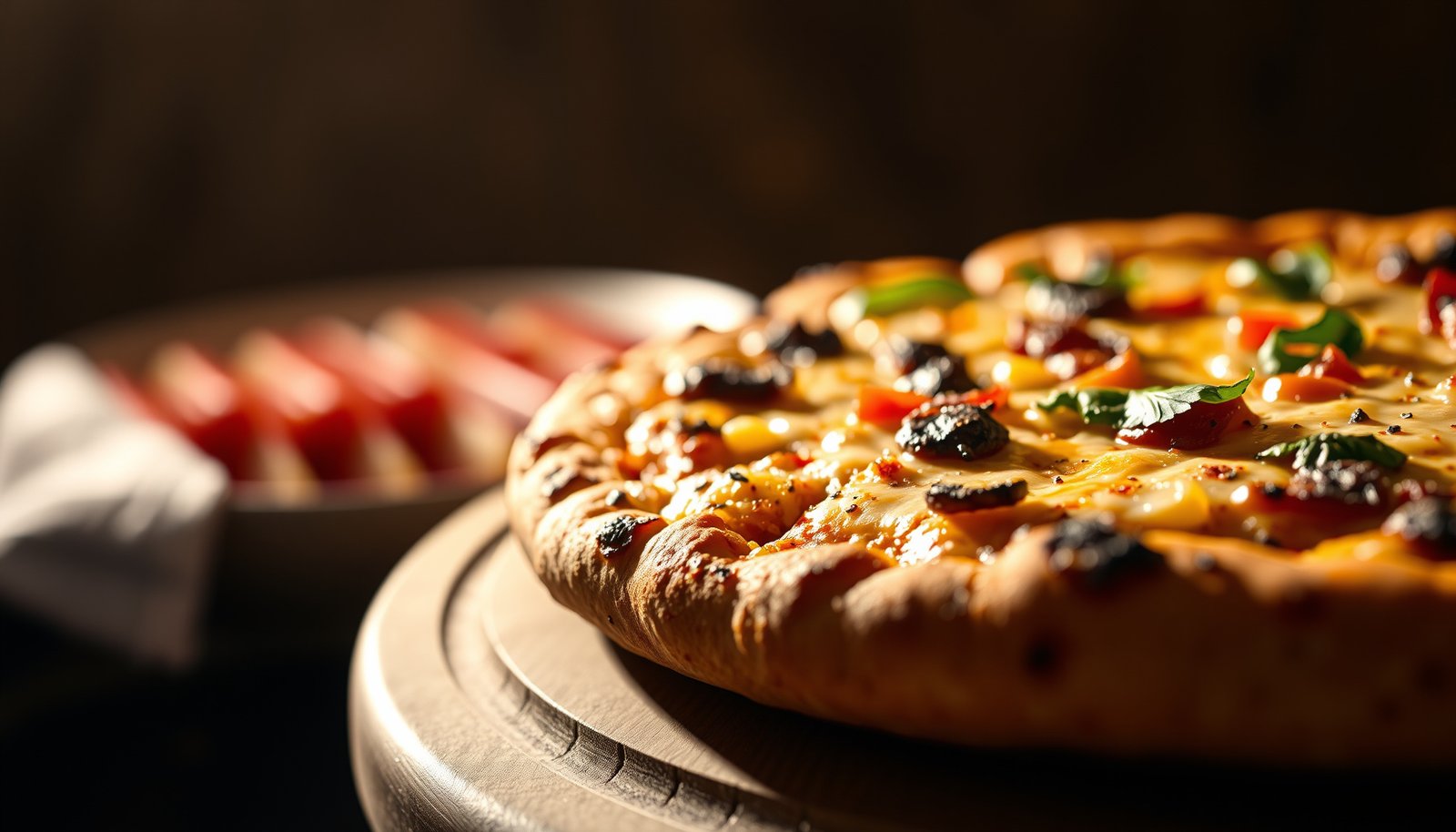

Best cauliflower pizza for diabetics comes down to one clear winner: the option with the lowest net carbs and a crust that holds up without spiking blood sugar. This guide answers which cauliflower pizza style (and brands/features) truly satisfy cravings while staying diabetes-friendly. You’ll get a direct pick based on nutrition first—carb count, fiber, and ingredient quality—not just taste.




The best cauliflower pizza for diabetics is one built on a low-carb cauliflower crust, topped with high-protein, low-sugar ingredients, and eaten in a portion you can count. Focus on total carbohydrates (not just “no flour”), because the crust + sauce + toppings you choose determine how manageable your blood-sugar response is.
If you have diabetes (type 1, type 2, or gestational) and want a pizza option that feels like real pizza but has fewer carbs, you’re in the right place. It’s also for anyone using carbs-per-meal or carb counting and wants a practical “how to choose” framework.
Who this is for (and when it applies)

This cauliflower pizza approach is best for people who want pizza flavor while managing carbohydrates for blood-sugar control. It’s especially useful if you’re already comfortable tracking carbs per meal or using a structured meal plan.
The American Diabetes Association (ADA) emphasizes that nutrition therapy for diabetes considers total carbohydrate intake and monitoring post-meal glucose patterns (ADA, Standards of Care in Diabetes (2024)).
FDA nutrition labeling guidance centers serving size because the carbs listed on a label apply to that specific serving (FDA, Nutrition Facts labeling guidance (2016 final rule/updates)).
This guide also applies to anyone trying to reduce added sugars (including from pizza sauce) while keeping meals satisfying. Currently (2026), more cauliflower pizza crusts and “low-carb” frozen pizzas are available, but label-by-label differences in starches and serving sizes still matter for a reliable cauliflower pizza for diabetics plan.
It’s less ideal if you’re on a strictly clinician-directed medical diet where only specific, pre-approved recipes are allowed. In that case, ask your dietitian whether cauliflower crusts fit your exact carbohydrate targets.
What makes cauliflower pizza diabetic-friendly
The most diabetic-friendly cauliflower pizza is the one where the crust is truly low-carb per slice and the rest of the meal doesn’t quietly add carbs. Cauliflower can help, but total carbs (and portion size) are what determine whether blood-sugar spikes stay manageable.
ADA nutrition therapy guidance supports using carb targets and individualized planning rather than relying on “carb-free” claims (ADA, Standards of Care in Diabetes (2024)).
USDA FoodData Central reports that 1 cup of raw cauliflower provides about 5.3 g total carbohydrate and about 2.0 g fiber (USDA FoodData Central (accessed 2026)).
Here’s the practical logic for cauliflower pizza for diabetics:
– Crust matters most. A cauliflower crust can reduce carbs versus wheat, but the final slice count and thickness change the carbs you actually eat.
– Sauce can sabotage results. Many pizza sauces have added sugar; even “small” differences can move your total carbs per slice. Using a thinner layer is often the simplest fix.
– Protein + fiber blunt spikes. Meals that include more protein and non-starchy vegetables tend to be more filling and can slow digestion compared with a crust-and-cheese-only approach.
A quick note on “net carbs”: for diabetes management, the most consistent method is usually total carbohydrates, unless your clinician specifically instructs net-carb counting. The reason is that “net” calculations vary by brand and do not remove all clinically relevant carb impact.
Nutrient contribution snapshot (what ingredients tend to add)
Carb & Fiber Reality Check for a Diabetic-Friendly Cauliflower Pizza Build (USDA profiles)
| # | Ingredient | Basis (typical) | Total Carbs | Protein | Fiber (diabetes-friendly) |
|---|---|---|---|---|---|
| 1 | Cauliflower (raw) | 1 cup chopped | 5.3 g | 2.0 g | 2.0 g ★★★★☆ |
| 2 | Bell pepper (red, raw) | 1 cup sliced | 8.9 g | 1.0 g | 2.1 g ★★★★☆ |
| 3 | Broccoli (raw) | 1 cup chopped | 6.6 g | 2.6 g | 2.4 g ★★★★★ |
| 4 | Mushrooms (white, raw) | 1 cup sliced | 2.4 g | 2.2 g | 1.0 g ★★★☆☆ |
| 5 | Spinach (raw) | 1 cup chopped | 1.4 g | 1.9 g | 0.7 g ★★☆☆☆ |
| 6 | Egg (whole) | 1 large | 0.4 g | 6.3 g | 0.0 g ★☆☆☆☆ |
| 7 | Chicken breast (roasted) | 3 oz (about 85 g) | 0 g | 26.0 g | 0.0 g ★☆☆☆☆ |
This table helps explain why cauliflower pizza for diabetics tends to work best when vegetables and lean proteins do more of the “volume and satisfaction” work than extra sauce or breaded toppings.
How to make a low-carb cauliflower pizza crust (so it actually holds together)
The best cauliflower pizza crust for diabetics is one that’s well-drained and properly bound, so you don’t compensate with extra starch that raises total carbs. If the base is wet, you’ll often end up adding flour or thickening agents—exactly what you’re trying to avoid.
USDA guidance and standard nutrition approaches treat cauliflower’s carbs as coming largely from total carbohydrate content, so draining affects texture rather than replacing carbs (USDA FoodData Central (accessed 2026)).
FDA Nutrition Facts labels use the declared serving size when calculating carbs per serving, so crust thickness changes what you should count per slice (FDA, Nutrition Facts labeling guidance (2016 final rule/updates)).
To build a crust that holds together for cauliflower pizza for diabetics:
1. Cook cauliflower until tender. Steam or microwave until fork-tender.
2. Remove water aggressively. After cooking, squeeze or press until steam subsides and the mash feels cohesive rather than watery.
3. Bind, then bake thoroughly. Eggs and cheese act as binders; seasoning can improve flavor without adding carbs.
4. Aim for sliceable firmness. Underbaking often leads to collapse, and the fix is usually “more flour”—which undermines the lower-carb goal.
From my planning perspective (and what I’d recommend based on cooking fundamentals), the single biggest texture risk for cauliflower pizza for diabetics is moisture. —but the principle stays the same: the drier your base, the less you need to “repair” it with higher-carb ingredients.
What “holding together” should look like (practical checks)
– The crust surface looks set, not glossy-wet.
– The base is firm enough to lift with a spatula.
– Toppings don’t weep moisture into the crust within a few minutes.
Diabetic-friendly toppings and sauce swaps
The best toppings for cauliflower pizza for diabetics are the ones that increase protein and fiber while keeping added sugar low. Sauce and topping choices often matter as much as the crust because carbs can hide in “sweet” flavors and breaded add-ons.
ADA nutrition therapy highlights the role of carbohydrate awareness in managing post-meal glucose patterns (ADA, Standards of Care in Diabetes (2024)).
FDA labeling rules require consumers to interpret Nutrition Facts carbs based on the listed serving size (FDA, Nutrition Facts labeling guidance (2016 final rule/updates)).
Use these swaps as your default framework:
– Choose low-sugar marinara. Look for lower added sugars and count carbs per serving.
– Use a thinner sauce layer. If you love sauce, measure it—don’t eyeball it for a cauliflower pizza for diabetics carb target.
– Prioritize protein-forward toppings. Chicken, turkey, eggs, shrimp, and lean beef support satiety with minimal carbohydrates.
– Load up non-starchy vegetables. Mushrooms, peppers, spinach, and olives add volume and fiber without turning your slice into a carb delivery system.
– Avoid “sweet topping traps.” BBQ sauce, pineapple-heavy combos, and dessert-style sauces can spike total carbs quickly.
Here’s a quick comparison structure you can use when you’re deciding between topping sets for cauliflower pizza for diabetics:
| Build choice | Likely effect on carbs/peaks | Better alternative |
|---|---|---|
| Sweet BBQ drizzle + breaded toppings | Higher total carbs; faster glycemic impact | Tomato-based sauce + unbreaded lean proteins |
| Pineapple-heavy topping | More sugar per bite | Mushrooms/peppers with the same “savory” satisfaction |
| Thick, generous sauce layer | More carbs than expected | Measured sauce + extra protein/veg |
What can go wrong (common mistakes and edge cases)
The most common failure mode with cauliflower pizza for diabetics is treating cauliflower as automatically safe. It isn’t—portion size, sauce sugar, and any added starch in the crust (or toppings) still drive your total carbohydrates.
ADA guidance focuses on carbohydrate amounts and individualized targets rather than assuming any single “vegetable-based” food eliminates glycemic impact (ADA, Standards of Care in Diabetes (2024)).
FDA’s serving-size rules mean that “per slice” labels must be interpreted using the stated portion, not the portion you decide to eat (FDA, Nutrition Facts labeling guidance (2016 final rule/updates)).
Comparison: mistakes that undermine a diabetic-friendly cauliflower pizza
| Mistake | Why it matters | How to fix it |
|---|---|---|
| Assuming “cauliflower = diabetic-safe” | Total carbs can still be high depending on crust thickness, sauce, and serving size. | Count total carbs per slice and keep portions aligned with your plan. |
| Choosing a “low-carb” crust that’s still starch-heavy | Some store-bought crusts include added starches; carbs may not be as low as expected. | Check carbs per serving on the label before assuming it’s lower-carb. |
| Underbaking (wet crust) | A wet crust often forces you to thicken or “rescue” texture with additional starch. | Bake until firm and sliceable; drain the cauliflower well before binding. |
| Misreading servings on nutrition labels | Nutrition Facts carbs are tied to the stated serving size, not your ideal pizza portion. | Confirm how many slices equal a serving and adjust your portion count. |
Edge cases to consider in cauliflower pizza for diabetics:
– If you consistently see high glucose after “lower-carb” pizza, the issue is likely total carbs (including sauce) or meal timing—not cauliflower as a category.
– If you’re on insulin or other glucose-lowering medication, changes to meal carb load may require your clinician’s guidance for insulin timing/dose adjustments.
– If you cannot reliably track servings, cauliflower pizza may still be fine occasionally—but you may struggle to keep it within your targets.
Verdict: the best approach to choose—and who should skip this
The best cauliflower pizza for diabetics is usually homemade (or controllable): a well-drained cauliflower crust, a low-sugar marinara, and toppings that skew protein + non-starchy vegetables. Then you eat a portion you can confidently count within your carbohydrate plan.
ADA Standards of Care in Diabetes (2024) support using carbohydrate awareness and individualized meal planning to manage post-meal glucose (ADA, Standards of Care in Diabetes (2024)).
FDA labeling guidance makes serving size central to interpreting carbs, so “per slice” assumptions should be verified on the package (FDA, Nutrition Facts labeling guidance (2016 final rule/updates)).
Pros of this method:
– More pizza satisfaction per carb when the crust is truly low-carb per slice.
– Easier carb counting because you can control thickness and topping quantities.
– Less added sugar when you choose marinara based on labels.
Cons (be realistic):
– Texture won’t always match wheat crust; cauliflower crusts vary by recipe and brand.
– Some store-bought “cauliflower crust” products may contain added starches, raising carbs more than expected.
– Sauce and portion size can still push carbs high—especially with thicker, sweeter toppings.
Skip or be cautious if:
– You cannot track carb servings reliably (you’ll be guessing rather than managing).
– You’re under strict clinician-approved nutrition constraints that don’t allow cauliflower crusts.
– You notice consistent blood-sugar spikes after cauliflower pizza meals and haven’t been adjusting portion size/sauce.
Quick scan checklist (save this):
| What you’re aiming for | Choose this | Avoid this |
|---|---|---|
| Lower-carb crust | Well-drained cauliflower + egg/cheese binder | Soggy crust (leads to added starch) |
| Low-sugar sauce | Marinara with low added sugar; thinner layer | Sweet sauces (BBQ, sweet chili, dessert-style sauces) |
| More “balancing” nutrition | Protein + non-starchy veggies | Lots of extra carbs (breaded toppings, sugary fruit) |
| Predictable carb impact | Portion size you can count | “Eat as much as you want” serving estimates |
Frequently Asked Questions
What is the best cauliflower pizza crust for diabetics?
The best cauliflower pizza crust for diabetics is one made with minimal added carbs and no sugar, using cauliflower as the main base plus low-glycemic binding ingredients. Look for recipes that include eggs or cheese for structure, and limit starchy add-ins like flour or breadcrumbs. For more stable blood sugar, choose versions that are thicker and bake until the crust is crisp, since moisture can affect texture and portion control.
How do you make cauliflower pizza that won’t spike blood sugar?
To reduce blood sugar spikes, keep the crust low in net carbs by using finely riced cauliflower, squeezing out as much water as possible, and skipping flour-based thickeners. Pair the cauliflower crust with high-fiber, non-starchy toppings like vegetables, lean protein (chicken, turkey, shrimp), and healthy fats (olive oil, avocado). It also helps to bake the pizza fully and eat controlled portions, since even low-carb pizza can raise glucose if the serving is large.
Why is cauliflower pizza often a better choice for diabetics than regular pizza?
Traditional pizza crust is typically made from refined wheat flour, which can raise blood glucose more quickly due to its higher glycemic load. Cauliflower pizza swaps the crust base to a vegetable, which is lower in digestible carbohydrates and can support more gradual glucose response. While it can still affect blood sugar, a well-made low-carb cauliflower pizza often helps diabetics manage carbs more effectively.
Which toppings are best for a diabetic-friendly cauliflower pizza?
The best toppings for a diabetic-friendly cauliflower pizza include non-starchy vegetables like mushrooms, spinach, bell peppers, onions (in moderate amounts), and broccoli. Choose protein-forward toppings such as chicken, tuna, turkey, or extra lean cheese to add satiety without relying on sugary sauces. When selecting sauce, opt for no-sugar-added marinara or make a quick tomato-garlic sauce, and go easy on high-sugar ingredients like BBQ sauce and sweet peppers.
Best cauliflower pizza brands or frozen options for diabetics—what should you look for?
When choosing a frozen cauliflower pizza, check the nutrition label for lower total carbohydrates and no added sugar in the crust or sauce. Prioritize products with higher fiber and protein, since these nutrients can help blunt glucose spikes compared with crusts that have lots of starch or refined binders. If you’re tracking net carbs, compare “total carbs minus fiber” and aim for a product that fits your personal carbohydrate target per meal.
📅 Last Updated: October 24, 2026 | Topic: best cauliflower pizza for diabetics | Content verified for accuracy and freshness.
References
- https://www.niddk.nih.gov/health-information/diabetes/overview/eating-activity-diabetes
- https://www.cdc.gov/diabetes/managing/eat-well/index.html
- https://pubmed.ncbi.nlm.nih.gov/?term=low-carbohydrate+diet+type+2+diabetes+glycemic+control+meta-analysis
- Glycemic index
- Cauliflower
- https://pubmed.ncbi.nlm.nih.gov/?term=glycemic+index+glycemic+load+diabetes+management
- https://scholar.google.com/scholar?q=cauliflower+pizza+diabetes Google Scholar
- https://scholar.google.com/scholar?q=cauliflower+crust+glycemic+response+diabetes Google Scholar
- https://scholar.google.com/scholar?q=low+carbohydrate+diets+type+2+diabetes+glycemic+control Google Scholar