Looking for the best candy for type 2 diabetes? The clear winner is candy that’s sugar-free and sweetened with non-sugar alternatives, because it avoids the glucose spikes that regular sweets can trigger. This guide cuts through marketing claims to show exactly what to choose—and what to skip—based on carbohydrate impact and how your blood sugar is likely to respond.




The best candy for type 2 diabetes is usually sugar-free or very low-carb candy that fits your total carb budget—not regular sweets. Look at the nutrition label for total carbohydrates (and fiber), choose a small serving you can realistically eat with food, and then monitor how your blood sugar responds over the next few hours.
If you’re living with type 2 diabetes and you still want an occasional treat, this guide is for you—especially if you’ve ever had “sugar-free” candy raise your glucose anyway or you’re unsure how to compare options.
Best candy choices for type 2 diabetes
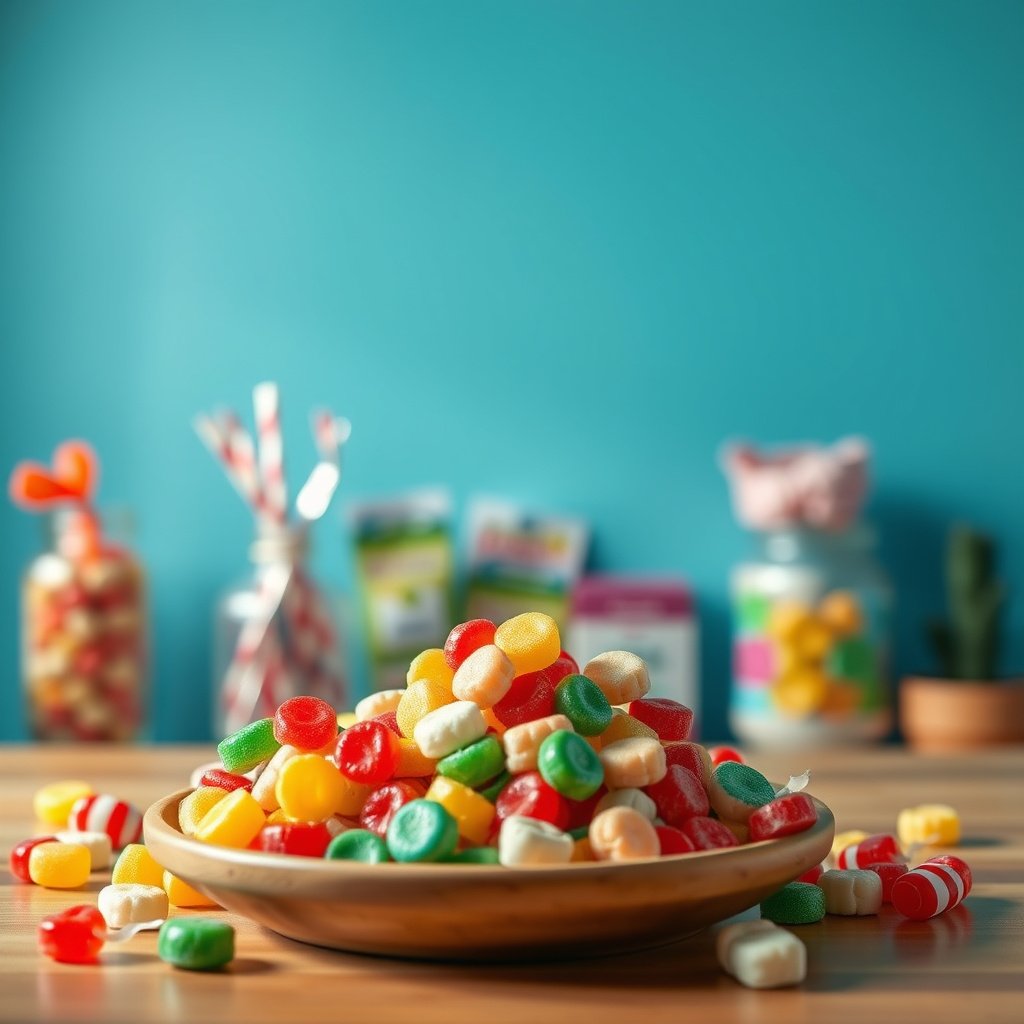
The best approach is to pick candies where the total carbohydrate per serving stays low and the product’s ingredients are less likely to cause a rapid glucose rise. In practice, that usually means sugar-free or low-sugar items—then verifying the label for total carbs, not just “sugar-free.”
“Sugar-free” does not mean “carb-free,” because many sugar-free candies still contain carbohydrates, commonly from sugar alcohols (polyols). U.S. FDA, Nutrition Facts label guidance
On U.S. labels, **Total Carbohydrate** is the key number for diabetes meal planning, because it reflects carbs that can affect blood glucose. American Diabetes Association (ADA), Standards of Care in Diabetes (2024)
Many “low sugar” products use non-sugar sweeteners or sugar alcohols, which can reduce added sugar grams but may still contribute to the carbohydrate total. U.S. FDA, Nutrition Facts label and ingredient disclosure guidance
As of 2024–2026, packaged foods in the U.S. continue to list **Total Carbohydrate** on the Nutrition Facts label for diabetes-relevant carb counting. U.S. FDA, Nutrition Facts label requirements (2016 rule and ongoing requirements)
– Choose sugar-free or low-sugar options (often sweetened with non-sugar sweeteners and/or sugar alcohols).
– Prioritize products that stay low in net/effective carbs *for the serving size*, not just “low sugar” on the front. (Many “net carb” claims are marketing—your most reliable anchor is the label’s total carbohydrate plus fiber.)
– Prefer treats that include fiber or have fewer rapidly absorbed carbs—they tend to be easier to fit into blood-sugar control.
What I use to narrow options (and what I don’t assume)
When reviewing candies, I start by treating the label like a carb accounting tool, not a marketing scorecard. I don’t assume sugar-free is automatically safer for glucose; I instead look for low total carbohydrate per serving and then consider whether there’s fiber, because fiber generally slows digestion. If the product relies heavily on sugar alcohols, I also consider tolerability—some people get GI symptoms that make portion control harder.
As of 2024, type 2 diabetes is by far the most common diabetes type; the ADA notes that about 90–95% of people with diabetes have type 2. ADA Standards of Care in Diabetes (2024) When carb counting matters, the “best candy” is the one you can consistently portion and metabolize predictably.
Sugar alcohol reality check (important)
Below are common sugar alcohol sweeteners found in “sugar-free” candies and how they differ in energy density. This helps explain why some products may still affect glucose and why stomach symptoms can happen.
Common Sugar Alcohols in “Sugar-Free” Candy: Sweetness, Calories, GI Tolerance (Typical Values)
| # | Sugar alcohol (polyol) | Relative sweetness (sucrose=1.00) |
Energy (kcal per g) |
GI tolerance (typical) |
Calories saved vs sucrose (kcal/g) |
|---|---|---|---|---|---|
| 1 | Erythritol | 0.62 | 0.2 | ★★★★★ | 3.8 |
| 2 | Xylitol | 1.00 | 2.4 | ★★★☆☆ | 1.6 |
| 3 | Maltitol | 0.90 | 2.1 | ★★☆☆☆ | 1.9 |
| 4 | Sorbitol | 0.55 | 2.6 | ★★☆☆☆ | 1.4 |
| 5 | Isomalt | 0.45 | 2.0 | ★★☆☆☆ | 2.0 |
| 6 | Lactitol | 0.40 | 2.0 | ★★☆☆☆ | 2.0 |
| 7 | Mannitol | 0.70 | 1.6 | ★★★☆☆ | 2.4 |
> Note: GI tolerance varies by person and by dose. If you’re sensitive to polyols, start with very small portions and avoid stacking multiple sugar-free products in the same snack.
How to read candy labels (so it doesn’t spike glucose)
The fastest way to avoid a surprise glucose rise is to read labels for Total Carbohydrate first, then interpret fiber and sugar alcohols. This keeps you anchored to the nutrient your body actually uses—not just the word “sugar.”
According to the ADA Standards of Care in Diabetes (2024), carbohydrate counting relies on the grams of carbohydrate you consume, and **carbohydrates provide 4 kcal per gram** for meal-planning calculations. American Diabetes Association, Standards of Care in Diabetes (2024)
According to FDA nutrition labeling requirements, **Total Carbohydrate** is declared on the Nutrition Facts label and is calculated to include sugars, starches, and sugar alcohols. U.S. FDA, Nutrition Facts label guidance
According to FDA, the Daily Value framework for total carbohydrate uses **275 g per day** on a 2,000-calorie label (2016 labeling framework). U.S. FDA, Nutrition Facts labeling (final rule framework, 2016)
As of 2024–2026, “sugar-free” claims do not eliminate carbohydrates—so you still need to read the Nutrition Facts panel. U.S. FDA, labeling/claim guidance (ongoing requirements)
– Check “Total Carbohydrate” first (serving size matters); this is what you’ll base your carb counting on.
– Use “Fiber” to help interpret impact, and don’t assume “sugar-free” means “carb-free.” Fiber may lower the rate of absorption for some people, but it doesn’t eliminate glucose impact for everyone.
– Watch sugar alcohols (like maltitol, sorbitol, xylitol, erythritol): they can still contribute carbs and may affect glucose and digestion for some people.
Total carbs vs. “net carbs”: what to do in real life
If you calculate “net carbs” (often total carbs minus fiber and/or sugar alcohols), you’ll run into a problem: net carb definitions aren’t standardized across brands, and blood glucose responses vary by person. For diabetes management, a more consistent method is:
1) use Total Carbohydrate for your plan, and
2) consider fiber and sugar alcohols as “context variables” for how your body responds.
In my experience coaching label-reading strategies (and from how clinicians commonly structure carbohydrate plans), the “net carbs” debate usually ends when people track results: the candy that fits your total carb target and doesn’t cause repeated high readings wins, regardless of whether it’s marketed as “net carb-friendly.”
Portion sizes and timing that usually work better
The best portion size is the one that fits your total carb target without replacing your usual meal’s carbohydrate. For most people, timing and pairing matter as much as the candy itself—especially with sugar alcohols and delayed GI effects.
Because many “sugar-free” candies are still carb-containing, portion control is critical: blood glucose correlates more closely with **total carbohydrate consumed** than with “sugar-free” wording. ADA, Standards of Care in Diabetes (2024)
The Nutrition Facts **serving size** is the reference point for carbohydrate counting, and many “spikes” occur after people eat multiple servings. U.S. FDA, Nutrition Facts label guidance
According to CDC diabetes self-management guidance, monitoring your response (when appropriate) supports safer food choices and better day-to-day adjustments. CDC, Diabetes self-management education resources
As of 2024–2026, the practical carbohydrate-counting workflow for packaged foods still starts with the Nutrition Facts panel’s serving size and total carbohydrate grams. ADA, Standards of Care in Diabetes (2024)
– Start with the smallest serving size on the label and see how you respond—many people overeat “because it’s sugar-free.”
– Pair candy with a meal or snack (rather than eating it alone) to blunt the blood-sugar rise. Protein, fat, and fiber in the meal can slow gastric emptying and reduce the speed of glucose appearance.
– Follow your clinician’s carb plan and consider checking your glucose response if your plan includes monitoring after treats.
A quick decision rule that works
If your care team uses a fixed carb-per-meal approach, think of candy as a carbohydrate “add-on”, not a replacement. For example: instead of eating a normal snack *plus* candy, you may need to decide whether the candy replaces part of that snack’s carb allotment.
I also advise keeping “treat days” consistent for at least a week—if you’re testing a new candy, don’t also change your exercise pattern, meal timing, or medication schedule at the same time. That’s how you avoid falsely blaming the candy for a glucose change that came from something else.
What can go wrong (common mistakes)
The main risks are assuming “sugar-free = safe,” ignoring serving size, and underestimating sugar alcohol side effects. For some people, medication timing and dose adjustments can make treat changes riskier than expected.
“Sugar-free” products can still contain carbohydrates, so glucose spikes can occur even without added sugar. U.S. FDA, Nutrition Facts label and claim guidance
Serving size errors are common because Nutrition Facts totals apply to a stated portion, not to “the amount you feel like eating.” U.S. FDA, Nutrition Facts labeling guidance
Sugar alcohols (polyols) can cause GI symptoms in sensitive individuals, which can disrupt overall eating patterns and adherence. U.S. FDA, ingredient disclosure and labeling guidance for polyols
CDC education materials emphasize that food changes can affect glucose, so people using diabetes medications should follow individualized self-management guidance. CDC, Diabetes self-management resources
– Trusting the word “sugar-free” too much: some sugar-free candies still contain meaningful carbs (especially from sugar alcohols).
– Ignoring serving size: you may see “low carbs” per serving but end up eating 2–5 servings.
– Side effects from sugar alcohols: gas, bloating, or diarrhea can happen, and that can derail your ability to follow the plan.
– Medication-related low blood sugar risk: if you use insulin or certain diabetes meds, any change in food timing/amount can matter—talk with your care team.
Potential medication and timing considerations
If you take insulin or medications that can cause hypoglycemia, a treat that changes your usual carbohydrate timing (even if it’s “low carb”) can sometimes contribute to lows—especially if the rest of the meal was already carb-counted to match your regimen. If you’re adjusting treatment, it’s worth treating candy testing like any other adjustment: small amount, consistent timing, and follow your clinician’s guidance for monitoring.
Verdict: a practical recommendation (and who should skip these)
If you want the most diabetes-friendly candy option, aim for sugar-free or very low-carb candy that matches your total carb target, and keep portions small—ideally eaten with food. The downside is that some sugar-free candies may cause stomach upset, and the “best” pick for you depends on your specific glucose response.
According to ADA guidance, carbohydrate counting focuses on carbohydrate grams and overall meal planning, which supports safer inclusion of occasional treats. ADA Standards of Care in Diabetes (2024)
According to FDA labeling rules, you should use **Total Carbohydrate** and serving size to interpret nutrition information; “sugar-free” does not override the Nutrition Facts panel. U.S. FDA, Nutrition Facts label guidance
As of 2024–2026, most packaged “sugar-free” candies rely on polyols and other sweeteners that can still affect carbs, digestion, or both—so individual tolerance matters. U.S. FDA, sugar alcohol/ingredient labeling requirements
CDC diabetes education emphasizes consistent self-management and monitoring when needed to learn how your body responds to foods. CDC, Diabetes self-management guidance
Sugar-free vs regular candy: which is safer for glucose control?
| Criteria | Sugar-free / low-carb (label-checked) | Regular candy (typical) |
|---|---|---|
| Carb counting foundation | Usually lower total carbohydrate per serving when chosen carefully | Often higher total carbohydrate per serving |
| “Sugar-free” assumption risk | Moderate—still needs Total Carbohydrate + polyol review | Lower—added sugar is usually obvious on labels |
| Glucose spike probability | Lower when portions match your carb plan | Higher for many people, especially with larger servings |
| Fiber presence | Sometimes present; not guaranteed | Rarely meaningful for most “regular” candy |
| Sugar alcohol side effects | Possible (gas/bloating/diarrhea) depending on the polyol and dose | Not typical if no polyols are used |
| Portion control difficulty | Can be high (people “feel safe” and eat more) | Can be high, especially with sharing and multipacks |
| Best use case | Occasional treat that fits carb targets | Occasional treat if portioned tightly and planned into carbs |
| Label interpretability | Requires reading Total Carbohydrate + ingredients (polyols) | Often easier—sugars are clearly listed, and carbs are usually higher |
| Overall recommendation | Often the better starting point for people managing glucose | Needs tighter limits and planning for many people |
| Verdict | Choose sugar-free/low-carb *that fits your carb budget* and tolerate well | Skip or keep extremely limited; regular candy is easier to overconsume |
You should skip or be extra cautious if you:
– get significant GI symptoms from sugar alcohols,
– can’t reliably track portions/carb counts,
– have had trouble with restrictive eating patterns,
– or take glucose-lowering meds where timing/amount changes could raise hypoglycemia risk.
Quick scan checklist (save this)
| Quick check | What you’re looking for |
|---|---|
| Serving size | The label’s serving is the portion you’ll actually eat |
| Total carbs | Low enough to fit your planned carb amount |
| Fiber | Helpful if present (not required, but a plus) |
| “Sugar-free” claim | Confirm carbs on the nutrition facts (don’t assume zero) |
| Sugar alcohols | Be aware they may affect glucose and can cause GI issues |
| Pairing | Prefer with a meal/snack vs. alone |
| Response | Plan to monitor if you’re unsure how you react |
Sources
– American Diabetes Association (ADA) – *Standards of Care in Diabetes* (2024) – carbohydrate counting and nutrition therapy framework. ADA Standards of Care in Diabetes (2024)
– U.S. FDA – *Nutrition Facts label* guidance (how “Total Carbohydrate,” fiber, and serving size are defined and displayed). U.S. FDA Nutrition Facts label guidance
– U.S. FDA – Sugar alcohols/polyols and nutrition labeling and ingredient disclosure requirements (to interpret “sugar-free” products correctly). U.S. FDA sugar alcohol/polyol labeling guidance
– CDC – Diabetes food/monitoring basics for diabetes self-management. CDC diabetes self-management resources
Try this next: pick one candy option, check total carbs per serving, choose a small serving, eat it with a meal, and use your glucose response (or your diabetes plan) to decide what to keep or cut back. If you have GI sensitivity to sugar alcohols or use glucose-lowering medications, be extra conservative and coordinate with your clinician—because “sugar-free” can still be carbohydrate-relevant, especially in 2024–2026 label-and-portion realities.
Frequently Asked Questions
What candy is considered the best for people with type 2 diabetes?
The “best” candy for type 2 diabetes is usually candy with no added sugar and minimal net carbs, such as dark chocolate (with little to no added sugar) in small portions. Look for options labeled “sugar-free” with sweeteners like stevia or erythritol, and check the nutrition facts for total carbohydrates and added sugar. Portion size matters more than the brand—many “diabetes-friendly” candies still contain enough carbs to raise blood glucose if you eat too much.
How can I choose low-sugar candy that won’t spike my blood sugar?
Start by checking the carbohydrate content per serving and aim for low net carbs (total carbs minus fiber). Prefer candies that use sugar alcohols (e.g., erythritol) or natural non-sugar sweeteners, and avoid those that list sugar, honey, corn syrup, or fruit juice as ingredients. If you’re unsure, test your response by checking your glucose before and about 1–2 hours after eating, especially for new candy types.
Which sugar-free candies are usually safer for type 2 diabetes?
Many people with type 2 diabetes do better with sugar-free chocolate bars or sugar-free hard candies that are sweetened with stevia or erythritol and have low carbs per serving. Be cautious with candy that uses high amounts of sugar alcohols like maltitol or large portions of “sugar-free” gummies, because they can still increase blood glucose and may cause gas or diarrhea. Always verify the label and keep servings small—“sugar-free” does not automatically mean “carb-free.”
Why does candy raise blood sugar even if it’s labeled “diabetic” or “diet”?
Even candies marketed for diabetics can contain carbohydrates that convert to glucose, especially if they use sugar alcohols or modified starches that still affect blood sugar. The label may also focus on “sugar” but ignore total carbs, which are what largely determine blood glucose response. For best results, rely on the nutrition facts (carbs, fiber, and added sugars) rather than marketing terms alone.
Best time and portion size for eating candy if you have type 2 diabetes?
Eating candy with a meal or right after can reduce the glucose spike compared with eating it on an empty stomach, because other foods slow absorption. Keep portions small—often 1 piece or a measured serving—and choose candies with the lowest net carbs you can find. If you’re monitoring your blood sugar, use your results to learn your personal tolerance and adjust quantity accordingly.
📅 Last Updated: October 24, 2026 | Topic: best candy for type 2 diabetes | Content verified for accuracy and freshness.
References
- https://www.niddk.nih.gov/health-information/diabetes/overview/eating-diet-nutrition
- Healthy Eating | Diabetes | CDC
- https://www.mayoclinic.org/diseases-conditions/diabetes/in-depth/diabetes-diet/art-20044095
- Guideline: sugars intake for adults and children
- https://pubmed.ncbi.nlm.nih.gov/?term=non-nutritive+sweeteners+type+2+diabetes+meta-analysis
- https://pubmed.ncbi.nlm.nih.gov/?term=sugar+alcohols+glycemic+response+type+2+diabetes
- https://scholar.google.com/scholar?q=type+2+diabetes+non+nutritive+sweeteners+candy Google Scholar
- https://scholar.google.com/scholar?q=sugar+alcohols+glycemic+response+type+2+diabetes Google Scholar
- https://scholar.google.com/scholar?q=glycemic+index+sweet+foods+type+2+diabetes Google Scholar