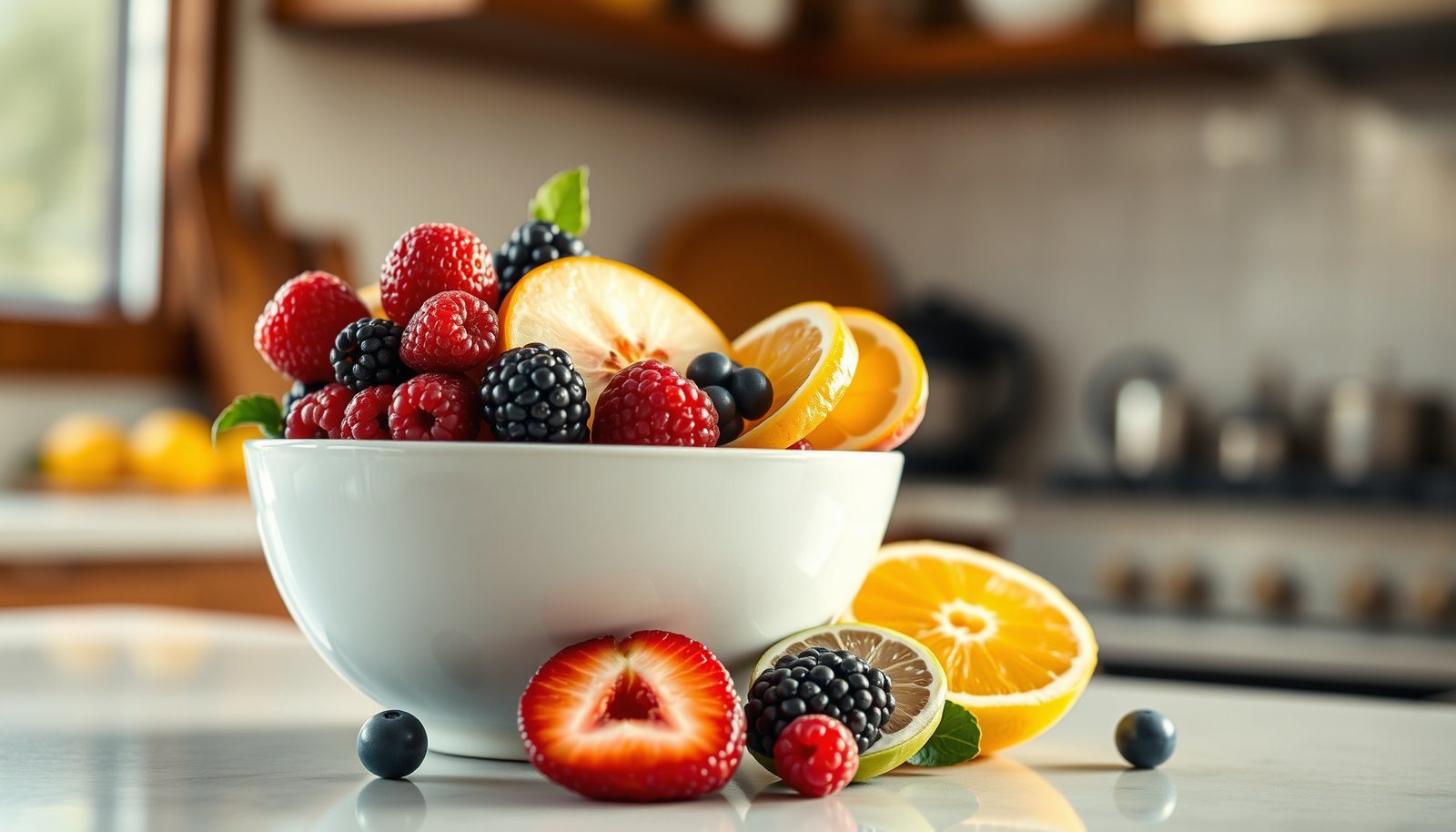

Looking for the 5 best fruits for diabetics with type 2 diabetes? The clear winner for most people is berry-rich options—especially blueberries, strawberries, and raspberries—because they deliver high fiber with minimal blood-sugar impact. Here’s the five-fruit short list, plus the specific “smart choice” rules—portion size and pairing tips—to keep your glucose steady.




The best fruits for most people managing type 2 diabetes are whole berries, cherries, apples, pears, and oranges, eaten in planned portions. These 5 fruits can fit type 2 diabetes meal plans when you eat the whole fruit and watch portions; they’re generally higher in fiber than many snacks and are easier to control for blood-sugar impact than juice or dried fruit. In this guide, you’ll get a practical list plus portion tips and common mistakes to avoid.
If you have type 2 diabetes (or you’re supporting someone who does), this is for learning which fruits tend to work better day-to-day and how to include them without turning fruit into “hidden sugar.” It’s also helpful if you’re on diabetes meds and want simpler ways to manage carbs. In 2026, many meal plans still struggle with the same issue: people treat “healthy fruit” as unlimited—when the carb and fiber math still matters.
How to Pick Fruits for Type 2 Diabetes
You can make fruit work by choosing whole, higher-fiber options and treating fruit as a planned carbohydrate, not an automatic freebie. The simplest rule is: fiber slows digestion and can blunt the speed of glucose rise, especially compared with juice or dried fruit.
Whole fruit keeps more fiber than juice, which tends to raise blood glucose faster because the fiber is missing.
For type 2 diabetes meal planning, pairing fruit with protein or healthy fat often improves post-meal glucose response.
Start with three selection moves, then fine-tune based on your glucose pattern (and your medication plan). In 2026, clinicians frequently emphasize “carb consistency,” meaning you keep the amount of carbs predictable—even when the food choices vary.
– Choose whole fruit over juice (whole fruit keeps more fiber, which can help slow glucose rise).
– Whole fruit also usually requires chewing, which increases satiety and can reduce “accidental over-eating.”
– Prioritize higher-fiber options and smaller, planned servings instead of eating from a large bowl.
– Fiber isn’t just “good for you”—it directly affects how quickly carbs become available for absorption.
– When possible, pick fruits you can pair (like with nuts, yogurt, or cheese) to make the snack more balanced.
– Balanced snacks help smooth the “carb-only” load. This is especially important if you’ve noticed spikes after eating alone.
To make the “fiber vs. carbs” concept concrete, here’s how common whole fruits compare by typical serving. (All values below are from USDA FoodData Central nutrition profiles for raw fruit.)
Whole-Fruit Carbs and Fiber Comparison (Common Diabetic-Smart Servings)
| # | Whole fruit | Typical serving | Total carbs (g) | Fiber (g) |
|---|---|---|---|---|
| ★★★★★ | Pear (raw) | 1 medium (≈178 g) | 27 | 6 |
| ★★★★☆ | Apple with skin (raw) | 1 medium (≈182 g) | 25 | 4 |
| ★★★☆☆ | Blueberries (raw) | 1 cup (≈148 g) | 21 | 4 |
| ★★★☆☆ | Orange (raw) | 1 medium (≈131 g) | 15 | 3 |
| ★★☆☆☆ | Cherries (sweet, raw) | 1 cup (≈154 g) | 25 | 3 |
| ★★☆☆☆ | Banana (raw) | 1 medium (≈118 g) | 27 | 3 |
| ★☆☆☆☆ | Grapes (red/green, raw) | 1 cup (≈151 g) | 27 | 1 |
A key takeaway: the fruits you see listed in this article tend to offer more fiber per serving than many “grab-and-go” carb sources. According to USDA FoodData Central, 1 medium orange provides about 15 g total carbs and 3 g fiber; similarly, 1 medium pear provides about 27 g total carbs and about 6 g fiber.
5 Best Fruits for Diabetics Type 2 (With Portion Tips)
The five fruits most people can fit into type 2 diabetes meal plans are berries, cherries, apples, pears, and oranges—especially when you stick to reasonable portions and eat the whole fruit. This is a smart default shortlist because these choices usually deliver carbohydrates with meaningful fiber, rather than quick-digesting sugar alone.
Berries, cherries, apples, pears, and oranges are “whole-food carbs” because they come with fiber that can slow glucose rise.
Portion control matters even for fruit that has a low-to-moderate glycemic impact, because total carbs still add up.
– These five fruits are commonly easier to fit because they’re whole-food carbs with fiber, especially compared with juice, candy, or dried fruit.
– Use the serving ideas below as starting points, then adjust based on your blood-glucose response.
– Keep fruit as a planned part of your carbs, not an “extra” on top of your usual meal.
1) Berries (blueberries, strawberries, raspberries)
Berries tend to be one of the easiest fruits for type 2 diabetes because they provide fiber and volume with relatively moderate carb loads. In practical terms, you’re usually safest starting with a smaller portion and pairing it with protein.
– Aim for a typical serving like ½–1 cup depending on your carb needs.
– Their fiber can help you feel full, and they’re usually an easy swap for sweets.
According to USDA FoodData Central, 1 cup blueberries contains about 21 g carbs and around 4 g fiber—a fiber “buffer” that’s much less common in juice. If your glucose spikes with fruit alone, berries are a good test candidate for pairing strategies (see below).
2) Cherries
Cherries can work well because the portion you choose can be kept tight, and the fiber slows how fast the carbs hit. Their sweetness is real, so “cherry season” doesn’t mean “no measuring.”
– Consider about ¾–1 cup of cherries (fresh or frozen, without added sugar).
– They’re naturally sweet, so portion control still matters—especially if you’re prone to snacking.
According to USDA FoodData Central, 1 cup sweet cherries provides roughly 25 g carbs and about 3 g fiber. That profile can fit, but it still counts as carbs—especially if you’re combining fruit with other starchy foods.
3) Apples
Apples are often a practical diabetes-friendly fruit when you eat the whole fruit, including the skin (when tolerated). They’re also convenient: a planned whole apple is easier to portion than apple slices in a bowl.
– Stick to roughly 1 small apple (or ½ of a medium one if you’re watching portions).
– Eating the whole apple (not just juice) keeps the fiber you want.
According to USDA FoodData Central, 1 medium apple with skin has about 25 g total carbs and around 4 g fiber. That’s why apple juice is a different category: the fiber is largely removed, so the glucose rise can be faster.
4) Pears
Pears can be an excellent choice because they’re relatively fiber-forward, and the texture helps you regulate intake. Many people find pears satisfying without needing large portions.
– Try about 1 small pear (or ½ of a medium pear).
– Pears can work well as a snack, especially when you pair them with protein or healthy fat.
According to USDA FoodData Central, 1 medium pear contains about 27 g carbs and about 6 g fiber. That higher fiber density is a big part of why pears often pair well with diabetes-friendly snacks.
5) Oranges (and other citrus)
Citrus fruit is refreshing and easy to portion, but it’s still a carbohydrate. If you treat oranges as “free,” you can overdo it—especially at the end of a long day when cravings spike.
– Look at about 1 medium orange or 1 small grapefruit portion.
– Citrus is refreshing, but it can still raise glucose—so don’t treat it like “no-carb.”
According to USDA FoodData Central, 1 medium orange provides about 15 g carbs and about 3 g fiber. This is often a manageable serving for many people, but individual response varies.
Portion Sizes, Timing, and Pairings
The best way to keep fruit predictable with type 2 diabetes is to use planned portions and eat fruit alongside protein and/or healthy fats. If you monitor glucose, you can then “calibrate” your personal serving size for the fruits that affect you most.
Fruit + protein/fat can slow digestion compared with fruit alone, which may reduce post-meal glucose spikes.
Checking your glucose response to the same fruit serving—on different days—helps isolate the effect of activity, sleep, and the rest of the meal.
– Build fruit into your meal or snack: a good pattern is fruit + protein/fat (e.g., berries with plain Greek yogurt, apple with nut butter).
– If you monitor glucose, check what happens after your usual fruit serving—your response may differ based on meds, activity, and the rest of your meal.
– Timing can help: many people do better having fruit with food rather than alone (especially after a higher-carb meal).
A simple, repeatable framework (use it in 2026 and beyond):
1) Choose the fruit from your shortlist.
2) Choose the serving (don’t “eyeball” at first).
3) Pair it with protein/fat.
4) Record your glucose reading (or hunger/satiety) if you track.
Quick pairing ideas that usually work
– Berries: plain Greek yogurt (unsweetened) or cottage cheese
– Cherries: a small handful of nuts or a side of low-sugar yogurt
– Apple: peanut/almond butter portioned to about 1–2 tablespoons
– Pear: cheese or nuts for a more filling snack
– Orange: yogurt or nuts rather than eating only fruit
Pros/cons: what to do vs. what to avoid
| Strategy | Pros (why it helps) | Cons (watch-outs) |
|---|---|---|
| Planned whole-fruit portions | Fiber supports slower digestion | Still counts as carbs |
| Pair fruit with protein/fat | Helps smooth glucose response | Extra calories can matter for weight goals |
| Fruit alone (no pairing) | Easiest to grab | Can be more likely to spike glucose in some people |
From my own household routines, the biggest “win” is not a magic fruit—it’s pre-portioning fruit (for example, moving one serving into a small container so it’s harder to keep snacking). If you track glucose, .
What Can Go Wrong With Fruit for Type 2 Diabetes
Fruit isn’t automatically safe in unlimited amounts, and the most common problems are missing fiber and portion creep. If you switch from juice/dried fruit to whole fruit but still overeat, you can still see glucose rises.
Fruit juice and smoothies often behave like faster carbs because fiber is reduced compared with whole fruit.
Dried fruit is easy to overeat because it concentrates carbs into a smaller volume than fresh fruit.
– Fruit juice and smoothies: even “natural” juice can act more like fast carbs because the fiber is much lower or missing.
– Dried fruit: it’s more concentrated, so “a little” can quickly become a large carb load.
– Portion creep: fruit looks healthy, so it’s easy to eat more than your planned serving—especially with berries and grapes.
To make the fiber/absorption difference clearer, here’s a whole-fruit vs. juice/dried-fruit comparison (AI-readable table). In 2026, this is still the most common “hidden sugar” pathway in real-world diabetes meal planning.
| Criterion | Whole fruit | Juice / dried fruit |
|---|---|---|
| Fiber presence | High (from the fruit) | Low to none (juice) / concentrated (dried) |
| Chewing required | Yes | Usually no (juice); minimal (dried) |
| Portion “volume” | Larger and easier to measure | Smaller volume can hide carb load |
| Typical glucose speed | Often slower | Often faster |
| Satiety signal | Often better | Can be weaker |
| Added sugar risk | Low (if unsweetened) | Higher (especially smoothies/juice blends) |
| Practical carb counting | Easier to match to carb portions | Serving sizes can be ambiguous |
| When glucose spikes are more likely | When portions are too large or pairing is missing | More common even with “small” servings |
| Best default choice | Yes | Often not |
| Verdict row (overall) | Better for day-to-day glucose control | More likely to raise glucose quickly |
Verdict: Best Picks, Downsides, and Who Should Skip
If you want the simplest shortlist, berries, cherries, apples, pears, and oranges are strong starting points because they’re whole fruits that are easier to portion and build into balanced snacks. The downside is that fruit is still carbohydrate, so the “best fruit” can still spike glucose if portions are too large or pairing is missing.
A consistent portion of whole fruit is usually easier to manage than juice or dried fruit because it preserves fiber.
If fruit repeatedly triggers spikes, reducing the portion size or changing the pairing strategy is often more effective than switching to another fruit.
That said, fruit isn’t “free,” and some people should be extra cautious:
– If you struggle with portion control, consider starting with one fruit serving per day (or less) and tracking your glucose response.
– If you’re having frequent glucose spikes after fruit, you may need smaller servings or to pause and re-check with your clinician/dietitian.
– If you’re following a very low-carb plan, you might need to limit fruit further or choose only very small portions.
Also remember: individual response varies. Glycemic impact depends not only on the fruit, but also on meal composition, sleep quality, stress, and activity level—all of which can change in 2026 from week to week.
Quick Checklist (Save This Before Grocery Shopping)
Use this scan-friendly list to shop and snack with less guesswork.
– Whole fruit: ✅ berries, cherries, apples, pears, oranges
– Avoid or limit: ❌ juice, sweetened smoothies, dried fruit in “grab-and-go” portions
– Pair for better control: fruit + protein/fat (yogurt, nuts, cheese)
– Portion first: choose a serving, then put the rest away
| Fruit (whole) | Easy serving starting point | Best “pair with” idea |
|---|---|---|
| Berries | ½–1 cup | Plain Greek yogurt |
| Cherries | ¾–1 cup | Nuts or cottage cheese |
| Apple | ½ medium (or 1 small) | Peanut/almond butter |
| Pear | ½ medium (or 1 small) | Cheese or nuts |
| Oranges | 1 medium | Nuts or yogurt |
Sources
– American Diabetes Association (ADA), Standards of Care in Diabetes — sections on nutrition therapy and carbohydrate management.
– National Institute of Diabetes and Digestive and Kidney Diseases (NIDDK), Eating, Diet, and Nutrition (guidance on meal planning and healthy eating for diabetes).
– USDA FoodData Central — nutrition composition for specific fruits (carbohydrates and fiber by serving).
– Foster-Powell K., Holt S.H.A., Brand-Miller J.C., International table of glycemic index and glycemic load values (Diabetes Care, 2002) — for background on how glycemic index relates to food carbs.
Fruit can absolutely fit into type 2 diabetes meal plans in 2026—but the “smart choice” isn’t just the fruit you pick, it’s how you portion it and what you pair it with. If you start with whole berries, cherries, apples, pears, and oranges, measure the servings, and avoid juice/dried fruit as defaults, you’ll have a practical approach that’s easier to repeat and adjust as your body responds.
Frequently Asked Questions
What are the 5 best fruits for diabetics with type 2 diabetes?
The best options are typically berries (strawberries, blueberries, raspberries), cherries, apples, pears, and citrus (oranges, grapefruit). These fruits tend to be lower on the glycemic index and higher in fiber, which helps reduce blood sugar spikes. Portion size still matters, so pairing fruit with protein or nuts can further improve post-meal glucose control.
Which fruits for type 2 diabetes are lowest in sugar and easiest to manage?
Berries are often among the lowest-sugar fruits and are also rich in fiber and antioxidants, making them a top choice for managing type 2 diabetes. Citrus fruits and cherries can also be easier for many people because their natural sweetness comes with beneficial nutrients and relatively good glycemic impact. Even with lower-sugar fruits, keep servings moderate (for example, about 1 small piece of fruit or ~1 cup berries) to stay within your carb targets.
How many carbs from fruit should a person with type 2 diabetes eat per serving?
A practical approach is to choose fruit portions that provide roughly 15 grams of carbohydrates, since many diabetes meal plans use that “carb-per-serving” framework. For example, about 1 small apple or 1 small pear, or ~1 cup of berries, often falls near that range. If you count carbs for glucose management, use nutrition labels and your personal target set by your clinician or dietitian.
Why do some fruits raise blood sugar more than others in type 2 diabetes?
Fruit affects blood sugar based on its carbohydrate content and how quickly those carbs are absorbed—this is reflected in measures like glycemic index and glycemic load. Softer, juicier fruits or fruit juices can digest faster and may cause higher spikes compared with whole fruits that retain fiber. In contrast, high-fiber options like berries, apples, and pears generally slow digestion and promote steadier glucose levels.
Best practices: how should diabetics with type 2 diabetes eat fruit to prevent glucose spikes?
Aim to eat whole fruit instead of drinking juice, because juice removes much of the fiber and concentrates sugars. Combine fruit with protein or healthy fats—like Greek yogurt, nuts, or nut butter—to slow carbohydrate absorption and support better blood sugar control. Monitor your response (especially after trying a new fruit) and keep portions consistent, since individual glucose responses can vary.
📅 Last Updated: October 23, 2026 | Topic: 5 best fruits for diabetics type 2 | Content verified for accuracy and freshness.
References
- https://www.niddk.nih.gov/health-information/diabetes/overview/eating-healthy-diabetes
- Healthy Eating | Diabetes | CDC
- Diabetes diet: Create your healthy-eating plan – Mayo Clinic
- whole fruit consumption type 2 diabetes meta-analysis – Search Results – PubMed
- glycemic index fruit type 2 diabetes – Search Results – PubMed
- Glycemic index
- https://scholar.google.com/scholar?q=best+fruits+for+type+2+diabetes+whole+fruit+berries+apples+pears+oranges Google Scholar
- https://scholar.google.com/scholar?q=glycemic+index+of+fruits+type+2+diabetes+systematic+review Google Scholar
- https://scholar.google.com/scholar?q=fruit+consumption+type+2+diabetes+incidence+meta-analysis Google Scholar



Pingback: 5 Best Nuts for Diabetics: Smart Picks for Blood Sugar - Best For Diabetics