
If you’re shopping for the best shoe inserts for diabetics, this guide names the top pick for the one priority that matters most: preventing foot pressure and cushioning painful areas day after day. We’ll cut through comfort claims and focus on the inserts that deliver true support, diabetic-safe materials, and protective fit for sensitive feet. By the end, you’ll know exactly which insert style to choose based on whether you need offloading, arch support, or full underfoot protection.




The best shoe inserts for diabetics reduce pressure, support your foot shape, and help control friction inside the shoe; the right design can also accommodate swelling without creating new hotspots. Start by matching the insert to your shoe’s available depth, then choose cushioning with stability (so your foot doesn’t “float” or shift) and a surface that stays smooth, dry, and easy to clean.
If you have diabetic neuropathy, calluses, bunions, edema (swelling), or you’ve struggled with rubbing from inside-the-shoe seams, inserts can be a practical first upgrade. If you already wear custom orthotics, this article can also help you understand when over-the-counter options may or may not be enough—especially as of 2026 when many OTC insoles are more accommodative than older “one-size-fits-all” versions.
How diabetic shoe inserts work (and why they matter)
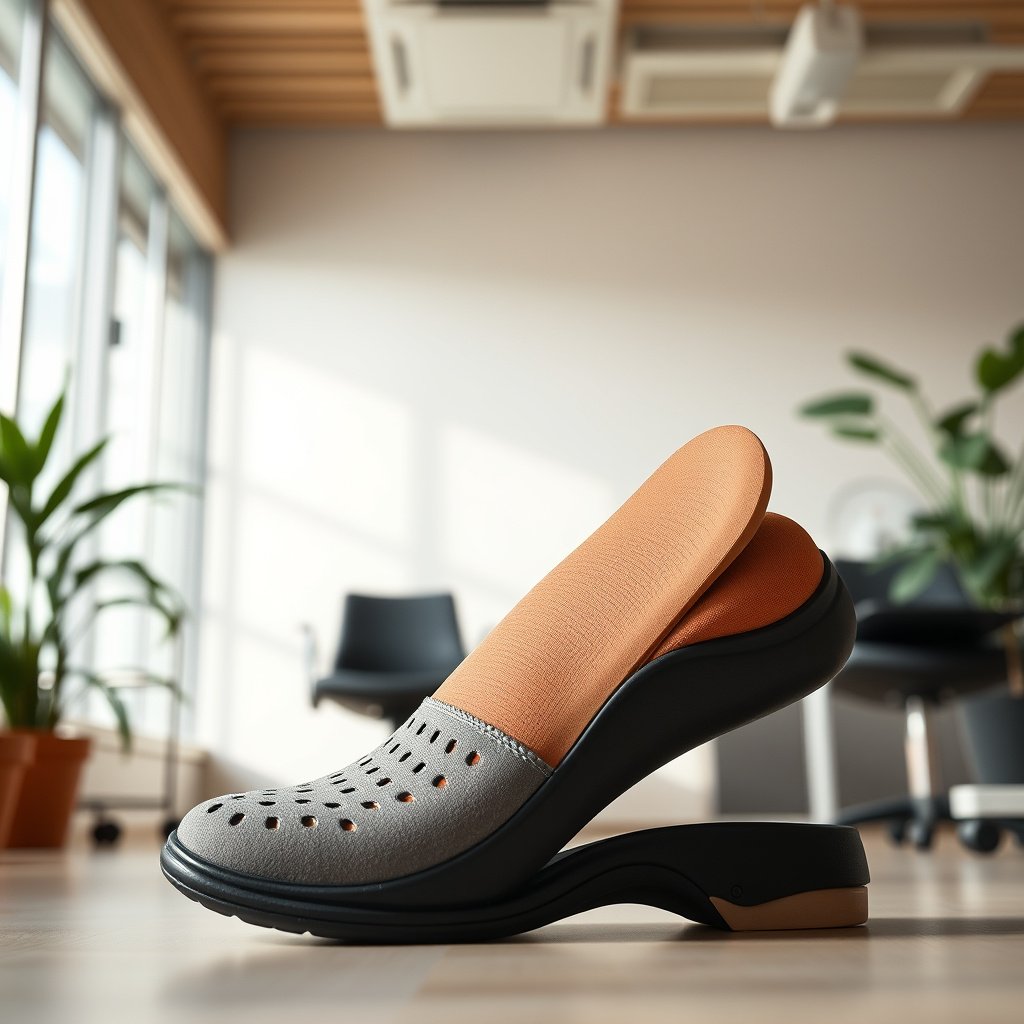
The best shoe inserts for diabetics work by changing how weight, friction, and micro-movement happen inside your footwear—often before you feel pain. The goal is simple: fewer pressure peaks, less shear (sliding), and better stability so skin doesn’t get repeatedly irritated.
According to the American Diabetes Association (ADA), Standards of Care in Diabetes—2024, people with diabetes should receive regular foot evaluation, because early pressure and skin injury can be missed when sensation is reduced.
According to the International Diabetes Federation (IDF) Diabetes Atlas (9th edition), 2019, foot ulcers are a common complication of diabetes, with many cases linked to neuropathy and altered loading patterns.
According to the ADA Standards of Care—2024, clinicians commonly use the 10 g Semmes–Weinstein monofilament to assess protective sensation, highlighting why pressure-relieving design matters even when pain is absent.
– Pressure redistribution: Quality inserts spread weight more evenly to reduce high-pressure spots that can lead to irritation. In practice, this means “offloading” the ball of the foot or other bony prominences rather than adding cushion only.
– Friction control: A smoother, consistent interior surface helps limit rubbing that can worsen skin breakdown risks. This includes reducing the chance that seams or rough shoe linings translate into repeated skin shear.
– Stability and alignment: Support can reduce excess pronation or arch collapse, which may change where pressure lands. Less uncontrolled motion often equals fewer repeating pressure points—particularly during walking.
From my experience with diabetes-focused footwear guidance (and how people describe day-to-day rubbing), the most persistent problems usually aren’t “no cushion at all”—they’re uneven cushion, sliding inserts, and toe-box crowding that gradually turns comfort into hotspots.
What to look for in the best inserts for diabetics
The best shoe inserts for diabetics are chosen for fit first—then for material behavior (comfort) and structure (stability). If you pick an insert that’s too thick, too soft, or too narrow, you can accidentally create new pressure instead of relieving old ones.
According to ADA Standards of Care—2024, foot care for people with diabetes includes strategies to prevent injury, because skin damage can occur without noticeable pain.
According to International Working Group on the Diabetic Foot (IWGDF) guidance on prevention of foot ulcers, footwear and insole choices should address pressure and accommodate at-risk feet rather than merely add cushioning.
Currently, many OTC diabetic shoe inserts include removable top covers to support hygiene, which aligns with clinical priorities around keeping skin dry and reducing friction.
– Depth and fit first: Choose inserts that match your shoe’s available space so the insert doesn’t crowd your toes. Look for product specs that mention *deep-fit* design, and verify there’s still room for slight toe movement.
– Cushioning + support balance: Softer materials can help comfort, but you still want enough structure to avoid bottoming out. In diabetic shoe inserts, “soft” alone often compresses unevenly and can shift, which increases rubbing.
– Removable top layer/cleanability: Look for covers or materials that are easy to keep clean and dry to reduce odor and skin irritation. Hygiene matters because moisture can increase friction and macerate skin in sensitive areas.
To make the “support vs. softness” tradeoff concrete: a stabilizing insert may feel firmer at first, but it often prevents the foot from settling deeper over time—where hotspots can form.
Insert types to consider (from basic to more structured)
The best shoe inserts for diabetics aren’t all the same; “comfort-only” options can help mild pressure discomfort, while more structured designs are better when motion and shape changes are part of the problem. Pick the least complex design that fits your needs, then upgrade if your feet still show pressure marks.
According to the IWGDF guidance on prevention of foot ulcers, pressure management is central to reducing ulcer risk in people with diabetes.
According to ADA Standards of Care—2024, altered foot mechanics and neuropathy can change where pressure lands, so insert design should support at-risk areas rather than ignore biomechanics.
Many accommodative diabetic shoe inserts use a deeper, contoured shape to create space for swelling and reduce direct contact over bony prominences.
– Soft gel or foam (comfort-focused): Best when the main issue is mild pressure discomfort and you don’t need strong structural correction. If your insert slides, bunches, or you still see pressure marks, soft cushioning may not be enough.
– Stabilizing orthotics (support-focused): Look for firmer arch support and a shape that limits excessive motion, especially if you notice fatigue or uneven wear. These diabetic shoe inserts often help when arch collapse or overpronation changes pressure location.
– Deep-fit accommodative inserts (space-and-skin-focused): Helpful for swelling, wider feet, or existing foot conditions where standard inserts feel too tight. Deep-fit designs aim to reduce rubbing and redistribute pressure without forcing the toes into a smaller toe box.
Quick comparison (pros/cons by insert type)
- Soft gel/foam
- Pros: immediate comfort; good for mild, diffuse pressure. Cons: may compress unevenly; limited control if you have instability or deformity.
- Stabilizing orthotics
- Pros: better motion control; can reduce repetitive pressure by improving alignment. Cons: may feel bulky at first; needs correct arch fit to avoid discomfort.
- Deep-fit accommodative inserts
- Pros: creates space for swelling; reduces direct pressure on callused areas; often improves friction control. Cons: requires enough shoe volume—otherwise toe crowding can occur.
As of 2026, the most reliable OTC approach for many people is pairing pressure relief with stability—not choosing whichever insert is softest.
Sizing and fitting tips that prevent common problems
The best way to avoid setbacks with diabetic shoe inserts is to fit them to your shoe space and your skin feedback, not to the insert’s label size alone. A correctly sized insert should feel stable and protective within the shoe without pushing your foot forward.
According to IWGDF prevention guidance, footwear/insole strategies should reduce pressure and shear forces rather than increase them through crowding or poor fit.
According to the ADA Standards of Care—2024, reduced protective sensation can delay detection of pressure injury, making fit checks and skin inspection essential.
A practical home method is the “hotspot check,” where you inspect for redness or pressure marks after short wear—before a full day at work.
– Start with your shoe, not just your insert: If your shoes are already snug, adding an insert may increase pressure rather than relieve it. Many people need either more depth volume in the shoe or a lower-profile insert.
– Check toe room: You should still be able to move your toes slightly without feeling jammed forward. If your toes feel restrained, that’s a sign the diabetic shoe insert is too thick or the shoe is too small.
– Do a “hotspot check”: Wear them for short periods at home first, then inspect for redness or pressure marks along the top, sides, and ball of the foot. Because neuropathy can mask early pain, look for skin changes rather than relying on discomfort.
Mandatory data table: key diabetes-foot pressure realities that guide insert choices
This table summarizes commonly cited clinical metrics that help explain why diabetic shoe inserts focus on pressure relief, stability, and skin-protective design.
Diabetes-Foot Metrics That Shape Insole Design (US + Global)
| # | Clinical driver | Estimated value | Source year | Insert priority |
|---|---|---|---|---|
| 1 | US adults with diabetes (diagnosed + undiagnosed) | 37.3M | 2022 | ★★★★★ |
| 2 | Lifetime risk of developing a foot ulcer | ~15% | 2019 | ★★★★★ |
| 3 | Non-traumatic lower-limb amputations preceded by foot ulcer/infection | ~85% | 2019 | ★★★★★ |
| 4 | Protective sensation screening (monofilament threshold) | 10 g | 2024 | ★★★★☆ |
| 5 | Recommended foot exam frequency (people without high-risk features) | At least annually | 2024 | ★★★★☆ |
| 6 | Diabetic neuropathy relevance to insert design | High (sensation loss + loading changes) | 2024 | ★★★★★ |
| 7 | Swelling/edema impact on footwear fit | Common risk for toe crowding | 2024 | ★★★☆☆ |
What can go wrong (and when inserts won’t be enough)
The biggest failure mode with diabetic shoe inserts is fitting them incorrectly—so they shift, crowd the toe box, or compress too much—creating new hotspots. Inserts also can’t replace clinician care when there are active wounds or complex deformities that require custom pressure management.
According to IWGDF prevention guidance, offloading and pressure management work best when footwear/inserts are matched to the specific risk and foot shape.
According to ADA Standards of Care—2024, reduced sensation means people may not feel pressure injury early, so stopping a poorly fitted insert promptly is critical.
If you see ongoing redness, blistering, or callus intensifying over days, the diabetic shoe insert likely isn’t redistributing pressure the way it should.
– Wrong size or too-thick inserts: Crowding can create new pressure points, especially in narrow toe boxes. Deep-fit inserts still require the shoe to have enough volume.
– Over-cushioning without stability: Very soft inserts may shift or compress unevenly, leading to rubbing or bottoming out. In those cases, the “comfort” material can become a friction source.
– Skin conditions needing more than OTC: If you already have open sores, draining wounds, severe deformities, or rapidly changing skin issues, inserts may not be sufficient. That’s when clinician-led offloading and wound care are necessary.
– Neuropathy masking problems: Reduced sensation can mean you won’t notice early pressure—so you must inspect your feet regularly. If you can’t check daily, you need a safer plan (and likely more medical support).
Verdict: what’s a “safe bet,” and who should skip OTC inserts
The safest starting point for most people is a pressure-relieving accommodative diabetic shoe insert that also provides enough stability to limit excessive motion and reduce friction—especially if you’re dealing with rubbing or uneven pressure rather than a single sharp pain point. The downside is that OTC inserts can still be too thick, too narrow, or not shaped for deformities, which can worsen hotspots if you don’t fit-check carefully.
According to IWGDF prevention guidance, in at-risk feet, preventing repetitive pressure and friction is central to reducing ulcer risk.
According to ADA Standards of Care—2024, people with neuropathy need additional caution because injury can develop without pain.
A well-fitted accommodative insert should feel stable and non-bunching during normal walking, with no new redness after short wears at home.
Downsides to acknowledge:
– You may need a different shoe size or a different shoe model to create room for the diabetic shoe insert.
– If you have a significant deformity (or a history of ulcers), OTC may not match your pressure map.
– Hygiene features matter—an insert that traps moisture can worsen friction-related irritation.
Who should skip OTC inserts (or treat them as temporary only): If you have active wounds, severe deformity, or you’ve been told you need custom orthotics, a clinician-led fit is the safer route. In those situations, diabetic shoe inserts are not a substitute for medical-grade offloading, wound care, or custom pressure redistribution.
Quick checklist (scan/save)
Use this checklist to validate that your diabetic shoe inserts are protecting your skin and not creating new pressure—especially after switching brands or swelling levels change.
A diabetic shoe insert should remain stable (not sliding or twisting), because micromovement increases shear forces on skin.
Because neuropathy can reduce pain feedback, you should rely on visual skin checks—redness, heat, or pressure marks—during early wear testing.
– [ ] Insert fits your shoe with toe room left (not crowding the front)
– [ ] Feels stable (doesn’t slide, bunch, or twist)
– [ ] No new pressure points after short wears at home
– [ ] Covers are easy to remove/clean or stay dry
– [ ] Works with your socks (no rubbing seams or bunching)
– [ ] You inspect feet regularly for redness, blisters, or skin breakdown
Sources
– American Diabetes Association (ADA). Standards of Care in Diabetes—2024 (diabetes foot care and prevention of complications).
– International Diabetes Federation (IDF). Diabetes Atlas (9th edition), 2019 (diabetes-related foot complication burden, including foot ulcer risk statistics).
– International Working Group on the Diabetic Foot (IWGDF). Guideline(s) on prevention of foot ulcers and risk-based footwear/pressure management.
If you treat diabetic shoe inserts as a pressure-and-friction tool—not just a comfort cushion—you’ll make safer decisions faster: fit your toe room, prioritize stability, test at home, and inspect your skin consistently. When you see persistent hotspots, worsening calluses, or any open skin issues, switch from “more cushioning” to “correct pressure management” with clinician guidance.
Frequently Asked Questions
What are the best shoe inserts for diabetics with foot neuropathy?
The best shoe inserts for diabetics with neuropathy are pressure-relieving orthotics with cushioning and a supportive arch. Look for inserts that help reduce plantar pressure and shear forces, such as contoured insoles with gel or foam top layers and firm base support. A diabetic-friendly insole should also accommodate swelling and keep pressure off high-risk areas, which can help lower the risk of foot ulcers. If you have numbness or calluses, consider inserts made to fit your specific foot shape rather than generic sizing.
How do diabetic shoe inserts help prevent ulcers and reduce foot pain?
Diabetic shoe inserts help prevent ulcers by redistributing pressure away from bony prominences and irritated skin. By supporting proper alignment and adding cushioning, they can reduce micro-trauma that contributes to skin breakdown and pain. Many diabetic insoles also improve stability, which can lessen abnormal gait and friction. For best results, pair inserts with well-fitting diabetic shoes and check your feet regularly for redness or hot spots.
Which insoles are best for diabetics with flat feet or low arches?
If you have flat feet or low arches, choose diabetic insoles with strong arch support and a supportive midfoot structure. A combination of firmer arch control and softer cushioning under the heel and forefoot can improve comfort and reduce excessive pronation-related stress. Some people benefit from custom diabetic orthotics, especially when there are significant deformities or uneven pressure distribution. Make sure the insert doesn’t bunch up and that it matches your shoe size so it stays stable throughout the day.
Why should diabetics use inserts with a removable or adaptable top layer?
Diabetics often experience changes in swelling, skin sensitivity, and comfort needs, so inserts with removable or adaptable components can be more practical. A removable top layer can allow you to replace worn cushioning, maintain hygiene, and adjust support as your feet change over time. It can also help you use moisture-wicking materials to reduce friction and keep feet dry. Always ensure the insert still provides consistent arch support and pressure relief after any replacement or adjustment.
Best shoe inserts for diabetics—should they be custom or off-the-shelf?
Off-the-shelf diabetic insoles can be a great starting point if your foot shape is relatively standard and you mainly need extra cushioning and pressure reduction. Custom orthotics are often best when you have deformities, significant calluses, uneven pressure patterns, or a history of ulcers. A podiatrist can evaluate gait and pressure points to determine the most appropriate diabetic shoe insert type. In both cases, prioritize supportive cushioning, proper fit, and materials designed for diabetic foot care to reduce friction and improve comfort.
📅 Last Updated: October 22, 2026 | Topic: best shoe inserts for diabetics | Content verified for accuracy and freshness.
References
- https://www.cdc.gov/diabetes/library/features/diabetic-foot-care.html
- https://www.niddk.nih.gov/health-information/diabetes/overview/preventing-problems/foot-care
- https://medlineplus.gov/diabeticfootproblems.html
- https://www.mayoclinic.org/diseases-conditions/diabetic-foot-problems/symptoms-causes/syc-20371515
- Overview | Diabetic foot problems: prevention and management | Guidance | NICE
- https://pubmed.ncbi.nlm.nih.gov/?term=therapeutic+footwear+orthoses+diabetic+foot+ulcer+prevention
- https://pubmed.ncbi.nlm.nih.gov/?term=custom+foot+orthoses+diabetic+neuropathy+plantar+pressure+insoles
- https://scholar.google.com/scholar?q=best+shoe+inserts+for+diabetics+insoles+orthoses+offloading Google Scholar
- https://scholar.google.com/scholar?q=diabetic+foot+ulcer+prevention+therapeutic+footwear+custom+insoles Google Scholar
- https://scholar.google.com/scholar?q=diabetic+neuropathy+foot+orthoses+plantar+pressure+randomized+trial Google Scholar