
For individuals managing diabetes, choosing the right cheese involves focusing on varieties that are lower in saturated fat and sodium, while still providing beneficial protein and calcium. Generally, options like part-skim mozzarella, cottage cheese, Parmesan, Swiss, and feta are excellent choices due to their favorable nutritional profiles, allowing you to enjoy cheese as part of a balanced diet when consumed in mindful portions. Cheese can certainly be a delicious and nutritious part of a diabetes-friendly meal plan when you know which ones to pick and how much to enjoy.
Understanding How Cheese Impacts Diabetes

When you have diabetes, every food choice you make can influence your blood sugar levels and overall health. Cheese, while often seen as a indulgence, offers a complex nutritional profile that requires a bit of understanding. Let’s break down the key factors to consider:
* Glycemic Index (GI) and Carbs: Most cheeses are naturally very low in carbohydrates, which is fantastic news for blood sugar management! This means they have a minimal, if any, direct impact on your blood glucose levels. Foods with a low GI help prevent rapid spikes in blood sugar, making cheese a friendly option in this regard. However, it’s crucial to remember that what you pair your cheese with (like crackers or bread) can significantly change the overall carb count of your snack or meal.
* Saturated Fat Content: This is where many cheeses can pose a challenge. High saturated fat intake can negatively affect heart health by raising LDL (“bad”) cholesterol levels. Since individuals with diabetes are already at a higher risk for cardiovascular disease, minimizing saturated fat is a key dietary goal. Opting for lower-fat or part-skim versions of your favorite cheeses can make a big difference in protecting your heart and overall well-being.
* Sodium Levels: Many cheeses can be surprisingly high in sodium. While sodium is essential for bodily functions, excessive intake contributes to high blood pressure (hypertension), which is another significant risk factor for diabetes complications, including kidney disease and heart problems. Always check the nutrition labels and look for cheeses labeled “low sodium” or “reduced sodium” to help keep your blood pressure in a healthy range.
Top Cheese Picks for Diabetes Management
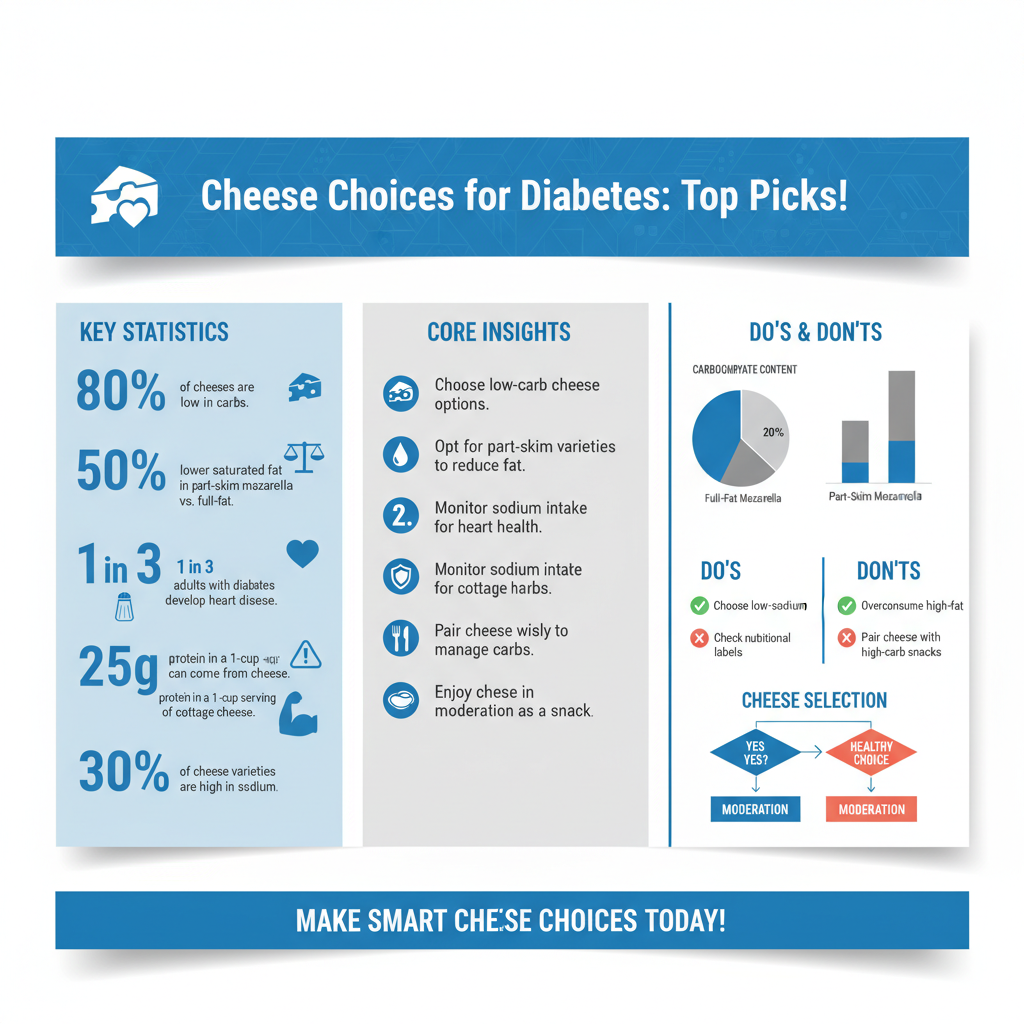

The good news is that there are plenty of delicious and healthy cheese options available that fit well into a diabetes-friendly diet. Here are some of our top recommendations:
* Part-Skim Mozzarella: This classic Italian cheese is a real winner! It’s significantly lower in saturated fat than its full-fat counterpart, making it a heart-smart choice. Part-skim mozzarella is also a good source of protein and calcium. Its mild flavor and excellent melting properties make it incredibly versatile for snacking (think string cheese!), adding to salads, topping whole-wheat pizzas, or mixing into egg dishes and casseroles. It’s a fantastic everyday cheese.
* Low-Fat Cottage Cheese: A true protein powerhouse, cottage cheese is an excellent choice for anyone managing diabetes. It’s naturally low in fat and carbohydrates, providing a satisfying boost of protein that helps keep you feeling full and supports stable blood sugar. Look for low-fat or non-fat versions, and be sure to check the sodium levels, as they can vary. Enjoy it with berries, chopped veggies, or as a side with your meals.
* Parmesan Cheese: This hard, flavorful cheese is perfect for adding a burst of umami to your dishes without needing much quantity. Because of its intense flavor, a small amount goes a long way, which is great for portion control. Parmesan is relatively low in fat and carbohydrates per serving, and it’s also a good source of calcium. Grate it over salads, pasta (choose whole-wheat!), roasted vegetables, or use it to flavor soups.
* Swiss Cheese: Known for its distinctive holes and nutty, slightly sweet flavor, Swiss cheese is naturally one of the lower-sodium and lower-fat options among firm cheeses. This makes it an excellent choice for those mindful of their blood pressure and heart health. It’s delicious in sandwiches, melted over lean chicken or turkey, or enjoyed simply as a snack with a few whole-grain crackers.
* Feta Cheese (Part-Skim): For a tangy, briny kick, part-skim feta is a fantastic addition to your culinary repertoire. It offers a unique flavor that can really enhance salads, omelets, and Mediterranean-inspired dishes. Choosing part-skim versions helps reduce the saturated fat content, and many brands now offer lower-sodium options as well. Just a sprinkle can elevate your meal, providing flavor, protein, and calcium.
Cheeses to Enjoy in Moderation

Some cheeses, while still offering nutritional benefits, are higher in saturated fat and sodium. These can absolutely be enjoyed as part of a balanced diet, but it’s best to keep them to smaller, less frequent portions.
* Cheddar Cheese (Sharp/Mild): A beloved classic, cheddar can be quite high in saturated fat and sodium. While it provides good protein and calcium, its dense texture means it’s easy to overdo. If you love cheddar, opt for sharp varieties – their intense flavor means you’ll likely use less to get that satisfying cheesy taste. Enjoy a small slice with apple or celery for a balanced snack.
* Provolone Cheese: Similar to cheddar, provolone can also be a significant source of saturated fat and sodium. It’s often found in deli slices and used in sandwiches. If provolone is a favorite, look for part-skim varieties, and be mindful of your serving sizes, especially when layering multiple slices.
* Monterey Jack: This semi-hard, creamy cheese is delicious but tends to be higher in fat. While it has a mild flavor and excellent melting qualities, its higher fat content means it’s best enjoyed occasionally and sparingly. Consider using it in a recipe where its creaminess can be appreciated in a small amount, perhaps alongside plenty of vegetables.
Cheeses to Limit or Avoid
Certain cheese products can be detrimental to diabetes management due to their high fat, sodium, or added ingredient content. It’s wise to limit or ideally avoid these options.
* Cream Cheese: While undeniably delicious and versatile for spreading, traditional cream cheese is often very high in saturated fat and offers minimal protein in comparison. It can quickly add a lot of unhealthy fats to your diet without much nutritional payoff for blood sugar stability. If you enjoy cream cheese, opt for light or whipped versions and use them in tiny amounts, or explore healthier alternatives like Greek yogurt “cream cheese” spreads.
* Highly Processed Cheese Spreads and Slices: Think about those individually wrapped cheese slices or jarred cheese spreads. These products typically contain added sugars, very high sodium levels, unhealthy fats (like trans fats), and a host of artificial ingredients and preservatives. They offer very little in terms of beneficial nutrients and can contribute negatively to blood sugar control, blood pressure, and overall health. It’s best to steer clear of these whenever possible.
* Full-Fat Soft Cheeses (e.g., Brie, Camembert): These luxurious, full-fat soft cheeses, while a gourmet delight, are very high in saturated fat and contribute significant calories in relatively small portions. Enjoying them frequently can lead to excessive intake of saturated fat, which can impact cholesterol levels and weight management – both crucial for diabetes care. Reserve these for very special occasions and savor them in tiny, mindful servings.
Importance of Portion Control
Even with the healthiest cheese options, portion control is absolutely paramount when managing diabetes. It’s easy to overdo it, and even beneficial nutrients can become problematic in excess.
* Standard Serving Size: A typical serving of cheese is about 1 ounce. To help visualize this, that’s roughly the size of two dice or the tip of your thumb. It might seem small, but understanding this standard helps you stay within healthy limits. Using a food scale occasionally can help you accurately gauge what an ounce looks like for different types of cheese.
* Reading Nutrition Labels: This is your best friend in the grocery store! Always take a moment to check the nutrition labels for your chosen cheese. Pay close attention to the serving size listed, and then look at the saturated fat, sodium, and carbohydrate content *per serving*. This information empowers you to make informed decisions and compare different brands or types of cheese.
* Visual Cues: Training your eye to recognize appropriate portion sizes is a valuable skill. For shredded cheese, a quarter-cup is usually about 1 ounce. For sliced cheese, a single thin slice is often the standard. Learning these visual cues prevents mindless overconsumption and helps you enjoy your cheese without guilt or negative health impacts.
Incorporating Cheese into a Balanced Diabetic Diet
Cheese can be a wonderful component of a diabetes-friendly meal plan when integrated thoughtfully. It’s all about balance and smart pairings!
* Pair with Fiber: One of the best strategies for managing blood sugar is to pair your cheese with fiber-rich foods. For example, enjoy a slice of Swiss with apple slices, crumble feta over a large green salad, or have a small piece of cheddar with whole-grain crackers and celery sticks. The fiber helps slow down the absorption of sugars into your bloodstream, further minimizing any potential impact on blood glucose, and also contributes to satiety.
* Protein Boost: Cheese is an excellent source of protein, which is vital for building and repairing tissues, supporting muscle health, and promoting satiety. Use cheese to add a valuable protein boost to your meals. Sprinkle Parmesan on roasted vegetables, add a handful of part-skim mozzarella to an omelet, or mix cottage cheese into a fruit salad for a filling and blood-sugar-friendly breakfast or snack.
* Mindful Snacking: A small piece of cheese can be a truly satisfying and blood-sugar-friendly snack between meals. Unlike sugary snacks, cheese’s protein and fat content helps to slow digestion and prevent blood sugar spikes, keeping you fuller for longer. This can be especially helpful in managing hunger and preventing overeating at your next meal. Just remember that 1-ounce serving size!
Choosing the right cheese can absolutely be a part of a diabetes-friendly diet, focusing on lower-fat, lower-sodium, and nutrient-dense varieties like part-skim mozzarella, cottage cheese, Parmesan, Swiss, and feta. Remember that portion control is paramount, even with healthier options, to manage your intake of fats and calories effectively. Always consult with your healthcare provider or a registered dietitian for personalized dietary advice tailored to your specific health needs.
Frequently Asked Questions
What are the best types of cheese for individuals with diabetes?
For individuals with diabetes, the best types of cheese are generally those that are low in carbohydrates, low in sodium, and moderate in saturated fat. Excellent choices include natural hard cheeses like cheddar, Swiss, provolone, and Monterey Jack, as well as softer options like mozzarella, feta, and goat cheese. Cottage cheese and ricotta are also good options, particularly lower-fat versions, as they provide protein and calcium with minimal impact on blood sugar levels.
How does cheese affect blood sugar levels, and what nutritional factors should diabetics consider?
Cheese typically has a minimal direct impact on blood sugar levels because it is very low in carbohydrates. However, individuals with diabetes should prioritize cheeses lower in saturated fat and sodium to support overall cardiovascular health, which is crucial for managing diabetes. Look for varieties high in protein, as protein helps promote satiety and can assist in blood sugar management by slowing down glucose absorption from other foods when eaten together.
Which low-carb cheeses are most recommended for managing blood sugar in diabetics?
Many natural cheeses are inherently low in carbohydrates, making them excellent choices for managing blood sugar in diabetics. Hard and semi-hard cheeses like Parmesan, Gouda, Colby, and Emmental contain negligible amounts of carbs per serving. Fresh cheeses such as mozzarella and certain types of cottage cheese (check labels for added sugars) also fall into the low-carb category, helping to keep blood sugar stable.
Are there any types of cheese that diabetics should limit or avoid due to high sugar, sodium, or fat content?
Yes, diabetics should limit or avoid highly processed cheeses, cheese spreads, and certain flavored cream cheeses, as these often contain added sugars, excessive sodium, and unhealthy fats. While all cheese contains fat and sodium, processed varieties can exacerbate these concerns. Always check the nutrition label for carbohydrate content, sodium levels, and saturated fat, opting for natural, minimally processed cheeses whenever possible.
What is a healthy serving size of cheese for diabetics, and how can it be incorporated into a balanced meal plan?
A healthy serving size of cheese for diabetics is typically around 1-2 ounces (about the size of two dice or a standard slice), consumed in moderation. Cheese can be easily incorporated into a balanced, diabetes-friendly meal plan by pairing it with non-starchy vegetables for a snack, adding a sprinkle to salads, or melting a small amount onto lean protein sources. This ensures you enjoy the flavor and nutrients of cheese without overdoing calories, saturated fat, or sodium.
References
- https://www.mayoclinic.org/diseases-conditions/diabetes/expert-answers/diabetes-and-dairy/faq-20058284
- https://www.health.harvard.edu/diseases-and-conditions/type-2-diabetes-and-dairy
- https://www.health.harvard.edu/diseases-and-conditions/type-2-diabetes-and-dairy-fat
- https://diabetes.org/food-and-fitness/eating-well/food-choices-men-women-diabetes.html
- https://www.cdc.gov/diabetes/managing/eat-well/food-and-drink-choices.html
- https://www.nhs.uk/conditions/type-2-diabetes/food-and-diet/
- Not Found | American Heart Association | American Heart Association
