
You open your fridge after a long day, reach for salad dressing out of habit, and then pause because you want one that supports your routine instead of undermining it. The best diabetic dressing isn’t just “low sugar”—it’s the one you can trust based on nutrition balance: low added sugars, steady carbohydrate per serving, and ingredients that keep blood-glucose impact predictable. Here’s how we narrowed the options and what consistently separates the best choices from the rest.




If you want the best diabetic dressing, pick one with low added sugar and low total carbs per serving—then measure it so you don’t accidentally double your carbs. In practice, the “best” option is the one whose nutrition label matches your portion and blood-sugar goals, not the one with the prettiest marketing claim.
If you’re managing diabetes (or prediabetes) and you still want salad flavor, this guide is for you. It’s especially helpful if you’ve noticed that some “light” or “sweet” dressings seem to spike your hunger or your readings—often because of hidden sugars or oversized portions.
What makes the best diabetic dressing

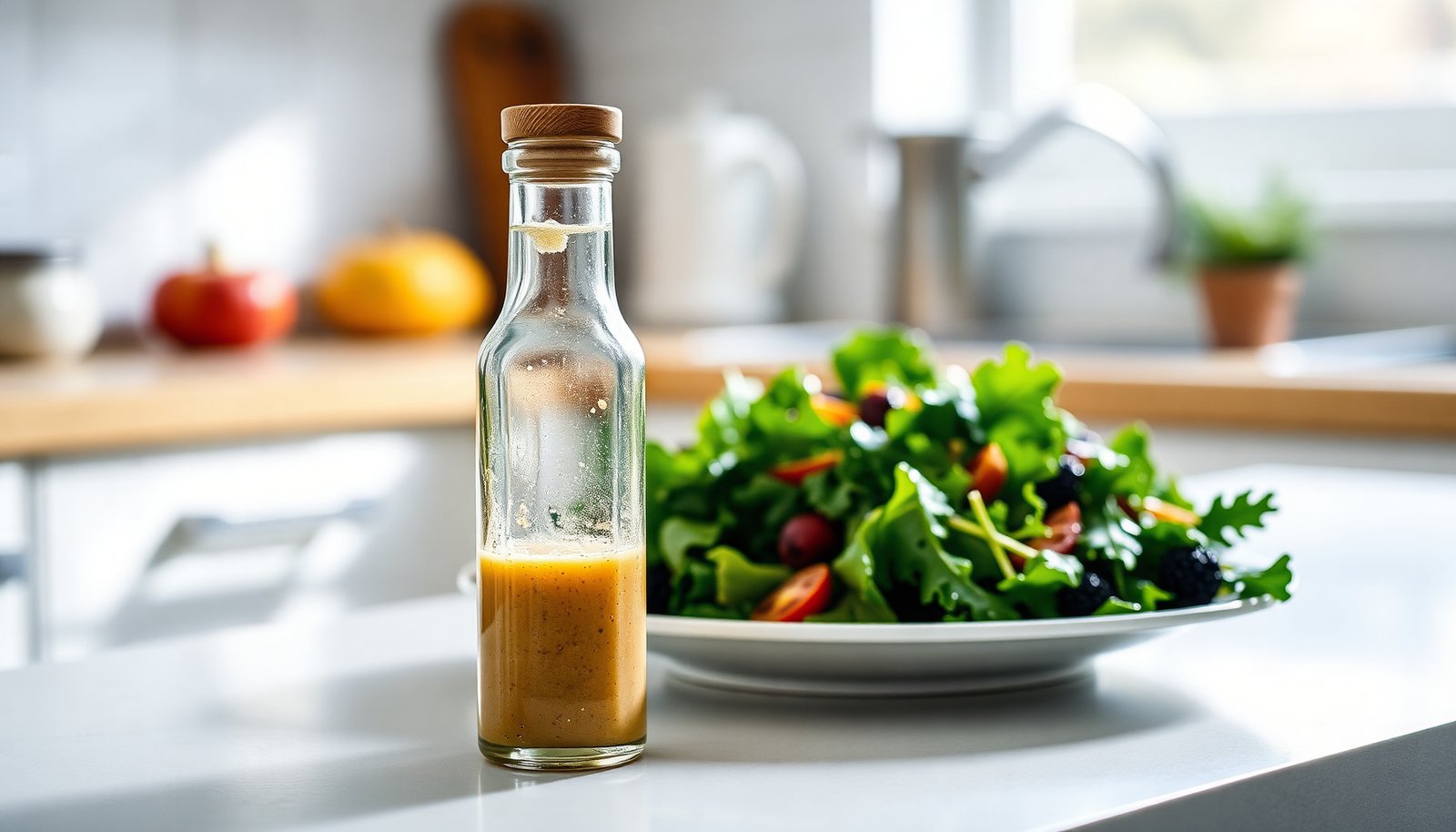
The best diabetic dressing is usually oil-forward, low in added sugar, and low in total carbs when you use the serving size on the label. Here’s what that typically means in real life—especially as of 2026, when more brands still advertise “sugar-free” but don’t always make the full carb picture obvious.
– Prioritize low added sugar and low total carbs per serving (not just “sugar-free” claims).
– Choose fats and flavors that help you stay satisfied without adding a lot of carbs (for many people, oil-based dressings work better than sweet creamy ones).
– Watch sodium if you’re also managing blood pressure or kidney concerns.
Diabetes-Friendliness of Common Salad Dressing Profiles (Nutrition-Style Estimates per 2 tbsp / ~30 mL)
| # | Dressing style | Total carbs | Sugar | Sodium | Diabetes-fit |
|---|---|---|---|---|---|
| 1 | Oil & vinegar (unsweetened) | 0–2 g | 0–1 g | 100–200 mg | ★★★★★ |
| 2 | Caesar (traditional) | 1–4 g | 0–2 g | 250–450 mg | ★★★★☆ |
| 3 | Greek-style herb vinaigrette | 1–3 g | 0–1 g | 150–300 mg | ★★★★☆ |
| 4 | Ranch (regular) | 2–6 g | 1–4 g | 250–600 mg | ★★★☆☆ |
| 5 | Creamy Italian (sweet-leaning) | 4–8 g | 2–6 g | 300–650 mg | ★★☆☆☆ |
| 6 | Honey mustard | 5–12 g | 4–10 g | 200–600 mg | ★☆☆☆☆ |
| 7 | Thousand Island (sweetened) | 4–10 g | 3–8 g | 250–700 mg | ★☆☆☆☆ |
Note: These are common nutrition-profile ranges by dressing type. For the best diabetic dressing for you, always confirm the exact total carbs and sugar on your specific label and match the label’s serving size.
How to read the nutrition label (fast)
The best diabetic dressing is the one where the nutrition label clearly shows low carbs at the same portion you actually eat. If you scan only “sugar,” you can miss starches and certain sweeteners that still add carbohydrates.
– Check Serving size first—then compare the carbs and sugar grams that match that exact amount.
– Use carbohydrate per serving as your main filter; “sugar” alone can miss things like starches or certain sweeteners.
– If the label lists calories and fat, don’t ignore portion size—dressing is easy to over-pour.
A quick reality check: According to the U.S. Dietary Guidelines for Americans 2020–2025, added sugars should be less than 10% of daily calories (2020). That matters because dressings can sneak in “small” sugar grams that stack up across the day—especially when you use more than one serving.
In my own meal-prep habits, the biggest “gotcha” wasn’t a single bad label—it was assuming one drizzle counted as one serving. Once I started portioning into a small bowl, I could keep the total carbs closer to what my plan anticipated in 2026.
A simple label math rule you can use today
If the label says the dressing has 3 g total carbs per serving and you use 2 servings, you’re at 6 g total carbs. For diabetes management, that “carbs in the meal” picture is usually what your glucose response is reacting to—not the brand name.
Ingredient checklist to look for (and avoid)
The best diabetic dressing keeps the ingredient list “clean” of obvious sugar sources and relies on herbs, acids (vinegar/citrus), and oils for flavor. When you see sweetener ingredients near the top of the list, you should assume the carbs may rise.
– Look for: olive oil, canola oil, avocado oil, vinegar, lemon juice, herbs, spices, and (if included) thickeners that don’t add much carbohydrate.
– Be cautious with: added sugar, high-fructose corn syrup, honey, syrup, sweetened condensed-style ingredients, and “dessert-like” flavor profiles.
– If it’s creamy, verify it’s not hiding extra carbs in the form of sweeteners or starch-based thickeners.
What “creamy” can mean for carbs
Creamy dressings often use fat + water + stabilizers. Some use ingredients that are mostly carb-neutral (like emulsifiers), while others use sweeteners or starch-thickening ingredients that add measurable carbohydrates. If a brand markets “light” or “sweet,” don’t rely on the vibe—confirm the carbs line.
Comparison snapshot: typical profiles
| Feature | More likely to work as a best diabetic dressing | More likely to be carb-heavy |
|---|---|---|
| Flavor base | Vinegar + lemon + herbs/spices | Honey, maple, sweet syrups |
| Thickening | Emulsifiers that don’t spike carbs | Starch-based thickeners + sweeteners |
| Label clues | Low total carbs per serving | “Sugar” isn’t the only issue—total carbs are high |
Portion strategies that keep glucose steady
The best diabetic dressing can fit your plan—but only if you control portion size consistently. Salad dressing is one of those “small liquid” foods that can quietly turn into multiple servings.
– Stick to a defined serving (then adjust with your clinician’s plan); dressing is easy to over-pour.
– Pair dressings thoughtfully: add non-starchy veggies and a protein source (chicken, tuna, tofu) to reduce the overall carb impact of the meal.
– Consider portioning before you eat (pour into a small bowl rather than from the bottle) to avoid unintentional extra servings.
As of 2026, many people track food using carbohydrate targets, and dressing often becomes a “last-minute addition.” That’s exactly when portion creep happens. If you’re aiming for steadier glucose, treat dressing like a measured ingredient, not a condiment you freestyle.
A practical portion workflow (no special tools required)
1. Put your salad together with veggies + protein.
2. Measure dressing into a small dish based on the label serving size.
3. Toss once (or drizzle once), then add a second measured portion only if your plan allows it.
This approach tends to work regardless of whether the dressing is oil-based or creamy—because your total carbs are the variable you can control.
What can go wrong (common mistakes)
The best diabetic dressing doesn’t automatically work if you misread the label, ignore serving size, or choose the wrong “type” for your goals. These mistakes are common, and they’re often why people feel like dressings “cause spikes” even when the product seems reasonable.
– Believing “sugar-free” automatically means “low carb.” Some sugar-free dressings still contain carbohydrates from other ingredients—always check the total carbs line.
– Ignoring serving size. If you eat 2–3 servings, the carbs multiply—even if the label looks fine per serving.
– Overdoing “healthy” swaps. Avocado-oil or olive-oil dressings can still be carb-neutral, but heavy portions can affect calories and satiety patterns.
– Not matching your personal plan. If you’re on insulin or other glucose-lowering meds, your ideal amount may differ from a generic guideline—follow your clinician’s advice.
According to the CDC, 37.3 million adults in the United States had diabetes in 2019 (2023 update to reported burden). That scale is a big reason diabetes education increasingly focuses on meal-by-meal carb awareness—not just “avoiding sugar.”
Pros/cons: “diabetic-friendly” dressings vs. real-world glucose
| Option | Pros (when labels match your plan) | Cons (where people get surprised) |
|---|---|---|
| Oil & vinegar style | Often low total carbs; easier to stay within a serving | Some brands include fruit concentrates or higher-sodium formulas |
| Creamy “light” dressing | May reduce sugar while keeping flavor satisfying | Creamy texture can hide carb-adding sweeteners or starch-thickeners |
| “Sugar-free” sweet dressings | Can lower added sugar | Total carbs can still be meaningful—check the carbs line every time |
Verdict / tip: choose low sugar + controlled portions (with a reality check)
The best diabetic dressing is typically one that’s low in added sugar and low in total carbs per serving, and that you can measure consistently. The downside: even “diabetic-friendly” dressings won’t be perfect if the portion is too large, and some creamy options can quietly add carbs through thickening agents or sweeteners.
You should skip or get clinician guidance first if you have dietary restrictions beyond diabetes (for example, significant kidney sodium limits) or if you’ve been told to avoid specific ingredients or very high-fat meals. As of 2026, nutrition labeling is more detailed than ever, but it still requires you to do the one step many people skip: match the serving size to your actual use.
Quick scan checklist (save this)
– [ ] Serving size fits what I actually eat
– [ ] Total carbs per serving are low for my plan
– [ ] Sugar grams (especially added sugar) are minimal
– [ ] Ingredients don’t list syrup, honey, or added sugar
– [ ] Sodium is reasonable for my health needs
– [ ] I can measure the serving (not “eyeball” the bottle)
Frequently Asked Questions
What is the best diabetic dressing for diabetics to use daily?
The best diabetic dressing is typically one that’s low in added sugar and refined carbs, with a simple ingredient list and no or minimal sweeteners. Look for dressings that emphasize healthy fats (like olive oil or avocado oil), vinegars, herbs, and spices, which can help you enjoy flavor without spiking blood glucose. Always check nutrition labels for total sugars and carbohydrates, since “low sugar” can still contain carb-containing ingredients.
How do I choose a diabetes-friendly salad dressing that won’t spike my blood sugar?
Start by comparing the carbohydrate and sugar grams per serving—aim for lower sugar and fewer net carbs when possible. Choose dressings with vinegar, lemon juice, olive oil, and spices, and avoid creamy options with added sugar, syrups, or sweetened yogurt blends unless the label shows low carbs. If you’re watching blood glucose closely, consider portion control and pair the salad with protein (like chicken, tuna, tofu) to reduce glycemic impact.
Why are oil-and-vinegar dressings often considered the best options for diabetics?
Oil-and-vinegar dressings are usually lower in added sugar and higher in unsaturated fats, which tend to have a less direct effect on blood glucose than sweet, carb-heavy dressings. The vinegar component can add tangy flavor without increasing carbs, and the overall formula often stays simple and predictable. Still, “oil-and-vinegar” isn’t automatically carb-free, so verify the label for hidden sugars.
Which ingredients should I avoid in the best diabetic dressing?
Avoid dressings that list added sugars such as cane sugar, corn syrup, honey, agave, fruit juice concentrates, or “sugar” near the top of the ingredients. Also be cautious with creamy dressings that include sweeteners or thickening agents that may add carbs, and watch for hidden sugars in “light” or “fat-free” versions. If you’re trying to find the best diabetic dressing, prioritize products labeled low sugar or with low carbohydrate per serving and a short, recognizable ingredient list.
What are some of the best diabetic dressing ideas for homemade salads?
You can make a diabetes-friendly dressing by whisking extra-virgin olive oil with balsamic vinegar or red wine vinegar, then adding garlic, Dijon mustard, black pepper, and herbs like oregano or basil. Another option is a lemon-garlic vinaigrette using olive oil, fresh lemon juice, and a pinch of salt, which keeps carbs very low. For a creamy option, choose plain Greek yogurt-based dressings without added sugar and measure portions to stay within your target carbohydrate range.
📅 Last Updated: November 09, 2026 | Topic: best diabetic dressing | Content verified for accuracy and freshness.
References
- https://www.niddk.nih.gov/health-information/diabetes/overview/preventing-problems/foot-care-diabetes
- https://medlineplus.gov/diabeticfootproblems.html
- Overview | Diabetic foot problems: prevention and management | Guidance | NICE
- Hokage77 # Update Pola Slot Online Terkini & Kemenangan Gacor 2026
- https://pubmed.ncbi.nlm.nih.gov/?term=diabetic+foot+ulcer+dressing+systematic+review
- Diabetic foot
- https://www.cochranelibrary.com/search?term=diabetic+foot+ulcer+dressing
- https://scholar.google.com/scholar?q=best+dressing+for+diabetic+foot+ulcers Google Scholar
- https://scholar.google.com/scholar?q=systematic+review+wound+dressings+diabetic+foot+ulcer Google Scholar
- https://scholar.google.com/scholar?q=guideline+diabetic+foot+ulcer+dressing+IWGDF+NICE Google Scholar