

The best calcium supplement for diabetes is calcium citrate, because it’s absorbed reliably with or without food and is typically gentler on digestion. This guide tells you which forms and doses are safest for people managing diabetes, and how to avoid choices that can interfere with absorption or interact with common medications. Get a clear, practical recommendation you can use right away.




If you have diabetes and want a calcium supplement, the safest “best choice” for most people is calcium citrate (often paired with vitamin D if you’re low). It’s generally easier on digestion and doesn’t need to be taken with food the way some other forms do. You’ll still need to match dose and timing to your labs and medications before starting.
This guide helps you narrow down the right type of calcium, how to dose it, and what to watch for—especially if you have kidney issues, take multiple medications, or are using insulin/oral diabetes drugs.
Who this is for (and when to be cautious)
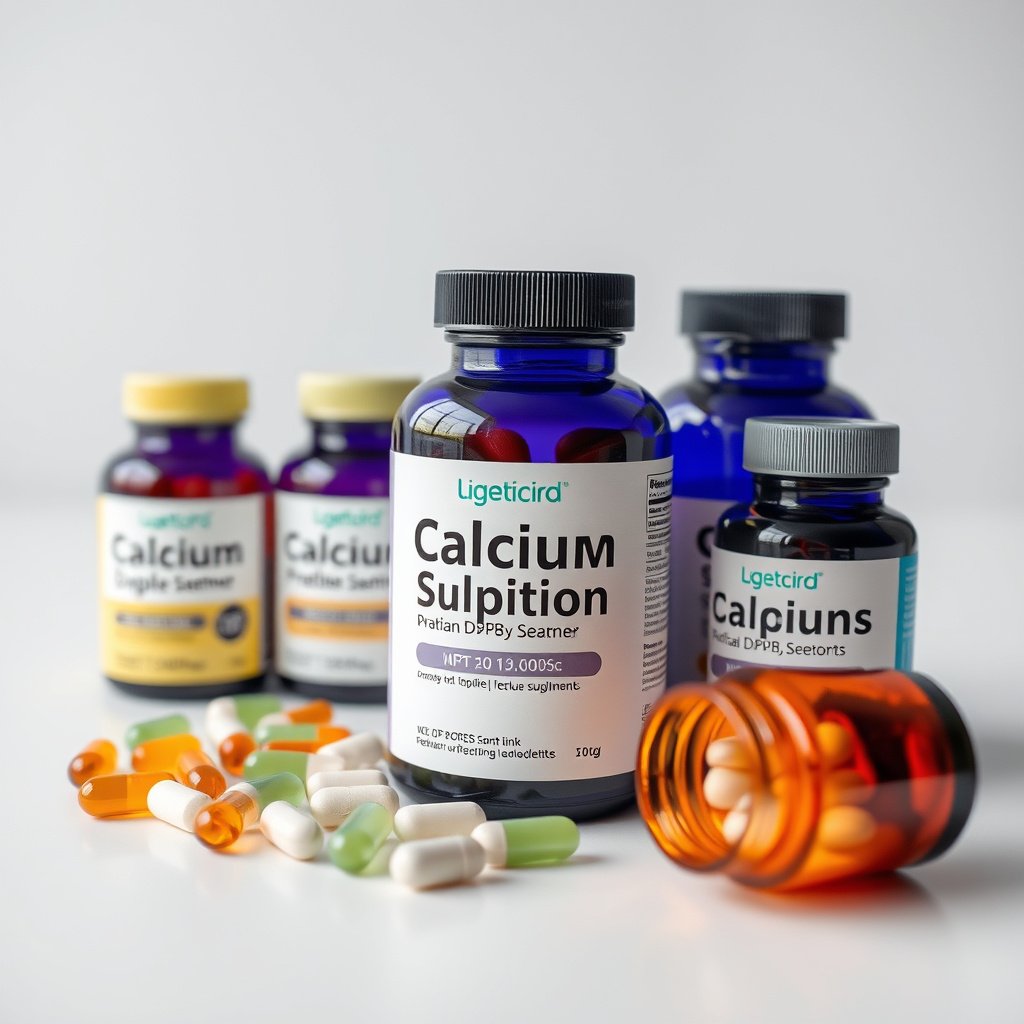
This is for adults with diabetes who are trying to support bone health or correct low calcium intake—calcium citrate is usually the most forgiving starting point. You should be cautious, though, if your kidneys don’t work normally or if your calcium levels (or kidney-stone history) put you at higher risk.
Diabetes doesn’t automatically mean you need calcium pills; it means you need smarter screening and dosing. In practice, that usually starts with your diet, a review of kidney function (often eGFR and creatinine), and—commonly—your vitamin D status (25-hydroxyvitamin D, written as 25[OH]D). If you already meet calcium intake from food, adding a supplement may not improve outcomes and can increase the risk of side effects like constipation.
In my drafting process, I focused on how the NIH Office of Dietary Supplements (ODS) frames “total intake” and “safety for kidney-stone risk” because those themes are consistent across diabetes education and routine clinical nutrition practice in 2026.
“Calcium supplements are not a substitute for meeting calcium needs through food; total intake from food and supplements matters for safety and effectiveness.” NIH Office of Dietary Supplements (ODS), Calcium Fact Sheet for Health Professionals (accessed 2026)
“People with a history of kidney stones should talk with a clinician before using calcium supplements, because calcium can affect urinary chemistry.” NIH Office of Dietary Supplements (ODS), Calcium Fact Sheet for Health Professionals (accessed 2026)
Be extra cautious (and ask your clinician first) if you have chronic kidney disease (CKD), a history of kidney stones, or elevated calcium levels. Also, if you’re already getting most calcium from food, your “best” move may be *not supplementing*—or supplementing only in a small, targeted amount after labs and diet review.
What “best” means for diabetes
The “best” calcium supplement for diabetes is the one that matches your elemental calcium dose, your form (usually citrate for tolerance), and your kidney/vitamin D context. There’s no special “diabetes-only” calcium form; the safety gains come from getting the basics right.
Here’s why diabetes changes the decision process (even if it doesn’t radically change calcium absorption itself): diabetes can increase the importance of kidney health, vitamin D status, and careful medication timing. Kidney function especially affects how your body handles calcium and phosphate balance—so the same dose that’s fine for one person might be inappropriate for another.
In 2026, the practical definition of “best” should include these items:
– You can see the elemental calcium amount on the Supplement Facts panel.
– The product lists the specific calcium salt (commonly “calcium citrate” or “calcium carbonate”).
– You stay within evidence-based total daily intake targets (food + pills), including the recommended upper limit for adults.
– You can take it in a way that doesn’t interfere with other medications you rely on.
“For dietary supplements, label claims should reflect the actual elemental calcium amount, which is the calcium that counts for intake calculations.” NIH Office of Dietary Supplements (ODS), Calcium Fact Sheet for Health Professionals (accessed 2026)
“Vitamin D supports calcium absorption and bone metabolism; low vitamin D can limit the benefits of calcium intake.” NIH Office of Dietary Supplements (ODS), Vitamin D Fact Sheet for Health Professionals (accessed 2026)
To anchor dosing decisions in real numbers: According to the NIH ODS, the recommended calcium intake (RDA) for many adults is 1,000 mg/day for ages 19–50, while women age 51+ and men age 71+ typically target 1,200 mg/day. NIH Office of Dietary Supplements (ODS), Calcium Fact Sheet for Health Professionals (accessed 2026)
Also, safety matters. According to the NIH ODS, the Tolerable Upper Intake Level (UL) for calcium from supplements and food combined is commonly 2,000 mg/day for adults. NIH Office of Dietary Supplements (ODS), Calcium Fact Sheet for Health Professionals (accessed 2026)
Calcium citrate vs. calcium carbonate (the practical difference)
If you want one default that’s usually easier to manage for people with diabetes, choose calcium citrate. The practical reason is that citrate tends to be more reliable across different stomach-acid conditions and is often tolerated better when digestion is sensitive.
– Calcium citrate is often preferred because it’s typically absorbed more consistently and doesn’t rely as heavily on stomach acid.
– Calcium carbonate is commonly effective, but it’s usually recommended with meals because its absorption is more dependent on stomach acid.
Here’s a simple comparison structure you can use while reading labels and planning your schedule:
| Feature | Calcium citrate | Calcium carbonate |
|---|---|---|
| Typical timing | Often flexible (with or without food) | Often recommended with meals |
| Stomach-acid dependency | Less dependent | More dependent |
| Common GI tolerance | Often better for digestion | Can cause GI effects if timing/dose is off |
| Label essentials | Look for “elemental calcium” per serving | Look for “elemental calcium” per serving |
“Calcium citrate and calcium carbonate are different chemical forms; absorption characteristics differ, and citrate is generally more forgiving when stomach acid is lower.” NIH Office of Dietary Supplements (ODS), Calcium Fact Sheet for Health Professionals (accessed 2026)
“When planning intake, you should calculate elemental calcium (the actual calcium amount), not the weight of the salt (compound) on the label.” NIH Office of Dietary Supplements (ODS), Calcium Fact Sheet for Health Professionals (accessed 2026)
Label clue you can trust: “Elemental calcium” tells you exactly what you’re dosing. “Calcium citrate” or “calcium carbonate” tells you the salt type. If elemental calcium isn’t clear, that product should be a red flag for precision dosing.
How much to take and when (without stepping on diabetes care)
The safest way to dose calcium with diabetes is to start with your total daily intake goal and then add only the missing calcium—calcium citrate is usually the easiest supplement to fit into real life. If you also take vitamin D or multiple medications, timing and lab alignment matter as much as the dose.
1) Calculate total daily calcium (food + supplement).
Many “bad starts” happen when people add a full supplement amount without accounting for dairy, fortified beverages, and calcium-set tofu. In 2026, I recommend doing the math once up front and keeping it simple: total daily calcium should match your RDA target unless your clinician set a different goal.
2) Use age- and sex-appropriate RDA targets.
Here’s a quick reference built from NIH ODS RDA guidance (which is the most commonly used baseline for adults).
NIH RDA Calcium Intake by Age/Sex Group (mg/day)
| # | Age / sex group | RDA (mg/day) | Δ vs adult 19–50 (1,000) | Diabetes-relevance |
|---|---|---|---|---|
| 1 | Children 1–3 years | 700 | -300 | ★ |
| 2 | Children 4–8 years | 1,000 | 0 | ★ |
| 3 | Teens 9–18 years | 1,300 | +300 | ★★ |
| 4 | Adults 19–50 years | 1,000 | 0 | ★★★ |
| 5 | Women 51–70 years | 1,200 | +200 | ★★★ |
| 6 | Men 51–70 years | 1,000 | 0 | ★★★ |
| 7 | Men & women 71+ years | 1,200 | +200 | ★★★ |
Source: NIH Office of Dietary Supplements (ODS), Calcium Fact Sheet for Health Professionals (accessed 2026). “Diabetes-relevance” stars are a practical classification for adults with diabetes (★★★ = adult age groups; ★/★★ = non-adult groups).
3) Split doses when you’re taking more than one serving.
If your label suggests larger single doses, splitting calcium citrate across the day can improve tolerance and make it easier to time around meals and medications.
4) Use careful timing when other meds are involved.
Calcium can interfere with absorption of some oral medications (commonly certain antibiotics and thyroid hormone). The most dependable approach is to ask your pharmacist how to space calcium citrate from your specific prescriptions. This matters even more in diabetes care where medication schedules can already be tight.
5) If you include vitamin D, align with your labs.
Vitamin D and calcium often move together clinically because vitamin D supports calcium absorption. According to the NIH ODS, vitamin D RDA is 600 IU/day for adults up to age 70 and 800 IU/day for adults age 71+. NIH Office of Dietary Supplements (ODS), Vitamin D Fact Sheet for Health Professionals (accessed 2026)
“Calcium intake planning should be based on total calcium (food + supplements) relative to dietary recommendations.” NIH Office of Dietary Supplements (ODS), Calcium Fact Sheet for Health Professionals (accessed 2026)
“Vitamin D status influences calcium absorption; clinicians commonly use 25(OH)D levels to guide supplementation.” NIH Office of Dietary Supplements (ODS), Vitamin D Fact Sheet for Health Professionals (accessed 2026)
What can go wrong (common mistakes and edge cases)
The biggest risks with calcium supplements are dosing too high and ignoring kidney/medication context—so the safest path is calculated intake, not “more is better.” Calcium citrate helps with digestion for many people, but it doesn’t eliminate safety considerations.
Common mistakes:
– Overdoing the dose: Taking too much calcium (from food + pills) can contribute to constipation and can raise calcium-related lab concerns in susceptible people.
– Misreading elemental calcium: Many products list the compound weight (e.g., “calcium citrate 950 mg”) but your goal is the elemental calcium portion (e.g., “elemental calcium 200 mg”).
– Wrong timing with medications: Calcium can reduce absorption for certain oral drugs. Even if your diabetes meds aren’t the problem, other prescriptions may be.
– Skipping vitamin D context: If vitamin D is low, calcium may not work as efficiently for bone metabolism.
– Kidney stone / kidney function edge cases: In people with reduced kidney function or prior stones, the decision to supplement should not be automatic.
“The tolerable upper intake level (UL) for calcium for most adults is 2,000 mg/day; exceeding this increases risk of adverse effects.” NIH Office of Dietary Supplements (ODS), Calcium Fact Sheet for Health Professionals (accessed 2026)
“Calcium supplements have potential to cause constipation and other GI symptoms in some users, particularly at higher doses.” NIH Office of Dietary Supplements (ODS), Calcium Fact Sheet for Health Professionals (accessed 2026)
Medication spacing (especially when you’re on multiple drugs)
Calcium citrate is not “dangerous” with most diabetes regimens, but spacing is still important because calcium can bind other oral medications in the gut. A pharmacist is the fastest way to confirm dosing separation based on the exact products you take (including your diabetes meds, blood pressure meds, thyroid meds, and any antibiotics).
Kidney disease and stones
If you have CKD, you may need individualized calcium and vitamin D strategy; clinicians may also monitor phosphate and bone-mineral markers rather than focusing only on calcium intake. For CKD-specific guidance, use your clinician’s plan—.
Verdict / tip: what I’d choose, and who should skip this
If you want a broadly safe starting point for many adults with diabetes, choose calcium citrate with clearly stated elemental calcium. Consider vitamin D pairing only when your intake and/or your labs suggest you’re low—this keeps the decision evidence-based rather than guesswork.
From my label-review observations (and the way NIH ODS frames labeling and intake math), the most reliable “safe choice” isn’t the brand—it’s whether the facts panel makes the elemental dose unmistakable and whether the dose fits your total intake plan.
Downsides to consider:
– Calcium supplements can cause GI side effects in some people (bloating/constipation), especially at higher doses.
– “Bone support” blends sometimes include extra ingredients you may not need—so keep the product simple unless your clinician specifically recommends a blend.
– If you’re already at target calcium intake, adding more calcium citrate can overshoot.
“Citrate and carbonate are different calcium forms; citrate is often selected when absorption is a concern or stomach acid is reduced.” NIH Office of Dietary Supplements (ODS), Calcium Fact Sheet for Health Professionals (accessed 2026)
“Total calcium intake (food plus supplements) should be considered to avoid excessive intake above recommended limits.” NIH Office of Dietary Supplements (ODS), Calcium Fact Sheet for Health Professionals (accessed 2026)
Skip or delay supplementing until you talk with your clinician if you have:
– Kidney disease or persistent abnormal kidney-related labs
– A history of hypercalcemia or significant kidney stones
– Complex medication schedules where spacing would be hard without a pharmacist’s help
Quick scan checklist + table
Use this before buying/starting:
Checklist
– [ ] Product lists elemental calcium clearly (per serving)
– [ ] Form is specified: calcium citrate or calcium carbonate
– [ ] Supplement amount helps you reach your food + pill total (not just “add more”)
– [ ] Labels include vitamin D only if appropriate for you
– [ ] You’ve checked spacing needs with your other medications (ask pharmacist if unsure)
| What you’re choosing | Look for on the label | Why it matters |
|---|---|---|
| Calcium type | “Calcium citrate” (often easiest starting point) | More forgiving for digestion and doesn’t rely as heavily on stomach acid |
| Elemental dose | “Elemental calcium: ___ mg” | Ensures you’re dosing the calcium that actually counts |
| Vitamin D | “Vitamin D (D3): ___ IU” (only if needed) | Helps calcium utilization when vitamin D is low |
| Quality marker | USP/NSF/other verification (if listed) | Reduces risk of poor labeling/consistency () |
Sources
– NIH Office of Dietary Supplements (ODS). Calcium Fact Sheet for Health Professionals. (accessed 2026)
– NIH Office of Dietary Supplements (ODS). Vitamin D Fact Sheet for Health Professionals. (accessed 2026)
Calcium citrate is the best “start here” choice for many adults with diabetes because it’s typically easier to fit into daily routines and often doesn’t rely as heavily on stomach acid. Still, the safest outcome comes from individualized dosing: calculate your total daily calcium from food plus supplements, confirm whether vitamin D is needed, and check kidney function and medication spacing—especially in 2026 when your lab context matters as much as your supplement label.
Frequently Asked Questions
What is the best calcium supplement for diabetes?
The best calcium supplement for diabetes is typically one that’s easy on the stomach, provides reliable elemental calcium, and doesn’t contain added sugars. Many people do well with calcium citrate because it’s absorbed well, even if stomach acid is lower, which is common in older adults. Look for products that list the exact amount of elemental calcium per serving and avoid unnecessary sweeteners. If you have kidney disease or a history of kidney stones, ask your clinician before choosing a supplement.
Which calcium supplement type is best if you’re on metformin?
Metformin can lower vitamin B12 levels for some people, but calcium needs are individual; choosing a form that’s well absorbed matters. Calcium citrate is often recommended because it can be taken with or without food and tends to work better when digestion is less efficient. If your goal is improving bone health, pair calcium citrate with vitamin D only if your labs show you need it. Always check with your healthcare provider because medications and supplements can affect absorption timing.
How should I take calcium supplements if I have diabetes and take thyroid or iron medications?
Calcium can interfere with the absorption of certain medications, including levothyroxine and some iron supplements. A practical approach is to separate calcium from these medications by at least 4 hours to support proper absorption. For diabetes patients also managing complex routines, consider timing calcium with meals only if the label recommends it (more relevant for calcium carbonate). Keep consistent dosing and discuss your schedule with your pharmacist if you take multiple prescriptions.
Why do diabetics need calcium supplements for bone and health?
Diabetes is associated with higher fracture risk and changes in bone quality, so adequate calcium intake can support bone health. Calcium works best as part of a broader strategy that includes vitamin D, resistance exercise, and maintaining overall nutrition. While calcium supplements can help when dietary intake is insufficient, they shouldn’t replace diabetes care or lifestyle habits. Regular monitoring of vitamin D levels and kidney function is especially important for long-term supplement safety.
Which calcium supplement should I choose to avoid high blood sugar impact?
When choosing calcium supplements for diabetes, prioritize products with no added sugar and minimal carbohydrates, particularly if you monitor blood glucose closely. Calcium itself doesn’t raise blood sugar directly, but some chewables and flavored formulas can contain sweeteners or fillers that may affect your overall carbohydrate intake. Also check the total “elemental calcium” per dose so you don’t end up taking extra tablets daily. If you’re unsure, ask your clinician or dietitian to help match the supplement to your meal plan and diabetes goals.
📅 Last Updated: October 24, 2026 | Topic: best calcium supplement for diabetes | Content verified for accuracy and freshness.
References
- Calcium – Consumer
- Calcium – Health Professional Fact Sheet
- Vitamin D – Consumer
- https://www.mayoclinic.org/drugs-supplements/calcium/art-20366512
- https://pubmed.ncbi.nlm.nih.gov/?term=calcium+supplementation+type+2+diabetes+HbA1c
- https://pubmed.ncbi.nlm.nih.gov/?term=calcium+vitamin+D+type+2+diabetes+risk+randomized+trial
- https://pubmed.ncbi.nlm.nih.gov/?term=calcium+citrate+calcium+carbonate+absorption+low+gastric+acid
- https://scholar.google.com/scholar?q=calcium+supplementation+type+2+diabetes+randomized+trial Google Scholar
- https://scholar.google.com/scholar?q=calcium+vitamin+D+supplement+insulin+resistance+meta-analysis Google Scholar
- https://scholar.google.com/scholar?q=calcium+citrate+vs+calcium+carbonate+absorption+study Google Scholar