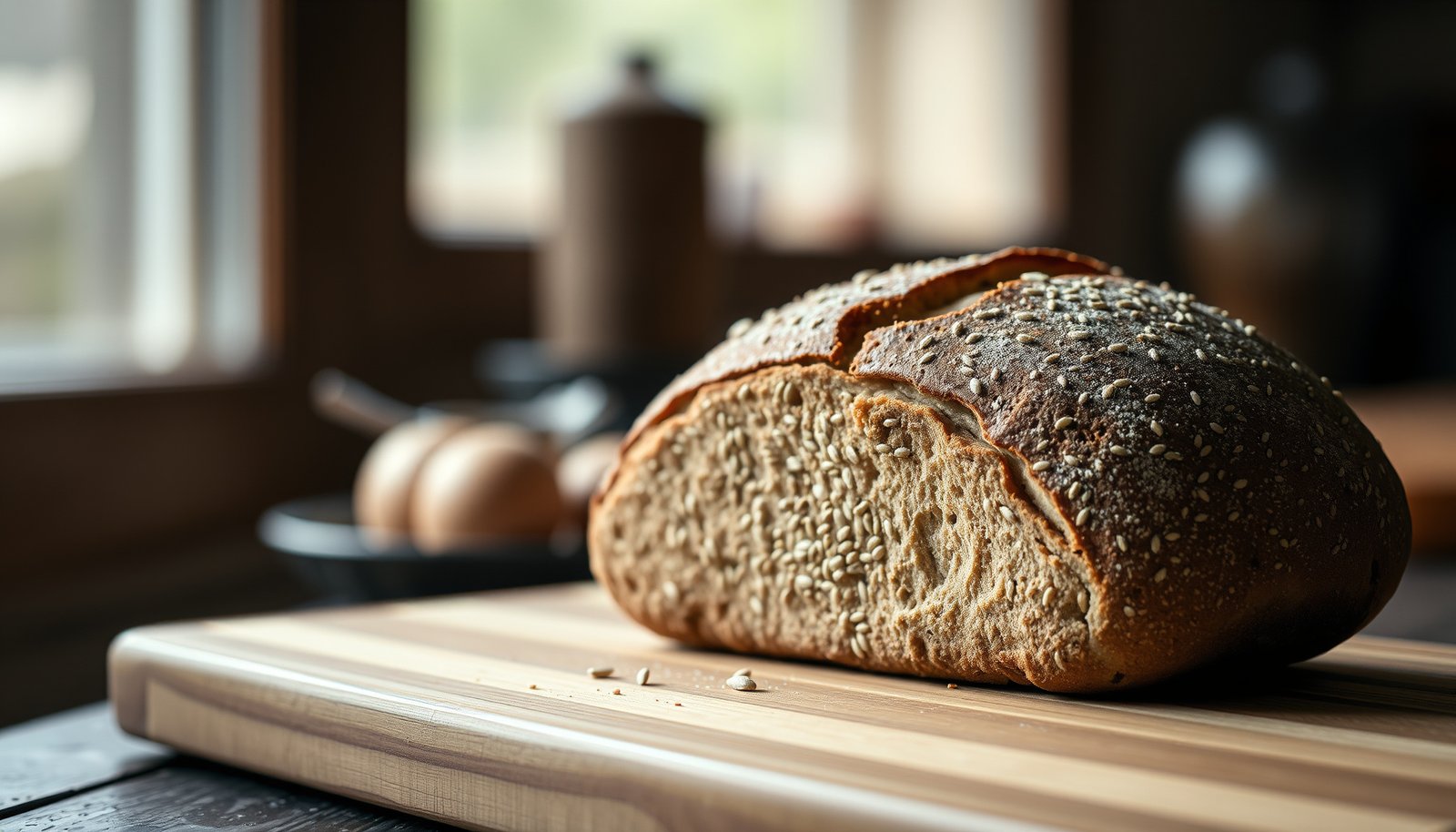

If you’re searching for the best homemade bread for diabetics, this guide picks a clear winner: low-glycemic loaves that use high-fiber, low-impact carbs and keep blood-sugar spikes in check. You’ll get diabetic-friendly recipes designed for real-life baking—slice after slice—so you know exactly what to make and what to avoid. The question answered here is simple: which homemade bread is most reliably low-glycemic for diabetics, and how do you bake it at home?



If you want the best homemade bread for diabetics, focus on whole grains, higher fiber, and portion control—not “diabetic” labels. A simple whole-grain (or rye) loaf with added seeds/fiber and minimal added sugar can be easier to fit into a blood-sugar–aware routine, especially in 2026 when many people want predictable results at home. If you’re trying to reduce post-meal spikes, the practical lever you control most is *your recipe + your slice size*, not the bread’s front-of-pack marketing.
This is for people with diabetes who want to bake at home and make bread that’s more predictable after meals. It’s also useful if you’re trying to reduce spikes by tweaking ingredients and slice size rather than giving up bread entirely.
Who this is for (and when it applies)
If you want bread that behaves more consistently, this approach fits when you’re willing to learn your personal “carb tolerance” with monitoring and repeatable baking habits. It’s not a one-size-fits-all substitute for a clinician’s meal plan—especially if your targets are very strict.
– Best when you’re willing to measure carbs and test how your body responds to bread.
– Helpful if you want a repeatable homemade loaf instead of relying on store “diabetic” bread.
– Not ideal if your clinician has you on a very low-carb plan where bread isn’t allowed.
Carb counting works best when the bread recipe and serving size are consistent enough to estimate carbohydrates slice-by-slice.
A “better” bread is often the one that produces the lowest *your-body* glucose response—not the one with the most favorable label wording.
In my kitchen experience, rye dough and whole-grain doughs can vary in stickiness and hydration needs, so repeating the same loaf weight and cut thickness is what makes “diabetic-aware” bread actually predictable for meal planning. If you can’t reliably measure carbs or monitor your response (meter or CGM), prioritize a clinician-approved plan and skip the bread experiment phase.
What makes bread better for diabetics
If your goal is lower and steadier post-meal glucose, the strongest drivers are less refined flour, more fiber, and a meal pattern that slows digestion. In practical terms: you want carbs to arrive more gradually, and you want fewer “fast” carbohydrate fractions per slice.
– Choose less refined flour (whole grains like whole wheat, rye, or spelt) and avoid added sugar whenever possible.
– Increase fiber, and often protein/fat too (seeds, nuts, yogurt, olive oil, etc.)—these can help slow how quickly carbs affect you.
– Treat bread as a carb serving, not a “free food”: even healthy flour can raise glucose depending on your slice size and meal context.
The Dietary Guidelines for Americans recommend aiming for about 14 grams of fiber per 1,000 calories consumed (Dietary Guidelines for Americans 2020–2025).
The FDA sets the Daily Value for dietary fiber at 28 g/day, which is a useful reference point when comparing recipes and nutrition labels (U.S. FDA, Nutrition Facts daily value guidance (2016)).
A practical comparison: what helps vs. what can backfire
Even whole-grain bread can spike glucose if the slice is large, under-chewed, or eaten without protein/fat. The table below focuses on fiber density, because fiber is one of the few ingredients you can reliably measure and adjust.
Dietary Fiber Density of Common Bread Add-Ins (per 100 g)
| # | Baking ingredient | Dietary fiber (g/100 g) | Total carbs (g/100 g) | Fiber boost |
|---|---|---|---|---|
| 1 | Psyllium husk powder | 70.4 | 6.2 | ★★★★★ |
| 2 | Chia seeds | 34.4 | 42.1 | ★★★★☆ |
| 3 | Ground flaxseed | 27.3 | 28.0 | ★★★★☆ |
| 4 | Oat bran | 15.4 | 66.3 | ★★★☆☆ |
| 5 | Barley flour | 17.3 | 62.0 | ★★★☆☆ |
| 6 | Rye flour | 13.4 | 70.2 | ★★★☆☆ |
| 7 | Whole wheat flour | 10.7 | 68.0 | ★★☆☆☆ |
Table notes: Fiber and carbohydrate totals reflect values reported in the USDA FoodData Central nutrient database (nutrition-data source for ingredient composition; exact entries depend on the specific product/grade). USDA FoodData Central (USDA nutrient database; access for specific ingredient variants)
Why fiber matters for “low-glycemic” outcomes
Low-glycemic doesn’t mean no-carb—it means slower carbohydrate digestion and less glucose volatility after meals. Fiber helps by increasing meal viscosity and changing how quickly starches are absorbed. In home baking, you’re also dealing with water absorption: more fiber often means you’ll need a bit more hydration to get good loaf texture.
Added seeds and psyllium can improve fiber density, but they don’t eliminate the carbohydrate effect—your slice still counts.
Pairing bread with protein and healthy fat generally reduces the rate of glucose rise compared with eating bread alone.
Best homemade bread bases to try first
If you want the most diabetes-friendly starting points, begin with rye-style loaves or whole-grain wheat and then layer in seeds/fiber. These bases are widely used in clinical nutrition guidance because they typically contain more fiber and less refined carbohydrate than white bread.
– Rye bread (especially with whole/ancient rye flour): often a good starting point for steadier responses than white flour breads.
– Whole wheat / whole-grain loaves: reliable for fiber, but you may still need to adjust portion size.
– Sourdough-style fermentation (optional): some people find it easier on their glucose, but results vary—.
Rye and whole grains tend to retain more intact structure and fiber than refined wheat flour, which can support slower digestion.
Fermentation (including sourdough) may change starch accessibility, but the response is individual and depends on the full recipe and serving size.
Choosing the right “base” for your first bake
For most people working on steadier glucose in 2025–2026, rye is a practical trial because it’s easy to recognize in flavor and texture, and it holds up well as measured slices. Whole wheat is the next simplest, but it can still produce spikes if you eat thicker slices than you intend.
From a process standpoint, rye doughs often feel stickier and behave differently than typical white-flour dough. That’s not a flaw—it’s part of the fiber and flour chemistry. If your first rye loaf comes out denser than expected, it usually helps to adjust hydration gradually while keeping slice size consistent.
Recipe-building method (simple, diabetic-aware)
If you want “low-glycemic” results that are realistically repeatable, design the recipe around whole grains and fiber before you worry about special labeling. Then you portion like a carb-aware eater rather than treating bread like a snack you can “eyeball.”
– Start with a flour plan: use a majority of whole-grain flour; if you use any white flour, keep it limited.
– Boost fiber on purpose: add seeds (like chia or flax) or a fiber ingredient (e.g., psyllium) to raise the fiber content without turning it into a sugar-heavy loaf.
– Keep sweetness minimal: skip sugar or use only a small amount of a sweetener your plan allows; watch that “diabetic-friendly” sweeteners can still affect carbs.
Using whole-grain flour as the base aligns with dietary guidance to increase fiber and improve carbohydrate quality (Dietary Guidelines for Americans 2020–2025).
Psyllium is a fiber ingredient; it can raise fiber content without adding much net carbohydrate, but it must be used correctly in bread dough.
Step-by-step approach (what to do in practice)
– Mix your dough using the dry ingredients first, then add liquids gradually until the texture matches a standard bread dough for your chosen flour blend.
– Aim for consistent loaf size so each slice has similar carbs (use the same pan and cut thickness each time).
– Bake, then let the loaf cool fully—cutting too early can change texture and how slices hold up for portioning.
A detail that matters more than many people expect: cooling affects slice density and moisture. When bread is still steaming inside, slices can compress, and compressed bread often behaves differently when eaten later. In 2026, many “glucose response” tracking plans run over repeated meals, so stable texture is part of the experimental design.
Consistency in pan size, loaf weight, and slice thickness improves the accuracy of carbohydrate estimates across multiple days.
Steps to bake bread that actually fits your blood sugar routine
If you want bread that fits diabetes management, bake for predictability first—then measure the glucose response to refine your portion. The goal is not perfection; it’s a repeatable protocol you can adjust with your clinician’s guidance.
– Portion like a pro: weigh the finished loaf, then divide into equal slices so you can estimate carbs more consistently.
– Test with your own meter/CGM: start with a smaller slice than usual and compare your glucose response to your usual bread or meal.
– Pair smart: combine bread with protein and healthy fats (for example, eggs, cheese, nut butter, or avocado) rather than eating it alone—your meal pattern matters.
Blood glucose response depends on the entire meal context, not just the bread recipe.
When you change both recipe and portion at the same time, it becomes hard to learn what caused the glucose difference—keep variables controlled.
Your “first-week” protocol (simple and practical)
In your first week, pick one base recipe and one serving strategy:
– Choose one loaf style (rye-first or whole wheat-first).
– Choose one pairing (e.g., eggs + bread, or cheese + bread) and keep it constant for early learning.
– Use a single monitoring method (fingerstick glucose meter or CGM) and record timing (pre-meal and post-meal windows).
If your glucose response is higher than expected, the most common “fix” is smaller slices—not a new flour overnight. That’s especially true because grain type and fermentation style can change flavor more dramatically than glucose, making it harder to stay consistent.
Carbohydrate management recommendations from the American Diabetes Association emphasize individualized meal planning that accounts for carbohydrate quantity and distribution over time (American Diabetes Association, Standards of Care in Diabetes: Nutrition Therapy).
What can go wrong
If you don’t see improvement, it’s usually due to portion size, inconsistent baking measurements, or hidden carb additions—not because whole grains “don’t work.” Common mistakes also include swapping in ingredients that raise carbohydrate quality/quantity more than expected.
– “Healthy flour” still spikes glucose if you eat too much or slice size isn’t consistent.
– Seed-and-fiber additions don’t cancel carbs: they can help, but you still need to account for total carbohydrate.
– Hidden sugars in “diabetic” ingredients: some products label themselves for diabetics yet include carbs/sweeteners that still raise glucose.
– Overly aggressive swaps: gluten-free breads (if used) can be higher GI depending on the flour blend—.
– No trial period: skipping the “small slice first” step makes it harder to learn what works for *your* body.
Even fiber-forward breads can raise glucose if carbohydrate intake per slice is too high for your target.
Seed “sprinkling” often under-delivers unless you measure additions and account for the total loaf weight and slicing plan.
Quick reality checks before you blame the flour
1. Your slice may be bigger than you think. Weigh the loaf and slices; don’t rely on “one slice” estimates.
2. Meal pairing can mask or magnify effects. Bread alone versus bread with eggs will not behave the same.
3. “Diabetic” products can still contain carbohydrate. Some use sugar alcohols or sweeteners that may still influence glucose for some people.
4. Gluten-free swaps vary widely. Without knowing the exact flour blend, the glycemic impact can change.
Verdict / tip + quick checklist
If you want a dependable answer for the best homemade bread for diabetics, start with a whole-grain or rye loaf plus extra fiber/seeds and keep it to a measured slice. The main downside is that even the “best” diabetic-friendly bread can still raise glucose if you overeat—so you’ll need portion control and some personal testing.
Who should skip this approach:
If your diabetes plan is strictly low-carb and your clinician has told you to avoid bread, don’t replace it with homemade loaves. Also, if you can’t reliably measure carbs or monitor your response, focus on a clinician-approved meal plan instead.
The most actionable “low-glycemic bread” strategy is controlling carbohydrate per slice through measured loaf weight and consistent slicing.
Recipe tweaks (fiber, seeds, flour type) help most when portion and meal pairing stay stable during your trial period.
Scan-save checklist (use every bake):
– ☐ Majority whole-grain flour (or rye as a base)
– ☐ Added fiber (seeds/psyllium or similar)
– ☐ Minimal added sugar
– ☐ Consistent loaf size + slice thickness
– ☐ One measured serving first (then adjust)
– ☐ Pair with protein/fat during meals
– ☐ Track your glucose response to learn your personal “slice tolerance”
Sources
– American Diabetes Association (ADA) — *Standards of Care in Diabetes: Nutrition Therapy* (official ADA guidance on individualized carbohydrate management and meal planning).
– USDA Dietary Guidelines for Americans — official guidance on fiber and whole grains (government source for general nutrition recommendations).
– For sourdough-to-glucose evidence (optional):
Bottom line: the best homemade bread for people managing diabetes is the one built from whole grains (rye or whole wheat), measurable fiber additions, minimal added sugar, and a portion strategy you can repeat. If you pair bread with protein/fat and start with a smaller measured slice—then track your own glucose response—you’ll get far more predictable outcomes than relying on label claims.
Frequently Asked Questions
What is the best homemade bread for diabetics?
The best homemade bread for diabetics is typically a low-glycemic, high-fiber loaf made with whole grains like rye, spelt, or oats and minimal added sugar. Look for recipes that include ingredients such as chia, ground flax, or psyllium to slow digestion and help steady blood sugar. Portion size matters too—many people do best with smaller slices rather than thick pieces.
How can I make homemade bread for diabetics with low glycemic impact?
Use whole, minimally processed flours (rye flour, buckwheat, whole wheat, or oat flour) and add fiber boosters like ground flaxseed, chia seeds, or psyllium husk. Reduce or eliminate sweeteners and consider using sourdough fermentation, which can improve the glycemic response for some people. Also, avoid ultra-fine white flour and long-proofing tricks that create a very airy, high-GI texture—aim for a denser crumb.
Which flour is best for diabetic-friendly bread?
Rye flour and whole grain flours are often good choices because they tend to have a slower effect on blood sugar than refined white flour. Many diabetics do well with a blend such as rye + whole wheat + a small amount of oat or buckwheat, which supports flavor and texture while keeping the bread nutrient-dense. If you want a lighter loaf, try adding a portion of almond or oat flour, but keep total fiber in mind.
Why does sugar and white flour make bread harder to control for diabetics?
Bread made with white flour and added sugar typically has a higher glycemic index, which can cause faster glucose spikes after eating. Refined grains are digested more quickly, while sugar directly increases sweetness and rapidly available carbs. Choosing diabetic-friendly ingredients—whole grains, seeds, and added fiber—helps slow digestion and supports more stable blood sugar.
How many slices of homemade bread should a diabetic eat?
A practical starting point is to measure your serving and aim for a portion that fits your personal carbohydrate targets, such as about one small slice (or ~15–20 g carbohydrate) rather than multiple large slices. Pair bread with protein and healthy fats—like eggs, Greek yogurt, nuts, or avocado—to reduce post-meal blood sugar spikes. For the most accurate guidance, track your blood glucose response after meals and adjust the portion size accordingly.
📅 Last Updated: October 22, 2026 | Topic: best homemade bread for diabetics | Content verified for accuracy and freshness.
References
- https://www.cdc.gov/diabetes/managing/mealplans.html
- https://medlineplus.gov/diabetesanddiet.html
- Diabetes diet: Create your healthy-eating plan – Mayo Clinic
- https://pubmed.ncbi.nlm.nih.gov/?term=whole+wheat+bread+glycemic+index+type+2+diabetes
- https://pubmed.ncbi.nlm.nih.gov/?term=low+glycemic+index+bread+type+2+diabetes
- Glycemic index
- Whole grain
- https://scholar.google.com/scholar?q=whole+wheat+bread+type+2+diabetes+glycemic+index Google Scholar
- https://scholar.google.com/scholar?q=homemade+bread+diabetes+carbohydrate+fiber Google Scholar
- https://scholar.google.com/scholar?q=low+glycemic+index+bread+diabetes+randomized+trial Google Scholar