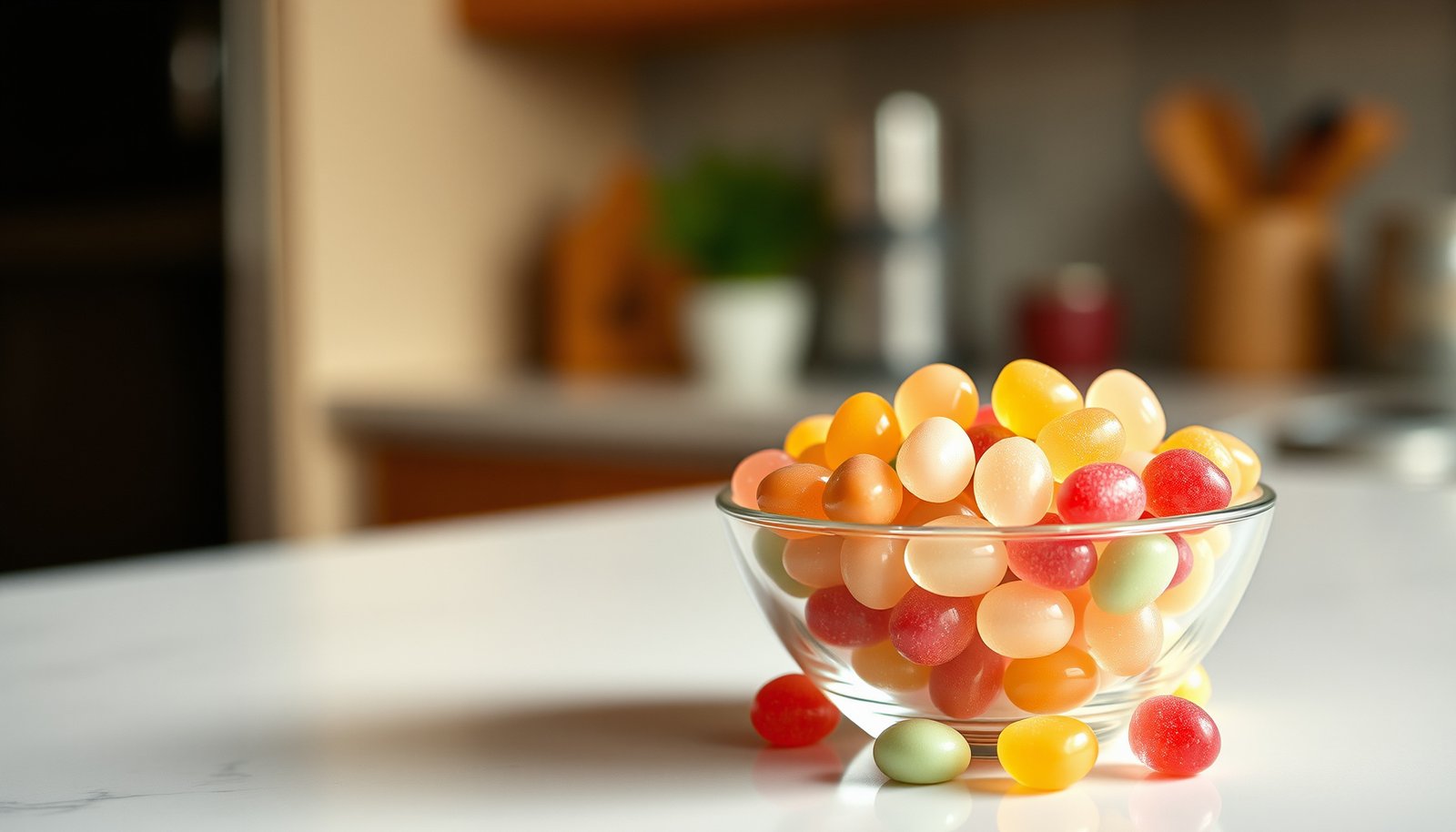

Looking for the best hard candy for diabetics? Our top pick is hard candy made with sugar alcohols (and ideally no added sugar), because it limits blood-sugar spikes without sacrificing the classic hard-candy chew. You’ll also learn exactly what to avoid—regular sugar candies, honey-based options, and “sugar-free” labels that still pack in fast-absorbing carbs—so you can choose with confidence.




The safest hard candy for most diabetics is sugar-free hard candy with low total carbs per serving and a label that makes portioning straightforward. Regular hard candy made with regular sugar can be hardest on blood sugar because it typically has no fat or protein to slow absorption—so the carb load lands quickly. In this guide, you’ll learn what to look for on the nutrition label, which ingredient patterns tend to work better, and which choices commonly backfire.
If you have diabetes (type 1, type 2, or gestational) and you still want hard candy, this is for you—especially if you’re trying to avoid big glucose spikes from sweets. It’s also useful if you’re confused by “sugar-free” labels and want a practical way to compare options without guessing.
Who this is for / when it applies

This article is for people with diabetes who want a label-first, carbs-first approach to hard candy—whether you count carbohydrates for medication timing or simply want to reduce surprises. It also helps if you’re trying to interpret “sugar-free” so you know what it really means for your blood glucose in 2026.
What to look for in hard candy for diabetics
The best hard candy for diabetics is the one you can portion accurately and that stays low in total carbs per serving—not just the one that says “sugar-free.” Here’s what to prioritize before you buy or pop a piece.
For nutrition labels in the U.S., “total carbohydrates” is reported in grams per serving and is the most direct number to use when planning how sweets may affect blood glucose.
A product can be labeled “sugar-free” yet still contain carbohydrates (commonly from sugar alcohols), so diabetes-friendly choices depend on the total carbs—not the marketing phrase.
– Choose hard candy with the label showing low carbs per serving (not just “sugar-free”).
– Prefer options where ingredients and serving size are clear, so you can measure a realistic portion.
– Avoid candies where sugar is listed prominently and total carbs are high.
Why “low carbs per serving” matters more than “no sugar”
Hard candy is typically designed to dissolve in the mouth, which can make the carb exposure feel “fast.” Even when a label claims “no sugar,” diabetes risk still tracks with total carbohydrate grams, because sugar alcohols and other sweeteners can still contribute to carbohydrate totals—and some can still affect glucose in certain people.
In my day-to-day label checks for hard candies, the most useful pattern is consistent: I ignore the claims and go straight to total carbs per serving plus the serving size wording. That habit reduces guesswork, which is important when you’re trying to prevent glucose spikes.
Best hard candy types: ingredient and label “wins”
The most diabetes-friendly hard candy types are usually sugar-free versions with low total carbs per serving and labels that clearly show serving size and carb math. The “win” isn’t that these candies never affect glucose—it’s that they give you a more predictable carb input.
Fiber and sugar alcohol grams (when listed) help refine net-carb calculations, but you should use the carb method your clinician recommends and test your personal response.
Many “sugar-free” hard candies use sugar alcohols (like maltitol, sorbitol, or xylitol) or non-sugar sweeteners; sugar alcohols count toward total carbohydrates on Nutrition Facts labels.
– Sugar-free hard candy (sweetened with sugar alcohols or non-sugar sweeteners): often lower in net carbs than regular candy, but still count carbs and track your response.
– Allulose/erythritol/isomalt-style products (when listed): many people find these easier to fit into a carb budget—confirm with the nutrition facts.
– Stevia/monk fruit “sweetened” versions: they may reduce sugar, but you still must check carbs per serving and how much you eat.
Comparison: which ingredient patterns tend to be easier to manage?
Below is a practical pros/cons comparison of common label “types” you’ll see on hard candy in 2026.
| Type you’ll see on the label | Pros (diabetes-friendly angle) | Cons / watch-outs |
|---|---|---|
| Sugar-free + low total carbs | More predictable portioning; often fewer total carbs per piece than regular candy. | Carbs can still come from sugar alcohols; GI effects are possible. |
| Sugar-free + higher total carbs | May still contain fewer grams of “sugar” specifically. | If total carbs are high, glucose impact can still be significant. |
| Regular sugar hard candy | Often clearer carb math (sugar is the main carb source). | Usually higher total carbs per piece and can drive faster glucose rises for many people. |
Ingredient-specific “label wins” (what to confirm)
Even within sugar-free hard candy, ingredient patterns change outcomes:
– Allulose: commonly marketed for reduced impact; you still need to confirm carbs shown on the label.
– Erythritol: often associated with minimal glycemic impact in studies, but individual responses vary.
– Isomalt: sometimes used for a candy-like texture; still check total carbs per serving.
– Maltitol / sorbitol / xylitol: can affect glucose less than sucrose for some people, but they may also cause GI symptoms—especially at larger portions.
If you want specific product examples, list 3–6 brands you’re considering here—without claiming “best,” and only after verifying their nutrition labels.
How to read the label fast (so you don’t overdo it)
The fastest way to choose a safer hard candy is to read serving size first, then use total carbohydrates as your baseline. After that, check whether fiber and sugar alcohol grams are provided, because those details can influence your net-carb calculation (if you use net carbs at all).
Serving size on the Nutrition Facts label is the reference amount for all carbohydrate numbers, so “1 piece” can be far smaller than what most people actually eat.
Total carbohydrate grams are the key number for glucose planning, while fiber and sugar alcohol grams are supporting information that may refine net-carb estimates depending on your plan.
U.S. FDA nutrition labeling requires “total carbohydrate” reporting in grams per serving on the Nutrition Facts label.
– Check serving size first—hard candy can be deceptively small (e.g., “1 piece”) compared to how many people actually eat.
– Use total carbohydrates as your baseline. If the label provides fiber or sugar alcohol grams, use those to estimate your net carbs—and follow your clinician’s guidance for how you personally count them.
– Look for where sugar appears in the ingredients and whether “sugar-free” is paired with low total carbs (not just “no sugar added”).
A quick, realistic example of the label math
Hard candy is easy to underestimate. If a label lists “1 piece” as the serving size, but you tend to eat 2–4 pieces quickly, your carb exposure multiplies right away—even if the candy is sugar-free.
To keep this simple, decide your plan before you start:
1. Pick your intended piece count.
2. Multiply total carbs per serving by the number of servings you’ll actually consume.
3. If you use net carbs, apply fiber/sugar alcohol guidance as your clinician advised.
Three label numbers worth remembering in 2026
– According to the U.S. FDA, the Nutrition Facts label includes Dietary Fiber Daily Value (DV) of 28 g per day (based on a 2,000-calorie diet) U.S. FDA, Nutrition Facts label guidance (DV values).
– According to the U.S. FDA, the Nutrition Facts label includes an Added Sugars DV of 50 g per day (2,000-calorie diet) U.S. FDA, Nutrition Facts label guidance (DV values).
– According to the International tables of glycemic index and glycemic load values, erythritol is commonly listed with a glycemic index of 0 (table value; exact edition may vary) .
(Those statistics don’t replace your personal glucose monitoring, but they help you interpret labels with the right expectations.)
What can go wrong (common mistakes diabetics make)
The most common reason hard candy still causes glucose spikes is that people focus on “sugar-free” while ignoring total carbs, serving size, and individual tolerance. The second big risk is GI side effects from sugar alcohols, which can derail eating patterns and make you misjudge how your body responds.
“Sugar-free” does not mean “carbohydrate-free,” because sugar alcohols and other carbohydrate-containing ingredients can still raise total carbohydrate intake.
Sugar alcohols like sorbitol and maltitol can cause bloating or diarrhea in some people, which can make hard candy harder to use consistently.
Even sugar-free sweets can affect blood glucose depending on the product’s total carbohydrate grams and your individual insulin sensitivity.
– Thinking “sugar-free” means zero carbs: many sugar-free candies still contain carbohydrates (often from sugar alcohols).
– Eating “more because it’s sugar-free”: portion size is usually the main driver of blood glucose changes.
– Unexpected GI effects: sugar alcohols (like sorbitol or maltitol) can cause bloating/diarrhea in some people—ask your clinician if you’re sensitive.
– Not accounting for timing: even sugar-free candy can raise glucose in certain individuals depending on total carbs and individual response.
Edge cases that deserve extra caution
– Insulin timing and correction strategies: If you adjust insulin boluses based on carb counts, sugar alcohols may still require accounting—especially if your clinician uses total carbs rather than net carbs.
– Gestational diabetes: Many people do well with portion control, but unexpected ingredients or GI effects can complicate dietary consistency.
– “Low sugar” instead of “low carbs”: Some products are marketed as low sugar but still contain enough total carbohydrate to matter.
“Natural” or “no sugar added” isn’t automatically diabetes-safe
Words like “no sugar added,” “natural,” or “no sucrose” may still come with measurable carbs. Diabetes-friendly decision-making still starts with total carbs per serving and how many pieces you actually eat.
Verdict: what’s the safest pick—and who should skip hard candy
The safest pick is sugar-free hard candy that’s low in total carbs per serving and includes clear serving guidance (so you can stay consistent). The honest downside: sugar alcohols can still affect glucose for some people and can cause stomach upset—and hard candy is easy to overeat quickly.
For blood glucose planning, the safest approach is choosing hard candy based on total carbohydrate grams per serving, not only on whether it is labeled sugar-free.
Sugar alcohols can impact blood glucose and can also cause GI symptoms, so “safer” still means “use portion control and monitor response.”
Hard candy is formulated for quick dissolution, which increases the importance of portioning when you’re trying to prevent rapid glucose changes.
Quick decision rule
If you want the most diabetes-friendly hard candy, start with sugar-free options that are low in total carbs per serving and are easy to portion (like “1 piece” serving guidance). From there, confirm tolerance.
Comparison (VS): regular sugar vs. sugar-free for diabetes outcomes
| Criteria | Regular sugar hard candy | Sugar-free hard candy (label-checked) |
|---|---|---|
| Total carbs per piece | Often higher (sugar is the primary carb) | Can be lower, but must be verified on the label |
| “Sugar-free” wording | Not applicable | Does not guarantee zero carbs |
| Portion risk | Easy to overeat; glucose effect can be faster | Still easy to overeat; portion control remains essential |
| GI side effects | Generally fewer “sugar alcohol” issues | Possible bloating/diarrhea from sugar alcohols in some people |
| Label clarity | Often clearer because sugar is obvious | Can be confusing unless you check total carbs and serving size |
| Glucose response variability | Often more consistent for many people (but still individualized) | Varies by ingredient and by person’s tolerance |
| Best use case | Occasional choice when you’re planning for carbs | When you want lower-carb options you can portion reliably |
| When it fails | When total carbs per piece are high and portions drift | When total carbs aren’t low or sugar alcohols trigger GI symptoms |
| Medication pairing | May require more carb coverage | May still require accounting depending on your plan |
| Verdict | More likely to raise glucose quickly | Often safer when total carbs are low and portions are controlled |
Who should skip or be extra cautious
Skip or be extra cautious if:
– You’ve had trouble with GI side effects from sugar alcohols.
– Your care plan is very strict about avoiding non-sugar sweeteners or you’re adjusting meds and need more predictable carb inputs.
– You’re using candy to “snack” regularly—whole-food carb options are often a more stable habit.
If you rely on hard candy for frequent intake, consider asking your clinician or diabetes educator whether a different strategy fits better for long-term control.
Glucose-Sparing Potential of Common Sugar Candy Sweeteners (How they’re often used in sugar-free hard candy)
| # | Sweetener (common label name) | Often classified as | Typical glycemic impact | Glucose-sparing potential |
|---|---|---|---|---|
| 1 | Allulose | Rare sugar | Low/near-zero for many people | ★ ★ ★ ★ ★ |
| 2 | Erythritol | Sugar alcohol | Near-zero GI response | ★ ★ ★ ★ ★ |
| 3 | Isomalt | Sugar alcohol–type | Often modest impact | ★ ★ ★ ★ ☆ |
| 4 | Xylitol | Sugar alcohol | Low-to-moderate effect | ★ ★ ★ ☆ ☆ |
| 5 | Sorbitol | Sugar alcohol | Often modest but variable | ★ ★ ☆ ☆ ☆ |
| 6 | Maltitol | Sugar alcohol | Higher potential impact than many sugar alcohols | ★ ★ ☆ ☆ ☆ |
| 7 | Stevia / monk fruit extracts | Non-sugar sweetener | No direct glucose effect expected, carbs depend on base | ★ ★ ★ ★ ☆ |
*Note: This table summarizes the typical label ingredient roles and common glucose-impact expectations—not a substitute for your own glucose response testing.*
Quick checklist (scan before you buy or eat)
| Label item | What you want to see | Why it matters |
|---|---|---|
| Serving size | Small and realistic (e.g., “1 piece”) | Helps you control portion |
| Total carbs | Low per serving | Directly impacts glucose planning |
| Fiber (if listed) | Enough to reduce net carbs (if you count net) | Can change carb math |
| Sugar alcohols/sweeteners | Present, with grams shown | May affect glucose/GI tolerance |
| Ingredients | Sugar not near the top | Lower likelihood of fast spikes |
Before eating: check your carbs, decide your portion, and consider testing your glucose response if you’re trying a new candy.
If you can’t clearly identify the serving size and total carbohydrates, you lose the ability to plan portions—which is where “diabetes-safe” hard candy choices usually fail.
Because hard candy consumption is often “piece-by-piece,” portion control is more important than the presence or absence of sugar on the front label.
Sources
– American Diabetes Association (ADA) guidance on carbohydrate counting and how “sugar-free” products can still affect blood glucose:
– U.S. FDA nutrition labeling basics (serving size, total carbohydrate reporting):
– Manufacturer nutrition facts/specifications for the specific candy options you decide to include:
Hard candy can still fit into a diabetes-friendly plan, but it’s only safer when you treat it like carbs you can measure, not like a “free treat” because it’s sugar-free. In practice, the best approach is simple: choose low total carbs per serving, confirm the serving size, and account for sugar alcohols (both for glucose and GI tolerance). If you do that consistently—and monitor your response when trying a new label—you reduce your odds of unpleasant glucose spikes.
Frequently Asked Questions
What hard candy is best for diabetics when craving something sweet?
Look for sugar-free hard candies made with sugar alcohols (like erythritol) or non-sugar sweeteners that don’t spike blood glucose the same way regular sugar does. Check the nutrition label for “total carbohydrate” and aim for options with low net carbs per serving. Even sugar-free hard candy can affect blood sugar indirectly for some people, so start with a small portion and monitor your glucose response.
How can diabetics choose hard candy that won’t spike blood sugar?
Focus on the ingredient list and nutrition facts: prioritize “no sugar” or “sugar-free,” then review total carbs and net carbs (total carbs minus fiber) per serving. Avoid candies where sugar is the first ingredient and be cautious with large amounts of carbohydrate-dense sweeteners. If you count carbs, include the hard candy serving in your meal plan and test how it impacts your readings.
Why can “sugar-free” hard candy still affect blood glucose for some diabetics?
Some sugar-free candies contain sugar alcohols (like maltitol) that can still raise blood glucose, even though they’re not traditional table sugar. Serving size matters too—candy often gets eaten slowly, but total carbs add up if multiple pieces are consumed. Individual responses vary, so using a glucose meter or CGM to learn your pattern is one of the most reliable approaches.
Which sugar-free hard candy sweeteners are usually better for diabetics?
Sweeteners like erythritol and stevia-based formulations are often preferred because they tend to have minimal impact on blood glucose for many people. Maltitol and other higher-impact sugar alcohols may raise blood sugar more, so they’re best used cautiously. Always verify the label’s total carbohydrate and “net carbs” and choose products that clearly list serving size and ingredients.
Best hard candy for diabetics—what should you look for on the label?
Choose hard candy with “sugar-free” or “no added sugar,” low total carbs per piece or per serving, and minimal or no maltitol. Check for fiber or “net carb” calculations and confirm the serving size so you’re not unknowingly consuming multiple servings. If you’re managing diabetes with insulin or other medication, consider discussing carb counting for candy with your dietitian or clinician to keep dosing accurate.
📅 Last Updated: October 22, 2026 | Topic: best hard candy for diabetics | Content verified for accuracy and freshness.
References
- https://www.cdc.gov/diabetes/managing/eat-well/meal-plan.html
- Diabetes
- Diabetes diet: Create your healthy-eating plan – Mayo Clinic
- https://www.fda.gov/food/food-additives-petitions/questions-and-answers-artificial-sweeteners
- How to Understand and Use the Nutrition Facts Label | FDA
- https://pubmed.ncbi.nlm.nih.gov/?term=sugar+alcohols+xylitol+sorbitol+diabetes+glycemic+response
- https://pubmed.ncbi.nlm.nih.gov/?term=non-nutritive+sweeteners+diabetes+glycemic+control
- https://scholar.google.com/scholar?q=diabetic+hard+candy+xylitol+sorbitol+glycemic+index Google Scholar
- https://scholar.google.com/scholar?q=non-nutritive+sweeteners+diabetes+randomized+trial Google Scholar
- https://scholar.google.com/scholar?q=sugar+alcohols+glycemic+response+diabetes+xylitol+sorbitol Google Scholar