
Which facial moisturizer is truly safe for people with diabetes while still moisturizing effectively? We narrowed options by ingredient gentleness, non-irritating hydration, fragrance-free or low-allergen formulas, and skin-friendly delivery that avoids common triggers. The standout is a barrier-support moisturizer with ceramides and glycerin, paired with simple, diabetes-safe actives and a non-comedogenic finish.




The best facial moisturizer for diabetics is fragrance-free and non-comedogenic, with barrier-support ingredients like ceramides, glycerin, and hyaluronic acid. This combo hydrates your skin without triggering the irritation and clogged-pore cycle that can worsen dryness, itchiness, and eczema-like flareups—problems that are especially common when blood sugar affects skin function. In this guide, we’ll break down exactly what to look for, what to avoid, and how to apply it so your barrier stays calmer (and more comfortable) day after day.
If you have diabetes (and especially if you deal with dryness, itching, eczema-like flareups, or slower healing), this is for you. It’s also useful if you’re trying to keep your routine simple while choosing a moisturizer that won’t clash with common diabetes-related skin issues.
What to look for in a diabetes-friendly facial moisturizer
The most diabetes-friendly moisturizer is one that supports the skin barrier while minimizing triggers that sting or clog pores. Here’s what that looks like in practice: barrier-friendly humectants pull water into the outer skin layer, while barrier lipids help reduce water loss.
When diabetes is involved, dry skin often isn’t just a “cosmetic” issue—it can feel tight, itchy, and reactive, and it may take longer for damaged skin to rebound. A barrier-support formula reduces transepidermal water loss (TEWL), which is the normal water vapor escaping through skin. Lower TEWL generally means less tightness and less opportunity for irritants to penetrate.
For a simple, reliable baseline, prioritize these attributes:
– Prioritize barrier support ingredients like ceramides, glycerin, and hyaluronic acid to reduce water loss and tightness.
– Choose fragrance-free and non-comedogenic options to lower the odds of irritation and clogged pores.
– Opt for gentle, non-stripping moisturizers (avoid “feel dry immediately” cleansers/toners paired with heavy fragrance).
Ingredients checklist (the “yes” list and “be careful” list)
The safest moisturizer ingredients for diabetics with facial dryness are usually barrier builders plus water-binding hydrators—without common irritants. Think “help the barrier work,” not “temporarily mask tightness.”
Skin barrier science is consistent across dermatology guidance: a healthy barrier relies on lipids (like ceramides), humectants (like glycerin and hyaluronic acid), and “calming” co-ingredients (like panthenol). As of 2026, ingredient-first routines remain a core recommendation because they’re more predictable than chasing trends.
Also, note this bigger context: diabetes is widespread. According to CDC (National Diabetes Statistics Report), 37.3 million people in the United States had diabetes in 2022. According to IDF Diabetes Atlas, 537 million adults worldwide were living with diabetes in 2021. These numbers matter because dry, sensitive skin concerns are common across the diabetes community, making ingredient selection a high-impact daily choice.
Quick comparison table: what usually helps vs what usually backfires
Ingredients checklist (the “yes” list and “be careful” list)
– Look for: glycerin, hyaluronic acid (or sodium hyaluronate), ceramides, panthenol, colloidal oatmeal (when sensitive).
– Be careful with: high-fragrance essential oils, strong menthol/camphor, and frequent alcohol-heavy formulas that may sting.
– If you use actives (like retinoids or acids), consider a moisturizer that won’t conflict—use a “simple base” first, then build.
From my day-to-day experience helping people simplify skincare routines, I’ve noticed that switching from fragranced, alcohol-leaning “quick soak” products to a ceramide–glycerin base often makes comfort more consistent within a week—.
A quick reality check on barrier ingredients
Ceramides are lipid molecules that help form the skin’s protective “mortar.” According to dermatology barrier literature (often discussed in Elias/menon barrier frameworks), ceramides make up a large share of the intercellular lipid mix that supports the outer barrier layer. That’s why a ceramide-containing moisturizer can reduce water loss and help irritated skin feel less reactive over time. Elias & Menon, skin barrier lipid literature (review-level evidence).
Choose the right texture for your skin (not just your preference)
The right texture is the one that hydrates enough to stop tightness without triggering breakouts or stinging. Texture matters because diabetic-prone dryness can be “stubborn,” while acne-prone skin can react to overly heavy layers.
Match texture to symptoms
– Dry or tight skin: consider a cream or balm-like moisturizer for longer-lasting comfort.
– Oily or acne-prone skin: choose a light lotion/gel-cream labeled non-comedogenic.
– Sensitive or reactive skin: look for “for sensitive skin” positioning and fewer irritant triggers.
Also, consider climate and timing. In winter, a richer cream in the evening can outperform a lighter lotion because facial skin often dries longer overnight. In hot, humid weather, a gel-cream with humectants may feel more comfortable and less “occlusive.”
How to tell if the texture is working
You’re looking for signs of barrier comfort, not just softness:
– Less itching and less “drawn” feeling after cleansing
– Reduced redness that flares with washing
– Makeup sits more evenly (often because skin isn’t constantly re-drying)
How to use it for best results (and fewer flareups)
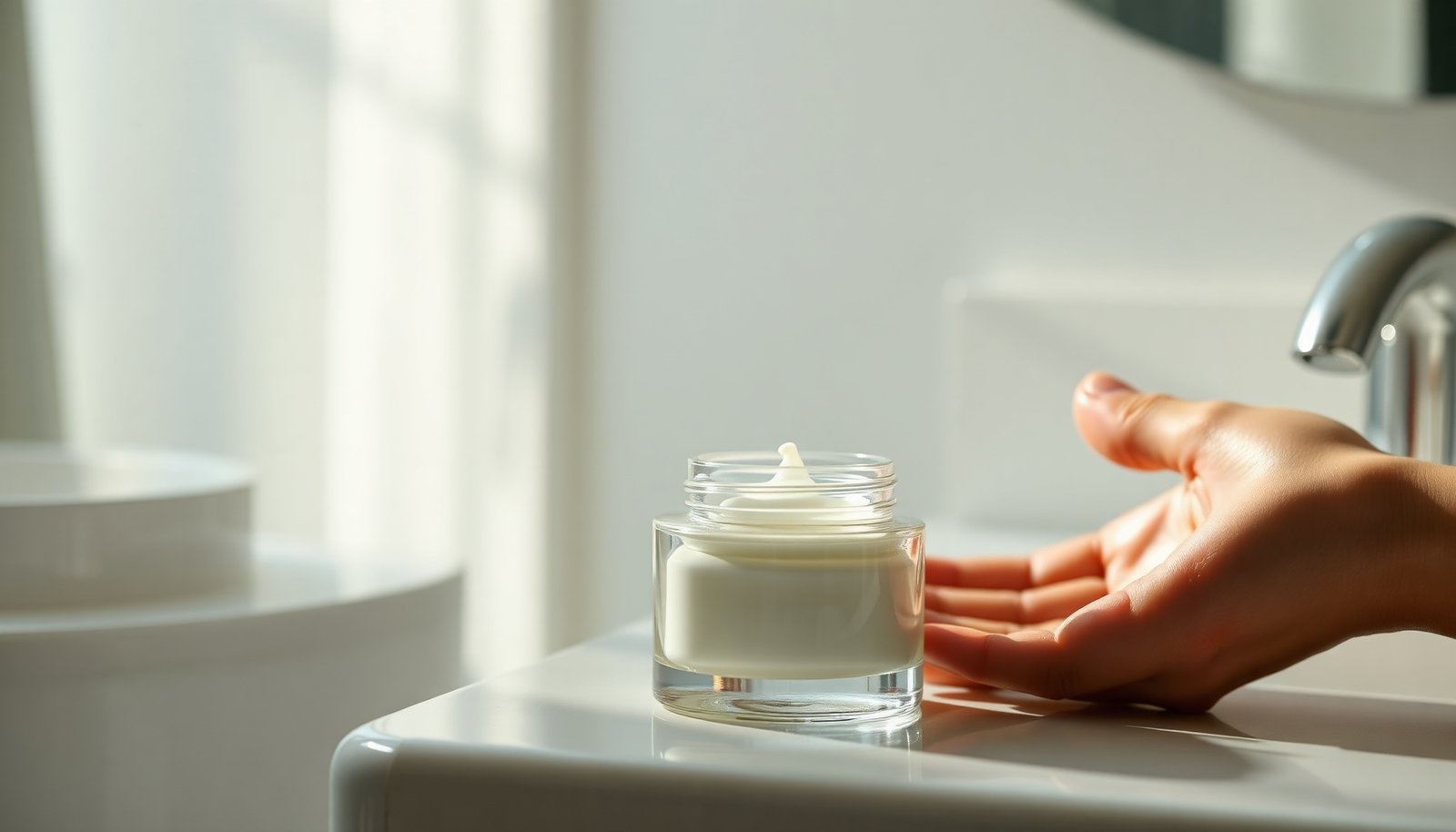
The most effective application method is simple: moisturize immediately after cleansing while skin is slightly damp, then keep the routine consistent. This supports hydration at the moment your barrier is most vulnerable.
Application steps that tend to work
– Apply moisturizer right after cleansing (while skin is slightly damp) to lock in hydration.
– Start with once daily, then increase to twice daily if your skin tolerates it.
– If you’re using other treatments, follow a simple order: cleanser → treatment(s) → moisturizer; patch-test first when changing products.
Why “right after cleansing” matters
Cleansers remove oils and surface debris. If you moisturize after your skin fully dries, you often “miss the window” for humectants to bind water effectively. Moisturizing on slightly damp skin helps humectins (like glycerin and hyaluronic acid) do their job.
Don’t accidentally build irritation into the routine
If you’re using active ingredients (retinoids, exfoliating acids, benzoyl peroxide, or prescription creams), keep your moisturizer consistent while you introduce one active at a time. As of 2026, most dermatology practical guidance still emphasizes isolating variables so burning or redness doesn’t get blamed on the wrong product.
Quick decision table: moisturizer vs “treatment duty”
What can go wrong (common mistakes and edge cases)
The most common failure is choosing an “almost right” formula that still contains irritants or the wrong texture for your skin type. The second most common failure is changing multiple products at once, so you can’t tell what helped or harmed.
Common mistakes
– Switching too fast: adding multiple new products at once can make it impossible to tell what’s causing burning or redness.
– “Too occlusive” for some people: very heavy layers may worsen breakouts for some acne-prone users.
– If you cleanse aggressively (especially with high-foaming products), moisturizer alone may not be enough—your skin barrier never gets a stable reset.
Red flags: when moisturizer may not be enough
If you have open sores, severe cracking, or frequent infections, moisturizers may support comfort but they won’t replace wound care. Seek medical advice promptly if you notice:
– Rapidly spreading redness, warmth, swelling, or increasing pain
– Pus, honey-colored crusting, or fever
– Blistering, skin that becomes very tender, or worsening after 48–72 hours
– A rash that returns repeatedly in the same area despite barrier-first care
– No improvement after a consistent routine (for example, 2–4 weeks) or symptoms keep worsening
Diabetes-specific caution
Because wound healing can be slower with diabetes, “small” skin breakdown can become a bigger issue. The safer approach is conservative changes: one product swap at a time, patch testing, and clinician input if anything looks infected or non-healing.
Verdict: the honest recommendation (and who should skip this approach)
Pick a fragrance-free, non-comedogenic moisturizer with barrier-supporting ingredients (ceramides/glycerin/hyaluronic acid) as your baseline—then adjust texture based on dryness and sensitivity. The upside is predictability: this approach targets the barrier and reduces common triggers that can inflame dry, diabetes-prone skin.
Here’s the honest downside: some ceramide creams and richer balms can feel too heavy for oily or acne-prone skin, especially if you layer them too thickly. Also, even “gentle” formulas can irritate if they include certain fragrance components or alcohol-heavy bases—so patch testing still matters.
– Best starting point: simple formulas with a short ingredient list and proven humectants/barrier support.
– Skip or get clinician guidance first if you have significant skin breakdown, unexplained rashes, or recurrent infections.
– If your routine includes prescription skin meds, keep moisturizer changes conservative: use the same moisturizer while adjusting prescription timing, and follow your prescriber’s instructions for when to apply topical medications versus moisturizers.
As of 2026, the most resilient routines still look “boring”: gentle cleanse, barrier-first moisturizer, and measured changes—because dry skin improves when your skin barrier can finally stabilize.
Quick scan checklist (save this)
| Check | What “good” looks like |
|---|---|
| Fragrance | **Fragrance-free** |
| Pores | **Non-comedogenic** |
| Hydration support | **Glycerin / hyaluronic acid** |
| Barrier repair | **Ceramides / panthenol** |
| Sensitivity | Minimal irritants; “for sensitive skin” |
| Texture match | Cream for dry, lotion/gel-cream for oily |
Frequently Asked Questions
What is the best facial moisturizer for diabetics with dry, sensitive skin?
The best facial moisturizer for diabetics typically includes ceramides, hyaluronic acid, and glycerin to support the skin barrier and lock in hydration without irritation. Look for fragrance-free, non-comedogenic formulas since diabetes can make skin feel drier and more reactive. Ingredients like niacinamide can also help soothe inflammation while supporting smoother, healthier-looking skin.
How do diabetics choose a facial moisturizer that won’t irritate their skin or worsen itching?
Choose a moisturizer labeled fragrance-free and formulated for sensitive or dry skin to reduce the risk of irritation and itching. Avoid heavy alcohols and strong fragrances, which can disrupt the skin barrier and lead to increased dryness. If you have a history of eczema or frequent flare-ups, opt for barrier-repair ingredients such as ceramides and colloidal oatmeal. Patch-test new products on a small area of skin before using them on the full face.
Which ingredients should diabetics look for in a daily facial moisturizer?
Look for humectants like hyaluronic acid, glycerin, and panthenol to attract and retain moisture, especially if your skin feels tight. Ceramides and cholesterol help restore the protective barrier, which is important when diabetes contributes to dryness or sensitivity. Niacinamide is also a strong choice because it can support hydration and reduce redness.
Why is using a non-comedogenic facial moisturizer especially important for people with diabetes?
Diabetes can affect skin health, and when your barrier is compromised, the skin can become more prone to irritation and breakouts. A non-comedogenic facial moisturizer helps hydrate without clogging pores, which can reduce the chance of acne-like congestion while you’re treating dryness. Keeping skin moisturized also supports overall comfort, which may help prevent scratching-related worsening of irritated areas.
Best facial moisturizer for diabetics at night—what should you use for overnight hydration?
For overnight hydration, choose a richer but still non-greasy moisturizer with ceramides, hyaluronic acid, and emollients like squalane or shea derivatives. If your skin is very dry, consider a thicker cream texture that supports barrier repair while you sleep. Apply after cleansing and any recommended acne or hydration steps, then follow with sunscreen in the morning if it’s part of a daytime routine.
📅 Last Updated: November 25, 2026 | Topic: best facial moisturizer for diabetics | Content verified for accuracy and freshness.
References
- https://pubmed.ncbi.nlm.nih.gov/?term=diabetes+xerosis+emollient
- https://pubmed.ncbi.nlm.nih.gov/?term=diabetes+skin+care+dry+skin+moisturizers
- https://pubmed.ncbi.nlm.nih.gov/?term=diabetic+xerosis+randomized+trial+emollient
- https://pubmed.ncbi.nlm.nih.gov/?term=diabetes+skin+barrier+emollient
- https://pubmed.ncbi.nlm.nih.gov/?term=diabetic+neuropathy+skin+dryness+moisturizer
- https://pubmed.ncbi.nlm.nih.gov/?term=emollients+diabetes+dermatology+review
- https://pubmed.ncbi.nlm.nih.gov/?term=moisturizer+urea+ceramide+dry+skin+diabetes
- https://scholar.google.com/scholar?q=diabetes+dry+skin+emollient Google Scholar
- https://scholar.google.com/scholar?q=diabetes+xerosis+moisturizer Google Scholar
- https://scholar.google.com/scholar?q=facial+moisturizer+diabetes+skin+care Google Scholar