
Maintaining optimal foot health is paramount for individuals with diabetes, and selecting the right foot moisturizer is a crucial step in preventing complications. The best foot moisturizers for diabetics are specifically formulated with ingredients like urea, lactic acid, ceramides, and hyaluronic acid to deeply hydrate, strengthen the skin barrier, and combat dryness and cracking. This guide will help you understand what makes a moisturizer ideal for diabetic feet and how to incorporate it effectively into your daily care routine, ensuring your feet stay healthy, comfortable, and protected.
Understanding Diabetic Foot Skin Challenges

Living with diabetes can bring unique challenges for your skin, especially on your feet. It’s not just about dry skin; there are underlying physiological changes that make diabetic feet particularly vulnerable. Understanding these challenges is the first step toward effective prevention and care.
* Increased Dryness and Cracking: Diabetes can impair nerve function (neuropathy) and reduce blood flow (peripheral artery disease), which directly impacts skin health. When nerves are damaged, they may not send the right signals to sweat glands, leading to significantly reduced moisture production. This means your skin loses its natural hydration, becoming dry, scaly, and brittle. This dryness often progresses to cracking, especially around the heels and balls of the feet, which bear the most pressure. These cracks, even tiny ones, can be incredibly painful and, more importantly, create easy entry points for bacteria and fungi.
* Impaired Wound Healing: High blood sugar levels, a hallmark of diabetes, can thicken blood vessels and stiffen arteries, reducing the efficient delivery of oxygen, nutrients, and immune cells to the extremities. This poor circulation means that even a small cut or crack takes much longer to heal. What might be a minor scrape for someone without diabetes could become a persistent, slow-healing wound for a diabetic individual, greatly increasing the risk of infection and more severe complications. The body’s natural repair mechanisms are simply less efficient.
* Risk of Neuropathy: Nerve damage, or neuropathy, is a common and serious complication of diabetes. It can lead to a loss of sensation in the feet, meaning you might not feel pain, heat, or cold as acutely as you should. This lack of sensation is particularly dangerous because minor skin issues like blisters, cuts, or ingrown toenails can go completely unnoticed. Without the protective signal of pain, these small problems can quickly escalate into larger, infected wounds before you’re even aware there’s an issue, highlighting the critical need for daily foot checks and proactive care like regular moisturizing.
Essential Ingredients for Diabetic Foot Moisturizers
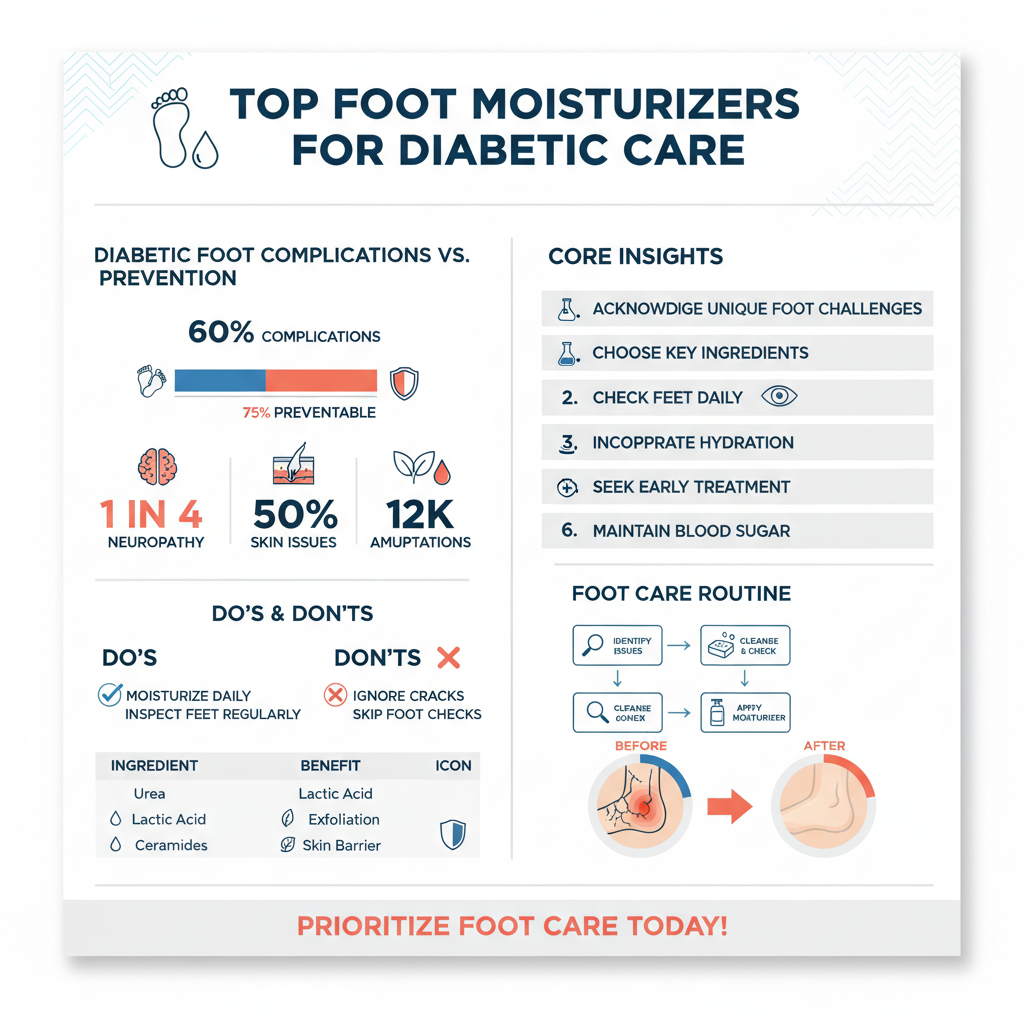

When choosing a foot moisturizer for diabetic feet, the ingredient list is your best friend. Look for specific components known for their hydrating, barrier-strengthening, and skin-softening properties, all while being gentle.
* Urea: This is often considered a superstar ingredient for diabetic foot care. Urea is both a powerful humectant and a keratolytic agent. As a humectant, it draws moisture from the air into the skin, providing deep and lasting hydration. As a keratolytic, it helps to gently break down and loosen thick, dead skin cells, which is particularly beneficial for managing calluses and thickened areas common on diabetic feet. By doing so, urea allows other moisturizing ingredients to penetrate more effectively, making the skin softer, smoother, and more supple. Look for products with urea concentrations typically between 10% and 20% for optimal results on the feet.
* Lactic Acid (AHA): Lactic acid is an alpha hydroxy acid (AHA) that performs a dual role in foot moisturizers. Firstly, it acts as a gentle exfoliant, helping to shed dead, dry skin cells from the surface. This not only improves skin texture and smoothness but also prevents the build-up of rough patches that can lead to cracking. Secondly, lactic acid is also a powerful humectant, similar to urea. It attracts and retains moisture in the skin, contributing significantly to overall hydration. Its gentle nature makes it suitable for sensitive diabetic skin, providing exfoliation without harshness.
* Ceramides: Think of ceramides as the “mortar” between the “bricks” (skin cells) in your skin’s protective barrier. These crucial lipids are naturally found in your skin and play a vital role in maintaining its integrity. For diabetic feet, where the skin barrier can often be compromised, ceramides are invaluable. They help to reinforce this natural barrier, reducing transepidermal water loss (meaning moisture stays locked in) and protecting the skin from external irritants, allergens, and potential pathogens. By strengthening the barrier, ceramides help to reduce dryness, itching, and the risk of infection.
* Hyaluronic Acid: Often lauded in skincare, hyaluronic acid is a humectant heavyweight. It has an extraordinary capacity to hold many times its weight in water, creating a reservoir of moisture in the skin. When applied to the feet, hyaluronic acid provides intense, immediate, and lasting hydration, plumping up the skin and improving its elasticity. This helps to reduce the appearance of fine lines and cracks, making the skin feel softer and more resilient against the daily stresses of walking and standing. It’s an excellent complementary ingredient to urea and lactic acid for comprehensive hydration.
Ingredients to Avoid in Diabetic Foot Care
Just as important as knowing what to look for is knowing what to avoid. Certain ingredients can irritate sensitive diabetic skin, potentially causing more harm than good and exacerbating existing issues.
* Fragrances and Dyes: While pleasant scents and colors might seem appealing, they are often unnecessary additives that can be problematic for diabetic skin. Fragrances (both synthetic and natural essential oils) and artificial dyes are common allergens and irritants. Diabetic skin is often more fragile and prone to sensitivity, making it more reactive to these compounds. Irritation can manifest as redness, itching, burning, or even allergic contact dermatitis, which can create new skin integrity issues or worsen existing ones, increasing the risk of infection.
* Alcohol (Ethanol/Isopropyl): Alcohol, particularly ethanol or isopropyl alcohol, is a common ingredient in many lotions and creams, often used for its quick-drying properties or as a solvent. However, these types of alcohol are highly dehydrating. They strip the skin of its natural oils and compromise its protective barrier, leading to increased dryness and irritation. For diabetic feet, which are already prone to excessive dryness, using products containing drying alcohols can exacerbate the problem, making cracks worse and hindering the skin’s natural healing process. Always check the ingredient list carefully for these drying alcohols.
* Harsh Exfoliants: While gentle exfoliation from ingredients like lactic acid is beneficial, harsh physical scrubs (e.g., those with large颗粒 or sharp edges like crushed nutshells) or strong chemical exfoliants (e.g., high concentrations of salicylic acid) should be avoided. Diabetic skin can be delicate and fragile due to poor circulation and neuropathy. Abrasive scrubs can create micro-tears in the skin, which might not be felt due to nerve damage but can easily become entry points for bacteria, leading to infections. Strong chemical exfoliants can be too aggressive, causing irritation, redness, or even chemical burns on compromised skin. Stick to gentle, chemical-free exfoliation methods or mild AHAs.
Top Features of a Diabetic-Friendly Foot Moisturizer
Beyond specific ingredients, certain product features indicate that a moisturizer is formulated with the unique needs of diabetic feet in mind. These features contribute to safety, comfort, and efficacy.
* Hypoallergenic and Non-Irritating: This is a paramount feature for any product intended for diabetic skin. “Hypoallergenic” means the product has been formulated to minimize the risk of allergic reactions. “Non-irritating” indicates it’s designed not to cause redness, itching, or discomfort. Since diabetic skin can be exceptionally sensitive and prone to inflammation, choosing products explicitly labeled with these terms provides a greater assurance of safety. It means the manufacturer has likely avoided common irritants and conducted testing to ensure gentleness, reducing the chances of adverse reactions that could compromise skin integrity.
* Non-Greasy and Fast-Absorbing: Comfort and compliance are key when it comes to daily foot care. A moisturizer that feels greasy or leaves a slippery residue can be unpleasant to use, making you less likely to apply it consistently. Furthermore, a greasy residue can create a slipping hazard, especially for individuals with compromised balance or sensation. Fast-absorbing formulas penetrate the skin quickly, allowing you to put on socks and shoes shortly after application without feeling sticky or uncomfortable. This encourages consistent daily use, which is essential for maintaining foot health, and minimizes disruption to your daily routine.
* Dermatologist-Recommended and Tested: When a product carries the endorsement or recommendation of dermatologists, it often means it has undergone rigorous testing and evaluation by skin health experts. This designation suggests that the product is likely safe, effective, and suitable for sensitive or compromised skin types, including diabetic skin. Dermatologists understand the specific vulnerabilities of diabetic feet and can guide patients toward products formulated with appropriate ingredients and without harmful ones. This recommendation adds a layer of trust and confidence, assuring you that the product has been vetted by professionals for its suitability in specialized foot care.
Proper Application Techniques for Optimal Results
Even the best moisturizer won’t work its magic if not applied correctly. Specific techniques can maximize absorption, prevent potential problems, and ensure your feet get the full benefits of hydration.
* Apply After Bathing: The ideal time to apply foot moisturizer is immediately after a warm (not hot) bath or shower, or after soaking your feet. Your skin is most receptive to moisture when it’s slightly damp because the pores are open and the skin is hydrated. Applying moisturizer at this stage helps to “lock in” the existing moisture, creating a more effective hydrating barrier. Gently pat your feet dry with a soft towel, leaving them just a little damp, then proceed with your moisturizer. This simple step can significantly boost the product’s effectiveness.
* Massage Gently: When applying the moisturizer, use a gentle, circular motion to massage it into your feet. Start with a small amount and add more if needed. Ensure you cover all areas of your feet, including the tops, bottoms, heels, and ankles. Gentle massage not only helps the product absorb deeply into the skin but also stimulates blood circulation, which is particularly beneficial for diabetic feet with potentially compromised blood flow. Pay extra attention to areas prone to dryness or calluses, working the product in without rubbing vigorously, which could cause irritation.
* Avoid Between Toes: This is a crucial instruction for diabetic foot care. While it might seem intuitive to moisturize every part of your foot, applying cream between the toes should be strictly avoided. The moist, warm, and dark environment between toes is an ideal breeding ground for fungal infections (like athlete’s foot). Adding moisturizer to this area can trap additional moisture, increasing the risk of such infections. Focus your application on the tops and bottoms of the feet, the heels, and around the toes, but always skip the areas directly between the toes to keep them dry and healthy.
Integrating Moisturizing into a Holistic Foot Care Routine
Moisturizing is a vital piece of the puzzle, but it’s most effective when integrated into a comprehensive, holistic approach to diabetic foot care. Think of it as one essential layer of protection for your feet.
* Daily Inspection: Make checking your feet a non-negotiable part of your daily routine, perhaps every morning or evening. This involves a thorough visual inspection of both feet, including the tops, bottoms, sides, and between the toes. Look for any changes: redness, swelling, blisters, cuts, scrapes, sores, ingrown toenails, calluses, corns, or any unusual discharge. Use a mirror if needed to see the bottoms of your feet. Because neuropathy can mask pain, early detection of issues through visual inspection is your first line of defense against minor problems escalating into serious complications.
* Appropriate Footwear: The right shoes and socks are paramount for protecting diabetic feet. Wear comfortable, well-fitting shoes that provide adequate support and cushioning, without any tight spots or rough seams that could cause friction or pressure points. Avoid high heels, pointed shoes, or shoes that are too loose. Opt for seamless, moisture-wicking socks made from materials like cotton blends or specialized diabetic socks, which can help prevent blisters and keep feet dry. Always check your shoes for foreign objects (like pebbles or bunched-up socks) before putting them on, as these could cause unnoticed injury.
* Regular Doctor Visits: Your healthcare provider, especially a podiatrist (a foot specialist), is your most valuable partner in diabetic foot care. Schedule regular check-ups as recommended, typically at least once a year, or more frequently if you have specific concerns or risk factors. During these visits, the doctor can perform comprehensive foot examinations, assess sensation and circulation, trim toenails safely, address calluses or corns professionally, and provide personalized advice and early intervention for any developing issues. Never attempt to remove corns or calluses yourself, as this can lead to injury and infection.
Choosing the right foot moisturizer is an essential component of comprehensive diabetic foot care, offering vital protection against dryness, cracking, and potential infections. By focusing on products with beneficial ingredients like urea and ceramides, while diligently avoiding irritants, you can significantly support your foot health and maintain skin integrity. Remember to apply moisturizer consistently and correctly as part of a broader daily foot care routine that includes meticulous daily inspection and appropriate, protective footwear. For personalized recommendations, or if you notice any concerning changes in your feet, always consult with your healthcare provider or a podiatrist – they are your best resource for keeping your feet healthy and happy.
Frequently Asked Questions
Why is it crucial for diabetics to use a specialized foot moisturizer?
Diabetics are particularly susceptible to dry, cracked skin on their feet due to nerve damage (neuropathy) and poor circulation, which compromise the skin’s natural moisture barrier. A specialized diabetic foot moisturizer helps to restore hydration and elasticity, preventing painful cracks and fissures that can become entry points for serious infections. Proactive use is a vital component of comprehensive diabetic foot care to maintain skin integrity and prevent complications.
What key ingredients should diabetics look for in a foot moisturizer, and what should they avoid?
Diabetics should seek moisturizers containing humectants like urea, lactic acid, or hyaluronic acid to draw moisture into the skin, along with emollients such as ceramides, shea butter, or dimethicone to soften and protect. Look for products designed for “diabetic dry skin” which are often fragrance-free. It’s crucial to avoid moisturizers with harsh fragrances, alcohol, dyes, or salicylic acid, which can irritate sensitive diabetic skin or cause further drying.
How often should a diabetic moisturize their feet for optimal care?
For optimal diabetic foot care, it’s recommended to moisturize your feet at least once daily, ideally after bathing when the skin is still slightly damp to effectively lock in moisture. Consistency is paramount; integrating this into your daily routine helps maintain skin elasticity and prevent dryness and cracking. Always remember to avoid applying moisturizer between the toes to prevent moisture buildup that can lead to fungal infections.
Which types of foot moisturizers are generally recommended for diabetics, beyond specific brands?
Diabetics typically benefit most from thicker creams and ointments rather than lightweight lotions, as these provide more intensive and longer-lasting hydration. Look for formulations specifically labeled for “diabetic dry skin,” “cracked heels,” or “intense repair,” which often contain higher concentrations of skin-repairing ingredients. These specialized products are formulated to address the unique challenges of diabetic skin, promoting healing and protection against dryness.
What are the potential risks if a diabetic neglects to moisturize their feet properly?
Neglecting proper foot moisturizing as a diabetic significantly increases the risk of severe foot complications. Dry, unmoisturized skin can easily crack and develop fissures, creating open wounds that are highly susceptible to bacterial and fungal infections. These infections can rapidly escalate into ulcers, which, due to impaired healing in diabetics, may ultimately lead to severe outcomes like amputation if not promptly and effectively managed.
References
- https://diabetes.org/health-wellness/diabetes-care/foot-care-skin-care
- https://www.cdc.gov/diabetes/library/features/healthy-feet.html
- https://www.mayoclinic.org/diseases-conditions/diabetic-neuropathy/in-depth/diabetic-foot/art-20046161
- Diabetes & Foot Problems – NIDDK
- https://my.clevelandclinic.org/health/articles/11090-diabetic-foot-care-ulcers
- https://www.ncbi.nlm.nih.gov/pmc/articles/PMC6266205/
- Dermatologist-recommended skin care for people with diabetes
