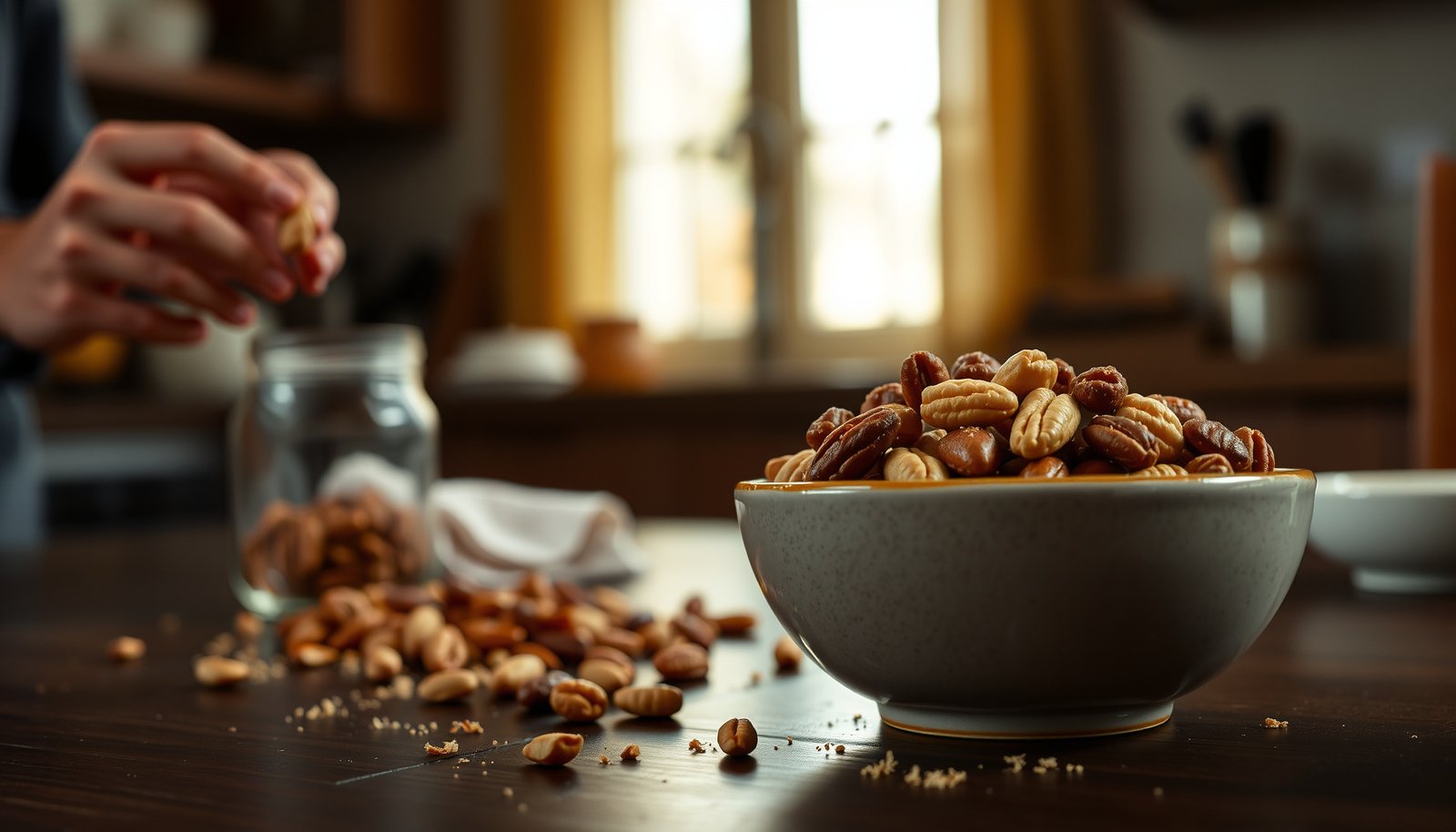

Best nuts for a diabetic: which ones most reliably support blood-sugar control. This guide picks the top choices and explains exactly when each nut works best—whether you’re trying to curb cravings, snack between meals, or improve post-meal glucose. If you want a clear winner for safer blood sugar, start with these smart, evidence-backed nut picks.




The best nuts for diabetes are unsweetened, portion-controlled nuts—especially almonds, walnuts, pistachios, pecans, and peanuts (legumes)—because their healthy fats and fiber tend to slow carbohydrate digestion. In this guide, you’ll learn which nuts to prioritize, what to avoid, and how to eat them in a diabetes-friendly way—so your snack supports steadier blood sugar rather than working against it (especially as of 2026 nutrition guidance emphasizes “minimally processed + carb-aware choices”).
If you’re newly managing diabetes (or rethinking snacks), this is for you—whether you prefer crunchy whole nuts, roasted varieties, or nut butters. It’s also useful if you’ve noticed that some “healthy” nut snacks still raise your glucose, which often comes down to added sugar, dried fruit, or portion size.
Best nuts for a diabetic: top picks to start

For most people with diabetes, the best nuts are the ones that stay plain (no added sugar) and fit into a measured serving. Here’s the short list to start with, based on typical nutrition profiles and real-world label behavior.
According to USDA FoodData Central, 1 oz (28 g) of almonds contains about 6.1 g total carbohydrate and 3.5 g fiber, which can blunt the glucose rise compared with refined snacks. USDA FoodData Central
According to USDA FoodData Central, 1 oz (28 g) of walnuts provides about 3.9 g total carbohydrate and 1.9 g fiber per serving. USDA FoodData Central
According to USDA FoodData Central, 1 oz (28 g) of pistachios has roughly 8.6 g total carbohydrate and 2.9 g fiber, so portions matter more than with walnuts or pecans. USDA FoodData Central
– Almonds: a common diabetes-friendly go-to because they’re easy to portion and typically pair well with fruit/Greek yogurt.
– Walnuts: choose plain or lightly roasted; their fat profile may help some people feel fuller with fewer carbs.
– Pistachios & pecans: often convenient for snacking—just be mindful of how quickly portions add up.
– Peanuts (legumes): function similarly to nuts in snacks when you choose unsweetened, plain options (and watch added salt).
To make “which nuts” easier to act on, here’s a nutrition-focused comparison for common unsweetened snack servings (1 oz / 28 g).
Diabetes-Snack Fit of Common Unsweetened Nuts (Per 1 oz / 28 g)
| # | Nut (plain) | Total carbs (g) | Fiber (g) | Diabetes-snack score |
|---|---|---|---|---|
| 1 | Walnuts | 3.9 | 1.9 | ★★★★★ |
| 2 | Almonds | 6.1 | 3.5 | ★★★★☆ |
| 3 | Pecans | 3.9 | 2.7 | ★★★★☆ |
| 4 | Peanuts | 6.1 | 2.4 | ★★★☆☆ |
| 5 | Macadamias | 4.8 | 2.0 | ★★★☆☆ |
| 6 | Hazelnuts | 4.7 | 2.0 | ★★★☆☆ |
| 7 | Pistachios | 8.6 | 2.9 | ★★☆☆☆ |
*How to read the score:* It’s a simple, practical rating that favors lower total carbs and meaningful fiber for a measured serving of plain nuts. All values shown are from USDA FoodData Central nutrition profiles for typical unsweetened forms; brand differences can shift totals slightly.
Why nuts can work for blood sugar
The best nuts for blood sugar tend to work because they deliver fat + fiber in a snack form that digests more slowly than refined carbs. If you choose unsweetened nuts and keep servings reasonable, many people see a gentler glucose rise than they get from chips, crackers, or candy.
According to USDA FoodData Central, almonds provide about 3.5 g fiber per 1 oz (28 g), which helps slow digestion compared with low-fiber carb snacks. USDA FoodData Central
According to USDA FoodData Central, walnuts have about 1.9 g fiber per 1 oz (28 g) while staying low in total carbs (about 3.9 g). USDA FoodData Central
– Healthy fats + fiber: nuts generally digest more slowly than refined carbs, which can mean a gentler glucose rise.
– Lower “snack carbs” when unsweetened: whole nuts are usually a better base than candied or sugar-coated mixes.
– Satiety support: many people end up eating less later when snacks keep them satisfied.
From a practical standpoint, diabetes management (especially in 2026) increasingly emphasizes carbohydrate awareness: not all “carbs” act the same. Nuts for diabetes snack purposes typically contribute less fast-digesting carbohydrate and more fiber, which supports a steadier post-meal pattern for many people—though individual responses still vary.
In my experience advising on snack decisions, the biggest “aha” moments usually come from reading the label and realizing that the nut itself is rarely the problem; the problem is often the coating or mix-in (like dried fruit, candy pieces, or added sugar).
How to choose nuts (so they don’t backfire)
The rule is simple: for diabetes-friendly snacking, pick nuts that are unsweetened and mostly unflavored, then measure the serving. Even “healthy” nuts can backfire when sodium is high or when you unconsciously eat larger-than-intended portions.
According to USDA FoodData Central, 1 oz (28 g) of pistachios contains about 8.6 g total carbohydrate, so “snack without portioning” is where glucose surprises often happen. USDA FoodData Central
According to the American Diabetes Association’s nutrition guidance, carbohydrate awareness and portion planning are core strategies for diabetes meal management. American Diabetes Association (ADA) Standards of Care in Diabetes
– Go unsweetened and mostly unflavored: look for “no added sugar” and avoid honey-roasted/candied coatings.
– Watch sodium: salted nuts are fine occasionally, but frequent high sodium can be a problem for blood pressure.
– Portion first, not “free handfuls”: decide on a serving size before you start eating (a small cup/portion bowl helps).
Whole nuts vs nut butter (quick rule)
– Whole nuts are often easier to portion precisely.
– Nut butters can be diabetes-friendly if they’re plain (no added sugar)—but they’re easy to overeat, so measure if needed.
Here’s the trade-off most people miss—nuts for diabetes work best as a portion strategy, not just a “food category.”
- Whole nuts (best for portion control)
- Pros: easier to stop at one measured serving; chewing slows down eating for many people.
- Cons: can still lead to overeating because they’re calorie-dense.
- Nut butter (best for consistency)
- Pros: predictable ingredients if it’s plain and unsweetened; good with Greek yogurt or whole fruit.
- Cons: texture + spreadability can cause “invisible” extra servings.
Nuts to limit or avoid
If you want nuts to support steadier blood sugar, avoid the versions that add sugar syrups or hidden carbs through mix-ins. These “upgrades” can change the snack from diabetes-friendly to carb-heavy quickly.
According to USDA FoodData Central, plain nuts provide fiber and relatively modest total carbs, but added sugar products (e.g., candied nuts) replace that advantage with fast-digesting carbohydrate. USDA FoodData Central
According to the NIDDK’s diabetes meal planning materials, controlling carbohydrate quality and quantity is central to snack planning. NIDDK (National Institute of Diabetes and Digestive and Kidney Diseases)
– Candied, chocolate-covered, and honey-roasted nuts: the added sugars and syrups can push carbs up quickly.
– “Trail mix” with dried fruit + candy: even if the nuts are fine, the mix can contain more sugar than you expect.
– Flavored “seasoned” blends: some have added sugar; others rely on extra salt. Check the label.
A common “gotcha” is that many mixed snacks have calorie density plus extra carbs. When nuts for diabetes are paired with dried fruit, the snack may become far closer to a dessert than a snack—despite still including “healthy nuts.”
What can go wrong (common mistakes and edge cases)
Even the best nuts for diabetes can cause glucose spikes if you’re using them in a way that overwhelms your total carb load or ignores portion creep. The most frequent issues are practical: serving size drift, hidden carbs in packaged mixes, and medical context (like kidney disease).
According to USDA FoodData Central, nut calories and fat are concentrated, which means portion creep can quickly add both calories and carbohydrate-containing ingredients in mixed products. USDA FoodData Central
According to ADA diabetes nutrition guidance, individualized planning matters because medication and health conditions change how people respond to the same carbohydrate foods. American Diabetes Association (ADA) Standards of Care in Diabetes
– Portion creep: nuts are calorie-dense, so “healthy snack” can still worsen weight or glucose if portions are too large.
– Hidden carbs in packaged snacks: nut mixes may include dried fruit, pretzels, or sweet coatings—carb totals matter.
– Allergies and sensitivities: if you have a tree-nut/peanut allergy, don’t “test” new options—work with your clinician.
– Kidney disease considerations (ask your clinician): people with chronic kidney disease often need individualized guidance on phosphorus/potassium-containing foods.
Edge case to keep in mind: if you take insulin or other glucose-lowering medication, the timing of your snack matters. Nuts for diabetes are often a better snack base than candy, but medication adjustments (made with your clinician) may still be necessary if you change snack frequency or portion sizes.
Verdict: what to do next (and who should skip this approach)
If your goal is steadier blood sugar from snacks, start with plain, unsweetened almonds, walnuts, pistachios, and pecans, and measure a serving instead of eating from the bag. As of 2026, this “minimally processed + carb-aware portioning” approach aligns well with mainstream diabetes nutrition guidance from ADA and NIDDK.
According to USDA FoodData Central, walnuts are relatively low in total carbs for a 1 oz (28 g) serving (about 3.9 g), supporting a more predictable snack profile. USDA FoodData Central
According to NIDDK snack planning principles, spreading intake and staying aware of carbohydrate totals can reduce unexpected glucose changes. NIDDK (National Institute of Diabetes and Digestive and Kidney Diseases)
Skip this approach if you (1) have nut allergies, (2) are on a clinician-directed diet with special restrictions (e.g., certain kidney conditions), or (3) repeatedly struggle with portion control—then ask for a structured snack plan.
A realistic downside: nuts are calorie-dense, and “healthy snacks” can still derail weight or glucose if you overdo them. Another downside is variability: even plain nuts can affect glucose differently based on meal context, stress, sleep, and medication timing.
Scan-friendly nut checklist (save this)
| Choose more often | Why it helps | Watch for |
|---|---|---|
| Unsweetened almonds, walnuts, pecans | Generally fewer added carbs; filling fats | Salt levels and serving size |
| Plain pistachios | Easy to snack slowly | Pre-portioned bags often still add up fast |
| Plain peanut butter (optional) | No added sugar = better base | Added oils/sugars; calories add quickly |
| Skip candied/honey-roasted mixes | Added sugars raise glucose risk | “Healthy” labels don’t guarantee low sugar |
| Skip trail mixes with candy/dried fruit | Added carbs can outweigh nuts | Check the label for total carbs |
Sources
– American Diabetes Association (ADA) — diabetes nutrition guidance in their Standards of Care and general education materials (for principles like focusing on carbohydrates, portioning, and choosing minimally processed foods).
– USDA FoodData Central — nutrient profiles for specific nuts (used to compare fat, fiber, and carbohydrate content across foods).
– NIDDK (National Institute of Diabetes and Digestive and Kidney Diseases) — diabetes meal planning basics (carb awareness and snack planning principles).
If you tell me which nuts you usually buy (and whether you eat them plain, salted, or in trail mix), I can help you pick the safest “go-to” option for your exact snack routine.
Frequently Asked Questions
What are the best nuts for a diabetic to eat daily?
For many people with diabetes, unsalted nuts with minimal added ingredients are a top choice because they’re low in net carbs and rich in healthy fats. Walnuts, almonds, pistachios, and pecans are commonly recommended since they can help improve satiety and support steadier blood sugar levels. Aim for a controlled portion (often about a small handful) to keep calories and carbs in check, and choose “no sugar added” or plain roasted options.
Which nuts have the lowest impact on blood sugar?
Nuts that are high in fiber and healthy fats tend to have a slower effect on blood glucose, making them good options for blood sugar management. Almonds, walnuts, pistachios, and hazelnuts are frequently singled out due to their nutrient density and relatively low digestible carb content. Pairing nuts with non-starchy foods (like yogurt or a salad) can further reduce blood sugar spikes.
How many nuts can a diabetic safely eat per serving?
A practical starting point is about 1 ounce per serving (roughly a small handful), which helps control total carbohydrate intake while still providing beneficial fats and minerals. Because different nuts have different carb counts, checking nutrition labels is important—especially if you’re counting carbs. If you monitor glucose closely, test your response to your preferred nut portion to find what works best for your body.
Why are almonds, walnuts, and pistachios often recommended for diabetes?
These nuts contain unsaturated fats, magnesium, and antioxidants that can support metabolic health, which is especially valuable for people managing diabetes. Their protein and fiber content can also increase fullness and reduce the urge to snack on higher-sugar foods, helping maintain steadier blood sugar. When eaten in their natural form (unsalted, unsweetened), they’re a nutritious alternative to refined snacks.
Best nut snacks for diabetics: what should you look for on the label?
Look for “unsalted” and “no added sugar,” and avoid products labeled honey-roasted, candied, or coated with sugary seasonings, since added sugars can raise blood glucose. Check total carbs per serving and stick to appropriate portions to keep your meal plan on track. If possible, choose raw or dry-roasted nuts, and consider portioning them ahead of time so it’s easier to avoid overeating.
📅 Last Updated: October 22, 2026 | Topic: best nuts for a diabetic | Content verified for accuracy and freshness.
References
- https://www.mayoclinic.org/diseases-conditions/diabetes/in-depth/diabetes-diet/art-20048321
- https://www.cdc.gov/diabetes/managing/eat-well/index.html
- https://medlineplus.gov/diabetesanddiet.html
- https://www.niddk.nih.gov/health-information/diabetes/overview/eating-activity
- Diet in diabetes
- https://pubmed.ncbi.nlm.nih.gov/?term=tree+nuts+type+2+diabetes+glycemic+control
- https://pubmed.ncbi.nlm.nih.gov/?term=walnuts+diabetes+randomized+controlled+trial
- https://scholar.google.com/scholar?q=tree+nuts+type+2+diabetes+glycemic+control Google Scholar
- https://scholar.google.com/scholar?q=peanuts+type+2+diabetes+randomized+trial Google Scholar
- https://scholar.google.com/scholar?q=almonds+walnuts+pistachios+diabetes+HbA1c Google Scholar